
A generator control panel is the enclosure that holds the controller, the output breaker, the metering and the protection for a generator set. The controller is one component inside it, not the whole thing. That distinction costs money when a project misses it.
Priya, a facilities engineer commissioning a data hall in 2025, approved a quotation that read “generator with controller”. What arrived was a set with a controller mounted on a bracket and no output breaker. Her electrical contractor had priced the panel as a separate package, and nobody compared the two documents until the set was already standing on its pad.
You probably already know the panel is not an accessory. What this guide adds is the structure the market usually skips: which of the four things called a control panel you are actually buying, what sits behind the door, and the specification items that decide whether the quotation matches the installation.
If you have a quotation in hand, send it to our engineers and we will tell you what it leaves out before the set ships.
Key Takeaways
- A generator control panel is the enclosure, breaker, metering, protection and terminals. The controller is one module inside it.
- A controller and a panel differ by roughly an order of magnitude in cost, because the switchgear and protection carry the price.
- The three duty classes are manual, AMF and parallel. Each changes the panel more than it changes the generator.
- Rated current sets the size of the panel. Fault level and breaking capacity set its price.
- ISO 8528-4:2025 is the standard that covers controlgear and switchgear for generating sets. Almost no supplier quotes it by name.
What a Generator Control Panel Is (and What It Is Not)
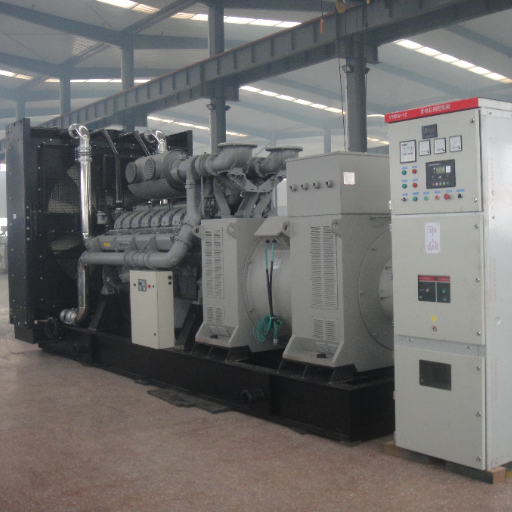
Four terms get used for the same object, and they are not interchangeable. The relationship is nesting, not equivalence.
| Term | What it is | What it does | Usually supplied by |
|---|---|---|---|
| Controller | A module, usually mounted in the panel door, with a display and a terminal strip | Measures, decides, drives outputs, logs faults | A controller maker such as Deep Sea, ComAp or SmartGen, fitted by the set builder |
| Control panel | An enclosure containing the controller, output breaker, protection, metering and terminals | Houses the switching and protection the controller commands | The generator builder |
| ATS | A switching assembly with two inputs and one output | Transfers the load between mains and generator | A switchgear supplier, sometimes the set builder |
| AMF panel | A panel that includes mains sensing, auto start and an ATS | Detects mains failure, starts the set, transfers the load | The generator builder or a panel shop |
This table describes the usual industry arrangement. A single supplier can deliver all four as one package, which is often the cleanest option.
Panel, Controller, ATS and AMF
The controller reads voltage, current, frequency, oil pressure and coolant temperature. It decides when to crank, when to accept the set as ready, and when to trip. It’s a logic device with a screen, and on its own it switches almost nothing.
The panel is what turns those decisions into current. It carries the output breaker that connects the alternator to the load, the current transformers that let the controller measure, and the protection that operates if the controller fails or the fault is faster than the logic.
An ATS is a separate assembly even when it sits in the same enclosure. An AMF panel is a panel with mains sensing added, so the sequence starts with a voltage check rather than a button press.
What a Panel Does That a Controller Cannot
A controller can’t interrupt 2,000 A. It can’t withstand a 50 kA fault, and it can’t isolate a circuit for maintenance. Those are switchgear jobs.
That’s why two panels carrying the same controller can differ in price by a factor of five. The buyer comparing on the controller model is comparing the cheapest part of the assembly.
If you are unsure which controller suits the engine in front of you, our controller compatibility chart maps engine type and kVA band to the usual modules.
What Is Inside a Generator Control Panel
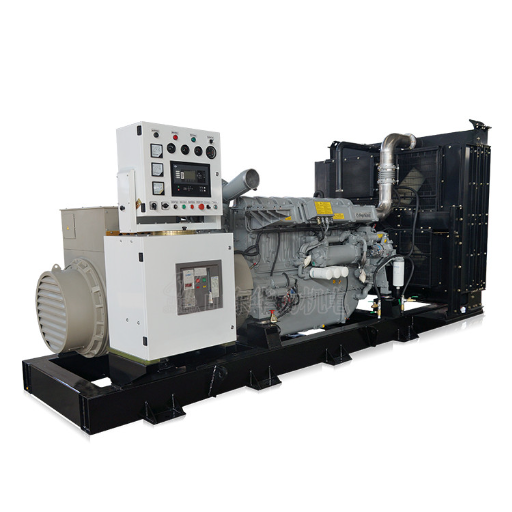
Open the door and the layout is predictable, whatever the make.
- Output breaker. The main molded-case or air circuit breaker between alternator and load. Its frame size follows the rated current; its breaking capacity follows the fault level.
- Current transformers. One per phase, feeding the controller and any separate metering.
- Protection relays. Overcurrent and earth fault at minimum. Reverse power and loss of mains when the set parallels.
- Metering. Analog gauges or a digital multimeter, or both. The controller display covers most of it.
- Terminal blocks and cable entry. Where the load cable lands, and where the control wiring terminates.
- Anti-condensation heater and thermostat. Small, cheap, and the reason a panel still works after a humid winter.
- Emergency stop. Wired to trip the breaker and shut the engine down, not just to signal the controller.
- Battery charger. Sometimes in the panel, sometimes on the set.
The list looks simple, and that’s the trap. The failures are usually in the interfaces between those items. A breaker sized for the generator’s rated current but not for the fault level. A CT ratio that leaves the controller reading several percent low. An e-stop wired to the controller instead of the breaker trip coil. Each one is small, and each one shows up during commissioning.
The Parts That Drive the Price
Three numbers decide what a panel costs, and none of them is the controller model.
Rated current sizes the busbar, the breaker and the cable terminations. A 400 A panel and a 2,000 A panel can use the same controller.
Fault level is the prospective short-circuit current the installation can deliver. A panel must withstand it, and its breaker must break it. A 25 kA assembly and a 50 kA assembly look similar from the front and are built very differently inside.
Protection scheme is the third. Basic overcurrent and earth fault protection is a small relay set. Reverse power, loss of mains, differential and directional protection for a parallel plant is a different order of cost.
Add the enclosure rating and the metering class, and you have the whole price structure. The controller is a line item; the switchgear is the panel.
Three Duty Classes: Manual, AMF and Parallel
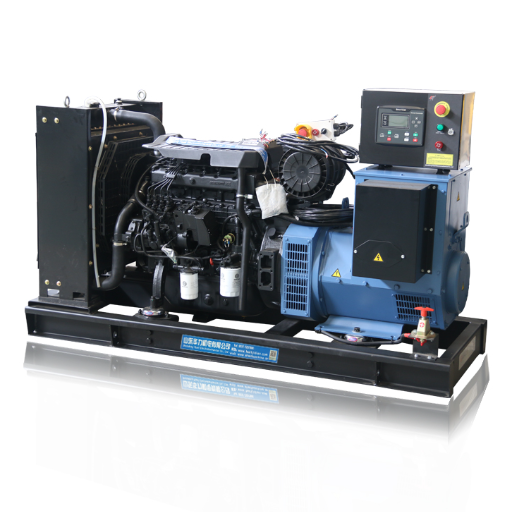
The panel changes more than the generator does between these three duties.
| Class | What the panel does | Who operates it | Typical use |
|---|---|---|---|
| Manual | Start, stop, breaker control, metering | An operator at the panel | Rental sets, temporary sites, attended plant |
| AMF | Senses mains, starts the set, transfers and retransfers | Nobody, the logic does it | Standby for buildings, hospitals and data centers |
| Parallel | Synchronizes, shares load, protects the plant | A plant operator or a SCADA system | Multi-set plants, N+1 redundancy, phased expansion |
A manual panel is the cheapest and the least forgiving. Someone has to be standing there when the mains fails.
An AMF panel adds mains sensing, a start signal and a transfer command. The set has to be rated for the duty it will run, which is why the ISO 8528 rating category belongs in the same conversation as the panel specification.
A parallel panel adds synchronization, load sharing, reverse power protection and usually a generator breaker per set. When the plant is more than one machine, the panel becomes a system, and the choice between one large set and several smaller ones decides how much of it you need.
AMF, ATS and Changeover: What the Naming Means
“AMF panel” and “changeover panel” are used interchangeably in the trade, and both usually mean a panel with an ATS inside it. The useful distinction is intent.
A changeover panel answers “how does the load move between two sources”. An AMF panel answers “how does the set start without anyone present, and how does the load move safely”. The second includes the first, and adds mains monitoring and the start sequence.
If a supplier quotes an ATS and a panel separately, ask which one contains the controller that issues the start command. That’s the question the quotation usually doesn’t answer.
Specifying a Generator Control Panel
A panel specification is short. Six items carry most of the risk.
- System voltage, phases and frequency. 400 V or 480 V, three-phase four-wire, 50 Hz or 60 Hz. The controller configuration and the metering both depend on it.
- Rated current. From the generator’s rated kVA at the system voltage. This sizes the breaker and the busbar.
- Fault level and breaking capacity. The prospective short-circuit current at the panel, and the breaking capacity of every device in it. Ask for both in writing.
- Enclosure. Indoor or outdoor, IP rating, ambient temperature, altitude, and whether the site is coastal or dusty. Component ratings usually assume 40°C outside the enclosure; inside it is hotter.
- Protection scheme. Which relays, which settings, and whether a coordination study is in scope.
- Interface to the set. Two-wire or three-wire start, engine type, and whether the controller reads the engine over CAN J1939 or from discrete sensors.
Two of those six items rarely appear in a quotation. Fault level is missing because it depends on the site’s transformer and the utility, not on the generator, so the panel supplier has nothing to size against. The interface is missing because the set builder and the panel shop each assume the other one is providing it.
Tomas, a plant manager in a coastal chemical facility, specified IP54 and got IP21 because the quotation did not repeat the rating. The first humid season produced condensation inside the panel and a run of nuisance trips. The fix was a replacement enclosure and a heater, both of which were in the original specification.
The Standards to Name in the Specification
Three standards cover this equipment, and naming them removes most of the ambiguity.
ISO 8528-4:2025 covers controlgear and switchgear for reciprocating engine generating sets. The third edition was published in October 2025 and replaces the 2005 version. It sets out control modes, protection, monitoring and communication, which is close to the exact scope of a generator control panel. Name it in the enquiry and the conversation moves from features to requirements.
IEC 61439-1:2020 applies when the panel is built as a low-voltage switchgear and controlgear assembly. It covers design verification, temperature rise, short-circuit withstand and routine testing. That is the standard behind a temperature-rise test, and the reason a panel carries a rated current in the first place.
NFPA 110 applies when the set is an emergency power supply system under that code. It addresses transfer, annunciation and system class rather than panel construction, so cite it for the system, not for the box.
Ask the supplier which of these the panel is built and tested to, and ask for the routine test report. A panel that can’t produce one wasn’t tested to a standard.
What to Put on a Generator Control Panel RFQ
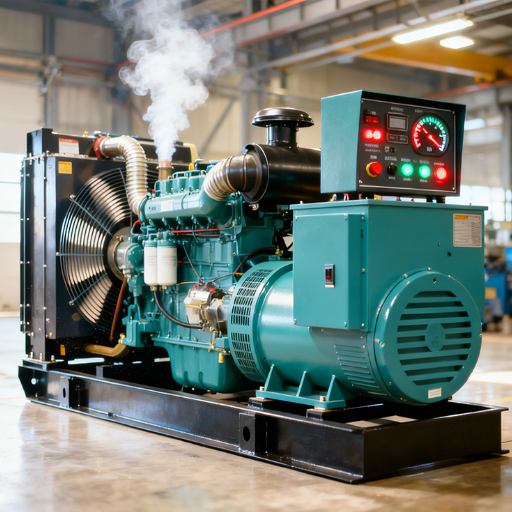
Most panel quotations are reissued because the enquiry left something out. Seven items close that gap.
- Duty class and hours. Manual, AMF or parallel, and the expected running hours per year.
- System data. Voltage, phases, frequency and the generator rating in kVA.
- Fault level. The prospective short-circuit current at the connection point, in kA.
- Environment. IP rating, indoor or outdoor, ambient, altitude and any corrosion requirement.
- Protection. The relays required, and whether settings and a coordination study are included.
- Interface. Start signal type, engine type, and the communications protocol you need.
- Documentation. Schematics, terminal drawings and the routine test report, listed as deliverables rather than assumed.
A tender engineer at a hospital project added items three and seven at the last review. The fault level moved the main breaker from one frame size to the next, and the documentation requirement revealed that the supplier’s standard package had no terminal drawings. Both were resolved before award. Neither would have been resolved after it.
Frequently Asked Questions
What is the difference between a generator control panel and a controller?
The controller is the module that measures and decides. The panel is the enclosure, breaker, protection, metering and terminals around it. A controller on its own cannot switch load current or clear a fault.
How much does a generator control panel cost?
It scales with rated current, fault level and protection scheme, not with the controller brand. Two panels using the same controller can differ by several times if one is a 25 kA assembly with basic protection and the other is a 50 kA assembly with reverse power and loss of mains. Give a supplier those three numbers and the price becomes comparable.
What is an AMF panel on a generator?
An automatic mains failure panel. It monitors the incoming supply, starts the generator when the supply fails, transfers the load, and reverses the sequence when power returns. It contains an ATS and the control logic that drives it.
What IP rating does a generator control panel need?
IP20 is normal indoors in a protected room. IP54 is the usual choice outdoors or in dusty and wet conditions, and coastal sites often justify a higher rating plus corrosion protection. The rating is only meaningful with the ambient temperature and the enclosure material stated alongside it.
Can a control panel be retrofitted to an existing generator?
Usually, if the controller is compatible with the engine and the alternator. The constraints are the engine interface, the existing protection and whether the original panel can be replaced without re-certifying the installation. Start with the controller compatibility chart, then confirm the engine type.
Is a genset control panel the same as a generator control panel?
Yes. Genset is short for generator set, so the two names describe the same assembly. The trade tends to use genset when the set is sold as an engine and alternator package, and the panel that ships with it follows the set builder’s vocabulary rather than the buyer’s.
Conclusion
A generator control panel is the enclosure that makes a controller useful: the breaker, the protection, the metering and the terminals. Three questions decide most of the specification.
- What duty does the panel serve: manual, AMF or parallel?
- What is the prospective fault level at the panel, and what breaking capacity does that require?
- Where will the panel stand, and what IP rating and ambient does that place demand?
Answer those and the rest of the specification follows. Leave them open and the supplier will answer them for you, in the quotation’s assumptions rather than in your design.
Send us your generator rating, system voltage and site conditions, and our engineers will confirm the panel scope, the protection scheme and the interface before anything is ordered. Request a generator control panel quotation.
