
The best manufacturer of diesel generators for your project is conditional on, such factors as application, duty cycle, and total cost of ownership, and not only the brand’s name. Brands, such as Caterpillar and Cummins, belong to Tier 1 and are highly preferred for critical infrastructures, whereas the ones from Asia-Pacific that are certified, integrated manufacturers may have the same reliability-a lot cheaper-for construction, mining, and prime power applications.
The global diesel generator market is projected to reach $25-36 billion by 2031. Yet industrial buyers waste capital on mismatched suppliers because they evaluate sticker price instead of manufacturing credibility. This guide provides a practical framework for vetting diesel generator manufacturers, whether you need a Tier 1 global brand or a certified integrated OEM.
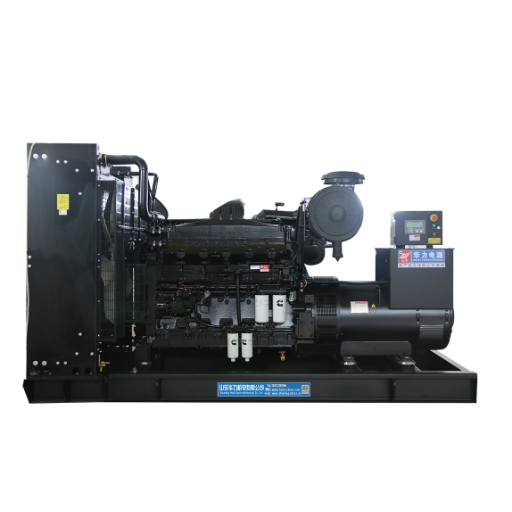
At Shandong Huali Electromechanical Co., Ltd., we have spent over 25 years building diesel generator sets for clients in 20+ countries. We have visited factories that impressed us and factories that alarmed us. The difference always comes down to the same eight criteria. This article shares the framework our procurement team uses.
For precise specification guidance on customizing diesel generators in 2026, see our Custom Diesel Generator Buyer’s Specification Guide.
Key Takeaways
- True OEMs build with branded components and full traceability; GOEMs assemble with mixed sourcing; trading companies resell with zero production control.
- Caterpillar leads in heavy-duty mining, Cummins dominates data centers, Perkins wins on fuel efficiency, and certified Chinese OEMs like Weichai deliver 14% fuel savings over legacy Tier 2 engines.
- Tier 1 manufacturers currently face 40-100 week lead times for large industrial units; certified Tier 2 suppliers can deliver in 18-30 weeks.
- Total cost of ownership over 10 years typically exceeds purchase price by 2-3x when fuel, maintenance, and parts are included.
- Factory audits should verify engine authorization certificates, load bank testing protocols, and ISO 9001 scope of certification, not just the certificate itself.
What Is a Diesel Generator Manufacturer?
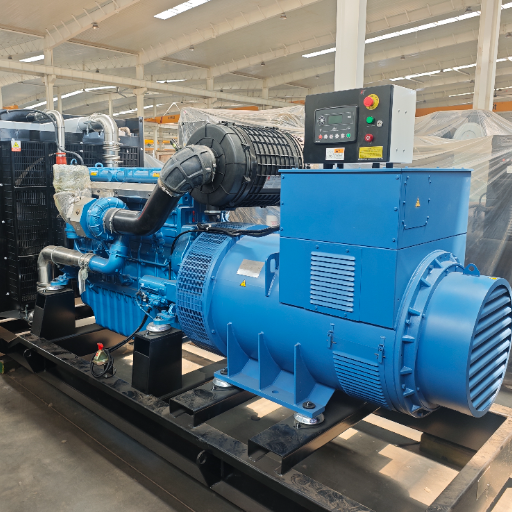
A diesel generator manufacturer refers to a firm that designs, constructs, tests, and supplies diesel engine generators by integrating a diesel engine with an alternator, control systems, and protective enclosures. However, not all diesel generator manufacturers do the same thing. There is a 3-way division in the sector with a good understanding of how it operates for warding off questionable vendors and ensuing functional warranties.
True OEMs (Original Equipment Manufacturers)
True OEMs design and build generator sets under their own brand with full control over component selection, assembly processes, and quality testing. They hold direct authorization from engine brands like Cummins or Perkins and can trace every alternator and controller back to its source. Examples include Caterpillar, Cummins Power Generation, and Kohler.
What to verify: Ask for engine authorization certificates. A true Cummins OEM can produce a letter from Cummins Inc. confirming the relationship. If the factory hesitates, that is a red flag.
GOEMs (Generator Original Equipment Manufacturers)
GOEMs assemble generator sets using branded engines and alternators sourced from multiple suppliers. They do not design the engine, but they engineer the complete genset package, radiator sizing, control panel integration, enclosure design, and testing. Most Chinese manufacturers, including Shandong Huali, operate as GOEMs.
The GOEM advantage: Flexibility. A GOEM can pair a Cummins engine with a Stamford alternator and a Deep Sea controller, then customize voltage, frequency, and enclosure dimensions for your exact site conditions. A true OEM like Caterpillar locks you into their component ecosystem.
What to verify: Request the bill of materials for your specific unit. Every major component should carry a brand name and model number, not “generic” or “OEM quality.”
For a clearer understanding of OEM, GOEM and trading company distinctions in diesel generator procurement, see our OEM Diesel Generator Buyer’s Guide.
Trading Companies
Trading companies do not manufacture anything. They source finished generators from multiple factories and resell them under their own brand or yours. Some add value through logistics, financing, or local service. Others simply mark up units they have never inspected.
The risk: Zero production control. If a trading company sources from Factory A in January and Factory B in March, your second batch may use different alternators, thinner steel, or untested controllers. Warranty claims become a blame-shifting exercise between the trader and the factory.
When Marcus, a procurement manager for a mining contractor in Peru, needed 12 x 500 kW generators, he chose a trading company with an impressive website and fluent English sales staff. Six months later, three units failed within the same week. The alternators, branded “OEM quality”, turned out to be uncertified copies. The trading company pointed to the factory. The factory pointed back. Marcus spent $47,000 on emergency replacements and lost a client relationship that had taken three years to build.
The 2026 Diesel Generator Manufacturing Landscape
Understanding where the market sits in 2026 helps you set realistic expectations for pricing, lead times, and availability.
Market Size and Growth Drivers
The global diesel generator market is valued at approximately $21-25 billion in 2025, growing at a 5.9-7.5% CAGR through 2031. Three forces are reshaping demand:
- Data center expansion: The data center generator sub-segment alone is estimated at $7.6-9.5 billion in 2025, with diesel gensets commanding 81% of backup power installations.
- Grid instability: Aging electrical infrastructure and climate-related disruptions are pushing industrial facilities toward on-site generation.
- Emerging market industrialization: Asia-Pacific accounts for 33-61% of industrial generator market share, depending on scope.
The Tier Structure
Manufacturers generally fall into three tiers:
| Tier | Examples | Strengths | Typical Lead Time |
|---|---|---|---|
| Tier 1 Global | Caterpillar, Cummins, MTU, Kohler | Extreme reliability, global service network, highest resale value | 40-100 weeks |
| Tier 2 Regional | FG Wilson, Himoinsa, Aksa, certified Chinese OEMs | Strong value, good customization, growing parts networks | 18-30 weeks |
| Tier 3 Value | Uncertified assemblers, budget traders | Lowest purchase price | 4-12 weeks |
The Lead-Time Crisis
Tier-1 manufacturers are currently facing a lead time of 40-100 weeks for large industrial units with power ratings above 1,000kW. The bottleneck is the availability of engines, whereby Caterpillar and Cummins allocate production to long-term agreements first, thus leaving the spot market waiting. However, those Tier-2 suppliers holding real engine supply agreements can deliver equivalent configurations within 18-30 weeks.
This lead time trend is causing a shift in procurement strategies. EPC contractors who exclusively specified Tier-1 brands only now accept Tier-2 manufacturers that carry verified certifications and possess factory acceptance test data that aligns with client standards.
How to Evaluate a Diesel Generator Manufacturer: 8 Criteria
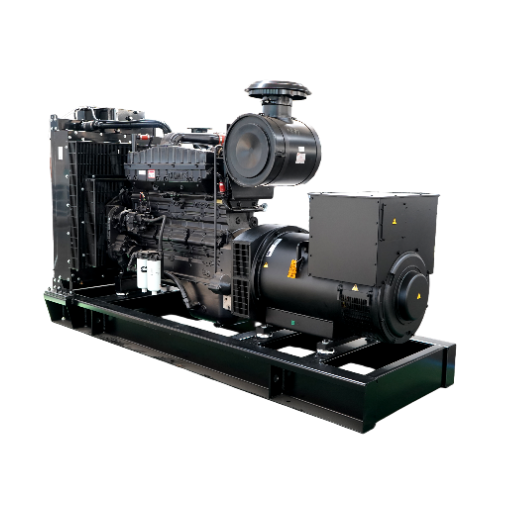
Use this framework every time you evaluate a new supplier. Print it. Take it to the factory. Score each manufacturer on all eight points before you sign a contract.
1. Manufacturing Transparency
Can the manufacturer show you exactly how your unit will be built? Do they allow factory visits? Do they provide a detailed bill of materials?
Green flags: Open factory tours, detailed production photos, component traceability records, willingness to share subcontractor names.
Red flags: Refusal to show production areas, vague answers about component sourcing, “trust us” responses to technical questions.
2. Engine, Alternator, and Controller Branding
The three most expensive and failure-prone components are the engine, alternator, and controller. Every one of them should carry a recognizable brand name.
Engines: Cummins, Perkins, Weichai, Baudouin, Yuchai, MTU, Caterpillar.
Alternators: Stamford (Cummins), Leroy-Somer, Marathon, Mecc Alte.
Controllers: Deep Sea Electronics (DSE), ComAp, Smartgen.
If a manufacturer uses “OEM quality” or “compatible” with any of these three components, demand the specific brand and model numbers. Unbranded alternators fail 3-5 times more often than Stamford or Leroy-Somer units.
3. Application Rating Accuracy
A manufacturer should help you match the right power rating to your duty cycle:
- Standby power: Emergency only. No overload permitted. Common for hospitals and data centers.
- Prime power: Variable load, unlimited annual hours, 10% overload for 1 hour in 12. Common for mining and off-grid manufacturing.
- Continuous power: Constant load, unlimited hours, no overload. Rare; used in remote base load applications.
Using a standby-rated unit for prime power causes premature engine failure. A responsible manufacturer will refuse the order or upgrade the engine spec.
4. Emissions Compliance and Certification
Verify which certifications the manufacturer holds and whether they apply to your market:
- ISO 9001: Quality management. Verify the scope of certification includes “generator set manufacturing”, not just “trading.”
- CE marking: Required for EU markets. Verify the notified body number.
- EPA Tier 4 Final: Required for US stationary engines. Verify the certificate matches the exact engine model.
- ISO 8528: Governing generator set performance classes. G3 is standard for most industrial applications; G4 is required for data centers with sensitive electronics.
5. Thermal Efficiency and Load Acceptance
Request fuel consumption curves at 25%, 50%, 75%, and 100% load. Compare liters per kilowatt-hour across manufacturers. Weichai’s record-breaking 53.09% thermal efficiency on some engines saves approximately 14% fuel versus legacy designs.
For data centers and hospitals, request transient response data. How quickly does the voltage recover after a 100% load step? Cummins and MTU typically lead here.
6. Service Network and Parts Availability
A generator without parts support is a liability, not an asset.
Ask specifically:
- Where is the nearest authorized service center?
- What is the typical parts delivery time to your location?
- Does the manufacturer stock critical spare parts (alternator diodes, controller boards, fuel injectors) or only source them on demand?
Hidden cost warning: Tier 1 brands often lock you into dealer service networks with premium labor rates. A Caterpillar dealer may charge 200−300perhourforaservicecallthatanindependenttechniciancouldhandlefor200−300perhourforaservicecallthatanindependenttechniciancouldhandlefor80-120.
7. Lead Times and Supply Chain Stability
Get a written commitment for lead times with penalties for delays. What happens if the engine OEM fails to deliver on time? Does the final-assembly operation hold buffer stock of critical engines, or do they source the engines on a per-project basis?
8. Total Cost of Ownership
Purchase price is typically less than one-third of lifetime cost. A 10-year TCO model should include:
- Purchase price and financing
- Fuel consumption over expected operating hours
- Scheduled maintenance (oil changes, filter replacements, belt inspections)
- Major overhauls (typically at 8,000-12,000 hours for industrial engines)
- Parts availability and shipping costs
- Downtime risk and business interruption insurance
For a comprehensive TCO breakdown and practical calculator framework for diesel generators, see our Diesel Generator Total Cost of Ownership Guide.
When the engineering team at a West African mining operation evaluated three manufacturers for a 2,000 kW prime power installation, they initially favored the lowest purchase price, a Tier 3 assembler at 380,000.Afterrunninga10−yearTCOmodel,thenumbersreversed.TheTier3unit′shigherfuelconsumption(380,000.Afterrunninga10−yearTCOmodel,thenumbersreversed.TheTier3unit′shigherfuelconsumption(1.2M vs. 980,000),expensiveair−freightedparts(980,000),expensiveair−freightedparts(340,000 vs. 120,000),andthreeunplannedoverhaulspushedtotalcostto120,000),andthreeunplannedoverhaulspushedtotalcostto2.4M. The certified Tier 2 manufacturer at 420,000purchasepricedelivereda10−yearTCOof420,000purchasepricedelivereda10−yearTCOof1.9M. The “cheaper” option would have cost $500,000 more over the generator’s lifetime.
Top Diesel Generator Engine Brands and Manufacturer Tiers
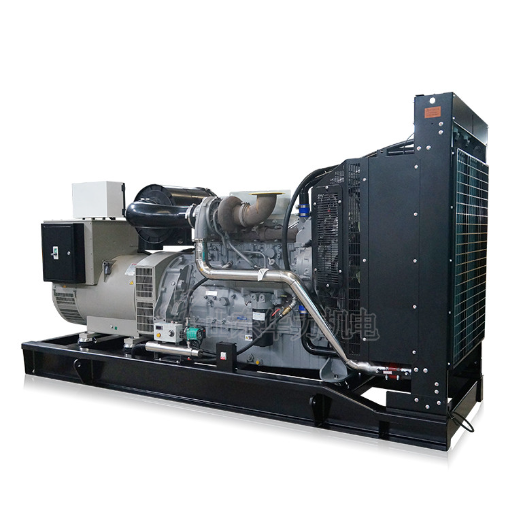
There is no “best” diesel generator manufacturer. There is only the right manufacturer for your specific duty cycle, environment, and support requirements.
Caterpillar
Best for: Heavy mining, large-scale construction, applications where resale value matters.
Caterpillar sells around 12% of engines around the globe and contributes to 22.4% of engines with an electrical capacity above 750 kVA. The evolution of the 3500 Series of engines is legendary for their reliability in the midst of harsh conditions. Caterpillar is renowned all over the world for its unparalleled dealer organization; Caterpillar parts and services are available almost anywhere in the world.
The trade-off: Premium pricing and dealer service lock-in. Expect to pay 30-50% more than Tier 2 equivalents. Dealer labor rates are among the highest in the industry.
Cummins
Best for: Data centers, critical infrastructure, applications requiring fast transient response.
Cummins dominates where load acceptance speed matters. Their PowerCommand controllers and QSK series engines are standard in Tier III/IV data center installations. The “Power of One” integration, Cummins engine, alternator, and controller engineered together, reduces compatibility issues.
The trade-off: Lead times for large QSK units currently exceed 60 weeks. Cummins also limits warranty coverage if non-Cummins alternators are used.
MTU (Rolls-Royce Power Systems)
Best for: Data centers, marine, applications requiring high power density.
MTU’s 2000 and 4000 series engines deliver exceptional power-to-weight ratios. Their advanced emissions technology meets EU Stage V without aftertreatment on some models.
The trade-off: Highest purchase price in the industry. MTU’s service network is strong in Europe and North America but thinner in Africa and parts of Asia.
Perkins
Best for: Commercial standby, telecom, light industrial where fuel efficiency matters.
Perkins 400 and 1100 series engines are compact, quiet, and remarkably fuel-efficient. Maintenance intervals are longer than many competitors. Perkins excels in applications where the generator runs infrequently but must start reliably every time.
The trade-off: Limited power range above 2,500 kW. For very large installations, you will need to parallel multiple units or look elsewhere. See our complete Perkins generator set guide for fuel data and 2026 pricing.
Weichai / Chinese OEMs
Best for: Construction, emerging markets, prime power where cost-effectiveness outweighs brand prestige.
Weichai holds the world record for diesel engine thermal efficiency at 53.09%. Their Baudouin marine and industrial engines are increasingly accepted in global markets. Chinese OEMs that integrate Weichai engines with Stamford alternators and DSE controllers produce units that meet the same ISO 8528-5 G3 standards as Western competitors.
The trade-off: Resale value is lower. Service networks outside Asia are still developing, though parts availability has improved dramatically in the last five years.
Need help matching the right engine brand to your project? Contact our engineering team for a free technical consultation.
Matching Manufacturers to Your Application
Data Centers and Hyperscale Facilities
Data centers require generators that start within 10 seconds, recover voltage within 2 seconds of a load step, and run for 24+ hours on a single fuel fill. Look for:
- DCC (Data Center Continuous) rating or equivalent
- ISO 8528-5 G4 load acceptance class
- N+1 or 2N redundancy configurations
- Parallel operation capability with load sharing
- Low harmonic distortion for sensitive IT equipment
Recommended approach: Tier 1 (Cummins, MTU) for Tier III/IV facilities; certified Tier 2 with proven data center references for Tier II facilities.
Mining and Heavy Construction
Mining generators face dust, vibration, altitude, and temperature extremes. Look for:
- Rugged open-frame or heavy-duty canopy enclosures
- High-capacity air filtration systems
- Altitude derating calculations (typically 2-3% power loss per 1,000 feet above sea level)
- Simple mechanical fuel systems that field technicians can repair
- Trailer or skid mounting for mobility
Recommended approach: Caterpillar for large permanent installations; certified Tier 2 with Weichai or Cummins engines for mobile and semi-permanent setups.
Healthcare and Critical Infrastructure
Hospital generators must comply with NFPA 110 Level 1 requirements. Look for:
- 10-second automatic start capability
- Redundant starting systems (battery + spring)
- Type 10 classification (10 seconds to rated voltage and frequency)
- Low-noise enclosures for urban sites
- 96-hour fuel supply for Level 1 systems
Recommended approach: Kohler and Cummins dominate this space due to extensive healthcare references and NFPA compliance documentation.
Manufacturing and Continuous Industrial Use
Factories need generators that handle load fluctuations without voltage sag. CNC equipment, welding equipment, and motor starting create severe transient demands. Look for:
- Prime or continuous power rating (not standby)
- Voltage regulation within +/- 0.5%
- Motor starting capability (kVA) at least 3x the largest motor’s locked rotor kVA
- Paralleling capability for load growth
Recommended approach: Depends heavily on duty cycle. For 24/7 operation, Caterpillar or MTU. For 12-16 hour shifts, certified Tier 2 manufacturers with Cummins or Perkins engines.
Chinese Diesel Generator Manufacturers: A Neutral Assessment
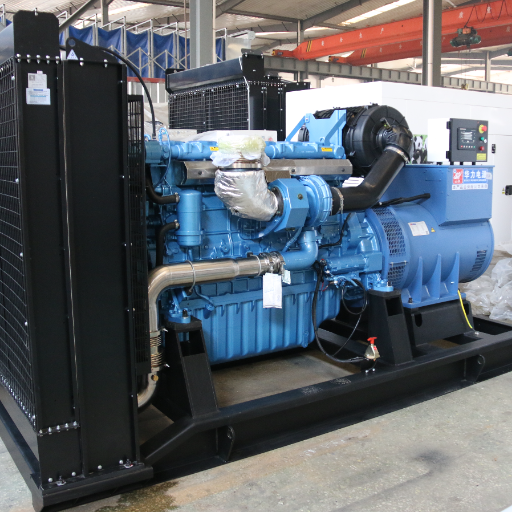
International buyers often ask us the same question: Are Chinese diesel generators reliable? The honest answer is, it depends entirely on which Chinese manufacturer you choose.For more guidance on vetting Chinese suppliers specifically, see our article on Chinese diesel generator manufacturers.
When Chinese Manufacturers Win
Chinese OEMs are the right choice when:
- Budget constraints are real and TCO analysis shows favorable lifetime costs
- Customization is critical and Western OEMs charge excessive NRE (non-recurring engineering) fees
- Lead times are tight and Tier 1 brands quote 60+ weeks
- Local support exists or you have in-house maintenance capability
- The application is not life-safety critical (construction, prime power for manufacturing, backup for non-critical facilities)
How to Verify Quality
Do not rely on Alibaba reviews or sales presentations. Verify quality through:
- Factory audit: Visit the production facility. Look for CNC machining centers, engine test beds, load bank stations, and organized material storage. A proper factory will welcome your visit.
- Component traceability: Request engine authorization certificates from Cummins, Perkins, or Weichai. Verify alternator serial numbers with Stamford or Leroy-Somer.
- Sample order: Place a small order (1-2 units) before committing to a large project. Run them for 500+ hours. Monitor fuel consumption, oil consumption, and vibration levels.
- Reference checks: Ask for 3-5 client references in your region. Call them. Ask about failure rates, parts delivery times, and warranty claim resolution.
- Certification verification: ISO 9001 certificates can be verified through the issuing body’s online database. CE certificates should list a notified body number you can cross-check.
The Integrated Manufacturing Advantage
The manufacturers do this step by step in control-integrated production: engine acquisition, alternator matching, steel cutting, painting, assembly, testing, packaging – removing gaps and any inadequacies in quality that arise when several subcontractors come in for different stages of the processing.
At Shandong Huali, our national standard testing center subjects every generator to 100% load bank testing before delivery. We hold direct authorization from Cummins, Perkins, Weichai, and Yuchai. Our engineering team of 80+ technicians supports clients from design through installation.
For targeted tips on screening and selecting reliable diesel generator suppliers in 2026, see our How to Choose a Diesel Generator Supplier Guide.
Red Flags: 6 Warning Signs of a Weak Manufacturer
Learn to spot these warning signs before you sign a contract.
1. Unbranded or “White Label” Component Packages
If a manufacturer cannot name the brand and model of the alternator, controller, or circuit breaker in your unit, they are hiding something. “OEM quality” is not a brand. It is a warning.
2. Missing OEM Authorization Certificates
Any factory claiming to build with Cummins, Perkins, or Weichai engines should produce a current authorization letter from that engine manufacturer. These letters expire and must be renewed. Check the date.
3. Dealer Service Lock-In Without Disclosure
Some Tier 1 brands require that all warranty service be performed by authorized dealers at premium rates. This can add $50,000-100,000 to lifetime maintenance costs on a large installation. Ask upfront whether independent service is permitted without voiding warranty.
4. Unsupported Emissions Claims
A manufacturer claiming “EPA Tier 4 compliant” should produce an EPA certificate of conformity for the exact engine model in your unit. “Meets Tier 4 standards” is not the same as “EPA certified.”
5. No Factory Acceptance Testing or Load Bank Verification
Every generator should be run at 100% rated load for a minimum duration before shipment. If the manufacturer ships units without testing, you are paying to be their quality control department.
6. Vague or Non-Existent Warranty Terms
A proper warranty specifies: parts coverage period, labor coverage period, travel costs for service calls, response time commitments, and exclusions. “One-year warranty” with no further detail is worthless.
Factory Direct vs. Trading Company: Which Sourcing Model?
| Factor | Factory Direct | Trading Company |
|---|---|---|
| Pricing | Lower (no markup) | Higher (10-30% margin) |
| Customization | Full flexibility | Limited to factory’s standard range |
| Quality control | Direct oversight | Indirect; depends on trader’s diligence |
| MOQ | Typically higher | Often lower |
| Payment security | Requires more due diligence | May offer escrow or safer payment terms |
| Communication | May require patience with language | Often smoother (English-speaking sales) |
| Logistics | Factory handles export packing | Trader may offer door-to-door service |
When factory direct makes sense: You have procurement experience, can verify the factory independently, need significant customization, and are ordering at least 2-3 units.
When a trading company makes sense: You need only 1 unit, require financing support, need door-to-door logistics to a remote location, or prefer the payment security of dealing with a local registered company.
The hybrid approach: Many experienced buyers work factory-direct for the main order but use a local trading company for spare parts and service support.
For more on factory testing standards, read our diesel generator factory audit guide.
Warranty, Support, and Long-Term Partnership
A generator is a 10-15 year investment. The warranty and support terms you negotiate today determine your operating costs for the next decade.
What to Negotiate
Parts coverage: Standard is 12 months. Push for 24 months on major components (engine, alternator, controller).
Labor coverage: Some warranties cover parts only. You pay the technician’s travel and labor. Negotiate labor coverage for at least the first 6 months.
Response time SLA: For critical applications, require a written response time, e.g., “Technical support response within 24 hours; on-site service within 72 hours for warranty claims.”
Spare parts availability: Require the manufacturer to guarantee availability of critical spare parts for the full expected lifetime of the generator (typically 10-15 years).
Remote diagnostics: Modern controllers support GSM/Ethernet remote monitoring. Confirm whether the manufacturer provides remote diagnostics as part of warranty support or charges extra.
For an in-depth analysis of 2026 diesel generator warranty terms and coverage details, see our Diesel Generator Warranty Complete Buyer’s Guide.
Custom Manufacturing: OEM, ODM, and Private Label
If standard generator configurations do not meet your requirements, consider custom manufacturing.
OEM (Original Equipment Manufacturing)
They do sell the generator under their own brand, yet the design is part of the manufacturer’s standard platform. The factory will integrate their custom paint color, logo plates, and packaging. Standard minimum order quantities are usually 10-20 units per year.
ODM (Original Design Manufacturing)
You sell under your brand and the maker customizes design according to your specifications. This might involve alternative voltages (commercially 480V/60Hz for the US market and 400V/50H for the EU), peculiar materials for casings, integrated fuel tanks or paralleling control systems. The MOQs are higher, around 50-100 units per year, and the engineering collaboration lasts from 3 to 6 months till production.
Private Label
The simplest form of customization. The manufacturer makes their normal item in your brand and documentation. Quickest time-to-market, lowest MOQ, no differentiation from competition sourcing that same platform.
Diesel Generator Manufacturer FAQ
What is the difference between an OEM and a GOEM?
Any authentic OEM firms inscribe and builds the core tech under their name like Caterpillar design its engines and makes them. A GOEM puts together complete generator packages with engines, alternators, and control instruments taken from specialized suppliers. Mostly all generators are produced with the GOEM concept around the world, and this would include the bigger European and Asian manufacturers.
How long does a diesel generator last?
It is common knowledge that the life expectancy of a diesel engine generator in the industrial world is 15,000-30,000 hours before a major overhaul is required. For Prime Power, 2,000 hours per year, that means 7-15 years. Usually, Standby units tend to last 20-25 years after maintenance.
Which generator brand offers the best price per kW?
Chinese OEMs integrating Weichai or Yuchai engines would tend to offer the lowest price per kW. But of course this is only one piece of the puzzle; total cost of ownership should also be considered. In standby applications, with low annual hours, a Chinese OEM will frequently be the lowest-cost option. For prime power applications with higher annual hours, however, Cummins and Perkins might actually be less expensive in the long run, despite a higher initial purchase price.
What certifications should a diesel generator manufacturer have?
At minimum: ISO 9001 (quality management) with scope covering generator manufacturing. For EU markets: CE marking with a valid notified body. For US markets: EPA Tier 4 Final certificate for the specific engine model. For critical applications: ISO 8528-5 G3 or G4 classification. Optional but valuable: ISO 14001 (environmental management).For detailed insights into global compliance and key certifications for diesel generators, see our Diesel Generator Certifications Complete Buyer’s Guide.
How do I verify a manufacturer’s export experience?
Request for reference destinations, as well as customers. Please look if they are knowledgeable and understand directly the international shipper needs (for example, sea container loading, ISPM-15 treatment for crate, Incoterms). It is advisable to request copies of previous bills of lading or customs declarations with customer names withdrawn (where necessary). A real manufacturer with export experience made copies of all these documents for reference purposes.
What is a typical lead time for industrial diesel generators in 2026?
Tier 1 manufacturers: 40-100 weeks for large units (above 1,000 kW). Certified Tier 2 manufacturers: 18-30 weeks. Budget assemblers: 4-12 weeks. Lead times for engines are the primary bottleneck, alternators and controllers are generally available within 4-8 weeks.For a full overview of 2026 diesel generator manufacturing and delivery scheduling details, see our Diesel Generator Lead Time Buyer’s Guide.
How much does a diesel generator cost?
Industrial diesel generators range from 200−400perkWforsmallstandbyunits(50−200kW)to200−400perkWforsmallstandbyunits(50−200kW)to150-250 per kW for large prime power installations (1,000-2,000 kW). Containerized and high-voltage configurations add 15-25%. Custom engineering, remote monitoring, and extended warranties add further cost.
What is the difference between Tier 1 and Tier 2 manufacturers?
The Tier 1 manufacturer (Caterpillar, Cummins, MTU, Kohler) makes their own engines and the control systems, can maintain a global service network, and charge a premium rate. A Tier 2 manufacturer would assemble the generator sets using the branded parts of Tier 1 manufacturers, offer greater customization and quicker delivery and are usually priced at a margin of 20-40%. Reliability can be considered in the same range given that the Tier 2 manufacturers are correctly certified and conduct a series of heavy-duty testing.
Conclusion
Choosing the right diesel generator manufacturer is not about finding the “best” brand. It is about finding the manufacturer whose capabilities, certifications, and cost structure align with your specific application and operational requirements.
The four pillars of a smart decision:
- Verify manufacturing credibility through factory audits, component traceability, and certification checks.
- Match the manufacturer to your duty cycle, not every application justifies Tier 1 pricing.
- Calculate true total cost of ownership over 10-15 years, not just purchase price.
- Negotiate warranty and support terms that protect your investment for the generator’s full lifespan.
The diesel generator market offers more choices than ever before. Tier 1 brands deliver unmatched service networks. Certified Tier 2 manufacturers deliver equivalent technical performance with greater flexibility and shorter lead times. The right choice depends on your priorities, and now you have the framework to make that choice with confidence.
At Shandong Huali Electromechanical Co., Ltd., we build diesel generator sets from 8 kVA to 4,000 kVA using Cummins, Perkins, Weichai, and Yuchai engines. Every unit is tested at 100% load before delivery. We welcome factory audits, provide full component traceability, and support clients in 20+ countries with engineering consultation and spare parts availability.