
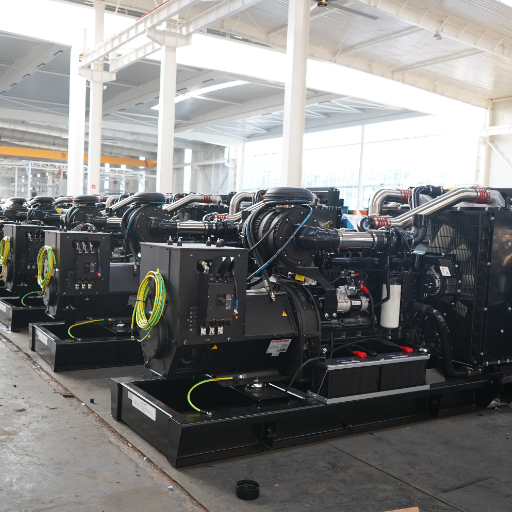
A Cummins diesel generator is a set of power generation which incorporates a Cummins compression-ignition engine, usually in tandem with an alternator from Stamford, Leroy-Somer, or Marathon that is equipped with computerized control systems, rendering a dependable source of power for standby, primary, or continuous utilizations ranging from 20 kVA to, well, over 3000 kVA.
Cummins diesel generators power roughly 40 percent of the world’s above-100 kVA diesel industrials. That holds sway vis-a-vis all others owing to the intact global network of parts, more than 100 years being the place for engine development, and the fact that offered here were 4-cylinder compact monster engines to 60-liter V16 plants.
Here is what most buyers discover too late. The engine badge matters less than the complete system integration. A genuine Cummins engine paired with a mismatched alternator and outdated analog controls will underperform. A properly specified Cummins generator set with the right alternator, digital synchronizer, and application-matched cooling system will outlast and outperform alternatives that cost 30 percent more.
This guide gives you the complete technical and commercial framework for Cummins diesel generator selection, deployment, and operation. We cover every engine series from the B3.9 to the QSK60, real fuel consumption data, 2026 price ranges by kVA tier, how to spot counterfeit engines, and the honest comparison with Perkins, Weichai, and MTU that most distributors avoid. By the end, you will have a procurement specification that engineers respect and finance approves. For a complete checklist of supplier credibility assessment criteria—covering all metrics beyond delivery lead times—please refer to our Complete Buyer’s Guide to Diesel Generator Manufacturers.
Key Takeaways
- Cummins diesel generators range from 20 kVA (4B3.9 engine) to 3,000+ kVA (QSK60 engine), with six core engine series covering every industrial application.
- Fuel consumption varies from 6 L/hr at 50% load for a 50 kVA unit to 210 L/hr at full load for a 1,000 kVA KTA38.
- 2026 factory pricing ranges from 8,000fora30kVAB−seriessetto8,000fora30kVAB−seriessetto450,000+ for a 2,000 kVA QSK60 configuration.
- Counterfeit Cummins engines are common in emerging markets; serial number verification via QuickServe Online is essential before payment.
- Shandong Huali manufactures Cummins powered generator systems from 20 kVA to 3,000 kVA with 100% load testing before shipment.
What Is a Cummins Diesel Generator?
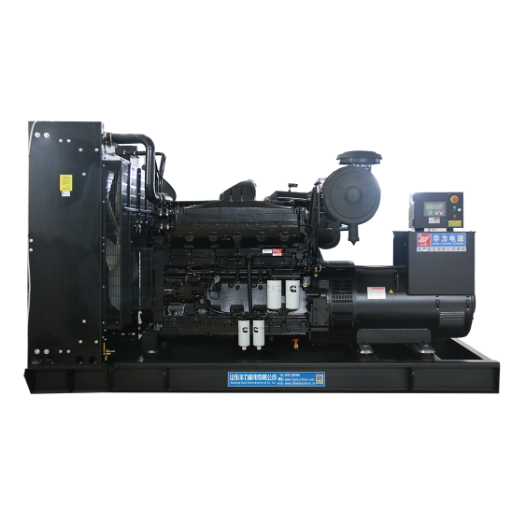
The Engine Behind the Name
Cummins began building diesel engines in 1919. Today, the company manufactures engines for on-highway trucks, marine vessels, construction equipment, and stationary power generation. The division that is particularly for power generation, Cummins Power Generation, provides engines specifically for generator set applications, where -G2, -G5, and -G8 denote generator-duty ratings.
The Cummins diesel generator is more than just an engine. Among other things, it is a completely integrated system. The engine supplies the mechanical power. The alternator converts the mechanical power into electrical power.
The control system undertakes the responsibility of start-up, monitoring, and protection. The choices of cooling and exhaust systems have to cater for heat and emissions management. The base frame and fuel tank need to keep everything together. If selected correctly, these components work toward the purpose of a single machine.
When Priya Sharma received three quotes for a 500 kVA hospital backup generator in Mumbai, the prices varied by 40 percent. The lowest bid claimed a “Cummins-class engine.” Priya checked the engine serial number on Cummins QuickServe Online. The number did not exist.
She requested the factory test report and CE documentation. The supplier went silent. The middle bid used a genuine Cummins 6CTA8.3-G2 with full traceability. Priya saved her hospital from a counterfeit engine that would have voided insurance coverage and risked patient lives during the monsoon season.
OEM vs Genuine Cummins
This distinction confuses many buyers. Cummins Inc. manufactures engines in the United States, United Kingdom, China, India, and Brazil. OEM manufacturers like Shandong Huali purchase genuine Cummins engines and build complete Cummins generator set configurations around them.
The engine is authentic. The alternator, control system, enclosure, and base tank are supplied by the OEM. This is standard practice across the global generator industry.
The alternative is a “Cummins-compatible” or “Cummins-class” engine. These are copies or rebuilt blocks that may look similar but lack genuine Cummins quality control, warranty support, and parts interchangeability. We cover authentication in detail later in this guide.
For a clearer understanding of OEM, GOEM and trading company distinctions in diesel generator procurement, see our OEM Diesel Generator Buyer’s Guide.
Cummins Engine Series for Generator Applications
Cummins organizes its generator engines into series based on displacement, cylinder count, and target power range. Understanding these series is the first step to correct specification.
B Series: 20-150 kVA
The B Series includes the 4B3.9 (4-cylinder, 3.9-liter) and 6B5.9 (6-cylinder, 5.9-liter) engines. These compact blocks dominate the small commercial and residential standby market. The 4BTA3.9-G2 delivers approximately 36 kW (45 kVA) prime power. The 6BTA5.9-G2 extends to 110 kW (138 kVA).
B Series engines use inline configurations with turbocharging and aftercooling. They are favored for telecom towers, small clinics, retail centers, and residential estates where space is limited and noise regulations are strict. Learn more about silent diesel generator enclosures and noise reduction in our dedicated guide. Service intervals are typically 250 hours for oil changes.
C Series: 150-250 kVA
The 6CTA8.3-G2 is the workhorse of the mid-range market. This 6-cylinder, 8.3-liter engine delivers 150-200 kW (188-250 kVA) in prime power configurations. It offers a step up in durability from the B Series without the cost and size of the L or NTA families.
C Series engines appear in commercial buildings, small manufacturing plants, and agricultural operations. The 6CTA is particularly popular in markets where parts availability for larger engines is limited.
L Series: 200-350 kVA
The 6LTAA8.9-G2 represents Cummins’ modern mid-heavy offering. This 8.9-liter inline-6 uses electronic fuel injection and meets EPA Tier 4 Final and EU Stage V emissions without exhaust aftertreatment in many configurations. Power output ranges from 220 kW to 280 kW (275-350 kVA).
L Series engines are increasingly specified for data centers and healthcare facilities where emissions compliance and electronic diagnostics are mandatory. The electronic control module (ECM) provides real-time fault codes and performance data.
NTA Series: 250-400 kVA
For many years, the NTA855-G series of Cummins products has been an outstanding motor. As its great 14l inline 6 mechanical fueled engine, the engine’s extreme simplicity and field services make it one to reckon with. Ratings are in the 313 to 400 kVA series, with outputs ranging between 250kW from 320 kW on a prime basis.
The NTA855 checks the box for those who must service in the garage in remote distances where only electronic diagnostic devices are the only things which can’t be found. For sure, this is attractive to many markets demanding simplicity to ultimately mean reliability.
KTA Series: 400-1,500 kVA
Includes the KTA19-G (19 liters, 6 cylinders), KTA38-G (38 liters, V12), and KTA50-G (50 liters, V16). They all are heavy industrial engines that continue to work continuously in mining, oil and gas, and large-scale prime power applications.
Kind of machine power standing at 1,000 Kw (1,250 kVA), the KTA38-G5 while stepping up to 1,200 Kw (1,500 kVA) in power is offered by the KTAA50-G3. These machines have high-pressure fuel injection, large cooling systems, and steel crankshafts rated 25,00 hours between overhaul.
In 2024, the Cerro Alto copper mine in Chile replaced six deteriorating generators with the Cummins KTA38-G5 units. Mine engineer Roberto Vargas had kept track of fuel consumption on three load profiles.
At 50% load, the KTA38s consumed 112 liters per hour. At 75% load, consumption rose to 158 liters. At 100% rated load, the engines burned 208 liters per hour while delivering a steady 1,000 kW. Over 12 months, the improved fuel efficiency versus the previous fleet saved $187,000 in diesel costs alone.
QSK Series: 800-3,500+ kVA
The QSK Series represents the top-line heavy duty offering for Cummins, made for strenuous and heavy-duty installations. The QSK19, QSK38, and QSK60 are advanced electronically managed, modular common rail fuel systems complying with the most demanding global emission limits.
The QSK60-G4 is a 60-liter V16 engine delivering up to 2,000 kW (2,500 kVA) in prime power and 2,200 kW (2,750 kVA) in standby. It is the engine of choice for large data centers, municipal utilities, and utility-scale distributed generation.
| Engine Series | Displacement | Cylinders | Prime Power Range | Typical Applications |
|---|---|---|---|---|
| 4B3.9 | 3.9 L | Inline-4 | 20-50 kVA | Telecom, residential, small commercial |
| 6B5.9 | 5.9 L | Inline-6 | 50-150 kVA | Commercial, light industrial |
| 6CTA8.3 | 8.3 L | Inline-6 | 150-250 kVA | Manufacturing, agriculture |
| 6LTAA8.9 | 8.9 L | Inline-6 | 200-350 kVA | Data centers, healthcare |
| NTA855 | 14 L | Inline-6 | 250-400 kVA | Remote sites, export markets |
| KTA19 | 19 L | Inline-6 | 400-600 kVA | Industrial, marine |
| KTA38 | 38 L | V12 | 800-1,250 kVA | Mining, oil and gas |
| KTA50 | 50 L | V16 | 1,000-1,500 kVA | Heavy industry, prime power |
| QSK60 | 60 L | V16 | 1,500-3,000+ kVA | Data centers, utilities |
Cummins Diesel Generator Specifications and Performance
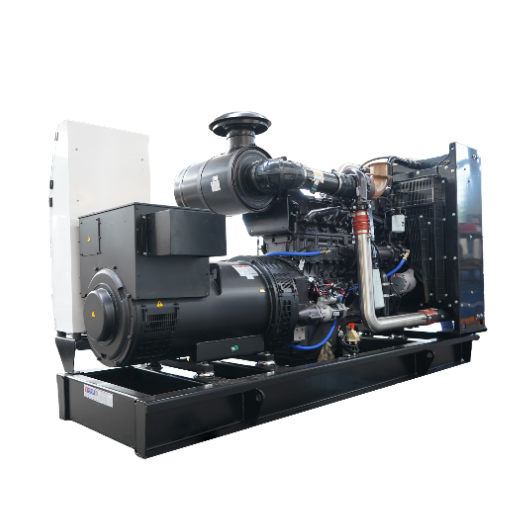
Understanding Cummins generator specifications is essential before comparing quotes. The following sections detail power ratings, fuel consumption, cooling requirements, and alternator matching for every major engine series.
Power Ratings and Duty Cycles
Three significant ratings were identified under ISO 8528-1: the Prime Power rating, Steady Power rating, and Continuous Power rating. Cummins standby generators may be at the EP rating, allowing emergency use only with no overload and peak availability of 200 hours annually. Again, Continuous Power (COP), since the Cummins LP genset average of 99% of uses under typical loads are at COP levels, it is not permissible to have PRP and ESP requirements in an LP unit.
Almost all Cummins diesel generator sets meant for industrial use are rated PRP. The buyer must select the correct rating since an engine rated Standby, when operated continuously, in effect sees excessive wear on its parts and premature, in-service piston damage, and very low overhaul intervals.
Fuel Consumption by Engine Series
Fuel efficiency is a primary purchasing criterion, especially for prime power applications where the generator runs 6,000+ hours annually. The table below shows typical fuel consumption across the Cummins range at 50%, 75%, and 100% of rated prime power.
| Engine Model | Rated Prime Power | 50% Load (L/hr) | 75% Load (L/hr) | 100% Load (L/hr) |
|---|---|---|---|---|
| 4BTA3.9-G2 | 36 kW | 6.2 | 8.8 | 11.5 |
| 6BTA5.9-G2 | 110 kW | 14.5 | 20.8 | 27.5 |
| 6CTA8.3-G2 | 200 kW | 24.0 | 35.5 | 48.0 |
| 6LTAA8.9-G2 | 250 kW | 29.5 | 43.0 | 58.0 |
| NTA855-G | 300 kW | 38.0 | 55.0 | 74.0 |
| KTA19-G | 500 kW | 58.0 | 85.0 | 115.0 |
| KTA38-G5 | 1,000 kW | 112.0 | 158.0 | 208.0 |
| KTA50-G3 | 1,200 kW | 135.0 | 192.0 | 252.0 |
| QSK60-G4 | 2,000 kW | 215.0 | 310.0 | 410.0 |
These figures assume diesel fuel to have a density of 0.835 kg/L and ambient conditions at 25 degrees Celsius at sea level. High altitude and high temperature reduce the output of the engines and increase the specific fuel consumption rate relatively.
Cooling, Exhaust, and Control Systems
Cummins generator engines use radiator cooling with belt-driven or electric fans. The radiator is sized for the engine’s heat rejection at rated load plus a margin for tropical conditions. Exhaust systems include industrial-grade mufflers that reduce noise to 85-95 dB(A) at 1 meter for open sets.
Control systems are not manufactured by Cummins. The industry standard pairings are ComAp InteliGen NT, Deep Sea DSE7310/8610, or Woodward EasyGen. These controllers manage auto-start, remote monitoring, paralleling, and protection functions. A modern digital controller is essential for any application requiring automatic transfer switch integration or remote telemetry.
Alternator Matching
The alternator converts mechanical power into electrical output. Stamford (a Cummins company), Leroy-Somer, and Marathon are the three most common pairings. Alternator selection must match the engine’s kW output while providing the correct voltage (400V/480V standard, 6.3kV/11kV with step-up), frequency (50Hz or 60Hz), and excitation type (self-excited or PMG for AVR stability).
For sensitive loads like data centers and medical imaging equipment, specify a PMG-excited alternator with Class H insulation and IP23 protection. These specifications ensure voltage stability within +/- 1% under load steps.
Cummins Diesel Generator Price Guide by kVA (2026)
Most distributors avoid publishing Cummins diesel generator price data because engine brand, alternator specification, and enclosure type create wide variation. But procurement teams need budgetary numbers for capital planning. Here is what factory-direct OEM pricing looks like in 2026.
| Power Rating | Engine Model | Approximate Price Range (USD) | Typical Lead Time |
|---|---|---|---|
| 20-50 kVA | 4B3.9 series | $8,000-18,000 | 2-4 weeks |
| 50-150 kVA | 6B5.9 series | $15,000-35,000 | 2-4 weeks |
| 150-250 kVA | 6CTA8.3 series | $28,000-55,000 | 3-5 weeks |
| 200-350 kVA | 6LTAA8.9 series | $38,000-72,000 | 3-6 weeks |
| 250-400 kVA | NTA855 series | $45,000-85,000 | 4-6 weeks |
| 400-600 kVA | KTA19 series | $75,000-130,000 | 4-8 weeks |
| 800-1,250 kVA | KTA38 series | $160,000-280,000 | 6-10 weeks |
| 1,000-1,500 kVA | KTA50 series | $220,000-380,000 | 8-12 weeks |
| 1,500-3,000 kVA | QSK60 series | $350,000-650,000 | 10-16 weeks |
These figures include the Cummins engine, Stamford alternator, Deep Sea or ComAp digital controller, standard radiator cooling, base fuel tank, and steel skid mounting. Options that add cost include silent canopy enclosures (add 20-35%), containerized enclosures (add 30-50%), high-voltage step-up transformers (add 15-25%), extended fuel tanks (add 8-15%), and advanced paralleling controls (add 10-18%).
What Drives Cost
Three factors account for most price variation within the same engine series. First, the alternator brand and specification. A Stamford UC224 is standard; a Stamford HCI444 with PMG excitation adds 8-12%.
Second, the control system. A Deep Sea DSE4520 is entry-level; a ComAp InteliGen NT with Ethernet and paralleling adds 15-20%. Third, the enclosure. An open set is cheapest.
A weatherproof canopy adds moderate cost. A full containerized enclosure with CSC certification adds the most but eliminates civil works.
Need a precise quote for your Cummins-powered project? Contact our engineering team for a customized generator specification and pricing based on your power requirements and delivery timeline.
Total Cost of Ownership
Not to mention that anything one pays for initially is just the beginning. A 500 KVA prime-power set of Cummins generators puts away about 690,000 liters of diesel over ten years, running 6,000 hours an year.
Costing some rough 552,000 at the rate of . 80 dollars per liter in fuel and, with maintenance expenses for 10 years added, about 45,000 , we have initial purchase cost of 75,000, close to 11% of the decade figures of total cost of ownership.
A comparison of the above math with the above information logically suggests that how much of a discount on an initial purchase price could make any difference versus its more important concerns of fuel efficiency and catalog availability. A 5% improvement in fuel consumption will save you $27,600 over the 10-year period, an amount greater than the difference in initial purchase price when considering the standard or premium alternator.
Cummins vs Perkins vs Weichai vs MTU: Engine Comparison
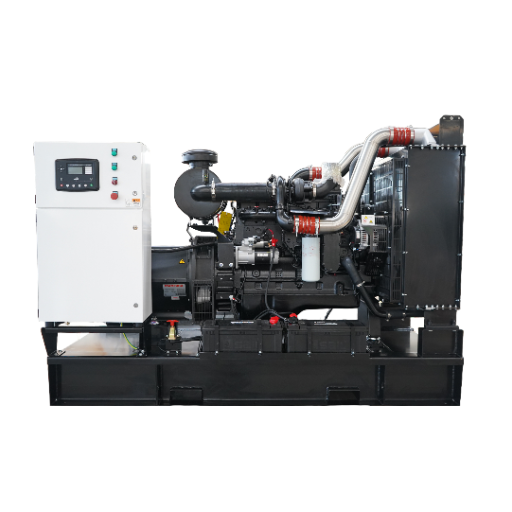
Industrial buyers rarely choose engines in a vacuum. The Cummins vs Perkins generator debate is the most common comparison we see, followed by evaluations of Weichai and MTU alternatives. Here is an honest assessment of how Cummins stacks against its most common competitors.
| Factor | Cummins | Perkins | Weichai | MTU |
|---|---|---|---|---|
| Origin | USA/UK/China/India | UK/China | China | Germany |
| Global Parts Network | Excellent (50,000+ locations) | Very Good | Good (Asia-strong) | Excellent (premium service) |
| Price Position | Mid-premium | Mid-premium | Budget-friendly | Premium |
| Fuel Efficiency | Very Good | Good | Good | Excellent |
| Emissions Compliance | EPA Tier 4 / EU Stage V | EPA Tier 4 / EU Stage V | China Stage IV/V | EPA Tier 4 / EU Stage V |
| Service Intervals | 250-500 hours | 250-500 hours | 250 hours | 500-1,000 hours |
| Overhaul Life | 15,000-25,000 hrs | 15,000-22,000 hrs | 12,000-18,000 hrs | 25,000-35,000 hrs |
| Best For | Balanced performance and support | UK/Commonwealth markets | Cost-sensitive projects | Premium, long-life applications |
When to Choose Cummins
Pick a Cummins diesel generator when global parts availability is a critical consideration, the project of IID standardization across multiple countries, or when the total cost of ownership balance considers the admittedly bad part about having to balance purchase price with fuel efficiency versus how long the generator is expected to last. However, in terms of dependability, no buyer should have qualms about picking Cummins over a forced selection of so-called finer brands.
The most important factor in the world of operations is the global service network. For instance, a mine camp in West Africa will benefit through the presence of Cummins parts channels in Lagos, Accra, or Johannesburg. Perkins parts are limited in countries not under common wealth market forces. MTU parts are the best but are expensive and not very accessible, being concentrated in Europe and North America.
When Perkins May Be Better
Perkins engines are competitive with Cummins in terms of pricing and performance. Perkins engines appeal to matured engineering realities in the likes of England, especially in Nigeria, Kenya, and India, and the Middle East. Some buyers may also choose Perkins because it operates in a quieter way and has more compact packaging in the 100 – 300 kVA range.
When Weichai or Yuchai Makes Sense
In this context, by comparison, Chinese engine manufacturers such as Weichai and Yuchai offer genuine value for applications where they clock fewer than 2,000 hours annually and parts can be sourced locally. Most are priced 30-40% less as compared with equivalent Cummins power plants. That makes Weichai and Yuchai engines suitable for standby duty in environments under control. However, for prime power in harsh conditions, the longer service life and the global support made available by Cummins justify the premium.
When MTU Is Worth the Premium
MTU (a Rolls-Royce Power Systems company) dominates the premium segment above 1,000 kVA where fuel efficiency and overhaul intervals matter most. An MTU 4000 series engine achieves 500-1,000 hour service intervals and 30,000+ hour overhaul life. The purchase price is 40-60% higher than Cummins. For applications running 8,000+ hours annually, MTU often delivers lower total cost of ownership despite the higher upfront investment.
For a deeper comparison of generator enclosure types and configurations, see our complete containerized generator guide. It covers how Cummins KTA and QSK engines integrate into modular power plants exceeding 10 MW.
Cummins Diesel Generator Applications by Industry
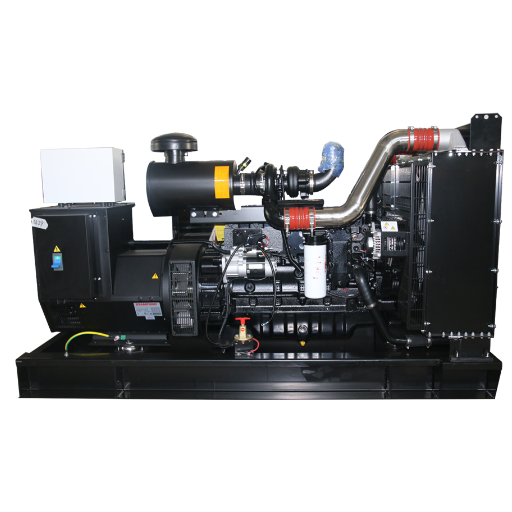
Every cummins industrial generator application demands a different engine series, duty rating, and enclosure configuration. Below are the most common sector requirements.
Data Centers and Critical Infrastructure
Data centers specify Cummins diesel generators for standby power because the engines start reliably, accept load within 10 seconds, and synchronize with UPS systems through modern digital controllers. The L Series and QSK Series are most common in this sector due to EPA Tier 4 Final compliance and electronic diagnostic capability.
CloudBridge Data Centers in Singapore expanded from 4 MW to 10 MW in 2025. Instead of ordering two massive 5 MW units, facilities director Lin Wei chose six Cummins QSK60-G4 generators in an N+1 configuration.
Each 2,000 kVA unit runs at 80% capacity during normal operations. If any single generator fails, the remaining five absorb the load without interruption. Lin’s team services one unit every Tuesday during low-demand hours. The data center has maintained 99.999% uptime for 18 consecutive months.
For data center-specific design requirements, see our generator for data center guide.
Healthcare and Hospitals
A cummins standby generator for hospital backup typically uses B Series or C Series engines in the 100 kVA to 500 kVA range. The engines must start automatically within 10 seconds of grid failure and accept full rated load within 20 seconds. NFPA 110 Level 1 compliance is standard for hospital emergency power.
Mining and Construction
Mining operations specify a cummins industrial generator from the KTA or QSK series for prime power in remote locations. The heavy-duty blocks tolerate dust, altitude, and temperature extremes. The 1,000-hour service intervals reduce downtime in locations where technicians visit monthly rather than weekly. For a broader look at heavy-duty power solutions, explore our industrial diesel generator applications and specifications.
For detailed maintenance protocols in harsh environments, refer to our diesel generator maintenance guide.
Telecom and Remote Sites
Telecom towers need autonomous standby power with minimal site visits. Cummins 4BTA and 6BTA engines in silent canopy enclosures are the industry standard for cell tower backup. The compact footprint fits within tower compound boundaries. The 72-hour base fuel tanks provide coverage during extended grid outages.
How to Verify a Genuine Cummins Engine
Counterfeit and rebuilt Cummins engines are a significant problem in emerging markets. A rebuilt engine with a counterfeit data plate may look identical to a genuine new engine. Here is how buyers protect themselves.
Engine Serial Number Verification
Every real Cummins engine is fitted with a unique serial number stamped on the block of the engine and imprinted on the data plate. This serial number can be authenticated via Cummins QuickServe Online. Enter the number, and it will display the engine model, build date, original specifications, and factory configuration.
If QuickServe does not have the serial number, the engine is not authentic. If the specs in QuickServe do not match the engine right in front of you, then the data plate is switched or counterfeit.
Documentation Requirements
A genuine Cummins engine sold through authorized channels includes a factory test report, a certificate of origin, a warranty registration card, and compliance documentation (CE, EPA, or ISO depending on the destination market). Request these documents before payment. Verify that the serial number on the documents matches the engine.
Physical Inspection Points
A closer examination of the engine often reveals counterfeit in the casting quality of the major components. Take block and head casting inspections, as genuine Cummins castings have highly smooth and clean finishes with sharp parting lines.
Check out the fuel injection pump. Genuine Cummins engines use a Bosch, Delphi or Cummins fuel system with manufacturer markings that are easy to see. Check the turbocharger. Genuine Holset or Garrett turbos have serial/ part numbers with the manufacturer’s logo.
Warranty Validation
Cummins offers a standard 12-month or 1,000-hour warranty on industrial engines, extendable to 24 months through authorized dealers. A supplier who cannot provide a valid Cummins warranty certificate is not selling a genuine new engine. Rebuilt engines may carry a third-party warranty, but this is not a Cummins factory warranty.
Cummins Diesel Generator Maintenance and Service Considerations
Recommended Service Intervals
| Service Item | B/C Series | NTA Series | KTA Series | QSK Series |
|---|---|---|---|---|
| Engine oil change | 250 hrs | 250 hrs | 500 hrs | 500 hrs |
| Oil filter change | 250 hrs | 250 hrs | 500 hrs | 500 hrs |
| Fuel filter change | 500 hrs | 500 hrs | 500 hrs | 1,000 hrs |
| Air filter replacement | 1,000 hrs | 1,000 hrs | 1,500 hrs | 2,000 hrs |
| Coolant change | 2,000 hrs | 2,000 hrs | 4,000 hrs | 6,000 hrs |
| Valve adjustment | 2,000 hrs | 2,000 hrs | 4,000 hrs | 6,000 hrs |
| Major overhaul | 12,000 hrs | 15,000 hrs | 20,000 hrs | 25,000 hrs |
These intervals assume operation with approved fluids and filters in clean environments. Dusty or high-temperature conditions require more frequent service.
Parts Availability and Global Distribution
Cummins operates more than 50,000 service centers and in about 190 countries around the globe. Spare parts need to be shipped by the company’s parts distribution network, and delivery is two days within major markets. Consequently, for remote locations, buyers must provide a spare part package, including filters for oil, fuel, and air, belts and crucial gaskets.
Common Issues and Troubleshooting
The most frequent Cummins generator issues involve fuel. Water in diesel fuel eats up injection pumps while algae blooms in tropical climates clog fuel filters. These problems can be prevented by practicing good fuel storage practices, by filters with water separators, and by biocide treatment.
Second in frequency are cooling system problems. Heating rejection is reduced from scaling in radiators. The coolant temperature largely serves to affect engine efficiency due to thermostat failure. Occasional radiator cleaning and coolant-testing to prevent these earning malfunctions.
Load Bank Testing
Cummins diesel generators in standby service must be load bank tested quarterly to prevent wet stacking. Wet stacking occurs when an engine runs at light load for extended periods, causing unburned fuel to accumulate in the exhaust system. A load bank applies artificial resistive load, allowing the engine to reach full operating temperature and clear carbon deposits.
How to Choose the Right Cummins Diesel Generator
Step 1: Calculate Your Power Requirement
Start with your total simultaneous load in kW or kVA. Add the highest motor starting current in your system. Apply a 1.25 safety factor for future expansion. The result is your minimum generator capacity.
For example, a manufacturing plant with 400 kW of running load and a 150 kW motor starting surge needs a generator rated for (400 + 150) x 1.25 = 687.5 kW minimum. A 700 kW (875 kVA) Cummins KTA19-G4 would be appropriate. For a step-by-step method that works for any application, read our guide on how to calculate generator size for your facility.
Step 2: Select the Duty Cycle
Standby generators run only during outages. Prime generators run continuously. Continuous generators run at fixed load indefinitely.
The duty cycle determines engine specifications, cooling capacity, and warranty terms. Never use a standby-rated engine for prime power.
Step 3: Match Engine Series to Application
Use the engine series table from earlier in this guide. B and C Series for small commercial. L and NTA for mid-range industrial.
KTA for heavy prime power. QSK for mission-critical and large-scale applications.
Step 4: Specify the Complete System
The engine is only one component. Specify the alternator brand, excitation type, voltage, and frequency. Specify the control system with required features (auto-start, remote monitoring, paralleling).
Specify cooling for the ambient temperature at your site. Specify the enclosure type (open, canopy, containerized) based on environment and noise regulations.
Step 5: Evaluate the Supplier
- Does the supplier hold ISO 9001 certification?
- Can the supplier provide Factory Acceptance Testing documentation?
- Is the Cummins engine serial number verifiable on QuickServe?
- Does the supplier offer installation supervision and commissioning?
- What is the warranty period and local service coverage?
At Shandong Huali Electromechanical, we manufacture Cummins-powered diesel generator sets from 20 kVA to 3,000 kVA. Every unit pairs a genuine Cummins engine with a Stamford alternator and ComAp or Deep Sea controls. Every unit undergoes 100% load testing in our national standard testing center before shipment. Our engineering team supports customization for tropical, arctic, high-dust, and marine environments.
For detailed insights into global compliance and key certifications for diesel generators, see our Diesel Generator Certifications Complete Buyer’s Guide.
Conclusion
The Cummins diesel generator is still the choice for end customers in industry to whom global parts availability, historical reliability, and predictable total cost of ownership appeal to them more than the little difference in capital cost. From 4B3.9 for a telecom tower to QSK60 driving a 10 MW data center, the Cummins mixed bag has an engine dedicated to each application for generator use.
Deciding to go for one over Perkins or MTU is not only about choosing one over the other; it also helps to specify correctly the entire selection of systems, starting with the correct alternator. Control system.
Cooling and enclosure that fit perfectly into the intended environment. Duty rating selected that is both suitable to the environment and the desired operational profile above. Perhaps above all, as good as ensuring that the actual engine is genuine.
Counterfeit engines destroy budgets and endanger operations. Genuine Cummins engines, properly integrated into a complete cummins generator set by qualified OEM manufacturers, deliver the reliability that industrial buyers depend on.
Follow the framework in this guide. Calculate your load correctly. Select the right engine series.
Specify the complete system. Verify authenticity before payment. And remember that the lowest bid often conceals the highest long-term cost.
For targeted tips on screening and selecting reliable diesel generator suppliers in 2026, see our How to Choose a Diesel Generator Supplier Guide.
Cummins Diesel Generator FAQ
What is a Cummins diesel generator?
A Cummins diesel generator is a power generation system that employs an authentic Cummins compression-ignition engine as the prime move, coupled with an alternator and digital control system that produces electricity. Generator sets range in capacity from 20 kVA to over 3,000 kVA, prepared for standby, prime, or continuous-duty applications.
How much does a Cummins diesel generator cost?
For a Cummins diesel generatorand in2026, prices begin at 8,000 for a 30 kVA B−series unit and top out at 30kVAB−seriesunitandextendto650,000 for a 3000 kVA QSK60. Mid-size range units started at 200 kVA C has priced at $28,000-55,000. These gadgets may obtain an additional 15-50% in enclosure alternatives, alternator upgrades, and control features.
What is the fuel consumption of a Cummins generator?
This may vary depending on engine series and load. Dimensional weight for a 50 kVA 4BTA is about 6 L/hr at 50% load and about 11.5 L/hr at full load. A 1,000 kVA KTA38 consumes 112 L/hr at 50% load and 208 L/hr at full load. Specific fuel consumption is rated higher at high loads.
How long does a Cummins generator last?
The Cummins B and C Series engines can provide hours up to 12,000 to 15,000 before major overhaul if well cared for, much as KTA and QSK hour-limits are put in closer to 20,000-25,000 hours and 25,000 hours aptly. With operating hours of 2000 each year, KTA engines can run 10-12 years before rebuilding.
What is the difference between Cummins and Perkins generators?
Cummins and Perkins can be compared in performance and cost in the range of 50-500 kVA. Although Cummins outshines Perkins in terms of a wider global service network (50,000+ vs 10,000+ locations), Perkins holds an advantage in the UK and Commonwealth markets. Poor availability of Cummins parts could be the deciding factor for most global projects.
How do I verify a genuine Cummins engine?
Check the engine serial number on Cummins QuickServe Online. Propose for the factory’s test report, certificate of origin, and warranty card. Check the quality of casting, fuel injection pump markings, and turbocharger markings. Should the supplier fail to produce verifiable paperwork during the course of the inspection, then the engine does not appear to be an authentic one.
What maintenance does a Cummins generator need?
Regular maintenance typically includes oil and filter changes every 250-500 hours, with fuel filters changed at 500 to 1,000 hours, air filters at 1,000 to 2,000 hours, and coolant anywhere from 2,000 to 6000 hours depending upon the series. For prime power, quarterly load bank tests need to be carried out in order to avoid wet stacking.
Where can I find official Cummins generator specifications?
For Cummins generators, specifications are available through Cummins QuickServe Online using the serial number of the engine. The specifica sheet incorporates the rated power, fuel consumption curves, emission certification, dimension drawings, and alternator compatibility information. Shandong Huali can also provide project-specific specification packages that include installation drawings and corresponding single-line diagrams.
In a cummins vs perkins generator comparison, which is better?
The choice between Cummins and Perkins generators will largely depend on your location and the application which you want to put the generator to. While Cummins can give you the advantage of parts supply worldwide (with 50,000+ locations to service them at), Perkins is better off in the British and Commonwealth markets in the 100-300kVA engine range. With such a presence, Cummins wins on service network density and across-the-board standardization for most global projects.
