
A 35kVA generator supplies up to 35 kilovolt-amperes (kVA) of apparent power. At a typical 0.8 power factor, that equals about 28 kW of real power, enough for a small business, a construction site, a rural property, or a backup power system for a residence or clinic. The most common 35 kVA units are diesel generator sets, but natural-gas and propane options are also available for sites with clean fuel infrastructure.
This guide explains what a 35 kVA generator can power, how its specifications affect performance, what buyers should look for, and how much one typically costs. If you need a 35 kVA generator for your project, Shandong Huali builds diesel and gas generator sets from 8 kVA to 4,000 kVA with engines from Cummins, Perkins, Volvo, Weichai, and other suppliers. If you want a quote, contact Huali’s engineering team.
What Is a 35kVA Generator?
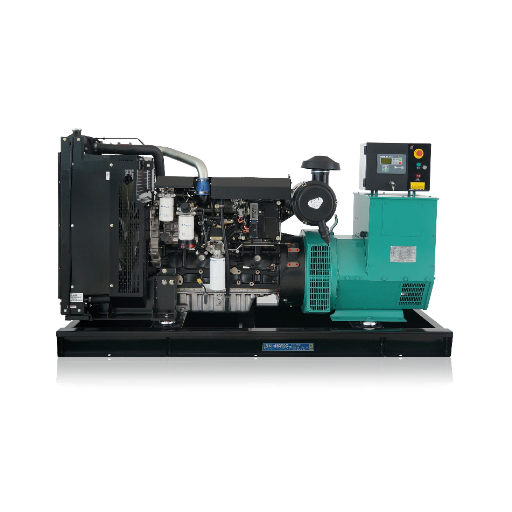
A 35kVA generator is a medium-capacity generator set that converts mechanical energy into electrical energy. The “35 kVA” rating refers to apparent power, which includes both real power (kW) and reactive power (kVAR) needed by inductive loads such as motors and transformers.
At a 0.8 power factor:
- Apparent power: 35 kVA
- Real power: ~28 kW
- Typical voltage options: 400/230V three-phase or 220/240V single-phase
- Typical frequency: 50 Hz or 60 Hz depending on region
Most 35 kVA generators sold today are diesel engine sets with brushless alternators, electronic governors, and automatic voltage regulators (AVR). They may be open sets for plant rooms or sound-attenuated canopy sets for outdoor or noise-sensitive locations. For phase and voltage basics, see our guide on single-phase vs two-phase generators.
35kVA Generator Specifications
The table below lists typical specifications for a 35 kVA diesel generator set. Exact values vary by engine brand, alternator, and enclosure.
| Specification | Typical Value | Notes |
|---|---|---|
| Rated power | 35 kVA / 28 kW | At 0.8 power factor |
| Engine | 4-cylinder diesel | Cummins, Perkins, Weichai, or similar |
| Fuel | Diesel | Natural-gas and propane variants available |
| Voltage | 400/230V three-phase or 220/240V single-phase | Must match site panel |
| Frequency | 50 Hz or 60 Hz | Region dependent |
| Fuel consumption | 7–10 L/hour at 75% load | Diesel; varies by engine |
| Tank capacity | 60–100 liters | Larger tanks available |
| Runtime | 8–12 hours at 75% load | Depends on tank size |
| Noise level | 65–75 dB(A) open; 55–65 dB(A) canopy | Measured at 7 meters |
| Dry weight | 700–1,000 kg | Open set; canopy adds weight |
| Dimensions (L×W×H) | 1,800 × 850 × 1,200 mm typical | Varies by enclosure |
| Starting | Electric start | Battery included |
| Cooling | Water-cooled radiator | With fan and coolant |
| Alternator | Brushless, self-excited | AVR for voltage stability |
These figures are starting points. Always request a factory datasheet for the exact unit you are buying, because engine brand, alternator class, and enclosure type change the numbers.
What Can a 35kVA Generator Power?
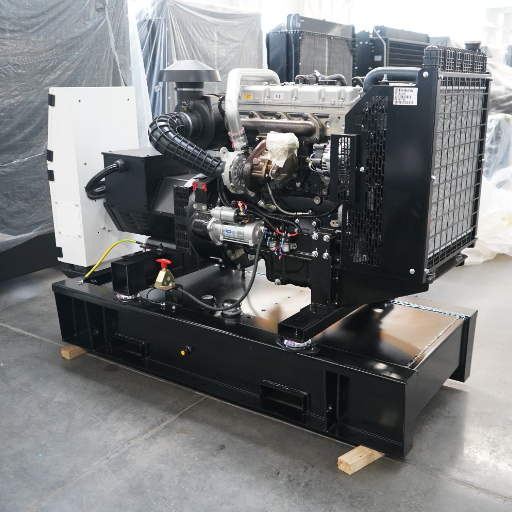
A 35 kVA generator can run a mix of equipment up to about 28 kW of real power, with some surge capacity for motor starting. The list below shows common loads that fit within this capacity.
Small Business or Office
- Air conditioning unit: 5–10 kW
- Servers and networking equipment: 2–5 kW
- Lighting and sockets: 3–5 kW
- Water pump or small compressor: 2–3 kW
- Refrigeration: 1–3 kW
Construction Site
- Concrete mixer: 5–7 kW
- Circular saw and power tools: 1–3 kW
- Welding set: 3–5 kW
- Site lighting: 2–4 kW
- Office trailer AC and sockets: 3–5 kW
Rural Property or Farm
- Irrigation pump: 5–10 kW
- Grain dryer or milling equipment: 5–10 kW
- Dairy equipment: 2–5 kW
- Household loads: 3–5 kW
Healthcare Clinic
- Lighting and sockets: 2–3 kW
- Medical imaging equipment: 5–10 kW
- Ventilators and patient monitors: 1–3 kW
- Refrigeration for vaccines and medicines: 1–2 kW
When sizing, add the running watts of all loads, then add the starting surge of the largest motor. A 20–30% capacity margin above the calculated load is recommended for safe operation and future expansion.
Common Applications for a 35kVA Generator
| Application | Why 35 kVA Fits |
|---|---|
| Small businesses | Covers office equipment, HVAC, and lighting during outages |
| Construction sites | Powers tools, mixers, welding, and site lighting |
| Farms and rural properties | Runs pumps, dryers, and household loads where grid access is weak |
| Events and outdoor gatherings | Supports sound systems, lighting, catering, and temporary infrastructure |
| Healthcare clinics | Keeps critical medical and refrigeration equipment online |
| Telecommunications | Provides backup for base stations and relay equipment |
| Residential estates | Backup for large homes with HVAC, pumps, and multiple circuits |
The 35 kVA size is popular because it balances capacity and portability. It is large enough for serious commercial use but small enough to transport on a trailer or fit into a compact plant room.
Fuel Types: Diesel, Gas, and Propane
Most 35 kVA generators run on diesel, but gas and propane options are worth considering depending on fuel availability and runtime needs.
Diesel
- Pros: High efficiency, long engine life, widely available fuel, good for heavy loads.
- Cons: Higher emissions than gas, requires fuel storage and handling, noise can be higher without a canopy.
- Best for: Construction, farms, remote sites, and anywhere diesel is easy to source.
Natural Gas
- Pros: Cleaner emissions, no on-site fuel storage if a gas line is present, quiet operation.
- Cons: Lower power density than diesel, depends on gas infrastructure, may not be available in remote areas.
- Best for: Urban businesses, hospitals, and sites with existing natural-gas service.
Propane (LPG)
- Pros: Cleaner than diesel, stored in tanks, long shelf life, good for standby use.
- Cons: Lower energy density than diesel, tank refueling logistics, cold-weather performance considerations.
- Best for: Standby backup at homes, clinics, and small businesses.
For a deeper comparison of fuel types and emissions control, see our generator exhaust system guide.
How Much Does a 35kVA Generator Cost?
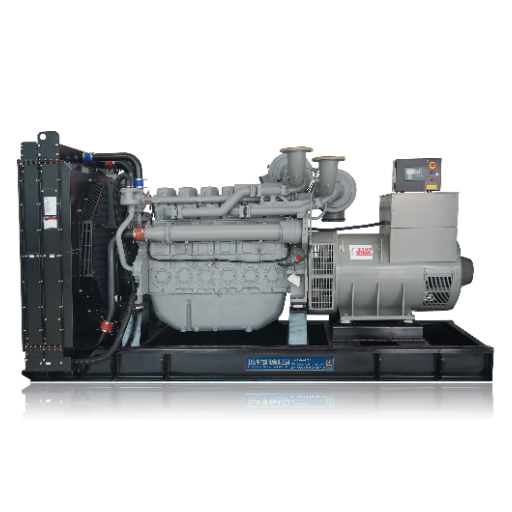
Prices vary by engine brand, alternator quality, enclosure, control system, and whether an automatic transfer switch (ATS) is included. The table below gives typical ranges for new 35 kVA diesel generator sets.
| Configuration | Price Range (USD) | Notes |
|---|---|---|
| Open set, Chinese engine | 3,000–3,000–5,000 | Basic industrial use |
| Canopy set, Chinese engine | 4,500–4,500–7,000 | Reduced noise, weather protection |
| Open set, Cummins/Perkins engine | 6,000–6,000–9,000 | Higher reliability and global parts support |
| Canopy set, Cummins/Perkins engine | 8,000–8,000–12,000 | Quiet, durable, suitable for commercial sites |
| With ATS panel | Add 500–500–1,500 | Automatic grid-to-generator transfer |
| With installation | Add 1,000–1,000–5,000 | Depends on electrical and fuel work |
Used and refurbished units cost less but carry higher maintenance risk. For budget planning, also factor in fuel, oil, filters, coolant, battery replacement, and periodic service. Our generator maintenance cost per year guide breaks down typical annual expenses.
Key Buying Considerations
Before choosing a 35 kVA generator, confirm the following.
1. Power Requirements
Calculate total running load and starting surge. A 35 kVA unit is not the right size for every application. If your load is close to 28 kW running, consider a 50 kVA unit for margin.
2. Voltage and Phase
Match the generator output to your distribution panel. Three-phase 400/230V is standard for commercial and industrial loads. Single-phase 220/240V is common for residential and small-business backup.
3. Runtime and Fuel Tank
Decide how many hours the generator must run between refueling. A larger tank or external fuel tank extends runtime but adds cost and footprint.
4. Noise Limits
Check local noise regulations. Open sets are louder and cheaper. Sound-attenuated canopies reduce noise but add cost and size. For noise-sensitive projects, see our silent diesel generator guide.
5. Enclosure and Environment
Outdoor installations need weatherproof canopies. Hot, dusty, or humid environments need upgraded air filtration, cooling, and enclosure ratings.
6. Control System
Basic units have manual or key start with analog gauges. Advanced units include digital controllers with remote monitoring, automatic start, and fault logging.
7. Warranty and Service
Check the engine warranty, alternator warranty, and local service availability. A strong warranty is only useful if qualified technicians and parts are nearby.
8. Automatic Transfer Switch
For standby applications, an ATS detects grid failure and starts the generator automatically. It adds cost but removes manual intervention during an outage.
35kVA Generator Maintenance Checklist
Regular maintenance keeps a 35 kVA generator reliable and extends its service life. Use the checklist below.
| Task | Interval |
|---|---|
| Check oil level | Weekly |
| Inspect coolant level | Weekly |
| Test battery voltage | Monthly |
| Run generator under load | Monthly |
| Change engine oil and filter | Every 250 hours or annually |
| Replace fuel filter | Every 250–500 hours |
| Replace air filter | As needed or every 500 hours |
| Inspect belts and hoses | Every 500 hours |
| Check alternator and control connections | Annually |
| Load-bank test | Annually |
For detailed maintenance procedures and cost estimates, see our generator maintenance cost per year guide. For ventilation layout advice, read our generator room ventilation requirements guide.
Huali 35kVA Generator Options
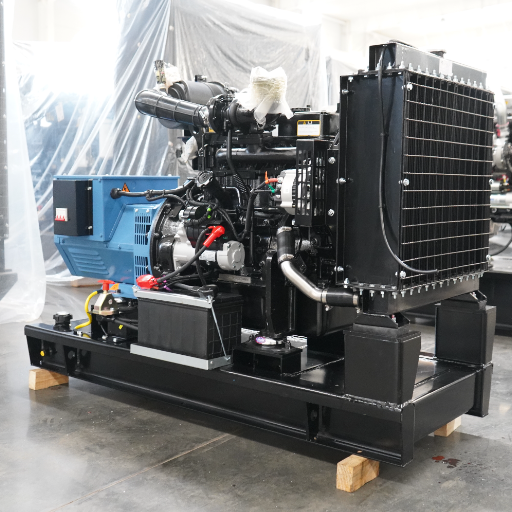
Shandong Huali manufactures 35 kVA diesel generator sets with flexible configurations for industrial, commercial, and residential projects. Standard options include:
- Engine choices: Cummins, Perkins, Volvo, Weichai, Deutz, and other tier-one brands.
- Voltage and phase: 400/230V three-phase, 220/240V single-phase, 480V, or custom voltages.
- Frequency: 50 Hz or 60 Hz.
- Enclosures: Open set, weatherproof canopy, or sound-attenuated canopy.
- Controllers: Deep Sea, ComAp, Smartgen, or customer-specified digital controllers.
- Options: ATS panel, remote monitoring, external fuel tank, silencer upgrade, and container mounting.
Huali’s 35 kVA generator sets are used on construction sites, farms, clinics, telecom projects, and small factories worldwide. Every unit is load tested before shipment, and engineering support is available for sizing, installation layout, and after-sales service.
If you are comparing generator suppliers, see our top 10 generator manufacturers in China overview for context on the manufacturing landscape.
Common Mistakes When Buying a 35kVA Generator
Mistake 1: Confusing kVA and kW
A 35 kVA generator does not deliver 35 kW. At 0.8 power factor, it delivers about 28 kW. Always size in kW, not kVA.
Mistake 2: Ignoring Starting Surge
Motors can draw 3–7 times their running current when starting. If your largest motor starts while other loads are running, the generator must handle the combined surge.
Mistake 3: Choosing the Wrong Fuel
Diesel is the default for good reason, but natural gas or propane may be better if clean fuel is available and emissions are a concern.
Mistake 4: Skipping the Canopy
An open set is cheaper, but noise and weather exposure can create problems. If the generator will sit outdoors or near occupied spaces, budget for a canopy.
Mistake 5: Undersizing the Fuel Tank
A small tank means frequent refueling during long outages. Size the tank for your required runtime, and consider an external tank for critical applications.
Frequently Asked Questions
What is a 35kVA generator used for?
A 35kVA generator is used for small-business backup, construction power, farm operations, events, healthcare clinics, and rural residential backup. It supplies about 28 kW of usable power at 0.8 power factor.
How many kW is a 35 kVA generator?
A 35 kVA generator produces approximately 28 kW of real power when operating at a 0.8 power factor. The exact value depends on the power factor of the connected load.
What can a 35kVA generator run?
A 35 kVA generator can run air conditioning, lighting, pumps, small compressors, office equipment, power tools, medical equipment, and refrigeration, provided the total running load stays below about 28 kW and motor starting surges are accounted for.
How much fuel does a 35 kVA generator use?
A 35 kVA diesel generator typically consumes 7–10 liters of diesel per hour at 75% load. Natural-gas and propane consumption vary by engine and load.
How much does a 35kVA generator cost?
A new 35 kVA diesel generator typically costs 3,000–3,000–12,000 depending on engine brand, alternator quality, enclosure, and options. Installation and an ATS can add 1,000–1,000–5,000.
Is a 35 kVA generator enough for a house?
A 35 kVA generator is enough for a large home or small estate with HVAC, pumps, lighting, and appliances. For average homes, a smaller 10–20 kVA unit is usually sufficient.
How often should a 35 kVA generator be serviced?
Oil and filter changes are typically needed every 250 running hours or annually. Weekly checks of oil, coolant, and battery voltage are recommended for standby units.
Conclusion
A 35kVA generator is a practical choice for small businesses, construction sites, farms, events, clinics, and rural homes that need reliable medium-scale power. It delivers roughly 28 kW of usable power, fits a wide range of fuel and enclosure configurations, and balances portability with enough capacity for serious applications.
When buying, focus on real power requirements, voltage and phase, fuel type, runtime, noise limits, and service support rather than the kVA rating alone. A well-sized 35 kVA generator with proper maintenance can provide 10–15 years or more of dependable service.
Shandong Huali builds 35 kVA generator sets with engines from Cummins, Perkins, Volvo, Weichai, and other leading brands, configured for your voltage, frequency, and environmental requirements. Contact Huali’s engineering team for a 35 kVA generator specification, price quote, and delivery schedule.
