
Diesel generators need CE marking for Europe, EPA Tier 4 Final for the United States, ISO 9001 for credibility, and regional certifications like BIS for India, SONCAP for Nigeria, or UKCA for the UK depending on destination. The exact diesel generator certifications required depend on your target market, application type, and engine power rating.
A $50,000 generator detained at customs because of a missing certificate. That is not a hypothetical — it happens every week.
On September 1, 2026, a new rule in India will make BIS certification mandatory for every diesel generator imported under HS codes 8502 and 8503. Non-compliant shipments will be seized.
Procurement officers who treat certifications as an afterthought learn expensive lessons.
This guide breaks down every major diesel generator certification — CE, ISO, EPA, UL, and regional mandates. You will learn what each certification covers, which markets require it, how much it costs, and how to verify a supplier’s claims before you wire the deposit.
For help selecting a certified manufacturer from the start, see our diesel generator manufacturer buyer’s guide.
Key Takeaways
- CE marking is mandatory for EU market access; covers Machinery Directive, EMC, LVD, and Stage V emissions
- India’s BIS certification becomes mandatory Sept 1, 2026 — non-compliance risks market seizure and prosecution
- EPA Tier 4 Final is required for all new non-emergency engines >=25 hp in the US
- ISO 9001 is not legally required but is the most requested supplier credential globally
- UL 2200 and NFPA 110 are required for hospital and data center installations in the US
- SONCAP is mandatory for Nigeria; UKCA replaces CE for Great Britain post-Brexit
What Are Diesel Generator Certifications and Why Do They Matter?
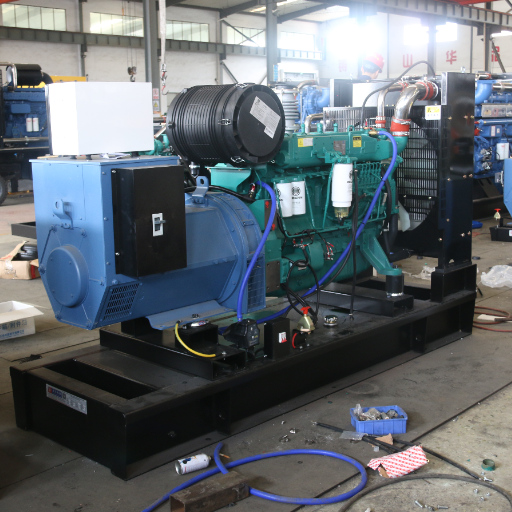
Diesel generator certifications are third-party validations that confirm a generator set meets specific safety, quality, emissions, and performance standards. They are not decorative stamps. They are legal requirements, buyer protection, and market access credentials rolled into one document.
Without the right certifications, your shipment can be detained at customs, your installation permit can be denied, and your warranty can be voided. In regulated markets, operating a non-compliant generator exposes you to fines, liability, and forced shutdowns. The cost of skipping certifications always exceeds the cost of obtaining them.
Ahmed, a distributor in Lagos, learned this the hard way. In March 2026, he submitted a bid for a $200,000 hospital tender. His supplier in China sent a SONCAP certificate that looked legitimate — until the Standards Organization of Nigeria cross-checked it against their database. The certificate was forged. Ahmed lost the tender, the deposit, and three months of lead time. A 30-minute verification call would have saved him everything.
Certifications matter because they separate professional suppliers from traders who cut corners. For buyers, they are the only objective proof that a generator will perform as promised.
Not sure how to evaluate a supplier beyond their certificate binder? Our diesel generator supplier selection guide shows you how to audit a manufacturer’s capabilities before you sign.
CE Marking Diesel Generator Compliance: The Gateway to Europe
CE marking is the single most important certification for accessing the European Economic Area. It is not a quality mark. It is not an origin mark. It is a legal declaration that the product complies with EU health, safety, and environmental protection legislation.
What CE Marking Actually Covers
A diesel generator CE mark demonstrates compliance with multiple EU directives simultaneously. The manufacturer must address each directive in their Technical File:
- Machinery Directive (2006/42/EC): Mechanical safety, risk assessment, guarding, and thermal protection. EN ISO 8528 and EN 12601 provide the technical backbone.
- EMC Directive (2014/30/EU): Electromagnetic compatibility. The generator must not interfere with other equipment and must resist external disturbances. EN 61000-6-2 covers immunity; EN 61000-6-4 covers emissions.
- Low Voltage Directive (2014/35/EU): Electrical safety including insulation, wiring, shock protection, and overheating prevention. Governed by EN 60204-1.
- ErP Directive (2009/125/EC): Environmental performance. For diesel generators, this means compliance with EU Stage V emission standards — NOx below 0.4 g/kWh and particulate matter below 0.015 g/kWh.
- Noise Directive (2000/14/EC): Maximum sound power levels for outdoor equipment.
- RoHS (2011/65/EU): Restriction of hazardous substances in electrical components.
CE Is Self-Certification — Buyer Beware
Here is the contrarian truth most buyers miss: CE is a self-certification system. A manufacturer can legally CE-mark their own products. The CE mark itself proves nothing without the supporting Technical File and Declaration of Conformity. The real value lies in third-party test reports from accredited bodies like TUV, SGS, or Bureau Veritas.
When evaluating a supplier, request the Declaration of Conformity, not just a photo of the CE label on the engine. A credible supplier will provide a multi-page document listing the applicable directives, harmonized standards, and the name of the responsible person. The EU Nando database lists all officially recognized Notified Bodies for CE marking verification.
Post-Brexit: UKCA and UKNI
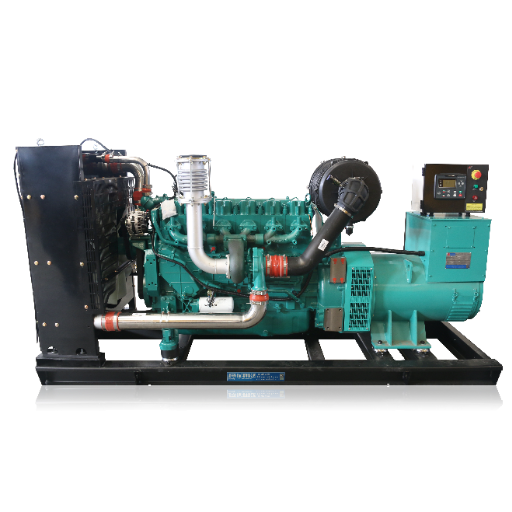
Since Brexit, Great Britain requires UKCA marking instead of CE. Northern Ireland requires UKNI marking. If your market includes the UK, verify that your supplier holds current UKCA certification. Many manufacturers updated their Technical Files in 2021 but never renewed them.
ISO Standards: The Quality Foundation
While ISO certifications are not legally mandatory for market access, they are the most requested supplier credential in global procurement. Generator ISO 9001 certification, in particular, is the baseline that separates organized manufacturers from informal workshops.
ISO 9001: Quality Management Systems
ISO 9001:2015 certifies that a manufacturer operates a documented quality management system. It covers design control, supplier management, production monitoring, and corrective action processes. Held by over 1.1 million organizations worldwide, it is the first certification buyers request when evaluating a new supplier.
The key point: ISO 9001 certifies the management system, not the product. A factory with ISO 9001 can still produce defective generators if they deviate from their own procedures. But a factory without ISO 9001 has no systematic way to prevent defects.
ISO 14001: Environmental Management
ISO 14001 certifies that the manufacturer manages environmental impacts during production. For diesel generator buyers, this matters when bidding for government or ESG-focused tenders.
ISO 45001: Occupational Health and Safety
ISO 45001 demonstrates that the factory protects worker safety. It signals organizational maturity and reduces supply chain risk.
ISO 8528 Generator Standard: The Technical Benchmark That Matters
ISO 8528 is the technical standard specifically for generator sets. It defines the six standard power ratings: ESP (Emergency Standby Power), PRP (Prime Rated Power), LTP (Limited Time Power), COP (Continuous Operating Power), DCP (Data Center Power), and MAX (Maximum Power). It also specifies performance classes, voltage regulation limits, and transient response requirements.
When a supplier claims their generator is “ISO 8528 compliant,” ask which part and which performance class. ISO 8528-5 defines transient response — the generator’s ability to handle sudden load steps. A hospital application requires G2 or G3 class; a construction site may accept G1. See our guide on how to choose diesel generator size to match the right kVA rating to your application.
ISO 3046: Engine Characteristics
ISO 3046 governs the diesel engine itself — power ratings, fuel consumption, torque curves, and vibration limits. It ensures the engine performs to specification under standardized test conditions.
How to Verify ISO Certification
Never trust a certificate image. Always check the IAF (International Accreditation Forum) database or the issuing body’s online registry. Enter the certificate number and verify that the company name, scope, and expiry date match what the supplier provided. Fake ISO certificates are common in low-cost markets.
For more on factory testing standards, read our diesel generator factory audit guide.
EPA Tier 4 Generator Standards: US Emissions Compliance
The US Environmental Protection Agency regulates non-road diesel engines under 40 CFR Part 89 and Part 1039. The Tier system represents progressively stricter limits on nitrogen oxides (NOx) and particulate matter (PM).
The Tier Progression
| Tier | Era | Status |
|---|---|---|
| Tier 1/2 | 1996–2005 | Legacy only |
| Tier 2/3 | 2001–2014 | Allowed for emergency standby |
| Tier 4 Interim | 2011–2014 | No longer compliant for new sales |
| Tier 4 Final | 2015–present | Required for all new non-emergency engines >=25 hp |
Tier 4 Final achieves a 90%+ reduction in NOx and PM compared to Tier 1. It requires aftertreatment systems including a Diesel Particulate Filter (DPF), Selective Catalytic Reduction (SCR), and Diesel Oxidation Catalyst (DOC). Most Tier 4 Final engines also require Diesel Exhaust Fluid (DEF).
The Emergency Standby Exemption
This is critical for buyers: emergency standby generators are exempt from Tier 4 Final. They can legally be Tier 2 or Tier 3 in many US jurisdictions. The exemption applies only to units that run exclusively during grid outages and mandatory testing. If you use the generator for prime power, construction, or peak shaving, Tier 4 Final is mandatory.
Lisa, a contractor in California, made this mistake. She bought Tier 2 generators for a construction site to save 15,000perunit.CARBinspectorsshutdownherprojectwithintwoweeks.Thefinewas15,000perunit.CARBinspectorsshutdownherprojectwithintwoweeks.Thefinewas25,000 per day. Her “savings” cost her $80,000 in penalties and three weeks of lost productivity. The EPA maintains a public database of all certified engines for cross-reference.
California CARB Requirements
California operates under CARB (California Air Resources Board), which enforces standards stricter than federal EPA. If your project is in California, verify CARB compliance separately. Many EPA-certified engines are not CARB-certified.
Regional and Generator Export Certifications
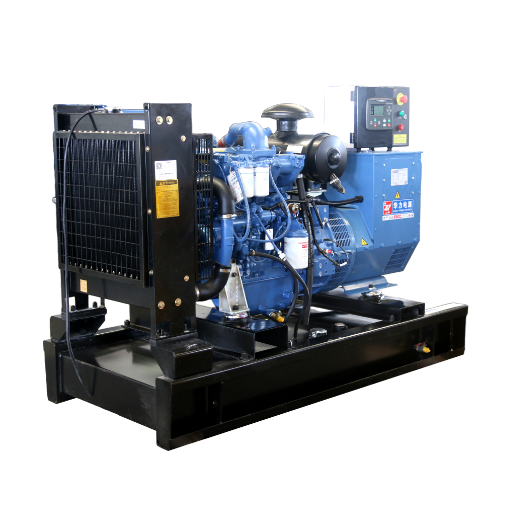
Beyond the major global standards, individual countries impose their own mandatory certification schemes. Understanding generator export certifications by destination is essential for any international procurement.
India: BIS/ISI Mandatory September 1, 2026
This is the most urgent deadline in the generator industry. India’s Machinery and Electrical Equipment Safety Order makes BIS certification mandatory for diesel generators under HS codes 8502 and 8503. The deadline is September 1, 2026.
Requirements include ISI marking, factory inspection, and compliance with IS/ISO 8528 (Parts 2, 3, 4, 5, 8, 12). Non-compliant products face market suspension, seizure, and prosecution under the BIS Act. Importers who stockpiled non-certified inventory before the deadline are now stuck with unsellable goods.
Raj, an importer in Mumbai, bought 40 non-BIS generators in August 2026 thinking he could clear customs before the deadline. He missed the window by three days. His entire shipment was held at Nhava Sheva port. After six weeks of negotiations, he had to re-export at a 40% loss. The certification he skipped cost him $120,000.
Nigeria: SONCAP
SONCAP (Standards Organization of Nigeria Conformity Assessment Programme) has been mandatory for diesel generators since 2005. Every shipment requires a Product Certificate (PC) and a SONCAP Certificate (SC). Pre-shipment inspection is required. Without SONCAP, customs will not release the goods.
Middle East: G-Mark
Gulf Cooperation Council (GCC) states require G-Mark certification for low-voltage electrical equipment. The G-Mark is issued by a Notified Body and registered in the GCCTrack system.
Russia and EAEU: EAC Certification
The Eurasian Economic Union requires EAC (Eurasian Conformity) marking for generators. The certification process involves sample testing and factory audit. Lead time is typically 2–4 months.
Australia and New Zealand: RCM
The Regulatory Compliance Mark (RCM) is required for electrical equipment in Australia and New Zealand. It combines electrical safety and EMC compliance into a single mark.
South Africa: NRCS and LOA
The National Regulator for Compulsory Specifications (NRCS) issues Letters of Authority (LOA) for generators. The process requires testing to SANS standards and submission of a test report from an accredited laboratory.
Safety and Installation Certifications
UL 2200: Stationary Engine Generator Assemblies
UL 2200 is the US safety standard for stationary generator assemblies. Many Authorities Having Jurisdiction (AHJs) require it for installation permits. It covers electrical safety, fire resistance, and mechanical integrity. If you are installing a generator in the US, ask for UL 2200 listing.
NFPA 110: Emergency and Standby Power Systems
NFPA 110 is the standard for emergency and standby power systems in the US. It is required for life safety applications including hospitals, data centers, and emergency services. The standard defines Type and Level classifications that determine fuel capacity, startup time, and redundancy requirements.
CSA: Canadian Standards Association
CSA certification is required for electrical and mechanical safety in Canada. It is equivalent to UL in the US market.
IBC and OSHPD: Seismic Certification
In earthquake-prone regions like California, generators must carry seismic certification under IBC (International Building Code) or OSHPD (Office of Statewide Health Planning and Development). This ensures the unit remains operational after a seismic event.
How to Verify Supplier Certification Claims
Fake certificates are a real problem. Here is how to verify what a supplier shows you:
Check the IAF database for ISO certificates. Enter the certificate number at iafdb.iaf.nu. Verify the company name, scope, and expiry date match.
Request the Declaration of Conformity for CE marking. A photo of the CE label means nothing. The DoC is a multi-page document listing applicable directives, harmonized standards, and the responsible signatory.
Verify EPA Certificate of Conformity numbers. The EPA maintains a public database of certified engines. Cross-reference the engine family name and model year.
Review Technical File contents. A credible CE Technical File includes risk assessments, test reports, drawings, and user manuals. Ask to see it.
Red flags to watch for:
- Certificates with the wrong company name
- Expired dates
- Missing scope of certification
- Blurry or low-resolution images
- Certificates from unknown bodies not accredited by IAF or EU Notified Body directories
Want to understand how GOEM authorization affects engine certification authenticity? Read our guide on what GOEM authorization means and why it matters for parts support.
Diesel Generator Certifications: Cost and Timeline Guide
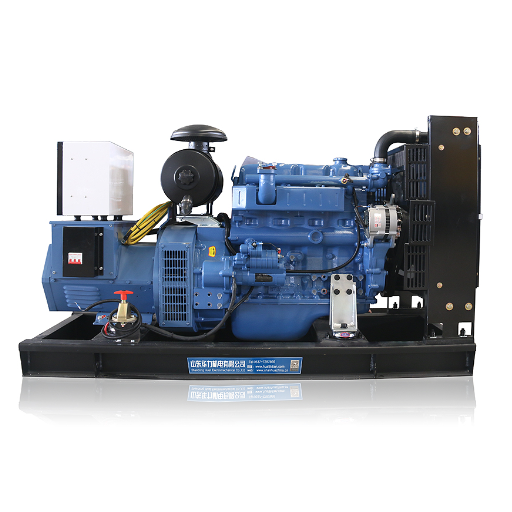
Certification is not free, but it is far cheaper than the consequences of non-compliance.
| Certification | Typical Cost | Timeline |
|---|---|---|
| CE marking (self-assessment) | 3,000−−3,000−−8,000 | 4–8 weeks |
| CE marking (Notified Body) | 8,000−−8,000−−15,000 | 8–16 weeks |
| ISO 9001 initial audit | 5,000−−5,000−−20,000 | 3–6 months |
| ISO 9001 surveillance | 2,000−−2,000−−5,000/year | Ongoing |
| EPA Tier 4 Final | Engine-level, included in OEM price | N/A |
| BIS/ISI (India) | 2,000−−2,000−−8,000 + travel | 8–12 weeks |
| SONCAP (Nigeria) | 500−−500−−2,000 per shipment | 2–4 weeks |
| UL 2200 listing | 15,000−−15,000−−40,000 | 12–20 weeks |
| G-Mark (GCC) | 3,000−−3,000−−8,000 | 6–10 weeks |
| EAC (Russia/EAEU) | 5,000−−5,000−−15,000 | 2–4 months |
For manufacturers, these costs are part of doing business. For buyers, the presence of current certifications is a strong indicator of supplier professionalism. A factory that maintains ISO 9001, CE, and EPA certifications invests significantly in compliance. That investment correlates with quality discipline.
Certification costs are part of your total cost of ownership. For a full breakdown of lifetime generator costs, see our diesel generator TCO guide.
Conclusion
Diesel generator certifications are not bureaucratic paperwork. They are buyer protection, market access credentials, and quality signals rolled into one.
CE marking opens Europe. EPA Tier 4 Final unlocks the US. ISO 9001 builds trust. Regional certifications like BIS, SONCAP, and UKCA determine whether your shipment clears customs or sits in a detention warehouse.
The supplier who treats diesel generator certifications as an afterthought will treat your order the same way. The supplier who maintains current, verifiable certifications across multiple standards has invested in systems, processes, and accountability.
Before your next purchase, verify every certificate. Check the IAF database. Request the Declaration of Conformity. Cross-reference EPA engine family names.
The 30 minutes you spend on verification can save you months of delays. And tens of thousands in fines.
At Shandong Huali Electromechanical Co., Ltd., we maintain ISO 9001, CE, and CCC certifications. Every generator leaves our facility with full documentation. We understand that our customers’ success depends on compliance from day one.
Need certified generators for your next project? Contact our engineering team for a diesel generator certifications compliance consultation. We will verify the exact certifications your destination market requires and deliver generators that clear customs without surprises.
Ready to evaluate specific engine brands from verified factories? Read our complete Cummins diesel generator guide for specifications, pricing tiers, and authorized partnership details.
Frequently Asked Questions
What certifications does a diesel generator need?
The certifications required depend on the destination market. For Europe, CE marking is mandatory. For the US, EPA Tier 4 Final is required for non-emergency engines. ISO 9001 is the most requested quality credential globally. Regional markets require additional certifications: BIS for India, SONCAP for Nigeria, UKCA for the UK, G-Mark for GCC states, and EAC for Russia.
What is the difference between CE and ISO 9001?
CE marking is a legal requirement for selling products in the European Economic Area. It demonstrates compliance with EU safety, health, and environmental directives. ISO 9001 is a voluntary quality management certification. It certifies that the manufacturer’s processes are systematic and controlled, but it does not certify the product itself.
Is CE marking required for Africa?
CE marking is not legally required in most African countries. However, it acts as a powerful quality signal. Many corporate buyers, government tenders, and NGOs in Africa specifically request CE-marked equipment. Nigeria requires SONCAP. South Africa requires NRCS/LOA.
What is EPA Tier 4 Final for generators?
EPA Tier 4 Final is the strictest US emissions standard for non-road diesel engines >=25 hp. It requires a 90%+ reduction in NOx and particulate matter compared to Tier 1. Tier 4 Final engines use aftertreatment systems including DPF, SCR, and DOC. Most also require Diesel Exhaust Fluid (DEF) and Ultra-Low Sulfur Diesel (ULSD).
What is the India BIS deadline for generators?
September 1, 2026. India’s Machinery and Electrical Equipment Safety Order makes BIS certification mandatory for diesel generators under HS codes 8502 and 8503. Non-compliant products face market suspension, seizure, and prosecution.
Does ISO 9001 guarantee product quality?
No. ISO 9001 certifies the quality management system, not the product. A factory with ISO 9001 can still produce defective units if they deviate from their documented procedures. However, a factory without ISO 9001 has no systematic framework to prevent defects.
How do I check if a supplier’s ISO certificate is real?
Use the IAF (International Accreditation Forum) database at iafdb.iaf.nu. Enter the certificate number and verify that the company name, certification scope, and expiry date match the supplier’s document. Also check that the issuing body is accredited.
Are Tier 2 generators still legal in the US?
Tier 2 generators are legal only for emergency standby applications in many jurisdictions. They are not compliant for prime power, construction, or continuous operation. California CARB requirements are stricter than federal EPA. Always verify local regulations before purchasing.
What happens if I import a non-compliant generator?
Consequences vary by market. In the EU, customs can detain shipments without CE marking. In India, non-BIS products face seizure after September 1, 2026. In the US, EPA violations carry fines up to $25,000 per day. Warranty claims may be denied. Insurance coverage may be voided.
What is ISO 8528 and why does it matter?
ISO 8528 is the international standard for generator set performance. It defines power ratings (ESP, PRP, LTP, COP, DCP, MAX), voltage regulation limits, and transient response requirements. When a supplier claims ISO 8528 compliance, ask which performance class (G1, G2, G3, or G4) they meet. Hospitals and data centers typically require G2 or G3.
