
A standard commercial diesel generator warranty runs 24 months or 2,000 operating hours, whichever comes first, and covers manufacturer defects in materials and workmanship for the engine, alternator, and control system. Extended plans push that to 60 months or 10,000 hours for an additional 8 to 15 percent of purchase price per year. Coverage details vary sharply between Cummins, Caterpillar, Perkins, and China-based manufacturers, and the fine print decides whether a 50,000generatorbecomesa50,000generatorbecomesa50,000 mistake.
A rejected warranty claim is seldom a defect. It’s for the documentation, contractual service outlets, and almost never read warranty before signing the purchase order. Warranties begin to be earnestly read by the consumers proximate to the part’s failure and as such are beyond bargaining. This article is described for the procurement managers, plant engineers, and end-users that would like to read the warranty concerning major parts before releasing the deposit. We will demystify what is addressed and the exclusions, have a comparison of Cummins, CAT, and Perkins warranties, do the math for extended coverage, what to cover in the RFP, and what every overseas purchaser asks that the manufacturer doesn’t dare answer in writing.
Key Takeaways
- Standard commercial diesel generator warranties run 24 months or 2,000 hours, with premium tiers extending to 60 months or 10,000 hours.
- Engine and alternator are usually warranted separately, often by different parties (OEM engine maker vs. genset assembler).
- Extended warranty costs 8 to 15 percent of purchase price annually and typically pays off only if the genset runs more than 1,200 hours per year.
- Documentation, not the failure, decides most claims. Service logs, approved parts, authorized technicians, and 30-day failure notification are the four most common void triggers.
- When buying from a China factory, the OEM engine warranty (Cummins, Perkins, Volvo) follows the engine globally if registered correctly. Confirm in writing before the PO.
What Does a Generator Warranty Cover? Diesel Generator Warranty Coverage Explained
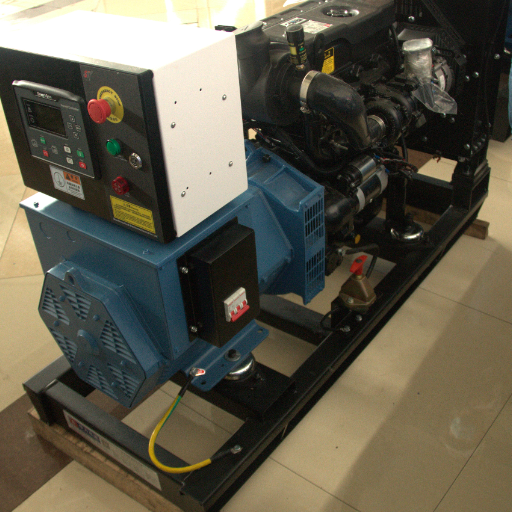
The guarantee of the diesel generator is an official promise from the manufacturer to fix or replace faulty components for a set period. This is the two-pillar promise: parts and service. Cheap warranties cover parts only. Complete warranties cover parts, service, and travel time. A few elite coins give rise to consequential services such as providing a standby unit during the period of repair.
Underneath three layers lie the warranty schemes. The genset assembler covers the package on the whole. The engine OEM (Cummins, Perkins, Volvo, Doosan, Yuchai) later vociferously covers the engines. The alternator OEM (Stamford, Leroy Somer, Marathon) hence has full warranty over the generating end part. If three of these are on copacetic terms, the buyer is protected; if not, the coverage will have roving gaps that show up every nasty time.
Standard Parts Covered Under Most Generator Warranties
Most factory warranties cover the engine block, cylinder head, crankshaft, turbocharger, fuel injection system, alternator stator and rotor, automatic voltage regulator, control panel PCB, circuit breaker, and base frame. Wiring harnesses, fuel pumps, oil pumps, and water pumps are usually included. Sensors, gauges, and the digital controller are typically covered for 12 months even when the rest of the genset carries a longer term.
What “Labor and Travel” Actually Means
There are three types of labor coverage. Factory labor brings the unit back to the workshop of the OEM. On-site labor means that a technician is sent to work at your facility. And travel and accommodation means that the flight, hotel, and per diem required by the technician are covered. Most warranties cover factory labor alone and bill on-site service as another expense. But, for a 500 kVA unit, which is installed in a remote location, on-site labor costs can reach four times the price of a failed part.
Standard Diesel Generator Warranty Periods (2026 Benchmarks): What Is the Typical Generator Warranty Period?
There is no single industry standard generator warranty period. There is a range, and your contract terms decide where you sit on it. Most commercial buyers fall into one of four tiers.
| Tier | Coverage Period | Hours Limit | Typical Use Case |
|---|---|---|---|
| Entry | 12 months | 1,000 hours | Low-cost suppliers, residential standby |
| Standard | 24 months | 2,000 hours | Commercial standby, most B2B procurement |
| Premium | 36 to 48 months | 3,000 to 5,000 hours | Data center, hospital, critical infrastructure |
| Extended | 60 to 120 months | 10,000 to 15,000 hours | Prime power, continuous duty, mining |
Coverage almost always runs on a “whichever comes first” basis. A 24-month / 2,000-hour warranty ends at month 24 or hour 2,000, whichever you hit sooner. A standby genset that runs 50 hours per year will reach 24 months long before 2,000 hours. A prime power unit running 6,000 hours per year will hit 2,000 hours before month 4.
Why Warranty Counts Run on Hours OR Years (Whichever Comes First)
Hours track wear. Years track aging. A generator that sits unused for two years can still have rubber seals harden, batteries degrade, and fluids absorb moisture. A generator that runs continuously for three months has experienced two years of mechanical wear in a fraction of the calendar time. Manufacturers use both meters because either one, alone, would be unfair to one type of buyer.
Warranty Start Date: Ship Date vs Commissioning Date
The single most expensive clause in any diesel generator warranty is the start-date trigger. Some manufacturers begin the clock at the ship date from the factory. Others begin at commissioning, the day the unit is first started under load on site. The difference can be three to six months for international buyers facing port delays and installation scheduling. See our diesel generator lead time guide for the shipping and commissioning timeline that determines your warranty trigger. Always negotiate commissioning-date start. Cummins commercial terms, for example, run “2 years from start-up or 18 months from ship date, whichever comes first” so the ship-date safety net caps the manufacturer’s exposure even if the buyer never installs the unit.
Cummins vs Caterpillar vs Perkins Generator Warranty Comparison
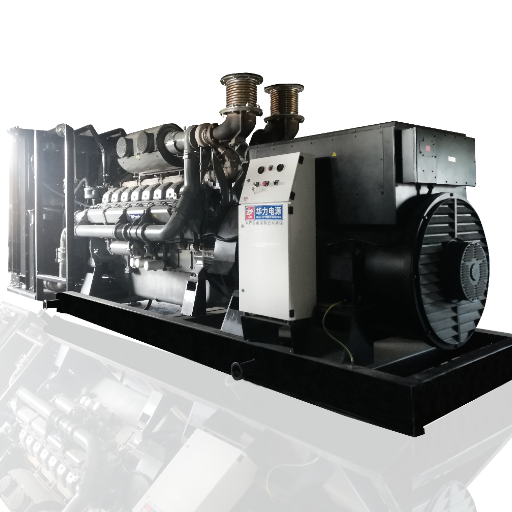
Three engine and genset brands dominate B2B procurement. Their warranties look similar on a brochure and differ sharply in the small print.
| Brand | Standard Term | Hours | Extended Option | Notable Clause |
|---|---|---|---|---|
| Cummins | 24 months | 2,000 hours | Up to 5 years | 18 months from ship date as cap |
| Caterpillar | 12 to 24 months | 1,000 hours | +1 year free with registration | Dealer-network only service |
| Perkins | 24 months | 3,000 hours | Up to 10 years / 15,000 hours (Platinum) | Cylinder block & head: 36 months |
Cummins Generator Warranty Terms
The Cummins diesel generator commercial warranty runs 24 months from start-up or 18 months from ship date, whichever comes first, for the base coverage. Power Generation Limited Warranty includes parts, labor, and travel for authorized service. Major component coverage on the engine block extends longer when registered. Cummins published terms are publicly available at the Cummins Warranty Information page.
Caterpillar Generator Warranty Terms
Caterpillar splits coverage by product line. Portable and small commercial gensets carry a 2-year / 1,000-hour limited warranty, with an additional year free if registered within 30 days of delivery. Larger industrial units fall under dealer-managed Customer Value Agreements that vary by region. Coverage is honored through the global Cat dealer network, which is a strength when you are inside it and a constraint when the nearest dealer is several hundred kilometers from your site. Details are at the Caterpillar Generator Warranty page.
Perkins Engine Warranty Terms
Perkins warrants the engine specifically, not the full genset. Standard coverage is 24 months or 3,000 hours, with the cylinder block and head extended to 36 months. Storage allowance of up to 4 years is unusual and valuable for buyers who hold inventory. The Perkins Platinum Protection program adds extended coverage up to 10 years or 15,000 hours, which is the most aggressive published term among the three. The Perkins Warranty page lists current terms.
Which Brand Offers the Best Warranty?
Perkins has the longest published terms on paper, particularly with Platinum Protection. Cummins has the strongest global service network coverage in North America and Europe. Caterpillar has the highest dealer density worldwide but locks service inside that network. The “best” warranty is the one whose service network matches your operating geography. A Perkins Platinum contract is only as good as the nearest authorized technician.
Common Diesel Generator Warranty Exclusions (What’s NOT Covered)
Every warranty is defined as much by what it excludes as by what it covers. The following items are excluded by virtually every commercial generator warranty in 2026:
- Wear items: Filters (air, oil, fuel, water separator), belts, hoses, batteries, glow plugs, brushes, gaskets, V-rings
- Consumables: Engine oil, coolant, diesel fuel, DEF fluid, lubricants
- Improper fuel or fluids: Off-spec diesel, contaminated fuel, wrong viscosity oil, incorrect coolant chemistry
- Unauthorized modifications: Aftermarket controllers, alternator swaps, non-OEM replacement parts
- Improper installation: Wrong ATS sizing, inadequate ventilation, no isolation pad, undersized cabling
- Misuse: Running above rated load, operating outside ambient temperature spec, parallel operation without approval
- External electrical faults: Lightning strikes, grid surges, utility transients, load short circuits
- Force majeure: Floods, fires, earthquakes, war, civil unrest
- Consequential damages: Lost profits, production downtime, contract penalties, food spoilage
- Late failure notification: Failures reported after the standard 30-day window from discovery
The Top 5 Reasons Generator Warranties Get Voided
The top void triggers are not exotic. They are predictable, document-based mistakes. First, missing service records. If you cannot prove the 500-hour service was performed, the warranty assumes it was not. Second, non-OEM parts. A 40aftermarketoilfiltercanvoida40aftermarketoilfiltercanvoida4,000 turbocharger claim. Third, unauthorized service. The technician who fixed the small problem last month may be why the big claim gets denied this month. Fourth, late notification. Most warranties give you 30 days from discovery. Fifth, operating outside spec. Running a standby genset for 3,000 hours per year voids the standby warranty even if the hour meter is within limits.
Extended Warranty Diesel Generator Options: Are They Worth It?
An extended warranty diesel generator plan costs 8 to 15 percent of the original purchase price per year of additional coverage. A 50,000gensetwitha3−yearextendedwarrantymightcost50,000gensetwitha3−yearextendedwarrantymightcost12,000 to $22,500 in additional fees. The honest answer is that extended warranties are worth it for some buyers and not for others. The math is straightforward.
Cost-Benefit Analysis: Extended Warranty Math
Consider a 500 kVA Cummins-powered genset at 55,000.A5−yearextendedwarrantyquotecomesinat55,000.A5−yearextendedwarrantyquotecomesinat7,500. The relevant questions are: what is the expected probability of a major component failure between months 25 and 60, and what would that failure cost out of pocket?
A turbocharger replacement runs roughly 3,500inpartsplus3,500inpartsplus1,500 in labor. A fuel injection system rebuild runs 6,000to6,000to9,000. A complete engine teardown for a thrown rod can exceed 25,000.Industryfailure−ratedatasuggeststhataproperlymaintainedenginehasa12to18percentprobabilityofonemajorcomponentfailurebetweenhours2,000and10,000.At25,000.Industryfailure−ratedatasuggeststhataproperlymaintainedenginehasa12to18percentprobabilityofonemajorcomponentfailurebetweenhours2,000and10,000.At7,500 in premium against an expected loss of 1,000to1,000to2,500, the break-even is at the high end of the failure-cost curve.
The math flips for high-utilization buyers. A prime power unit running 4,000 hours per year hits hour 10,000 in 30 months. The probability of major failure jumps to 30 to 45 percent in that window. Extended warranty becomes obvious value.
When to Skip the Extended Warranty
Skip extended coverage if your unit runs fewer than 1,200 hours per year, your in-house team can handle minor repairs, you have a service contract that bundles parts and labor separately, or the extended warranty excludes the components most likely to fail (controllers, fuel systems). Want help running this math against your specific load profile? Our engineering team will benchmark your usage against failure-rate data at no charge. Review our diesel generator TCO guide for the full lifecycle cost framework.
How to Maintain Diesel Generator Warranty Validity (Documentation Checklist)
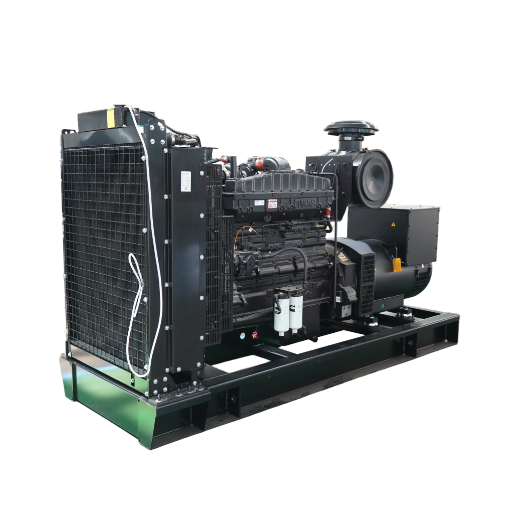
Diesel generator warranty validity is a documentation problem, not a maintenance problem. Even owners who service their units religiously lose claims because they cannot produce the records on demand. Build a service log from day one and update it after every interval. Our companion diesel generator maintenance guide details the service schedule that pairs with warranty documentation.
A complete maintenance file contains the original warranty terms, the genset commissioning report with serial numbers and start-date confirmation, the bill of materials for every service performed, copies of all parts invoices showing OEM part numbers, the qualification certificate of every technician who touched the unit, oil and fuel sample test reports, and a chronological event log of any alarms, faults, or abnormal operation.
Sample Maintenance Documentation Template
A practical service log records the date, hour-meter reading, technician name and certification, work performed (including specific OEM part numbers replaced), oil and coolant top-ups, fault codes cleared, and a signature line for the responsible operator. Photographs of each service add visual evidence. Many manufacturers accept digital maintenance platforms; some still want signed paper logs. Confirm the format your manufacturer requires before the first service.
Why Your Service Records Are Your Strongest Asset
A complete service file shifts the burden of proof. Without documentation, the manufacturer assumes the failure was caused by negligence. With documentation, the manufacturer must prove that something the buyer did caused the failure. This single difference is the reason data centers and hospitals never lose warranty claims and budget-conscious contractors often do.
How to File a Diesel Generator Warranty Claim
Most claims succeed or fail in the first 72 hours. The clock starts when the failure is discovered, not when the unit is shut down. Most warranty terms require notification within 30 days of failure discovery. Faster is always better.
What to Submit With Your Claim
An initial claim submitted in full includes the unit’s serial number and warranty registration number; the hour-meter reading at the time of the failure; a written description of the problem, including sounds, smells, or visual symptoms; fault codes recorded by the controller; pictures of the failed component while still assembled; a copy of the most recent service log entries; and the name and information of an authorized point of contact that can respond to any follow-up questions. Incomplete ones are faster getting rejected by manufacturers than accepted in full.
What to Expect After You Submit
Usually the manufacturer confirms receipt within 5 business days and issues a warranty claim number, simultaneously dispatching or authorizing a technician to inspect the case within 10 to 14 days. The outcome may typically be in favor of one of the three possibilities: either approved (with shipment of parts or scheduling of repairs), provisional wait (for additional evidence), or denial (with reasons to appeal). Claim time spans 30-90 days based upon parts availability and complexity.
International Diesel Generator Warranty Concerns: Buying From a China Factory
Manufacturer Marcus Lee’s team in Frankfurt purchased a 1000 kVA Cummins-powered genset from a Shandong-based factory in early 2025. At month 9, the high-pressure fuel pump failed. Marcus’s local Cummins dealer in Hesse honored the OEM engine warranty directly. A replacement pump arrived in 48 hours. The total downtime was 3 days, and the bill from the dealer was zero. The Shandong factory paid the freight on the failed pump back to the dealer for analysis. This is exactly how international procurement is supposed to work, and it is the model every serious China-factory buyer should expect.
Three trust pillars separate professional Chinese manufacturers from low-cost suppliers. First, OEM engine warranty pass-through. When a Chinese factory installs a genuine Cummins, Perkins, Volvo, or Doosan engine, the engine OEM warranty applies globally through the OEM’s authorized dealer network, not through the Chinese assembler. The buyer is protected by the same global service infrastructure that protects the OEM’s direct customers. Second, factory-direct service partners. Quality manufacturers maintain regional service relationships in Africa, Latin America, the Middle East, and Southeast Asia with parts available in 48 to 72 hours from regional warehouses. Third, written warranty terms published before the deposit. Most factories share terms only at delivery. Reputable ones publish standard terms at the RFP stage and negotiate them line by line.
How to Verify a China Manufacturer’s Warranty Is Legitimate
Ask for three pieces of evidence before signing the PO. Request the OEM engine warranty registration certificate that will be issued for your specific serial number. Request contact information for two existing customers in your region who have filed warranty claims in the last 24 months. Request a written description of the spare-parts logistics, including warehouse locations and 48-hour stocking SLA. A factory that hesitates on any of these three is not a factory that will honor a claim two years from now. To learn more about evaluating manufacturers, see our diesel generator factory guide.
What to Ask Before Signing the PO
Before the signing of contracts terms and conditions, it is advisable to enforce nine euphemisms in full, i.e., an agreed schedule and position of the warranty initialization, duration covered by warranty, coverage for parts and labor, in-site response commitments, tour and accommodation, spare parts stocking amounts, the maintenance clause regarding inflation and currency over multi-year royalty contracts, ability to maintain warranty during possible subsequent sale or transfer, the force majeure exclusion clause that specifies that consignee’s shipping damage will not void warranty.
Diesel Generator Warranty Clauses to Add to Your Procurement RFP
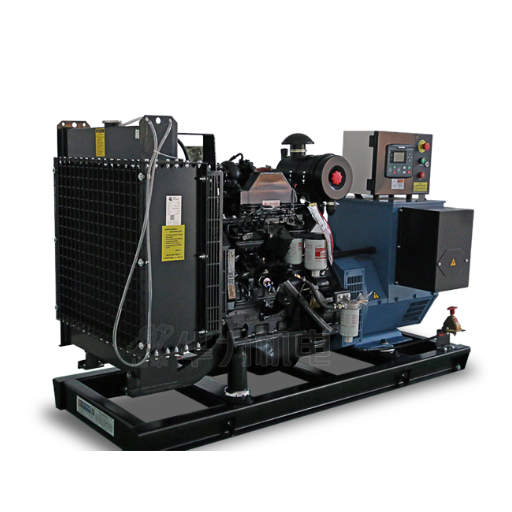
Strong procurement teams treat warranty as a negotiated specification, not a take-it-or-leave-it boilerplate. Insert these clauses into your RFP and require bidders to respond in writing.
- Minimum warranty period: 24 months from commissioning or 2,000 operating hours, whichever comes later
- Engine warranty pass-through: OEM engine warranty registered to buyer at delivery, with registration certificate provided
- Parts and labor coverage: Parts, labor, and travel for all authorized service within the warranty period
- Response time SLA: Authorized technician on site within 48 hours of failure notification for critical applications
- Spare parts stocking: Critical-component parts held in regional warehouse with 72-hour delivery commitment
- Travel and accommodation: Reimbursement of technician travel, lodging, and per diem for on-site service
- Transfer of warranty: Remaining warranty term transferable to subsequent owner with manufacturer notification
- Force majeure carveout: Shipping damage, port handling damage, and customs storage damage explicitly excluded from warranty void triggers
Sample RFP Warranty Language (Copy-Paste Template)
“The Seller will issue a written guarantee for a minimum period of twenty-four (24) months against defects in material and workmanship starting from the date of commissioning or while it is in use, for two (2,000) hours, whichever is later. The warranty covers parts, labor costs, traveling, and boarding of the instructed field service technicians. The engine guarantee obtained by the original engine manufacturer (Cummins, Perkins, Volvo, or equivalent) will be recorded in the Buyer’s name upon delivery and will be completely transferable. The Seller will load key spare parts into a warehouse within the Buyers’ regional area that is no more than seventy-two (72) hours from the site of delivery of the contractor’s equipment. Fail-Safe Response Time shall not exceed forty-eight (48) hours from the written notification.”
A buyer who issues this RFP language disqualifies low-cost suppliers automatically and creates a level playing field for serious manufacturers. Need help drafting RFP warranty clauses for your project? Our procurement specialists provide free RFP review for commercial buyers. Compare suppliers using our diesel generator supplier guide and the OEM diesel generator buying guide.
Frequently Asked Questions About Diesel Generator Warranties
What is the difference between a warranty and a service plan?
A diesel generator warranty refers to manufacturer defects on materials and workmanship. Under a plan service contract, otherwise referred to as an extended service agreement, you would be covered on predicament-related maintenance requirements. Warranties, as a general rule, are given with the purchase price; service plans are generally billed separately and exist in the form of ongoing contracts.
Can a dealer modify the manufacturer warranty?
Dealers can add coverage on top of the manufacturer warranty (extended terms, faster response SLAs) but cannot reduce or modify the OEM’s underlying terms.
What automatically voids a generator warranty?
The top causes of warranty voiding involve the use of unauthorized modifications, non-OEM replacement parts, technicians not certified to carry out the job, and when the customer fails to produce any maintenance documentation, with products being run outside their rated specifications.
Can I transfer the warranty if I sell the generator?
Most commercial warranties allow warranty transfer with written notification to the manufacturer within 30 days of sale. The remaining warranty term transfers to the new owner; the term does not restart.
Does the warranty cover the alternator separately from the engine?
Yes. Engines and alternators are warranted by their respective OEMs (e.g., Cummins for the engine, Stamford for the alternator), with the genset assembler warranting the overall package.
What is the failure notification window?
Industry standard is 30 days from discovery of the failure. Some premium contracts extend this to 60 days. Reporting late is one of the top reasons claims are denied.
Does buying through a distributor affect my warranty?
The OEM warranty remains valid regardless of distribution channel as long as the distributor is authorized. Confirm “authorized dealer” status before purchase.
Are warranty repairs handled at the factory or on site?
Comprehensive warranties include on-site labor for units above 100 kVA. Smaller units may require return to the factory or dealer workshop. Confirm the service location in your warranty document.
Does the warranty cover damage from a fuel-system contamination?
No. Fuel contamination is explicitly excluded from virtually every diesel generator warranty. Fuel sampling and filtration are the buyer’s responsibility.
Should I register the warranty even if the dealer says it is automatic?
Yes. Always confirm registration in writing, request a copy of the registration certificate, and store it with the commissioning report. Self-registration is the most common gap in dealer-handled warranties.
Conclusion: Your Warranty Is a Negotiation, Not a Document
The warranty for generators financed by diesel is the most misjudged line in most procurement contracts. The buyers who take it as a checkbox often lose tens of thousands of dollars when their turbocharger fails in the fourteenth month. The buyers, on the contrary, take time on this; they negotiate with the supplier and in the end save the same dollars that might have gone waste. They thereby secure a service partner of sorts.
There are five rules by which one may discern which groups the above belong to. First, insist that the commissioning date (first run) be the starting date and not the ship date. Second, the engine OEM warranty is registered to your name upon delivery. Third, in your RFP, lock up all parts stocking and SLAs for response time. Fourth, build the maintenance documentation file from day one. Fifth, read all exclusion lines attached in December, rather than after the failure occurs.
At Shandong Huali Electromechanical Co., Ltd., we publish our standard warranty terms before offering a quotation, and we walk through the OEM engine pass-through process for Cummins, Perkins, Volvo, and Doosan engines with every commercial buyer. We do this because a warranty written clearly before purchase saves both sides time and money later.
For a complete checklist of supplier credibility assessment criteria—covering all metrics beyond delivery lead times—please refer to our Complete Buyer’s Guide to Diesel Generator Manufacturers.