
A used vs new diesel generator decision usually comes down to four numbers most buyers never calculate: upfront price, total cost of ownership over the unit’s remaining hours, downtime risk if the used unit fails early, and the warranty value you trade away. Get those right and a used unit can save 30 to 70 percent. Get them wrong and the savings disappear inside the first major service call.
Most articles on this topic are written by used-equipment dealers, so they tilt one way. We are a manufacturer. We build new diesel generator sets from 8 kVA to 4,000 kVA and ship them into 20+ countries. We are not going to pretend used does not exist. After 25 years watching buyers win and lose this decision in roughly equal measure, here is the honest version, including the cases where buying used is the smarter call than buying from us.
Key Takeaways
- Used industrial diesel generators typically cost 30 to 70 percent less than new, but real savings depend on remaining hours, inspection rigor, and downtime tolerance.
- Well-maintained industrial diesels can exceed 25,000 operating hours; “low hours” with a documented maintenance log beats young age every time.
- True total cost of ownership over 10 years often narrows the new-versus-used gap to less than 15 percent, especially when downtime cost is factored in.
- Tier 4 emissions, EU Stage V, and 50Hz/60Hz mismatches create hidden compliance risks when buying used units across borders.
- Surplus and factory-recertified units are the underrated third option: zero-hour or near-zero-hour stock at 15 to 25 percent below new retail.
Used vs New Diesel Generator at a Glance
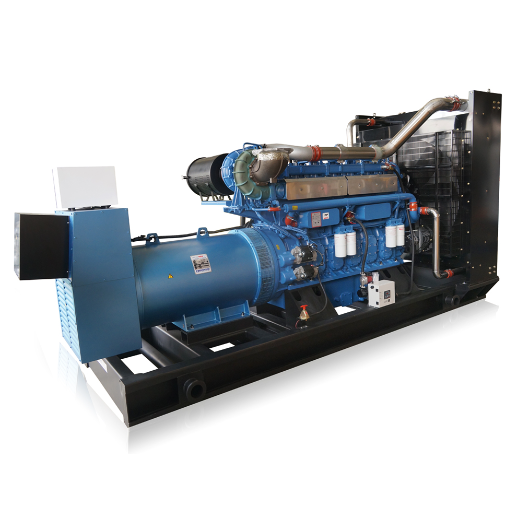
Before we get into the math, here is the 30-second decision framework that almost always points buyers in the right direction.
| Factor | New | Used | Surplus / Recertified |
|---|---|---|---|
| Upfront price | Baseline | 30 to 70% less | 15 to 25% less |
| Lead time | 6 to 24 weeks | Immediate (1 to 4 weeks) | 1 to 6 weeks |
| Warranty | 2 to 5 years factory | 30 to 90 days dealer (varies) | 1 to 2 years (varies) |
| Operating hours remaining | 25,000+ | Variable (check log) | 25,000+ |
| Emissions tier | Latest (Tier 4 Final / Stage V) | Whatever it was built to | Latest (typically) |
| Residual value | High | Lower (depreciation already absorbed) | High |
| Best fit | Mission-critical, long-horizon | Budget-constrained, urgent | Buyers who want new performance at a discount |
The honest answer is rarely universal for any diesel generator set purchase. Application, region, and project timeline change the math more than people expect.
How Much Cheaper Is a Used Diesel Generator?
The headline answer for used diesel generator price comparisons: used industrial diesel generators cost about 30 to 70 percent less than new units, depending on hours, age, brand, and dealer reputation. That savings range comes from public listings on Surplus Record, Generator Source, and major used-equipment dealers tracked over the last several years.
A few real market data points from 2024-2025 listings:
- 120 kVA Kohler, 2,625 hours, full enclosure: 26,500(newequivalent: 26,500(newequivalent: 58,000)
- 80 kVA unit, 64 hours, recently serviced: 22,500(newequivalent: 22,500(newequivalent: 32,000)
- 500 kW Caterpillar, 4,800 hours, prime-rated: 78,000to78,000to95,000 (new equivalent: $185,000+)
- Used industrial generator lots from major dealers typically list 100 to 400 units at any time across these size classes.
Why “Discount” Can Be Misleading
A 50 percent discount is not the same as 50 percent savings. The savings figure only counts if the unit performs to spec for the hours you need. Buyers who skip a load bank test, miss a worn AVR, or buy a unit with degraded fuel injectors often spend the “savings” inside year one. We have seen the math go both ways.
Depreciation Math
New industrial gensets lose roughly 15 to 25 percent of value in year one, then 5 to 10 percent per year thereafter, depending on hours run and maintenance discipline. By year five, a well-maintained unit typically sits at 35 to 50 percent of new retail. Buyers of used units in that five-year window absorb the depreciation curve someone else paid for.
Lifespan and Operating Hours: What “Used” Really Costs You
Industrial diesel generators are mechanical marathon runners. Diesel generator lifespan hours is the metric that matters more than age.
Typical numbers:
- First major service interval: ~10,000 hours
- Top-end mileage with discipline: 25,000+ hours before major overhaul
- Maintenance interval: every 250 to 500 hours, at 800to800to2,000 per service
A well-maintained 10-year-old unit at 2,000 hours has more useful life left than a 3-year-old unit at 10,000 hours. Hours and maintenance discipline beat age every time.
The Four Hidden Wear Modes Dealer Blogs Skip
- Wet stacking. Light-load operation leaves unburned fuel and carbon in the exhaust system. Reversible with a proper load bank test, but ignored units develop turbo and valve issues.
- AVR drift. Automatic voltage regulator capacitors age. A unit that ran at the wrong voltage for the last six months may have already damaged the alternator windings.
- Fuel system contamination. Diesel degrades after 6 to 12 months in storage. A used unit that sat with old fuel will need fuel polishing or complete system flush.
- Controller obsolescence. Pre-2015 controllers may not interface with modern building management systems or remote monitoring. Retrofitting is sometimes more expensive than the used-unit discount.
Indonesia palm-oil mill (used unit win). A processing plant located near Medan required a 250 kVA primary power supply; however, ordering a brand-new Cummins unit would have entailed a lead time of up to 14 weeks. Ultimately, they sourced a 2018-model Cummins generator set with a cumulative runtime of just 1,400 hours. They purchased it for $18,000—a stark contrast to the $42,000 price tag of a brand-new unit of the same model. Prior to purchase, they conducted load bank testing, installed a new Automatic Voltage Regulator (AVR), and performed fuel purification; these additional expenses totaled $2,200. Five years later, the unit remains in active service, having now accumulated a total runtime of 9,600 hours. The resulting net cost savings amount to approximately $22,000, all without a single instance of downtime. This stands as a prime example of “making the right choice when purchasing used equipment.”
For a deeper dive on extending generator life through proper care, see our diesel generator maintenance guide.
Total Cost of Ownership: The Number Everyone Forgets
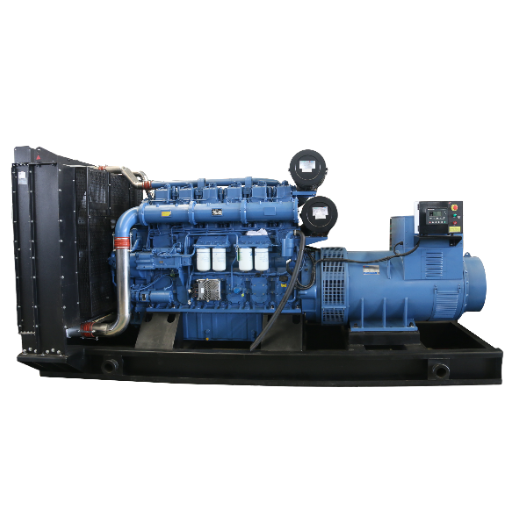
Upfront price is the most visible number, but it is rarely the most important one. A real diesel generator total cost of ownership model includes five inputs.
The TCO Equation
TCO = Purchase Price
    + Installation Cost
    + (Fuel Cost per Hour × Annual Hours × Years)
    + (Maintenance Cost per Hour × Annual Hours × Years)
    + Downtime Cost (probability-weighted)
    - Resale Value at End of Life
10-Year TCO Example: 250 kW Standby Genset
| Cost Element | New Unit | 5-Year-Old Used |
|---|---|---|
| Purchase price | $48,000 | $22,000 |
| Installation | $9,000 | $11,000 (extra inspection/fuel polish) |
| Fuel (50 hrs/yr × 10 yr) | $11,000 | $11,000 |
| Maintenance (10 yr) | $14,000 | $19,000 (more frequent service early) |
| Downtime risk (probability × cost) | $2,000 | $8,500 |
| Resale value (year 10) | -$9,000 | -$3,000 |
| 10-year TCO | $75,000 | $68,500 |
| Total savings | Baseline | $6,500 (8.7%) |
The dramatic upfront 54 percent discount narrows to roughly 9 percent over 10 years. That 9 percent is still real money, but it is not the 50 percent the listing price suggested. For low-runtime standby applications, used units often still win. For prime-power applications running 4,000+ hours per year, the math frequently flips toward new.
Downtime Cost: The Multiplier Most Buyers Underestimate
A small commercial building might absorb a four-hour outage at modest cost. A data center generator protecting a 1,000-rack facility is a different conversation entirely. The Uptime Institute and Ponemon Institute have published historical estimates of data center outage cost in the range of $9,000 per minute on average for larger facilities. Plug that into the TCO equation and a used unit’s higher early-failure probability becomes the single largest line item.
To right-size fuel and tank planning across both new and used units, see our companion guide on diesel generator fuel consumption.
Used Diesel Generator Inspection Checklist
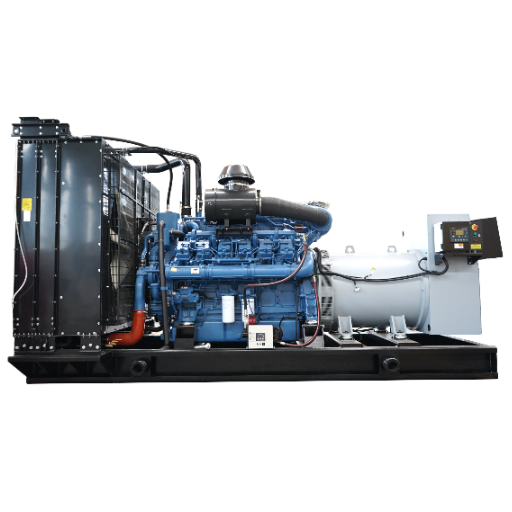
If you buy used, buying a used diesel generator without the right inspection is the most expensive shortcut in the industry. Here is our used generator inspection checklist — the same 15-point process reputable dealers use (and what we recommend our distributors verify before reselling).
Engine
- Oil analysis sample (look for metal particulates, coolant contamination, fuel dilution)
- Compression test on each cylinder
- Turbo backpressure and play in the shaft
- Visible signs of oil leaks at the head gasket, rear main seal, and turbo
Alternator
- Insulation resistance (megger test, both windings)
- AVR functional test under partial load
- Bearing temperature and noise during 30-minute run
- Slip ring and brush wear (where applicable)
Controls and Switchgear
- Controller firmware version and BMS compatibility
- Protection setpoints recorded and verified
- Emergency stop, low oil pressure, high coolant temp shutdown testing
Fuel System
- Fuel sample analysis (water, particulates, microbial contamination)
- Day tank inspection for sediment and corrosion
Cooling and Enclosure
- Radiator core inspection (bent fins, leaks, debris)
- Enclosure structural integrity, door seals, and whether the unit uses sound-attenuated enclosures that meet site noise ordinances
Load Bank Test (Non-Negotiable)
A 2-hour load bank test at 75 to 100 percent capacity is the only way to verify a used unit’s actual capability. This test exposes wet stacking, AVR weakness, fuel pressure drops, and cooling system marginality. Reputable dealers offer this as a paid service (800to800to2,500 depending on unit size); skip it at your own risk.
Nigerian telecom tower site (used unit loss). A regional carrier bought 12 used 40 kVA units at 4,800eachforoff−gridcelltowerbackup,saving4,800eachforoff−gridcelltowerbackup,saving56,400 over new pricing. They skipped pre-purchase load bank tests to move quickly. Within 18 months, 7 of 12 had AVR failures, 3 had injector wear requiring rebuild, and one alternator winding burned out. Total unplanned repair bill: $52,000. Cumulative tower downtime: 4 weeks across all sites. The “savings” vanished entirely, plus they absorbed the operational damage. This is what skipping inspection costs.
Emissions, Frequency & Compliance Traps
This is the section the dealer blogs do not write because it gets uncomfortable. International buyers face real risk when shipping a used industrial generator across borders.
EPA Tier and EU Stage V Compliance
Since 2015, the EPA requires Tier 4 Final emissions on most new non-emergency diesel gensets above 75 hp sold in the United States. The European Union enforces Stage V across most non-road mobile machinery. A used unit built to Tier 2 or Tier 3 may be perfectly legal where it was originally sold, but may not be legal to install in another jurisdiction or another country with different rules. Some countries reject pre-Tier 4 imports outright; others require expensive aftertreatment retrofits.
50Hz vs 60Hz Traps
A used 60Hz unit pulled from a US data center looks like a steal until the buyer realizes it was destined for a 50Hz site in Saudi Arabia, the Philippines, or Australia. Frequency conversion is more involved than rewiring the alternator; engine governor calibration, AVR settings, and rated power all shift. Buyers regularly underestimate this. We cover the full picture in our guide to 50Hz vs 60Hz generator selection.
Cross-Border Shipping Certification
Each country has its own certification regime: CE for Europe, CCC for China, SASO for Saudi Arabia, INMETRO for Brazil. A used unit may have valid documentation for its original market and require expensive re-certification for the destination. Factor 1,500to1,500to5,000 in re-certification cost into the TCO when sourcing used units internationally.
Saudi hospital project (new chosen). A Riyadh hospital required Level 1 emergency power with full Tier 4 emissions, 5-year factory warranty, and SASO certification. Local distributor sourced four 1,000 kVA new units with 14-week lead time at 235,000each.Theownerconsidereda235,000each.Theownerconsidereda128,000-per-unit used Caterpillar fleet from a US auction. After factoring re-certification (4,200each),emissionsretrofit(4,200each),emissionsretrofit(18,000 each), and the absence of a factory warranty for a hospital-critical system, the used route would have saved about $24,000 per unit but added 30 percent compliance risk on a building the owner could not afford to delay. They went new.
Refurbished and Surplus Generators (The Third Option)
Between “used” and “new” sits an underrated third option many buyers never consider: refurbished diesel generator stock and surplus units.
Defining the Tiers
Refurbishment is not one thing. Reputable dealers operate at four levels:
- Tier 1 — Cosmetic refresh. Paint, decals, basic cleaning. No mechanical work. Lowest discount but also lowest assurance.
- Tier 2 — Mechanical refurbishment. Oil, filters, belts, hoses replaced. Fuel polish, load bank test. Typical 22-point inspection. Common at most used-equipment dealers.
- Tier 3 — Full overhaul. Top-end rebuild, alternator rewind if needed, control upgrade. If control and spec mismatches dominate the retrofit cost, buyers should compare against a custom diesel generator build instead. Often comes with a 1-year dealer warranty. 31-point inspection standard.
- Tier 4 — Factory recertification. Original equipment manufacturer takes the unit, strips it, replaces wear components to spec, retests against factory standard, and issues a refreshed warranty. The closest thing to “new” without buying new.
Surplus and “New Old Stock”
Surplus generators are new units sold at discount because the original buyer cancelled the order, overstocked, or upgraded specs mid-project. These units have zero operating hours and full factory warranty. Typical discount: 15 to 25 percent below new retail. The catch: surplus availability is unpredictable, and units that have sat unsold for 18+ months may have aged seals, dried gaskets, or obsolete controllers.
Bolivia mining surplus deal. A copper-mining operator needed two 800 kVA prime-power units. New lead time from a major OEM was 22 weeks. Their procurement team found two surplus units from a cancelled refinery project at a regional distributor: zero hours, full factory warranty, 144,000eachversus144,000eachversus186,000 new. Total savings: $84,000 across both units, plus 16 weeks shaved off the project schedule. This is the surplus sweet spot when it appears.
When to Buy New, When to Buy Used: Decision Matrix
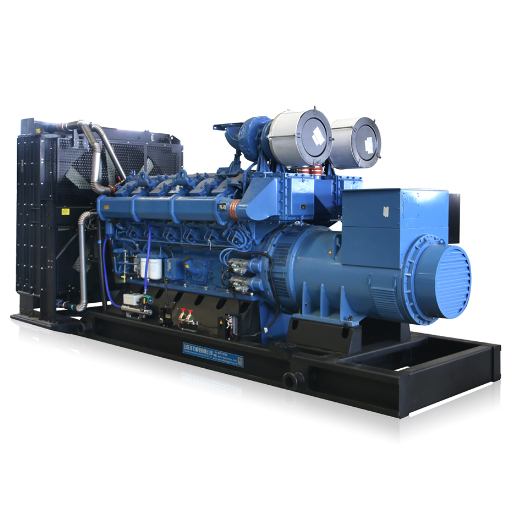
There is no universal answer. Application, regulatory zone, project schedule, and budget envelope all drive the decision. Here is how we coach our distributors and EPC partners to think about it.
By Application
| Application | Typical Recommendation | Reasoning |
|---|---|---|
| Hospital, Level 1 emergency | New | Code compliance, factory warranty, AHJ acceptance |
| Tier III/IV data center | New or factory-recertified | Downtime cost dominates TCO |
| Mining prime power | Used or new (TCO close) | High runtime favors new; budget pressure favors used |
| Construction site rental | Used | Short deployment cycles, depreciation already absorbed |
| Telecom backup | Surplus or new (avoid pure used at scale) | Reliability across distributed fleet matters more than per-unit savings |
| Manufacturing standby | Used (well-inspected) or new | Depends on production downtime cost |
| Agricultural irrigation | Used | Low utilization, modest downtime cost |
| Off-grid remote | New or factory-recertified | Service access is hard; reliability dominates; containerized generator housings are common in these deployments |
By Region
- Strict emissions zones (EU, US, Japan, Korea): New or factory-recertified to current tier
- Less restricted markets (parts of Africa, MENA, Southeast Asia): Used units viable if frequency and certification align
- High-corruption import regimes: Pre-shipment inspection by an independent third party regardless of new/used
By Project Schedule
If the project needs power on-site within 4 weeks, used or surplus is usually the only option. New equipment lead times of 6 to 24 weeks rule out most urgent deployments.
For a deeper buying framework that covers sizing and brand selection alongside new/used, see how to choose a diesel generator. Once the unit is on site, code-compliant installation is the next gate; our diesel generator installation and ATS guide walks through the five-phase commissioning process.
Brand Considerations
Across new, used, and refurbished, the dominant industrial brands remain Caterpillar, Cummins, Perkins, MTU, and Kohler, plus regional leaders like Weichai in Asia. Parts availability, dealer network, and resale value are stronger with these brands. Off-brand bargains often disappoint at the spare-parts counter five years later. Our Cummins-powered diesel generator overview covers what we package and why.
Used vs New Diesel Generator: Frequently Asked Questions
Is a used diesel generator worth it?
Often yes, especially for standby applications under 500 hours per year, with a documented maintenance log and a pre-purchase load bank test. The savings are real (30 to 70 percent upfront, 8 to 20 percent over 10 years) when the unit is properly inspected. Used is usually not worth it for mission-critical Level 1 emergency systems, data center primary backup, or projects with strict emissions and certification requirements.
How many hours is too many on a used diesel generator?
There is no single number, but useful tiers: under 2,000 hours is considered low-hour with significant remaining life; 2,000 to 10,000 hours is mid-life and worth inspecting carefully; 10,000 to 25,000 hours likely needs a top-end overhaul soon; over 25,000 hours is typically a candidate for full rebuild or scrap unless the price is very low.
How much can you save buying used vs new?
Upfront, 30 to 70 percent versus new retail. Over a 10-year TCO including downtime, fuel, and maintenance, real savings narrow to roughly 8 to 20 percent for typical standby applications. Higher utilization (prime power) compresses savings further, sometimes to zero or negative.
What is the lifespan of a diesel generator in hours?
Industrial diesel generators typically run 10,000 hours before their first major service and can exceed 25,000 hours with disciplined maintenance. Some units pass 50,000 hours with mid-life overhauls. Light-duty residential or small-commercial standby units have shorter ratings, typically 2,000 to 5,000 hours.
Do used diesel generators come with a warranty?
Sometimes. Most pure used units sold by private sellers or auctions come with no warranty. Reputable dealers often include 30 to 90 days of mechanical warranty. Refurbished units may carry 6 months to 2 years of dealer warranty. Factory-recertified units from the original OEM can carry warranty periods approaching new equipment.
What inspection should I do before buying a used generator?
At minimum: oil analysis, compression test, AVR functional test, insulation resistance (megger), fuel sample analysis, and a 2-hour load bank test at 75 to 100 percent capacity. A 15- to 31-point inspection by a qualified technician is the industry standard. Skipping the load bank test is the single biggest risk concentration in the buying process.
Can I import a used US-spec generator to my country?
Sometimes yes, sometimes no. You face three potential blockers: frequency mismatch (60Hz unit going into a 50Hz country), emissions tier mismatch (older EPA tier not accepted in current EU Stage V or local equivalent zones), and certification gaps (no local CE, CCC, SASO, INMETRO equivalent). Budget 1,500to1,500to5,000 for re-certification and check with your in-country distributor before shipping.
Is a refurbished generator as good as new?
A factory-recertified unit from the original OEM is functionally very close to new, often with a comparable warranty. A dealer-refurbished unit at Tier 2 or 3 levels (mechanical refurbishment or full overhaul) is generally reliable but typically carries a shorter warranty and may have older controllers or emissions tier. Cosmetic-only refurbishment offers little assurance beyond appearance.
Conclusion
The used vs new diesel generator decision is rarely as simple as the discount headline suggests. New units deliver factory warranty, current emissions compliance, and predictable behavior at the cost of 6- to 24-week lead times and full retail pricing. Used units deliver immediate availability and 30 to 70 percent upfront savings at the cost of warranty risk, inspection burden, and sometimes hidden compliance traps. Surplus and factory-recertified units sit between the two, often delivering the best risk-adjusted value when you can find them.
The honest framework comes down to four questions: How critical is uptime? How tight is the project schedule? What regulatory zone is the install in? And how comfortable are you with inspection and TCO math? Answer those four and the right path usually picks itself.
At Shandong Huali Electromechanical Co., Ltd., we manufacture new diesel generator sets from 8 kVA to 4,000 kVA, with national-standard testing on every unit before shipment and global support across 20+ countries. We also help our distributors evaluate used and refurbished alternatives when those are the right call for the project. Our engineering team’s job is to help you reach the right decision, not the most profitable decision for us.