
It should be noted that the choice between the 50Hz and 60Hz generator sets lies in the engine speed. A 50Hz generator operates at a speed of 1,500 rpm and is typical for Europe, Asia, Africa, and Australia. A 60Hz generator operates at 1,800 rpm and is typical for North America, some parts of South America, and certain Asian nations.
One can’t just turn on a frequency control dial, which requires adjustment of the engine speed and even alternator design. Choosing the wrong frequency results in damages to the equipment and other difficulties for projects of foreign customers.
Shandong Huali Electromechanical Co., Ltd. specializes in production and exporting of both types of generator sets to more than 20 countries. Every week, our engineers receive the following question from foreign buyers: “Will this genset operate in my country?” Our response always begins with frequency differences.
In this guide, we explain the engineering behind generator frequency, which countries use which standard, what happens when you mismatch equipment, and how to select the right configuration for your application. For a broader decision framework, see our guide on how to choose a diesel generator.
Key Takeaways
- 50Hz generators run at 1,500 RPM; 60Hz generators run at 1,800 RPM for the same 4-pole alternator.
- 80% of the world uses 50Hz; 60Hz dominates the Americas, Saudi Arabia, South Korea, and the Philippines.
- Running 60Hz motors on 50Hz power causes overheating and torque loss; running 50Hz motors on 60Hz causes overspeed and bearing failure.
- A 60Hz generator derated to 50Hz produces approximately 83.3% (5/6) of its rated power.
- Dual-frequency switchable diesel generators are available from Cummins, John Deere, Doosan, and select China OEMs.
What Determines Generator Frequency: RPM and Pole Count
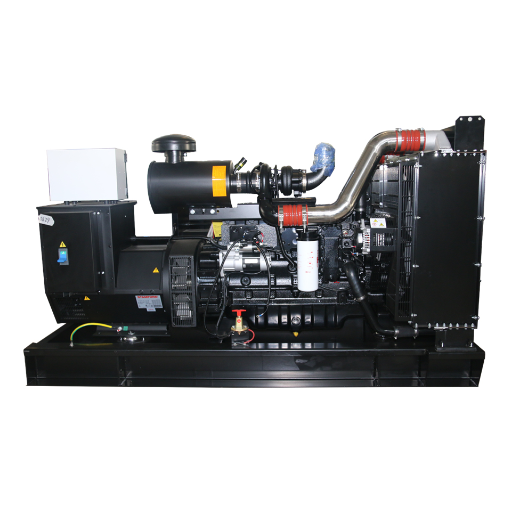
Generator output frequency is not arbitrary. It is locked to the mechanical speed of the engine and the electromagnetic design of the alternator.
The Formula
The governing equation is:
f = (P × N) / 120
Where:
- f = frequency in Hertz (Hz)
- P = number of magnetic poles in the alternator
- N = engine speed in revolutions per minute (RPM)
For a standard 4-pole alternator — the most common configuration in industrial diesel generators — the math is simple. The generator RPM 50Hz 60Hz relationship is fixed:
| Frequency | Required RPM |
|---|---|
| 50 Hz | 1,500 RPM |
| 60 Hz | 1,800 RPM |
A 2-pole alternator spins faster (3,000 RPM at 50Hz, 3,600 RPM at 60Hz). A 6-pole alternator spins slower (1,000 RPM at 50Hz, 1,200 RPM at 60Hz). In industrial applications, the 4-pole design dominates because it balances efficiency, noise, and mechanical stress.
Why You Cannot “Dial” a Different Frequency
Because frequency is mechanically fixed, changing it requires changing engine speed. On a conventional synchronous generator, the diesel engine must run at exactly 1,500 RPM for 50Hz. For 60Hz, it must run at 1,800 RPM. The electronic governor maintains this speed within tight tolerances.
If you speed up a 50Hz generator to 1,800 RPM without adjusting the voltage regulator, the output voltage rises proportionally. Connected equipment can be damaged.
Inverter generators are the exception. They decouple engine speed from output frequency by generating DC first, then inverting it to AC electronically. However, most industrial diesel generator sets above 20 kVA are synchronous machines, not inverters.
50Hz vs 60Hz Generator: Side-by-Side Technical Comparison
The 20% speed difference between 50Hz and 60Hz creates a cascade of engineering trade-offs. Here is how the two standards compare across the parameters that matter for buyers.
| Parameter | 50 Hz Generator | 60 Hz Generator | Practical Impact |
|---|---|---|---|
| 4-Pole RPM | 1,500 RPM | 1,800 RPM | Governed by f = (P × N) / 120 |
| Centrifugal Stress | Baseline | ~44% higher | Stress increases with the square of speed |
| Power Density | Baseline | ~20% higher | More kW from the same frame size |
| Unit Size/Weight | Larger/heavier | ~20% smaller/lighter | Better for space-constrained sites |
| Noise Level | Lower | Higher | Higher RPM increases acoustic output |
| Bearing Wear | Lower | Higher | Faster oil shear and thermal load |
| Piston Velocity | ~8.5 m/s | ~10.2 m/s | Higher friction and cylinder wear at 60Hz |
| Thermal Efficiency | Slightly better | Slightly lower | Lower core losses at 50Hz |
| Typical Voltage | 220–240V / 380–415V | 110–127V / 208–480V | Regional standard pairing |
Efficiency and Thermal Behavior
Using the transformer EMF equation E = 4.44 × f × N × A × B, the required core cross-sectional area is inversely proportional to frequency. This means a 60Hz alternator can be physically smaller for the same power output.
However, iron losses increase with frequency. Eddy current losses scale with the square of frequency. Hysteresis losses scale linearly.
In practice, 50Hz generators run slightly cooler under continuous load. For prime power applications running 6,000+ hours per year, the lower mechanical stress at 1,500 RPM translates to longer bearing life. For standby applications, the difference is less significant. Fuel consumption also varies by speed; see our detailed guide on diesel generator fuel consumption.
The 5/6 Derating Rule
If you have a 60Hz generator and need to run it at 50Hz, you cannot simply slow the engine and expect full output. The industry-standard 5/6 derating rule applies:
- Power Output at 50Hz ≈ 83.3% of the 60Hz rating
- Voltage must also be derated proportionally to maintain the same magnetic flux density
- Cooling capacity drops because the fan spins 20% slower
For example, a 500 kW 60Hz generator reconfigured to 50Hz delivers approximately 415 kW continuously. The voltage must drop from 480V to roughly 400V to maintain the correct V/Hz ratio and avoid magnetic saturation.
Shipping the wrong frequency is expensive. When a contractor in Lagos received a 60Hz generator intended for a 50Hz Nigerian grid, the motors on his construction site ran 20% faster than rated speed. Three pumps overheated within 48 hours. The contractor faced a three-week delay while a frequency converter was sourced and installed. The unplanned cost exceeded $12,000 — more than the generator itself. A 60Hz generator in a 50Hz country is a costly mistake. Always verify your destination grid standard before placing an order.
50Hz vs 60Hz Generator by Country: Global Frequency Map
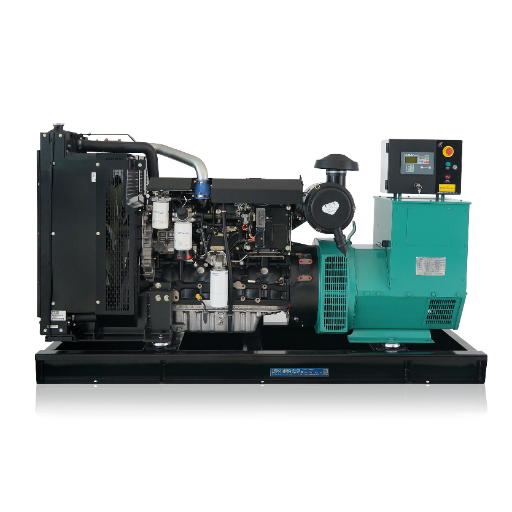
Frequency is determined by national grid standards, not by preference. Exporting a generator without confirming the destination generator frequency by country is one of the most common and costly mistakes in international equipment procurement.
50Hz Regions (Approximately 80% of the World)
| Region | Examples |
|---|---|
| Europe | UK, Germany, France, Italy, Spain, Netherlands, Scandinavia |
| Asia | China, India, Indonesia, Thailand, Vietnam, Bangladesh |
| Middle East | UAE, Kuwait, Qatar, Oman, Jordan, Iraq, Iran |
| Africa | South Africa, Nigeria, Kenya, Egypt, Morocco, Ghana |
| Oceania | Australia, New Zealand |
| South America | Argentina, Chile, Uruguay, Bolivia |
| CIS / Former Soviet | Russia, Kazakhstan, Uzbekistan |
Typical Voltages: 220–240V single-phase / 380–415V three-phase
60Hz Regions
| Region | Examples |
|---|---|
| North America | USA, Canada, Mexico |
| Central America / Caribbean | Guatemala, Honduras, Costa Rica, Panama, Bahamas |
| South America | Brazil, Colombia, Venezuela, Ecuador, Peru |
| East Asia | South Korea, Taiwan, Philippines |
| Middle East | Saudi Arabia |
Typical Voltages: 110–127V single-phase / 208V, 240V, 480V three-phase
Special Cases
Japan is unique. The eastern half (Tokyo area) operates on 50Hz. The western half (Osaka, Kyoto) operates on 60Hz.
This split dates back to the 1890s. Tokyo purchased German 50Hz equipment. Osaka purchased American 60Hz equipment. Any generator shipped to Japan requires confirmation of the specific destination region or a dual-frequency capable unit.
Brazil is predominantly 60Hz but has regional voltage variations. Some areas use 127V while others use 220V. Saudi Arabia is an outlier in the Middle East, using 60Hz while its neighbors use 50Hz.
Export Voltage and Frequency Quick Reference
| Country | Frequency | Typical Voltage | Plug / Standard |
|---|---|---|---|
| USA | 60 Hz | 120V / 208V / 480V | NEMA |
| Canada | 60 Hz | 120V / 347V / 600V | CSA |
| UK | 50 Hz | 230V / 400V | BS |
| Germany | 50 Hz | 230V / 400V | IEC |
| Australia | 50 Hz | 230V / 400V | AS/NZS |
| Nigeria | 50 Hz | 230V / 400V | BS |
| UAE | 50 Hz | 230V / 400V | BS / IEC |
| Saudi Arabia | 60 Hz | 127V / 220V / 480V | SASO |
| South Korea | 60 Hz | 220V / 380V | KSC |
| Japan (East) | 50 Hz | 100V / 200V | JIS |
| Japan (West) | 60 Hz | 100V / 200V | JIS |
| Brazil | 60 Hz | 127V / 220V / 380V | NBR |
| South Africa | 50 Hz | 230V / 400V | SABS |
Can You Run a 60Hz Generator in a 50Hz Country?
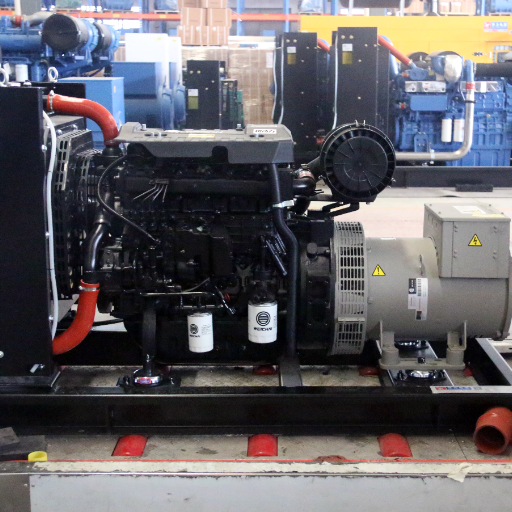
The short answer is no — not safely without conversion. A 60Hz generator in a 50Hz country creates a frequency mismatch that damages motors, pumps, transformers, and compressors. Resistive loads like heaters and incandescent bulbs are generally unaffected.
What Happens to Motors
When you connect a motor designed for 60Hz to a 50Hz supply:
- Speed drops by 20% — the motor runs slower than designed
- Cooling fan spins slower — reduced airflow causes overheating
- Magnetic saturation increases — the core draws excess current
- Torque drops — the motor may fail to start under load
When you connect a 50Hz motor to 60Hz:
- Speed increases by 20% — bearings and rotors experience overspeed stress
- Power draw increases — for constant-torque loads, horsepower rises ~20%
- Centrifugal loads (fans, pumps) overload dramatically — power demand scales with the cube of speed
The V/Hz Ratio Rule
Electric motors and transformers are designed for a specific volts-per-hertz (V/Hz) ratio. For example:
- 400V / 50Hz = 8.0 V/Hz
- 480V / 60Hz = 8.0 V/Hz
If you change frequency without adjusting voltage proportionally, the magnetic flux density in the core changes. Too much flux causes saturation, overheating, and insulation damage. Too little flux causes weak torque and poor performance.
Need a generator configured for your specific voltage and frequency? We build custom diesel generator sets with exact regional specifications — including voltage selector switches and dual-frequency capability.
Dual-Frequency Diesel Generators: Switchable 50Hz/60Hz Options
For distributors and contractors who serve multiple regions, stocking separate 50Hz and 60Hz inventories is expensive and inefficient. The solution is a dual frequency diesel generator — the same engine and alternator configured to run at either 1,500 RPM or 1,800 RPM.
How Same-Engine Switching Works
A dual-frequency generator uses an electronic governor and programmable engine control unit (ECU) to switch between two preset speed targets. When the operator selects 50Hz, the governor holds 1,500 RPM. When 60Hz is selected, it holds 1,800 RPM. The voltage regulator (AVR) adjusts excitation simultaneously to maintain the correct V/Hz ratio.
This is not a universal feature. The engine must be mechanically rated for both speeds, and the alternator must be designed to handle the thermal and centrifugal differences.
Engine Models with Factory Dual-Frequency Ratings
Several engine families are explicitly rated for dual-frequency operation:
- John Deere PowerTech M 4.5L: Covers 80–120 kVA with “50 Hz / 60 Hz switchable” ratings. The same engine block serves European, Asian, and American markets.
- Cummins QSL9 / Doosan G325: Features dual-frequency capability standard across the Tier 4 portfolio. A switch or controller setting changes the operating mode.
- Weichai WP Series: Available in dual-frequency configurations through China OEMs, typically from 50 kVA to 1,000 kVA.
At Shandong Huali, we configure Cummins and Weichai engine platforms for dual-frequency export. The alternator is wound for the higher voltage requirement, and the AVR is programmed with two excitation maps. Switching takes less than five minutes and requires no mechanical changes.
One distributor in Dubai standardized on dual-frequency Cummins-powered units. Instead of maintaining separate 50Hz stock for Kuwait and 60Hz stock for Saudi Arabia, he stocked switchable gensets. His SKU count dropped by 40%, inventory turns improved, and he could quote any Gulf project within 24 hours. The premium for dual-frequency capability paid for itself in reduced working capital within six months.
When to Specify Dual-Frequency vs Single-Frequency
| Scenario | Recommendation |
|---|---|
| You know your exact destination country | Single-frequency is simpler and slightly less expensive |
| You are a distributor serving multiple regions | Dual-frequency reduces inventory and increases flexibility |
| Your project involves Japan | Dual-frequency or a dedicated frequency converter is essential |
| You plan to relocate equipment across regions | Dual-frequency future-proofs your investment |
| Your budget is extremely tight | Single-frequency is the cost-optimized choice |
Frequency Converters: Rotary vs Static
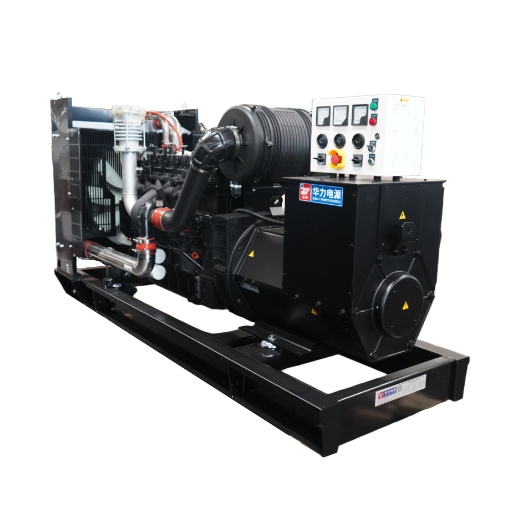
When you already own a generator of one frequency and need to power equipment of another, a 50Hz to 60Hz converter — or frequency converter — is the solution. There are two main types.
Rotary Motor-Generator (M-G) Sets
A rotary converter uses a 50Hz electric motor to mechanically drive a 60Hz alternator (or vice versa). There are no electronic power stages — just rotating machinery.
- Capacity range: 30 kVA to 3,000 kVA
- Advantages: Extremely robust, handles motor-starting inrush currents well, galvanic isolation between input and output
- Disadvantages: Mechanical wear, noise, maintenance requirements, lower efficiency (~85–90%)
- Best for: Large industrial loads, continuous operation, harsh environments
Static Electronic Converters
A static converter rectifies the incoming AC to DC, then inverts the DC back to AC at the target frequency.
- Capacity range: 20 kVA to 400+ kVA
- Advantages: No moving parts, quiet operation, high efficiency (~90–95%), compact footprint
- Disadvantages: Higher cost per kVA, sensitive to overloads and motor inrush, requires clean input power
- Best for: Office, medical, data center, and light industrial applications
Sizing Rule
Size the converter by the load’s kVA requirement, not the generator’s full capacity. Include a safety margin for motor starting. A practical rule:
- Converter kVA ≥ 1.2 × continuous load kVA
- For motor-heavy loads: Converter kVA ≥ 1.5 × continuous load kVA
For example, if you need to run 100 kVA of 60Hz equipment from a 50Hz generator, specify a converter rated for at least 120 kVA (150 kVA if motors dominate the load).
A factory in Southeast Asia had surplus 60Hz 500 kW generators after a canceled U.S. project. Rather than selling at a loss, they reconfigured the engine governors to 1,500 RPM, accepted the 5/6 derating to approximately 415 kW at 50Hz, and redeployed the units to a Kenyan mining site. The fuel consumption per kWh remained competitive, and the capital recovery exceeded $180,000. When derating is acceptable, it is often the most cost-effective path.
How to Choose the Right Frequency for Your Generator
Follow this four-step process to ensure your generator matches your application.
Step 1: Identify Your Destination Grid Standard
Check the national frequency for your installation country. Use the reference table above or confirm with the local utility authority. If the destination is Japan, verify the specific region.
Step 2: Match Your Equipment Nameplate Frequency
Check out the nameplates on the motors, pumps, UPS systems, and other loads that you will be using. The frequencies should match those of the generator. In case of multiple frequencies for loads, you need a generator with multiple frequencies or a frequency converter.
Step 3: Consider Dual-Frequency If Exporting to Multiple Regions
The distributor, the rental company, and the overseas contractor would be wise to look into the dual frequency genset, which adds only about 5–10% more to the cost than the single-frequency genset.
Step 4: Budget for Conversion If Reusing Existing Equipment
If you already own a generator of the wrong frequency, calculate the total cost of conversion:
- Engine governor reconfiguration: Low cost if the engine is rated for both speeds
- AVR reprogramming: Low to moderate cost
- Alternator rewinding: Moderate to high cost; sometimes uneconomical
- External frequency converter: Moderate to high cost; most flexible option
In many cases, selling the existing unit and purchasing the correct specification is more economical than extensive retrofitting.
Frequently Asked Questions
What is the difference between 50Hz and 60Hz generator?
A generator operating on 50Hz has a speed of 1,500 rpm with a four pole alternator while one working on 60Hz operates at 1,800 rpm. The difference in speeds by 20% has an impact on factors like power density, sound level, bearing life, and efficiency.
Can a 50Hz generator run on 60Hz?
No, not really. At 1,500 revolutions per minute (RPM), the generator will produce 50 cycles per second. The generator will need to turn at 1,800 RPM in order to generate 60 cycles per second. This involves adjustments on the governor and the voltage regulator, as well as verifying that the engine can handle the higher speed.
Why do some countries use 50Hz and others 60Hz?
The divide occurred historically. By the end of the 19th century, European companies decided to use 50Hz, whereas American companies selected 60Hz. After the development of the power grid within countries, the expense of switching frequencies was too high.
What happens if I plug 60Hz equipment into 50Hz power?
The machines operate at 20 percent lower efficiency. The motors have less air flow for cooling, magnetic saturation, and excessive currents. The transformers overheat. There is decreased flow from the pumps and fans. The resistive loads, such as heaters and lights, are not affected.
Is 50Hz or 60Hz more efficient?
Iron loss and mechanical wear are less with 50 Hz compared to 60 Hz, thereby rendering 50 Hz a bit more efficient when it comes to prime power production. As far as the efficiency is concerned, using 60 Hz allows you to build more compact machinery for the same capacity. Both cannot be said to be better or worse than each other.
Can I convert my existing generator from 50Hz to 60Hz?
Not always. The governor and AVR can be adjusted to work at a higher engine speed (1,800 RPM) if the engine allows this operation and if the alternator is able to tolerate high speed/voltage conditions. Nevertheless, many engines have one specific speed that cannot be exceeded.
What RPM does a 50Hz generator run at?
A standard 4-pole 50Hz generator runs at 1,500 RPM. A 2-pole unit runs at 3,000 RPM. A 6-pole unit runs at 1,000 RPM. The 4-pole configuration is the industrial standard for diesel generators because it balances efficiency, noise, and longevity.
Which generator frequency is best for industrial use?
Both frequencies power industrial applications successfully. Choose the frequency that matches your local grid and equipment. If you operate in a 50Hz country, use a 50Hz generator. If you operate in a 60Hz country, use a 60Hz generator. For multi-region operations, consider a dual-frequency diesel generator to maximize flexibility.
Conclusion
Generator frequency is not up for debate. Generator frequency depends on the rotational speed of its motor and number of poles of the alternator. A 50 Hz generator will operate at 1,500 RPM, while a 60 Hz generator operates at 1,800 RPM. These frequencies are not interchangeable when used with a grid without derating, converting, or modifying the equipment.
When exporting, the key element would be ensuring that you know the grid frequency at the destination point. When distributing, having a switchable frequency unit would help you be flexible compared to using single-frequency units. As an end user, make sure you match your generator’s frequency to your equipment ratings to avoid overheating and premature equipment failure. You should then maintain your diesel generator properly after installation.
At Shandong Huali Electromechanical Co., Ltd., we manufacture diesel generator sets from 8 kVA to 4,000 kVA in both 50Hz and 60Hz configurations. We also offer dual-frequency switchable options for clients who serve multiple markets. Every unit is tested at our national standard testing center before shipment.