
The best generator remote monitoring setup for industrial buyers in 2026 depends on three things: your controller, your connection type, and your fleet size.
- Controller-native platforms such as Deep Sea DSEControl and ComAp InteliMonitor work across genset brands.
- OEM systems such as Cummins PowerCommand Cloud or Generac Mobile Link suit single-brand fleets.
- Third-party IoT kits are the fastest way to add basic monitoring to older units.
Most standby generators still run without remote visibility. An operator checks gauges on-site and hopes nothing fails before the next inspection. That made sense when generators were simple mechanical assets. However, industrial generator monitoring is now essential for critical infrastructure. A single data-center outage can cost thousands of dollars per minute.
At Shandong Huali Electromechanical Co., Ltd., we ship generators to more than 20 countries. As a result, we have learned that buyers who specify remote monitoring during the buying process avoid problems that other buyers discover only after a failure. This guide compares generator remote monitoring platforms, explains how to choose a connection type, and shows what to verify when you buy from a factory. In addition, it shows how to avoid common buying mistakes.
What Is Generator Remote Monitoring?
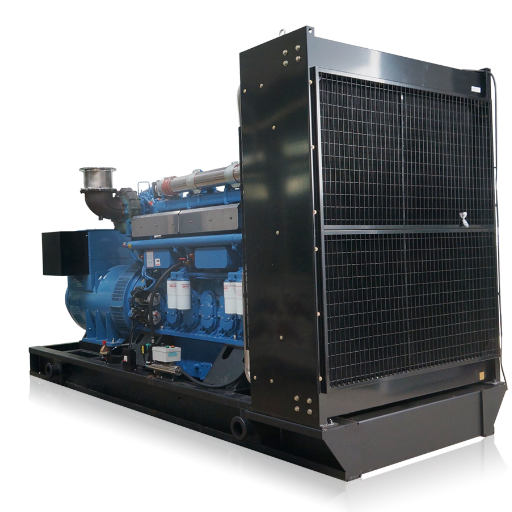
Generator remote monitoring is a system that collects operating data from a generator, voltage, fuel level, temperature, fault codes, and sends it to a cloud dashboard over cellular, WiFi, satellite, or SMS. It lets operators track performance, receive alerts, and schedule maintenance without visiting the site.
Key Takeaways
- Only 15-20% of standby generators worldwide use remote monitoring. Retrofitting legacy units is often the smartest move.
- Controller-native platforms (Deep Sea, ComAp) work across genset brands. OEM systems lock you into one manufacturer.
- Connectivity choice matters more than platform choice in developing markets. Cellular fails where satellite or SMS fallback works.
- Smart control panels add auto-start, load shedding, parallel control, fuel-theft alerts, and automated exercise logging.
- A connected generator is a network asset. Cybersecurity for industrial IoT is not optional for critical infrastructure.
- The right monitoring system often pays for itself with a single avoided outage.
Which Generator Remote Monitoring Setup Is Right for You?
| Your Situation | Best Option | Why |
|---|---|---|
| New purchase, mixed fleet, global support | Deep Sea or ComAp controller-native platform | Cross-brand, open protocols, strong support |
| Single-brand fleet (Cummins, Generac, Kohler) | OEM-integrated monitoring | Seamless warranty, plug-and-play setup |
| Legacy unit with Modbus/CAN/RS-485 output | Telemetry gateway | Low cost, keeps existing controller |
| Old unit with no communication port | IoT sensor kit | Basic voltage, temperature, and fuel alerts |
| Remote site with weak cellular | Satellite + SMS backup | Works where data networks fail |
Use this table to narrow your choice quickly. The sections below explain each option.
What Generator Remote Monitoring Actually Does
Generator remote monitoring collects, sends, and analyzes operating data without a person at the unit. In other words, a monitored diesel generator set is a managed asset. One without monitoring is a passive machine you hope stays healthy.
The main value is the shift from “run until failure” to predictive maintenance. For example, instead of finding a problem when the generator fails to start during an outage, the system alerts you while the issue is still small.
What You Can Monitor Remotely
A full monitoring system tracks:
- Output voltage, current, and frequency
- Engine oil pressure and coolant temperature
- Runtime hours and load percentage
- Fuel level and fuel consumption rate
- Battery voltage and charging status
- Fault codes and alarm history
- Automatic transfer switch (ATS) status
- Enclosure temperature and intrusion detection
This data flows from the controller to a gateway, then to a cloud platform, and finally to your phone or desktop. The entire cycle takes seconds.
Case Study: A Saudi Data Center Avoids a $14,000 Failure.** A 12 MW data center near Riyadh utilized a Deep Sea DSE Control system to monitor the insulation resistance of Unit 4. Over a six-month period, readings dropped from 50 MΩ to 8 MΩ. The technical team replaced the excitation diodes during scheduled maintenance at a cost of $800. Three months later, another data center—lacking such a monitoring system—experienced the same failure during a power outage; emergency repairs cost $14,000 and resulted in 11 hours of downtime. In contrast, the annual monitoring service fee for all six units at the first center was only $2,400. Consequently, avoiding this failure yielded a return on investment of six times the cost.
The Three Types of Generator Monitoring Systems
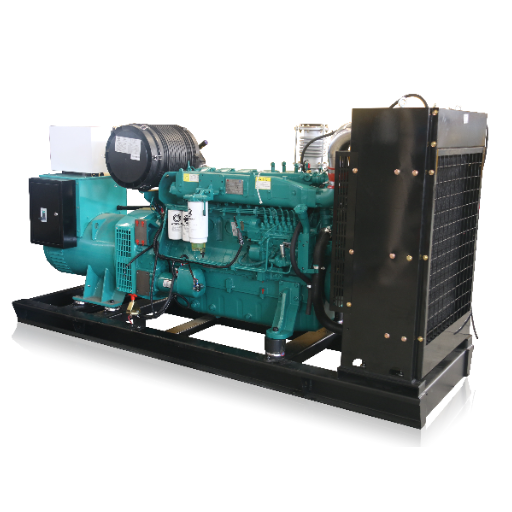
Not all generator remote monitoring is the same. Industrial generator monitoring systems fall into three categories, each with different trade-offs.
OEM-Integrated Monitoring
Generac, Cummins, and Kohler each offer proprietary platforms tied to their own hardware. Generac uses Mobile Link. Cummins uses PowerCommand Cloud. Kohler uses OnCue Plus.
Pros: Seamless integration and full warranty support.
Cons: Vendor lock-in and limited cross-brand compatibility. If you run a mixed fleet, you need multiple apps and dashboards.
For single-brand installations, this approach works well. For mixed fleets, however, it becomes expensive to manage.
Controller-Native Platforms
Deep Sea Electronics DSEControl and ComAp InteliMonitor / Web Supervisor are the industry standards. These platforms talk directly to the controller hardware: Deep Sea DSE 4xxx, 7xxx, and 8xxx series, or ComAp InteliGen, InteliSys, and InteliMains modules.
Pros: Cross-brand compatibility. A generator with a Deep Sea controller works with DSEControl whether the engine is Cummins, Perkins, Weichai, or Yuchai. This is the reality for most generators built in China.
Cons: You need the right firmware version, and older units may need a hardware upgrade.
Most Shandong Huali industrial diesel generator sets ship with Deep Sea DSE 4xxx series controllers as standard. ComAp is available on request. In addition, both support full remote monitoring natively.
Third-Party and IoT Retrofit Solutions
Companies such as Monnit, SensorSuite, and other industrial IoT vendors offer add-on telemetry kits. IoT generator monitoring is the fastest way to add basic telemetry to older units without replacing the controller. These kits attach to existing generators through analog sensors, Modbus connections, or dry-contact inputs.
Pros: Low cost and quick installation. A basic IoT sensor kit costs 200−200−600, compared with 800−800−2,500 for a controller upgrade.
Cons: Limited diagnostic depth. Third-party sensors can read voltage and temperature, but they cannot decode proprietary fault codes or access controller event logs.
Use these kits when the controller is obsolete or when you only need basic status alerts.
Generator Controller Comparison for Remote Monitoring
Your controller determines your monitoring options. This generator controller comparison covers the platforms most common in industrial and mixed-fleet applications.
| Controller | Monitoring Platform | Interfaces | Hardware Cost | Best For |
|---|---|---|---|---|
| Deep Sea DSE 4xxx/7xxx/8xxx | DSEControl | Ethernet, WiFi, cellular, USB | 400−400−1,200 | Mixed fleets, retrofits |
| ComAp InteliGen / InteliSys | InteliMonitor / WebSupervisor | Ethernet, cellular, RS-485 | 500−500−1,500 | Parallel systems, BMS links |
| Woodward EasyGen | EasyGen Web / third-party SCADA | Ethernet, Modbus, CAN | 600−600−1,800 | Large turbines, marine |
| Beckwith M-3425 | Beckwith Unity | Ethernet, Modbus, DNP3 | 800−800−2,200 | Utility-scale installs |
| Cummins PCC | PowerCommand Cloud | Proprietary gateway | 1,000−1,000−2,500 with gateway | Single-brand Cummins fleets |
| Kohler APM | OnCue Plus | WiFi, Ethernet | 300−300−800 | Light commercial |
Use this generator controller comparison to eliminate controllers that lack Ethernet, cellular, or cloud-native support. For buyers sourcing from a Chinese factory, Deep Sea and ComAp are the dominant standards. Therefore, always ask for the exact controller part number. “Smart controller” is not a valid answer. For example, Deep Sea DSE 4520 MKII supports remote monitoring; DSE 3110 does not. Similarly, ComAp InteliGen NT supports InteliMonitor; InteliLite does not.
Generator Remote Monitoring Connectivity: Cellular, WiFi, Satellite, and SMS
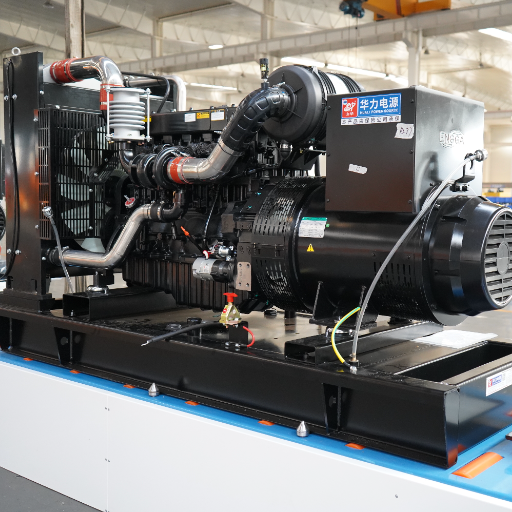
The best monitoring platform is useless without reliable connectivity. However, many buyers overlook this decision and regret it later.
Cellular (4G/5G)
Cellular is the default choice for remote sites. A 4G modem connected to the controller gateway sends data to the cloud continuously. Modern industrial IoT SIMs offer multi-carrier roaming, which improves reliability in regions with weak single-carrier coverage.
A typical generator monitoring connection uses 5-20 MB per month. That is small by consumer standards, but it can trigger overage fees on poorly chosen plans. For containerized generators at construction sites or mobile installs, cellular is usually the only practical option.
WiFi and Ethernet
Fixed installations with reliable local network infrastructure should use WiFi or Ethernet. This removes SIM costs and usually offers lower latency. However, a generator connected to your corporate network becomes a potential attack vector. Segment it on a dedicated VLAN or industrial network.
Satellite
Satellite connectivity is the fallback for extreme remote locations: offshore platforms, mining camps, and desert telecom towers. Providers such as Starlink, Iridium, and Inmarsat offer industrial IoT plans. Latency is higher than cellular, and cost per megabyte is much higher. For a generator that only needs to send a few kilobytes of data per minute, satellite is viable.
SMS-Only Fallback
In developing markets with unreliable data coverage, SMS-only alerting is a practical choice. The controller sends a text when a fault occurs or a threshold is exceeded. There is no continuous dashboard, no trend data, and no predictive analytics. Nevertheless, there is also no dependency on data connectivity, and SMS works on every GSM network.
Case study: Peruvian mine stays online through a blizzard. At a gold mine in the Andes situated at an altitude of 4,200 meters, three 500 kVA generators are in operation. The site lacks cellular network coverage; while the camp utilizes Starlink, the antenna frequently ices over during winter. To address this, the operator deployed a dual-link system featuring Starlink as the primary data link, supplemented by an SMS-only backup module based on an independent GSM modem. During a three-day blizzard, Starlink service was interrupted, yet the SMS backup module continued to transmit temperature and fault alerts. On the second day, a low coolant level alert prompted the team to promptly clear ice buildup from the radiators, thereby preventing potential equipment damage from a cold start. The system cost $3,200 to install; had the issue gone undetected and necessitated a major engine overhaul, the cost would have reached $18,000, plus the travel expenses for dispatching technicians from Lima.
Retrofitting an Existing Generator for Remote Monitoring
Most generators in service today were built without remote monitoring. Therefore, the question is not whether to monitor. It is whether to upgrade the controller or use a remote monitoring retrofit.
When to Upgrade the Controller
Upgrade the controller if the existing unit has no communication port, uses a proprietary OEM controller with no open protocol, or needs modern features such as parallel operation control. A Deep Sea DSE 4520 or ComAp InteliGen NT upgrade costs 800−800−1,500 for the hardware plus installation labor.
Controller upgrades preserve full diagnostic access: fault codes, event logs, and complete parameter visibility.
When to Add a Telemetry Gateway
Add a telemetry gateway if the existing controller has a Modbus, CAN, or RS-485 output but no built-in cloud connectivity. This remote monitoring retrofit path is ideal when the controller already has a serial port. A third-party gateway reads data from the controller’s serial port and sends it via cellular or WiFi. Costs range from 300−300−800.
This approach keeps the existing controller and avoids warranty complications. Furthermore, it works well for generators under five years old with functional controllers.
When to Use IoT Sensor Kits
Use IoT sensor kits only when the controller is obsolete and replacement parts are no longer available. These kits attach external current transformers, temperature sensors, and voltage probes directly to the generator. They provide basic telemetry without controller integration. Cost: 200−200−600.
Warranty Implications
Modifications to generator control systems can affect warranty coverage. The safe approach is to use monitoring hardware approved or supplied by the generator manufacturer. For diesel generator maintenance contracts, confirm with your service provider that the monitoring installation does not void terms.
Smart Control Panels and Generator Remote Monitoring: Features That Matter
Remote monitoring is only as useful as the control panel feeding it data. Smart control panels turn basic controllers into automated management hubs for auto-start, load shedding, and remote override. Therefore, the features below separate a basic controller from a smart control system.
Auto-Start Logic and Remote Override
A smart control panel watches utility power and automatically starts the generator when mains fail. Remote override lets an operator start, stop, or reset the generator from a phone or desktop interface. This is essential for sites without 24-hour staff.
Load Demand Management and Load Shedding
For installations with multiple generators or limited capacity, load demand management starts and stops units based on total load. Load shedding disconnects non-critical circuits when capacity is exceeded. Both functions require a programmable controller with multiple digital inputs and outputs.
Parallel Operation Control
Large installations often run two or more generators in parallel. Synchronizing voltage, frequency, and phase angle between units requires an advanced controller. Deep Sea DSE 8xxx and ComAp InteliSys controllers handle parallel operation natively.
Fuel Level Monitoring and Theft Detection
Fuel level sensors connected to the controller send real-time fuel volume to the dashboard. Sudden drops that do not match runtime indicate theft. For remote sites, this single feature often justifies the entire monitoring investment.
Case study: Nigerian telecom operator stops fuel theft. A tower operator in northern Nigeria manages 20 base stations, each with a 30 kVA diesel generator. Fuel theft had been a constant problem. Monthly losses reached 600 liters per site, or 12,000 liters across the network. In early 2024, the operator installed fuel level sensors with SMS alerts. The system triggered an alarm whenever the tank level dropped by more than 5 liters within 10 minutes while the generator was off. On the first day, three sites triggered theft alerts. With timestamped data in hand, the operator stopped the losses within a week. The hardware cost 8,500.Meanwhile,monthlysavingsreached8,500.Meanwhile,monthlysavingsreached12,000, giving a 21-day payback.
Remote Exercise Scheduling
NFPA 110 requires emergency generators to exercise monthly under load. A smart control panel automates this schedule, logs the exercise, and generates compliance reports. Remote exercise scheduling removes the need for on-site staff to manually start and stop units for routine testing.
Cybersecurity for IoT-Connected Generators
A connected generator is a network asset, not just a power asset. Consequently, every generator remote monitoring deployment must treat the controller as a potential entry point into your operational technology (OT) network.
Common Vulnerabilities
Industrial IoT devices share common weaknesses:
- Default passwords that are never changed
- Unencrypted data transmission
- Firmware that is never updated
- Controllers placed on the same network segment as business systems
A compromised generator controller can open a path into building management systems, SCADA networks, or corporate IT infrastructure.
Best Practices
- Change default credentials before connecting any controller to a network.
- Segment the generator on a dedicated VLAN or industrial network. Never place it on the same subnet as office computers or guest WiFi.
- Use VPN access for remote configuration. Cloud dashboards for viewing telemetry are fine over the public internet; configuration changes should require VPN access.
- Update firmware quarterly. Controller manufacturers release security patches on a regular schedule.
- Monitor the monitor. Log all access to the monitoring platform and alert on logins from unexpected IP addresses or countries.
Compliance Frameworks
IEC 62443 provides the industrial cybersecurity standard for operational technology. The NIST Cybersecurity Framework offers guidance for critical infrastructure. For data center generators, many insurers now require proof of network segmentation and access logging for monitored backup power systems.
Generator Remote Monitoring ROI and Use Cases
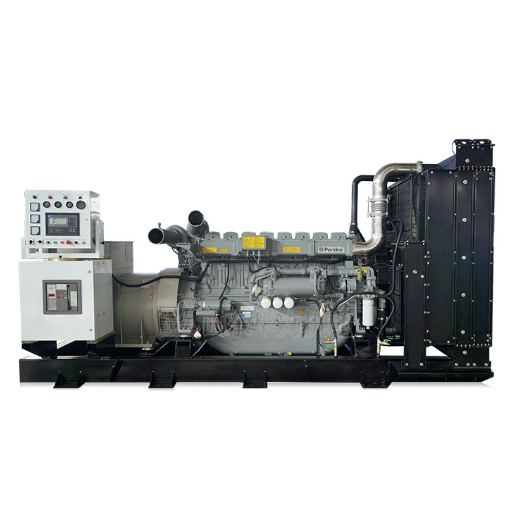
Generator remote monitoring is not a cost. Instead, it is insurance with a measurable return. Industrial generator monitoring delivers the fastest ROI in applications where downtime is measured in thousands of dollars per minute.
Monitoring System Cost Breakdown
| Component | Cost Range |
|---|---|
| Controller upgrade (if needed) | 800−800−2,500 |
| Telemetry gateway or modem | 300−300−800 |
| IoT sensor kit (retrofit) | 200−200−600 |
| Installation and commissioning | 400−400−1,200 |
| Annual cloud platform fee | 200−200−600 per unit |
| Annual cellular data plan | 100−100−300 per unit |
Cost of Unplanned Downtime
The Uptime Institute reports that the average cost of a data center outage is $9,000 per minute. A hospital without backup power faces regulatory penalties, patient safety risks, and reputational damage. A telecom tower with a failed generator loses lease revenue and faces SLA penalties. For mining operations, generator downtime means production stops.
Predictive Maintenance Savings
McKinsey estimates that predictive maintenance reduces equipment downtime by 30-50% and extends asset life by 20-40%. A monitoring system that detects a degrading water pump bearing allows a $200 replacement during a scheduled window. Without monitoring, the same bearing seizes during an emergency, damages the water pump, and causes an unplanned outage.
ROI Scenarios by Application
| Application | Typical System Cost | Potential Downtime Cost | Payback |
|---|---|---|---|
| Data center (1,000+ kVA) | 5,000−5,000−8,000 | $500,000+ | Immediate |
| Hospital (500-1,000 kVA) | 3,500−3,500−6,000 | $100,000+ (regulatory + liability) | Single event |
| Telecom tower (30-100 kVA) | 800−800−2,000 | 15,000−15,000−40,000 (SLA penalties) | 1-3 months |
| Mining camp (500+ kVA) | 4,000−4,000−7,000 | $50,000+ (production loss) | Single event |
| Commercial building (100-300 kVA) | 1,500−1,500−3,500 | 10,000−10,000−25,000 | 6-12 months |
For a generator for data center deployment, monitoring is often mandatory. For a generator for hospital installation, it supports patient-safety compliance. For a deeper analysis of life cycle costs, see our diesel generator TCO guide.
Integrating Generator Remote Monitoring with BMS, SCADA, and CMMS
Modern controllers support Modbus, BACnet, and SNMP protocols for integration with building management systems (BMS) and SCADA networks. Modern generator remote monitoring platforms can publish this data directly to BMS and SCADA dashboards. Deep Sea and ComAp controllers publish their Modbus register maps, which simplifies integration. Confirm protocol compatibility with your BMS vendor before buying.
For maintenance workflows, connect monitoring alerts to your computerized maintenance management system (CMMS):
- Low battery voltage → auto-create urgent inspection work order
- Run-hours threshold exceeded → auto-generate oil-change PM with parts picklist
- Fuel anomaly → trigger inspection for theft or leak
Retain at least 12 months of data. Historical records help you spot gradual degradation, such as battery voltage decline or fuel efficiency loss, before it causes a failure.
Buying From a Chinese Factory: Generator Remote Monitoring Compatibility Checklist
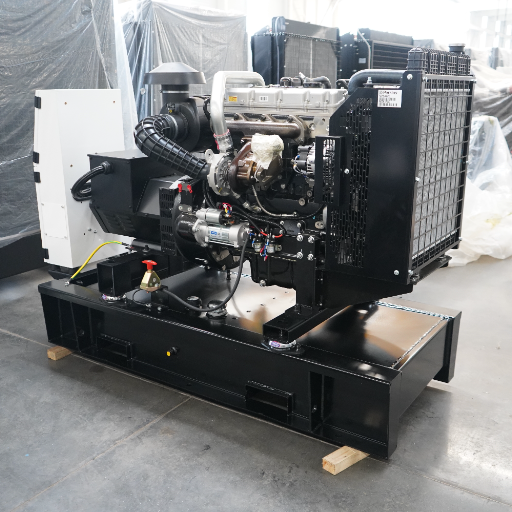
International buying of a diesel generator set adds complexity. As a result, the generator remote monitoring system you need may not be the system your supplier ships by default.
Verify the Controller Brand and Model
Ask for the specific controller part number before you sign the purchase order. Confirm the model supports remote monitoring and has the ports you need.
Confirm Firmware Unlock Status
Some controllers ship with monitoring features locked by regional distributors. Verify that the firmware is unlocked for your country and that the monitoring platform license is included in the purchase price.
Request Integration Documents
Every delivery should include:
- Controller manual
- Complete parameter map
- Modbus register list
- Wiring diagrams for the communication gateway
Without these documents, linking the generator to your BMS or SCADA network becomes an expensive rediscovery project.
Check Connectivity Hardware
Does the generator ship with a cellular modem, or is that extra? Is the modem compatible with the cellular bands in your country? A modem built for China may not support the frequencies used in Nigeria or Peru. For sites where noise is a concern, pair the system with a silent diesel generator enclosure and environmental sensors.
Case study: Indonesian hospital learns the hard way. A 300-bed hospital in Surabaya bought three 400 kVA generators from a China factory in 2022. The supplier promised “remote monitoring capability.” The units arrived with basic Deep Sea DSE 3110 controllers, no Ethernet port, no cellular module, and no cloud connectivity. In 2024, Indonesia’s Ministry of Health required real-time monitoring of emergency power systems in hospitals. As a result, the hospital had to retrofit all three units with ComAp InteliGen NT controllers and InteliMonitor licenses at $4,200 per unit. The original supplier had sold generators with obsolete controllers. The hospital now requires specific controller part numbers, firmware version confirmation, and monitoring platform license documentation in every RFP.
Frequently Asked Questions About Generator Remote Monitoring
Can I monitor any generator remotely, or does it need a smart controller?
Any generator can be monitored remotely, but the depth of data depends on the controller. A modern Deep Sea or ComAp controller provides full diagnostics, fault codes, and event logs. A basic analog controller needs external sensors for voltage and temperature only. A generator with no controller needs a complete controller upgrade.
How much does a generator remote monitoring system cost?
For a new generator with a compatible controller, add 300−300−800 for a telemetry gateway and 200−200−600 per year for the cloud platform and data plan. For a retrofit, budget 800−800−2,500 for a controller upgrade plus installation. A basic IoT sensor kit costs 200−200−600 but provides limited diagnostic depth.
What is the best controller brand for remote monitoring?
Deep Sea Electronics and ComAp are the industry standards for industrial applications. Both offer native cloud platforms, global support, and compatibility with all major engine brands. For OEM-locked installations, Cummins PowerCommand Cloud and Generac Mobile Link are strong within their ecosystems.
Will remote monitoring void my generator warranty?
It depends on the installation. Monitoring hardware supplied or approved by the generator manufacturer typically does not affect warranty coverage. Unauthorized modifications to controller wiring or non-approved third-party devices may void warranty terms. Confirm with your supplier before installation.
Can I integrate generator monitoring with my building management system?
Yes. Modern controllers support Modbus, BACnet, and SNMP protocols for integration with BMS and SCADA systems. Confirm protocol compatibility with your BMS vendor before buying.
How reliable is cellular monitoring in remote locations?
Cellular monitoring works well in areas with 3G or better coverage. For weak or intermittent signal, use a multi-carrier roaming SIM or add an SMS-only backup module. For areas with no cellular coverage, satellite or local radio networks are the alternatives.
What happens if the monitoring system itself fails?
A properly designed monitoring system fails safely. The generator continues to operate normally if the communication link is lost. Configure alerts to notify you if the monitoring system stops transmitting a heartbeat signal. Some platforms offer redundant communication paths, such as primary cellular with SMS backup.
Conclusion
Generator remote monitoring transforms a generator from a passive machine into a managed asset. Voltage, temperature, runtime, fuel level, and fault codes are not abstract data points. They form the early warning system that prevents catastrophic failures.
The buyers who get this right treat monitoring as a purchase requirement, not an afterthought. They verify controller models, confirm firmware compatibility, and demand integration documents before they transfer the deposit. In addition, they choose connectivity that matches their geography. They segment their generator networks and change default passwords.
The buyers who get this wrong install monitoring only after their first expensive surprise. They discover that their controller cannot support the platform they want, that their cellular modem does not work in their country, or that their monitoring platform license was never included in the purchase price.
At Shandong Huali Electromechanical Co., Ltd., we specify Deep Sea and ComAp controllers with remote monitoring support as standard on all industrial diesel generator sets. We provide controller manuals, parameter maps, and Modbus register lists with every delivery. We confirm firmware unlock status and regional compatibility before shipment.
For industrial generator monitoring, the controller brand and firmware unlock status are the two most important pre-purchase checks. If you are specifying monitoring for a new purchase or retrofitting an existing fleet, contact our team for a controller and connectivity recommendation matched to your site conditions.
