
Marine generator sizing is the process of calculating the exact kVA capacity your vessel needs based on electrical load inventory, diversity factor, motor starting surge, and environmental conditions. Size it too small and you risk blackout during motor start. Size it too large and you waste fuel, accelerate engine wear, and trigger wet stacking.
At Shandong Huali Electromechanical Co., Ltd., our marine engineering team has sized generators for yachts, cargo ships, fishing vessels, and offshore platforms for over 25 years. This marine genset sizing guide covers the same five-step methodology our engineers use to specify the right unit for any vessel.
Key Takeaways
- Size a marine generator in five steps: load inventory, diversity factor, motor starting surge, kW-to-kVA conversion with safety margin, and environmental derating.
- Diversity factors for marine applications range from 0.70 to 0.95 depending on vessel type; do not apply land-based factors.
- Motor starting surge can demand 3-10x running current; your starting method (DOL vs Star-Delta vs Soft Starter vs VFD) directly affects generator size.
- Add a 20-30% safety margin after converting kW to kVA at 0.8 power factor, then derate for engine room temperature and altitude.
- Chronic underloading below 30% of rated capacity causes wet stacking, carbon buildup, and premature engine failure.
Want to know how to size a marine generator for your specific vessel? Contact our marine engineering team for a free generator sizing report.
Why Marine Generator Sizing Matters for Your Vessel
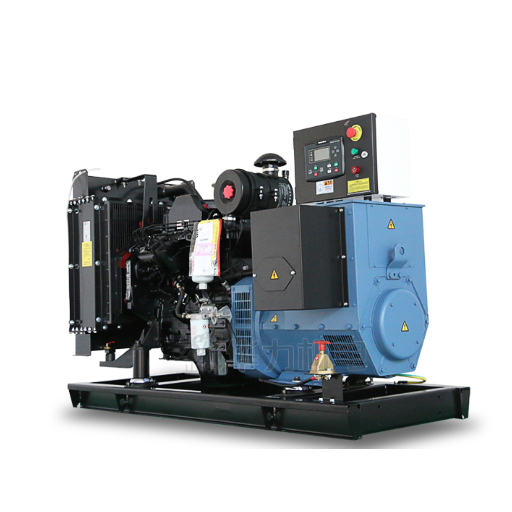
Marine electrical systems are more demanding than land-based installations. A vessel operates in multiple modes: sea passage, cargo handling, anchorage, and emergency. Each mode presents a different load profile.
Precision matters. An undersized generator will collapse under motor starting surge, dropping voltage below the threshold where navigation electronics reboot. An oversized unit runs cold. It accumulates unburned fuel in the exhaust and destroys itself from wet stacking.
The consequences are expensive. A voltage dip during crane operation can reset autopilot, radar, and GPS. Wet stacking from chronic underload requires decarbonization, injector replacement, and oil changes that cost thousands. Unlike land-based installations, you cannot simply call a rental company when your only generator fails at sea.
A 65-foot cruising yacht in the Mediterranean was fitted with a 35 kW generator because the owner “wanted plenty of power.” At sea, the vessel’s actual load was only 8 kW, less than 25% of rated capacity. Within 18 months, the generator suffered severe wet stacking: black smoke, fuel dilution in the oil, and fouled injectors. The owner spent €4,200 on decarbonization and injector replacement. A properly sized 12 kW unit would have operated at 65-75% load, avoided wet stacking entirely, and saved €12,000 in capital cost.
For the complete overview of marine generator types, certification, and cooling systems, see our marine diesel generator guide.
Step 1: Conduct a Complete Load Inventory
Every accurate marine generator sizing exercise begins with a complete load inventory. You must list every electrical consumer on board, record its running power in kW or kVA, and capture the starting power for every motor. Missing a single large motor is the most common reason generators are undersized.
Essential and Navigation Loads
These loads run continuously and cannot be switched off without compromising safety. They include navigation lights, radar, GPS, autopilot, VHF radio, AIS, and emergency lighting. While individually small, their cumulative draw is constant and must be included in the base load.
Operational Loads
Operational loads vary by vessel activity. They include deck cranes, winches, windlasses, bow thrusters, steering gear, fire pumps, bilge pumps, and cargo handling equipment. These often contain the largest motors on board and therefore dominate generator sizing. Record both running watts and starting watts for every motor.
Hotel and Habitation Loads
Hotel loads include air conditioning, refrigeration, galley equipment, laundry, lighting, and entertainment systems. On passenger vessels and yachts, these can exceed operational loads. Note that marine air conditioning compressors are notorious for high starting surge, sometimes 6-10x running current.
Load Inventory Table Template
Use this template to build your own load analysis. Copy it into a spreadsheet and fill in your vessel’s actual values.
| Load Item | Qty | Running kW Each | Total Running kW | Starting kW Each | Starting Method | Notes |
|---|---|---|---|---|---|---|
| Navigation lights | 1 | 0.5 | 0.5 | 0.5 | Direct | Continuous |
| Radar | 1 | 1.2 | 1.2 | 1.2 | Direct | Continuous |
| Air conditioning | 2 | 4.0 | 8.0 | 24.0 | DOL | Highest surge risk |
| Deck crane motor | 1 | 75.0 | 75.0 | 375.0 | DOL | Critical for sizing |
| Fire pump | 1 | 15.0 | 15.0 | 75.0 | Star-Delta | Emergency only |
| Galley equipment | 1 | 12.0 | 12.0 | 12.0 | Direct | Intermittent |
| Winch | 1 | 22.0 | 22.0 | 66.0 | Soft Starter | Operational |
| Bow thruster | 1 | 45.0 | 45.0 | 135.0 | Soft Starter | Maneuvering only |
Key point: Record both running watts and starting watts for every motor. The generator must handle the sum of all running loads plus the largest single motor starting surge.
Step 2: Apply the Diversity Factor
Not every load runs simultaneously in a marine generator sizing analysis. A diversity factor accounts for the probability that only a fraction of your total installed load will be online at any given moment. Ignoring diversity leads to massive oversizing.
What Is Diversity Factor?
Diversity factor is the ratio of the sum of individual maximum demands to the actual maximum demand of the whole system.
Formula: Diversity Factor = Sum of Individual Maximum Demands / Actual Maximum Demand
In practice, a diversity factor of 0.80 means you expect 80% of your installed load to be running at peak simultaneously. The remaining 20% represents loads that cycle on and off or operate in mutually exclusive modes.
Marine-Specific Diversity Factors by Vessel Type
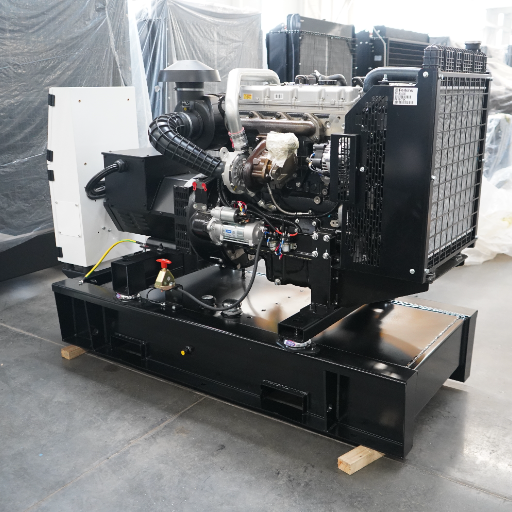
Land-based diversity factors do not apply to marine environments. A cargo ship at sea has a radically different load profile than one in port. The table below shows standard marine diversity factors based on actual vessel operating profiles.
| Vessel Type | Diversity Factor | Rationale |
|---|---|---|
| Yachts and small craft | 0.70 – 0.80 | Hotel loads cycle; not all cabins occupied |
| Fishing vessels | 0.75 – 0.85 | Winch and processing loads are intermittent |
| Cargo ships at sea | 0.80 – 0.90 | Navigation and hotel loads steady; cargo gear offline |
| Cargo ships in port | 0.85 – 0.95 | Cargo cranes are active; navigation is reduced |
| Offshore platforms | 0.85 – 0.95 | Industrial process loads run continuously |
| Passenger ferries | 0.80 – 0.90 | Hotel loads high but predictable |
Warning: Do not use land-based commercial building diversity factors of 0.50-0.60 for marine applications. Marine electrical systems have fewer redundant circuits and higher critical-load ratios. A factor below 0.70 is rarely appropriate at sea.
Step 3: Calculate Motor Starting Surge
Motor starting surge is the single most common reason marine generator sizing fails. When a large induction motor starts via direct-on-line (DOL), it can draw 3-10 times its rated running current for several seconds. According to Kohler marine power specifications and Victron marine generator testing, AC compressors and large pumps frequently exhibit the highest surge multiples.
Why Motor Starting Dominates Generator Sizing
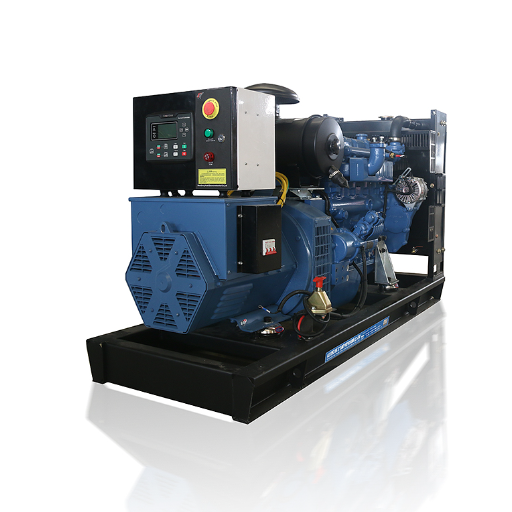
A generator’s alternator must deliver enough reactive power (kVAR) to establish the motor’s magnetic field while maintaining voltage within acceptable limits. If the motor surge exceeds the generator’s transient capability, voltage collapses. The resulting dip can drop navigation electronics below their operating threshold, causing reboots or shutdowns.
Most marine generators can deliver approximately 300% of rated current for 10 seconds to handle motor starting, per Cummins generator selection guidelines. However, this capability varies by alternator design and engine governor response. Always verify with the manufacturer.
Starting Method Comparison
Your choice of motor starting method has a direct impact on generator size. The table below compares common methods and their effect on generator kVA requirements.
| Starting Method | Starting Current Multiplier | Generator kVA Impact | Best For |
|---|---|---|---|
| Direct-On-Line (DOL) | 6-10x | Highest; may require 2-3x running kVA | Small motors, emergency pumps |
| Star-Delta | 2-3x | Moderate; reduces surge significantly | Medium motors, cranes |
| Soft Starter | 2-4x | Moderate; controlled acceleration | Large fans, compressors |
| Variable Frequency Drive (VFD) | 1-1.5x | Lowest; minimal surge | Pumps, thrusters, propulsion |
Voltage Dip Tolerance
Cummins technical guides recommend targeting a maximum voltage dip of 15-20% during motor start. Beyond 20%, sensitive navigation and communication equipment may dropout. If your calculation predicts a dip above 20%, you have three options: increase generator size, change the motor starting method, or add a soft starter/VFD.
A Southeast Asian shipyard specified a 500 kVA generator for a new 6,000 DWT general cargo vessel. The load analysis showed 380 kW continuous demand, well within the 500 kVA (400 kW) rating. But the chief engineer forgot to account for the 200 kW deck crane motor starting via direct-on-line. When the crane started with other loads online, the generator voltage dipped 28%, causing the navigation radar and autopilot to reboot. The vessel had to upgrade to a 625 kVA unit at a cost of $18,000, a mistake caught too late.
Bottom line: Always identify your largest motor, determine its locked-rotor kVA, and confirm your generator can start it while carrying all other simultaneous loads.
Step 4: Convert kW to kVA and Add Safety Margin
Electrical load inventories are the foundation of every marine generator load calculation. They are usually calculated in kilowatts (kW), the real power consumed by resistive and motor loads. Generators are rated in kilovolt-amperes (kVA), the apparent power the alternator must deliver. Converting between the two requires the power factor.
kW to kVA Conversion Formula
For standard marine three-phase systems, the power factor is typically 0.8 lagging according to IEC 60092 electrical installations in ships.
Formula: kVA = kW / Power Factor
Example: A continuous load of 320 kW at 0.8 power factor requires:
320 kW / 0.8 = 400 kVA
Why You Need a 20-30% Safety Margin
A generator running at 100% of its nameplate rating has no headroom. Load growth, voltage fluctuations, and measurement uncertainty all demand spare capacity. Marine engineering practice recommends adding 20-30% safety margin above the calculated kVA demand.
Example calculation walkthrough (cargo ship):
- Sum of running loads: 380 kW
- Apply diversity factor (0.85 for cargo ship in port): 380 x 0.85 = 323 kW
- Add largest motor starting surge (crane, DOL): 323 + 200 = 523 kW peak
- Convert to kVA at 0.8 PF: 523 / 0.8 = 654 kVA
- Add 25% safety margin: 654 x 1.25 = 817.5 kVA
- Recommended generator size: 800-850 kVA
Environmental Derating Factors
Marine engine rooms are not climate-controlled offices. High temperature, humidity, and altitude all reduce generator output. Engine manufacturers typically specify derating of approximately 2% per 5°C above 40°C ambient temperature.
| Environmental Condition | Derating Factor | Example Impact on 500 kVA |
|---|---|---|
| 45°C engine room | -2% | 490 kVA effective |
| 50°C engine room | -4% | 480 kVA effective |
| 55°C engine room | -6% | 470 kVA effective |
| Above 1,000 m altitude | -3% per 500 m | 485 kVA at 1,500 m |
| High humidity (>80%) | -1% to -2% | 490-495 kVA effective |
Always apply derating after calculating your required kVA. If your engine room routinely exceeds 45°C, size the generator 5-10% larger than the standard calculation suggests.
Step 5: Size for Your Vessel Type
Marine generator sizing for different vessels requires fundamentally different approaches. A yacht’s load profile, operating cycle, and redundancy requirements differ completely from a cargo ship. The sections below provide practical guidance by vessel category.
Yachts and Small Craft (3-50 kW Range)
Boat generator sizing depends heavily on length and equipment level. Yachts prioritize low noise, compact footprint, and fuel efficiency over raw capacity. The hotel load (air conditioning, refrigeration, entertainment) usually dominates.
| Boat Length | Typical Load Range | Common Generator Config | Key Sizing Consideration |
|---|---|---|---|
| 25-35 ft | 2-4 kW | Single 3-5 kW unit | AC compressor starting surge |
| 35-50 ft | 5-9 kW | Single 8-12 kW unit | Silent enclosure required |
| 50-70 ft | 12-25 kW | Single 15-30 kW unit | Redundancy often desired |
| 70-120 ft | 30-80 kW | Twin units or single 40-100 kW | Parallel capability for efficiency |
For yachts, the most common sizing mistake is oversizing “to be safe.” A 45-foot cruising yacht rarely needs more than 12 kW unless it carries multiple air conditioning units and a full galley.
Fishing Vessels (50-500 kVA)
Fishing vessels present a highly cyclical load profile. Winches, net haulers, and processing equipment create sharp load spikes. The generator must handle these surges without voltage dip while also providing continuous power for navigation and hotel loads during transit.
Key consideration: Size for the worst-case simultaneous operation. If the winch and processing line can run together during a catch, the generator must support both. Do not average the loads.
Cargo Ships and Ferries (500-3,000 kVA)
Ship generator sizing for commercial vessels follows classification society rules more strictly than recreational craft. Many class societies require the generator to carry all essential loads plus the largest motor starting surge while maintaining voltage within ±10%.
Cargo ships typically need their largest capacity in port during cargo operations. At sea, the load drops significantly. Consider parallel generator configurations that allow one unit to handle sea passage while two or three run together during port operations.
Offshore Platforms (1,000-5,000+ kVA)
Offshore platforms run process loads, drilling equipment, accommodation modules, and safety systems continuously. Redundancy is mandatory. Platform sizing almost always uses N+1 redundancy with multiple medium-speed diesel generators in parallel.
Parallel Operation and N+1 Redundancy Sizing
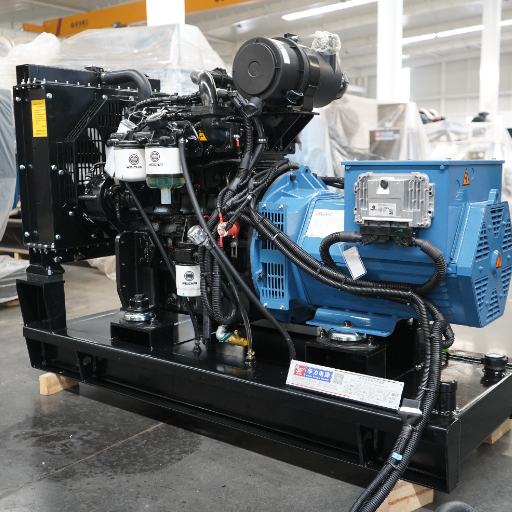
Running a single massive generator is rarely the best solution for commercial marine applications. Multiple smaller units in parallel offer redundancy, part-load efficiency, and maintenance flexibility.
When to Use Multiple Generators vs One Large Unit
Choose a single generator for small craft with simple load profiles. Choose parallel operation for cargo ships, ferries, and offshore platforms where redundancy and load following matter.
| Configuration | Best For | Advantages | Disadvantages |
|---|---|---|---|
| Single generator | Yachts, small fishing boats | Lower cost, simpler control | No redundancy; must oversize for surge |
| Twin parallel | Ferries, medium cargo ships | N+1 redundancy; load sharing | Higher initial cost; synchronizing required |
| Three or more | Offshore platforms, large ships | High redundancy; optimal loading | Complex PMS; more maintenance points |
N+1 Redundancy: Size Each Unit for Full Load
N+1 redundancy means you have enough capacity to lose one generator and still carry the full vessel load. The critical sizing rule: each unit must be large enough to handle 100% of the vessel’s operating load, not a fractional share.
Example: A ferry with a 1,200 kW continuous load and N+1 redundancy needs three 600 kW generators, not two 600 kW units. With three units, any two can carry the full 1,200 kW if one fails. With two units, losing one leaves you with only 600 kW, a dangerous 50% shortfall.
Load sharing between parallel generators is managed through speed droop governors or an integrated power management system. N+1 redundancy principles apply equally to data center generator backup systems and marine installations. A well-tuned PMS can reduce fuel consumption by 10-15% compared to manual generator operation by automatically starting and stopping units to match load demand.
Common Marine Generator Sizing Mistakes
Even experienced marine engineers make these errors during marine generator sizing. Review this list before finalizing your specification.
Mistake 1: Sizing Only for Peak Load
Peak load occurs during cargo operations or emergency maneuvers. But a generator spends most of its life at partial load. Size for the most demanding normal operating mode. Then verify the generator can handle peak with acceptable voltage dip.
Mistake 2: Ignoring Motor Starting Surge
This is the most expensive mistake on the list. A generator that looks perfectly adequate on paper can collapse when a large DOL motor starts. Always calculate locked-rotor kVA and verify alternator transient response.
Mistake 3: Applying Land-Based Diversity Factors to Marine
Commercial building diversity factors of 0.50-0.60 assume large populations of small, independent loads. Marine vessels have fewer circuits and higher critical-load concentrations. Use marine-specific diversity factors from 0.70 to 0.95.
Mistake 4: Forgetting Environmental Derating
Engine rooms in tropical waters routinely exceed 45°C. A generator rated at 500 kVA at 25°C may deliver only 470 kVA at 50°C. Apply temperature and altitude derating before selecting the final unit.
Mistake 5: Oversizing “to Be Safe”
Chronic underloading below 30% of rated capacity causes wet stacking, carbon buildup, fuel dilution in the lube oil, and premature engine wear. A generator that is too big is just as problematic as one that is too small. Follow a proper generator maintenance schedule to catch early signs of wet stacking before they cause damage.
Frequently Asked Questions
What is the standard power factor for marine generators?
The standard power factor for marine three-phase generator systems is 0.8 lagging according to IEC 60092. This means a 500 kVA generator delivers 400 kW of real power. Always confirm the actual power factor of your vessel’s load profile, as highly inductive loads (motors, transformers) can push the power factor lower.
How much safety margin should I add when sizing a marine generator?
Add 20-30% safety margin above your calculated kVA demand. This provides headroom for load growth, measurement uncertainty, and transient overloads. For vessels with highly uncertain load profiles or planned future expansion, 30% is appropriate. Well-documented existing vessels can use 20%.
What is diversity factor and why does it matter?
Diversity factor accounts for the fact that not all electrical loads run simultaneously. It is the ratio of the sum of individual maximum demands to the actual maximum demand of the system. Applying diversity prevents massive oversizing. In marine applications, diversity factors typically range from 0.70 to 0.95.
Can I use a land generator sizing method for a marine generator?
No. Land-based sizing methods use different diversity factors, ignore motor starting surge in the same way, and do not account for marine-specific conditions such as engine room temperature, redundancy requirements, and the critical nature of navigation loads. Always use a marine-specific load analysis methodology.
How does motor starting method affect generator size?
Direct-On-Line (DOL) starting creates the highest surge. It demands up to 10x running current. Star-Delta reduces this to 2-3x. Soft starters and VFDs minimize surge to 1-2x. Switching from DOL to a soft starter or VFD can allow you to specify a significantly smaller generator while improving voltage stability.
What happens if my marine generator is too big?
An oversized generator runs chronically underloaded. That leads to wet stacking. Unburned fuel and carbon accumulate in the exhaust system, oil becomes diluted with diesel, and injectors foul. The engine runs inefficiently. In extreme cases, wet stacking can destroy the engine within 1,000 operating hours.
How do I size generators for parallel operation?
Size each generator to carry 100% of the vessel’s operating load if you need N+1 redundancy. For load-sharing without redundancy, each unit should handle its share plus a margin for uneven loading. Always include a power management system (PMS) to optimize start/stop sequencing and load distribution across units.
What environmental factors require generator derating at sea?
High engine room temperature is the primary factor. Derate approximately 2% per 5°C above 40°C ambient. Altitude above 1,000 meters also reduces output, typically 3% per 500 meters. High humidity above 80% can reduce output by 1-2%. Apply these derating factors after calculating your base kVA requirement.
Conclusion
Marine generator sizing is not guesswork. It is a structured engineering process: inventory every load, apply a vessel-appropriate diversity factor, calculate the largest motor starting surge, convert kW to kVA at 0.8 power factor, add a 20-30% safety margin, and derate for engine room conditions. Skip any step and you risk either a blackout at sea or a generator that destroys itself from wet stacking.
The five-step marine generator sizing method in this guide is the same process our marine engineering team uses when specifying Cummins, Perkins, and Weichai generator sets for global shipyards and vessel operators. With over 80 engineers and technicians, ISO-certified testing facilities, and CCS-compliant production capabilities, Shandong Huali Electromechanical Co., Ltd. delivers marine power solutions sized precisely for your operational requirements.
Get a free generator sizing report from our marine engineering team. Send us your load inventory, vessel type, and operating profile. We will calculate the exact kVA you need, recommend the optimal configuration, and provide a factory-direct quotation backed by 25 years of manufacturing experience.