
A ship can have the most modern main engine in the world, yet it will still be detained if its emergency generator fails to start within 45 seconds. SOLAS generator requirements are not optional guidance; they are binding rules that determine whether a vessel can trade legally. Every cargo ship and passenger ship must carry an independent emergency source of electrical power that starts automatically, runs for a defined endurance period, and supplies safety-critical loads the moment the main switchboard goes dark. A marine diesel generator is the most common choice for this emergency source because of its reliability and load-handling capability.
At Shandong Huali Electromechanical Co., Ltd., we have spent more than 25 years supplying marine generator sets to shipyards and vessel operators. We see the same pattern repeatedly: the theory is well known, but the practical compliance details are where projects slip. This guide consolidates the SOLAS emergency generator requirements from Chapter II-1, Regulations 41 through 44, adds classification society context, and gives you checklists you can use in the shipyard or on board.
Key Takeaways
- SOLAS generator requirements are governed by Chapter II-1/42–44 (passenger ships use Reg. 42, cargo ships use Reg. 43, starting arrangements are in Reg. 44).
- The emergency generator must start automatically and supply its full rated load within 45 seconds of main power failure.
- Fuel endurance is 18 hours for cargo ships and 36 hours for passenger ships, with fuel flashpoint not less than 43°C.
- Two independent starting means are required: primary for 3 consecutive starts, secondary for 3 starts within 30 minutes.
- Ships built on or after 1 July 1998 must be able to restore propulsion from a dead ship condition within 30 minutes of blackout.
- Regular testing, accurate log books, and PSC-ready documentation are as important as the hardware itself.
What Are SOLAS Generator Requirements?
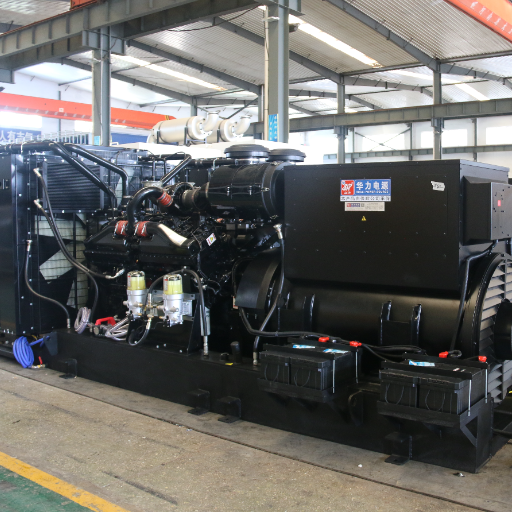
The International Convention for the Safety of Life at Sea (SOLAS) sets the global minimum standards for ship construction, equipment, and operation. When people ask about SOLAS generator requirements, they are usually referring to the emergency source of electrical power and its supporting systems.
The relevant rules sit in SOLAS Chapter II-1, Part D (Electrical installations). The full text of SOLAS Chapter II-1, Regulations 42 and 43 is available through the IMO Rules database for readers who need the exact regulatory language.
| Regulation | What it covers |
|---|---|
| Regulation 41 | Main source of electrical power and lighting systems |
| Regulation 42 | Emergency source of electrical power in passenger ships |
| Regulation 43 | Emergency source of electrical power in cargo ships |
| Regulation 44 | Starting arrangements for emergency generating sets |
Regulation 41 matters because it defines the normal electrical supply that the emergency system must back up. Regulations 42 and 43 define the emergency source itself, whether it is a generator or an accumulator battery. Regulation 44 adds the detailed mechanical requirements that make an emergency generator reliable in a real casualty.
The emergency source may be a diesel-driven generator or a battery bank. Batteries are more common on small cargo ships, but most commercial vessels above a few hundred gross tons use a generator because of the load and endurance demanded.
When Captain Lin reviewed the drawings for a new 8,000 dwt bulk carrier, he assumed the emergency generator was simply a smaller version of the main auxiliary sets. His class surveyor pointed out that SOLAS requires the emergency prime mover to start at 0°C, operate at 22.5° list, and carry fuel for 18 hours, independent of the main engine room. Lin had to redesign the fuel and ventilation routing before the yard could proceed. That conversation saved the owner from a costly rework later in construction.
SOLAS Generator Location and Installation Requirements
The location of the emergency generator is one of the most strictly enforced ship emergency generator regulations. If a fire or flooding in the main machinery space can disable the emergency power supply, the arrangement fails the purpose of the rule.
Above the uppermost continuous deck and outside the machinery space
SOLAS requires the emergency generator, its switchboard, and any transitional source to be located above the uppermost continuous deck and outside the main and auxiliary machinery casings. The space must be readily accessible from the open deck.
Aft of the collision bulkhead
The emergency generator must be positioned aft of the collision bulkhead. This reduces the risk that a forward collision will flood or damage the unit before it is needed.
Separation from the main switchboard
The emergency switchboard should normally be in the same compartment as the emergency generator. The arrangement must ensure that a fire or other casualty in the main switchboard area or a machinery space of category A does not interfere with the emergency power supply. Where practicable, the emergency generator space should not be contiguous to the boundaries of those spaces.
Emergency switchboard in the same compartment
Keeping the generator and switchboard together shortens cable runs, simplifies protection coordination, and makes it easier for the crew to operate and inspect the system from a single location.
For a marine emergency generator installation, the enclosure rating also matters. CCS and other class societies typically expect at least IP23 for indoor emergency sets and IP56 or equivalent for deck-mounted units exposed to seawater and washdown.
Performance Requirements: The 45-Second Rule
The most famous SOLAS emergency generator requirements are the response-time rules. When the main source fails, the emergency source must take over fast enough to keep navigation, communications, and firefighting equipment alive.
Automatic start upon main power failure
The emergency generator prime mover must start automatically when the main source of electrical power fails. Manual starting arrangements must also be available, but the normal path is fully automatic.
Full rated load within 45 seconds
The automatic starting system and prime mover characteristics must be capable of carrying the full rated load as quickly as safe and practicable, subject to a maximum of 45 seconds. This 45-second window is why a transitional battery source is often required for critical loads that cannot tolerate even a brief interruption.
Inclination tolerance
The emergency generator must operate at full rated power when the ship is:
- Upright, or
- Listed up to 22.5°, or
- Trimmed up to 10° either fore or aft, or
- Any combination within those limits.
Engine mounts, lubrication sumps, fuel tanks, and cooling systems must all be designed for these angles.
Dead ship recovery: restore propulsion within 30 minutes
For ships constructed on or after 1 July 1998, SOLAS II-1/42.3.4 and 43.3.4 add a further requirement. Where electrical power is necessary to restore propulsion, the emergency source must have sufficient capacity to restore propulsion from a dead ship condition within 30 minutes after blackout. A dead ship condition means the main propulsion plant, boilers, and auxiliaries are not in operation and no stored starting energy is assumed available for the main plant.
This requirement links the emergency generator size directly to the starting air compressors, lube oil priming pumps, fuel oil pumps, and control systems needed to bring the main plant back online.
Starting Arrangements Under SOLAS Regulation 44
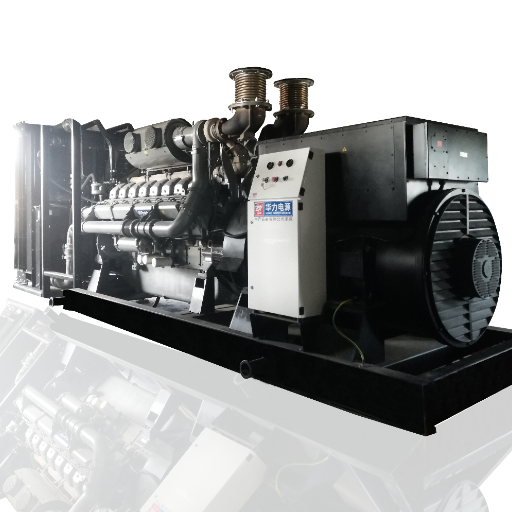
A generator that cannot start is not an emergency generator. SOLAS Regulation 44 specifies the starting arrangements in detail. Meeting SOLAS generator requirements for starting means ensures the unit is ready in any casualty.
Cold-start capability at 0°C
Emergency generating sets must be capable of being readily started in their cold condition at 0°C. If the ship operates where lower temperatures are likely, heating arrangements must be provided and maintained.
Two independent starting means
Each emergency generating set arranged for automatic starting must have at least two independent means of starting. The most common arrangement is a battery-based electric starter as the primary means and a spring, hydraulic, compressed air, or second battery system as the secondary means.
Primary source: 3 consecutive starts
The primary starting device must have stored energy for at least 3 consecutive starts without recharging.
Secondary source: 3 starts within 30 minutes
The secondary source must provide energy for an additional 3 starts within 30 minutes. This gives the crew a second chance if the first starting attempt fails during an actual emergency.
Stored energy maintenance and location
All starting, charging, and energy-storing devices must normally be located in the emergency generator space and must not be used for any purpose other than operating the emergency generating set. For electrical or hydraulic starting, energy is maintained from the emergency switchboard. Compressed air may be maintained from main or auxiliary air receivers, but only through a non-return valve fitted in the emergency generator space.
Chief Engineer Park learned this lesson the hard way. During a port state control inspection in Rotterdam, the PSCO asked him to demonstrate the secondary starting means. The compressed air reserve had been used two days earlier for routine maintenance and not recharged. The vessel was detained until the system was restored and a crew retraining record was produced. A simple checklist item had turned into a four-day delay.
SOLAS Generator Fuel System and Endurance Requirements
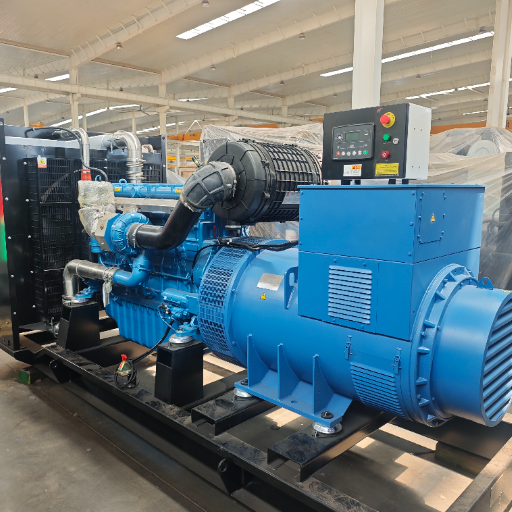
Fuel is the second most common reason emergency generators fail inspection. The fuel system is one of the most strictly enforced aspects of SOLAS generator requirements. The rules are specific and unforgiving.
Independent fuel supply with flashpoint ≥ 43°C
The emergency generator must have an independent fuel oil system. The fuel flashpoint must be not less than 43°C (closed cup), unless special arrangements are approved by the Administration. This effectively rules out gasoline or other low-flashpoint fuels.
18 hours for cargo ships / 36 hours for passenger ships
The fuel tank must contain enough fuel to run the emergency generator at its full rated load for the required endurance period:
| Ship type | SOLAS minimum endurance |
|---|---|
| Cargo ships | 18 hours |
| Passenger ships | 36 hours |
For passenger ships on short voyages, the Administration may accept a reduced period, but not less than 12 hours.
Quick-closing valve and low-level alarm
The fuel system should include a quick-closing valve operable from outside the emergency generator room. A low-level alarm ensures the crew knows when the tank is approaching the minimum reserve needed for the required endurance.
Fuel calculation basics
To verify endurance, divide the usable fuel tank capacity by the generator’s fuel consumption at full load. Remember to use the net usable volume, not the total tank volume, and to account for return fuel if the engine uses a spill-back line to the day tank.
Essential Services Supplied by Emergency Power
The purpose of the emergency generator is to keep safety systems alive. SOLAS generator requirements list the services that must be supplied within the 45-second window.
Emergency lighting and navigation lights
Emergency lighting must cover muster stations, embarkation stations, corridors, stairways, exits, machinery spaces, control rooms, switchboards, and the steering gear compartment. Navigation lights must also remain powered.
Communications, fire detection, and alarms
Internal and external communications, including VHF radio and GMDSS installations, must remain available. Fire detection and alarm systems, the general emergency alarm system, and the ship’s whistle also need emergency power.
Emergency bilge pump and one steering gear power unit
At least one steering gear power unit must be supplied, together with the emergency bilge pump. These are among the highest-load items on the emergency switchboard and often drive the generator size.
Passenger ship additions
For passenger ships, the list expands to include the public address system, fire pumps, fire-service elevators, and possibly additional ventilation controls. This larger load is one reason passenger ships require a longer endurance period.
Transitional Source of Emergency Power
A transitional source, usually a battery bank, covers the gap between main power failure and emergency generator availability. A transitional source is required under SOLAS generator requirements when the emergency generator cannot supply the required loads automatically within the 45-second limit.
When batteries are required
A transitional source is required unless the emergency generator can supply the required loads automatically within the 45-second limit. In practice, most ships include batteries for emergency lighting, navigation lights, GMDSS, and fire alarm systems regardless of generator start time.
30-minute transitional coverage
The transitional source must supply its assigned loads for at least 30 minutes. This covers not only the generator start-up interval but also any repeated start attempts if the first attempt fails.
GMDSS and fire alarm battery independence
Even when the emergency generator supplies the main emergency switchboard, GMDSS reserve sources and fire detection/control power supplies often have their own dedicated batteries under SOLAS Chapter IV and the FSS Code. These batteries are not a substitute for the emergency generator, and the emergency generator starting batteries are not a substitute for GMDSS reserve power.
Passenger Ship vs. Cargo Ship Requirements
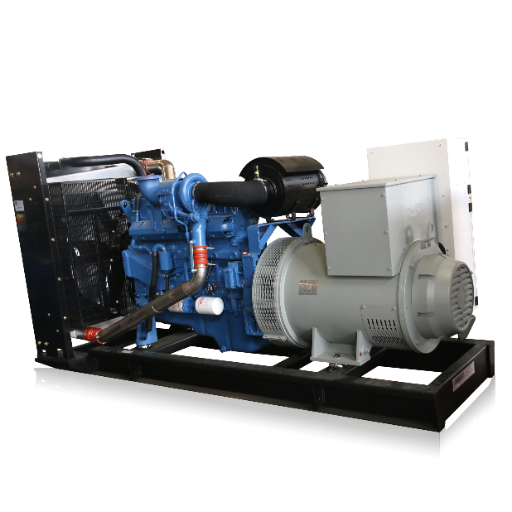
The SOLAS emergency generator requirements for passenger ships and cargo ships are broadly similar in technology but differ in endurance and some load details.
| Requirement | Passenger ships (Reg. 42) | Cargo ships (Reg. 43) |
|---|---|---|
| Applicable regulation | SOLAS II-1/42 | SOLAS II-1/43 |
| Minimum endurance | 36 hours | 18 hours |
| Short-voyage reduction | May be reduced to not less than 12 hours | Not normally applicable |
| Auto-start time | Within 45 seconds | Within 45 seconds |
| Inclination limit | 22.5° list / 10° trim | 22.5° list / 10° trim |
| Cold-start temperature | 0°C | 0°C |
| Starting means | Two independent | Two independent |
| Location | Above the uppermost deck, outside the machinery space | Above the uppermost deck, outside the machinery space |
The practical difference is endurance. A passenger ship carries more people and more complex safety systems, so it must sustain emergency power for twice as long as a cargo ship.
Exceptional Use of Emergency Generator in Port
Ships sometimes want to use the emergency generator to supply non-emergency circuits while in port, for example during laytime or main switchboard maintenance. Exceptional use is permitted under SOLAS generator requirements only when suitable measures are in place, as clarified by IMO MSC.1/Circ.1464/Rev.1.
Suitable measures required
Before the emergency generator can supply non-emergency loads, the ship must have:
- Load-shedding arrangements to prevent overload.
- Prime mover equipment, filters, monitoring, and protection suitable for continuous operation.
- Fuel tank low-level alarm to preserve the SOLAS-required reserve.
- Fire detectors at the emergency generator and switchboard location.
- Means to readily change over to independent emergency operation.
- Isolation switches and protected control circuits so a fault cannot disable main or emergency services.
- Onboard instructions ensuring all controls are correctly set before the ship gets underway.
Practical safeguards for operators
Many operators create a formal risk assessment and checklist for in-port use. The emergency generator must remain ready to take over safety loads instantly if the main power fails. Any use that compromises that readiness is not permitted under the SOLAS interpretation.
SOLAS Generator Testing Requirements: Weekly, Monthly, and Annual Maintenance
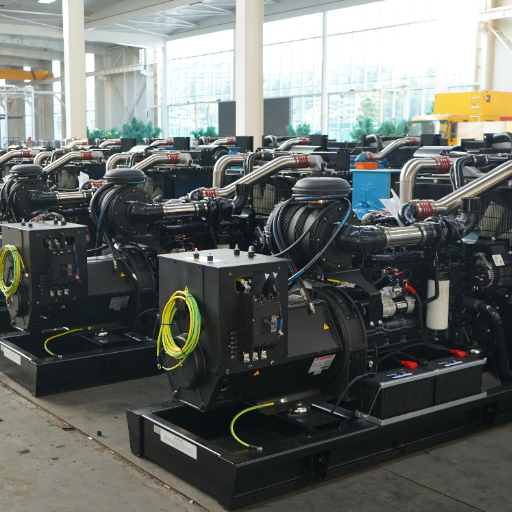
Testing is where compliance becomes visible. A generator that looks perfect on paper but has not been exercised will fail when the PSCO presses the test button. Consistent marine generator maintenance is what separates a vessel that passes PSC inspection from one that gets detained.
Weekly inspection and manual/auto-start test
Each week the crew should:
- Visually inspect the emergency generator space for leaks, debris, and ventilation issues.
- Check fuel, oil, and coolant levels.
- Inspect battery condition and charger operation.
- Start the generator manually or by simulating mains failure.
- Run it long enough to reach stable temperature and pressure.
Importantly, the weekly test should be done with the battery charger disconnected from mains at least part of the time. A charger can mask a weak battery.
Monthly load test and automatic transfer verification
Each month, run the emergency generator on load as close to actual emergency load as practicable, typically for at least 30 minutes. Verify that the automatic transfer switch transfers the emergency loads correctly and that voltage and frequency remain stable.
Annual load bank, insulation, and protective device tests
Annually, or per the manufacturer’s and class society’s instructions, perform:
- A load bank test at 50–75% of rated capacity, or higher.
- Insulation resistance testing of windings and cables.
- Testing of protective relays and safety shutdowns.
- Fuel sample analysis for water, microbes, and particulates.
- Major service items such as oil and filter changes.
Want a printable SOLAS emergency generator compliance checklist? Contact our engineering team and we will send you a template you can use for weekly, monthly, and annual records.
Record-keeping and log book template
PSC inspectors will ask for records. A good emergency generator log includes:
| Item | Weekly | Monthly | Annual |
|---|---|---|---|
| Date, time, and officer signature | ✓ | ✓ | ✓ |
| Start method and running hours | ✓ | ✓ | ✓ |
| Voltage, frequency, and load current | ✓ | ✓ | |
| Oil pressure and coolant temperature | ✓ | ✓ | |
| Battery voltage and charger status | ✓ | ✓ | ✓ |
| Fuel level and quick-closing valve check | ✓ | ✓ | ✓ |
| Defects and corrective action | ✓ | ✓ | ✓ |
| Load bank / insulation test results | ✓ |
PSC Inspection and Common Deficiencies
Port state control concentrated inspection campaigns repeatedly show that emergency power systems are a leading cause of detention.
CIC 2019 on emergency systems and procedures
The 2019 Tokyo MOU CIC on emergency systems found that a significant share of deficiencies related to the emergency source of power, emergency lighting, and testing records. The same themes continue today. The Tokyo MOU CIC 2019 report on emergency systems provides detailed statistics on deficiency rates by ship type and flag state.
Top detainable items
Common reasons for detention include:
- Emergency generator fails to auto-start or come online.
- Starting battery is flat or charger-dependent.
- Fuel is contaminated, low, or the quick-closing valve is inoperable.
- Emergency lighting is not working in machinery spaces or escape routes.
- Test records are missing, incomplete, or falsified.
- Crew members cannot demonstrate operation.
72-hour pre-arrival readiness protocol
Before entering a port with active PSC inspections, verify the following within 72 hours:
- The emergency generator auto-starts and takes load.
- Both starting means are available and charged.
- Fuel is above the minimum required level.
- Emergency lighting is operational throughout the ship.
- Test records are current and signed.
- The duty officer can explain the auto-start sequence.
Second Officer Ahmed ran this protocol before arriving in Singapore. He discovered that a recent software update on the power management system had disabled the auto-start signal to the emergency generator. The fault was corrected before arrival, and the inspection passed without comment. The 72-hour check had paid for itself many times over.
Sizing a SOLAS-Compliant Emergency Generator
There is no single universal size for an emergency generator. The correct size comes from a load analysis of all mandatory emergency services.
Emergency load schedule methodology
Start by listing every load connected to the emergency switchboard. Classify each as life-safety, legally required standby, or optional. Then estimate the actual running current, not just the nameplate rating.
Demand and diversity factors
Not all emergency loads run simultaneously. Apply demand and diversity factors, typically between 0.8 and 1.0 for life-safety loads. The generator kW rating must exceed the diversified load plus a margin for future growth.
Motor starting and transient considerations
Large motors such as fire pumps and steering gear pumps draw high inrush current. The generator must be able to supply the starting kVA while maintaining voltage within acceptable limits. If motor starting is severe, a soft starter or reduced-voltage starter may be needed. For vessels with multiple gensets, understanding marine generator parallel operation helps ensure the emergency unit can synchronize with restored main power without voltage or frequency disruption.
Classification society verification
The final load schedule must be submitted to the classification society for review. CCS, ABS, DNV, and others will verify that the generator capacity, endurance, and voltage regulation meet both SOLAS and their own rules.
If you are sizing a new emergency generator, our article on marine generator sizing explains the full methodology for main and auxiliary sets.
CCS and Classification Society Alignment
SOLAS sets the international minimum. Classification societies such as CCS translate those minimums into detailed design, testing, and certification requirements.
How CCS rules implement SOLAS requirements
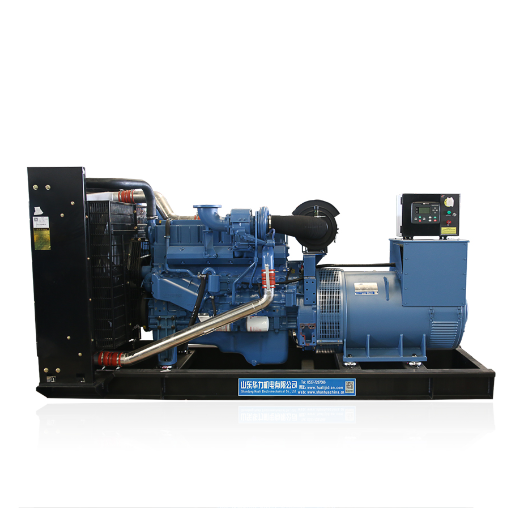
CCS Rules for Classification of Sea-going Steel Ships incorporate SOLAS emergency power requirements and add specifications for materials, construction, electrical performance, and environmental suitability. A CCS-certified marine generator for emergency duty must pass design review, prototype inspection, factory audit, and witnessed factory acceptance testing.
Electrical performance requirements
CCS rules typically require:
- Steady-state voltage regulation within ±3.5% for emergency sets.
- Transient voltage recovery to within ±4% within 5 seconds after a sudden load change.
- Ability to withstand 50% overcurrent for 2 minutes.
- Short-circuit current of at least 3 times rated current for 2 seconds.
- Voltage harmonic distortion not exceeding 5% line-to-line.
Multi-class approval considerations
For vessels trading internationally, owners often seek multi-class approvals such as CCS plus ABS, BV, DNV, or LR. Each society has minor differences in enclosure rating, temperature detectors, shaft material tests, and documentation. Planning for these differences during design avoids expensive rework. When evaluating marine generator brands, look for manufacturers who already hold multi-class approvals and can supply test reports for each society’s specific requirements.
Our guide to CCS-certified marine generator approval explains the certification timeline and how to combine CCS with other class societies efficiently.
Frequently Asked Questions About SOLAS Generator Requirements
What are SOLAS generator requirements for emergency generators?
SOLAS generator requirements are the rules in Chapter II-1/42–44 that specify the emergency source of electrical power on ships, covering location, automatic start, fuel endurance, starting arrangements, essential services, and testing.
How quickly must an emergency generator start under SOLAS?
The emergency generator must start automatically and supply its full rated load within 45 seconds of main power failure. A transitional battery source often covers critical loads during this interval.
How much fuel must an emergency generator carry?
Cargo ships need enough fuel for 18 hours of full-load operation. Passenger ships need 36 hours, or a minimum of 12 hours on short voyages if approved by the Administration.
What is the difference between passenger and cargo ship requirements?
The technical requirements are similar, but passenger ships need longer endurance (36 hours vs. 18 hours) and must supply additional services such as public address systems and fire pumps.
How often should the emergency generator be tested?
SOLAS generator testing requirements call for weekly auto-start and inspection, monthly loaded running and transfer checks, and annual load bank, insulation, and protective device tests. All tests must be recorded.
What are common PSC deficiencies for emergency generators?
Common deficiencies include failure to auto-start, flat starting batteries, contaminated or low fuel, missing test records, and crew members who cannot demonstrate operation.
Where should the emergency generator be located on a ship?
It must be above the uppermost continuous deck, outside the main machinery space, aft of the collision bulkhead, and accessible from the open deck. The emergency switchboard is normally in the same compartment.
Conclusion
SOLAS generator requirements cover far more than the generator itself. They define where it must sit, how fast it must start, how long it must run, what it must power, and how it must be tested. Meeting all SOLAS emergency generator requirements, ship emergency generator regulations, and SOLAS generator testing requirements is the only way to ensure PSC readiness.
If you are specifying a newbuild or refit, focus on the practical details: dual starting means with verified stored energy, an independent fuel system sized for 18 or 36 hours, a transitional battery bank for the 45-second window, and a testing routine that proves the system works every week. This is what keeps a ship safe and trading after a blackout.
At Shandong Huali Electromechanical Co., Ltd., we supply CCS-certified marine generator sets configured for SOLAS emergency power duty, from compact 25 kW deck-mounted units to larger packages integrated with paralleling and power management systems. Our engineering team can help you develop the emergency load schedule, select the right endurance, and align the design with CCS, ABS, BV, or DNV requirements.
Need a SOLAS-compliant emergency generator set for your vessel? Contact our engineering team for a customized solution with classification society certification and documentation support.