
An offshore generator is a generator set engineered to produce reliable electrical power on fixed or floating offshore installations such as oil and gas platforms, FPSOs, drilling rigs, offshore wind substations, and accommodation barges. Unlike standard land-based units, it must survive salt spray, high humidity, vibration, and often hazardous-area classification while delivering power for safety-critical loads. In this guide, you will learn how offshore generators differ from marine generators, where they are used, how to size and certify them, and what maintenance keeps them running when weather windows are short and downtime is expensive.
At Shandong Huali Electromechanical Co., Ltd., we have built CCS-certified offshore generator sets from 8 kVA to 4,000 kVA for ocean vessels, offshore platforms, and ferries. We wrote this guide for project engineers, EPC buyers, and fleet managers who need practical selection advice rather than a product catalog.
Key Takeaways
- An offshore generator powers fixed or floating offshore installations where grid connection is unavailable or unreliable.
- Offshore generators differ from marine generators mainly in duty cycle, power scale, hazardous-area exposure, and redundancy requirements.
- Key standards include IEC 61892, NORSOK Z-015, IMO SOLAS/MARPOL, ABS/DNV/CCS class rules, and ATEX/IECEx for hazardous areas.
- Most platforms design generator capacity with N+1 redundancy and keep 10–25% headroom for future loads.
- Salt corrosion, fuel quality, and emissions compliance (IMO Tier III in NECAs) are the most common causes of offshore generator failure.
- CCS, ABS, and DNV certification must be planned at the quotation stage; retrofitting after production is costly.
What Is an Offshore Generator?
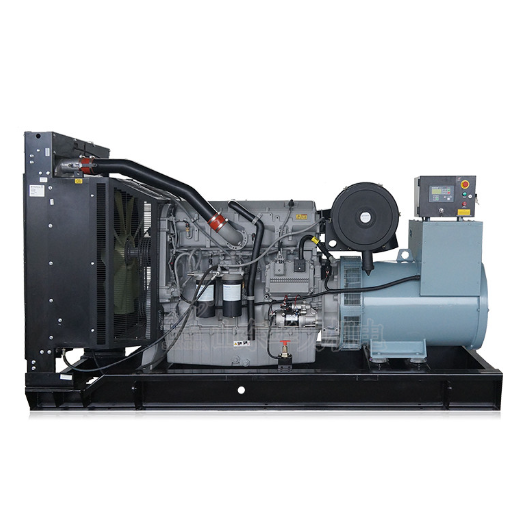
An offshore generator converts mechanical energy into electrical power for offshore assets that cannot rely on shore-based grids. These assets include fixed production platforms, floating production storage and offloading (FPSO) vessels, drilling rigs, accommodation barges, offshore support vessels (OSVs), and offshore wind farm substations. The generator may serve as the main power source, an essential power source, or an emergency backup.
Offshore generators share DNA with marine diesel generators: both use salt-resistant materials, seawater or heat-exchanger cooling, and classification-society approval. However, offshore generators are usually optimized for stationary or semi-stationary high-power duty in corrosive, hazardous environments rather than for the rolling, pitching motion of a ship.
Consider the experience of Lars, a project engineer on a North Sea accommodation barge. His client specified two 500 kW offshore diesel generators for living quarters, HVAC, and galley loads. Lars added only the present load, ignored motor-starting inrush, and skipped the 25% expansion margin. Six months after handover, the barge added a desalination unit and two more crane cabins. The existing units could not cover the inrush of a 110 kW reverse-osmosis pump, so the owner had to rent a third generator at short-term offshore rates. The oversight cost more than the original gensets.
That story explains why offshore generator selection is as much about load forecasting and standards compliance as it is about kilowatts.
Offshore Generator vs Marine Generator: Key Differences
Suppliers often group “offshore and marine generators” into one brochure, but the two terms describe different engineering priorities. If you are powering a ship, you need a marine generator. If you are powering a fixed platform, FPSO, or large offshore industrial facility, you need an offshore generator.
| Feature | Offshore Generator | Marine Generator |
|---|---|---|
| Typical location | Fixed platforms, FPSOs, rigs, offshore wind substations | Ships, yachts, workboats, OSVs, PSVs |
| Primary design driver | High-power continuous duty in corrosive, hazardous environment | Vessel motion: roll, pitch, yaw, heeling |
| Power range | 1,000 kW to 20,000+ kW on large platforms | 20 kW to 2,500+ kVA on vessels |
| Inclination tolerance | Usually static or semi-submersible mounting | ±22.5° continuous, ±35° transient |
| Hazardous-area focus | Critical: wellhead, process modules, Zone 2 common | Required only in fuel tanks, cargo areas |
| Redundancy | N+1 or N+2 generator trains for production continuity | N+1 or DP-redundant for OSVs/PSVs |
| Certification emphasis | IEC 61892, NORSOK Z-015, ABS/DNV/CCS, ATEX/IECEx | SOLAS/IMO, class society rules, occasional ATEX |
| Cooling | Heat exchanger or platform cooling loops | Heat exchanger or keel cooling |
The overlap is real: both must resist salt, both often use seawater cooling, and both usually carry classification-society approvals. But the difference in duty, scale, and hazardous-area exposure changes the specification sheet.
Where Offshore Generators Are Used
Offshore generators appear wherever people and machinery operate beyond the reach of a reliable grid. The application determines capacity, fuel type, redundancy, and certification. DNV publishes practical guidance on power-supply design for offshore substations; the DNV guidance on offshore substation power supply design is a useful starting point for electrical engineers laying out an offshore platform generator system.
| Application | Typical load | Common genset size | Key requirement |
|---|---|---|---|
| Oil and gas drilling rig | Drilling motors, cranes, mud pumps, accommodation | 1,000–5,000 kW | High inrush tolerance, N+1 redundancy |
| FPSO / production platform | Separation, compression, water injection, accommodation | 10–150 MW total plant | Gas turbine + diesel backup, fuel flexibility |
| Offshore wind substation | Construction power, auxiliary systems, emergency backup | 200–2,000 kW | Grid-code compliance, low emissions |
| Accommodation barge / floatel | HVAC, lighting, galley, water makers | 500–5,000 kW | Low noise, vibration isolation |
| OSV / PSV / construction vessel | Propulsion support, DP systems, deck equipment | 400–2,500 kW | DP-grade frequency stability |
FPSOs present the most complex power architecture. A large pre-salt FPSO can require roughly 150 MW of installed generation. Many use dual-fuel gas turbines as the main source, with diesel generators supplying essential and emergency loads. Produced well gas often fuels the turbines, improving autonomy. Smaller platforms and wind farm service vessels increasingly use marine generator parallel operation to split load across multiple mid-sized sets for redundancy and fuel optimization.
Offshore Generator Types and Power Sources
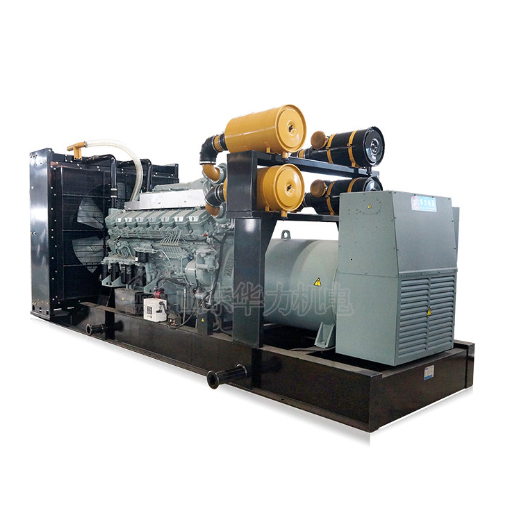
Not every offshore generator burns diesel. The power source depends on platform size, fuel availability, emissions rules, and whether the unit is main, essential, or emergency.
Diesel Generator Sets
The offshore diesel generator remains the default for auxiliary, essential, and emergency offshore power. According to industry market analysis, diesel holds about 61.4% of the marine genset market in 2025. Offshore diesel generators are favored because they start quickly, tolerate variable load, and require less specialized maintenance than gas turbines. Caterpillar 3500 and C280 series, Cummins QSK, and MTU Series 4000 are common choices for offshore platforms.
Gas Turbine and FPSO Generator Sets
Large FPSOs and production platforms often use gas turbine generator sets rated from 1 MW to 25 MW. An FPSO generator may burn produced well gas, natural gas, or light diesel, and it offers high power density for separation, compression, and water injection loads. The trade-off is higher capital cost and more specialized maintenance.
Hybrid and Renewable Integration
The fastest-growing segment of the marine genset market is hybrid systems, expanding at roughly 11.4% CAGR. The broader offshore power generation market is also expanding: offshore wind turbine generator revenue is projected to grow from 21.21billionin2025to21.21billionin2025to36.16 billion by 2031. Offshore operators are pairing diesel or gas turbines with floating offshore wind, batteries, and supercapacitors to cut emissions. For example, some Brazilian FPSO projects model 10–50 MW of floating wind with a 15.23 MW / 121 kWh supercapacitor-based energy storage system to keep frequency within IEC 61892-1:2019 limits.
Offshore Generator Requirements and Standards
Offshore generators must satisfy a stack of standards. Missing one can block installation, void insurance, or trigger a shutdown order from a flag-state inspector on any offshore platform generator project.
IEC 61892 Series
The IEC 61892 offshore electrical installation standards apply to mobile and fixed offshore units. The most generator-relevant parts are:
- IEC 61892-2, System design, including definitions for main, essential, and emergency generators.
- IEC 61892-3, Equipment requirements for generators, motors, transformers, and switchgear.
- IEC 61892-6, Installation requirements for generators and motors.
- IEC 61892-7, Hazardous-area electrical equipment.
NORSOK Z-015
NORSOK Z-015 covers temporary equipment on Norwegian offshore installations. A NORSOK-certified temporary generator is typically housed in a DNV 2.7-1 offshore container and includes fire and gas detection, emergency stop, spark arrestors, and sea-mist filtration.
NORSOK Z-015
NORSOK Z-015 covers temporary equipment on Norwegian offshore installations. A NORSOK-certified temporary generator is typically housed in a DNV 2.7-1 offshore container and includes fire and gas detection, emergency stop, spark arrestors, and sea-mist filtration.
SOLAS and MARPOL
SOLAS governs safety-related emergency power on vessels and offshore units. The IMO MARPOL Annex VI air pollution regulations regulate NOx, SOx, and particulate emissions. Engines above 130 kW must hold an EIAPP certificate and comply with IMO Tier I/II/III limits. From 1 March 2026, the Norwegian Sea becomes a Tier III NOx Emission Control Area (NECA), requiring roughly 75–80% NOx reduction versus Tier I/II.
Classification Society Rules
ABS, DNV, Lloyd’s Register, Bureau Veritas, and CCS each publish rules for offshore generator design, factory acceptance testing, and onboard installation. A CCS certified marine generator for offshore use goes through design review, prototype inspection, factory audit, witnessed FAT, and certificate issuance. A CCS-certified offshore generator follows the same five-stage workflow, with additional attention to salt-spray protection and hazardous-area design. The process typically takes 8–12 weeks for CCS-only approval and must be specified at quotation.
ATEX / IECEx
Generators installed near wellheads, process modules, or tank vents in Zone 1 or Zone 2 hazardous areas need ATEX or IECEx certification. Features include explosion-proof enclosures, gas detection auto-shutdown, hydraulic or mechanical starting, and double-sealed fuel systems.
Sizing an Offshore Generator
Sizing errors are expensive offshore because adding capacity later means crane windows, deck space, and new switchgear. Follow a structured load analysis rather than guessing from nameplate ratings.
Step 1: Build the Load Schedule
Offshore generator sizing starts with a load schedule. List every continuous load by rated power, quantity, and operating factor. Add intermittent loads such as cranes, winches, and pumps. Apply a demand factor (often 0.6–0.85) to reflect that not all loads run at full power simultaneously.
Step 2: Account for Motor Starting Inrush
Large induction motors can draw 5–7 times their rated current at start. If the generator is too small, voltage dip during motor starting can trip contactors, drop variable-frequency drives, or stall other motors. As a rule, keep voltage dip below 15–20% during the largest motor start.
Step 3: Add Headroom and Redundancy
Plan 10–25% spare capacity for future loads. Then apply redundancy. N+1 redundancy means the platform can run normally with one generator out of service. For drilling or production-critical loads, N+1 is the common minimum; some facilities use N+2 or a meshed 2×100% design.
Step 4: Match Duty Rating
Choose a continuous, prime, or standby rating matched to actual operation. Running a standby-rated generator continuously will shorten life and may void warranties. For detailed methodology, see our guide to marine generator sizing.
Mini-story: On a West African FPSO, the electrical team sized the essential diesel generator using only running kW. They did not include the starting kVA of the fire pump. During a blackout drill, the generator sagged below 75% voltage, the pump contactor dropped out, and the diesel failed to restore essential power within the required time. The root cause was a one-line sizing error that required a larger alternator and upgraded AVR, a six-figure retrofit.
Environmental Hardening for Offshore Generators
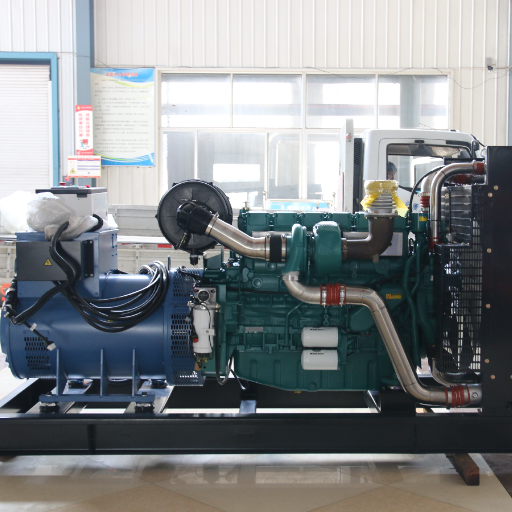
Salt, humidity, and vibration are the three killers of offshore generator reliability. Design must address all three from the quotation stage.
Corrosion Protection
Salt aerosol accelerates electrochemical corrosion. Protective measures include:
- Tinned copper conductors and bus bars.
- Conformal-coated printed circuit boards.
- Epoxy-coated or vacuum-pressure-impregnated alternator windings.
- Stainless steel or hot-dip galvanized fasteners.
- Zinc-rich primers, epoxy undercoats, and polyurethane topcoats meeting ISO 12944 or NORSOK M-501.
Cooling
Most offshore diesel generators use closed-loop seawater heat exchangers or keel coolers. Seawater strainers and sacrificial anodes must be sized for biofouling and checked during every maintenance window.
Vibration and Inclination
Offshore generators are mounted on resilient anti-vibration pads that isolate the set from platform structure in all axes. For vessel-mounted sets, the engine must maintain lubrication at inclinations up to ±22.5° continuous and ±35° transient.
Enclosure and IP Rating
Machinery-space generators typically need at least IP44; exposed deck units need IP55 or IP66. Electrical cabinets in splash zones often require IP66 with tropicalization.
Offshore Generator Fuel and Emissions
Fuel logistics offshore are constrained, and emissions rules are tightening. The specification must address both.
Fuel Systems
Offshore generators usually burn marine gas oil (MGO), marine diesel oil (MDO), or light diesel. Fuel systems must include:
- Day tanks sized for the required endurance, often 48–72 hours of critical load.
- Double-walled piping or containment bunds.
- Quick-closing valves and fire-segregated tank rooms.
- Water separators and filtration to protect injectors and common-rail systems.
Emissions Compliance
MARPOL Annex VI Tier III applies inside NECAs and requires a major NOx reduction. The two main compliance routes are:
- Selective Catalytic Reduction (SCR): Injects urea-based diesel exhaust fluid into the exhaust. SCR can cut NOx by over 95% but adds capex, urea logistics, and catalyst maintenance.
- Exhaust Gas Recirculation (EGR): Recirculates exhaust to lower combustion temperature and reduce NOx formation. EGR is compact but increases heat rejection and fouling risk.
From 1 March 2026, operators in the Norwegian Sea must meet Tier III. Retrofitting SCR onto an existing offshore generator is possible but requires deck space, exhaust modifications, and urea storage.
Offshore Generator Maintenance and Reliability
Offshore maintenance is expensive because every technician needs a helicopter or vessel, and weather can cancel the window. Reliability starts with a maintenance plan that matches the environment.
Preventive Maintenance
A practical offshore generator maintenance plan balances time-based tasks with condition monitoring. Time-based tasks include:
| Interval | Tasks |
|---|---|
| Daily | Coolant and oil level checks, leak inspection, alarm log review |
| Weekly | Load test, battery voltage, fuel-water separator check |
| Monthly | Oil analysis sampling, air filter inspection, belt and hose check |
| Annually | Load-bank test, coolant replacement, alternator insulation resistance test, calibration of sensors and governors |
Predictive Maintenance
Condition-based monitoring reduces unplanned trips. Common techniques include:
- Vibration analysis on engine and alternator bearings.
- Oil analysis for wear metals, fuel dilution, and oxidation.
- Thermal imaging of terminals and switchgear.
- SCADA monitoring of exhaust temperature, coolant temperature, and fuel pressure.
Offshore-Specific Spares Strategy
Keep critical spares on board: filters, belts, hoses, coolant, lubricants, injectors, AVR cards, and starter batteries. For remote fields, the cost of a single missed production day usually exceeds the cost of holding spares.
For a broader maintenance framework, see our marine generator maintenance guide. A structured generator sizing guide can also help if you are still building the load schedule.
Choosing an Offshore Generator Manufacturer
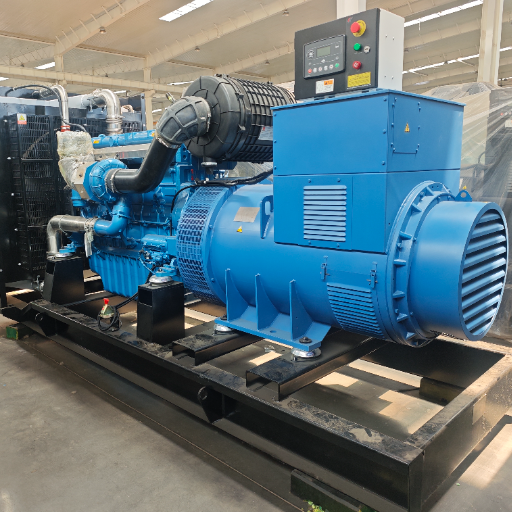
Buying an offshore generator from any manufacturer is risky if you cannot verify what is inside the enclosure. The following checks separate reliable offshore generator manufacturers from trading companies reselling standard industrial sets.
Verify the Engine and Alternator Brand
Ask for the exact engine model, serial-number range, and alternator brand. Genuine Cummins, Perkins, Weichai, or MTU engines paired with Stamford, Leroy Somer, Mecc Alte, or Marathon alternators are common in quality offshore sets. Avoid listings that only say “Cummins type” or “Perkins type.”
Confirm Class Approval Path
CCS, ABS, DNV, Lloyd’s Register, and Bureau Veritas each require design review, material certificates, witnessed factory acceptance testing, and final survey. The approval must be requested at quotation; adding it after production requires re-engineering and re-testing.
Review FAT and Testing Documentation
A credible offshore generator supplier provides:
- Factory acceptance test protocol signed by the class surveyor.
- ISO 8528 load-step test results.
- Vibration test report to ISO 10816.
- Noise-level report.
- Insulation resistance and high-potential test records.
Check After-Sales Support
Offshore generators need spare parts, service manuals, and remote technical support. Ask whether the manufacturer has experience with offshore documentation packages and whether they can supply critical spares within your expected logistics window.
For a deeper brand comparison, read our analysis of marine generator brands. If you are ready to move forward, request a quotation with your load schedule and target class society.
Shandong Huali Offshore Generator Solutions
At Shandong Huali Electromechanical Co., Ltd., we design and manufacture offshore generator sets from 8 kVA to 4,000 kVA for platforms, FPSOs, accommodation barges, and ocean vessels. Our offshore power generation configurations integrate:
- Engines: Cummins, Perkins, Weichai, and Yuchai.
- Alternators: Stamford, Leroy Somer, Mecc Alte, and Marathon.
- Controllers: Smartgen or ComAp with remote monitoring options.
- Cooling: Marine-grade heat exchangers, keel cooling, or direct seawater cooling.
- Certifications: CCS, ABS, and DNV class approvals available.
- Hardening: Salt-spray-resistant coatings, tropical insulation, Class H alternator insulation, IP56+ enclosures, and double resilient mounts.
Consider Mei, a procurement manager at an EPC contractor in Singapore. She was comparing two Chinese offshore generator manufacturers for a 500 kW platform set. One quote was 15% cheaper, but the engine was listed only as “Cummins type” and the alternator had no brand name. The other quote from Shandong Huali specified a genuine Cummins KTA19 engine, a Stamford alternator, and a CCS approval path with witnessed FAT. Mei chose the second option because the class surveyor would reject an unbranded alternator and the cheaper unit would have needed a full redesign for CCS. Her decision saved the project from a six-month delay.
Every unit is 100% tested in our national-standard testing center before delivery. We also provide factory-witnessed acceptance testing with class surveyors when CCS or ABS approval is required.
Need an offshore generator specification for your platform or vessel? Contact our engineering team with your load schedule and class requirements. We will return a tailored proposal with engine, alternator, cooling, and certification options.
Frequently Asked Questions About Offshore Generators
What is an offshore generator?
An offshore generator is a generator set that produces electrical power for fixed or floating offshore installations, including oil and gas platforms, FPSOs, drilling rigs, offshore wind substations, and accommodation barges. It is built to resist salt spray, humidity, vibration, and hazardous-area conditions while delivering power for main, essential, or emergency loads.
What certifications does an offshore generator need?
Common certifications include IEC 61892 compliance, classification society approval (CCS, ABS, DNV, Lloyd’s Register, Bureau Veritas), IMO SOLAS and MARPOL compliance, and ATEX or IECEx certification for hazardous areas.
What is an offshore diesel generator?
An offshore diesel generator is a diesel-powered generator set used for auxiliary, essential, or emergency power on offshore platforms, rigs, and FPSOs. It is preferred because it starts quickly, handles variable load, and requires less specialized maintenance than a gas turbine generator.
What is an FPSO generator?
An FPSO generator produces electricity on a Floating Production, Storage, and Offloading vessel. Large FPSOs often use gas turbine generators fueled by produced well gas, with diesel generators providing essential and emergency backup power.
How much fuel does an offshore generator need?
Critical-load fuel endurance is typically planned for 48–72 hours, though emergency power rules may require longer. MGO or MDO is common. Fuel systems must include double-walled piping or containment and filtration.
How is an offshore generator sized?
Build a load schedule, apply demand and diversity factors, calculate the largest motor-starting inrush, add 10–25% future headroom, and then apply N+1 or N+2 redundancy depending on production criticality.
What does an offshore generator maintenance plan include?
An offshore generator maintenance plan includes daily fluid and leak checks, weekly load tests, monthly oil analysis and filter inspections, and annual load-bank testing. Predictive techniques such as vibration analysis, thermal imaging, and SCADA trending extend intervals when condition data supports it.
How often should offshore generators be maintained?
Run daily checks, weekly load tests, monthly oil analysis and filter inspections, and annual load-bank testing with coolant and alternator insulation checks. Predictive monitoring can extend intervals if condition data supports it.
What is N+1 redundancy in offshore power?
N+1 means the platform has one more generator than the minimum needed to carry normal load. If one unit fails or is offline for maintenance, the remaining units still cover the full load.
Can offshore generators meet IMO Tier III?
Yes, with after-treatment. Selective Catalytic Reduction (SCR) can reduce NOx by over 95%, and Exhaust Gas Recirculation (EGR) can also be used. Tier III is mandatory in NECAs such as the Norwegian Sea from 1 March 2026.
Conclusion
Offshore generators are not simply marine generators with a different name. They are purpose-built power systems designed for high-availability duty in corrosive, hazardous, and logistically remote environments. Success depends on choosing the right power source, sizing for real loads and motor starting, designing in N+1 redundancy, meeting IEC 61892 and class-society rules, and maintaining the unit aggressively before salt and humidity cause failure.
For buyers sourcing from China, the key is to verify genuine engine and alternator brands, confirm the class-approval path at quotation, and witness factory acceptance testing. Shandong Huali supplies CCS, ABS, and DNV-certified offshore generator sets up to 4,000 kVA, with salt-spray-resistant, vibration-proof designs built for platform and vessel duty. Whether you need a single offshore diesel generator or a complete offshore power generation package, the same verification steps apply.
If your project needs a SOLAS generator requirements review or a platform-specific load study, contact our engineering team today. We will help you specify an offshore generator that meets both the standard and the sea.