
A mobile power station is a self-contained power system that can be moved to wherever electricity is needed. It may be a battery-based portable unit, a trailer-mounted diesel generator, or a hybrid solar-diesel-battery plant on wheels. For construction crews, mining operators, event producers, and emergency-response teams, mobile power turns any location into a working site without waiting for grid connection.
When a road contractor in Alberta had to repair a washed-out bridge 40 kilometers from the nearest utility pole, a towable diesel generator arrived behind a standard pickup truck. Within two hours, the crew had lights, welding current, and concrete-curing power. That is the value of mobility.
In this guide, we explain the different types of mobile power stations, how to size and choose one, and how to decide between rental, purchase, and factory-direct procurement. We also show how Shandong Huali builds mobile power systems for construction, mining, and industrial use worldwide.
Key Takeaways
- A mobile power station can be a battery pack, a fuel-powered generator, or a hybrid trailer system; the right choice depends on load, runtime, noise, and emissions limits.
- Construction and mining usually need diesel or gas trailer-mounted generators from 25 kW to over 1,000 kW; events and film production often prefer silent battery units.
- Sizing requires an accurate load inventory, starting-surge calculation, runtime estimate, and 15–25% future growth margin.
- Mobile power station rentals work for short jobs; purchase or factory-direct procurement is better for contractors with steady workloads.
- Shandong Huali supplies mobile and trailer-mounted generator sets from 8 kVA to 4,000 kVA with Cummins, Perkins, Weichai, and Yuchai engines.
What Is a Mobile Power Station?
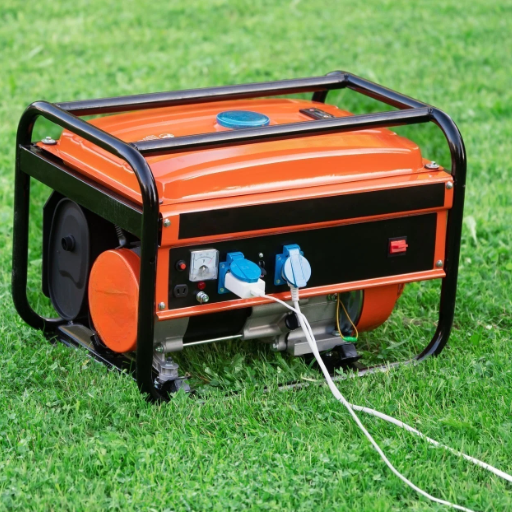
A mobile power station is a transportable system that generates, stores, or converts electricity for use away from permanent grid infrastructure. It includes the power source, output connections, protection devices, and a mobility platform such as wheels, a skid, or a trailer.
Mobile power stations differ from fixed backup generators in three ways:
- They move to the load rather than waiting for the load to come to them.
- They are designed for transport with frames, lifting points, and road-legal trailers.
- They serve temporary or shifting work fronts such as construction phases, mining pits, film locations, and disaster zones.
The term covers a wide capacity range. A 500 Wh lithium battery pack for charging hand tools is a mobile power station. So is a 2 MW trailer-mounted diesel plant supplying a remote mining camp. This guide focuses on the industrial end of that range while explaining how smaller battery units fit into a broader mobile power strategy.
Types of Mobile Power Stations
Choosing the right mobile power station starts with matching the technology to the application. Each architecture has clear strengths and limits.
Battery-Based Mobile Power Stations
Battery mobile power stations store electricity in lithium-ion or lithium iron phosphate (LiFePO4) cells and deliver it through AC inverters and DC outlets. They are silent, emission-free, and safe for indoor use. Capacities commonly range from 0.5 kWh to 30 kWh or more when units are paralleled.
These systems work well for events, film sets, telecom shelters, and light construction tasks such as lighting, device charging, and small tool power. Their main limits are energy capacity and recharge time. A battery station cannot run a tower crane or concrete batch plant.
Diesel and Gas Mobile Generators
A diesel or gas engine driving an alternator remains the standard for high-power mobile applications. Units are mounted on trailers, skids, or in containers for transport. Diesel generators from 25 kW to 1,250 kW are common in construction and mining. Gas generators are used where pipeline gas is available or emissions rules favor cleaner fuel.
Diesel mobile generators handle heavy motor-starting surges, run continuously as long as fuel is available, and can be refueled in minutes. They are louder than battery stations and produce exhaust, which is why sound-attenuated enclosures and emissions aftertreatment are often specified.
Trailer-Mounted Generators
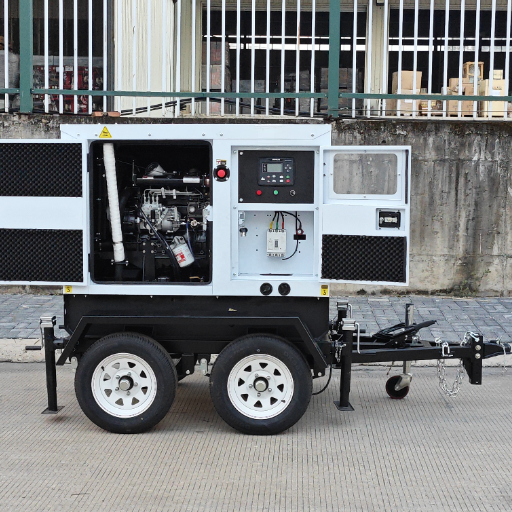
A trailer mounted generator combines a generator set with a road-legal chassis. The trailer carries the engine, alternator, fuel tank, control panel, and sometimes distribution panels and cable storage. Towable units can be pulled by pickup trucks or flatbeds and relocated in hours.
Trailer-mounted generators are common in roadwork, pipeline construction, building sites, and outdoor events. They reduce civil works and let contractors move power as the job progresses. Skid-mounted generators serve similar roles where the unit will sit on a prepared pad rather than travel on public roads.
Skid-Mounted and Containerized Mobile Power Plants
For larger or longer-duration projects, generator sets are installed on skids or inside ISO shipping containers. A containerized mobile power station can house multiple generators, switchgear, fuel systems, batteries, and control rooms in a weather-resistant package.
Containerized plants scale into the megawatt range and can be transported by truck, rail, or ship. They are used for remote mining camps, large construction sites, military bases, and emergency field hospitals. Relocation takes longer than a trailer unit, but the power density and protection are much higher.
Solar-Diesel-Battery Hybrid Mobile Stations
Hybrid mobile power stations combine solar panels, batteries, and a smaller diesel generator on a trailer or skid. Solar and batteries cover base load and quiet-hour operation, while the diesel generator handles peaks and recharges the batteries. Fuel use can drop by 28–50% compared with a diesel-only system.
These systems suit sunny locations with strict noise or emissions limits. They are increasingly used for telecom towers, remote monitoring, eco-sensitive construction, and mining operations with ESG targets. Learn more about integrated off-grid power solutions for remote and standalone sites.
Mobile Transformer Substations
A mobile transformer substation steps transmission voltage down to distribution voltage for temporary industrial service. These trailer-mounted units are used during grid maintenance, emergency restoration, and large construction projects that need medium-voltage feed. They are not standalone generators, but they are an important category of mobile power infrastructure.
| Mobile Power Type | Best For | Typical Capacity | Strengths | Limitations |
|---|---|---|---|---|
| Battery power station | Events, film, light construction | 0.5–30 kWh | Silent, zero emissions, indoor safe | Limited energy and peak power |
| Diesel/gas mobile generator | Construction, mining, heavy industry | 25 kW–1,250+ kW | High output, long runtime, motor-starting capacity | Noise, emissions, fuel logistics |
| Trailer-mounted generator | Shifting work fronts, roadwork | 25 kW–500 kW | Easy relocation, fast deploy | Smaller than container plants |
| Skid/container plant | Remote camps, megawatt sites | 500 kW–10+ MW | High power density, protected | Higher capital cost, slower to move |
| Hybrid solar-diesel-battery | Sunny, ESG-sensitive sites | 10 kW–1 MW+ | Fuel savings, low noise | Higher upfront cost |
| Mobile transformer substation | Grid maintenance, large projects | 1–50 MVA | Fast medium-voltage connection | Requires upstream grid access |
Mobile Power Station Applications by Industry
Mobile power is not limited to one sector. Any project that starts before the grid arrives, operates off-grid, or needs redundant power can use a mobile power station.
Construction Sites
Construction is one of the largest users of mobile power. Site offices, tools, lighting, welding equipment, concrete pumps, and cranes all need electricity before permanent service is available.
A mobile power station for construction can be a 30–100 kVA unit for offices and small tools, or a 200–500+ kVA trailer generator for cranes and batch plants. See our dedicated guide to power supply for construction for distribution design and site planning.
Mobile power lets contractors mobilize quickly and move the power source as building phases change. It also avoids the cost and delay of building temporary utility infrastructure that will be removed later.
Mining and Remote Operations
Mines often operate far from the grid. A mobile generator for mining can supply exploration camps, dewatering pumps, ventilation fans, crushing circuits, and accommodation blocks. Trailer- and skid-mounted units are common because mine layouts shift as pits deepen and ore bodies are exhausted.
Battery mobile power stations are also entering mining for communications, monitoring, and charging small electric equipment. For large-scale operations, containerized diesel or hybrid plants provide megawatts of prime power. Read more about our specialized mining power supply solution for camps, dewatering, and processing circuits.
Events, Film, and Entertainment
Concerts, festivals, film sets, and corporate events need quiet, clean power near audiences and sensitive equipment. Battery mobile power stations are ideal because they produce no noise or exhaust. Larger events may use trailer-mounted diesel generators positioned away from the stage, with battery stations handling front-of-house loads.
Pure sine wave output is important for film and audio gear. Low total harmonic distortion helps avoid flicker in lighting and interference in sound systems.
Oil, Gas, and Energy Projects
Drilling, well servicing, pipeline construction, and renewable-energy installation all use mobile power. Off-grid well pads may rely on trailer-mounted diesel generators for months. Solar and wind construction sites use mobile power for tools, lifting equipment, and worker camps during installation.
Emergency Response and Disaster Relief
After hurricanes, floods, earthquakes, and grid failures, mobile power stations restore electricity to command centers, hospitals, water plants, and shelters. Rapid deployment is critical, so trailer-mounted and skid-mounted units are often pre-positioned in emergency inventories.
See our guide to selecting the right emergency power generator.
Military and Telecom
Military field operations and remote telecom towers require rugged, transportable power. Containerized and trailer-mounted generators with blackout lighting, electromagnetic compatibility, and extreme-temperature performance are common in defense applications. Telecom sites increasingly use hybrid solar-battery-diesel systems to reduce fuel deliveries.
How to Size a Mobile Power Station
Accurate sizing prevents both brownouts and wasted capital. Follow these steps.
Step 1: Inventory All Loads and Duty Cycles
List every device that will run at the same time. Record running watts, starting watts, voltage, phase, and power factor. Include future loads such as additional trailers, new phases, or seasonal equipment.
A clear load inventory is the foundation of every mobile power station design.
Step 2: Calculate Running Watts and Starting Surge
Add the running power of all loads that operate simultaneously. Then identify the single largest motor-starting surge. This surge is added once, not for every motor. Large motors can draw five to seven times their running current at startup.
For example, a 75 kW concrete pump may need 375–525 kVA of momentary starting capacity. The mobile generator must deliver this surge without excessive voltage dip.
Step 3: Determine Required Runtime or Daily Energy
Battery mobile power stations are sized by watt-hours. Multiply total running watts by the number of hours the load must run between charges. Add inefficiency and depth-of-discharge limits.
A 2 kW load running for 8 hours needs at least 16 kWh of usable energy; with inverter losses and battery management reserve, a 20+ kWh station is safer. Fuel-powered generators are sized by power output and fuel storage. A 100 kW load running 24 hours needs a generator rated for continuous duty and enough fuel for the planned runtime or refueling interval.
Step 4: Choose Battery, Fuel, or Hybrid Architecture
Match the architecture to the load profile:
- Battery: light loads, short runtime, indoor or noise-sensitive sites.
- Diesel/gas: heavy loads, long runtime, remote locations.
- Hybrid: variable loads with base-load opportunity from solar or batteries, plus diesel for peaks.
Step 5: Account for Portability and Deployment
Consider how the unit will arrive on site. A battery station may be carried by two people. A 500 kW trailer generator needs a heavy-duty pickup or flatbed.
A containerized plant needs a crane or roll-off truck. Site access, ground conditions, and installation time all affect the choice.
Step 6: Add 15–25% Future Growth Margin
Construction and mining loads grow. Add a margin for additional equipment, extra shifts, or scope changes. A 20% margin is typical for mid-size industrial projects.
A film production company in New Zealand sized a mobile power station by listing cameras, lights, monitors, sound equipment, and catering appliances. The total running load was 4.2 kW, but LED panels and a small fridge created a 6.8 kW starting surge. They chose a 10 kWh battery station with 7 kW peak output, giving them five hours of runtime and headroom for extra gear.
Mobile Power Station vs Generator
Many buyers ask whether a battery mobile power station can replace a diesel generator. The answer depends on the job.
| Factor | Battery Mobile Power Station | Fuel-Powered Generator |
|---|---|---|
| Power output | Lower; 0.3–8 kW typical, some up to 15+ kW | Higher; 4 kW to 1,250+ kW |
| Runtime | Limited by battery; must recharge | Unlimited with fuel supply |
| Noise | Near-silent | 55–85 dB depending on enclosure |
| Emissions | Zero at point of use | Exhaust, CO₂, NOx, particulates |
| Indoor use | Safe | Requires ventilation and CO monitoring |
| Maintenance | Minimal | Oil, filters, belts, fuel care |
| Portability | Highly portable | Requires trailer or heavy transport |
| Upfront cost | Higher per kWh | Lower per kW |
| Running cost | Low if charged from grid/solar | Ongoing fuel cost |
| Heavy motor starting | Limited | Excellent |
Battery mobile power stations win on silence, emissions, and indoor safety. Fuel-powered generators win on continuous high output, long runtime, and heavy motor starting.
For many sites, the best solution is a hybrid: batteries for quiet base load and a generator for peaks and recharge.
Mobile Power Station Rental vs Purchase vs Factory-Direct
When Rental Makes Sense
Rental is best for short projects, emergency response, or when the buyer lacks maintenance capacity. Rental companies handle transport, service, and sometimes fuel logistics. Daily rates for towable diesel generators in the United States commonly range from 150to150to800+ depending on kW and location. Battery mobile power stations are also available for rent from specialists such as GoGrid Systems.
When Purchase Pays Off
Purchase is better for contractors, miners, and event companies with steady work. Owning the asset eliminates recurring rental fees and allows customization. Depreciation, resale value, and redeployment across multiple projects improve total cost of ownership.
Buying from a Chinese OEM
Factory-direct procurement from an established OEM offers competitive pricing, customization, and documented testing. Buyers can specify voltage, frequency, enclosure type, control system, fuel strategy, trailer configuration, and hybrid integration. Shandong Huali supplies mobile generator sets from 8 kVA to 4,000 kVA with Cummins, Perkins, Weichai, and Yuchai engine options.
Key Selection Criteria for Industrial Mobile Power
Power Output and Energy Capacity
Match the continuous power rating to your calculated load. For battery systems, verify both peak output and usable watt-hours. For generators, confirm kW, kVA, and power factor ratings.
Runtime, Fuel, and Recharging Options
Battery stations should have enough capacity for the longest planned runtime or a reliable recharge plan. Fuel generators need tank capacity matched to shift length and refueling logistics. Solar compatibility extends battery runtime in off-grid locations.
Noise Level and Emissions Compliance
Urban and sensitive sites may impose noise limits and emissions restrictions. Sound-attenuated enclosures can reduce diesel generator noise below 70 dB at 7 meters. Tier 4 Final or equivalent aftertreatment reduces NOx and particulates. Battery stations eliminate both concerns.
Weather Protection and Durability Ratings
Outdoor mobile power stations need weatherproof enclosures, corrosion-resistant frames, and high IP ratings for dust and water. Mining and desert sites need heavy-duty air filtration. Cold-climate sites need block heaters and low-temperature fluids.
Safety Features and Certifications
Look for low-oil shutdown, overcurrent protection, ground-fault protection, emergency stops, and fire suppression on larger units. Certifications such as CE, ISO 9001, ISO 14001, and relevant national electrical approvals support global deployment.
Remote Monitoring and Control Systems
Modern mobile power stations include controllers that report fuel level, battery state, run hours, faults, and location. Remote monitoring reduces site visits, predicts maintenance, and prevents theft or unauthorized use.
Transport, Mounting, and Deployment
Verify trailer ratings, axle capacity, braking, lighting, and road-legal dimensions for the target countries. Containerized units should match ISO dimensions for rail and ship transport. Skid-mounted units need lifting points and fork pockets.
Huali Mobile Power Station Solutions
Shandong Huali Electromechanical has more than 25 years of manufacturing experience and supplies generator sets from 8 kVA to 4,000 kVA for construction, mining, and industrial applications. Our mobile power solutions include trailer-mounted, skid-mounted, containerized, and silent-enclosure configurations. Explore our complete range of industrial power solutions.
Engine and Component Options
Huali integrates globally trusted engines and alternators:
- Cummins: high performance for demanding duty.
- Perkins: reliable continuous and standby power.
- Weichai: cost-effective industrial-grade solutions.
- Yuchai: durable engines widely used in emerging markets.
- Stamford alternators: premium output quality.
Customization for Mobile Power Projects
We customize voltage, frequency, phase, enclosure, fuel tanks, automatic transfer switches, paralleling, remote monitoring, trailer mounting, and hybrid solar-battery integration. Whether you need a quiet unit for an urban event or a rugged trailer generator for a remote mine, we can configure the system to match.
Our mobile power solutions connect naturally with related project needs. Contractors can pair mobile power experience with our broader industrial power expertise.
Factory Acceptance Testing and Global Support
Every unit undergoes 100% testing and documented factory acceptance testing before shipment. Huali supports clients in 20+ countries with export documentation, spare parts, and technical assistance.
Need a reliable mobile power station for your project? Contact Huali’s engineering team to discuss trailer-mounted, containerized, and hybrid power systems.
FAQ
What is a mobile power station?
A mobile power station is a transportable system that generates, stores, or converts electricity for use off-grid. It can be a battery pack, a fuel-powered generator, or a hybrid unit on a trailer, skid, or container.
How does a mobile power station work?
Battery stations store energy in cells and release it through inverters. Fuel-powered stations use an engine to spin an alternator and produce AC electricity. Hybrid systems combine both, using solar and batteries when possible and a generator for peaks and recharge.
Mobile power station vs generator: which is better?
Battery mobile power stations are better for quiet, emission-free, indoor use with light loads. Fuel-powered generators are better for heavy loads, long runtime, and motor-starting capacity. Many industrial sites use both in a hybrid configuration.
What size mobile power station do I need?
Add the running watts of all simultaneous loads, add the largest motor-starting surge, convert to kVA if needed, and add a 15–25% growth margin. Battery systems also need enough watt-hours for the planned runtime.
Can a mobile power station power a construction site?
Yes. Small sites and office trailers can use battery mobile power stations. Heavy construction with cranes, welders, and concrete equipment typically needs a diesel trailer-mounted generator from 25 kW to 500+ kW.
How long does a mobile power station last?
Runtime depends on capacity and load. A fuel generator lasts as long as fuel is supplied. A battery station lasts until its stored energy is depleted, typically 2–12 hours at moderate load, longer with solar charging or expansion batteries.
What is the difference between a portable and mobile power station?
The terms overlap. “Portable” often refers to smaller battery units carried by hand. “Mobile” can include larger trailer-mounted or containerized systems moved by vehicle. In industrial contexts, mobile usually means transportable by truck or trailer.
Are mobile power stations worth it?
For temporary, remote, or shifting work sites, mobile power stations are often the only practical option. They reduce delay, avoid utility construction costs, and can be redeployed to the next project. The key is choosing the right technology and size.
Can mobile power stations be used indoors?
Battery mobile power stations are safe for indoor use because they produce no exhaust. Fuel-powered generators must be used outdoors or in well-ventilated areas with carbon monoxide monitoring.
How do you charge a mobile power station?
Battery stations charge from wall outlets, vehicle 12 V ports, solar panels, or a generator. Fuel-powered generators are refueled with diesel, gasoline, propane, or natural gas depending on the engine.
Conclusion
A mobile power station puts electricity where it is needed, when it is needed. The right system depends on the load profile, runtime, noise and emissions constraints, and how often the power point must move.
Battery stations dominate events and light indoor work. Diesel and gas trailer generators remain the backbone of construction and mining. Hybrid systems offer a middle path for sites that need both clean quiet operation and heavy peak capacity.
Contractors and project managers who size mobile power accurately and choose the right procurement model avoid costly downtime and fuel waste. At Shandong Huali Electromechanical, we supply the trailer-mounted, containerized, and hybrid mobile power systems that keep industrial projects running worldwide.
Request a mobile power station assessment and our engineers will help you size and configure the right system for your site.
