
Industrial power solutions are engineered systems that generate, store, and distribute reliable electricity for factories, data centers, hospitals, mines, and other critical facilities. The right industrial power solutions can mean the difference between continuous production and a six-figure downtime loss.
In 2026, the industrial backup power market alone is projected at USD 33.8 billion. It is expected to reach USD 48.2 billion by 2034. Yet many buyers still struggle to compare diesel, natural gas, hybrid, and battery systems on equal terms. Most manufacturer pages pitch one technology. This guide gives you a technology-neutral framework for evaluating, sizing, and procuring industrial power solutions.
At Shandong Huali Electromechanical Co., Ltd., we have spent more than 25 years designing and manufacturing generator sets from 8 kVA to 4,000 kVA for clients in over 20 countries. We will show you how to match the right power technology to your application, comply with the relevant codes, and calculate true total cost of ownership.
Key Takeaways
- Industrial power solutions cover backup, standby, prime, and emergency power systems for critical facilities.
- Diesel generator sets remain the default for high-reliability backup, but natural gas, hybrid, BESS, and fuel cells each fit specific use cases.
- Sizing starts with real load analysis, then adds diversity factor, motor starting surge, and redundancy architecture (N, N+1, or 2N).
- Data centers, hospitals, mining, and construction each have distinct compliance and runtime requirements.
- Factory-direct procurement from a Chinese OEM can reduce cost while preserving customization, testing, and after-sales support.
What Are Industrial Power Solutions?
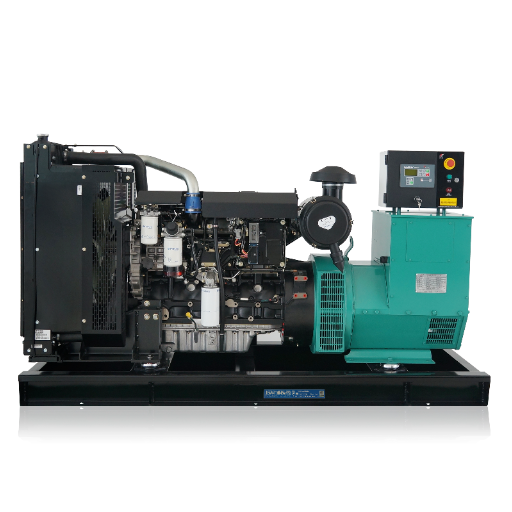
Industrial power solutions are products, services, and engineered systems that solve a facility’s electricity needs. They include diesel generator sets, natural gas generators, battery storage systems (BESS), hybrid microgrids, UPS units, transfer switches, and controls.
An industrial power system is the complete installed electrical infrastructure. It includes generators, transformers, switchgear, protection relays, and distribution feeders. A “solution” is what you buy. A “system” is what gets installed.
Facilities buy industrial power solutions for five main reasons:
- Backup power solutions: Automatic response when the grid fails.
- Standby power: Occasional use during outages.
- Prime power: Continuous operation off-grid.
- Emergency power: Life-safety loads that need power within seconds.
- Peak shaving: Cutting demand charges with stored or on-site power.
If backup during grid failure is your top priority, our dedicated guide to backup power solutions explains how automatic transfer, sizing, and fuel storage work together to keep critical loads running.
When Li Wei, a procurement manager at a textile mill in Vietnam, searched for industrial power solutions in 2025, he was not looking for a catalog. He needed a 1,500 kVA diesel plant. It needed automatic transfer, 72-hour fuel storage, and a decade of spare-parts support. The terminology confused him. Then he separated the technology question from the procurement question. Many buyers face the same confusion when comparing industrial power solutions for the first time.
Industrial Generator Solutions: Types and Technologies
Every technology has a best-fit application. The mistake is choosing the technology first and forcing the application to fit.
Diesel Generator Sets
Diesel generator sets remain the backbone of industrial backup power. They start in under 10 seconds, carry high surge capacity, and store fuel on site. Modern engines from Cummins, Perkins, Weichai, and Yuchai offer fuel efficiencies from 0.20 to 0.30 liters per kWh depending on load.
Best for: data centers, hospitals, mining, construction, remote prime power. These are the core industries for diesel generator applications.
Natural Gas and Propane Generators
Natural gas generators burn cleaner than diesel and can run indefinitely if pipeline gas is available. They suit urban facilities with emissions restrictions. They are a common choice for commercial power solutions in city centers. The trade-off is dependence on utility gas, which can be shut off during the same disaster that kills grid power.
Best for: commercial buildings, urban factories, facilities with reliable gas supply.
Biogas and Renewable-Fuel Generators
Biogas generators turn waste methane from agriculture, landfills, or wastewater into electricity. They reduce emissions and can qualify for carbon credits. Fuel quality and supply consistency are the main design constraints.
Best for: farms, food processing, waste-to-energy plants.
Hybrid Systems (Generator + Battery + Solar)
A hybrid industrial power solution combines a diesel or gas generator with a BESS and often solar PV. The battery handles short peaks and silent operation; the generator recharges the battery and covers long runtime. This arrangement can cut fuel consumption by 20-40% in cyclic load applications.
Best for: remote telecom towers, off-grid mines, islanded microgrids.
Battery Energy Storage Systems (BESS)
BESS provides instantaneous response, zero emissions, and no moving parts. Alone, it is limited by stored capacity. Paired with solar or a generator, it becomes a flexible bridge. Lithium iron phosphate (LiFePO4) batteries dominate industrial BESS for their thermal stability and cycle life.
Best for: peak shaving, grid stabilization, short-duration backup, renewable integration.
Fuel Cells (SOFC and Hydrogen PEM)
Solid-oxide fuel cells (SOFC) and hydrogen proton-exchange membrane (PEM) fuel cells offer quiet, low-emission power. Capital cost is still high, and hydrogen logistics remain immature in many regions. They are best viewed as a strategic option for net-zero roadmaps rather than a drop-in replacement today.
Best for: data centers with carbon-neutral targets, hydrogen pilot projects.
Technology Comparison Matrix
| Technology | Capex | Opex | Runtime | Emissions | Best Fit |
|---|---|---|---|---|---|
| Diesel generator set | Medium | Medium | Long | Higher | Backup, prime, remote sites |
| Natural gas generator | Medium | Low | Long if pipeline | Lower | Urban standby, continuous duty |
| Biogas generator | Medium | Low | Variable | Low | Waste-to-energy, farms |
| Hybrid gen + BESS | High | Low | Long | Lower | Cyclic loads, off-grid |
| BESS alone | High | Low | Short | None | Peak shaving, grid services |
| Fuel cells | Very high | Medium | Long | Very low | Net-zero pilots, data centers |
How to Size an Industrial Power Solution
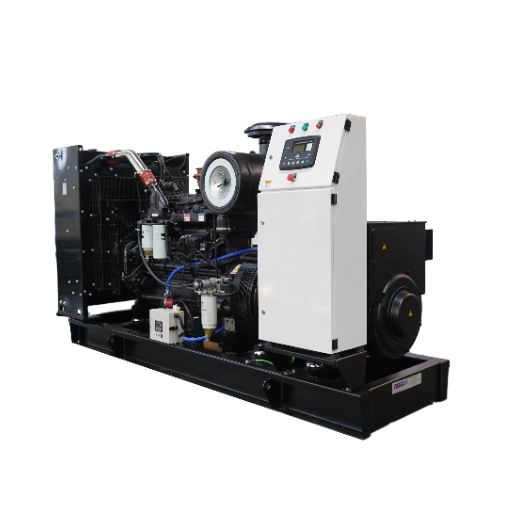
Sizing is the step most buyers get wrong. A generator that is too small trips on motor starting surge. One that is too large runs inefficiently and suffers from wet stacking or carbon buildup.
Step 1: List Every Load
Record the running kW and starting kW for each load. Motor-driven equipment such as compressors, pumps, and chillers can draw five to seven times their running current during startup.
Step 2: Apply the Diversity Factor
Not every load runs at the same time. The diversity factor divides the sum of individual maximum demands by the actual maximum demand. For a typical factory, this ranges from 0.6 to 0.8.
Step 3: Convert kW to kVA
Generators are rated in kVA. Divide kW by the power factor, typically 0.8 for industrial loads:
Generator kVA = Total running kW / Power factor
Step 4: Add Motor Starting Surge
Calculate the largest motor starting kVA and ensure the generator can deliver it without excessive voltage dip. A 100 kW compressor starting across the line might need 600 kVA of momentary capacity.
Step 5: Choose Redundancy Architecture
- N: One generator sized for the full load. Lowest cost, no redundancy.
- N+1: One extra unit beyond the minimum required. Common for data centers and hospitals.
- 2N: Fully duplicated capacity. Required for Uptime Institute Tier IV and some hospital critical branches.
- 2N+1: Duplicated capacity plus one spare. Used in hyperscale data centers.
Step 6: Apply Environmental Derating
Engines lose power at high altitude and high temperature. A generator rated at sea level can lose 3-4% output per 300 meters of altitude and 1% per 3°C above 27°C.
Sizing Example: Manufacturing Plant
| Load | Running kW | Starting kW |
|---|---|---|
| Production line A | 450 | 470 |
| Production line B | 380 | 400 |
| HVAC | 220 | 260 |
| Lighting and office | 80 | 80 |
| Fire pumps | 75 | 375 |
| Total | 1,205 | 1,585 |
With a diversity factor of 0.75 and power factor of 0.8:
- Running kVA = 1,205 × 0.75 / 0.8 = 1,131 kVA
- With N+1 redundancy and 20% future growth: 2 × 680 kVA units or 1 × 1,500 kVA unit with a standby 680 kVA unit
For help converting between kVA and kW, see our kVA to kW calculator.
When Ana Torres sized a plant in Mexico City at 2,200 meters altitude, she learned that a 1,000 kVA unit rated at sea level delivered only about 880 kVA at site. She upgraded to a 1,250 kVA unit and avoided a costly rewiring job six months later.
Backup Power Solutions by Industry: Diesel Generator Application Industries
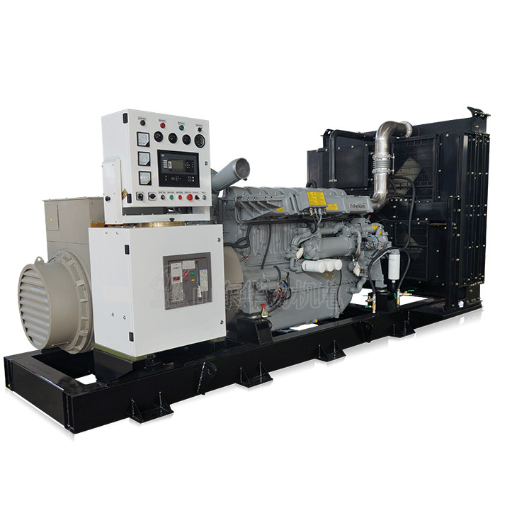
Each industry has different uptime requirements, fuel rules, and compliance codes. A one-size-fits-all industrial power solution usually fits none of them well. The following diesel generator application industries show how requirements change by sector.
Data Center Power Solutions
Data centers measure uptime in nines. A 99.999% uptime SLA allows only 5.26 minutes of downtime per year. AI rack densities now exceed 132 kW per rack with NVIDIA B200 hardware. Future architectures may demand 240-900 kW per rack.
Uptime Institute Tier III requires N+1 redundancy for concurrent maintainability. Tier IV requires 2N for fault tolerance. A 10,000-rack AI training campus can need 1.4 GW of total power. Backup generator plants become campus-scale power stations at that scale. Industrial power solutions for data centers are no longer room-sized backup units. They are dedicated power plants.
For a deeper dive, read our guide on industrial power solutions for data centers.To match redundancy tiers, cooling loads, and generator sizing to your specific facility, our detailed guide to the right power solution for data center walks through Tier III and Tier IV requirements step by step.
Hospital Emergency Power Generator Requirements
Healthcare facilities in many jurisdictions must comply with NFPA 99 and NFPA 110. A hospital emergency power generator must restore power to Type 1 essential electrical system (EES) branches within 10 seconds of utility failure. California and several other states now require nursing homes to maintain 96 hours of fuel autonomy.
Hospital loads include life-safety lighting, fire pumps, surgical suites, and isolation-room ventilation. The generator must start automatically, transfer through an ATS, and carry the full load without interruption. Lives depend on it.For a closer look at NFPA compliance, transfer timing, and fuel autonomy, see our dedicated guide to choosing a generator for hospital applications.
Mining Power Supply Solutions
Mines operate in harsh environments with high dust, vibration, and temperature swings. Mobile generators mounted on skids or trailers allow operations to shift as excavation moves. High-altitude sites require additional derating. For marine and offshore energy needs, see our separate guide on marine power solutions.If you operate in remote or high-altitude terrain, our guide to the right mining power supply solution covers derating, dust protection, and skid-mounted deployment in detail.
Fuel logistics are often the biggest constraint. A remote open-pit mine may burn 10,000 liters of diesel per day across multiple generators. On-site fuel farms with secondary containment and filtration become part of the power solution.Because excavation faces move as the pit expands, many operations rely on a trailer-mounted mobile power station that can be relocated as the site layout changes.
Construction Site Power Solutions
Construction power is temporary by nature. Trailer-mounted or truck-mounted generators can be deployed in days, not weeks. Loads change as trades move in and out: welding, cranes, concrete curing, site offices, and lighting.For a breakdown of temporary hookups, load planning, and deployment options, our guide to power supply for construction helps you match equipment to each phase of a build.
Rental makes sense for short projects. Purchase makes sense for contractors with recurring multi-year work. Noise limits in urban areas often require silent canopies rated below 75 dB at 7 meters.
Standby Power System vs. Prime vs. Emergency Power Explained
The terms are not interchangeable. Mis-specifying the duty cycle can void warranties and create safety risks. Choosing the right industrial power systems design starts with matching duty to application.
Standby Power
A standby power system supplies power during utility outages. ISO 8528 limits standby duty to 200 hours per year with no overload. These systems are common in commercial buildings, retail, and light industrial facilities.To understand duty limits, sizing, and typical applications in more depth, see our dedicated guide to the standby power system.
Prime Power
Prime power generators run continuously as the main source of electricity, often where grid power is unavailable or prohibitively expensive. ISO 8528 allows unlimited annual hours at variable load, typically with a 10% overload for one hour in 12.For remote sites and islanded operations where the grid is not an option, our guide to off-grid power solutions explains how prime, hybrid, and battery systems keep power flowing continuously.
Emergency Power
An emergency power generator is specifically for life-safety loads. NEC Article 700 requires emergency systems to restore power within 10 seconds. NFPA 110 Level 1 systems serve facilities where failure could result in loss of human life.For code requirements, transfer timing, and life-safety load planning, our guide to the emergency power generator breaks down what NEC 700 and NFPA 110 demand.
Continuous Power
Continuous power is similar to prime but at a constant base load, usually in parallel with the grid or in islanded industrial microgrids. It prioritizes long, stable runtime over load variation.
| Duty Type | Annual Hours | Overload Allowed | Typical Use |
|---|---|---|---|
| Standby | ≤ 200 | No | Commercial backup and standby power systems |
| Prime | Unlimited | 10% / 1 hr per 12 | Off-grid, remote sites |
| Emergency | Varies | No | Life-safety systems with emergency power generators |
| Continuous | Unlimited | No | Base-load plants |
Total Cost of Ownership for Industrial Power Systems
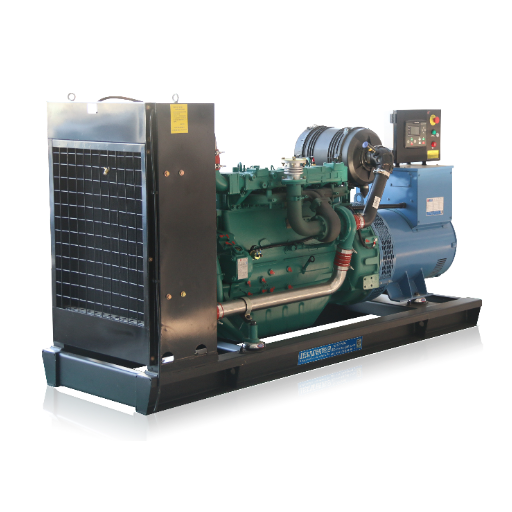
Purchase price is only the beginning. A 10-year TCO analysis reveals the true cost of an industrial power solution. Understanding industrial power solutions price factors early prevents budget surprises later.
Capex Components
- Generator set or BESS
- ATS, switchgear, and controls
- Fuel storage tanks and piping
- Enclosure, ventilation, and noise attenuation
- Installation and civil works
Opex Components
- Fuel: the largest recurring cost for diesel and gas systems
- Maintenance: oil, filters, coolant, belts, injectors
- Parts and overhauls: major overhauls typically at 12,000-20,000 hours
- Downtime risk: the cost of an outage can dwarf annual maintenance
TCO Comparison: 1,000 kVA Diesel vs. Hybrid
| Cost Item | Diesel Only | Hybrid Diesel + BESS |
|---|---|---|
| Initial equipment | $180,000 | $260,000 |
| Installation | $40,000 | $55,000 |
| 10-year fuel | $420,000 | $320,000 |
| 10-year maintenance | $95,000 | $80,000 |
| Downtime risk (estimated) | $50,000 | $30,000 |
| 10-year TCO | $785,000 | $745,000 |
The hybrid option costs more upfront but can break even within 6-8 years in cyclic-load applications. For constant base load, diesel-only usually wins.
Turnkey Industrial Energy Solutions: From Design to Commissioning
A turnkey power solution provider manages the project from first sketch to final handover. The value is not just the equipment. It is the integration. Shandong Huali delivers turnkey industrial power solutions for clients worldwide.For an end-to-end view of how design, testing, and commissioning come together, our overview of a complete industrial energy solution shows what a fully integrated project looks like from survey to handover.
1. Site Survey and Load Profiling
Engineers visit the site. They review electrical single-line diagrams and record load profiles. They identify voltage, frequency, fuel availability, and environmental constraints.
2. System Design and Equipment Selection
The design team selects engine-alternator combinations, redundancy architecture, ATS, switchgear, and controls. Software modeling confirms transient response and harmonic compatibility.
3. Factory Acceptance Testing (FAT)
Before shipment, the generator undergoes FAT at the industrial power solutions manufacturer‘s test facility. Tests include full-load run, voltage regulation, frequency stability, protection relay checks, and insulation resistance.
4. Shipping, Customs, and Logistics
Large generator sets ship in containers or on flat racks. Proper crating, moisture protection, and customs documentation prevent delays at the destination port.
5. Installation and Commissioning
Local contractors install the foundation, fuel system, exhaust, and electrical connections. The OEM or its representative commissions the system, tests the ATS, and trains the operator.
6. After-Sales Service and Spare Parts
Long-term reliability depends on spare-parts availability and service response. A good industrial power solutions provider keeps critical spares on hand. It also offers remote monitoring to catch faults before they cause outages.
Buying Industrial Power Solutions from a Chinese Manufacturer
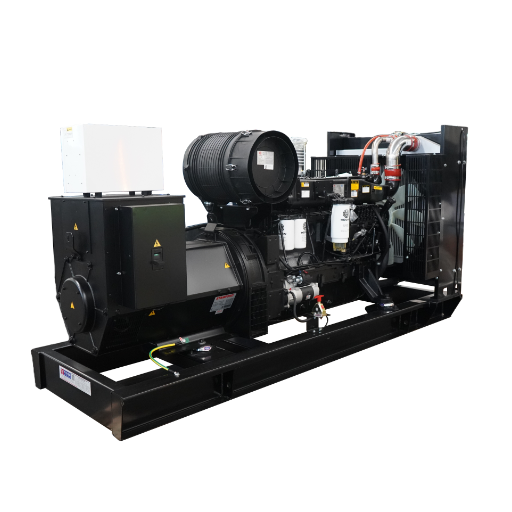
Chinese OEMs such as Shandong Huali Electromechanical Co., Ltd. offer factory-direct pricing without the distributor markup. The key is to verify capabilities before committing. We provide industrial generator solutions from 8 kVA to 4,000 kVA with global delivery.
What to Look For
- ISO 9001 and ISO 14001 certification
- In-house test center capable of full-load FAT
- Engine partnerships with Cummins, Perkins, Weichai, Yuchai, or Stamford
- Customization track record for voltage, frequency, enclosure, and controls
- Export experience with documentation for your destination country
- Spare-parts commitment and technical support network
Typical Lead Times
- Standard generator sets: 4-6 weeks
- Customized systems: 8-12 weeks
- Containerized or high-voltage plants: 12-16 weeks
Cost Advantage
Factory-direct procurement can cut equipment cost by 25-40% compared to a distributor or local integrator. Reinvest those savings in installation, commissioning, and a spares package. This is why many buyers now source industrial power solutions directly from China.
When a logistics company in Lagos needed four 500 kVA silent generators in 2024, it compared quotes from a European distributor and a Chinese OEM. The OEM delivered equivalent Cummins-powered units at 32% less cost, including FAT video evidence and a one-year spares kit. The project was commissioned two weeks ahead of schedule.
FAQ
What is an industrial power solution?
An industrial power solution is an engineered product or service that generates, stores, or distributes electricity for industrial and critical facilities. It can include diesel generators, gas generators, BESS, UPS, transfer switches, and control systems. Industrial generator solutions range from small standby units to multi-megawatt power plants.
Which industries need backup power?
Data centers, hospitals, manufacturing plants, mining operations, telecommunications, financial services, and water treatment facilities all rely on backup power solutions to avoid catastrophic downtime.
What is the difference between prime and standby power?
A standby power system is used only during outages and is limited to about 200 hours per year. Prime power runs continuously as the main power source where grid electricity is unavailable or too costly.
How do you size an industrial generator?
Size an industrial generator by totaling running kW, applying a diversity factor, converting to kVA using the power factor, adding the largest motor starting surge, and applying N+1 or 2N redundancy plus environmental derating.
What is N+1 redundancy?
N+1 redundancy means one more generator is installed than the minimum required to carry the load. If one unit fails or is offline for maintenance, the remaining units can still support the facility.
How long should a backup generator run?
Runtime depends on code requirements and fuel storage. Hospitals may need 96 hours of fuel. Data centers typically design for 24-72 hours. Remote sites may need on-site fuel farms for weeks.
Are diesel generators still viable for industrial use?
Yes. Diesel generator sets remain the most reliable choice for high-power backup and prime power, especially where fast startup, long runtime, and on-site fuel storage are required.
What does turnkey power solution mean?
A turnkey power solution provider handles the entire project: site survey, design, equipment supply, testing, shipping, installation, commissioning, training, and after-sales support.
Conclusion
Industrial power solutions are not a single product. They are a set of decisions about technology, sizing, redundancy, compliance, and procurement. Get any of those decisions wrong and you risk downtime, regulatory failure, or runaway lifetime costs.
Start by defining the duty cycle: standby, prime, emergency, or continuous. Then size the system from actual loads, apply the right redundancy, and compare technologies on a 10-year TCO basis. Finally, choose a turnkey power solution provider that can deliver not just equipment but engineering, testing, and long-term support.
At Shandong Huali Electromechanical Co., Ltd., we design and manufacture industrial power solutions and industrial generator solutions from 8 kVA to 4,000 kVA. We offer Cummins, Perkins, Weichai, and Yuchai engine options, full OEM/ODM customization, and ISO-certified testing. If you are planning a new facility or upgrading backup power, request an industrial power assessment and our engineers will size a solution for your exact load.
