
Copper has about 61% more conductivity than aluminum, so it drops less voltage for the same wire size. To match copper’s performance, aluminum must be upsized about two AWG sizes, but it is roughly 70% lighter and 40 to 60% cheaper, so it often wins on long, large feeders.
Here is the trap most buyers fall into. They compare the price per foot of copper versus aluminum, see that copper is more expensive, and pick aluminum. Then they discover the aluminum needs a larger conduit, larger lugs, an anti-oxidant compound, and re-torquing labor, and on a short run the “cheap” wire was not cheap at all.
The cheapest wire is not the cheapest installed wire. This copper vs aluminum wire voltage drop guide gives you the resistance math, the sizing rule, and a decision framework so you can pick copper or aluminum for the actual run you are building, including the generator feeder that most guides ignore.
Key Takeaways
- Copper is 100% IACS conductive; aluminum is about 61%, so aluminum has roughly 64% higher resistance and drops more voltage at the same size.
- In the voltage-drop formula, copper uses a k-factor of 12.9 and aluminum 21.2, so aluminum needs about two AWG sizes larger to match.
- Aluminum is about 70% lighter and 40 to 60% cheaper for the same ampacity, but on short runs copper can be cheaper once installed.
- Aluminum needs compression lugs, anti-oxidant paste, and proper torque because it oxidizes, expands more, and creeps under pressure.
- Shandong Huali sizes the whole power system, so we help you choose the conductor material that fits your generator feeder, not just the wire in isolation.
Why Copper and Aluminum Drop Voltage Differently
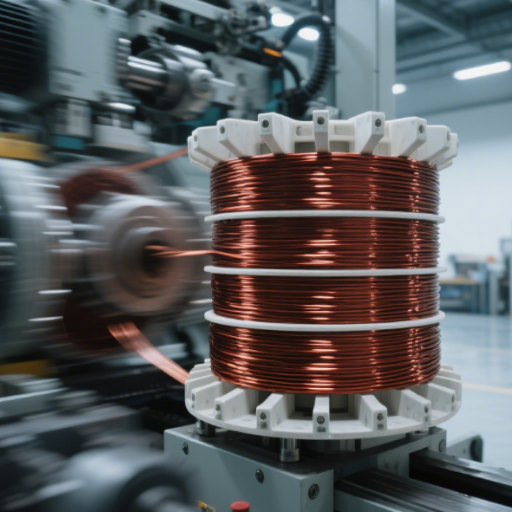
Voltage drop is the voltage lost as current fights its way through a conductor. The higher the conductor’s resistance, the more voltage it drops, and copper and aluminum are not the same material.
Conductivity and Resistance
Copper is the benchmark at 100% IACS (International Annealed Copper Standard) conductivity. Aluminum sits at about 61% of that. In practical terms, aluminum has roughly 64% higher resistance than copper for the same cross-sectional area.
That resistance is what drives the voltage drop. Run the same current through a copper wire and an equal-sized aluminum wire, and the aluminum wire drops noticeably more voltage over the same distance.
The Voltage-Drop Formula
Electricians size conductors with a simple formula that uses a resistance constant called the k-factor. For copper, k is 12.9. For aluminum, k is 21.2 at 75°C.
The formula is:
Voltage drop = k × length × current ÷ circular mils
That result is then multiplied by 2 for single-phase circuits, or by 1.732 for three-phase circuits. The higher k-factor for aluminum is the whole story: 21.2 is about 64% more than 12.9, which is exactly the resistance penalty aluminum pays.
Three-Phase vs Single-Phase
Generator feeders are almost always three-phase, so they use the 1.732 multiplier instead of the single-phase 2. The formula looks the same, but the result is different, which is why you cannot borrow a single-phase voltage-drop table for a generator installation.
| Property | Copper | Aluminum |
|---|---|---|
| Conductivity (IACS) | 100% | ~61% |
| Relative resistance | 1.00 | 1.64 |
| k-factor (75°C) | 12.9 | 21.2 |
| Sizing to match | Baseline | +2 AWG sizes |
| Weight | Heavy | ~70% lighter |
| Cost | 2 to 3× per lb | 40 to 60% cheaper |
| Thermal expansion | Lower | ~40% more |
Want the code-backed version of this math? The IAEI’s voltage-drop reference walks through the same formulas with NEC tables. Our engineers use the same calculation when we size a standby power system end to end.
Sizing Aluminum to Match Copper
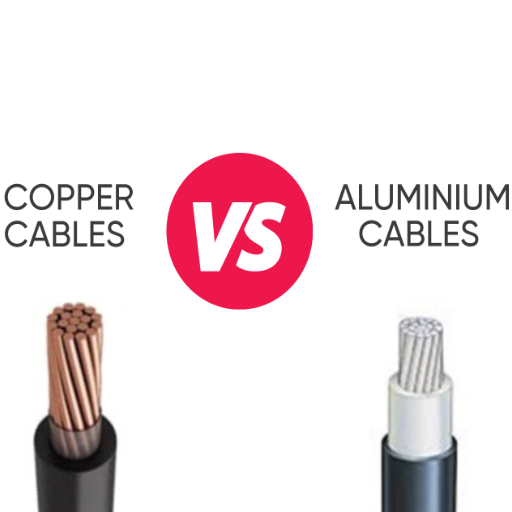
Because aluminum conducts less, you do not swap copper for aluminum one for one. You upsize the aluminum until its resistance matches.
The “Two AWG Sizes Up” Rule
The rule of thumb is that aluminum needs to go about two AWG sizes larger to match copper’s ampacity and voltage drop. A 4 AWG copper conductor (85 A at 75°C) is roughly matched by a 2 AWG aluminum conductor (90 A at 75°C). A 1/0 AWG aluminum matches a 2 AWG copper.
For a 200 A residential service, the benchmark is 2/0 AWG copper or 4/0 AWG aluminum. The aluminum is thicker, but it carries the same current.
| Copper (75°C) | Equivalent Aluminum |
|---|---|
| 4 AWG (85 A) | 2 AWG (90 A) |
| 2 AWG | 1/0 AWG |
| 2/0 AWG (200 A service) | 4/0 AWG |
Cross-Sectional Area
Another way to say the same thing is that aluminum needs about 1.6 times the cross-sectional area of copper. That larger area buys back the conductivity aluminum lacks, but it also consumes more conduit or cable-tray space, which matters when the run is crowded.
A Worked Generator-Feeder Example
Consider a generator feeding a transfer switch 160 feet away at 100 A. To keep voltage drop under 3%, you need a #2 AWG copper or a 1/0 AWG aluminum. The aluminum is bigger and lighter; the copper is smaller and heavier. Both do the same job, but the aluminum usually costs less in material.
Diego, an electrical contractor in São Paulo, was running a feeder from a rooftop generator down to a basement ATS, a 220-foot pull through a congested riser. He specified 1/0 AWG aluminum instead of #2 copper to cut material cost and weight. The aluminum cost about half as much, and the lighter cable made the long vertical pull far easier for his crew.
Weight and Cost: The Real Tradeoff
Resistance explains the physics. Weight and cost explain why anyone bothers with aluminum at all.
Weight
Aluminum is about 70% lighter than copper by volume. Even after upsizing to match ampacity, an aluminum conductor still weighs roughly half what the copper equivalent does. That weight saving matters on long overhead runs, rooftop generators, and cable trays, where support structure and installation labor add up fast.
Material Cost
Aluminum delivers the same current capacity at roughly 40 to 60% lower material cost than copper. Copper is often two to three times the price per pound, and its price swings more. The cost gap widens on large conductors and long runs, which is why utilities and big feeders have used aluminum for decades.
Installed Cost: The Short-Run Reversal
Here is the part most guides skip. Installation costs can eat up Aluminum’s material savings on a short run. Larger conduit, larger lugs, anti-oxidant compound, and the extra labor of torqueing and re-torqueing all add up.
One analysis found a 50-meter, 100-amp run was about $215 cheaper installed in copper than in aluminum. On short runs, copper’s smaller size and simpler terminations win. On long, large runs, aluminum’s material savings dominate.
Termination, Oxidation, and the Aluminum Cautions
Aluminum is not harder to use because it conducts less. It is harder to use because of how it behaves at the connection, which is where almost every aluminum failure happens.
Oxidation, Thermal Expansion, and Cold Flow
Three physical properties separate aluminum from copper at the terminal. First, aluminum forms a non-conductive oxide layer almost instantly, which raises contact resistance if it is not cleaned and coated. Second, aluminum expands about 40% more than copper when it heats up, so a connection can loosen over repeated thermal cycles. Third, aluminum creeps, or cold-flows, under pressure, which slowly loosens screw terminals.
Proper Terminations
Every one of those three problems has a standard fix. Use compression lugs rated for aluminum, apply anti-oxidant compound before the connection, torque to the manufacturer’s spec, and use dual-rated CO/ALR connectors or Belleville washers where required. Do those things and an aluminum termination is as reliable as copper.
The 1960s History vs Modern Alloys
The aluminum wiring fires of the 1960s and 1970s happened with small-gauge solid aluminum branch circuits and improperly rated terminations. That was a termination problem, not a conductor problem. Modern AA-8000 series alloys, combined with approved connectors, resolved it, and aluminum is now standard worldwide for large power-distribution cables.
For the full material science, the Electrical Engineering Portal’s conductor comparison covers the engineering details behind these properties, and the Engineering Toolbox keeps the resistivity constants handy for quick reference.
Generator Feeders: Where the Decision Actually Happens
This is the part generic copper-versus-aluminum guides never reach, and it is where Shandong Huali’s customers actually make the call.
Vibration and Fatigue
Generators vibrate. Copper has about twice the tensile strength of aluminum and resists fatigue and vibration better. At the generator end, where the cable connects to a vibrating machine, copper is the safer choice even when aluminum runs the rest of the feeder.
Generator and ATS Terminal Ratings
Before you run aluminum, check the generator and transfer switch terminals. Many generator lugs are copper-only or are not rated for aluminum. If the genset requires copper, the standard solution is to run an aluminum feeder to a junction box and transition to a short copper whip into the generator. That gets you aluminum’s cost savings on the long run and copper’s reliability at the terminal.
Leila, a facilities engineer at a data center in Frankfurt, needed a 400-amp feeder from a new diesel generator. The generator’s lugs were copper-only. She ran aluminum cable from the ATS most of the way, then transitioned to a copper whip for the final three feet into the generator. The job saved about 45% on conductor cost without touching the manufacturer’s termination requirements.
115 to 125% Continuous-Load Sizing
One more generator-specific detail. A generator is treated as a continuous load, so its feeder is typically sized to 115 to 125% of the generator’s nameplate current, not just the running amps. For a 20 kW generator drawing 83.3 A, that means sizing the conductor for about 104 A. That sizing decision happens before you even choose copper or aluminum, which is why it pairs naturally with our how to size a diesel generator guide.
How to Choose: A 6-Point Checklist
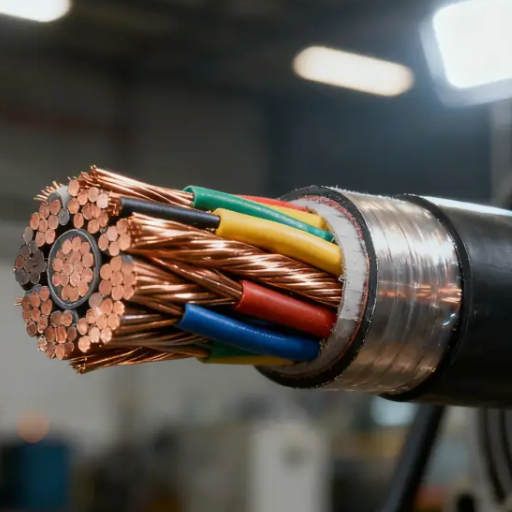
Work through these six points in order and the material choice usually makes itself.
- Measure the run length. Short runs favor copper; long runs favor aluminum.
- Check the generator and ATS terminals. Copper-only lugs mean a copper whip or a copper-only feeder.
- Size for the load. Use 115 to 125% of the generator nameplate current, then apply the two-AWG-sizes-up rule if you go aluminum.
- Run the voltage-drop math. Use k = 12.9 for copper or 21.2 for aluminum, and keep drop under 3% for feeders.
- Account for vibration. At the generator end, copper resists fatigue better than aluminum.
- Cost of the installed job. Include conduit, lugs, anti-oxidant, and labor, not just price per foot.
Frequently Asked Questions
Is aluminum wire as good as copper?
For large feeders and long runs, yes, when it is properly upsized and terminated. Copper still wins for small circuits, control wiring, and high-vibration locations.
Why does aluminum have more voltage drop than copper?
Aluminum has about 61% of copper’s conductivity, so its resistance is roughly 64% higher. More resistance means more voltage drop for the same wire size and current.
What size aluminum wire replaces copper?
Aluminum needs to go about two AWG sizes larger. A 2 AWG aluminum matches a 4 AWG copper, and a 1/0 AWG aluminum matches a 2 AWG copper.
Can I use aluminum wire for a generator?
Yes, if the generator and transfer switch terminals are rated for aluminum. If they are copper-only, run aluminum to a junction box and use a short copper whip into the generator.
Is copper or aluminum better for long distances?
Aluminum is usually better for long distances because it is lighter and cheaper, and the larger size that compensates for its resistance becomes affordable over a long pull.
Does aluminum wire need to be bigger than copper?
Yes. Because it is less conductive, aluminum must be about two AWG sizes larger, or about 1.6 times the cross-sectional area, to match copper’s ampacity and voltage drop.
Conclusion
The copper vs aluminum wire voltage drop question is not about which material is better. It is about which one fits the run. Copper drops less voltage and terminates more forgivingly, but it is heavy and expensive. Aluminum needs to be upsized and terminated carefully, but it is lighter, cheaper, and often the right answer on long, large feeders.
Here is what to remember:
- Copper: 100% IACS, k-factor 12.9, smaller size, simpler terminations.
- Aluminum: ~61% IACS, k-factor 21.2, two AWG sizes larger, but ~70% lighter and 40 to 60% cheaper.
- Short runs favor copper; long, large runs favor aluminum.
- At the generator, check terminal ratings and account for vibration.
- Compare installed cost, not price per foot.
Shandong Huali Electromechanical Co., Ltd. manufactures diesel generator sets from 8 kVA to 4,000 kVA, and our engineers size the entire power system, from the generator to the ATS to the load. If you are not sure whether copper or aluminum fits your feeder run, we will run the voltage-drop math, check the terminal ratings, and recommend the material with the lowest installed cost.
