
A diesel generator coolant is a glycol-based fluid that carries heat out of the engine, protects the block against freezing and boiling, and prevents the corrosion and cavitation that attack metal from the inside. In most diesel generators it is mixed 50:50 with deionised water, and the additive chemistry, not the brand, decides how long it lasts and which engines it suits.
Coolant looks like a commodity. It is not.
The mistake that costs the most is not choosing the wrong brand. It is choosing the wrong chemistry, or mixing two chemistries that should never meet, and only discovering the damage a year later.
Owen found that on a cold-storage plant in 2022. A technician topped up a low cooling system with a conventional green coolant because that was the drum nearest the door. The system was already running an orange organic-acid coolant. The two reacted and formed a gel that partially blocked the radiator core.
The engine did not fail that week. It ran hot under load for four months before anyone connected the two events.
This guide covers what generator coolant does, the four chemistries you will meet, how to mix and test it, how often to change it, and how to dispose of it. It is written for diesel generators rather than cars, because the requirements are not quite the same.
Specifying coolant across a fleet or a large genset? Send us your engine models and our engineers will confirm the chemistry and concentration each one needs.
Key Takeaways
- Diesel generator coolant is a glycol-based fluid, mixed 50:50 with deionised water in most applications. Its additive chemistry, not its brand, decides how long it lasts.
- Four chemistries exist: conventional IAT, organic-acid OAT, hybrid HOAT, and SCA-precharged coolants for wet-liner engines. IAT must never be mixed with OAT.
- Wet-liner engines need supplemental coolant additives, or a precharged coolant, to prevent cavitation that perforates the cylinder liner from the coolant side.
- Change intervals follow chemistry: roughly two to three years for conventional coolant, five to six for extended-life OAT and HOAT.
- Test the coolant rather than judging it by colour. Glycol concentration, pH and additive level all matter, and colour tells you almost nothing.
What Generator Coolant Does
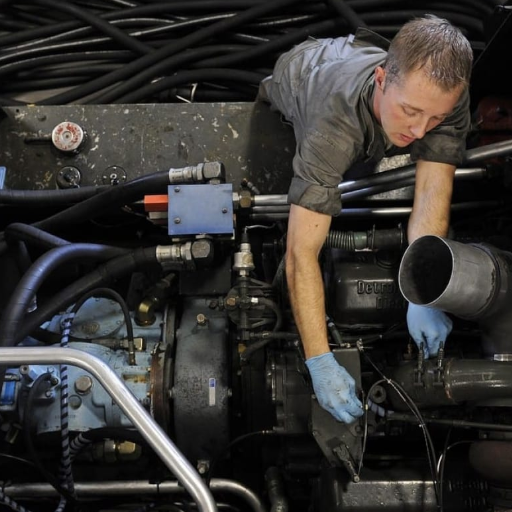
Coolant has four jobs, and only one of them is about temperature.
It carries heat. Glycol and water together move combustion heat from the engine to the radiator. Water is the better heat-transfer fluid of the two, which is why most coolants are half water by design.
It protects against freezing. Water expands as it freezes, and that expansion cracks blocks, heads and radiator cores. Glycol lowers the freezing point, keeping the fluid liquid in cold weather.
It raises the boiling point. A pressurised glycol mix boils well above 100 °C, which gives the engine headroom before the coolant turns to vapour and stops carrying heat.
It protects the metal. This is the job people overlook. A coolant’s additive package controls corrosion across iron, aluminium, copper and solder, lubricates the water pump seal, and on some engines prevents cavitation damage to the cylinder liners.
Why Plain Water Is Not Enough
Water is the best heat-transfer fluid available. It is also the worst coolant.
Water freezes at 0 °C and expands as it does. It boils at 100 °C, uncomfortably close to normal operating temperature. It carries dissolved oxygen and minerals that corrode iron and deposit scale inside the radiator. And it does nothing to stop cavitation.
The Four Coolant Chemistries
Coolants are grouped by their additive chemistry, not their colour. Colour is a manufacturer convention and means nothing on its own, which is exactly why mixing by colour leads to trouble.
IAT, Conventional Coolant
Inorganic acid technology is the traditional green coolant. It quickly protects metal by forming a phosphate or silicate barrier, and it works well. Its weakness is service life.
The inorganic additives are depleted, and the silicates can settle out of suspension and form a gel or abrasive paste. Conventional coolant is the reason the old rule was a flush every two years.
OAT, Organic Acid Technology
Organic acid technology, usually orange or red, uses carboxylate additives that deplete far more slowly. It offers no quick barrier layer, so it protects metal more gradually, but it lasts substantially longer and produces less deposit.
OAT coolant is the basis of most extended-life products. It is a poor choice for engines with high-silicate requirements, which is why it is not universal.
HOAT, Hybrid Organic Acid Technology
Hybrid coolant combines the two. It uses organic acids plus a small quantity of silicate or other inorganic additive, which gives fast initial protection with long service life.
Many modern generator coolants are HOAT. A typical example is Kohler’s premixed 50:50 HOAT product, supplied ready to use, requiring no supplemental additives, and formulated without nitrites, amines or phosphates.
SCA-Precharged Coolant
Some coolants arrive already dosed with supplemental coolant additives, the chemistry designed for engines with wet cylinder liners. These are discussed below, because the engines that need them are the ones where the wrong coolant is most expensive.
Never Mix IAT and OAT
The single hardest rule in this article: do not mix IAT coolant with OAT coolant.
The two chemistries react. The result is a gel that settles in the radiator core and the coolant passages, reducing flow and heat rejection.
The engine does not stop. It runs hot, and the cause is invisible until someone opens the system. By then the gel has usually been there for months.
If a system is topped up with the wrong chemistry and mixing was unavoidable, flush it at the next opportunity rather than leaving the mixture in service.
Wet-Liner Cavitation and Why SCA Matters
This is the section that separates a coolant article worth reading from the rest, because it describes the failure that actually destroys an engine block.
Why Liner Walls Flex
Many heavy-duty diesel engines, including common Cummins, Perkins and Deutz designs, use wet cylinder liners. The liner is a removable sleeve whose outer surface sits directly in the coolant. Only its thickness separates the coolant from the crankcase.
When the engine fires, the combustion pressure makes the liner wall flex outward and then snap back. That movement happens thousands of times a minute.
How Cavitation Perforates a Liner
The flexing creates local pressure changes in the coolant film against the liner. Where pressure drops far enough, small vapour bubbles form. When the liner snaps back, those bubbles collapse against the metal surface with enough force to pit it.
Each collapse removes a microscopic amount of material. The damage is cumulative. Over thousands of hours, the pits deepen.
On a badly affected engine, cavitation can perforate the liner entirely, letting coolant into the crankcase and oil into the cooling system.
Which Engines Need SCA
Wet-liner engines need either a coolant containing supplemental coolant additives (SCA), or a precharged coolant formulated for them. The additives lay a protective film on the liner’s coolant side that cushions the bubble collapse.
The failure is slow, invisible and expensive. Nothing repairs a pitted liner. It can only be replaced, and by the time the symptom appears as coolant loss or contaminated oil, the damage is done.
Sofia managed a standby fleet for a food-processing group and inherited this problem. Two 500 kW standby sets had run for six years on a coolant that was correct for their radiators and wrong for their liners. Neither engine had ever overheated.
Both failed a coolant test in the same month, one with visible pitting on three liners. The coolant had protected every metal surface in the system except the one that mattered most.
The HOAT Exception
There is an important qualification here, and getting it wrong in either direction is a mistake.
A HOAT coolant can be formulated so that it needs no separate SCA and still protects against wet-sleeve cavitation. That is a property of the coolant’s chemistry, achieved inside the formulation.
It does not mean SCA is unnecessary in general. A conventional IAT coolant in a wet-liner engine still requires supplemental coolant additives, added at fill or maintained through a coolant filter. The correct statement is specific: HOAT coolants can be SCA-free by design; conventional coolants in wet-liner engines are not.
Mixing Generator Coolant: Ratios and Freeze Protection
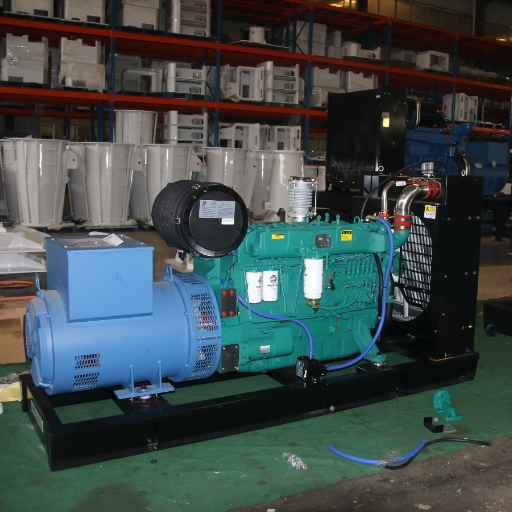
Most diesel generator coolant is sold as concentrate and mixed with water, or as a ready-to-use premix. If you are mixing, the ratio is the decision that matters.
The 50:50 Standard
A 50:50 mix of glycol concentrate and deionised water is the standard for most generator applications. It is the ratio most premixed products are supplied at, and it covers the temperature range most sites see.
Typical Freeze Protection by Concentration
| Glycol concentration | Approximate freeze protection | Typical use |
|---|---|---|
| 30% | about −15 °C | Mild climates only |
| 40% | about −25 °C | Temperate sites |
| 50% | about −37 °C | Standard for most generators |
| 60% | about −52 °C | Extreme cold |
| 70% | about −55 °C | Practical maximum |
Treat these as typical published figures; your coolant manufacturer’s data governs. As a check, a typical premixed 50:50 generator coolant is rated to about −34 °F (−37 °C) for freeze protection and to 265 °F for boil-over with a 15 psi radiator cap.
Two things about this table catch people out. First, freeze protection improves steeply up to around 60% glycol and then flattens, so moving from 50% to 70% buys very little. Second, above roughly 70% glycol the freeze point starts to rise again, so a stronger mix is not a safer one.
Cold weather affects more than the coolant. Our guide to altitude and temperature derating covers how ambient conditions change what a generator can deliver.
Why Deionised Water, Not Tap Water
Tap water carries dissolved minerals. Those minerals deposit as scale inside the radiator and interfere with the additive package.
Published guidance puts the penalty for hard water at up to 30% loss of heat-transfer efficiency. Use deionised or distilled water, not tap water.
Ready-to-Use Coolants
Premixed coolants remove the mixing decision entirely. They arrive at the correct concentration with deionised water already in the blend, which eliminates the two most common mixing errors: the wrong ratio and the wrong water.
The trade-off is cost and shipping weight, because you are buying water. For a single genset, that is usually worth it. For a large fleet, concentrate plus a drum of deionised water is cheaper, provided someone actually measures.
Change Intervals and Testing
Intervals by Chemistry
The service interval follows the chemistry, so read the product, not the calendar.
| Chemistry | Typical change interval |
|---|---|
| Conventional IAT | 2 to 3 years, or about 6,000 operating hours |
| Extended-life OAT | 5 to 6 years, or about 12,000 operating hours |
| HOAT | 5 to 6 years, or 12,000 hours, confirm against the product |
These are the intervals published by coolant suppliers. A long-life coolant in a system with a slow leak, or one that has been topped up with the wrong product, will not reach its rated life. That is why the interval is a ceiling, not a guarantee.
What to Test
Testing tells you whether the coolant is still doing its job. Three things matter:
- Glycol concentration, which sets freeze and boil protection
- pH, which should stay slightly alkaline. Published guidance puts the working range around 7.5 to 11.0, and a falling pH signals additive depletion and rising corrosion risk
- Additive level, measured for the specific chemistry, with nitrite, molybdate and silicate values relevant to wet-liner and conventional coolants
Refractometer, Hydrometer or Test Strips
A refractometer reads glycol concentration directly and is the tool of choice for routine checks. It is unaffected by coolant temperature or by the presence of additives, so the reading holds hot or cold.
A hydrometer measures density, which varies with temperature and additive content, making it less reliable on glycol coolant than on a battery.
Test strips cover the additive chemistry rather than the concentration, and are the practical way to check nitrite or pH between laboratory samples. Many fleets test every 250 operating hours and send a sample for full analysis annually.
Topping Up, Flushing and Disposal
Topping Up Without Unbalancing the Mix
A cooling system that needs regular topping up has a leak, and the leak is the real problem. Topping up masks it and gradually dilutes the additive package.
When you do top up, use the same product already in the system, or a compatible one. Where a top-up with a different product was unavoidable, plan a flush rather than leaving the mixture in service indefinitely.
Flushing Procedure
A flush is warranted when changing chemistry, after a contaminating event, or when the coolant has been in service past its interval. The sequence is straightforward:
- Let the engine cool completely before opening anything
- Drain the system, including the block drain and the heater or bypass circuit
- Refill with flush solution or deionised water, run to operating temperature, and drain
- Repeat until the drained liquid is clear
- Refill with the correct coolant at the correct concentration
Disposal and Recycling
Used coolant is a controlled waste in most jurisdictions. It contains ethylene glycol, toxic if ingested and harmful to aquatic life, plus heavy metals picked up from the cooling system.
Collect it. Do not pour it down a drain, and do not mix it with waste oil if your recycler keeps the streams separate. Many suppliers and recyclers accept used coolant for reclamation. Keep a disposal record, because environmental compliance increasingly asks for one.
Derek ran maintenance for a transit operator with 40 gensets across three depots. Each depot dealt with coolant its own way, and only one kept a disposal record.
When the operator applied for an environmental certification in 2024, the missing records across two depots held up the application for months. The coolant itself was not the problem. The paperwork was.
Common Coolant Mistakes
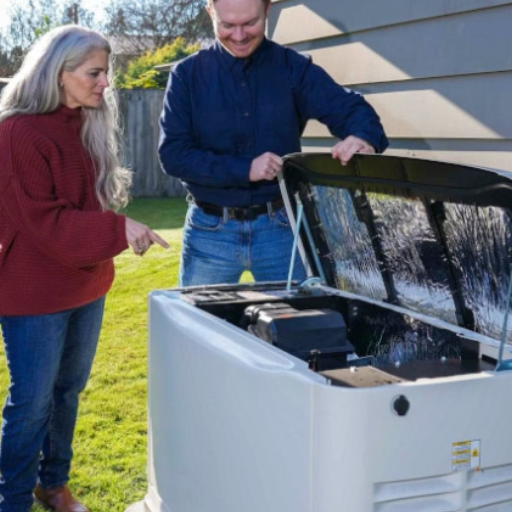
The same errors recur across sites, and most are avoidable.
- Mixing chemistries. IAT and OAT form a gel. Never combine them.
- Mixing by colour. Colour is a manufacturer convention, not a specification.
- Using tap water. Minerals cut heat-transfer efficiency and attack the additive package.
- Over-concentrating. Above about 70% glycol, freeze protection stops improving and starts reversing.
- Running the wrong coolant in a wet-liner engine. The most expensive mistake in this article.
Specifying Coolant for a Generator
Four questions settle the specification.
What liner type does the engine have? Wet-liner engines need SCA or a precharged coolant. Confirm this before anything else.
What does the engine manufacturer specify? The OEM standard overrides a generic recommendation. Heavy-duty diesel standards include ASTM D6210 for fully formulated heavy-duty coolant and ASTM D3306 for automotive and light-duty service, along with engine-maker specifications.
What is the site’s minimum temperature? That sets the required glycol concentration, and therefore the mix ratio.
Who maintains it, and how will they test it? A coolant that no one tests is a coolant that fails silently. Decide the testing method and interval at the point of specification.
Frequently Asked Questions
What kind of coolant goes in a diesel generator?
Most diesel generators use a glycol-based coolant mixed 50:50 with deionised water, with the additive chemistry matched to the engine. Conventional IAT coolant suits older designs; OAT and HOAT coolants give longer service life. Engines with wet cylinder liners need SCA or a precharged coolant. Always confirm against the engine manufacturer’s specification.
What type of coolant does a generator use?
Four chemistries cover most generators: IAT (conventional, silicate-based), OAT (organic acid), HOAT (hybrid organic acid), and SCA-precharged coolant for wet-liner engines. The engine’s liner design and the manufacturer’s specification determine which one is correct.
Is diesel coolant different from gas coolant?
Yes, in the additives rather than the base. Both use glycol, but diesel engines, particularly those with wet liners, have different cavitation and corrosion requirements. A coolant specified for a petrol engine may not provide the liner protection a diesel engine needs.
How long does coolant last in a generator?
Roughly two to three years or 6,000 operating hours for conventional IAT coolant, and five to six years or about 12,000 hours for extended-life OAT and HOAT products. Testing pH and glycol concentration is a better guide than elapsed time.
Can you mix different coolants?
Not safely. Mixing IAT and OAT coolant can form a gel that blocks the radiator. Mixing propylene glycol with ethylene glycol makes freeze protection unpredictable. If mixing was unavoidable, flush the system at the next opportunity.
Coolant is one part of a system. Our diesel generator maintenance guide covers the rest of the schedule, and preventing wet stacking explains what happens when an engine runs too cold.
Conclusion
Generator coolant is a glycol-based fluid whose additive chemistry decides how well it protects an engine and how long it lasts. The base fluid carries heat. The additives do everything else.
Five points are worth carrying into your next service:
- Match the chemistry to the engine. Wet-liner engines need SCA or a precharged coolant. This is the most expensive specification to get wrong.
- Mix 50:50 with deionised water. It is the standard, and it covers most sites. Above about 70% glycol, protection stops improving.
- Never mix IAT and OAT. The reaction forms a gel and the engine runs hot months later, with no obvious cause.
- Test, do not assume. Check glycol concentration, pH and additive level. Colour tells you almost nothing.
- Plan for disposal. Used coolant is a controlled waste. Collect it, record it, and recycle it where you can.
Shandong Huali Electromechanical Co., Ltd. manufactures diesel generator sets from 8 kVA to 4,000 kVA and supplies cooling systems, coolant specifications and commissioning support as part of an integrated package, with full OEM/ODM customization.
Have our engineers confirm the coolant specification for your engines →
Send us your engine model, liner type and site minimum temperature. We will confirm the chemistry, the concentration, and the change interval your fleet should follow.
