
A medium voltage generator is a set whose alternator is wound for a distribution voltage above 1 kV, most often 4,160 V, 6,600 V or 11,000 V. The reason to buy one is never the label. It is that at 480 V, the current from a large enough set stops fitting the bus, the breaker and the cable around it.
That point is measurable, and this page measures it.
We should be clear about where this advice comes from. Shandong Huali builds low voltage diesel generator sets from 8 kVA to 4,000 kVA, at 230/400 V and 480 V. We do not build a medium voltage alternator. This page is not trying to sell you one.
It tells you where our range ends, because you will find that out eventually, and better from us now than after a quotation you cannot use.
By the end you will know the current threshold that forces the decision, the three routes above 480 V and what each one costs, and how to write an enquiry that a supplier can answer without three rounds of email.
Key Takeaways
- A medium voltage generator is defined by its alternator winding, not its engine. The class starts above 1 kV and is sold in two bands: 2,400 / 4,160 / 6,900 V and 12,470 / 13,200 / 13,800 V.
- The decision is forced by current, not kilowatts. A standard low voltage bus is rated about 6,000 A, and double-ending it gets you 12,000 A before fault current passes 100 kA.
- On 480 V equipment those limits converge at roughly 8,000 kW. On 400 V they converge about 1.3 MW earlier, which matters for most of the world outside North America.
- Moving a 2 MW set from 480 V to 4,160 V adds roughly 40,000∗∗;movingitto15kVaddsroughly∗∗40,000∗∗;movingitto15kVaddsroughly∗∗100,000. Medium voltage switchgear runs 50,000to50,000to60,000 per section.
- Huali’s range stops at 480 V. If your load or your cable run says otherwise, this page tells you what to ask for instead.
What a Medium Voltage Generator Actually Is
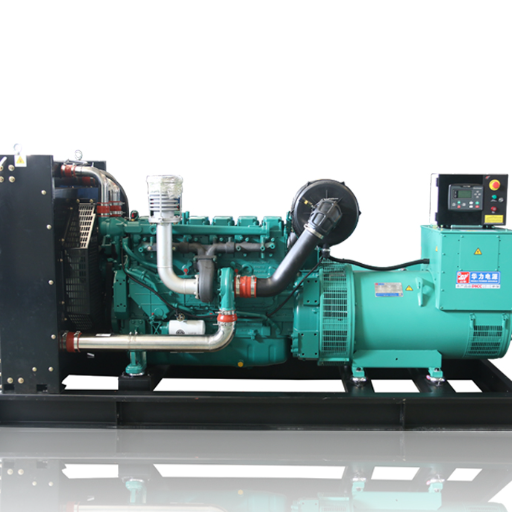
The machine is an ordinary diesel or gas set with an alternator wound for a different voltage. The engine, the governor, the cooling package and the frame are largely the same. What changes is the insulation, the winding form and the switchgear the set connects to.
Alternator manufacturers sell two bands and use the same words loosely. Generac’s technical paper on medium voltage on-site generation sets out the convention, and it is the one you will meet in quotations:
- 5 kV class: 2,400 V, 4,160 V and 6,900 V alternators, described as medium voltage.
- 15 kV class: 12,470 V, 13,200 V and 13,800 V alternators, described as high voltage by alternator makers, though both bands sit inside the broader medium voltage category.
So a 4160v generator is not a compromise between low and medium voltage. It is one of the most common entry points to the class, and in industrial plants it becomes normal once motor sizes pass roughly 500 hp. The number keeps reappearing in current product lines: Generac’s SD1250 and SD1500 diesel generators offer low and medium voltage options up to 4,160 V, and that is where the range stops.
Buyers search for an mv generator, an 11kv generator or a 6.6kv generator as though they were three products. They are the same machine at three nominal voltages.
Why the Label Disagrees With Itself
There is no single agreed boundary, and the disagreement is not academic. It changes which standard your switchgear is built and tested to.
The National Electrical Code treats 1,000 to 4,160 V as high distribution. ANSI and IEEE standards work with a 1 kV to 35 kV band. IEC 60038, the standard most often quoted in Europe and Asia, tabulates preferred voltages for supply systems rather than legislating which word covers which band.
The practical consequence is simple. Do not argue about the adjective. Agree the number in writing, agree the standard the equipment is tested to, and put both in the purchase order.
If your project is still at the stage of converting load figures, our guide to kVA versus kW settles that arithmetic first. Voltage class is the next decision, not the first.
Not sure which side of the line your project sits on? Send us the load figure and the cable route and we will tell you plainly, including when the answer is that you need a supplier we are not.
The Number That Decides It Is Amps, Not Kilowatts
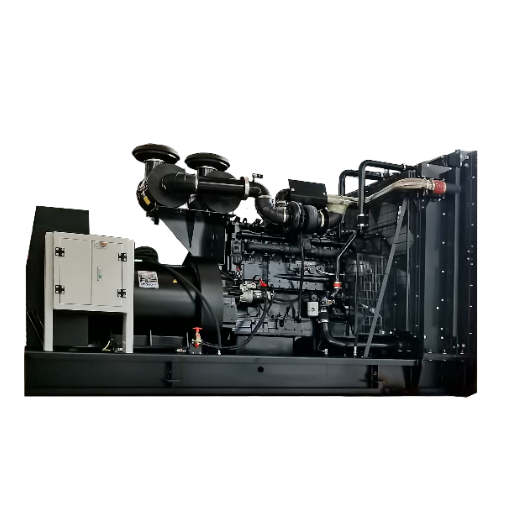
Buyers usually reason in megawatts: a 2 MW site, a 4 MW site, a 6 MW site. The equipment reasons in amps.
A standard low voltage switchboard bus is rated to about 6,000 A. Larger busbars can be engineered, but the cost climbs steeply. Double-ending the bus, feeding generation in from both ends with the distribution breakers in the middle, doubles that to 12,000 A.
Fault current arrives at the same ceiling. A paralleling bus with alternators at 12 percent subtransient reactance produces a short-circuit current of 12,000 divided by 0.12, which is 100 kA. Beyond that you are buying 150 kA or 200 kA gear, and the economics change.
Run the arithmetic on a 480 V system and both limits land in the same place. Eight megawatts is 10,000 kVA at 0.8 power factor, which is 12,028 A at 480 V, and that is the 12,000 A bus with nothing left over.
Eight megawatts is therefore the point where low voltage stops being a design choice. Generac’s paper puts it plainly: at 8,000 kW on 480 V, the limits converge, and the strong transition is either medium voltage or splitting the low voltage bus into two separate systems.
What Your Load Draws at Each Voltage
| Load | kVA at 0.8 PF | 400 V | 480 V | 4,160 V | 11,000 V |
|---|---|---|---|---|---|
| 500 kW | 625 | 902 A | 752 A | 87 A | 33 A |
| 1,000 kW | 1,250 | 1,804 A | 1,504 A | 173 A | 66 A |
| 1,600 kW | 2,000 | 2,887 A | 2,406 A | 278 A | 105 A |
| 2,000 kW | 2,500 | 3,608 A | 3,007 A | 347 A | 131 A |
| 4,000 kW | 5,000 | 7,217 A | 6,014 A | 694 A | 262 A |
| 8,000 kW | 10,000 | 14,434 A | 12,028 A | 1,388 A | 525 A |
Two rows in that table do most of the work.
At 4,000 kW on 480 V you are at 6,014 A, which is a single standard bus with no headroom. At the same load on 400 V you are at 7,217 A, past the bus before you have added anything.
And at 8,000 kW on 400 V the current is 14,434 A, which no standard low voltage bus will carry at all. The 8 MW figure everyone quotes is a 480 V figure. On a 400 V system, the practical ceiling is about 6.7 MW, and on a 415 V system it is barely higher.
This is not a detail. Most of the world outside North America distributes at 400 V, and a buyer in Lagos or Karachi reading an American blog post will assume they have two megawatts more headroom than they do.
Why the Cable Binds Before the Bus Does
Tomasz, a plant engineer at a tyre factory outside Wrocław, specified a 2,000 kW low voltage set at 400 V for a new curing hall. The generator quotation was fine. The cable schedule was not.
At 400 V that set needs 3,608 A per phase, and his switchroom sat 380 metres from the load. That is a long way to push three and a half thousand amps, and it does not go down one cable. It goes down several parallel runs per phase, in large copper, with the earth conductor to match.
The cable and the trenching came in above the price of the generator. Tomasz asked for a medium voltage review two weeks after the cable schedule landed, which was one week too late for the main switchgear order.
The lesson is not that he chose badly. It is that on long runs the cable reaches its limit at a much lower power than the switchboard does. If your load is a kilometre from your plant room, the 8 MW figure is irrelevant; you may be over the practical limit at 2 MW.
This is also why the 2 MW generator decision matters more than it looks. At that size you are still comfortably low voltage on a short run and already awkward on a long one.
Three Ways to Get Above 480 V
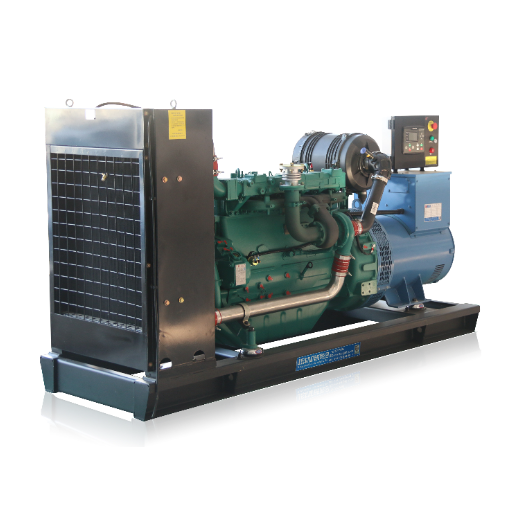
Once the current says you have to move, you have three options, and they are not equally expensive.
An MV Alternator on the Set
Buy the generator wound at 4,160 V, 6,600 V or 11,000 V and connect it straight to medium voltage switchgear. This is the cleanest arrangement and the shortest electrical path.
It is also the option that removes you from most Chinese factories. Huali’s range, like most exporters at our scale, is low voltage. Sets with genuine medium voltage alternators come from a smaller group of builders, and the alternator is usually sourced from a specialist rather than made in-house.
Expect the set itself to cost more. On a 2 MW machine, Generac puts the premium at roughly 40,000∗∗tomovefrom480Vto4,160Vandroughly∗∗40,000∗∗tomovefrom480Vto4,160Vandroughly∗∗100,000 to reach 15 kV. A medium voltage diesel generator quotation at 4,160 V therefore looks close to the low voltage price, and one at 13.8 kV does not.
Generate Low, Step Up
Keep the generator at 480 V and put a step-up transformer between it and the medium voltage bus. The set stays cheap and, more importantly, stays replaceable from a much wider supplier base.
This is the standard answer for loads between roughly 2 MW and 4 MW where the site already has a medium voltage distribution system. It moves the complexity into the transformer and the protection coordination, and it costs you a little efficiency at every hour of running.
The trade widens as the rating grows, because transformer losses sit on the bus continuously while the alternator premium is a one-time purchase.
Parallel Several Low Voltage Sets
Instead of raising the voltage, lower the current per busbar by splitting the generation. Two 1,000 kW sets on separate low voltage boards, or a double-ended bus with generation at both ends, keeps you at 480 V and inside the 12,000 A limit.
This is often the cheapest route and almost always the most flexible. It also buys redundancy that a single medium voltage set does not have.
The cost moves to switchgear and control. Medium voltage metal-clad switchgear in the ANSI C37.20.2 family runs 50,000to50,000to60,000 per section, and a section holds a single breaker. Generac’s comparison puts medium voltage transfer and paralleling equipment at about twice the low voltage equivalent.
Nadia, an electrical engineer on a university campus in Sharjah, priced both routes for a 4 MW backup scheme. The medium voltage option was one set, one transformer yard and one switchgear line-up. The low voltage option was four 1,000 kW sets with integrated paralleling, spread across three plant rooms.
She chose the second. It came in lower on capital, and a single set failure cost her 25 percent of capacity rather than the whole scheme. The one large generator versus parallel generators comparison works through that trade in detail.
What Huali Supplies, and What We Do Not
This is the section most supplier pages will not write, so here it is plainly.
We build 230/400 V and 480 V sets from 8 kVA to 4,000 kVA. That covers a very large share of industrial, commercial and standby work, including most data hall and factory projects below about 4 MW.
We do not build or supply a medium voltage alternator. If your specification calls for an 11 kV machine, we are the wrong factory, and we would rather say so before you spend a week on an enquiry.
We do not claim to have supplied medium voltage switchgear. Protection, synchronising and distribution gear at that voltage is a specialist package, and buying it from a generator assembler usually means buying it from a reseller.
What we can do is worth knowing, because it decides a large share of projects before the voltage question is even asked. A 2,000 kW set at 480 V draws 3,007 A. If we size the load correctly in kW first, and the 2000 kVA generator page shows how often the label is read wrong, a meaningful number of projects that think they need medium voltage turn out to need a smaller low voltage machine and a shorter cable route.
That is the honest position. If your answer comes back at 4,160 V or above, you need a supplier with a medium voltage alternator line, and our engineers will tell you that in writing.
Before you write an RFQ, get the current figure checked. Send us the load, the voltage and the cable route and we will tell you which side of the 6,000 A line you are on. No charge, and no attempt to sell you a set you do not need.
What to Put on a Medium Voltage Generator Enquiry
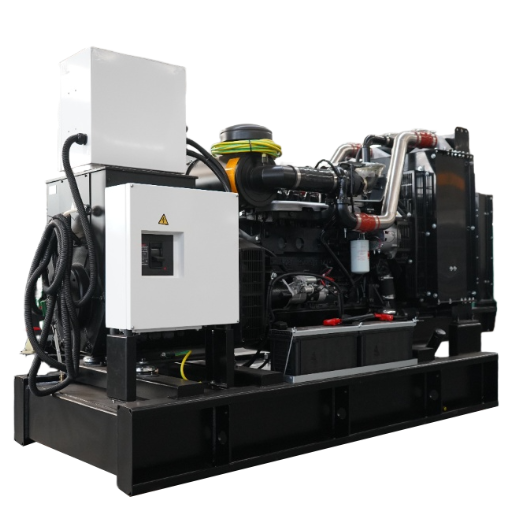
Whether you end up with us or not, an enquiry that answers seven questions gets a usable quotation on the first pass.
- System voltage and frequency. The nominal bus voltage, not the generator terminal voltage, and whether the site is 50 Hz or 60 Hz.
- Bus rating and configuration. The ampacity of the existing busbar, and whether you can double-end it.
- Fault level. The prospective short-circuit current at the point of connection, or the rating of the gear already installed.
- Cable route. Distance from the plant room to the load, and whether it is trench, tray or duct.
- Earthing system. Solidly earthed, resistance earthed or isolated, because it changes the protection scheme.
- Protection required. Differential, overcurrent, earth fault and the standard the relays must meet.
- Rating basis. Prime or standby, named on the quotation, to a stated standard such as ISO 8528.
The two items buyers most often leave off are the fault level and the cable route. Both change the answer, and both come back as a variation later if they are missing.
The Voltage Is a Consequence, Not a Choice
A medium voltage generator is not a better generator. It is the generator you end up with when the current at 480 V stops fitting the equipment around it.
The threshold is about 6,000 A on a single low voltage bus, 12,000 A on a double-ended one, and 100 kA of fault current. On 480 V those arrive together at roughly 8,000 kW. On 400 V they arrive earlier. On a long cable run, the cable gets there first.
Work the current out before you choose the voltage. Compare the three routes on capital and on running cost, not on how the specification looks. Then buy from whoever actually builds the thing you need.
If that turns out to be a 480 V set of ours, we will quote it properly. If it turns out to be an 11 kV machine, we will tell you so and point you at the questions to ask, which is the more useful outcome for both of us.
