
Below about 4,160 volts, buy the medium-voltage winding on the alternator. At 15 kV, buy a generator step-up transformer. That is the short answer, and it is the one the capital cost gives you.
It is also only half the decision, which is what this page is about.
A step-up transformer for generator output costs you twice. You pay for it once, and then you pay for it again every hour it sits on the bus, because it is a second conversion stage between your engine and your load. Most comparisons stop at the purchase order. The ones that do not tend to change their answer.
We should be straight about where this advice comes from. Shandong Huali builds 230/400 V and 480 V diesel generator sets from 8 kVA to 4,000 kVA. We do not build transformers, and we do not build medium voltage alternators. Neither side of this comparison is a product we sell.
What we can do is price the decision honestly, because we sit in the middle of it. When a plant engineer is choosing between a 480 V set with a transformer and an 11 kV set, we are usually the party that has already quoted the 480 V machine.
By the end you will know what the capital premium actually is at each voltage, what the transformer costs you to run, and where the two numbers cross over a ten-year life.
Key Takeaways
- Moving a 2 MW set from 480 V to 4,160 V adds about 40,000∗∗;movingitto∗∗15kVaddsabout40,000∗∗;movingitto∗∗15kVaddsabout100,000. At 4,160 V the two routes cost roughly the same. At 15 kV the transformer wins on capital.
- A 2,000 kVA dry-type transformer carries 3.05 kW of no-load loss and 14.4 kW of load loss at 120 °C, for an efficiency around 99.1 percent at full load.
- That is about 72,000 kWh a year at 60 percent load. At 0.12/kWh∗∗itis∗∗0.12/kWh∗∗itis∗∗8,660 a year, or $86,600 over ten years.
- The no-load loss runs whether you are using the set or not. It is the part most quotes ignore.
- At 4,160 V there is no capital saving to fund the losses. At 15 kV there is, and it takes seven to ten years of running at 60 percent load to spend it.
What a Generator Step Up Transformer Actually Costs at 2 MW
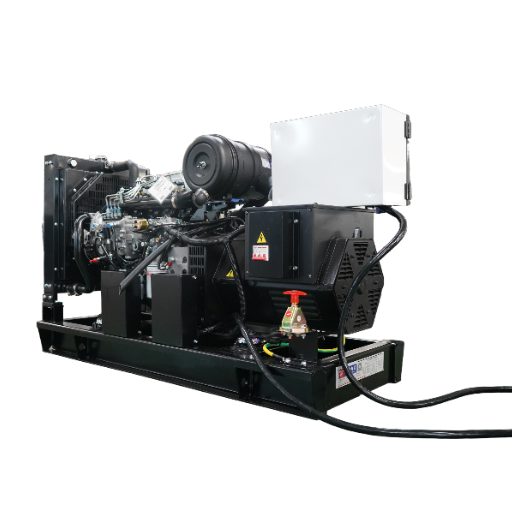
A generator transformer sits between the set and the distribution bus. The low voltage winding connects to the alternator at 480 V. The high voltage winding connects to the bus at 4,160 V, 11 kV or whatever your system runs at.
Every other part of the set stays the same. The engine, the governor, the cooling package and the frame do not change. You are buying a voltage conversion, not a different machine.
Most of what ranks for this phrase is not about a generator set at all. The generator step-up transformers Hitachi Energy builds sit in power stations, take 10 to 30 kV up past 345 kV, and run to a thousand MVA. If that is the machine you are searching for, this page is the wrong scale. What follows is the two-megawatt version.
Compared to the price premiums for most other types of equipment, capital expenditure (CAPEX) figures are more clearly documented. A technical paper from Generac regarding medium-voltage on-site power generation provides a clear illustration: upgrading a 480 V, 2 MW generator set to a 15 kV unit increases the cost by approximately $100,000, while upgrading it to a 4160 V unit adds about $40,000 to the cost.
Those are alternator premiums. To compare properly, you set them against the cost of a transformer at each site, which Generac describes as a pad-mounted unit at each generator.
Then comes the switchgear, and it is not a rounding error. Medium voltage metal-clad switchgear in the ANSI C37.20.2 family costs 50,000to50,000to60,000 per section, and a section holds a single breaker. Generac puts medium voltage transfer and paralleling equipment at roughly twice the low voltage equivalent.
Why the Capital Comparison Usually Ends in a Draw
Here is the part of Generac’s paper that most people quoting it leave out.
At 4160 V, the medium voltage alternator configuration is fairly common because the costs are similar. At 15 kV, many system designers will look at implementing a step up transformer configuration to achieve some cost savings.
Read that carefully. At 4,160 V, the alternator and the transformer cost about the same, so the choice is not really financial. At 15 kV, the transformer is the cheaper way in, and that is why designers choose it.
So the capital cost does not settle this decision at 4,160 V at all. It settles it at 15 kV, and it settles it in favour of the transformer.
That is where the comparison normally stops, with a saved $60,000 and a purchase order. It is where it should keep going.
Sitting on a 2 MW specification and unsure which side of 4,160 volts you are on? Send us the load, the voltage and the cable route and we will tell you which route your numbers point to, including when the answer is a transformer we do not make.
What a Generator Step Up Transformer Costs You Every Hour
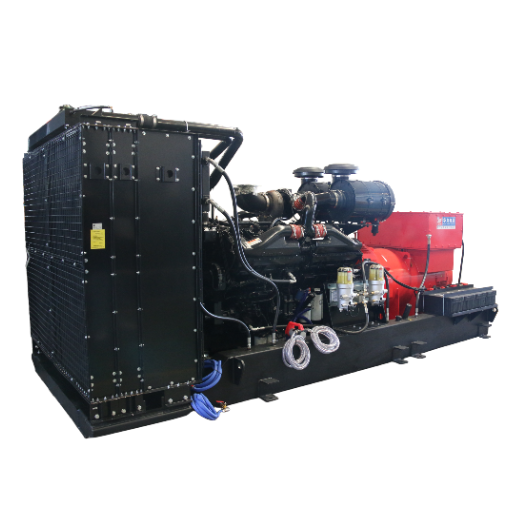
A transformer is a second conversion stage. Your engine converts fuel to mechanical power, the alternator converts that to electrical power, and the transformer converts the voltage again. Every conversion loses energy, and the transformer’s share of it is published on every datasheet.
Take a real, currently published machine. A 2000 kVA cast-resin dry-type unit from Shengte, rated 6/10/11 kV to 0.4 kV with 6 percent impedance, lists:
| Parameter | Value |
|---|---|
| No-load loss | 3.05 kW |
| Load loss at 120 °C | 14.4 kW |
| No-load current | 0.7% |
| Short-circuit impedance | 6% |
| Efficiency at full load | about 99.1% |
Start with the first row, because it is the one buyers forget. The 3.05 kW no-load loss is the energy needed to magnetise the core. It is drawn continuously whenever the transformer is energised, whether the generator is carrying 2 MW or sitting idle. It runs 8,760 hours a year.
The second row scales. Load loss rises with the square of the current, so at half load it is a quarter of the figure, and at full load it is all of it.
Step-up transformer sizing is therefore not about picking a kVA number off a table. It is about picking the load point you will actually run at, because that is what decides your bill.
What That Adds Up To
| Average load | Load loss | No-load | Total loss | kWh a year | Cost a year at $0.12 |
|---|---|---|---|---|---|
| 40% | 2.30 kW | 3.05 kW | 5.35 kW | 46,900 | $5,630 |
| 60% | 5.18 kW | 3.05 kW | 8.23 kW | 72,130 | $8,660 |
| 80% | 9.22 kW | 3.05 kW | 12.27 kW | 107,450 | $12,890 |
| 100% | 14.40 kW | 3.05 kW | 17.45 kW | 152,860 | $18,340 |
A 2 MW prime-power site typically runs somewhere between 60 and 80 percent of nameplate on average. Call it 72,000 to 107,000 kWh of pure loss a year.
At an industrial electricity price of 0.12perkWh,thatis∗∗0.12perkWh,thatis∗∗8,660 to $12,890 a year**, every year, for as long as the site operates.
Losses Versus Capital, Over Ten Years
Now put the two numbers side by side.
| Route | Capital delta over a 480 V set | Ten-year loss cost at 60% load |
|---|---|---|
| To 4,160 V, MV alternator | +$40,000 | $0 |
| To 15 kV, step-up transformer | less than +$100,000 | 57,700to57,700to144,300 |
| To 15 kV, MV alternator | +$100,000 | $0 |
If the electricity price is 0.08/kWh, the cost of losses over ten years is approximately 57,700; at 0.12/kWh, it is approximately 86,600; and at 0.20/kWh—a price level that might be encountered in parts of Western Europe or on island power grids—it is approximately 144,300.
Run it at 80 percent average load and every one of those figures grows by about half.
Where the Crossover Sits
Against the $100,000 alternator premium at 15 kV, the transformer’s losses alone consume the whole saving in about eleven and a half to seventeen years at 60 percent load, depending on what you pay for power. That is a slow bleed, and on its own it loses the argument.
But the transformer costs money to buy, and that subtracts from the 100,000 before the losses start. Put $ 100,000 before the losses start.Puta40,000 pad-mounted unit against the premium and the net saving is $60,000, so the crossover lands between seven and ten years. Run the site at 80 percent average load and it arrives in four to seven.
The $40,000 is a placeholder, not a quote. Generac’s paper does not price the transformer, and yours will be quoted per site. The point is that the crossover is a function of two numbers you can get before you sign anything: the transformer price, and the hours the site runs.
Against the $40,000 premium at 4,160 V, there is nothing to eat. The two routes cost roughly the same to buy, so the transformer’s losses are pure additional cost, and the MV winding wins on total cost from the first hour.
That is the finding. At 4,160 V, the question answers itself. At 15 kV, it depends entirely on how many hours the site runs.
Yusuf is an equipment engineer at a textile mill near Kayseri. In 2023, he conducted a comparative analysis for a system with an annual runtime of approximately 6,500 hours and a prime power capacity of 2 megawatts (MW). The results showed that a 15-kilovolt (kV) generator set was priced 95,000 higher than a 480-volt (V) unit, while an alternative configuration incorporating a transformer cost 38,000 more than the 480-volt unit.
He took the transformer. Two years later he ran the site’s own metering against the transformer losses and found his annual bill was about $11,000 higher than the quote comparison had implied, because the no-load loss had never appeared on any document he had been given.
He still thinks the decision was right. The saving was enough to fund the losses for the first five years, and the capital was not available. But he would have preferred to know the number before he signed.
One Honest Caveat
An MV alternator is not lossless, and this comparison should not pretend it is. Both routes have an alternator, and both alternators have core and winding losses.
What the transformer adds is one more conversion stage. The 17.45 kW above is the size of that stage, not the total loss of the plant.
That distinction matters when a supplier quotes a generator step-up transformer at ninety-nine percent efficiency. Ninety-nine percent sounds excellent. It is excellent. It is also 152,000 kWh a year at full load, and the MV route does not spend it.
What Changes Operationally
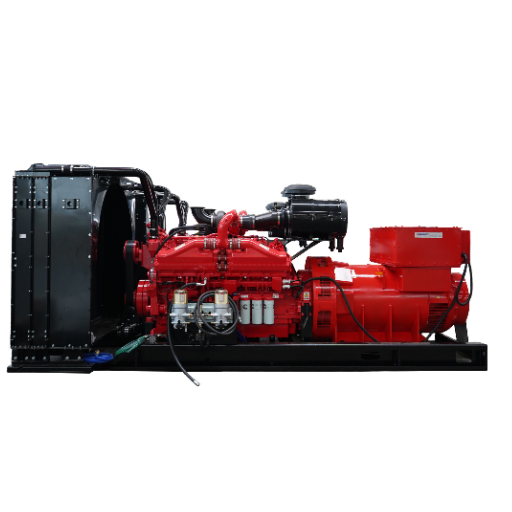
The financial case is only one of the differences. A generator step up transformer changes three other things, and all of them are worth knowing before the purchase order goes out.
The 480 V side still carries the current. A 2,500 kVA load, which is what a 2,000 kW set delivers at 0.8 power factor, draws 3,007 A at 480 V against 347 A at 4,160 V and 131 A at 11,000 V. The transformer does not reduce the current on the generator side; it only reduces it after the transformer. If your cable run is long, the transformer has to sit near the set, not near the load.
You are buying a second failure mode. A transformer needs its own protection, its own tap changer if it has one, and its own spares. It can fail, and when it does the generator is healthy and the site is dark. The MV alternator is a single machine with a single warranty.
Dry type or oil-filled changes the siting. A cast-resin dry-type unit can sit indoors and needs no bund. An oil-filled unit usually goes outside and needs fire separation and containment. At 2 MW either arrangement is a step up transformer 3 phase machine with three times the copper of the single-phase version, so the footprint difference between the two types is significant. It often decides the layout before the electrical design does.
What to Put in the Enquiry
If you are pricing the generator step up transformer route, six items get you a usable quote.
- Primary and secondary voltage, including the tap range you need.
- kVA rating and the load profile, because the loss figures depend on where you run.
- Impedance, which sets the fault level the switchgear must withstand.
- Cooling class and ambient, which decides whether the rating holds at 40 °C or 50 °C.
- Indoor or outdoor, and whether an enclosure is required.
- Loss limits, if your procurement or a local regulation imposes them. Ask for the no-load and load loss figures in writing, in kW, on the quotation.
That last item is the one that changes the answer most often. Two transformers with the same kVA and the same impedance can be several kilowatts apart on losses, and the cheaper one is frequently the thirstier one.
If the load figure itself is still in doubt, our guide to kVA versus kW settles that first, and the 2000 kVA generator page shows how often a nameplate overstates what a set will actually carry.
What Huali Sells in This Decision
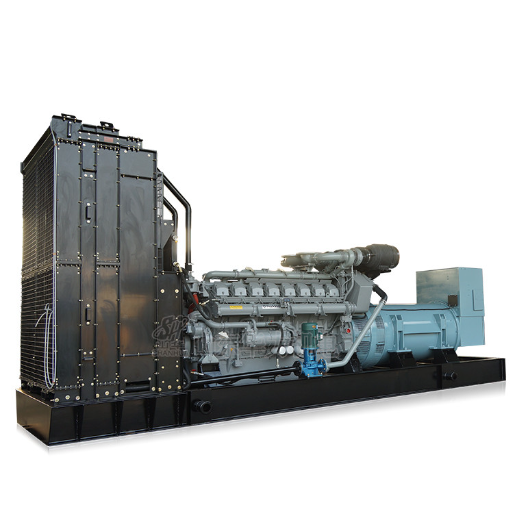
Here is our position, stated plainly.
We build 230/400 V and 480 V diesel generator sets from 8 kVA to 4,000 kVA. For a 2 MW project that is the low-voltage half of this decision, and it is the half we are good at. Our 2 MW generator page covers the frame, the transport weight and the one-unit-or-two question.
We do not build step-up transformers. The generator step-up transformer side of this comparison comes from a specialist manufacturer, and the losses above are theirs, not ours.
We do not build medium voltage alternators either. If your project lands at 4,160 V or 11 kV, both routes take you outside our range, and we will say so before you spend time on a formal enquiry.
What we can do is the part that comes before either of them. Get the load right in kilowatts, confirm the current at the voltage you intend to run, and a meaningful share of projects that arrive asking about 11 kV turn out to need a smaller set and a shorter cable route. The medium voltage generator page works through that threshold in detail.
If your answer comes back at 480 V, we will quote it properly. If it comes back at 4,160 V, we will tell you which of the two routes the numbers favour and what to ask the supplier, which is the more useful outcome for both of us.
Before you commit to a voltage class, get the current checked. Send us the load, the voltage and the route length and our engineers will tell you where the decision actually falls. No charge, and no attempt to sell you a transformer we do not make.
The Decision
A generator step-up transformer is the right answer at 15 kV and the expensive one at 4,160 V, and the reason is not the capital cost. It is the conversion stage you have just added to a plant that runs several thousand hours a year.
Compare the two routes on four lines:
- Capital, where the MV alternator is level at 4,160 V and the transformer wins at 15 kV.
- Losses, where the transformer spends 3.05 kW before it does any work and up to 14.4 kW more under load.
- Switchgear, at 50,000to50,000to60,000 per medium voltage section and about twice the low voltage equivalent for transfer and paralleling.
- Operating hours, which is the line that decides whether the capital saving survives.
If the site runs 4,000 hours a year as standby, the transformer’s losses never accumulate enough to matter and the cheap route stays cheap. If it runs 8,000 hours as prime power, the capital saving is spent within seven to ten years and the expensive route was the cheaper one.
Work the hours before you work the price. It is the same discipline as working the current before you choose the voltage, and it is the one that decides this.
If you want the megawatt generator price picture for the set itself, we have that too. What we will not give you is a generator step-up transformer quote, because we do not build them.
