
A single-phase generator typically produces 120V, 240V, or 120/240V split-phase in North America, and 220V to 230V at 50 Hz in Europe, Asia, and most other regions. The exact voltage of a single-phase generator depends on its winding configuration and the electrical standard of the country where it operates.
This guide explains the standard voltage of a single-phase generator, how it compares to three-phase output, what determines the rated voltage, and how to choose the right unit for residential, commercial, and industrial applications.
Single-Phase Generator Voltage: The Quick Answer
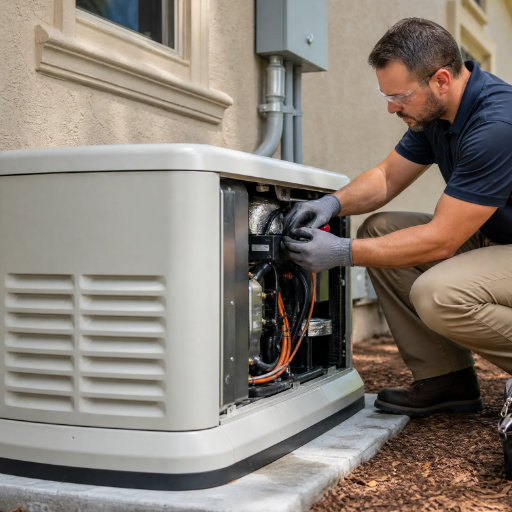
Single-phase generators do not have one universal voltage. Output follows regional grid standards:
| Region | Common Single-Phase Voltage | Frequency |
|---|---|---|
| United States / Canada | 120V, 240V, or 120/240V split-phase | 60 Hz |
| Europe / UK | 230V | 50 Hz |
| China / most of Asia | 220V | 50 Hz |
| Australia / New Zealand | 230V | 50 Hz |
| Japan | 100V | 50/60 Hz |
A 120/240V split-phase generator supplies both voltages at once: 120V between each live leg and neutral, and 240V between the two live legs. In practical terms, a 120/240V generator can run standard household outlets and 240V appliances such as well pumps or air conditioners from the same unit. In Europe and Asia, a 230V single phase generator is the standard equivalent.
One clarification worth knowing: the figures above are RMS (root mean square) values, which is how AC voltage is always rated. A nominal 120V sine wave actually peaks at about 170V and a 230V wave peaks at about 325V. Nameplates, multimeters, and appliance ratings all use RMS, so you never need to convert in practice.
Understanding Single-Phase and Three-Phase Generators
What Is a Single-Phase Generator?
A single-phase generator produces one alternating current (AC) sine wave through two wires: one live conductor and one neutral. Because the design is simple and uses less copper, single-phase generators are cost-effective machines built for light to medium loads. They are the standard choice for homes, small businesses, farms, and portable applications.
What Is a Three-Phase Generator?
A three-phase generator produces three AC sine waves offset by 120 degrees, delivered through three or four wires. Because the three waves overlap, power delivery is continuous rather than pulsing, which gives three-phase systems higher efficiency, better voltage stability under load, and the ability to run large motors and industrial machinery.
Key Differences Between Single-Phase and Three-Phase Generators
| Parameter | Single-Phase | Three-Phase |
|---|---|---|
| Wires | 2 (live + neutral) | 3 or 4 |
| Typical voltage (North America) | 120/240V | 208V or 480V |
| Typical voltage (Europe/Asia) | 220-230V | 380-415V |
| Power flow | Pulsing (one wave) | Continuous (three waves) |
| Efficiency | Lower at high loads | Higher |
| Typical capacity | Up to ~20-40 kVA | 20 kVA and above |
| Applications | Residential, light commercial | Industrial, heavy machinery |
| Initial cost | Lower | Higher |
| Design complexity | Simple | Complex |
Note: voltage figures follow regional standards, which is why a single-phase generator is rated 230V in Europe but 120/240V in the United States.
Single-Phase vs. Split-Phase: Are They the Same Thing?
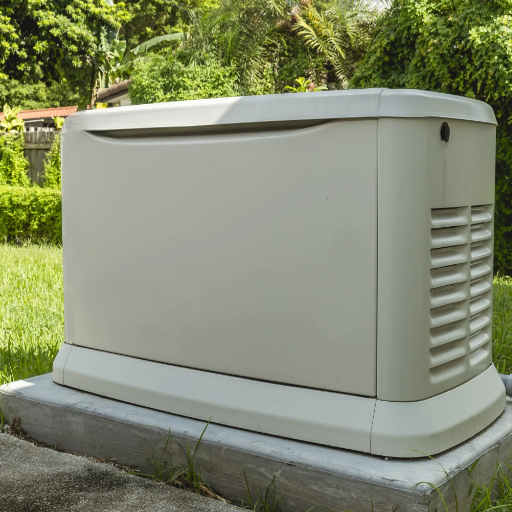
Buyers in North America often see “split-phase” on a generator datasheet and assume it is a different type of machine. It is not. Split-phase is a wiring configuration of a single-phase supply, not a separate phase system.
A standard single-phase alternator has one output winding. In a 120/240V split-phase setup, that winding has a center tap that becomes the neutral conductor. The two ends of the winding give you 240V leg-to-leg, and each end gives 120V to neutral. The two 120V legs are 180 degrees apart electrically, but they still come from one winding and one magnetic field, so the supply is genuinely single-phase.
This matters when you shop for a generator:
- A unit listed as “120V only” cannot supply 240V loads without a transformer.
- A unit listed as “120/240V” covers both outlet types from the same machine.
- A unit listed as “230V” (50 Hz markets) supplies the single live-plus-neutral standard used across Europe and Asia.
When in doubt, check the alternator plate for the number of leads and the reconnection diagram. Many quality alternators allow a qualified electrician to reconnect the windings for a different output voltage.
What Determines a Single-Phase Generator’s Output Voltage?
Four factors set the rated voltage of a single-phase generator:
- Winding configuration. The alternator windings determine the base output. Many generators have reconnectable windings, so a technician can configure the same unit for 120V, 240V, or 120/240V output.
- Automatic voltage regulator (AVR). The AVR holds output voltage stable as the load changes, typically within ±1-2% of the rated value. A failing AVR is the most common cause of voltage fluctuation.
- Engine speed and frequency. Output frequency (50 Hz or 60 Hz) is tied to engine RPM. A generator running below rated speed produces lower voltage and frequency, which can damage connected equipment.
- Load size. Heavy or motor-starting loads cause temporary voltage dip. Correct sizing (matching generator kVA to your total load) keeps voltage within acceptable limits.
Acceptable Voltage Range: How Much Deviation Is Normal?
No generator holds its rated voltage perfectly. The question buyers should ask is not “does the voltage move?” but “how far can it move before equipment is at risk?”
Most appliances and electronics tolerate a supply within ±5% of nominal. Sensitive equipment such as computers and medical devices prefers ±3%. IEC 60038, the international standard for low-voltage supply, allows utilities a wider band, but a quality standby generator with a working AVR should stay well inside the tighter range.
| Condition | 120V System | 230V System | Effect on Equipment |
|---|---|---|---|
| Ideal range (±5%) | 114-126V | 218-242V | Normal operation |
| Mild undervoltage | 108-114V | 207-218V | Motors run hot, lights dim, electronics may reset |
| Severe undervoltage | Below 108V | Below 207V | Motor overheating, compressor damage, equipment shutdown |
| Mild overvoltage | 126-132V | 242-253V | Reduced appliance lifespan, overheating |
| Severe overvoltage | Above 132V | Above 253V | Immediate risk of electronics failure and insulation damage |
Sustained undervoltage is the more common generator problem, and it usually traces back to an overloaded unit, a slipping engine governor, or a worn AVR. Overvoltage is rarer but more destructive, and it points to AVR failure or incorrect winding reconnection. If your generator sits outside the ideal range under normal load, take it out of service and diagnose the cause before connecting sensitive loads.
How to Test a Single-Phase Generator’s Output Voltage
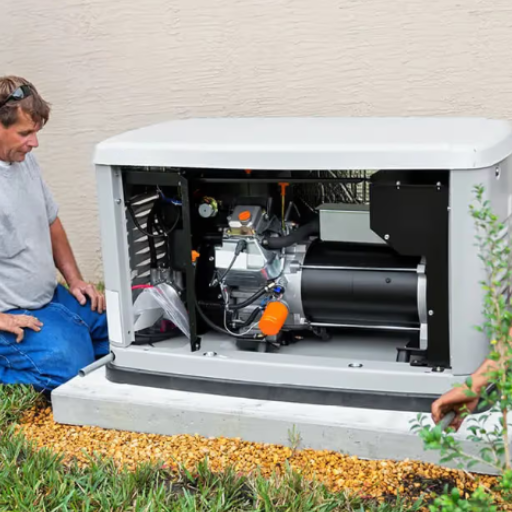
You can verify output voltage with a standard digital multimeter in a few minutes:
- Warm up the generator. Start the unit and let it run for 3-5 minutes so engine speed and voltage stabilize.
- Set the multimeter. Select AC voltage (V with a wavy line) on a range above your expected reading, typically 250V or 750V.
- Measure at the outlet. Insert the probes into a receptacle: one in the live slot, one in neutral. A healthy 120V circuit should read roughly 114-126V; a healthy 230V circuit should read roughly 218-242V.
- Measure under load. Plug in a typical load such as a heater or work light and measure again. The reading should drop only slightly. A sag of more than 5-10% suggests the generator is undersized or the AVR is struggling.
- Check frequency if possible. Many multimeters include a Hz mode. You should see close to 60 Hz (North America) or 50 Hz (most other regions) at no load, dipping no more than 1-2 Hz under load.
A quick rule of thumb: if voltage and frequency both sag together under load, the engine is underpowered or losing speed. If voltage sags while frequency holds, suspect the AVR or the alternator.
Common Voltage Problems and How to Fix Them
| Symptom | Likely Cause | Fix |
|---|---|---|
| No output voltage | Tripped breaker, loss of residual magnetism, failed AVR | Reset breaker; flash the field; test/replace AVR |
| Low voltage at all loads | Engine under-speed, worn brushes, faulty AVR | Check RPM and governor; inspect brushes; replace AVR |
| Low voltage only under load | Generator undersized, excessive load, clogged fuel/air filter | Reduce load; service filters; upsize the unit |
| High voltage | Failed AVR, incorrect winding reconnection | Replace AVR; verify alternator lead configuration |
| Fluctuating voltage | Loose connections, hunting governor, unstable fuel supply | Tighten terminals; service governor; check fuel quality |
| Correct voltage, wrong frequency | Engine speed set incorrectly | Adjust governor to rated RPM (3,000 rpm for 50 Hz 2-pole; 3,600 rpm for 60 Hz 2-pole) |
Regular preventive maintenance, especially AVR checks, brush inspection, and governor service, prevents most of these issues. If voltage problems persist after basic checks, have the alternator tested by a qualified technician before winding damage develops.
Advantages of Single-Phase Generators
- Simple design. Fewer components mean easier operation, faster troubleshooting, and lower maintenance costs.
- Lower purchase price. Single-phase units cost less to buy and install than three-phase equivalents, making them practical for homes and small operations.
- Matched to household loads. Most residential appliances and small commercial equipment are designed for single-phase power, so no conversion is needed.
- Portability. Compact single-phase generators are easy to transport and store, suiting construction sites, outdoor events, and backup use.
- Easy integration. They connect to standard residential electrical services with minimal modification.
Common Applications of Single-Phase Generators
- Home standby power. Running lighting, refrigeration, heating, and cooling during grid outages.
- Small businesses and shops. Powering point-of-sale systems, lighting, and office equipment where demand is modest.
- Construction sites. Operating power tools and temporary lighting where grid supply is unavailable.
- Outdoor and leisure use. Camping, events, and remote locations without utility power.
- Agriculture. Driving water pumps, heaters, and farm equipment in areas beyond grid coverage.
When Should You Choose a Single-Phase Generator?
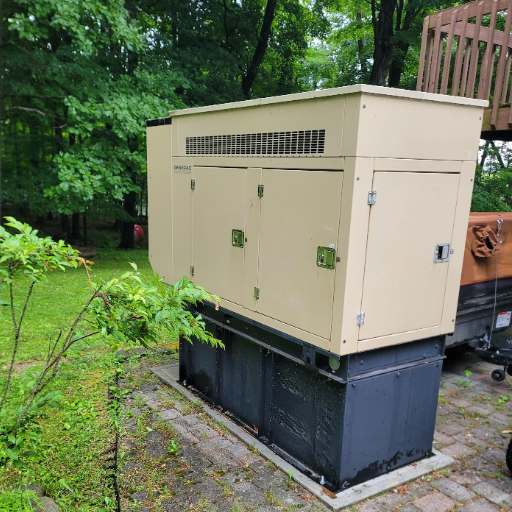
Choose a single-phase generator when your loads are modest and predictable: residential backup, light commercial use, portable power, or remote sites. If your total load stays under roughly 20 kVA and your equipment is rated for single-phase supply, a single-phase unit is the most economical and easiest to maintain.
A quick way to sanity-check capacity uses the basic relationship watts = volts × amps. On a 230V supply, a 10 kVA generator delivers about 43 amps of usable current; on a 120V circuit, the same 10 kVA delivers about 83 amps, but split across circuits. Add up the running watts of everything you plan to power, then add the starting surge of the largest motor (often 3 times its running draw), and keep the total under about 80% of the generator’s rated output for reliable voltage stability.
Step up to three-phase when you need to run large motors, heavy machinery, or continuous industrial loads, or when your facility already has three-phase service. If you are unsure which supply your site has, see our guide on how to tell if you have 3-phase or single-phase power.
Single-Phase Diesel Generators
Diesel is the most common fuel for single-phase generator sets used in backup and off-grid roles. Compared with gasoline units, diesel generators offer:
- Better fuel economy. Diesel engines convert more fuel energy into work, lowering running costs over long operating hours.
- Durability and long service life. Diesel engines are built for sustained operation and tolerate harsh environments well.
- Fuel safety. Diesel is less flammable than gasoline, reducing fire risk during storage and refueling.
- High continuous output. Suitable for extended outages and prime-power applications such as farms and remote facilities.
Modern single-phase diesel generators are available from around 2 kW portable units up to 20 kW and above for stationary standby systems, all at the standard voltages shown in the table above. Explore our single-phase diesel generator range or browse all power generator types to find a unit matched to your voltage and capacity requirements.
Frequently Asked Questions
What is the voltage of a single-phase generator?
A single-phase generator typically produces 120V, 240V, or 120/240V split-phase in North America, and 220V to 230V in Europe, China, and most of Asia. The exact rating depends on the generator’s windings and regional standards.
What are the differences between single-phase and three-phase generators?
Single-phase generators deliver power through one AC wave on two wires and suit residential and light loads. Three-phase generators deliver three overlapping waves on three or four wires, providing continuous, more efficient power for industrial equipment and large motors.
How does single-phase power compare to three-phase power?
Single-phase power is simpler and cheaper to install, making it the standard for homes and small businesses. Three-phase power delivers larger loads more efficiently, with less voltage drop and smoother motor operation in industrial settings.
What are the advantages of three-phase generators?
Three-phase generators offer higher efficiency, continuous power delivery, better load balancing across phases, and the ability to start and run large motors without overload. They are the standard choice above roughly 20 kVA.
When should I choose a single-phase generator?
Choose single-phase when your loads are modest: homes, shops, farms, portable tools, and outdoor events. It is more affordable to buy, install, and maintain for loads under about 20 kVA.
Can a single-phase generator provide power during an outage?
Yes. Size the generator so its rated wattage exceeds the combined load of the appliances you need to run, including motor starting surge, and connect it through a proper transfer switch.
What is the voltage output of a three-phase generator?
Three-phase generators typically output 208V or 480V in North America and 380V to 415V in Europe and Asia, depending on system design.
What type of generator is best for large power needs?
A three-phase generator is the best choice for large power needs. Its continuous, balanced output handles industrial machinery and heavy loads that would overload a single-phase unit.
Is 220V the same as 230V?
For practical purposes, yes. 220V, 230V, and 240V describe the same nominal single-phase supply standard in different countries and eras. IEC 60038 harmonized the standard at 230V, and appliances rated for any of these values work safely on the others.
Can I change the output voltage of my single-phase generator?
Often, yes. Many alternators have reconnectable windings that allow a qualified electrician to switch between configurations such as 120V, 240V, or 120/240V. Small voltage adjustments can also be made through the AVR trimmer. Changing frequency, however, requires changing engine speed and is not practical on most units.
Why is my generator producing low voltage?
The most common causes are an overloaded generator, low engine speed, a failing AVR, worn brushes, or clogged fuel and air filters. Measure output at no load first. If voltage is still low with nothing connected, the problem is in the engine or alternator rather than your load.
Conclusion
The voltage of a single-phase generator is typically 120V, 240V, or 120/240V split-phase in North America and 220-230V elsewhere. The right unit depends on your regional standard, your total load in kVA, and whether your equipment requires single-phase or three-phase supply. For most homes, farms, and small businesses, a single-phase diesel generator is the most practical and cost-effective source of backup or off-grid power.
Need help sizing a unit for your application? Request a quote and our engineering team will recommend a generator matched to your voltage and capacity requirements.
