
A diesel generator generally would consume around 0.22 to 0.25 liters of diesel fuel per every kilowatt-hour of full load power. Though that is not usually the factor concerned on-site, the amount of fuel consumed by the generator under operating load is a significant indicator, and thousands of dollars in losses disappear almost when what would have been a regular fuel-hungry approach to operating the generator is not taken.
Most prospective buyers will specify a generator rated in accordance with peak load and will in practice operate it at 40-60% of that rating throughout its life. The engine’s consumption of fuel per kWh at 50% load would approximate about 12% exceeding the reading taken when at full load; at 25% load, this figure would almost run up to 43%. Be overprepared by 30% does not afford you 30% safe haven; rather, it means taxing fuel every moment the unit is operational.
If you are budgeting for a new installation or trying to understand why your existing unit is burning more than the datasheet promised, this guide gives you the exact calculation framework our engineers use. We will walk through the real formulas, a consumption chart you can read in 10 seconds, brand-specific efficiency curves, and a copy-paste annual fuel budget template.
Key Takeaways
- Diesel generator fuel consumption is measured in L/kWh or gal/kWh, and the standard planning constant is 0.25 L/kWh at full load; at 25% load it rises to 0.357 L/kWh, a 43% penalty.
- The 70–80% load window is the fuel-efficiency sweet spot; chronic underloading causes wet stacking, carbon buildup, and a 10–20% fuel penalty over time.
- Deferred maintenance increases fuel consumption by 15–25%; skipped injector service and dirty air filters are the most common culprits.
- A 500 kW prime-power genset running 4,000 hours per year at 75% load burns roughly 384,000 L of diesel annually; at 1.10/Lthatis1.10/Lthatis422,400 in fuel alone.
- B20 biodiesel consumes roughly 5–7% more fuel by volume than straight diesel; HVO is a drop-in paraffinic replacement with similar energy density and cleaner combustion.
How Diesel Generator Fuel Consumption Is Actually Measured
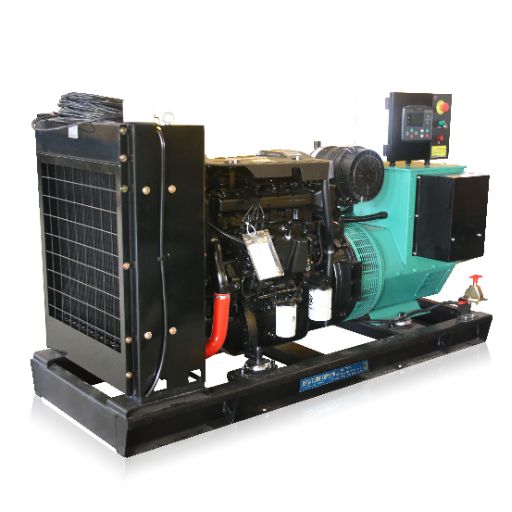
Diesel generator fuel consumption is not a single number. It is a curve plotted against load, and the shape of that curve depends on engine design, age, maintenance condition, and ambient conditions.
SFOC vs the Rule of Thumb
Engineers use Specific Fuel Oil Consumption (SFOC), measured in grams of diesel per kWh produced. The industry rule of thumb for quick budgeting is 0.25 L/kWh at full load (or 0.1 gal/kWh in US markets). That figure comes from dividing a typical SFOC of 210 g/kWh by diesel density of roughly 0.84 kg/L.
The problem is that 0.25 L/kWh only works at or close to 100% rated load. At anything less, the parasitic losses, cooling-fan drag, and oil-pump load remain constant as useful power goes down. The engine is still kept running for itself, and this self-consumption to fewer kilowatt-hours produces loss.
Why 0.25 L/kWh Is Only True at Full Load
A modern Cummins QSK19G7 might record an SFOC of 205 g/kWh at 100% load. At 50% load, the same engine might record 240 g/kWh. The total liters per hour still drop because you are producing half the power, but the fuel cost per unit of energy rises. Buyers who calculate annual budgets using the full-load constant and then run at 50% load find themselves 10–15% over budget by month six.
The Partial-Load Penalty Table
| Load Factor | SFOC (g/kWh) | Effective Rate (L/kWh) | Fuel Penalty vs Full Load |
|---|---|---|---|
| 110% (overload) | ~205 | ~0.244 | Baseline + stress |
| 100% (full load) | ~210 | ~0.250 | Baseline |
| 75% | ~215 | ~0.256 | +2.4% |
| 50% | ~235 | ~0.280 | +12.0% |
| 25% | ~300 | ~0.357 | +42.8% |
Calculated using diesel density of 0.84 kg/L. Figures represent modern industrial engines; older units may be 5–10% higher across the board.
Diesel Generator Fuel Consumption Chart by kW Rating
The table below is a complete diesel generator fuel consumption per hour reference for common industrial genset sizes. The numbers assume a modern diesel engine at 50%, 75%, and 100% load factors.
| Generator Size | 50% Load (L/h) | 50% Load (gal/h) | 75% Load (L/h) | 75% Load (gal/h) | 100% Load (L/h) | 100% Load (gal/h) |
|---|---|---|---|---|---|---|
| 10 kW | 1.4 | 0.37 | 1.9 | 0.50 | 2.5 | 0.66 |
| 20 kW | 2.8 | 0.74 | 3.8 | 1.00 | 5.0 | 1.32 |
| 30 kW | 4.2 | 1.11 | 5.8 | 1.53 | 7.5 | 1.98 |
| 50 kW | 7.0 | 1.85 | 9.6 | 2.54 | 12.5 | 3.30 |
| 100 kW | 14.0 | 3.70 | 19.2 | 5.07 | 25.0 | 6.60 |
| 200 kW | 28.0 | 7.40 | 38.4 | 10.14 | 50.0 | 13.20 |
| 500 kW | 70.0 | 18.50 | 96.0 | 25.36 | 125.0 | 33.00 |
| 1,000 kW | 140.0 | 37.00 | 192.0 | 50.72 | 250.0 | 66.00 |
| 1,500 kW | 210.0 | 55.50 | 288.0 | 76.08 | 375.0 | 99.00 |
| 2,000 kW | 280.0 | 74.00 | 384.0 | 101.44 | 500.0 | 132.00 |
How to read this chart for your application: Find your generator’s kW rating in the left column, then read across to the load factor that matches your real operating profile. Most standby units run well below 75% during test cycles; most prime-power industrial units aim for 70–80% average load.
Not sure what your actual average load is? Our engineers can analyze your consumption logs and tell you your real L/kWh in 48 hours. Request a fuel-efficiency assessment →
Brand-Specific Fuel Efficiency: Cummins vs Perkins vs Weichai
Engine brand matters for diesel generator fuel efficiency, but the gap is smaller than most buyers assume. On a like-for-like kW rating, the difference between a Cummins KTA and a Weichai WP13 at 75% load is typically 3–8%, not the 20% gap that marketing brochures sometimes imply.
SFOC Curves at 75% Load
Based on factory datasheet values and our witness load-bank observations:
- Cummins QSK series: ~208–215 g/kWh at 75% load. Best-in-class for large-frame industrial units above 500 kW.
- Perkins 4000 series: ~212–220 g/kWh at 75% load. Strong across the 200–1,000 kW range with excellent part-load stability.
- Weichai WP series: ~218–228 g/kWh at 75% load. Slightly higher consumption, but the acquisition cost difference often pays for years of extra fuel.
- Yuchai YC series: ~225–235 g/kWh at 75% load. Value-focused; best suited for prime power in environments where fuel quality is variable.
When Engine Brand Actually Matters for Fuel Cost
When you run a 4000-hour engine, the brand decision makes the greatest difference. On one 1000 kW prime unit running 6000 hours per year, a poor SFOC results in the waste of over 4500 L of diesel in a year. So about $4,500 with L10/L. A differential on fuel costs between the top and bottom of the efficiency chart could run up to $50,000-80,000 over a ten-year life. For a standby unit working 200 hours a year, fuel lost through the brand’s selection is minimal relative to the outlay and maintenance expenses.
China-Factory OEM Units: Same Engine, Same Consumption
A Cummins diesel generator built at a China factory uses the same Cummins engine block, injectors, and turbocharger you would get from a Western OEM direct. The SFOC curve does not change because the engine was assembled in Shandong instead of Minnesota. What changes is the price, the diesel generator lead time, and the enclosure engineering. For the full picture on cost differences, see our diesel generator total cost of ownership guide.
Hidden Causes of High Diesel Generator Fuel Consumption
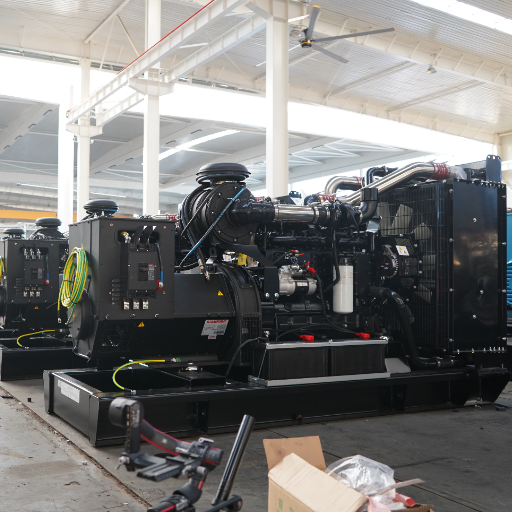
Three factors drive fuel consumption far above the datasheet: wet stacking, altitude derating, and chronic underloading. None of them show up in the brochure.
Wet Stacking and Carbon Buildup
When a diesel engine runs at less than 30% of its rating for extended periods, combustion temperatures fall below the norm to fry off carbon deposits. Unburned fuel and oil will pass past the piston rings and accumulate in the exhaust system; the result is wet stacking-an oily black layer covering the turbocharger, manifold, and exhaust piping.
The economic impact of this is very significant: there will be a heavy carbon load on the cylinder walls, increased ring friction, and resultant leakages causing reduction in the compression ratio. The genset that started at 210 g/kWh can go to 240-250 g/kWh even in 12-18 months of chronic underloading, for an overall 14-19 percent fuel penalty before the cleanup price can be accounted for.
A copper mine in Chile installed a 750 kW diesel generator set for a camp that never grew beyond 280 kW of real load. The unit ran at 37% load for 18 months. By month 20, fuel consumption had risen 18% above specification, and the exhaust manifold was saturated with carbon sludge.
The mine paid $14,000 for a hot-pressure wash, piston-ring replacement, and injector refurbishment. The fix would have been a 400 kW unit or parallel operation from day one.
Altitude and Temperature Impact on Fuel Consumption
Altitude derating is usually discussed in terms of lost kW output, but it also raises fuel consumption per kWh. At 1,500 meters, a naturally aspirated engine loses roughly 15% of its power. To produce the same kW, it works harder and burns more fuel per unit of output.
Turbocharged engines fare better, but even they show a measurable SFOC increase above 1,000 meters. Hot ambient temperatures compound the effect: a 45°C day can push intake-air temperature high enough to reduce combustion efficiency by 3–5%.
Chronic Underloading: The Oversizing Tax
Oversizing is the single most common cause of high fuel consumption. Engineers add 20% for future expansion, then procurement adds another 20% for safety margin, then the facilities team rounds up to the next standard frame size. The result is a 500 kW genset running a 180 kW load. The unit works, but it works inefficiently, and the fuel bill reflects that inefficiency every month.
Maintenance Impact on Fuel Consumption
Deferred maintenance is not a reliability issue that might catch up with you someday. It is a fuel-cost issue that is already draining your budget.
Deferred Maintenance = +15–25% Fuel Penalty
Industry data and our own load-bank observations confirm that poorly maintained gensets consume 15–25% more fuel than well-maintained equivalents. The culprits are predictable:
- Dirty injectors: Incomplete atomization causes poor combustion; SFOC rises 5–10%.
- Clogged air filter: Restricted airflow reduces the air-fuel ratio; SFOC rises 3–8%.
- Worn piston rings: Blow-by reduces compression and combustion pressure; SFOC rises 5–12%.
- Degraded engine oil: Increased friction and poor heat transfer; SFOC rises 2–5%.
The 250-Hour Service Interval Rule
For prime-power applications, oil and filter changes every 250 hours are the baseline. Stretch that to 400 hours and oil viscosity breakdown accelerates. Stretch it to 500 hours and you are gambling with both engine life and fuel economy. For the full maintenance schedule, see our diesel generator maintenance guide. For generator warranty coverage on engine pass-through terms, see our warranty guide.
A municipal hospital in Nigeria ran two 500 kW prime units on a 12-month service interval because spare parts were hard to source. After 18 months, both units were burning 22% more fuel than specification. Injector spray patterns were degraded, air filters were caked with dust, and oil analysis showed elevated soot levels.
When the hospital finally sourced replacement injectors and filters, the fuel bill dropped by 1,800permonthperunit.The18−monthdelayhadcostthemroughly1,800permonthperunit.The18−monthdelayhadcostthemroughly65,000 in extra fuel.
HVO and Biodiesel: What Changes for Fuel Consumption?
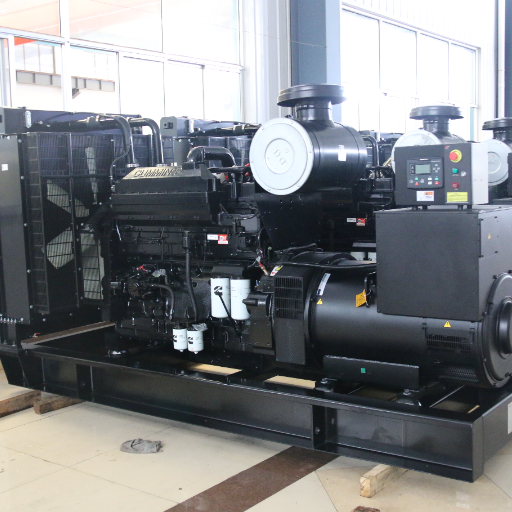
Alternative fuels are increasingly relevant for sites with emissions targets or renewable-fuel mandates. The impact on generator fuel consumption varies by fuel type.
B20: ~5–7% More Volume, Cleaner Burn
B20 (20% biodiesel, 80% mineral diesel) has roughly 2% lower energy density than straight diesel. A generator burning B20 will consume 5–7% more fuel by volume to produce the same kWh. The trade-off is cleaner combustion: lower particulate matter, reduced sulfur, and less carbon deposit buildup. For gensets in regulated environments, the volume penalty is often offset by reduced exhaust after-treatment maintenance.
HVO as Drop-In Replacement
Hydrotreated Vegetable Oil (HVO) is a paraffinic replacement for diesel fuel that is chemically very different from FAME type of diesel. Sulphur-free and with a very high cetane number, it can just as well be used as a 100% drop-in replacement with near to zero blending. The rank of energy density is close to that of mineral diesel. Therefore, the volumetric fuel consumption remains quite healthy. The main benefits are cleaner combustion, less fuel injector separation, and a higher degree of seal and gasket compatibility. The downside is the price: HVO typically is 5%–15% more expensive compared to mineral diesel by 2026.
Seal Compatibility and Filter Loading
Biodiesel (FAME) can degrade natural-rubber seals and hoses over time. HVO does not. Both fuels have solvent properties that can dislodge deposits from old fuel systems, so filter changes should be accelerated during the first 500 hours of transition. After the system is clean, filter life returns to normal.
Diesel Generator Fuel Cost Calculator: Annual Budget Template
Use this template to build a fuel budget for any genset installation.
The Formula
Annual Fuel (L) = Rated kW × Load Factor × Annual Runtime (hrs) × SFOC Rate (L/kWh)
Annual Fuel Cost = Annual Fuel (L) × Local Diesel Price ($/L)
SFOC Rate by Load Factor:
- 100% load: 0.250 L/kWh
- 75% load: 0.256 L/kWh
- 50% load: 0.280 L/kWh
- 25% load: 0.357 L/kWh
Worked Example: 5 Scenarios
| Scenario | Size | Load | Runtime/yr | Annual Fuel (L) | @ $1.10/L | @ $0.95/L |
|---|---|---|---|---|---|---|
| Residential standby | 20 kW | 25% | 100 hrs | 179 L | $197 | $170 |
| Commercial standby | 100 kW | 50% | 200 hrs | 2,800 L | $3,080 | $2,660 |
| Construction prime | 200 kW | 75% | 2,000 hrs | 76,800 L | $84,480 | $72,960 |
| Industrial prime | 500 kW | 75% | 4,000 hrs | 384,000 L | $422,400 | $364,800 |
| Data center standby | 1,000 kW | 50% | 300 hrs | 42,000 L | $46,200 | $39,900 |
Diesel price varies by region. 1.10/L approximates European/Australian pricing;1.10/L approximates European/Australian pricing;0.95/L approximates US Gulf Coast bulk pricing before tax.
5 Ways to Reduce Diesel Generator Fuel Consumption
- Right-size to 70–80% load. The single biggest lever to reduce diesel generator fuel consumption. If your real load is 300 kW, do not buy a 600 kW unit “just in case.” Buy a 400 kW unit and plan for parallel expansion. See our custom diesel generator configurations for tailored sizing options.
- Load-bank monthly. NFPA 110 recommends a 30-minute run at ≥30% load every month. This prevents wet stacking, cleans out carbon, and keeps the engine in its efficient operating window.
- Stick to the 250-hour maintenance interval. Oil, filters, and injector inspection are not optional reliability measures; they are fuel-economy measures. Skipping them costs more in fuel than the service would have cost.
- Consider HVO for clean-burn efficiency. If your site has renewable-fuel mandates or you are fighting injector deposits, HVO maintains the same volumetric consumption with cleaner combustion and longer component life.
- Parallel operation vs single oversized unit. Two 500 kW units in parallel give you redundancy and let you run one unit at 80% load while the other sits offline. A single 1,000 kW unit running at 40% load burns more fuel per kWh, has no redundancy, and accumulates wet-stacking deposits faster.
Frequently Asked Questions About Diesel Generator Fuel Consumption
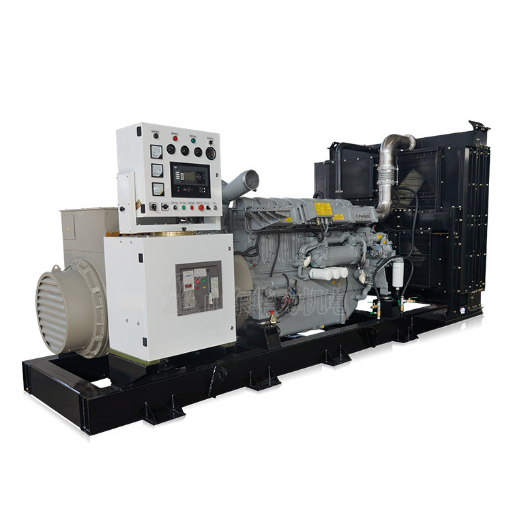
What is diesel generator fuel consumption?
Diesel generator fuel consumption is the rate at which a diesel engine burns fuel to produce electrical power, typically measured in litres per kilowatt-hour (L/kWh) or grams per kilowatt-hour (g/kWh). The industry standard for modern engines is roughly 0.25 L/kWh at full load, but real-world consumption depends on load factor, engine condition, altitude, and maintenance discipline.
How much diesel does a generator use per hour?
At full load, a diesel generator uses approximately 0.22–0.25 L per kWh produced. A 100 kW unit at full load burns roughly 25 L/h; at 50% load it burns roughly 14 L/h. The exact figure depends on engine brand, age, maintenance condition, and ambient temperature.
What is the fuel consumption of a 100 kW diesel generator?
A modern 100 kW diesel generator at 100% load burns approximately 25 L/h (6.6 gal/h). At 75% load it burns approximately 19.2 L/h. At 50% load it burns approximately 14 L/h. These diesel generator litres per hour figures assume a well-maintained modern engine; older or poorly maintained units may be 10–20% higher.
How do I calculate diesel generator fuel consumption?
Follow these three steps to calculate diesel generator fuel consumption for any unit:
- Find your actual load in kW (not the nameplate rating).
- Multiply by the SFOC rate for your load factor: 0.25 L/kWh at 100% load, 0.28 L/kWh at 50% load, or 0.357 L/kWh at 25% load.
- Multiply by annual runtime in hours to get total litres per year.
For a quick estimate, our generator fuel consumption calculator table in the budget section above gives pre-calculated figures for 10 common sizes.
Does maintenance affect fuel consumption?
Yes. Deferred maintenance increases fuel consumption by 15–25% in most cases. Dirty injectors, clogged air filters, worn piston rings, and degraded oil are the primary causes. A strict 250-hour service interval preserves both engine life and fuel economy.
Is biodiesel more efficient than diesel in generators?
No. B20 biodiesel has roughly 2% lower energy density than mineral diesel, so a generator burns 5–7% more fuel by volume to produce the same kWh. The trade-off is cleaner combustion with lower particulate and sulfur emissions. HVO is a drop-in replacement with energy density comparable to mineral diesel.
What is the best load for fuel efficiency?
The fuel-efficiency sweet spot is 70–80% of rated load. Below 50%, parasitic losses rise and fuel cost per kWh increases. Below 30%, wet stacking and carbon buildup become significant problems. Above 90%, thermal stress increases and efficiency flattens.
How much does it cost to run a diesel generator per year?
For a 500 kW prime unit running 4,000 hours at 75% load: annual fuel is roughly 384,000 L. At 1.10/L,fuelcostis1.10/L,fuelcostis422,400. Add maintenance (5,000–5,000–15,000), and total operating cost is roughly 427,000–427,000–437,000 per year. Standby units running 200 hours cost far less: a 100 kW standby unit at 50% load burns 2,800 L/year, or roughly 3,080at3,080at1.10/L.
Why is my generator using more fuel than expected?
The most common causes are: (1) chronic underloading (below 50% rated load), (2) deferred maintenance (dirty injectors, clogged filters, worn rings), (3) altitude or high ambient temperature derating, (4) wet stacking from insufficient load-bank exercise, and (5) an inaccurate baseline assumption (using full-load SFOC for partial-load reality).
Conclusion
Diesel generator fuel consumption is not a fixed specification. It is a moving target shaped by load factor, maintenance discipline, altitude, and engine condition. The datasheet figure of 0.25 L/kWh is only the starting point. The number that shows up on your fuel invoice is determined by how you operate and maintain the unit.
The three rules that determine your real generator fuel cost per year:
- Size the generator so your average load sits in the 70–80% window.
- Service the unit every 250 hours; deferred maintenance is a fuel-tax you pay every month.
- Load-bank exercise monthly to prevent wet stacking and carbon buildup.
Shandong Huali has 25 years of experience manufacturing and testing diesel gensets from 8 kVA to 4,000 kVA. Every unit leaves our factory with a witnessed load-bank test report that records actual SFOC at 25%, 50%, 75%, 100%, and 110% load. Our engineers can run a fuel-budget calculation against your site conditions, runtime expectations, and local diesel price on request.
Ready to calculate your real fuel cost? Send us your generator size, estimated load factor, annual runtime, and local diesel price. We will return a detailed fuel budget and maintenance schedule within five working days. Request a fuel-cost assessment →
