
An IMO Tier III marine generator is a diesel generator set certified under MARPOL Annex VI Regulation 13 to emit roughly 75–80% less nitrogen oxide (NOx) than Tier II engines when operating inside a NOx Emission Control Area (NECA). For shipyards, owners, and equipment buyers, compliance is not a sticker you add at delivery; it is a design decision that affects engine selection, exhaust aftertreatment, fuel systems, class approval, and operating costs.
At Shandong Huali Electromechanical Co., Ltd., we have supplied marine generator sets to shipyards and vessel operators for more than 25 years. In this guide, we explain what an IMO Tier III marine generator is, where and when the rules apply, how SCR and EGR aftertreatment work, what documentation you need, and how to work with a manufacturer so certification stays on schedule.
Key Takeaways
- An IMO Tier III marine generator is certified to MARPOL Annex VI Regulation 13 and must achieve a 75–80% NOx reduction inside NECAs.
- The rules apply to installed marine diesel engines above 130 kW output, including auxiliary generators; emergency generators are exempt.
- SCR aftertreatment is the most common compliance path, typically cutting NOx by 70–95% with urea injection.
- EGR reduces NOx inside the cylinder but usually involves a fuel-consumption penalty and tighter engine integration.
- Mandatory documentation includes the EIAPP certificate, NOx Technical File, and Record Book of Engine Parameters.
- New NECAs in the Norwegian Sea and Canadian Arctic entered force on 1 March 2026.
- CCS approval of an SCR package follows GD 33-2020 and should start at the quotation stage, not after the generator is built.
What Is an IMO Tier III Marine Generator?
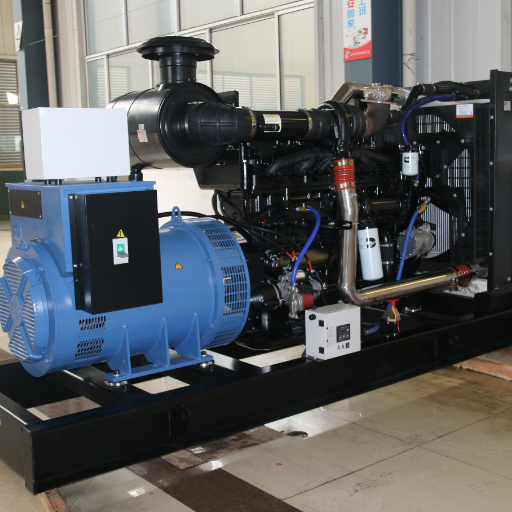
An IMO Tier III marine generator is a shipboard diesel generator set whose engine has been tested and certified to meet the Tier III NOx emission limits set out in MARPOL Annex VI, Regulation 13. The limits apply to installed marine diesel engines with a power output above 130 kW. That includes main propulsion engines and auxiliary engines driving generators. Engines intended solely for emergency use, such as SOLAS generator requirements emergency sets, lifeboat engines, and emergency fire pumps, are exempt.
The term “Tier III marine generator” is sometimes used loosely in the market. A complete solution includes the engine, the alternator, the exhaust aftertreatment system, the control and monitoring package, and the class-approved documentation. If any of those elements are missing or mismatched, the vessel can fail flag-state inspection or port-state control.
Mini-story: The procurement assumption
Lars, a procurement manager at a Scandinavian shipyard, ordered three auxiliary generators for a newbuild ro-ro vessel. The engine datasheet said “IMO Tier III capable.” Six weeks before delivery, the class surveyor asked for the SCR system approval drawing and the NOx Technical File. Lars discovered the SCR reactor had been sourced from a third party without class approval. The yard had to redesign the exhaust line and delay sea trials by six weeks. The lesson: an IMO Tier III marine generator is a system, not just an engine rating.
MARPOL Annex VI and NOx Emission Limits
MARPOL Annex VI NOx controls emissions from marine diesel engines under IMO Regulation 13. The regulation divides engines into three tiers based on construction date and operating area. Tier III is the strictest and applies only inside designated NECAs.
The NOx limits depend on engine rated speed (n in rpm):
| Tier | Applicability | n < 130 rpm | 130 ≤ n < 2,000 rpm | n ≥ 2,000 rpm |
|---|---|---|---|---|
| Tier I | Ships built on/after 1 Jan 2000, all waters | 17.0 g/kWh | 45 · n^−0.2 g/kWh | 9.8 g/kWh |
| Tier II | Ships built on/after 1 Jan 2011, all waters | 14.4 g/kWh | 44 · n^−0.2 g/kWh | 7.7 g/kWh |
| Tier III | Ships built on/after NECA dates, inside NECAs only | 3.4 g/kWh | 9 · n^−0.2 g/kWh | 2.0 g/kWh |
For a medium-speed generator engine running at 1,000 rpm, the Tier III limit is approximately 5.7 g/kWh, compared with about 11.0 g/kWh under Tier II. That is why most marine diesel generator emissions strategies rely on aftertreatment or alternative combustion technology.
Where and When Does IMO Tier III Apply?
Tier III compliance is location-specific. Outside a NOx Emission Control Area, a Tier III-certified engine can operate under its Tier II settings. Inside a NECA, the engine must meet Tier III limits. The boundaries and effective dates are set by IMO resolutions.
| NECA | NOx Tier III Effective From | Vessel Construction Rule |
|---|---|---|
| North American ECA | 1 Jan 2016 | Ships constructed on/after 1 Jan 2016 |
| US Caribbean Sea ECA | 1 Jan 2016 | Ships constructed on/after 1 Jan 2016 |
| Baltic Sea ECA | 1 Jan 2021 | Ships constructed on/after 1 Jan 2021 |
| North Sea ECA | 1 Jan 2021 | Ships constructed on/after 1 Jan 2021 |
| Canadian Arctic ECA | 1 Mar 2026 | Keel laid on/after 1 Jan 2025 |
| Norwegian Sea ECA | 1 Mar 2026 | Building contract on/after 1 Mar 2026, or keel laid on/after 1 Sep 2026, or delivery on/after 1 Mar 2030 |
| North-East Atlantic Ocean ECA | 1 Sep 2027 | Adopted by MEPC.407(84) |
For ships operating in and out of NECAs, the crew must record the engine tier status, on/off status, date, time, and position at each entry and exit. The ABS advisory on NOx Tier III compliance provides a clear template for this logging.
How IMO Tier III Marine Generators Meet NOx Limits: SCR vs EGR Marine
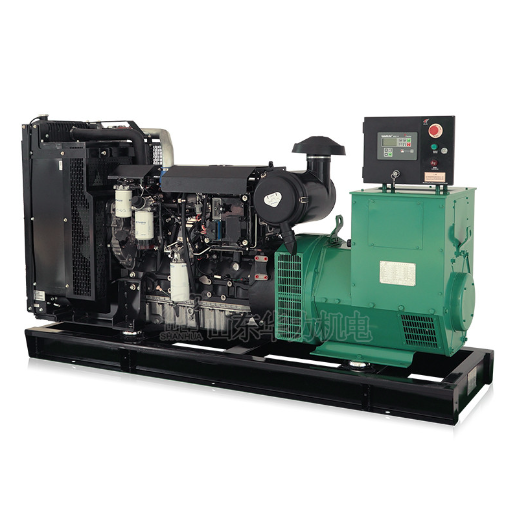
Most IMO Tier III marine generator projects use one of two technical approaches: Selective Catalytic Reduction (SCR) or Exhaust Gas Recirculation (EGR). A third option, dual-fuel or gas engines, is growing for newbuilds.
Selective Catalytic Reduction (SCR)
An SCR system injects aqueous urea into the hot exhaust stream before it passes through a catalyst. The urea decomposes into ammonia, which reacts with NOx to form nitrogen and water vapor. A well-maintained marine generator SCR system can reduce NOx by 70–95%, depending on exhaust temperature, catalyst condition, and dosing accuracy. This is why SCR dominates IMO Tier III compliance for auxiliary generator sets.
Marine SCR units are usually sized larger than land-based systems because marine fuels can have higher sulfur content and because exhaust temperatures vary with generator load. The system needs a urea storage tank, a dosing pump, a mixing chamber, a reactor, NOx and temperature sensors, and a control module. For larger engines, marine generator urea AUS40 (40% urea solution, ISO 18611-1) is often preferred over automotive AdBlue (AUS32) because it reduces storage volume.
Exhaust Gas Recirculation (EGR)
EGR recirculates part of the exhaust gas back into the engine intake. The added inert gas lowers peak combustion temperature, which reduces NOx formation inside the cylinder. EGR avoids the extra hardware of SCR but usually increases fuel consumption and requires cooling and cleaning of the recirculated gas. It is more common on main propulsion engines than on auxiliary generators because the integration is tighter.
SCR vs EGR Marine: Side-by-Side Comparison
| Factor | SCR | EGR |
|---|---|---|
| NOx reduction | 70–95% | 50–80% depending on design |
| CAPEX per kW | 40–40–115 | 55–55–82 |
| Space requirement | Reactor + urea tank | Smaller external footprint |
| Fuel impact | Minimal if tuned correctly | 1–3% fuel penalty typical |
| Retrofit suitability | Well suited to generators | Better for new engines |
| Maintenance focus | Urea quality, catalyst, injectors | Cooler, valves, blowers |
For auxiliary generators, SCR is generally the easier retrofit path because it treats exhaust downstream of the engine rather than changing combustion hardware.
Dual-Fuel Marine Generators
A dual fuel marine generator Tier III solution burns LNG or another gas in lean-burn Otto-cycle mode. Because gas combustion produces lower peak temperatures, it naturally meets Tier III NOx limits without SCR or EGR. This makes dual-fuel attractive for newbuilds with predictable LNG supply. In diesel mode, the same engine usually only meets Tier II, so an SCR may still be needed if the vessel expects to run on liquid fuel inside a NECA. Dual-fuel systems also require compliance with the IGF Code for low-flashpoint fuel.
IMO Tier III Marine Generator Certification and Documentation
Compliance documentation is as important as the hardware. Every marine diesel engine above 130 kW must have:
- Engine International Air Pollution Prevention (EIAPP) certificate: proves the engine meets the applicable NOx tier.
- NOx Technical File: describes the engine components, settings, and allowable adjustments that affect NOx emissions, including any aftertreatment.
- On-board NOx verification procedures: the method the crew or surveyor uses to confirm compliance during inspections.
- Record Book of Engine Parameters: tracks any changes to NOx-critical settings.
If the engine undergoes a major conversion, such as a power increase of more than 10%, a new EIAPP certificate may be required. The same applies if an older engine is retrofitted with SCR to operate in a NECA.
For buyers sourcing from China, the documentation package should also show that the CCS certified marine generator approval covers the complete engine-aftertreatment system, not just the bare engine.
CCS SCR Marine Generator: Class Approval Workflow
The China Classification Society (CCS) addresses SCR systems in GD 33-2020, Guidelines for Application of Selective Catalytic Reduction (SCR) System Onboard Ships. The guideline covers design review, arrangement, control and monitoring, safety, and installation tests. It is a class-survey supplement to statutory MARPOL requirements.
A typical CCS approval workflow for an IMO Tier III marine generator with SCR looks like this:
- Design review — Submit generator and SCR drawings, material specifications, insulation class, and integration layout. Allow 2–3 weeks.
- Prototype inspection — CCS inspects the prototype against IEC 60092 and ISO 8528. Allow 1–2 weeks.
- Factory audit — Review quality control and production processes. Allow about 1 week.
- Witnessed FAT — Factory acceptance testing covers load runs, insulation, vibration, noise, and emissions verification. Allow 2–3 weeks.
- Certificate issuance — CCS issues the Type Approval Certificate and MG class notation. Allow 2–3 weeks.
Total timeline for CCS-only certification is typically 8–12 weeks. If ABS or DNV is also required, the schedule can extend because each society reviews the SCR package independently. The key is to start the approval conversation at the quotation stage, before the exhaust line and urea tank locations are fixed.
Key CCS technical expectations for marine generators include IP56 or better enclosures, Class H alternator insulation, ISO 8528-9 noise limits, marine heat-exchanger cooling, and double-resilient anti-vibration mounts.
IMO Tier III Marine Generator Costs
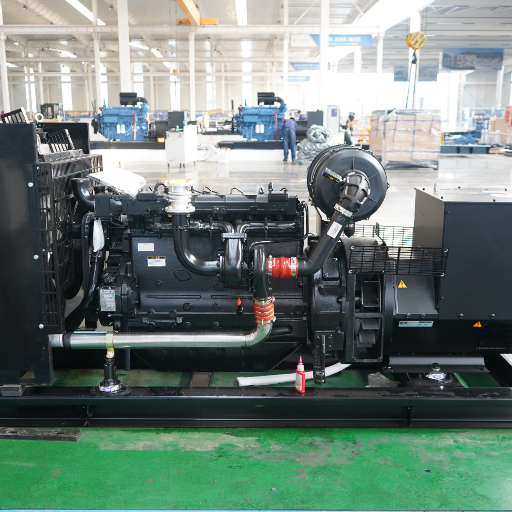
Cost is one of the first questions buyers ask, but headline prices can be misleading. The aftertreatment system, engineering, installation, and operating supplies all add to the base generator price.
Capital Costs
| Technology | Typical CAPEX per kW | Notes |
|---|---|---|
| SCR aftertreatment | 40–40–115/kW | Most common for generators and retrofits |
| EGR | 55–55–82/kW | Usually engine-integrated |
| Dual-fuel conversion | Higher than SCR/EGR | Includes fuel system, containment, IGF compliance |
ABS notes that installing SCR or EGR including piping and auxiliaries typically adds 25–30% on top of the base system cost. Retrofit projects often face additional engineering, structural reinforcement, exhaust rerouting, and urea tank integration that can add another 15–30%.
Mini-story: The retrofit budget overrun
A Greek owner wanted to bring a 2009-built feeder container ship into the Baltic Sea trade. The original quote for an SCR retrofit on the auxiliary generators was €280,000. Once the yard opened the engine room, it found the SCR reactor could not fit in the planned location. A custom funnel-mounted reactor, new exhaust piping, and a urea tank on deck pushed the final invoice to €410,000. The owner later told us the project would have been cheaper if planned during the last dry docking, when the exhaust system was already open.
Operating Costs
- Urea consumption: approximately 7 g/kWh of generator output, depending on engine-out NOx and SCR efficiency.
- Urea price: varies from 150/tonneto150/tonneto400/tonne or more, depending on port and supply chain.
- Catalyst replacement: typically every 12,000–24,000 running hours; larger systems can cost up to $150,000 per replacement.
- Fuel penalty: SCR has minimal fuel impact if tuned well; EGR can add 1–3 g/kWh.
Lifecycle economics depend on how much time the vessel spends inside NECAs and on local fuel and urea prices.
Operating and Maintaining an IMO Tier III Marine Generator
The reliability of an IMO Tier III marine generator depends heavily on urea quality and marine generator maintenance. Operators who treat the SCR system as a fit-and-forget component usually face catalyst damage, injector crystallization, and compliance failures.
Urea Quality and Storage
Marine SCR systems can use AUS32 (32.5% urea, commonly called AdBlue, governed by ISO 22241) or AUS40 (40% urea, governed by ISO 18611-1 for marine use). AUS40 is often chosen for larger engines because it reduces tank volume. Both grades must be high-purity; contaminated urea can poison the catalyst and clog injectors.
Storage guidelines:
- Keep urea in sealed containers out of direct sunlight.
- Store between −11 °C and 30 °C when possible to prevent crystallization and degradation.
- Do not use antifreeze additives unless the engine manufacturer explicitly approves them.
- Test concentration regularly with a refractometer or test strips.
SCR Maintenance Checklist
| Interval | Task |
|---|---|
| Daily | Check urea tank level and alarm status |
| Weekly | Inspect dosing nozzle for white crystal deposits |
| Monthly | Test urea concentration and inspect lines for leaks |
| Quarterly | Verify pump pressure, flow rate, and NOx sensor calibration |
| Annually | Review catalyst condition and sample urea for purity |
Common faults include urea crystallization blocking the injector, low exhaust temperature at partial load reducing catalyst efficiency, and ammonia slip causing a visible exhaust plume.
Choosing an IMO Tier III Marine Generator Manufacturer
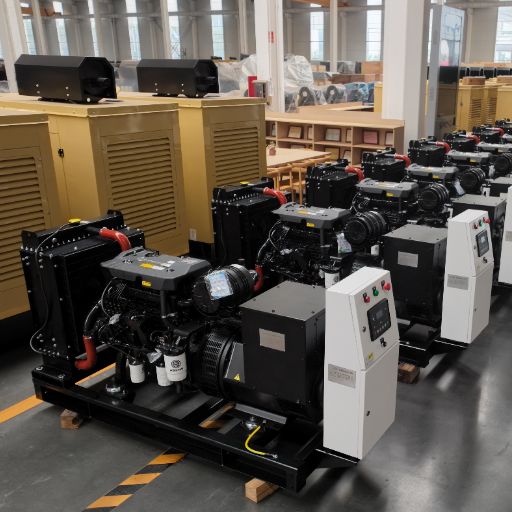
Not every supplier who advertises an “IMO Tier III” engine can deliver a class-approved system. Buyers should verify several points before placing an order.
- Genuine engine and alternator brands. Confirm the engine is from a recognized manufacturer and that the alternator meets marine insulation and class requirements.
- Integrated SCR or EGR approval. Ask whether the aftertreatment system is included in the EIAPP certificate and Technical File, and whether it has CCS/ABS/DNV approval.
- Factory acceptance testing. Request a witnessed FAT that includes emissions verification at representative loads.
- Documentation package. The supplier should deliver the EIAPP certificate, NOx Technical File, SCR operation manual, and onboard verification procedures.
- Service and spares network. Catalysts, injectors, pumps, and sensors have finite lives. Check whether the supplier can support these over the vessel’s trading life.
Our marine generator brands comparison guide explains how Cummins, Perkins, Weichai, and other engine brands differ for marine applications.
Shandong Huali IMO Tier III Marine Generator Solutions
Shandong Huali Electromechanical Co., Ltd. builds marine generator sets from 8 kVA to 4,000 kVA for shipyards, vessel owners, and EPC contractors worldwide. For IMO Tier III compliance, we supply SCR-based aftertreatment packages integrated with Cummins, Perkins, or Weichai engines and Marathon, Mecc Alte, Stamford, or Leroy Somer alternators.
For IMO Tier III compliance, we supply CCS, ABS, or DNV certification as required. Our CCS certified marine generator workflow covers design review, prototype inspection, factory audit, witnessed FAT, and certificate issuance. We also provide marine-grade enclosures, anti-vibration mounts, tropical insulation, and seawater-cooled heat exchangers to match the installation environment.
Contact our engineering team to discuss your project. We can review the vessel’s trading route, NECA exposure, load profile, and class requirements to recommend the right engine, alternator, and aftertreatment configuration.
Frequently Asked Questions About IMO Tier III Marine Generators
What is an IMO Tier III marine generator?
An IMO Tier III marine generator is a shipboard diesel generator set certified under MARPOL Annex VI Regulation 13 to meet strict NOx emission limits inside NOx Emission Control Areas. It typically uses SCR aftertreatment, EGR, or dual-fuel combustion to reduce NOx by roughly 75–80% compared with Tier II.
Does IMO Tier III apply to emergency generators?
No. Engines intended solely for emergency use, including SOLAS generator requirements emergency generators, emergency fire pumps, and lifeboat engines, are exempt from Tier III.
What is the difference between SCR and EGR for marine generators?
SCR treats exhaust downstream of the engine by injecting urea into a catalyst. EGR recirculates exhaust gas into the intake to lower combustion temperature and reduce NOx formation inside the cylinder. SCR is generally easier to retrofit on auxiliary generators and achieves higher NOx reduction.
How much does an IMO Tier III generator retrofit cost?
SCR retrofits typically range from 40–40–115/kW, while EGR ranges from 55–55–82/kW. Installation, engineering, exhaust piping, and urea tank integration can add 15–30% to the quoted price. Operating costs include urea at roughly 7 g/kWh and catalyst replacement every 12,000–24,000 hours.
Can a dual-fuel marine generator meet IMO Tier III?
Yes. A dual fuel marine generator Tier III solution running on LNG in gas mode can meet Tier III without SCR or EGR because lean-burn gas combustion produces less NOx. In diesel mode, the engine usually only meets Tier II, so an SCR may be needed for NECA operation on liquid fuel.
What certifications does a Tier III marine generator need?
The engine needs an EIAPP certificate, an approved NOx Technical File, and onboard verification procedures. If SCR is used, the system also needs class approval such as CCS GD 33-2020, ABS, or DNV. The vessel must keep records of ECA entry/exit and engine tier status.
How often should an SCR catalyst be replaced on a marine generator?
Most marine SCR catalysts last 12,000–24,000 running hours, depending on fuel sulfur content, exhaust temperature, and urea quality. Regular inspection and urea sampling help extend catalyst life.
Conclusion
An IMO Tier III marine generator is more than a low-NOx engine. It is an integrated system of engine, aftertreatment, controls, class approval, and documentation that must work together from the first day of operation. With new NECAs in the Norwegian Sea and Canadian Arctic now in force, and the North-East Atlantic Ocean ECA following in 2027, more vessels will need Tier III power systems.
The most common compliance path for auxiliary generators is a marine generator SCR system, supported by proper urea management and a clear maintenance plan. For shipyards and owners sourcing from China, the critical step is to confirm that the CCS certified marine generator approval covers the complete generator and SCR system, not just the bare engine.
At Shandong Huali, we help clients navigate IMO Tier III compliance from quotation through FAT and class certification. Whether you need a newbuild package or a retrofit design, contact us today for an IMO Tier III marine generator specification review.
For related reading, see our guides to offshore generator solutions and marine generator brands comparison.