
The best power solution for data center projects combines a reliable utility feed, medium-voltage distribution, UPS systems, backup generators, and increasingly a battery energy storage system (BESS) to handle AI-driven load swings. For hyperscale, colocation, and enterprise facilities, the architecture must deliver 99.999% uptime while staying within carbon and cost targets.
A single AI server rack can draw 50-150 kW. A 100 MW AI campus needs the same electrical infrastructure as a small city district. Yet many developers still size power systems for legacy densities. That leaves no headroom for GPU clusters or liquid cooling loads.
At Shandong Huali Electromechanical Co., Ltd., we design and manufacture power generation and storage solutions from 8 kVA to 4,000 kVA. Our equipment serves data centers, hospitals, factories, and mining operations worldwide. In this guide, we explain how to design a power solution for data center projects that scales with AI growth, meets uptime targets, and stays within budget.
Key Takeaways
- A complete power solution for data center includes utility service, transformers, UPS, generators, BESS, and intelligent monitoring.
- AI racks draw 50-150 kW each, so legacy sizing assumptions fail for modern high-density facilities.
- Uptime Institute Tier III requires N+1 redundancy; Tier IV requires 2N or better for fault tolerance.
- Backup power typically uses UPS to bridge the first seconds, then diesel or gas generators for hours or days of runtime.
- Factory-direct procurement from a Chinese OEM can cut generator and power equipment cost by 25-40% while preserving customization and witnessed testing.
What Is a Power Solution for Data Center Projects?
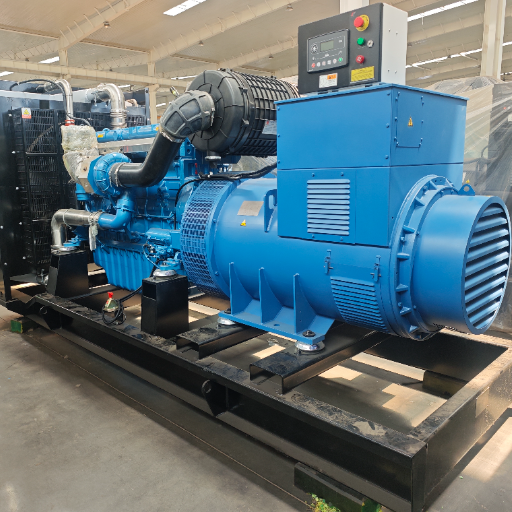
A power solution for data center is the complete electrical infrastructure that delivers, conditions, protects, and backs up energy for IT equipment, cooling, and auxiliary systems. It is broader than a backup power system. It includes the normal operating power path as well as the emergency path.
A typical power solution for data center projects has six layers:
- Utility incoming service: medium-voltage feeders from the grid
- Transformers: step-down to data center voltage and isolate faults
- Switchgear and busway: distribute power across the facility
- UPS systems: clean, uninterrupted power for sensitive IT loads
- Backup generators: long-duration runtime during grid outages
- Monitoring and controls: DCIM, power management, predictive maintenance
For a broader look at integrated power systems, see our complete guide to industrial power solutions.
When a colocation provider in Singapore planned a 20 MW expansion in 2024, its initial design assumed 12 kW per rack. After a load review revealed that half the tenants wanted GPU clusters, the average design density jumped to 35 kW per rack. The engineering team redesigned the data center power infrastructure with higher-capacity busway, larger UPS modules, and 2 MW of on-site generation. That early revision avoided a $4 million retrofit and six months of delayed commissioning.
Why Data Center Power Solutions Matter More in 2026
Data center power design is changing faster than at any point in the last decade. Three forces are driving the shift.
AI and High-Density Computing
Generative AI, large language models, and high-performance computing clusters use GPU-heavy servers. They consume far more power than CPU-based systems. A single AI training rack can use 50-150 kW. A 10,000-rack campus can exceed 1.4 GW of total power demand. This changes everything from transformer sizing to cooling power budgets.
Grid Capacity Constraints
In many major markets, grid interconnection timelines now stretch 4-8 years. Developers cannot assume unlimited utility power will arrive on schedule. On-site generation, BESS, and microgrids are becoming part of the primary power solution for data center design, not just backup.
Sustainability and ESG Pressure
Investors, customers, and regulators are tracking carbon intensity, PUE, and renewable energy use. A modern data center power solution must support solar, wind, biogas, hydrogen, or power purchase agreements without sacrificing reliability.
Core Components of a Data Center Power Solution
Medium-Voltage Incoming Service and Transformers
Power enters a large facility at medium voltage, often 11 kV, 22 kV, or 33 kV. Transformers step the voltage down to the data center distribution level, typically 400/230 V or 480/277 V. Transformer selection affects efficiency, fault current, and heat rejection.
For a hyperscale campus, total transformer capacity may exceed 1,500 MVA. Redundancy starts here. Many facilities use dual utility feeds from separate substations.
Uninterruptible Power Supply (UPS)
A UPS for data center applications provides instant, conditioned power through batteries or flywheels. It bridges the gap between utility failure and generator startup, typically 10-60 seconds. Modern modular UPS systems allow capacity to be added in increments as IT load grows.
Best for: servers, storage, networking, and any load that cannot tolerate interruption.
Key considerations:
- Double-conversion vs. line-interactive efficiency
- Lithium-ion vs. lead-acid batteries
- Modular scalability and hot-swappable units
For more on UPS and battery backup, see our guide on backup power solutions.
If you need help selecting the right power solution for data center projects, request a data center power assessment and our engineers will review your load profile.
Backup Generators and Fuel Systems
Diesel generators remain the default generator for data center backup applications. They start within 10 seconds, carry high surge loads, and store fuel on site. Natural gas generators are cleaner but depend on pipeline integrity. Dual-fuel and hydrogen-ready units are gaining interest for sustainability goals.
Power Distribution Units and Busway
PDUs and busway deliver power from the UPS or switchgear to racks. High-density AI environments are driving demand for 60 A, 100 A, and even higher rack PDUs. Busway with tap-off boxes offers flexibility when rack layouts change frequently.
Battery Energy Storage Systems (BESS)
BESS can provide peak shaving, frequency regulation, renewable smoothing, and short-duration backup. When paired with solar or wind, a BESS turns the data center into a microgrid participant. It also reduces generator runtime during brief outages, cutting fuel use and emissions. This is a key part of any modular data center power strategy.
Monitoring, DCIM, and Power Management Software
Data center infrastructure management (DCIM) software tracks power, cooling, capacity, and alarms. Real-time monitoring helps operators avoid overloads. It also helps them plan capacity and prove PUE to customers and regulators.
Data Center Power Architectures and Redundancy
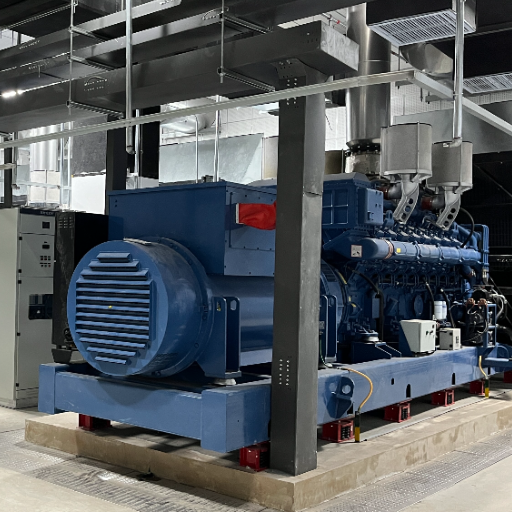
The right data center power infrastructure design depends on uptime targets. It also depends on budget and operational risk tolerance.
| Architecture | Description | Typical Uptime | Best For |
|---|---|---|---|
| N | No redundancy | 99.5-99.9% | Small, cost-sensitive facilities |
| N+1 | One spare for every N components | 99.98-99.99% | Most enterprise and colocation data centers |
| 2N | Fully duplicated path | 99.999% | Critical financial, cloud, and AI facilities |
| 2N+1 | Duplicated path plus spare | 99.9999%+ | Mission-critical government or research sites |
Uptime Institute tiers map closely to these architectures:
- Tier I: basic capacity, no redundancy
- Tier II: redundant components, single path
- Tier III: N+1, concurrent maintainability
- Tier IV: 2N, fault tolerant
For detailed standby and emergency requirements, see our guide on emergency power generator systems.
How to Size a Power Solution for Data Center Facilities
Sizing a power solution for data center projects follows six steps:
Step 1: Inventory IT Load Per Rack
Collect the nameplate and measured power for each rack. Use design kW, not average kW, for planning. AI and GPU racks should be sized at their thermal design power.
Step 2: Plan for Cooling and Auxiliary Loads
Cooling can account for 30-40% of total facility energy. Include chillers, CRAHs, pumps, fans, lighting, fire suppression, and security systems.
Step 3: Apply Diversity and Growth Margins
Not every rack runs at full load simultaneously. A diversity factor of 0.7 to 0.9 is common. Add 20-30% for future growth, especially in AI facilities where density can double in a few years.
Step 4: Convert to Total Facility Power
Total facility power = (IT load / diversity factor + cooling + auxiliary) × growth margin.
Step 5: Add Redundancy Factor
For N+1, divide by the number of units and add one spare. For 2N, double the calculated active path.
Step 6: Determine Backup Runtime and Fuel Storage
Calculate how long generators must run without refueling. Many colocation contracts require 24-72 hours. Some jurisdictions now require longer runtimes for critical digital infrastructure.
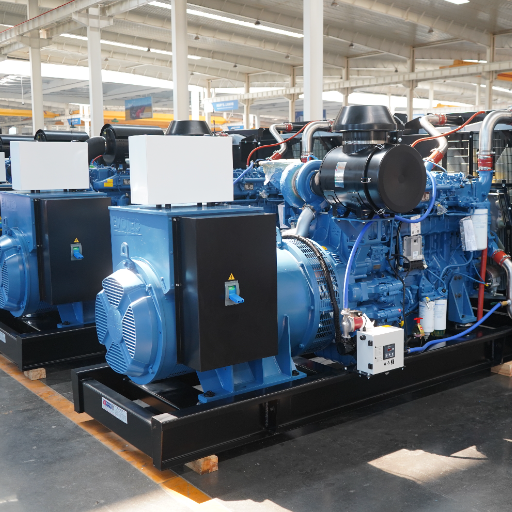
Sizing Example: AI Training Campus
| Load Category | Design kW |
|---|---|
| GPU compute racks (500 racks × 100 kW) | 50,000 |
| CPU/storage racks (1,500 racks × 12 kW) | 18,000 |
| Cooling (35% of IT load) | 23,800 |
| Lighting, fire, security, auxiliary | 3,200 |
| Subtotal | 95,000 |
| Diversity factor 0.85 | 80,750 |
| 25% growth margin | 100,938 kW |
| Redundancy (N+1 generator) | ~110,000 kW total |
A campus of this scale typically splits the load into 10-20 MW blocks. Each block has its own substation, UPS, and generator plant.
Backup Power for Data Centers
Backup power is the most scrutinized part of any power solution for data center design. The standard architecture uses UPS batteries to cover the first 10-30 seconds. Diesel generators then carry the load for hours or days.
Typical Runtime Targets
- Colocation facilities: 24-48 hours
- Hyperscale cloud campuses: 12-72 hours depending on refueling contracts
- Financial and trading data centers: 48-96 hours
- Edge data centers: 4-24 hours
Fuel Storage Considerations
Main diesel tanks are often sized to 133% of required fuel volume. This accounts for unusable fuel and minor leakage. Day tanks and transfer pumps must keep generators supplied during continuous operation. Natural gas systems avoid on-site fuel storage but introduce pipeline dependency risk.
Power Solutions for AI and High-Density Data Centers
AI data center power requirements are not simply larger versions of traditional facilities. They have unique power signatures.
Rack Density
GPU racks commonly operate at 50-150 kW. Some liquid-cooled AI racks already exceed 200 kW. This requires busway and PDUs rated for much higher currents than legacy designs.
Power Fluctuations
Training workloads can swing from idle to full load in seconds. The power system must handle rapid ramp rates without voltage sag or UPS overload.
Liquid Cooling Power Demand
Liquid cooling reduces HVAC load but adds pumps, heat exchangers, and coolant distribution units. The net facility power may drop, but the electrical design must include these new auxiliary loads.
On-Site Generation and Microgrids
Because grid interconnection is slow, AI campuses increasingly include gas turbines, dual-fuel reciprocating engines, or fuel cells as part of the primary power mix. BESS smooths the transition between sources.
Renewable and Hybrid Data Center Power Solutions
Sustainability targets are pushing data centers toward cleaner data center power solutions.
Solar + BESS + Generator Microgrids
Solar arrays can supply daytime load while BESS stores excess energy. Generators provide backup during extended outages or low-sun periods. This hybrid approach reduces fuel consumption and carbon intensity.
Biogas and Hydrogen
Biogas generators use methane from landfills or digesters. Hydrogen-ready units and fuel cells are emerging options for zero-carbon backup power, though fuel availability and cost remain constraints.
Power Purchase Agreements
Many operators meet renewable targets through virtual or physical PPAs rather than on-site generation. The facility still needs the same backup hardware, but its carbon accounting improves.
Buying Data Center Power Solutions from a Chinese OEM
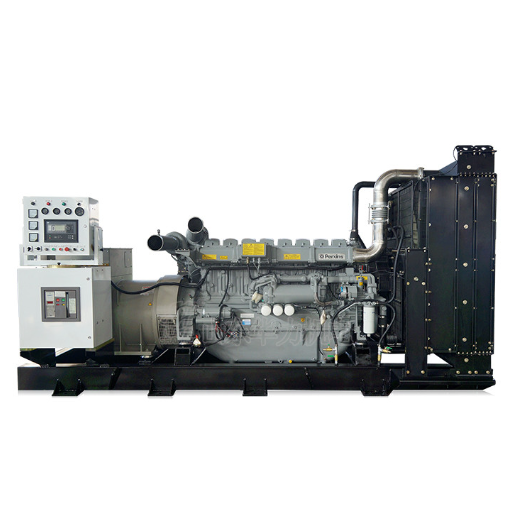
Chinese OEMs such as Shandong Huali Electromechanical Co., Ltd. offer factory-direct pricing for generators, switchgear integration, containerized power plants, and hybrid systems. There is no distributor markup.
What to Look For
- ISO 9001 and ISO 14001 certification
- In-house test center capable of full-load FAT
- Engine partnerships with Cummins, Perkins, Weichai, or Yuchai
- Customization track record for voltage, frequency, enclosure, ATS, and controls
- Export experience with documentation for your destination country
- Spare-parts commitment and technical support network
Typical Lead Times
- Standard backup generator sets: 4-6 weeks
- Customized systems: 8-12 weeks
- Containerized or high-voltage power plants: 12-16 weeks
Cost Advantage
Factory-direct procurement can cut equipment cost by 25-40% compared with a distributor or local integrator. Reinvest those savings in installation, commissioning, spare parts, and training.
When a cloud provider in Southeast Asia needed 40 MW of backup generation for a new AI campus in 2025, it compared quotes from a European distributor and Shandong Huali. The factory-direct option delivered Cummins-powered containerized generator sets, paralleling controls, and remote monitoring at 33% less cost. The units passed witnessed FAT and were commissioned within 14 weeks.
FAQ
What is a data center power solution?
A data center power solution is the complete electrical infrastructure that delivers, conditions, distributes, and backs up power for IT equipment, cooling, and auxiliary systems. It includes utility service, transformers, switchgear, UPS, generators, BESS, and monitoring.
How much power does a data center use?
A large hyperscale data center can consume 20-100 MW continuously, and the largest AI campuses exceed 650 MW. U.S. data centers used approximately 176 TWh of electricity in 2023.
What is PUE in a data center?
PUE, or Power Usage Effectiveness, equals total facility energy divided by IT equipment energy. A PUE of 1.0 is perfect. Modern data centers typically range from 1.4 to 1.6, while the most efficient operators achieve below 1.2.
How do you design a data center power system?
Design starts with rack-level load inventory, adds cooling and auxiliary loads, applies diversity and growth margins, selects redundancy architecture, and sizes backup power and fuel storage to match uptime targets.
What is N+1 redundancy in a data center?
N+1 means the system has one spare component for every N components required to carry the load. If one UPS or generator fails, the spare can take over without interrupting service.
How much power does an AI data center use?
AI data centers consume 3-5 times more power per square foot than traditional facilities. A single AI rack can draw 50-150 kW, compared with 10-15 kW for a standard compute rack.
What is the best backup power for a data center?
The best backup power for most data centers is a UPS plus diesel generator architecture. The UPS covers the first seconds, and the generator provides long-duration runtime. For sustainability targets, hybrid or gas systems may be added.
How can data centers reduce power consumption?
Data centers can reduce power use through efficient cooling, higher server utilization, modular UPS, renewable energy, BESS peak shaving, and continuous PUE monitoring.
What fuel is used for data center generators?
Diesel is the most common fuel because it stores on site and starts quickly. Natural gas, biogas, and hydrogen-ready systems are increasingly used for lower emissions.
What does turnkey data center power solution mean?
A turnkey solution includes site survey, electrical design, equipment supply, factory acceptance testing, shipping, installation, commissioning, training, and after-sales support. If you want a turnkey power solution for data center project, request a data center power assessment from our engineering team.
Conclusion
The right power solution for data center projects must handle today’s IT loads and tomorrow’s AI densities. Start by sizing from real rack-level data, not legacy assumptions. Add cooling, auxiliary loads, diversity, and growth margin. Choose redundancy architecture based on uptime targets and budget. Then select backup power, renewable integration, and monitoring systems that match the facility’s risk profile and sustainability goals.
At Shandong Huali Electromechanical Co., Ltd., we design and manufacture power generation and storage solutions from 8 kVA to 4,000 kVA. We offer diesel, gas, hybrid, and BESS configurations with Cummins, Perkins, Weichai, and Yuchai engine options. We provide OEM/ODM customization, ISO-certified testing, and global delivery. If you are planning a new data center or upgrading an existing facility, request a data center power assessment. Our engineers will size a solution for your exact load.