
Off-grid power solutions are standalone systems that generate, store, and distribute electricity without a connection to the public utility grid. For remote telecom towers, mining camps, construction sites, and island facilities, a well-designed off-grid system combines solar panels, batteries, and a diesel or gas generator to deliver reliable power while cutting fuel costs by 50–84%.
Grid extension is not always an option. In many regions, the nearest utility line is hundreds of kilometers away. Even where the grid exists, weak or intermittent supply can damage equipment and stop production. Off-grid power gives site managers control over their own energy supply.
In this guide, we explain how off-grid power solutions work, what components you need, and how to size a hybrid system for your application. We also show how a factory-direct generator OEM can supply the diesel backup, integration, and support that keeps remote sites running.
For a broader view of integrated power systems, see our complete guide to industrial power solutions.
Key Takeaways
- Off-grid power solutions generate, store, and distribute electricity independently of the utility grid.
- Hybrid systems using solar + battery + diesel generator can cut fuel consumption and runtime by 50–84%.
- Telecom towers, mining camps, construction sites, and islands are the main industrial applications.
- Proper sizing starts with daily energy demand, peak load, battery autonomy, and backup generator duty.
- Factory-direct OEMs can reduce capex and customize voltage, enclosure, controls, and fuel options for remote projects.
What Is an Off-Grid Power Solution?
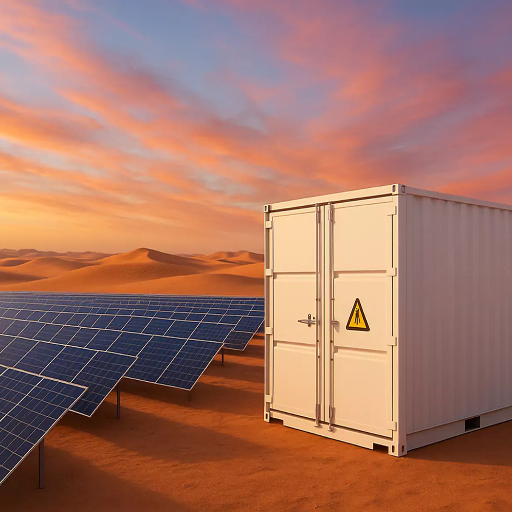
An off-grid power solution is a self-contained energy system that produces and consumes electricity on-site without relying on the utility grid. It typically includes one or more generation sources, battery storage, power conversion equipment, and a control system that manages energy flows.
Unlike a grid-tied system, an off-grid system must balance generation and demand in real time. There is no utility to absorb excess power or supply shortfalls. This means storage and backup generation are essential.
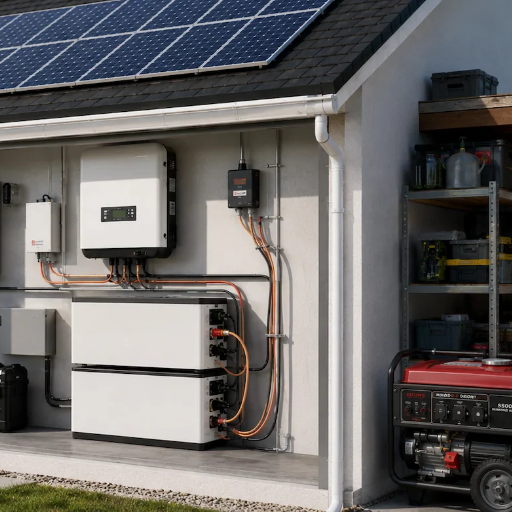
A typical industrial off-grid solution includes:
- Solar PV array: produces DC power during daylight hours.
- Battery bank: stores surplus energy for night or cloudy periods.
- Charge controller: regulates battery charging and prevents overcharging.
- Off-grid inverter: converts DC battery power into usable AC power.
- Diesel or gas generator: provides backup or supplemental power during periods of low generation.
- Energy management system: decides when to use solar, battery, or generator power.
The goal is to maintain continuous power at the lowest lifecycle cost while minimizing fuel logistics and maintenance visits.
Why Off-Grid Power Solutions Matter Now
Three trends are driving demand for off-grid power.
Grid Extension Is Slow and Expensive
In remote and rural areas, building transmission lines can cost tens of thousands of dollars per kilometer. For a single telecom tower or small mining camp, the payback period for grid extension is often measured in decades. Off-grid power is frequently the cheaper and faster option.
Diesel Costs and Logistics Are Rising
Diesel has long been the default power source for remote sites. However, fuel transport to remote locations adds cost, security risk, and environmental exposure. In addition, diesel generators run inefficiently at partial load, wasting fuel and shortening service intervals.
Renewable + Storage Costs Have Fallen
Solar module and lithium battery prices have dropped dramatically over the past decade. Hybrid systems that combine solar, batteries, and a smaller diesel generator now offer lower cost per kWh than diesel-only systems in many remote locations.
When a telecom operator in East Africa replaced a diesel-only tower power system with a solar-battery-diesel hybrid, diesel runtime fell from 18 hours per day to under 3 hours. Fuel deliveries dropped from monthly to quarterly, and site maintenance costs fell by 40% within the first year.
Core Components of an Off-Grid Power System
Solar PV Array
Solar panels convert sunlight into DC electricity. In off-grid systems, they usually supply the daytime load and charge the battery. Panel orientation, tilt angle, shading, and local solar irradiance all affect system output.
Battery Energy Storage System
Batteries store excess solar generation and discharge when generation is low. Lithium iron phosphate (LiFePO4) batteries are now preferred for off-grid industrial systems because of their long cycle life, safety, and high depth of discharge.
Battery capacity is sized in kilowatt-hours (kWh) and determines how many hours or days the system can operate without sun.
Charge Controller
The charge controller regulates voltage and current from the solar array to the battery. MPPT (Maximum Power Point Tracking) controllers extract more energy from the panels than simpler PWM controllers, especially in variable weather.
Off-Grid Inverter
The inverter converts DC power from the battery into AC power for standard equipment. In industrial systems, inverters must handle surge currents from motors and compressors. Some inverters also include generator auto-start capability.
Diesel or Gas Generator
A generator provides reliable backup power and recharges batteries during extended cloudy periods. In hybrid systems, the generator runs only when needed, rather than continuously. This reduces fuel use and extends service life.
Huali builds diesel generator sets from 8 kVA to 4,000 kVA that can anchor off-grid systems of any scale.
Energy Management and Monitoring
The energy management system (EMS) controls charging, discharging, and generator start/stop logic. Remote monitoring allows operators to track performance, fuel levels, and faults from a central location, reducing the need for site visits.
How Off-Grid Power Systems Work
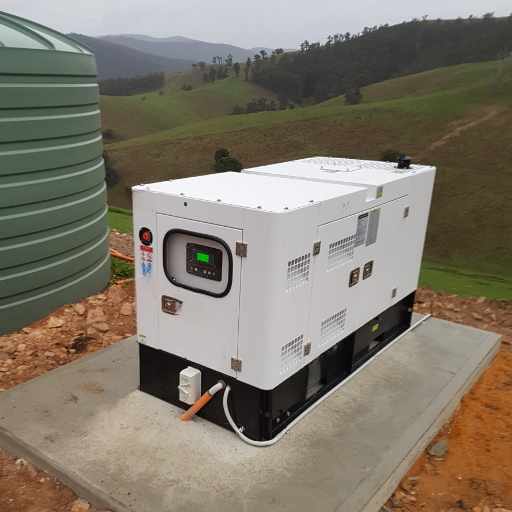
Daytime Operation
During the day, solar panels supply power to the loads. Any surplus charges the batteries. If solar output exceeds inverter capacity or load demand spikes, the battery supplements the panels.
Nighttime and Low-Sun Operation
When solar production drops, the battery takes over. The inverter draws DC power from the battery and converts it to AC for the site. Well-sized batteries can carry the load through the night and through one or more cloudy days.
Generator Auto-Start Logic
If battery state of charge falls below a set threshold and solar is insufficient, the generator starts automatically. It powers the loads and recharges the battery. Once the battery reaches a higher threshold, the generator shuts off.
Load Prioritization
Some off-grid systems use load prioritization to shed non-critical loads during low-battery events. Critical loads such as communications, safety systems, and refrigeration stay online while less essential equipment is temporarily turned off.
Types of Off-Grid Power Solutions
Solar-Only Off-Grid Systems
Solar-only systems work where sunshine is abundant and loads are small and predictable. They are common for rural homes, small pumps, and low-power monitoring stations. Without a generator, they require large battery banks to handle multi-day cloudy periods.
Diesel-Only Off-Grid Systems
Diesel-only systems are simple and reliable but have high operating costs. They are still used where fuel is accessible and renewable generation is impractical. For remote industrial sites, diesel-only is increasingly being replaced by hybrid systems.
Solar-Diesel Hybrid Systems
Solar-diesel hybrid systems add solar panels to an existing diesel generator setup. The solar reduces generator runtime during daylight hours. These systems are popular for retrofitting telecom towers and remote facilities.
Solar-Diesel-Battery Hybrid Systems
These systems combine all three assets. Solar provides primary daytime power, batteries provide storage and peak shaving, and the generator serves as backup. This architecture delivers the lowest lifecycle cost for most industrial off-grid applications.
Containerized and Mobile Off-Grid Power Plants
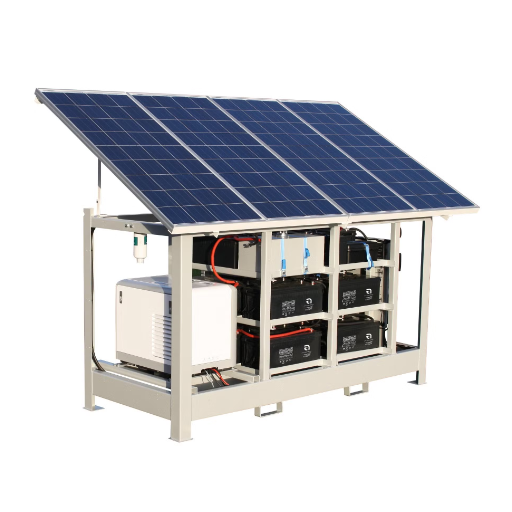
Containerized systems package generators, solar inverters, batteries, and controls in a single shipping container. Mobile power stations on trailers can be moved between construction sites or emergency response locations. These solutions reduce deployment time and protect equipment from harsh environments.
Off-Grid Power Solutions by Application
Telecom Towers and Base Stations
Telecom towers are one of the largest industrial off-grid markets. A typical off-grid tower consumes 2–5 kW for 4G and 8–15 kW for 5G. Macro cell sites often use 8–20 kWp of solar with 30–80 kWh of battery, while smaller cells use 1–5 kWp with 5–15 kWh.
Diesel can account for up to 70% of telecom tower OPEX, making hybrid systems highly attractive. Case studies show diesel runtime reductions from 18 hours per day to under 1 hour per day.
Mining Camps and Remote Industrial Sites
Mining operations require reliable power for accommodation, processing, pumping, and communications. Hybrid systems reduce fuel consumption and the risk of fuel supply interruptions. Containerized and skid-mounted systems are common because they can be relocated as mining fronts move.
Construction Sites
Construction sites need temporary power for tools, lighting, offices, and batching plants. Mobile generator sets and solar-diesel hybrid trailers provide flexible power without waiting for grid connection.
Islands and Coastal Facilities
Islands often rely on imported diesel for electricity. Solar-diesel-battery hybrids reduce fuel imports, improve price stability, and lower emissions. Coastal sites also benefit from containerized enclosures that resist salt and humidity.
Agriculture and Water Pumping
Irrigation pumps and cold storage facilities in rural areas use off-grid solar or solar-diesel hybrid systems. These applications often have predictable daytime loads that match solar output well.
How to Size an Off-Grid Power System
Accurate sizing prevents both under-investment and over-investment. Follow these steps.
Step 1: Calculate Daily Energy Demand
List all loads and estimate daily operating hours. Multiply power (kW) by hours to get energy consumption (kWh/day). Include future growth.
Step 2: Identify Peak Load
Peak load is the maximum simultaneous power draw in kW. The inverter and generator must be sized to handle this load, including motor starting surges.
Step 3: Size the Solar Array
Estimate average daily solar irradiance at the site. Size the array so that average daily generation equals or exceeds daily consumption during the sunniest months. In less sunny seasons, the generator will compensate.
Step 4: Size the Battery Bank
Battery capacity depends on required autonomy, usually 1–3 days for industrial sites. Multiply daily consumption by autonomy days and divide by allowable depth of discharge. LiFePO4 batteries typically allow 80–90% depth of discharge.
Step 5: Size the Generator
Size the generator to cover peak load and recharge the battery at the same time. For hybrid systems, the generator can be smaller than in diesel-only designs because it does not carry the full continuous load.
Step 6: Add Safety Margin
Add 10–25% margin to solar, battery, and generator ratings to account for equipment degradation, temperature effects, and future load growth.
A mining camp in Central Asia needed 1.2 MWh of energy per day. Engineers sized a 600 kWp solar array, a 1,500 kWh LiFePO4 battery bank, and a 500 kVA diesel generator. The generator now runs only 4–6 hours per day instead of 24, cutting diesel consumption by 62%.
Cost Analysis and ROI
Capex Breakdown
Typical capital costs include:
- Solar PV modules and mounting.
- Battery bank and battery management system.
- Inverters and charge controllers.
- Generator set and fuel system.
- Switchgear, cabling, and protection.
- Container or enclosure.
- Installation and commissioning.
Opex Breakdown
Operating costs include:
- Fuel for the generator.
- Scheduled maintenance for the generator and batteries.
- Battery replacement every 10–15 years for LiFePO4.
- Remote monitoring service fees.
- Site visits for troubleshooting.
Cost per kWh Comparison
For remote sites, cost per kWh often compares as follows:
- Diesel-only: high fuel and transport costs.
- Solar-diesel hybrid: moderate capex, lower opex.
- Solar-diesel-battery hybrid: higher capex, lowest lifecycle cost.
- Grid extension: high upfront infrastructure cost, low ongoing cost if grid is nearby.
The best choice depends on distance from the grid, solar resource, fuel price, load profile, and project duration.
Payback Period
Hybrid systems typically pay back in 3–7 years compared to diesel-only operation, depending on fuel price and solar resource. For telecom towers, payback can be faster because diesel represents such a large share of OPEX.
Diesel Generator Role in Off-Grid Power
Why Diesel Generators Remain Essential
Solar and battery systems can handle many off-grid loads, but extended cloudy weather, seasonal low-sun periods, and unexpected load growth still require backup. Diesel generators provide that backup with fast start, high reliability, and widely available fuel.
Sizing Generators for Hybrid Systems
In hybrid systems, the generator is sized for the average load plus battery charging, not the full peak load. This allows a smaller, more efficient generator to run at higher load factors, reducing fuel consumption per kWh.
Fuel Efficiency and Load Management
Diesel generators are most efficient at 70–85% of rated load. Running them at very low load wastes fuel and causes wet stacking. The EMS should coordinate generator operation to keep it in the efficient range.
Alternative Fuels
Natural gas, liquefied petroleum gas (LPG), and biogas can replace diesel where fuel supply chains exist. Hydrogen-ready generators are also emerging for long-term decarbonization strategies.
Buying Off-Grid Power Equipment from a Chinese OEM
Global buyers increasingly source off-grid power equipment directly from OEMs to reduce cost and customize systems for specific sites.
Factory-Direct Engineering
Shandong Huali Electromechanical has more than 25 years of manufacturing experience and builds generator sets from 8 kVA to 4,000 kVA. Every unit is tested in a national-standard facility before shipment.
Engine and Component Options
Huali integrates globally recognized engines and alternators:
- Cummins: high-performance engines for demanding duty.
- Perkins: reliable power for continuous and standby applications.
- Weichai: cost-effective industrial-grade solutions.
- Yuchai: durable engines widely used in emerging markets.
- Stamford alternators: premium electrical output quality.
Customization for Remote Projects
Huali can customize voltage, frequency, enclosure type, fuel system, controls, ATS, paralleling switchgear, and remote monitoring. Containerized and trailer-mounted options are available for fast deployment.
Factory Acceptance Testing and Global Support
Before shipment, units undergo 100% testing and documented factory acceptance testing. Huali supports clients in 20+ countries with export documentation, spare parts, and technical assistance.
Looking for a reliable off-grid power partner? Contact Huali’s engineering team to discuss solar-diesel-battery hybrid systems for your remote site.
FAQ
What is an off-grid power solution?
An off-grid power solution is a self-contained system that generates, stores, and distributes electricity without a connection to the public utility grid. It commonly uses solar panels, batteries, and a backup generator.
How does an off-grid power system work?
During the day, solar panels power the loads and charge the batteries. At night or during low-sun periods, the batteries supply power. If battery charge falls too low, a diesel or gas generator starts automatically to recharge the batteries and power the loads.
What are the main components of an off-grid power system?
The main components are solar panels, a charge controller, a battery bank, an off-grid inverter, a backup generator, and an energy management system.
What is a solar-diesel hybrid system?
A solar-diesel hybrid system combines solar panels with a diesel generator. Solar reduces generator runtime during the day, while the generator provides backup power when solar is insufficient.
Do I need a backup generator for an off-grid solar system?
For industrial and commercial applications, a backup generator is strongly recommended. It ensures power during extended cloudy periods, seasonal low-sun conditions, and unexpected load increases.
How do you size an off-grid power system?
Start by calculating daily energy demand and peak load. Then size the solar array for average generation, the battery for required autonomy, and the generator for backup and battery charging. Add a safety margin for growth and degradation.
How much does an off-grid power system cost?
Costs vary widely based on load, solar resource, and battery autonomy. Small telecom hybrid systems may cost tens of thousands of dollars, while large industrial microgrids can cost millions. Lifecycle cost per kWh is usually lower than diesel-only systems.
What battery type is best for off-grid systems?
Lithium iron phosphate (LiFePO4) batteries are preferred for industrial off-grid systems due to their long cycle life, safety, and high depth of discharge.
Can off-grid power run industrial equipment?
Yes. Properly sized off-grid systems can run pumps, compressors, motors, and processing equipment. The inverter and generator must be sized for motor starting currents and continuous load.
What are the benefits of buying off-grid power equipment from a Chinese OEM?
Factory-direct pricing, flexible customization, direct engineering support, and documented testing. Established OEMs also provide global delivery, spare parts, and after-sales service.
Conclusion
Off-grid power solutions give remote sites, telecom towers, mining camps, and industrial facilities control over their own energy supply. The most cost-effective designs combine solar generation, battery storage, and a diesel or gas generator into a single hybrid system managed by smart controls.
Success depends on accurate sizing, quality components, and a supplier that can customize, test, and support the system globally. At Shandong Huali Electromechanical, we supply the generator sets, hybrid integration, and remote-site expertise that anchor reliable off-grid power solutions.
Request an off-grid power solution assessment and our engineers will help you size and configure the right system for your site.