
Datacenter generators should be sized by following suit of multiplying total IT load times the Power Usage Effectiveness (PUE) of the facility and then coming back as per the redundancy level chosen by you under your Uptime Institute-tiered datacenter. A 1000-rack data center facility’s generator capacity should have close to 130 MW supplied by multiple synchronized units. Miscalculate your redundancy architecture and you break your SLA. Size for yesterday’s rack density and you sink capital when AI workload’s demand is 240 kW per rack one year from now.
Here is the challenge every data center operator faces in 2026. Generator decisions are 10-to-15-year infrastructure commitments. Yet the market is shifting faster than equipment depreciates.
AI rack densities have jumped from 5-9 kW to 132 kW with NVIDIA’s B200. The next generation pushes past 240 kW. Meanwhile, fuel cells are moving from pilot projects to primary power contracts worth billions. Diesel assumptions are being rewritten in real time.
This guide explains how to size, configure, and select a generator for data center infrastructure. For broader backup power context, see our complete backup power generator guide. We cover sizing formulas, redundancy architectures, Tier requirements, UPS integration, technology comparisons, and the AI density disruption that is reshaping every calculation. By the end, you will know how to specify generator infrastructure that matches your tier, your load, and your decade-long growth trajectory.
Key Takeaways
- Size your generator for data center loads by multiplying IT load (kW per rack x rack count) by PUE (1.2-1.6), then applying your redundancy factor (N+1, 2N, or 2N+1).
- Uptime Institute Tier III requires N+1 redundancy for concurrent maintainability; Tier IV requires 2N for fault tolerance.
- AI rack densities now exceed 132 kW per rack and are heading toward 240-900 kW, forcing campus-scale generator plants measured in hundreds of megawatts.
- Diesel remains the backup standard with sub-10-second startup, but SOFC fuel cells and hydrogen PEM are emerging as primary and zero-emission backup alternatives.
- Total cost of ownership over 10 years varies dramatically by Tier: Tier III N+1 diesel costs roughly 2,000−2,500perkWinstalled;TierIV2Ncanexceed2,000−2,500perkWinstalled;TierIV2Ncanexceed4,000 per kW.
Why Data Centers Need Generators: The Uptime Imperative
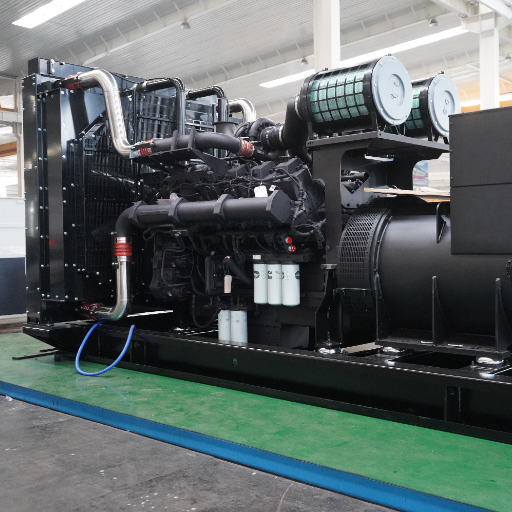
Data centers exist to guarantee availability. 99.999% uptime allows 5.26 minutes of downtime per year. For a hyperscale facility, a single minute offline can cost 5,000to5,000to50,000 or more. When the utility grid fails, the generator for data center infrastructure is the only thing standing between your SLA and a breach notice.
Grid instability is not theoretical. Interconnection delays now stretch 3 to 5 years in major markets like Northern Virginia, Frankfurt, and Singapore. Some operators cannot get utility power at all. In these situations, a reliable diesel generator for data center backup is not just backup. It is the primary power architecture.
When Marcus Chen, a facility director in Singapore, planned a 20 MW colocation expansion in 2024, the local utility quoted a 4-year interconnection timeline. His choices were simple: wait and lose market share, or design around generator-backed primary power. He chose the latter, deploying a 24 MW diesel plant with N+1 redundancy that allowed the facility to open 18 months ahead of competitors still waiting for grid connection.
The financial case for a generator for data center use extends beyond outage protection. It includes revenue protection, contractual SLA enforcement, and the ability to build where grid power is unavailable or delayed. For most operators, a diesel generator for data center backup remains the foundational backup power solution for data center infrastructure.
Generator for Data Center Sizing: From Rack Density to Campus Load
Sizing a generator for data center applications starts with one number: your total IT load. Everything else flows from there.
Calculating IT Load
Multiply the power draw per rack by your total rack count. A traditional facility might run 5-9 kW per rack. An AI training facility today runs 100-200 kW per rack.
| Rack Density | 500 Racks | 1,000 Racks | 5,000 Racks |
|---|---|---|---|
| 10 kW (traditional) | 5 MW | 10 MW | 50 MW |
| 50 kW (HPC) | 25 MW | 50 MW | 250 MW |
| 100 kW (AI-ready) | 50 MW | 100 MW | 500 MW |
| 200 kW (AI-dense) | 100 MW | 200 MW | 1,000 MW |
Applying PUE
Power Usage Effectiveness (PUE) divides total facility power by IT power. A PUE of 1.3 means every 1 kW of IT load requires 1.3 kW of total power. Traditional air-cooled facilities achieve 1.2-1.4. AI facilities with liquid cooling often run 1.5-1.6 because of coolant distribution units, pumps, and heat rejection equipment.
Generator Sizing Formula
Total generator capacity = (IT load in kW x PUE) x redundancy factor
For a 1,000-rack facility at 100 kW per rack with PUE 1.3:
- Base load: 100,000 kW x 1.3 = 130,000 kW (130 MW)
- N+1 redundancy: 130 MW x 1.33 = ~173 MW
- 2N redundancy: 130 MW x 2 = 260 MW
The AI Density Explosion
NVIDIA’s B200 GPU racks draw 132 kW. The Blackwell Ultra generation pushes that to 240 kW. Future Rubin architectures could demand 250-900 kW per rack.
A 10,000-rack AI training campus now needs 1.4 gigawatts of total power. That is the output of a small nuclear reactor. The generator for data center use at this scale is no longer a room of backup units. It is a dedicated power plant.
For sizing assistance, use our kVA to kW calculator to convert your data center load to generator kVA ratings.
Data Center Redundancy N+1 2N: Architectures Explained
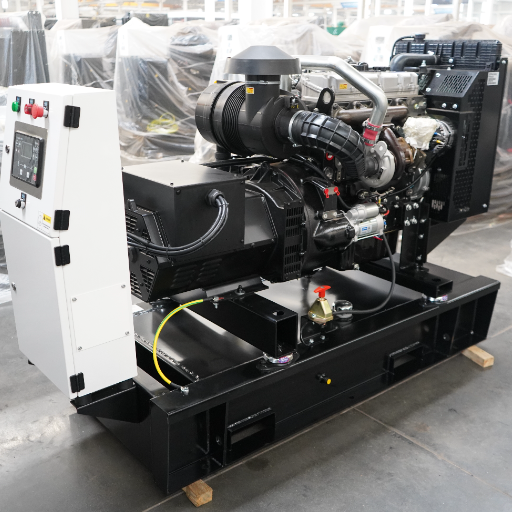
Redundancy determines how many spare generator units you maintain. The architecture you choose dictates your Tier certification, your capital budget, and your operational flexibility. Understanding data center redundancy N+1 2N is essential for matching generator infrastructure to your availability targets.
| Architecture | Definition | Tier Mapping | Cost Multiplier | Best For |
|---|---|---|---|---|
| N | Baseline capacity, no spare | Tier I/II | 1.0x | Cost-sensitive, non-critical loads |
| N+1 | Required capacity plus one spare unit | Tier III | 1.33x | Concurrent maintainability, colocation |
| 2N | Two fully independent A/B power systems | Tier IV | 2.0x | Fault tolerance, financial trading, healthcare |
| 2N+1 | Full duplication plus one extra spare per side | Hyperscale | 2.33x+ | Maximum resilience, cloud infrastructure |
N (No Redundancy)
N represents your baseline capacity with zero spare units. If you need 10 MW and you install one 10 MW generator, that is N. It is the cheapest option and the riskiest. Any maintenance or failure takes your facility offline.
N+1
N+1 adds one spare unit to your required capacity. If you need 10 MW and each generator is 2 MW, you install six units (5 running + 1 spare). This supports concurrent maintainability. You can take any one unit offline for service without impacting load. N+1 is the standard for Tier III data center generator requirements and most colocation facilities.
2N
2N creates two fully independent power systems, each capable of carrying 100% of the load. If the A-side fails, the B-side carries everything. This is fault tolerance, not just redundancy. 2N is required for Tier IV certification and facilities where downtime is unacceptable.
2N+1
Hyperscale operators like AWS, Google, and Microsoft sometimes deploy 2N+1 or even greater redundancy. Each side of the 2N architecture gets its own N+1 spare. The cost is enormous. So is the resilience.
Data Center Tier Standards and Generator Requirements
Tier standards define what your generator for data center infrastructure must deliver. The Uptime Institute’s Tier Classification System sets the Tier III Tier IV generator requirements that every mission-critical facility must meet.
Uptime Institute Tier Classification
| Tier | Availability | Redundancy | Generator Requirement | Use Case |
|---|---|---|---|---|
| Tier I | 99.671% | None (N) | Single path, no redundancy | Small business, development |
| Tier II | 99.741% | Partial (N+1 components) | Redundant components, single path | Small-medium business |
| Tier III | 99.982% | Concurrent maintainability (N+1) | Multiple generators, one spare | Colocation, enterprise |
| Tier IV | 99.995% | Fault tolerance (2N) | Fully independent A/B generator plants | Financial, hyperscale, critical |
ANSI/TIA-942 Requirements
The ANSI/TIA-942 standard mirrors Uptime Institute tiers with additional specifications for electrical topology, grounding, and cabling. Generator capacity must be validated through load bank testing at 100% rating for a minimum duration.
ISO 8528 Class G3 for Sensitive Electronics
Data center loads include switch-mode power supplies, variable frequency drives, and UPS rectifiers. These create harmonic distortion. ISO 8528-5 Class G3 defines voltage and frequency stability limits for sensitive electronics. Any generator for data center use should be specified to G3 or better.
NFPA 110 for Life Safety
NFPA 110 classifies data center generators as Level 1 (life safety) or Level 2 (property protection) systems. Level 1 systems require 96 hours of on-site fuel storage. Most enterprise data centers specify 24-72 hours minimum.
UPS and Generator Integration: Bridging the Power Gap
Generators do not start instantly. There is a 10-20 second window between utility failure and generator acceptance of full load. The UPS bridges that gap. Proper UPS generator integration data center design is critical to avoid the cascading failures that destroy SLAs.
The 10-20 Second Startup Window
When utility power fails, the automatic transfer switch (ATS) signals the generator to start. A well-maintained diesel generator reaches rated speed and voltage in 8-12 seconds. The UPS carries the load during this interval using its battery bank.
UPS Sizing Coordination
The generator must be sized to handle the UPS rectifier load plus the IT load. A common rule: generator capacity should be at least 150% of the UPS maximum input power. UPS rectifiers draw current in pulses, creating harmonic distortion that can destabilize an undersized generator.
Generator-UPS Compatibility
Not every generator works with every UPS. Key compatibility factors include:
- Harmonic content: UPS rectifiers generate 3rd, 5th, and 7th harmonics. The generator alternator must handle these without excessive heating or voltage distortion.
- Step loading: The generator must accept 100% load in a single step when the ATS transfers from UPS bypass.
- Frequency stability: Under step load, frequency dip should remain within +/- 2% for Tier III/IV compliance.
Battery Runtime vs Generator Reliability
Some operators extend battery runtime to 30 minutes or more, believing this reduces generator dependency. The opposite is true. Longer battery strings increase failure modes, maintenance cost, and floor space. The better strategy is a reliable generator with 10-15 minute battery backup.
When a Frankfurt colocation facility experienced a generator-UPS mismatch in 2023, the UPS transferred to battery during a brief grid sag. The generator started normally. But its voltage waveform was incompatible with the UPS input filter.
The UPS refused to transfer back to generator power. Batteries depleted after 12 minutes. The facility went dark for 47 minutes, breaching every customer SLA and triggering $2.3 million in penalty payments. The root cause was a generator purchased on price, not on UPS compatibility certification.
Generator Technologies for Data Center Backup Power
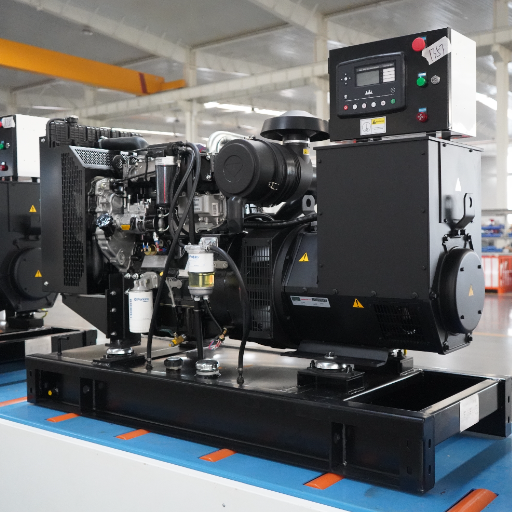
The technology landscape for data center power is splitting. Backup power is diversifying beyond diesel. Primary power is bypassing the grid entirely.
| Technology | Startup Time | Emissions vs Diesel | CapEx per kW | Best Application |
|---|---|---|---|---|
| Diesel | <10 seconds | Baseline | ~$800 | Backup power, rapid start, fuel autonomy |
| Natural Gas | 30-60 seconds | 20-40% less CO2 | ~$1,000 | Cleaner backup, pipeline availability, grid services |
| SOFC Fuel Cell | Always on (primary) | 50-70% less CO2 | ~$2,000+ | Primary power, bypass grid bottlenecks |
| Hydrogen PEM | 5-10 seconds | Zero emissions | ~$3,000+ (pilot) | Zero-emission backup, ESG compliance |
| Hybrid Battery-Diesel | Instant (battery) | Proportional to runtime | ~$1,200-1,500 | Short outage coverage, peak shaving |
Diesel Generators
Diesel is and remains the reigning incumbent in the data center backup game. Sub-10-second starting times, high energy densities, and proven decades of reliability make diesel the automatic default equipment for this site situation. Contemporary diesel generators built for data center usage basically have electronic governors, permanent magnet alternators, paralleling controllers to synchronize numerous units in under 2 seconds.
The downside is emissions and fuel logistics. Across 10 MW diesel plants, around 2,500 liters are consumed every hour under full load. For a 72-hour fuel reserve, on-site storage demands will reach 180,000 liters. There’s just so much more, including tanks, spill containment, and environmental permits.
Natural Gas Generators
Natural gas generators offer 20-40% lower CO2 emissions than diesel and eliminate on-site fuel storage. They connect to pipeline infrastructure. The tradeoff is startup time (30-60 seconds vs under 10) and pipeline dependency. If an earthquake or supply disruption cuts the pipeline, your backup disappears. Some operators use dual-fuel diesel-gas units to get the best of both.
SOFC Fuel Cells
Solid Oxide Fuel Cells (SOFC) represent the biggest disruption in data center power. Cummins and Bloom Energy are deploying SOFC systems as primary power for AI data centers.
Bloom Energy’s $5 billion framework with Brookfield bypasses grid interconnection entirely. It delivers baseload power at the point of consumption. SOFC systems run on natural gas today with a hydrogen transition path. They produce 50-70% less CO2 than grid power and eliminate the generator-for-backup paradigm by making backup unnecessary.
Hydrogen PEM Fuel Cells
Proton Exchange Membrane (PEM) fuel cells offer zero-emission backup with 5-10 second startup. Microsoft, Caterpillar, and Ballard Power are piloting 1.5 MW PEM systems for data center microgrids. The technology works. The challenge is hydrogen supply infrastructure. Until green hydrogen becomes economically available at scale, PEM remains a niche solution for ESG-leading operators.
Hybrid Battery-Diesel
Hybrid systems use batteries to cover short outages (under 30 minutes) and diesel generators for extended events. This reduces generator runtime, fuel consumption, and emissions. It also extends generator maintenance intervals. The tradeoff is higher capital cost and battery replacement cycles every 7-10 years.
The AI Data Center Disruption: Rethinking Backup Power
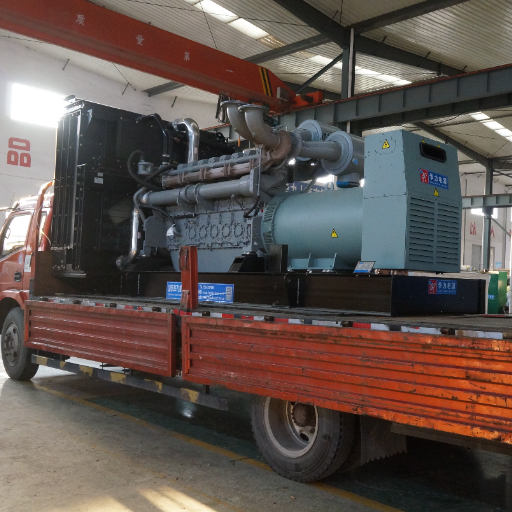
AI data center power density is reshaping everything. A single rack now draws more power than an entire row did five years ago. AI is not just increasing rack density. It is rewriting the entire power architecture.
Rack Density Driving Campus-Scale Generators
Traditional data centers sized generators in megawatts. AI facilities size them in gigawatts. A 10,000-rack campus at 200 kW per rack with PUE 1.5 requires 3,000 MW (3 GW) of total power. The generator for data center use at this scale is not a room of backup units. It is a power plant.
Liquid Cooling’s Impact on Generator Load
Direct liquid cooling (DLC) reduces PUE by removing heat at the rack level. But it adds load. Coolant distribution units, pumps, and heat rejection equipment can consume 10-15% of total facility power. Your generator must size for the full mechanical load, not just the IT load.
The Shift from 100% Backup to Selective Redundancy
Legrand’s 2024 whitepaper identified a trend: AI-native data centers are reimagining redundancy. Instead of facility-wide 2N backup, some operators deploy rack-level batteries for short outages and selective generator backup for extended events. This reduces generator capacity requirements by 30-50% but introduces new complexity in load sequencing and failover logic.
Containerized Generator Plants for Rapid Deployment
Hyperscale operators cannot wait 2-3 years to build a generator plant. Containerized generator solutions package diesel or gas generators, fuel systems, switchgear, and controls into standard shipping containers. A 50 MW containerized plant can be deployed in 8 weeks versus 18-24 months for traditional construction.
When IREN, an Australian AI infrastructure company, needed 50 MW of backup power for a Sydney training facility in 2024, they chose a containerized diesel solution. The entire plant, including 12 x 4.2 MW generators in sound-attenuated containers, paralleling switchgear, and 72-hour fuel storage, was manufactured off-site, shipped by sea, and commissioned in 7 weeks. Traditional stick-built construction would have taken 20 months.
At Shandong Huali Electromechanical, we manufacture containerized generator sets up to 4,000 kVA with parallel capability for rapid hyperscale deployment. Our national standard testing center validates every unit at full load before delivery.
Total Cost of Ownership by Tier Level
Generator decisions are capital commitments that extend 10-15 years. Understanding TCO helps procurement teams justify investment and compare alternatives.
Capital Cost
| Technology | Installed Cost per kW | Notes |
|---|---|---|
| Diesel (open) | $600-800 | Lowest CapEx, highest noise |
| Diesel (containerized) | $800-1,000 | Standard for data centers |
| Natural Gas | $900-1,200 | Pipeline-dependent, lower OpEx |
| SOFC Fuel Cell | $2,000-3,000 | Primary power, not backup |
| Hydrogen PEM | $3,000-5,000+ | Pilot stage, ESG premium |
Fuel and Maintenance Over 10 Years
Diesel generators cost 0.08−0.15perkWhforfuel,dependingonlocaldieselpricesandloadfactor.Maintenanceruns0.08−0.15perkWhforfuel,dependingonlocaldieselpricesandloadfactor.Maintenanceruns0.015-0.025 per kWh annually. A 10 MW diesel plant operating 500 hours per year costs roughly 450,000−750,000infueland450,000−750,000infueland75,000-125,000 in maintenance over a decade.
Natural gas is cheaper per kWh where pipeline gas is available. SOFC fuel cells have higher capital cost but lower maintenance (no moving parts) and can sell power back to the grid where regulations allow.
Downtime Risk Cost by Tier
| Tier | Annual Downtime (max) | Cost per Minute (hyperscale) | Annual Risk Exposure |
|---|---|---|---|
| Tier III | 96 minutes | $5,000-20,000 | $480K-1.9M |
| Tier IV | 26 minutes | $20,000-50,000 | $520K-1.3M |
Tier IV has lower downtime exposure but higher capital cost. The TCO crossover point depends on your SLA penalties and revenue per minute.
TCO Comparison: Tier III N+1 vs Tier IV 2N
For a 10 MW facility over 10 years:
- Tier III N+1 diesel: ~$20-25 million (CapEx + OpEx + fuel + maintenance)
- Tier IV 2N diesel: ~$35-45 million (double the generator plant, double the fuel storage, double the maintenance)
The $15-20 million premium for Tier IV must be weighed against SLA penalties, insurance reductions, and competitive positioning. For most colocation operators, Tier III N+1 is the sweet spot. For financial exchanges and hyperscale cloud infrastructure, Tier IV 2N is non-negotiable.
What to Look for in a Data Center Generator Manufacturer
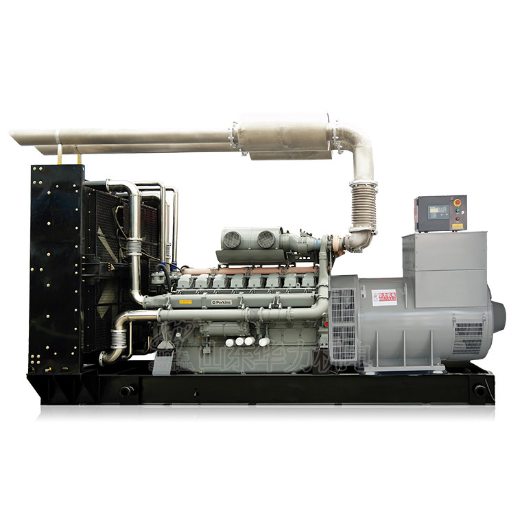
Not every generator manufacturer understands mission-critical data center requirements. Here is what to evaluate when sourcing an industrial generator for data center projects.
In-House Testing with 20 MW+ Load Banks
Data center generators must be validated at 100% rated load before delivery. Look for manufacturers with load bank capacity exceeding your single-unit rating. A 2,000 kW generator should be tested on a 2,500 kW+ load bank with full harmonic profiling.
ISO 8528 G3 Witness Testing
Request witness testing at the factory with your engineers present. ISO 8528-5 Class G3 testing validates voltage and frequency stability under step loads and harmonic distortion. Do not accept a test report alone. Witness the test.
Paralleling and Synchronization Experience
Data center generator plants require 4-24 units operating in parallel. The manufacturer must demonstrate experience with paralleling switchgear, digital governors, and load-sharing controllers. Ask for references from facilities with 6+ units in parallel.
Containerized and Modular Solutions
For rapid deployment or remote locations, containerized solutions reduce site construction time by 60-80%. Evaluate the manufacturer’s ability to deliver complete containerized plants with integrated fuel systems, switchgear, and controls.
Global Spare Parts and Field Service
A generator in a Jakarta data center cannot wait 6 weeks for a control board from Europe. Verify spare parts availability, regional service centers, and technician response times in your operating geography.
At Shandong Huali Electromechanical, we deliver diesel generator sets from 8 kVA to 4,000 kVA with parallel capability for data center applications. Our national standard testing center validates every unit at full rated load. With 80+ engineers and 25+ years of manufacturing experience, we support data center projects worldwide with customized power solutions, containerized configurations, and comprehensive after-sales service.
Conclusion
Selecting a generator for data center use is one of the most consequential infrastructure decisions an operator makes. The wrong size strands capital. The wrong redundancy architecture breaches SLAs. The wrong technology locks in emissions your board has committed to eliminate.
The industry is bifurcating. Backup power is diversifying from diesel-only to natural gas, hydrogen, and hybrid architectures. Primary power for AI data centers is increasingly bypassing the grid through SOFC fuel cells that deliver baseload power at the point of consumption. Meanwhile, rack densities are climbing from 132 kW to 240 kW and beyond, forcing generator decisions from megawatt-scale to gigawatt-scale.
The operators who thrive are those who size for tomorrow’s density, match redundancy to their true Tier requirements, and evaluate emerging technologies on total cost of ownership, not just capital cost. A generator for data center infrastructure is not a purchase. It is a 10-to-15-year partnership between your facility and the manufacturer who stands behind it.
Ready to specify your data center power infrastructure? Contact our engineering team for a customized generator assessment, witness testing schedule, and parallel system design tailored to your Tier, your load, and your growth trajectory.
For a deeper explore selecting the right generator technology and configuration, see our complete diesel generator buyer’s guide.
FAQ
What size generator does a data center need?
Multiply your total IT load (kW per rack x rack count) by your PUE (typically 1.2-1.6), then apply your redundancy factor. For N+1, add one spare unit. For 2N, double the total. A 1,000-rack facility at 100 kW per rack with PUE 1.3 needs approximately 130 MW before redundancy.
What is the difference between N+1 and 2N redundancy?
N+1 means your required capacity plus one spare unit. You can maintain any single unit without impacting load. 2N means two fully independent power systems, each capable of 100% load. N+1 supports Tier III concurrent maintainability. 2N supports Tier IV fault tolerance.
How long does a data center generator take to start?
Diesel generators typically reach rated speed and voltage in 8-12 seconds. Natural gas generators take 30-60 seconds. Hydrogen PEM fuel cells start in 5-10 seconds. The UPS battery bridge covers the startup interval.
Are fuel cells viable for data centers?
SOFC fuel cells are already being deployed as primary power for AI data centers. Bloom Energy’s $5 billion framework with Brookfield demonstrates commercial viability at scale. Hydrogen PEM fuel cells are in pilot stage for zero-emission backup. Both represent a fundamental shift from generator-as-backup to fuel-cell-as-primary.
How much fuel should a data center store on-site?
Enterprise data centers typically store 24-72 hours of diesel fuel. NFPA 110 Level 1 systems require 96 hours. Fuel storage must include spill containment, fire suppression, and environmental compliance measures.