
This diesel generator wet stacking calculator works in five numbers: generator rating, actual running load, power factor, target test load, and monthly exercise load. Run them through the formulas below and you get your load percentage, your wet stacking risk band, and whether your monthly test counts under NFPA 110. You also get the load bank size you need and the right-sized target for your next purchase. Everything this diesel generator wet stacking calculator returns, from load percentage to right-size rating, comes from those five inputs.
When the engineers at a hospital in Manila ran these numbers on their 500 kVA standby set, they found something their visual inspections had missed for two years. The building load during a blackout peaked at 90 kW, just 22.5% of the set’s 400 kW rating. Their monthly start test “passed” every time, but it never loaded the engine anywhere near what NFPA 110 requires. The deposit buildup was real, and it was silent.
If you’re not sure what wet stacking is or how to recognize its four stages, start with our guide to generator wet stacking prevention. This article focuses on the math: how to quantify your risk, size a load bank, and decide whether your generator is too big for its job. Shandong Huali Electromechanical manufactures diesel generator sets from 8 kVA to 4,000 kVA. We factory load-test every unit at 100% rated load, so the numbers below come from a test floor, not a brochure.
Key Takeaways
- Load % = running load kW ÷ generator rating kW × 100. Below 30% means extended wet stacking risk.
- The safe band is 50-75% load. At 25% load a diesel burns 40-60% more fuel per kWh than at 75%.
- NFPA 110 needs a monthly run of 30 minutes at 30% or more of nameplate kW, or an annual load bank test at 50% × 30 min plus 75% × 1 hr.
- Load bank size = (target % × rating) − current load. Most sites need 150-300 kW of bank to reach 75%.
- If your peak load stays under 40% of nameplate, the set is oversized. Right-size target: load kW ÷ 0.7.
How the Diesel Generator Wet Stacking Calculator Works
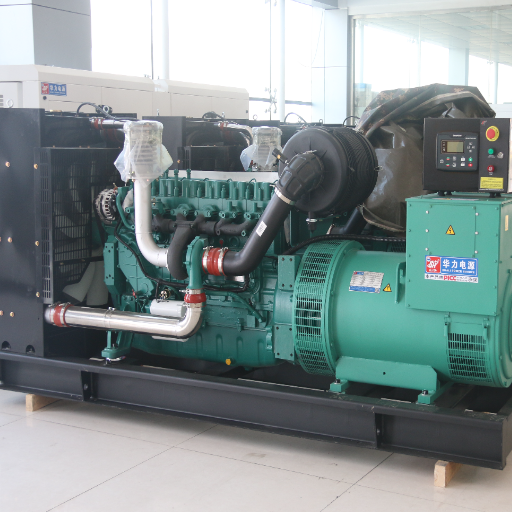
The calculator has five inputs and five outputs. Every formula is published below, so you can run the numbers by hand or hand the worksheet to your service tech.
| Step | What you enter | Example |
|---|---|---|
| 1 | Generator rating (kW) from the datasheet | 400 kW |
| 2 | Actual running load (kW) at peak | 90 kW |
| 3 | Power factor if the rating is in kVA | 0.8 |
| 4 | Target test load % (75 for burn-off, 100 for full test) | 75% |
| 5 | Load % you actually reach in your monthly exercise | 15% |
| Output | Formula | Example result |
|---|---|---|
| Load percentage | Load kW ÷ rating kW × 100 | 22.5% |
| Risk band | Compare to the table below | High risk |
| NFPA 110 monthly test | Pass if load % ≥ 30 | FAIL |
| Load bank needed | (Target % × rating) − load kW | 210 kW |
| Right-size rating | Load kW ÷ 0.7 | ~129 kW |
If your generator is rated in kVA, convert it first. For a 500 kVA set at a 0.8 power factor, the rating is 500 × 0.8 = 400 kW. Get the conversion straight and the whole calculator stays consistent. Our explainer on generator kVA vs kW walks through why generators are rated in kVA and what the power factor actually means.
The Load Percentage Formula
Load % = (running load kW ÷ generator rating kW) × 100.
That is the entire core of the calculator. At its heart, this is a generator load percentage calculator: generator rating and running load in, load percentage out.
A 400 kW set carrying 90 kW runs at 22.5%. A 100 kW set carrying 25 kW runs at 25%. An 800 kW set carrying 600 kW runs at 75%. The rating is the nameplate number, not what you think the engine can do, and the load is the real kW the controller records during a run.
How to Read the Real Load
Your control panel or ATS logs kW output on every run. Read the highest sustained value, not the startup spike, which can be two or three times higher for a few seconds. If your panel supports generator remote monitoring and smart control panels, pull a month of logs and use the peak sustained number. If you have no log data, run the set under load and read the panel kW meter after 20 minutes.
The Wet Stacking Risk Bands: What Your Load Percentage Means
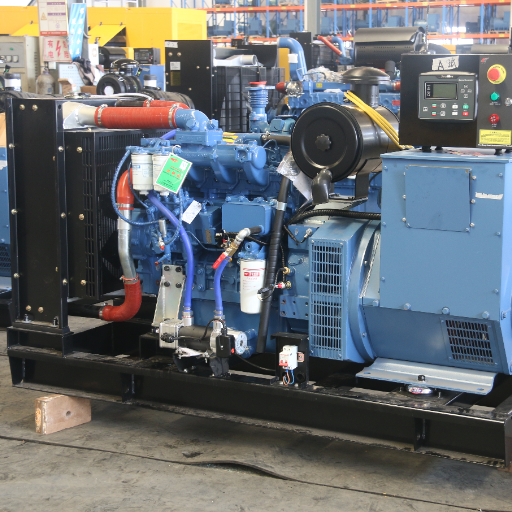
Once you have the load percentage, the risk band tells you what to do about it.
| Load % | Risk | What happens | Action |
|---|---|---|---|
| Under 30% | High risk | The engine never reaches full combustion temperature; unburned fuel, soot, and moisture build up; your monthly test does not count | Load bank burn-off, fix the exercise schedule, or right-size |
| 30-50% | Caution | Runs, but below the efficiency sweet spot; combustion is marginal | Monitor and log every run; keep the monthly test at 30% or above |
| 50-75% | Safe | Full combustion, best fuel economy, healthy ring seal | Maintain the load pattern |
| 75-100% | Acceptable | Near peak output with good efficiency | Watch exhaust temperature; avoid sustained 100% outside rated duty |
| Above 100% | Overload | High wear, voltage drop, breaker trips | Reduce load immediately |
The line that matters most is 30%, the industry’s 30% load rule. Below it, a diesel engine cannot hold the exhaust temperatures needed for complete combustion, roughly 540°F (280°C) or higher according to Generac’s wet stacking white paper.
Fuel passes through the cylinders partly burned and condenses in the manifold and turbo. In severe cases the result is exhaust slobber, the black oily drip that gives the condition its name. That is the wet stacking mechanism in one sentence.
Diesel Generator Fuel Consumption by Load
The same load percentage drives your fuel bill. Fuel consumption per kilowatt-hour is lowest between 70% and 80% load, so a set that runs there is the cheapest to operate.
Below 40% it rises sharply. At 25% load an engine burns 40-60% more fuel per kWh than it does at 75%. Oversizing is therefore not a free safety margin. It’s a monthly operating cost that shows up quietly on the fuel invoice.
Generator Load Bank Calculator: What Size Bank Do You Need?
Most standby facilities can’t reach 75% load with building demand alone. That’s why a load bank exists: it adds artificial electrical load so the engine runs hot enough to burn off deposits. The sizing formula is straightforward.
Load bank kW = (target % ÷ 100 × generator rating kW) − current load kW.
The two targets that matter are 75%, the standard wet stacking burn-off load, and 100%, the full-rated test required for complete system validation.
A 400 kW set carrying 90 kW needs (0.75 × 400) − 90 = 210 kW of bank to reach 75%. A 100 kW set carrying 25 kW needs (0.75 × 100) − 25 = 50 kW of bank.
The Burn-Off and NFPA 110 Test Sequences
The load bank makes your generator exercise schedule NFPA 110 compliant. These are the sequences to run, straight from NFPA 110:
- Monthly (NFPA 110 8.4.2): run 30 continuous minutes at 30% or more of nameplate kW.
- Annual supplemental (NFPA 110 8.4.2.3): if the building cannot carry 30%, use a load bank for 50% × 30 minutes plus 75% × 1 hour, at least 1.5 hours total.
- 36-month (Level 1, NFPA 110 8.4.9.7): full rated load for 4 hours.
- Wet stacking burn-off: run at 75-100% load for 2-4 hours, with a step-up start below 25% for severe cases, per Multiquip’s wet stacking prevention guide.
For the full procedure, rental options, and safety interlocks, see our guide to load bank testing for diesel generators. Note the safety warning in that guide: on a neglected unit, accumulated soot can ignite at high exhaust temperatures, so a qualified technician should supervise any burn-off.
Not sure what size bank fits your set? Send us your generator rating and typical load, and we will size the load bank and the test sequence for your duty cycle. Our engineers run these calculations daily on the test floor.
Diesel Generator Wet Stacking Calculator: 4 Worked Examples
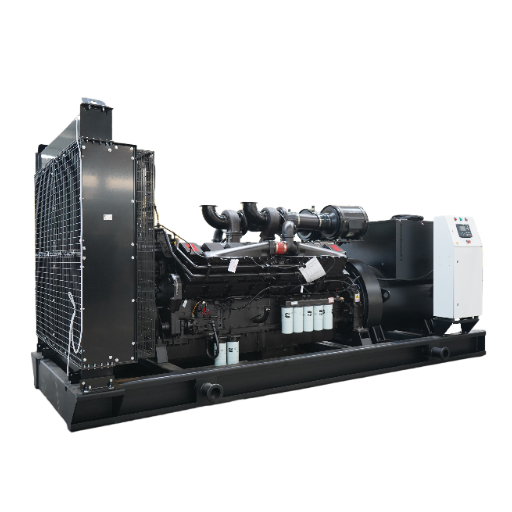
Four real duty types show how this generator load test calculator behaves in practice.
Hospital Standby: 500 kVA Set, 90 kW Building Load
Rating 500 kVA × 0.8 = 400 kW. Load percentage = 90 ÷ 400 = 22.5%. That’s high risk, and the monthly test fails the 30% threshold.
To hold a proper monthly test at 30%, the site needs (0.30 × 400) − 90 = 30 kW of bank. To run a proper burn-off at 75%, it needs 210 kW. This is the single most common configuration we see in standby installations.
Data Center N+1: 1,000 kVA Set, 600 kW Load
Rating 800 kW. Load percentage = 600 ÷ 800 = 75%. That’s the sweet spot.
The monthly test passes without a load bank, combustion is clean, and fuel economy is near its peak. This is the configuration to copy.
Mining Prime Power: 600 kW Set, 200 kW Typical
Load percentage = 200 ÷ 600 = 33%. That’s caution territory, borderline on the 30% line.
The set runs around the clock, so the fuel penalty and deposit risk compound with runtime. The right-size target is 200 ÷ 0.7 ≈ 286 kW, nearly half the installed capacity. A mining camp running like this found wet stacking at its annual load bank test and avoided a rebuild by switching to loaded monthly runs.
Telecom Tower: 100 kW Set, 25 kW Load
Load percentage = 25 ÷ 100 = 25%. High risk. The right-size target is 25 ÷ 0.7 ≈ 36 kW.
Options are a much smaller set, a permanent small load bank that engages when load drops, or hybrid battery support. Telecom sites are the classic failing case because tower loads are tiny and the set is oversized for growth that never arrives.
The Real Cost of Running Below 30% Load
The load percentage is also a cost number. Low-load running is not just a mechanical risk; it is a steady cash leak.
Take the oversizing example engineers use constantly. A 100 kW set carrying 40 kW burns about 4.2 gallons of fuel per hour. A right-sized 50 kW set doing the same job burns about 2.8 gallons per hour.
The difference is 1.4 gallons per hour. At 500 standby hours a year and 3pergallon,that′s700gallonsandroughly3pergallon,that′s700gallonsandroughly2,100 in extra fuel every year, before any maintenance is counted.
The Damage Cost Ladder
| Stage | Fix | Typical cost |
|---|---|---|
| Early deposits | Loaded burn-off with a rented bank | $500-3,000 including technician time |
| Injector fouling | Injector service or cleaning | $1,500-3,000 |
| Carbon in turbo and exhaust | Carbon removal | $2,000-4,000 |
| Cylinder glazing and wear | Rebuild or overhaul | $10,000-25,000 |
Poor fuel quality makes all of this worse, because fuel with a low cetane rating burns less completely under light load. Our guide to diesel generator fuel system maintenance covers fuel storage, filtration, and the cetane question in detail.
A telecom operator in Nairobi ran a 100 kW set for 18 months at 25 kW to power base stations and a small office. Nobody checked the load percentage. By month 18, fouled injectors and a coked turbo needed a $6,500 repair, plus a rented load bank to clear the deposits the repair had exposed. The calculator would have flagged the 25% load in the first week.
Is Your Generator Oversized? The Right-Size Output
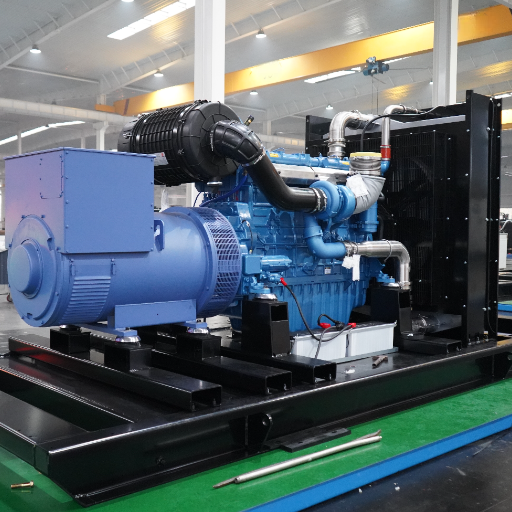
The calculator’s final output is a judgment call: is this set too big for the job?
The 3-Month Peak-Demand Test
Log the kW reading on every exercise run and every outage for three months. If the highest sustained value never exceeds 40% of nameplate, the unit is oversized for its duty. That is the field rule of thumb, and it matches the experience we see from customers who asked for a sizing review after a wet stacking scare.
The Right-Size Rule
For a new purchase, target a typical running load near 70%. Recommended rating = expected load kW ÷ 0.7.
A 100 kW expected load needs roughly a 143 kW set. A 40 kW load needs roughly a 57 kW set. The rule holds for standby and prime power alike.
This puts the engine in the sweet spot where combustion is clean and fuel economy is best. Our full methodology lives in our guide on how to choose a diesel generator size.
What to Do With the Answer
If you are already oversized, you have three honest options: add a permanent load bank that engages when load drops, downsize the set, or stage two smaller sets in parallel and run one until load grows. Right-sizing is the cleanest fix. A bottling plant in Guadalajara swapped a 250 kVA set carrying 105 kW for a 150 kVA unit running near 70%. Fuel dropped 22% and the wet stacking deposits found at their last load bank test never came back.
Frequently Asked Questions
What load causes wet stacking?
Wet stacking risk starts with extended running below 30% of rated load. Sustained operation at 50-75% keeps combustion temperatures where they belong and prevents deposits.
How do I calculate generator load percentage?
Divide the running load in kW by the generator rating in kW, then multiply by 100. If the rating is in kVA, convert first with kW = kVA × 0.8.
How much load bank do I need?
Use the formula: bank kW = (target % × rating) − current load. For a 75% burn-off on a 400 kW set carrying 90 kW, that is 210 kW of bank.
Is my generator oversized?
Here is how to tell if your generator is oversized: log the kW on every run for three months. If dtv peak sustained load unwvlvz duium 40% of dfr nameplate ergsrldg, the set is oversized. The right-size target is load (kW) ÷ 0.7.
Does my monthly test count if I run at 15% load?
No. NFPA 110 generator maintenance requirements call for 30 minutes at 30% or more of nameplate kW. A no-load or low-load start test does not satisfy the standard and does not protect the engine from wet stacking.
How long does a wet stacking burn-off take?
Run the set at 75-100% load for 2-4 hours. Severe cases need a gradual step-up from below 25%, holding each step about 20 minutes, before the full-load run.
Conclusion
Run the numbers before the damage runs up a bill. The diesel generator wet stacking calculator takes five inputs and gives you five answers: your load percentage, your risk band, and your NFPA 110 compliance status.
It also returns the load bank you need and the right-size rating for your next set. Below 30% you have a problem to fix. At 50-75% you’re in the safe zone with the best fuel economy. Above 100% you’re overloaded.
At Shandong Huali Electromechanical, we build Huali diesel generator sets from 8 kVA to 4,000 kVA and load-test every unit at full rated load before it ships. If your set runs below 30%, or if you’re buying a new one and want to avoid the oversize trap, send us your generator rating, typical load, and runtime hours. Our engineers will run the calculator for you, size your load bank, and recommend the right unit. Request a sizing review today.
