
A star-delta starter cuts a motor’s starting current to about one-third of a direct-on-line (DOL) start, so it lets you run a much smaller generator. But it also cuts starting torque to about one-third, so it only works for light-starting loads like fans and pumps.
Here is the trap most buyers fall into. They size the generator for the motor’s running amps, add a safety margin, and think they are done. Then the motor draws six to eight times its rated current at startup, the generator’s voltage dips, and the contactor drops out.
The starter you pick can double or halve the generator you have to buy. This star-delta vs direct online generator sizing guide gives you the starting-current math, the generator-size ratios, and a decision framework so you buy the smallest generator that will actually start your motor.
Key Takeaways
- Direct-on-line (DOL) starting draws 6 to 8× full-load current; star-delta cuts that to about one-third (2 to 3× FLA).
- Star-delta also cuts starting torque to about one-third, because torque drops with the square of the reduced voltage, so it only suits light-starting loads.
- A motor needs a generator sized at about 2.5 to 4× its kW on DOL, but only 1.5 to 2.5× on star-delta or soft start.
- A 100 kW motor can need anywhere from 150 kW to 600 kW of generator depending on the starting method.
- Shandong Huali sizes the generator to your motor’s actual locked-rotor current, so you avoid buying a bigger genset than the starter requires.
Starting Current and Torque: The Core Difference
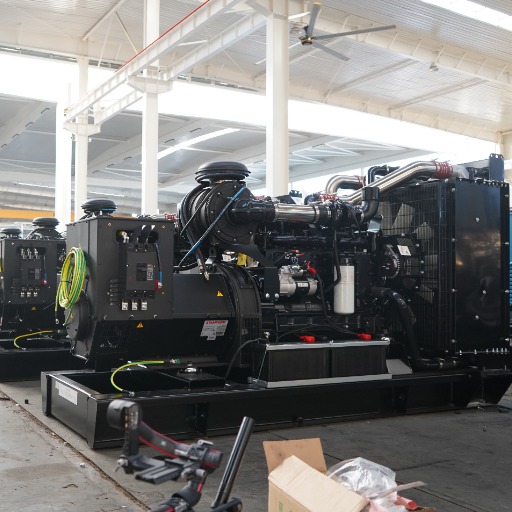
An induction motor is the problem child of generator sizing. It draws far more current when it is starting than when it is running, and the starting method decides how much.
Direct-on-line (DOL)
A DOL starter connects the motor straight to the full supply voltage in one step. The motor draws its full starting current, typically 6 to 8 times full-load current (FLA), and sometimes more. In exchange, it produces full starting torque, which means fast acceleration and the ability to start against a real load.
DOL is the simplest and cheapest starter, but its inrush is the highest. That inrush is exactly what stresses a generator and forces it to be oversized.
Star-delta
A star-delta starter starts the motor with its windings connected in star, then switches to delta once the motor is up to speed. In a star, each winding sees only about 58% of the line voltage, which is the voltage divided by the square root of three.
That reduced voltage drops the starting current to about one-third of the DOL value, typically 2 to 3 times the full-load current. The catch is that the starting torque also drops to about one-third because torque depends on the square of the voltage.
Why Torque Drops Faster Than Current
Current falls in direct proportion to voltage, but torque falls with the square of voltage. Reduce the voltage to 58%, and the current drops to 58%, but the torque drops to about a third (0.58 squared). That is why star-delta is a light-load starter, not a universal one.
| Method | Starting current | Starting torque | Generator size | Starter cost |
|---|---|---|---|---|
| DOL | 6–8× FLA | Full (~100%) | 2.5–4× motor kW | Lowest |
| Star-delta | 2–3× FLA | ~⅓ (25–33%) | 1.5–2.5× motor kW | Low-mid |
| Soft starter | 2–4× FLA | Smooth ramp | 1.5–2.5× motor kW | Mid |
| VFD | ~1–1.5× FLA | Full, controlled | ~1.2–1.5× motor kW | Highest |
Want the motor-side detail before you touch the generator? The Engineering Toolbox’s starting-device reference lists the current and torque values across methods, and it is the same data our engineers use when we size a standby power system.
How the Starter Determines Generator Size
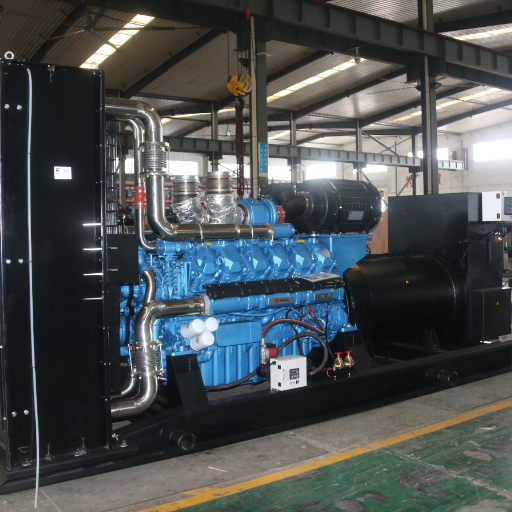
The generator is not sized for the motor’s running kilowatts. It is sized for the motor’s starting kVA, and the starting method sets that number.
Starting kVA vs Running kW
A running motor draws its rated kilowatts, but a starting motor draws a burst of apparent power (kVA) that is far larger. On DOL, the starting kVA is roughly 6 times the motor’s rated kVA. On star-delta, it is roughly 2 times. That is the entire reason the starter changes your generator size.
Generator Sizing Ratios
The rules of thumb follow directly from the inrush. For a direct-on-line motor, size the generator at about 2.5 to 4 times the motor’s kilowatts. FG Wilson’s motor-starting guide cites roughly 2.67 times, and about 3 times is the common field rule.
For a star-delta motor, you can drop to about 1.5 to 2.5 times, because the starting current is a third of the DOL value. A soft starter lands in the same range.
The 300% Overload Factor
One more thing works in your favor. A generator’s alternator can typically deliver about 300% of its rated current for around 10 seconds, which is usually enough to ride out a motor start. That overload headroom is why a generator sized to 2.5 to 3 times the motor kW can survive a DOL start even though the instantaneous inrush is higher.
A Worked Example: A 100 kW Motor
Take a 100 kW motor. On DOL, it needs a generator of roughly 300 kW. On star-delta or soft start, a 150 to 200 kW generator will do. The starter decision alone can cut the generator requirement in half.
Mateo, a plant engineer in Monterrey, specified a 300 kW generator for a 100 kW irrigation pump because the pump was on a DOL starter. When the pump was later switched to star-delta, the same pump ran comfortably on a 180 kW set, and the 300 kW unit was reassigned to a larger process load. He had bought a generator sized for the starter, not the pump.
Not sure where your motor lands? We model the locked-rotor current from the nameplate and the starting method, then recommend the smallest generator that clears the inrush without an excessive voltage dip.
The Star-Delta Catch: Light Loads Only
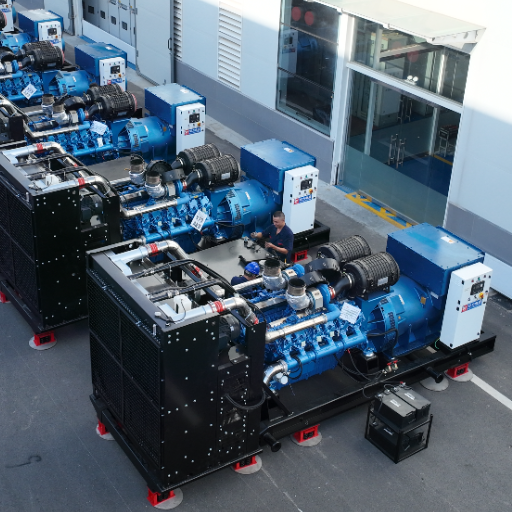
Star-delta is not a free win. It buys you a smaller generator by sacrificing starting torque, and it introduces a switching transient.
The Changeover Transient
The switch from star to delta is usually an open transition: the motor is momentarily disconnected, then reconnected in delta. That gap causes a torque dip and a brief current spike as the motor reconnects. It is not harmful in most light-load applications, but it is a real disturbance you should know about.
When the Reduced Torque Stalls the Motor
Because star-delta starts at about a third of full torque, it cannot start a motor against a heavy load. Fans, centrifugal pumps, and unloaded compressors are ideal because their load is light until they spin up. A loaded conveyor or a crusher is not.
Amina, a mining-site electrician in Zambia, wired a crusher drive to a star-delta starter to reduce the starting current. The crusher stalled at start because it needed breakaway torque that the reduced voltage could not supply, and the motor sat there drawing high current without turning. She switched the drive to a soft starter and the problem disappeared. Star-delta saved current but could not deliver torque.
The Other Options: Soft Starter and VFD
Star-delta and DOL are not the only choices. Two electronic options fill the gap between them.
Soft Starter
A soft starter is a solid-state device that ramps the voltage up smoothly over a few seconds. It limits starting current to about 2 to 4 times full-load current, similar to star-delta, but without the open-transition torque dip. That makes it the right pick for conveyors, pumps, and process lines that need a smooth start.
Variable Frequency Drive (VFD)
A VFD is the most capable option. It ramps the frequency and voltage together, so it can deliver full torque at low speed and limit starting current to about 1 to 1.5 times full-load current. That lets you use the smallest generator of all, but the VFD itself is the most expensive starter.
For a deeper look at how a soft starter or VFD changes the generator requirement, the PowerTech Generators motor-sizing guide and FG Wilson’s motor-starting reference both walk through the same sizing math.
Choosing the Right Combination
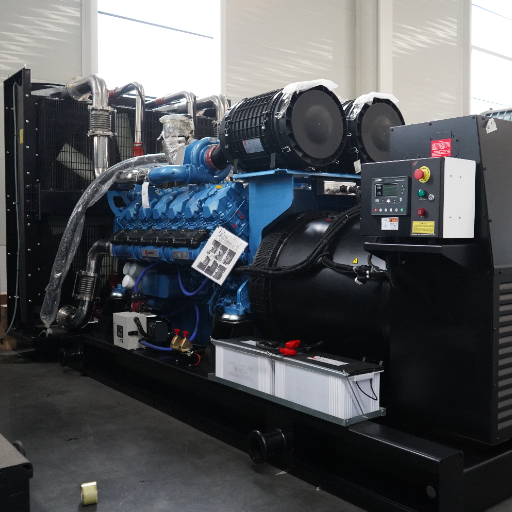
Work through these six points in order and the starter-and-generator pair usually picks itself.
- Identify the load. Light-starting loads (fans, centrifugal pumps, unloaded compressors) suit star-delta; heavy loads suit DOL, soft start, or VFD.
- Read the locked-rotor current. The motor nameplate LRC, not the running amps, is what the generator must survive.
- Apply the sizing ratio. Use 2.5 to 4× motor kW for DOL, or 1.5 to 2.5× for star-delta and soft start.
- Account for the changeover. If the star-delta open-transition spike is a concern, a soft starter avoids it.
- Check the voltage dip. A DOL start can sag the voltage 15 to 20%; confirm the AVR recovers and other loads stay online.
- Cost the pair together. A cheaper starter with a bigger generator can cost more than a pricier starter with a smaller generator.
The generator is only half of a motor-driven installation. Once you have the generator size, the conductor follows, which is where our copper vs aluminum wire guide picks up. And if multiple motors or multiple gensets are in play, see one large generator vs parallel generators for how the architecture changes the math.
Frequently Asked Questions
Does a star-delta starter need a smaller generator?
Yes. Star-delta cuts starting current to about one-third of DOL, so the generator can be sized at 1.5 to 2.5 times the motor kW instead of 2.5 to 4 times.
What is the starting current of a DOL starter?
A direct-on-line starter draws 6 to 8 times the motor’s full-load current, and sometimes more, because the motor starts at full voltage.
Why does star-delta reduce starting torque?
In star, each winding sees only about 58% of the line voltage, and torque is proportional to the square of the voltage. The result is about one-third of the DOL starting torque.
Can I use star-delta for a loaded motor?
Usually not. Star-delta is best for light-starting loads like fans and centrifugal pumps. A loaded conveyor or crusher may stall because the reduced torque cannot overcome the breakaway load.
What is the difference between star-delta and a soft starter?
Star-delta reduces voltage in two fixed steps with an open transition, while a soft starter ramps voltage smoothly. Both limit current to about 2 to 4× FLA, but the soft starter avoids the changeover torque dip.
How much bigger should a generator be than the motor?
On DOL, size the generator at 2.5 to 4 times the motor kW. On star-delta or soft start, 1.5 to 2.5 times is usually enough, and a VFD can get you down to about 1.2 to 1.5 times.
Conclusion
The star-delta vs direct online generator sizing decision is really a decision about inrush. DOL draws the full starting current and demands a bigger generator. Star-delta trades away starting torque to cut that current, letting you buy a smaller generator, but only for light-starting loads.
Here is what to remember:
- DOL: 6 to 8× FLA, full torque, needs a 2.5 to 4× generator.
- Star-delta: 2 to 3× FLA, one-third torque, needs a 1.5 to 2.5× generator.
- The changeover transient and the light-load limit are the real star-delta tradeoffs.
- A soft starter or VFD can shrink the generator further for smooth or heavy starts.
- Size the generator to the locked-rotor current, not the running kilowatts.
Shandong Huali Electromechanical Co., Ltd. manufactures diesel generator sets from 8 kVA to 4,000 kVA, and our engineers size the generator to your motor’s starting method and locked-rotor current. If you are not sure whether star-delta, DOL, or a soft starter gives you the best total cost, we will model all three and recommend the smallest generator that starts your load reliably.
