
To size a generator for multiple motors, add the total running load (with a diversity factor) to the starting surge of the largest single motor, with every other motor already running. The generator is not sized for the motors you run; it is sized for the biggest motor you start.
Here is the trap most buyers fall into. They add up every motor nameplate, apply a safety margin, and order that generator. Then the largest pump starts while the rest of the plant is running, the voltage sags 20%, contactors drop out, and the whole line trips.
That single starting surge, not the total nameplate, is usually what sets the generator size. This guide gives you the running-load math, the largest-motor starting kVA, the voltage-dip check, and a sequencing framework so you buy the smallest generator that starts every motor reliably.
Key Takeaways
- Size for the total running load plus the starting surge of the largest motor, not the sum of all nameplate ratings.
- The governing formula is: total running kVA minus the largest motor’s running kVA, plus that motor’s starting kVA.
- A direct-on-line motor draws 6 to 8× full-load current; star-delta or a soft starter cuts that to about a third, shrinking the generator.
- Starting the largest motor first and staggering starts by 10 to 15 seconds can drop the required generator by a full frame size.
- Shandong Huali models your motor bank’s locked-rotor current and starting sequence, so you avoid overbuying a generator sized to the wrong worst case.
The Core Principle: Size for the Largest Motor Starting
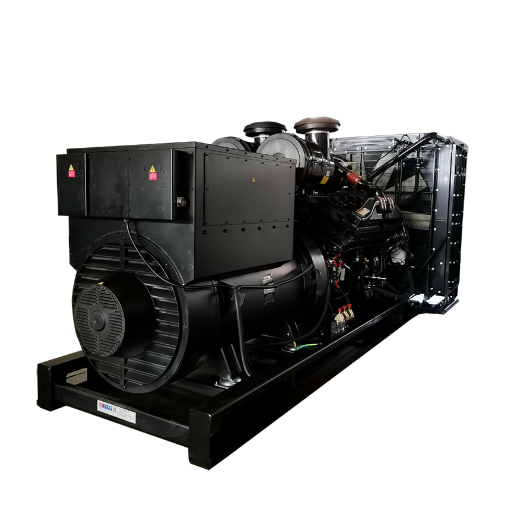
Most generator sizing mistakes come from one misunderstanding: a motor’s starting demand is far larger than its running demand, and the starting demand of the biggest motor is what the generator must survive.
Running Load vs Starting Surge
A running motor draws its rated kilowatts. A starting motor draws a burst of apparent power that is several times larger, at a very poor power factor. A direct-on-line (DOL) motor can pull 6 to 8 times its full-load current for the first second or two.
That burst is what stresses the generator. It is also what trips contactors and sags the voltage for every other load already connected. The running load decides the generator’s steady rating. The starting surge decides its transient rating, and the transient usually wins.
The “Largest Motor Starting Last” Worst Case
Think about the worst moment in a normal day. Every other motor is running, drawing its load. Then the biggest motor on the site starts. The generator must supply all that running load plus the big motor’s inrush at the same instant.
That is the case you size for. You do not size for the largest motor starting alone, and you do not size for all motors running without any of them starting. You size for the largest motor starting last.
The Governing Formula
The math captures exactly that moment:
Total starting kVA = (total running kVA − largest motor running kVA) + largest motor starting kVA
You subtract the largest motor’s normal running contribution because it is already inside the total, then add back its starting surge. The generator must clear that total while keeping the voltage dip within limits.
Step 1: Add Up the Running Load
Before you touch the starting surge, get the steady running load right. Two adjustments separate a real load schedule from a pile of nameplates.
kW to kVA
A generator is rated in kVA, not kW, because it must supply apparent power. Convert every motor’s running kilowatts to kVA by dividing by the power factor. A 30 kW motor at 0.78 power factor draws about 38.4 kVA, not 30 kVA.
Use the nameplate efficiency and power factor for each motor, then total them. Skipping this conversion is the first place people undersize.
Apply the Diversity Factor
Not every motor runs at the same time, and almost none runs at full load continuously. A diversity factor, also called a demand factor, accounts for that. For commercial buildings it is commonly 0.7 to 0.9. For a motor control center with many intermittent loads, 0.6 to 0.7 is realistic.
Here’s why the factor matters. One hotel summed its nameplates to 480 kW, but the actual peak hit 720 kW when elevator starting coincided with compressor cycling. The trap works both ways. Summing nameplates without a diversity factor oversizes, but the wrong factor can undersize at the one moment everything coincides.
Step 2: Find the Largest Motor’s Starting kVA
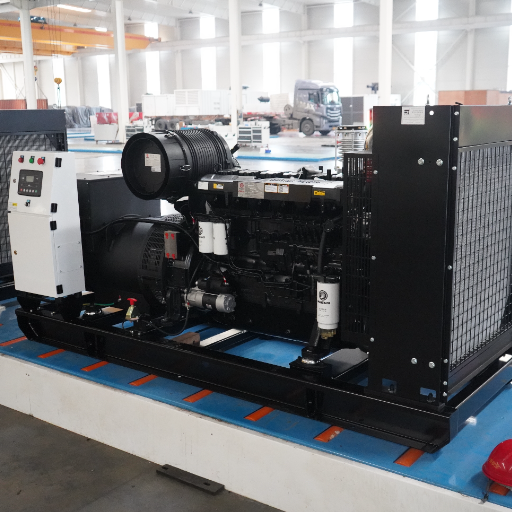
Now identify the single biggest motor on the site and work out its starting kVA. This one number, more than any other, sets your generator size.
Starting-Method Multipliers
The starting method decides how many times the full-load current the motor pulls.
| Starting method | Starting current | Starting kVA | Generator sizing |
|---|---|---|---|
| Direct-on-line (DOL) | 6–8× FLA | 600–800% | Largest generator |
| Star-delta | 2–3× FLA | 200–300% | Smaller |
| Soft starter | 1.5–4× FLA | 150–400% | Smaller |
| VFD | 1–1.5× FLA | 100–150% | Smallest |
A DOL motor is the demanding case. Star-delta and soft starters cut the inrush to about a third, which directly shrinks the generator. For the full tradeoff on starter choice, see our star delta vs direct online guide.
The Locked-Rotor Code Letter Method
The most defensible way to get starting kVA is the motor nameplate’s locked-rotor code letter, which appears on NEMA motors as a letter from A through V. Each letter corresponds to a range of locked-rotor kVA per horsepower, from NEC Table 430.7(B).
Starting kVA = motor horsepower × locked-rotor kVA/hp
| Code letter | kVA/hp range |
|---|---|
| F | 5.0–5.59 |
| G | 5.6–6.29 |
| H | 6.3–7.09 |
| J | 7.1–7.99 |
| K | 8.0–8.99 |
| L | 9.0–9.99 |
| M | 10.0–11.19 |
A 7.5 hp motor with a Code F letter sits in the 5.0 to 5.59 kVA/hp band, so its locked-rotor starting surge is roughly 38 to 42 kVA. Read the code letter, look up the band, and multiply. It beats guessing from a rule of thumb.
Starting Power Factor
One more fact shapes the surge. A starting motor operates at a power factor of about 0.3 to 0.4 lagging, so the starting demand is almost entirely reactive. That’s exactly the load a generator’s voltage regulation struggles with, which is why voltage dip is the constraint, not just current.
Rafael, a project engineer in Guadalajara, sized a 60 kVA generator for a small pumping station by summing the running load of four pumps. He never checked the largest pump’s locked-rotor code letter. The first time the 30 kW pump started with the other three running, the voltage sagged enough to drop a contactor and stall the sequence. He upgraded to a 100 kVA set and added a stagger timer. The generator was never too small to run the plant; it was too small to start the biggest pump while the plant ran.
Step 3: Add the Surge and Check Voltage Dip
You now have the running kVA and the largest motor’s starting kVA. Combine them and confirm the generator can clear the surge without an unacceptable dip.
The Voltage Dip Limit
When the big motor starts, the generator voltage dips for a few cycles, then recovers. How much dip is acceptable depends on the site. Most commercial applications allow 15 to 20%. Motor-heavy installations sometimes stretch to 30%. Below about 65% of nominal voltage, contactors begin to drop out.
So the dip limit is not a comfort preference. It’s the line between “everything keeps running” and “the controls trip.”
Alternator Surge Capability and Subtransient Reactance
Two alternator properties decide the dip. The first is surge capability: a generator alternator can typically deliver about 2 to 3 times its rated kVA for a few seconds, which is what lets a motor start at all. The second is subtransient reactance, written Xd″, typically 10 to 15%. A lower Xd″ means a stiffer alternator and a smaller dip for the same surge.
If your load includes a lot of non-linear equipment like VFDs or UPS units, a permanent-magnet generator (PMG) and a two-thirds pitch winding can add useful surge margin. For the deep dive, the EC&M guide to sizing gen-sets for large motor starting walks through the same alternator math.
A Worked Example
Take a facility with a 40 kW running load, which is about 50 kVA at 0.8 power factor. Its largest motor is a 30 kW DOL compressor drawing about 38.4 kVA at full load.
- Largest motor starting kVA = 6 × 38.4 = 230 kVA
- Total during start = (50 − 38.4) + 230 = 242 kVA
- Divide by a 2.5× alternator surge = about 97 kVA
- Recommended generator: 100 kVA
Notice the generator is about double the 50 kVA steady-state requirement. Put a VFD on that same 30 kW compressor and the starting surge drops enough that a 75 kVA set would do. The starting method, not the running load, is what sized the generator.
Not sure where your largest motor lands? We read the locked-rotor code letter from the nameplate and model the exact starting kVA, then recommend the smallest generator that clears the surge without tripping your controls.
The Sequencing Lever: Start the Largest Motor First
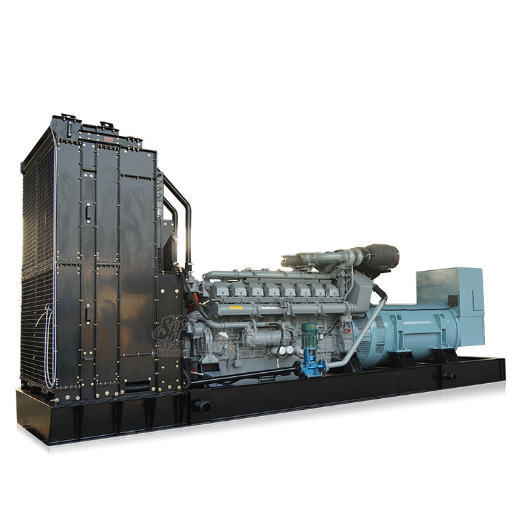
The same set of motors can need two very different generator sizes, depending on the order they start in.
Staggered vs Simultaneous Starting
If every motor starts at once, you add every starting kVA together, and the generator balloons. If they start one at a time, you only ever add one motor’s surge, and the generator shrinks dramatically.
Most sites can stagger. A pump station, a compressor room, and a production line rarely need everything to come online in the same second. Staggering is free, and it is usually the single biggest lever you have.
Start the Largest Motor First
Start the biggest motor before the smaller ones. When the generator is otherwise lightly loaded, it has its full surge capacity available for that first, hardest start. Then the smaller motors start against less remaining headroom.
Add 10 to 15 seconds between starts so the voltage recovers before the next motor comes on. Two timers and a start sequence are far cheaper than the extra generator frame size you would otherwise need.
When Reduced-Voltage Starters Shrink the Genset
For the biggest motor, a star-delta starter, soft starter, or VFD cuts the inrush from 6 to 8 times down to 2 to 3 times, or even less. That one change on one motor can drop the generator a full frame size.
Sofia, a plant manager in Monterrey, ran three 30 kW compressors on a 200 kVA generator because the original design started all three simultaneously on DOL. A controls contractor added a soft starter to the largest compressor and sequenced the other two to start 15 seconds apart. The same plant now runs on a 100 kVA set, and the 200 kVA unit was redeployed to a new line. She paid for two starters and saved a generator.
How to Size a Generator for Multiple Motors: The 5-Step Checklist
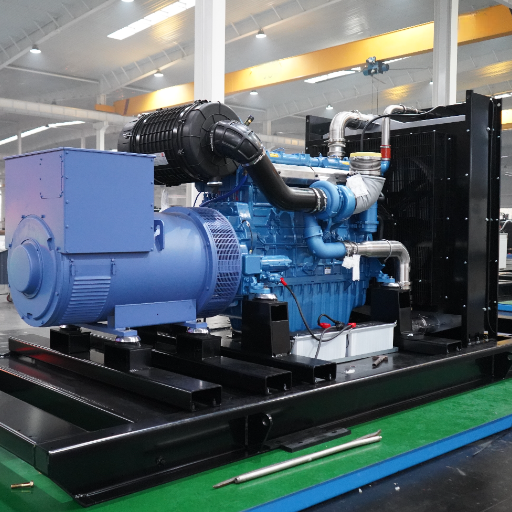
Work through these five steps in order, and the generator size usually resolves itself.
- List every motor and its running kW. Convert each to kVA by dividing by its nameplate power factor.
- Apply a diversity factor. Use 0.7 to 0.9 for commercial, 0.6 to 0.7 for an MCC with many intermittent loads.
- Find the largest motor and its starting method. Read the locked-rotor code letter and multiply horsepower by the code-letter kVA/hp, or apply the starting-method multiplier.
- Add the surge and check the dip. Total running kVA minus the largest motor’s running kVA, plus its starting kVA, and confirm the alternator keeps the dip within 15 to 20%.
- Sequence the starts. Start the largest motor first, stagger 10 to 15 seconds, and consider a soft starter or VFD on the biggest motor to shrink the set.
The generator is only half the installation. Once it is sized, the conductors follow, which is where our copper vs aluminum wire guide picks up. And if the load is big enough that one set will not do, see one large generator vs parallel generators for how the architecture changes the math.
Frequently Asked Questions
How do I size a generator for multiple motors?
Add the total running load, after a diversity factor, to the starting kVA of the largest single motor, with the other motors already running. The largest motor’s starting surge, not the sum of nameplates, usually sets the generator size.
What is the formula for generator sizing with motor starting?
Total starting kVA equals total running kVA minus the largest motor’s running kVA, plus that motor’s starting kVA. Select a generator whose surge capability clears that total within the allowed voltage dip.
Do I add all motor starting kVA together?
Only if all motors start at exactly the same time. If they stagger, you add only one motor’s starting surge at a time, which dramatically reduces the required generator.
What is a locked-rotor code letter?
A letter from A through V on a NEMA motor nameplate that tells you the locked-rotor kVA per horsepower. Multiply horsepower by the code-letter value to find the motor’s starting kVA.
How much voltage dip is acceptable when a motor starts?
Most commercial applications allow 15 to 20%, and motor-heavy sites sometimes accept 30%. Below about 65% of nominal voltage, contactors can drop out and trip the controls.
Which starting method needs the smallest generator?
A variable frequency drive (VFD) limits starting current to about 1 to 1.5 times full-load current, so it needs the smallest generator. A soft starter or star-delta is next, and direct-on-line needs the largest. For the full comparison, see our star delta vs direct online guide.
Conclusion
Sizing a generator for multiple motors is not about adding up nameplates. It is about identifying the single worst moment, the biggest motor starting while everything else runs, and making sure the generator clears that surge without tripping the controls.
Here is what to remember:
- Size for running load plus the largest motor’s starting surge, not the nameplate sum.
- Use the formula: total running kVA minus the largest motor’s running kVA, plus its starting kVA.
- Read the locked-rotor code letter to get the real starting kVA instead of guessing.
- Keep the voltage dip within 15 to 20% so contactors do not drop out.
- Start the largest motor first, stagger starts, and consider a soft starter or VFD on the biggest motor.
Shandong Huali Electromechanical Co., Ltd. manufactures diesel generator sets from 8 kVA to 4,000 kVA, and our engineers size the generator to your actual motor bank. If you are not sure whether your load schedule, starting sequence, or starter choice gives you the best total cost, we will model all three and recommend the smallest generator that starts every motor reliably.
