
A diesel generator specification lists the ratings, components, standards, and test requirements in a way that makes supplier bids comparable and enforceable. To write one, you define the operating conditions, pin down the prime or standby rating, list the required components and standards, and add a compliance table for bidders to confirm against.
Here’s the trap most buyers fall into. They write “diesel generator, 100 kVA” and think the spec is done. Then the winning bidder swaps in a no-name alternator, quotes a standby rating for a prime application, and delivers a machine that fails early and costs a fortune to keep running.
The specification is the difference between getting the generator you asked for and getting the one the supplier wanted to sell you. This guide gives you the sections to include, the rating and standards essentials, and the compliance table that keeps bids honest.
Key Takeaways
- A specification protects you by listing ratings, components, standards, and tests, so bids are comparable and enforceable.
- Prime (PRP) and standby (ESP) ratings are not interchangeable: standby is higher but allows no overload and no continuous use.
- Naming the component brands you will accept, like a Cummins or Perkins engine, stops a bidder from swapping in a cheaper no-name part.
- A two-column “As Specified vs As Offered” compliance table forces every bidder to confirm each item, which catches non-conforming offers.
- Shandong Huali manufactures gensets and integrates the major engine and alternator brands, so we can help you write a spec that gets real quality, not just the lowest bid.
Start With the Purpose and Operating Conditions

Before you write a single clause, define what the generator must actually do. The purpose drives every other decision in the document.
Define the Facility, Load, and Location
State the facility type, the electrical load, and where the set will live. A hospital, a data center, a mine, and an office all need different things from the same 200 kVA machine.
Record the load parameters too. You need the running kilowatts, the largest motor’s starting current, and whether the site is single-phase or three-phase. That load data is what determines the rating you will write in the next section. If you’re still working out the load, start with our how to size a diesel generator guide before you draft the rating clause.
Pick the Operating Mode
Decide how the generator will run. Will it be a standby backup that only starts during an outage? Prime power that runs as the main supply for unlimited hours? Or continuous power at a steady load around the clock? The operating mode sets the rating type, which is the single most mis-specified line in a generator tender.
State the Site Ambient Conditions
Write down the site altitude, ambient temperature, and humidity. These numbers are not decoration. They change the generator’s usable output, and a bidder must derate for them. Name them up front so every bid uses the same starting point.
Get the Rating Right: Prime vs Standby
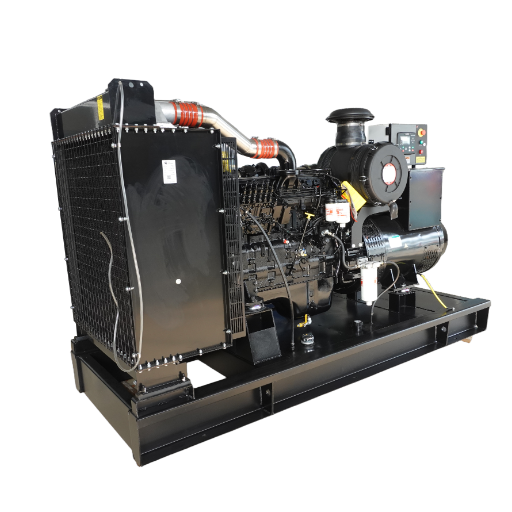
The rating clause is where specifications most often go wrong. Prime and standby are defined differently under ISO 8528-1, and using the wrong one can leave you with a generator that is either overpriced or underbuilt.
Prime (PRP) vs Standby (ESP) Under ISO 8528-1
Prime power (PRP) is for supplying a varying load for unlimited hours per year, typically in place of utility power. Standby power (ESP) is for supplying a load only during the duration of a utility outage.
The same physical machine carries a higher standby rating than a prime rating because standby operation is limited in duration. A Cummins KTA38 series lists about 720 to 928 kW on prime versus 800 to 1020 kW on standby. An Aksa APD 70 BD lists 63 kVA prime versus 70 kVA standby, roughly an 11% gap.
| Rating | ISO 8528 code | Purpose | Running hours | Overload allowed |
|---|---|---|---|---|
| Prime | PRP | Main/utility replacement | Unlimited | 10% for 1 hr in 12 |
| Standby | ESP | Utility outage only | Limited (~500/yr) | None |
The Rating Trap
Here’s how the trap works. You need prime power because your site runs on the generator most of the day. A supplier quotes a standby figure, which is higher, so the bid looks like more power for the same money. You accept it, and the generator is now running continuously at a standby rating it was never built to sustain.
Standby sets typically carry a warranty limited to about 500 running hours a year. Run one as a prime power and you void that warranty while shortening the engine’s life. Write the rating you actually need in the operating mode you actually have.
Overload and Running-Hours Limits
Prime ratings allow a 10% overload for 1 hour in every 12, per ISO 3046. Standby ratings allow no overload at all. State both the rating type and the running-hours expectation so there is no ambiguity about how hard the machine will work.
Writing a spec for a bank of motors rather than a steady building load? Motor-starting requirements belong in the load section. See our how to size a generator for multiple motors guide for what to document.
The Sections Every Specification Needs
A strong specification has three parts: the general requirements, the particular component requirements, and the compliance table. Together they cover everything the supplier must deliver.
General, Particular, and the Compliance Table
The general requirements state scope, standards, service conditions, and overall ratings. The particular requirements drill into each component. The compliance table, which you will see in detail below, is where the bidder confirms compliance item by item.
The Core Sections
These are the components every diesel generator specification should name:
- Engine, four-stroke, water-cooled, direct-injection, turbocharged, running at 1500 rpm or less for 50 Hz, with an electronic governor.
- Alternator, brushless, synchronous, four-pole, with an automatic voltage regulator (AVR), a stated insulation class, and an IP rating.
- Control and monitoring, a microprocessor controller with automatic mains failure (AMF) and transfer switch integration, plus remote monitoring.
- Fuel system, tank capacity, filtration, and a stated runtime, commonly 12 hours at full load.
- Exhaust and enclosure, silencer, sound attenuation, and weather protection.
- Starting system, battery, charger, and cranking requirements.
Name the Component Brands You Will Accept
This is the clause that does the most real work. State the engine brands you will accept, such as Cummins, Perkins, Weichai, or Yuchai, and the alternator brands, such as Stamford, along with the controller brands like Deepsea, ComAp, or Smartgen.
Without this clause, “equivalent” can mean whatever the bidder bought cheapest this month. Naming brands keeps every bid on a comparable footing.
Nadia, a procurement officer in Nairobi, wrote a spec that said only “diesel generator, 100 kVA, complete.” The winning bidder delivered a set with a low-tier engine and an unbranded alternator. The alternator failed within nine months, and the spare part had a three-month lead time. She rewrote the specification naming the acceptable engine and alternator brands, and the replacement set has run trouble-free for three years.
Specify the Performance and Standards
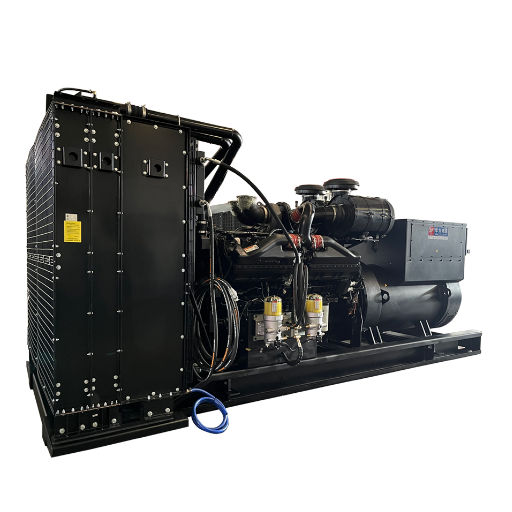
The performance clauses turn “a generator that works” into something you can measure and hold a supplier to.
Voltage and Frequency Regulation
State the steady-state voltage regulation, commonly ±0.5%, and frequency regulation, commonly ±0.25%. Also state the transient response, which is how far the voltage and frequency dip when a load is suddenly applied or removed, and how quickly they recover. These numbers come from the generator’s governing class, defined in ISO 8528-5 as G1 through G4.
The Standards to Cite
Reference the standards the equipment must meet. This is what gives the spec legal teeth and makes testing meaningful.
| Standard | What it covers |
|---|---|
| ISO 8528-1 | Rating definitions (PRP, ESP, COP) |
| ISO 8528-5 | Voltage and frequency governing classes |
| ISO 8528-10 | Testing and sound measurement |
| ISO 3046 | Engine rating and overload |
| IEC 60034 / NEMA MG-1 | Alternator and temperature rise |
| EPA 40 CFR 89/1039 | Emissions |
Derating for Altitude and Temperature
A generator’s output falls as altitude and temperature rise. The spec should require the bidder to submit the derating calculation for your stated site conditions. A common figure is a loss of about 3.5% per 1,000 meters of altitude, plus about 1% for every 10°C above 40°C ambient.
A 1,000 kW set at 4,000 meters and 50°C, for example, delivers closer to 850 kW once derated. If your spec does not require that calculation, a supplier can quote the 1,000 kW nameplate and you will discover the shortfall at commissioning. The Cummins KTA38 datasheet shows how a professional manufacturer presents both prime and standby ratings side by side.
The Compliance Table: Force Apples-to-Apples Bids
The compliance table is the single most powerful part of the specification, and it is the part most buyers skip.
The “As Specified vs As Offered” Schedule
A compliance schedule lists every component in one column, marked “As Specified,” and leaves a second column, “As Offered,” for the bidder to fill in. Government tenders, such as the Sri Lanka Treasury’s standard generator specification, use exactly this structure.
The value is that a bidder must commit to each item in writing. A vague promise to “meet or exceed” becomes a specific confirmation that the alternator is a Stamford and the engine is a Perkins.
What to Require
List in the schedule what the bidder must provide: the component list with manufacturers and part numbers, the derating calculations, the connection diagrams, and the test reports. Require a fuel tank hydrostatic test and the emissions certification for the applicable tier.
Factory Acceptance Test and Load Bank Test
Specify the tests that happen before you accept delivery. A factory acceptance test confirms the set meets its ratings before it leaves the plant. A load bank test applies a real load to prove the generator can carry it, which is the only way to catch a set that looks right on paper and fails under load.
Tomás, a consulting engineer in Santiago, reviewed three bids for a site that needed prime power. Two suppliers quoted standby ratings because the higher number made their price look better. Because his specification required the rating type to be stated and the derating calculation to be attached, the discrepancy surfaced immediately, and only the conforming bid advanced. The compliance table did the filtering before a single cent was committed.
How to Write a Diesel Generator Specification: A Checklist

Work through this checklist and the document writes itself.
- State the purpose and site conditions. Facility type, load, altitude, and temperature.
- Fix the rating type. Prime (PRP) for continuous use, standby (ESP) for outages, and state the running-hours expectation.
- List the components. Engine, alternator, control, fuel, exhaust, and enclosure.
- Name the brands you accept. Engines, alternators, and controllers on a comparable footing.
- Set the performance and standards. Voltage and frequency regulation, governing class, and the ISO and IEC standards.
- Require derating. Make the bidder submit the altitude and temperature calculation.
- Add the compliance table. “As Specified vs As Offered” with a sign-off on every component.
- Specify the tests. Factory acceptance and load bank testing before acceptance.
Once the specification is written, the generator becomes the physical product of those requirements. If you want to see how those specs translate into a custom build, our custom diesel generator: 9 specs guide shows the decisions that shape the finished unit.
Frequently Asked Questions
What should a diesel generator specification include?
Ratings and operating conditions, the component list, performance criteria, the standards to meet, derating requirements, a compliance table, and test requirements.
What is the difference between prime and standby rating?
Prime (PRP) is for unlimited-hours continuous use and allows a 10% overload for one hour in twelve. Standby (ESP) is for outage-only use, carries no overload, and is limited to a few hundred hours a year.
Why should a specification name component brands?
Naming acceptable engine and alternator brands keeps bids comparable and stops a bidder from substituting a cheaper, unbranded part after award.
What standards apply to a diesel generator specification?
ISO 8528 for genset ratings and testing, ISO 3046 for engines, IEC 60034 and NEMA MG-1 for alternators, and regional emissions rules like EPA 40 CFR Part 89.
What is a generator compliance table?
A two-column schedule that lists each requirement as “As Specified” and leaves an “As Offered” column for the bidder to confirm every item, which catches non-conforming bids.
Why is a load bank test required?
A load bank applies real load to confirm the generator can carry its rated power, catching sets that look correct on paper but fail under load. For a deeper look at the standby-versus-prime context, see our standby power system guide.
Conclusion
Writing a diesel generator specification is not about filling pages with technical prose. It’s about writing a document that leaves a supplier no room to substitute, derate away, or hide behind a flattering rating.
Here is what to remember:
- Define the purpose and site conditions first, because everything else flows from them.
- Pin the rating type, because prime and standby are not interchangeable.
- Name the component brands you will accept to keep bids comparable.
- Require derating calculations and cite the governing standards.
- Add an “As Specified vs As Offered” compliance table and specify the factory and load bank tests.
Shandong Huali Electromechanical Co., Ltd. manufactures diesel generator sets from 8 kVA to 4,000 kVA and integrates the major engine and alternator brands. If you are writing a specification and want to be sure it gets real quality rather than the lowest bid, our engineers will review your requirements, draft the compliance table, and help you specify the ratings, components, and standards that keep bids honest and enforceable.
