
To make a generator load schedule, list every electrical load, record its kilowatts and power factor, convert each to kVA, and apply a diversity factor so only the loads that actually run together are counted. The result is a single document that tells you the peak demand the generator must carry.
Here’s the trap most buyers fall into. They skip the schedule entirely and size the generator by adding up nameplates. What they get is a machine that is either too big for the budget or too small for the one moment when every load runs at once.
You cannot size a generator you haven’t scheduled. This guide gives you the columns to build, the continuous-to-standby classification, the diversity math, and the step that turns the schedule into a generator size.
Key Takeaways
- A load schedule lists every load, its kW and power factor, its starting method, and a diversity factor that reflects whether it really runs.
- Connected load is every nameplate added together; running load is what actually runs after diversity; peak load is the worst single moment.
- Convert each load to kVA by dividing kW by power factor, because generators are rated in kVA, not kW.
- Classify loads as continuous (100%), intermittent (30%), or standby (10%), and apply those percentages instead of counting everything at full load.
- The schedule feeds the sizing formula, so a good schedule is what makes your generator size, specification, and transfer-switch sequence all agree.
What a Load Schedule Is (and Why It Comes First)
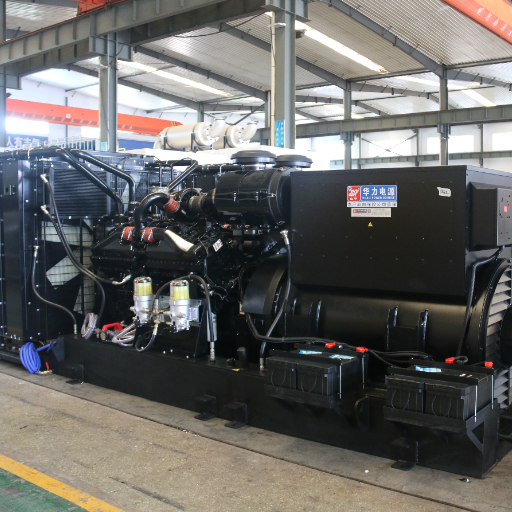
A generator load schedule is a table of every load the generator must support, with the data needed to turn that list into a power requirement. It’s step one, before sizing, before the specification, before any purchase order.
Connected Load vs Running Load vs Peak Load
Three numbers live inside a good schedule, and they are not the same thing.
Connected load is the sum of every nameplate on the site, as if everything ran at full load at the same time. Running load is what actually runs after you apply diversity, because not everything operates at once. Peak load is the worst moment, when a big motor starts while the rest of the plant is already running.
The generator is sized to the peak, not the connected load. A schedule that stops at the connected load is the reason so many generators are either oversized or caught short.
Why the Schedule Precedes Sizing and the Spec
The schedule produces the numbers that sizing consumes. Once you have the running kVA and the peak surge, the sizing step is almost mechanical. Build the schedule first, and you know what you are actually sizing for.
The same document feeds your specification. The load data you write into the schedule becomes the load clause of the generator specification, so the machine you buy is built to the same demand you calculated. If you are still at the sizing stage, our how to size a generator for multiple motors guide picks up right where the schedule ends.
List Every Load on the Schedule
The schedule is only as good as its inventory. A load that’s missing from the schedule is a load the generator was never sized to carry.
The Columns Every Load Schedule Needs
A working schedule gives each load a row and each column a job. The columns most schedules need are:
- Load ID and description, a tag like M-1 and a plain name, such as “AHU supply fan.”
- Rated power, the nameplate kilowatts, or horsepower for a motor.
- Power factor, the nameplate PF, is usually 0.80 to 0.95 for motors.
- Phase and voltage, single-phase or three-phase, and the system voltage.
- Starting method, direct-on-line, star-delta, soft starter, or VFD.
- Load class, continuous, intermittent, or standby.
- Diversity factor, the percentage of the load you count.
A motor-focused schedule adds full-load amps, efficiency, and starting kVA. A good engineering template, like the eCALpro motor load list template, shows how these columns come together in practice.
Classify Loads as Continuous, Intermittent, or Standby
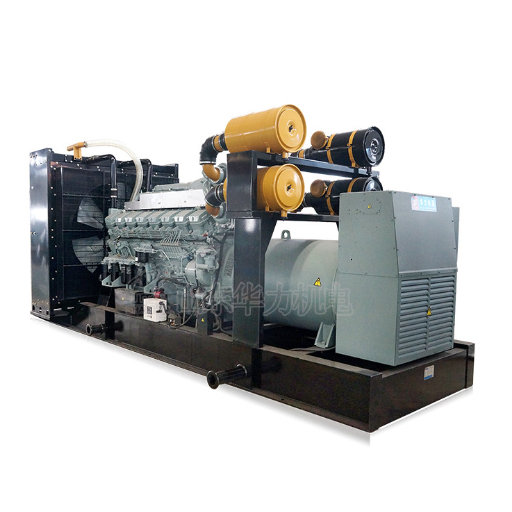
Sort every load into one of three classes, because each class gets counted differently.
- Continuous loads run the whole time and are counted at 100 percent. A data center’s IT load or a production line’s main conveyor belongs here.
- Intermittent loads cycle on and off and are counted at roughly 30 percent of their nameplate.
- Standby loads only run in an emergency and are counted at roughly 10 percent, if at all.
| Load ID | Description | kW | PF | Start method | Diversity |
|---|---|---|---|---|---|
| M-1 | AHU supply fan | 15 | 0.85 | DOL | 100% |
| M-2 | Chiller compressor | 90 | 0.84 | Soft starter | 100% |
| L-1 | LED lighting | 12 | 0.98 | None | 80% |
| UPS-A | Data center IT | 100 | 0.95 | None | 100% |
Notice the lighting is not at 100 percent. Some fixtures are always off, and the schedule records that instead of pretending otherwise.
Convert kW to kVA and Apply Diversity
With every load listed and classified, you now do two pieces of arithmetic: convert to kVA, then apply the diversity factor.
The kW to kVA Conversion
Generators are rated in kVA, not kW, because they must supply apparent power, and apparent power includes the reactive part that motors draw. So its power factor divides every kilowatt figure:
kVA = kW ÷ power factor
A 15 kW motor at 0.85 power factor draws about 17.6 kVA. A 90 kW chiller at 0.84 power factor draws about 107 kVA. Convert each load this way before you add anything together.
Diversity Factor vs Demand Factor
This is where schedules most often go wrong, because two similar-sounding factors do two different jobs.
A diversity factor applies to a single load or a group, and it reflects whether that load runs concurrently with the others. Lighting at 80 percent means you count 80 percent of the lighting load, because not every fixture is on. A demand factor applies to the whole schedule, and it reflects that the maximum demand is less than the total connected load.
The trap is applying both to the same total. Do that, and you quietly cut the load twice, specifying a generator 30 to 40 percent larger than the site needs.
Jonas, a facilities engineer in Copenhagen, built a schedule for a warehouse, applied a 0.8 diversity factor to every load, and then multiplied the whole total by a 0.9 demand factor “for safety.” His supervisor spotted it before tender and removed the second factor. The generator dropped from 250 kVA to 160 kVA, and the project saved enough to fund the transfer switch.
Find the Peak Demand and the Starting Surge
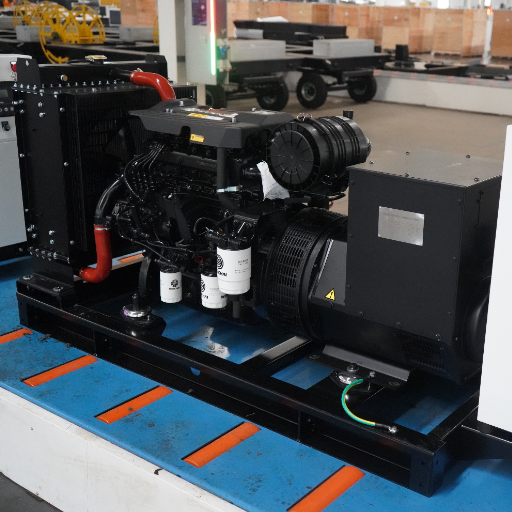
The running load is only half the picture. The other half is the single worst moment, when the biggest load starts while everything else is already running.
The Largest Motor Starting
A starting motor draws several times its running current for a few seconds. The starting method decides how many times.
| Starting method | Starting current |
|---|---|
| Direct-on-line (DOL) | 6–7× full-load amps |
| Star-delta | 2.5–3× full-load amps |
| Soft starter | 3–4× full-load amps |
| VFD | 1.1–1.5× full-load amps |
The starting demand in kVA is found with the same three-phase formula:
Starting kVA = √3 × voltage × starting amps ÷ 1000
The generator must clear this surge while carrying the running load, without the voltage dipping enough to drop contactors. The Cummins application manual explains this motor-starting demand in detail, and it is the same physics your schedule is built to capture.
Load Sequencing and Step Loading
The schedule also tells you the order in which loads come on, and that order changes the size. If a transfer switch starts every load at once, you add every starting kVA together. If loads are staggered so the biggest motor starts first and the rest follow, you only ever carry one surge at a time.
Write the sequence into the schedule. It is often the difference between a generator that fits the budget and one that does not.
Hana, a commissioning engineer in Doha, was reviewing a schedule for an office tower when she noticed the chiller and the passenger elevator both restored automatically after a utility outage. The nameplate sum never showed the spike. Her schedule did. Staggering the two starts by ten seconds lets the same generator carry both, where a simultaneous start would have forced the next frame size up.
Turn the Schedule Into a Generator Size
The final step is translating the schedule into a kVA number you can order and adding only the margin you actually need.
Safety and Growth Margin
Add a margin for measurement error and future expansion, but add it deliberately. A margin of 10 to 25 percent is common, with commercial buildings usually on the higher end. Apply it once, to the final total, not to every load.
A margin is not a substitute for a good schedule. It is a cushion on top of an accurate number, not a correction for a guess.
Derating and the Step-Load Check
Two more checks before you finalize. First, derate for site conditions: a generator loses roughly 1 percent for every 100 meters above 1,000 meters of altitude, and about 2 percent for every 5 °C above 40 °C. Second, check the largest single-step load, because the alternator must accept it without an excessive voltage dip.
If your schedule is heavy with UPS, LED, or VFD loads above about 50 percent of the total, the alternator may need oversizing for harmonics. Our how to choose a diesel generator guide covers how those load types shift the machine selection once the schedule is done.
Kwame, a plant manager in Accra, inherited a schedule that had been copied from a neighboring site and had never been checked against the actual workshop. He walked the floor with the schedule in hand and found a welder bay that was missing entirely. Adding that one intermittent load moved the running kVA up a full frame size, and the generator he would have ordered from the old schedule would have tripped on the first heavy fabrication day.
How to Make a Generator Load Schedule: The Checklist
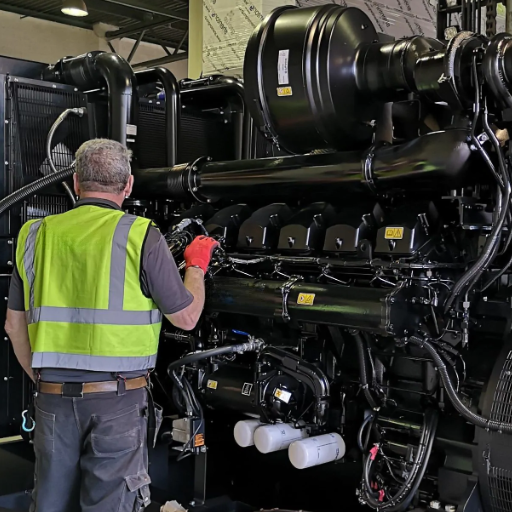
Work through these seven steps in order, and the schedule builds itself.
- List every load. Walk the site; do not copy a template from another building.
- Record kW, power factor, phase, and voltage for each load.
- Classify each load as continuous, intermittent, or standby.
- Convert each kW to kVA by dividing by the power factor.
- Apply the diversity factor per load or group, and do not double-count it.
- Find the peak demand by adding the largest motor’s starting surge to the running load.
- Write the start sequence so the biggest motor starts first and the rest stagger behind it.
The schedule then flows forward into the rest of the project. The load data becomes the load clause of how to write a diesel generator specification, and it tells the standby power system how hard it will actually work.
Frequently Asked Questions
What is a generator load schedule?
A generator load schedule is a table of every electrical load the generator must support, with each load’s power, power factor, starting method, and diversity factor used to calculate the peak demand that sizes the generator.
How do I calculate the load for a generator?
List every load, convert each kilowatt to kVA by dividing by its power factor, apply a diversity factor, then add the largest motor’s starting surge to find the peak demand.
What is the difference between connected load and running load?
Connected load is the sum of every nameplate as if everything ran at full load at once. Running load is what actually runs after diversity factors are applied, because not all equipment operates simultaneously.
What is the difference between the diversity factor and the demand factor?
A diversity factor applies to a single load or group and reflects whether it runs concurrently with the others. A demand factor applies to the whole schedule and reflects that the maximum demand is less than the total connected load.
How do I convert kW to kVA?
Divide the kilowatts by the power factor. A 15 kW motor at 0.85 power factor draws about 17.6 kVA because a generator supplies apparent power, not just real power.
How much safety margin should a generator have?
A margin of 10 to 25 percent is typical, applied once to the final total for measurement error and future growth. It is a cushion on an accurate schedule, not a correction for a guess.
Conclusion
Making a generator load schedule is not about filling a spreadsheet. It is about producing one honest number, the peak demand, that everything downstream can trust.
Here is what to remember:
- List every load and classify it as continuous, intermittent, or standby.
- Convert kW to kVA by dividing by the power factor.
- Apply diversity once, per load or group, and do not double-count it.
- Find the peak by adding the largest motor’s starting surge to the running load.
- Write the start sequence, then add only the margin you actually need.
Shandong Huali Electromechanical Co., Ltd. builds generator sets from 8 kVA to 4,000 kVA, and our engineers prepare the load schedule with you before we size anything. If you are building a schedule and want a second set of eyes on the diversity factors, the peak, and the final size, we will review it, catch the missing loads or double-counted, and recommend the smallest generator that reliably carries the real peak.
