
Generator short circuit protection detects fault current and disconnects the set before the alternator’s damage curve is reached. It uses circuit breakers to open the circuit and protective relays to sense the fault, coordinated so the trip happens in the right time window. Diesel generator short circuit protection follows the same logic, applied to the alternator’s specific fault behavior.
Most people believe the generator’s main breaker protects the machine. It does not. The main breaker protects the cabling between the generator and the load. What protects the alternator is a protection scheme with the right relay functions and settings, coordinated below the generator’s decrement curve. Machines get destroyed every year because of that one misunderstanding, and the sets weren’t broken. Their protection was.
Hassan, the facilities manager at a cold-storage warehouse in Dubai, learned the lesson during a 48-hour outage. A forklift chewed through a feeder cable. The fault arced for seconds, and by the time the breaker operated, the alternator winding was burned black. The breaker was sized for the cable, not the machine, and nothing on the panel was set to protect the alternator. A protection review and two relays later, the same short circuit now clears in a few hundred milliseconds.
This guide covers how a generator behaves when shorted, which breakers and relays you need, how to set and coordinate them, and how to read a short-circuit rating off a datasheet.
Key Takeaways
- A bolted short circuit delivers 6 to 12 times rated current for the first cycles, then decays; protection must clear the fault before the alternator’s damage curve is reached.
- The main breaker protects the cabling, not the alternator. Protective relays with correct settings protect the machine.
- Alternators are rated to sustain about 3 times rated current for 10 seconds, which sets the clearing window for downstream breakers.
- A breaker set above the available fault current can never trip. One documented case set instantaneous pickup at 12 times rated while the set delivered only 8 times, and the generator was destroyed.
- Stator ground faults are the most common internal generator fault, and they need a dedicated ground protection scheme, not just overcurrent.
What Is Generator Short Circuit Protection?
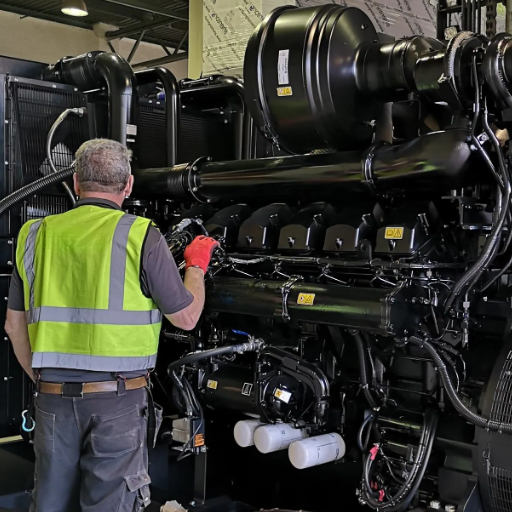
Generator short-circuit protection is the combination of breakers, relays, and settings that sense an abnormal current path and disconnect the generator from it before the windings overheat, the arc flashes, or the shaft takes mechanical damage. It has two jobs: detect the fault fast enough and clear it before the alternator’s thermal limit is exceeded.
A short circuit bypasses the load, so current flows almost without opposition. The machine’s internal reactance is all that limits it. That’s why fault current runs at many times the generator’s rating, and why a slow protection scheme is more dangerous than no scheme at all.
Why protection matters
The stakes go beyond a burned winding. A 10,000 A fault can produce an arc flash at temperatures around 20,000 °C, enough to vaporize copper and injure anyone nearby. The same current slams the busbar with electromagnetic forces that can bend or snap rigid conductors. Protection that clears the fault in a few hundred milliseconds contains the damage to the fault point. Protection that clears slowly lets the damage spread through the whole machine. A fault that reaches a panel, a switchboard, or the machine room turns an electrical event into a fire event, which is why generator room fire safety requirements go hand in hand with the protection scheme.
The correction: breakers protect cabling, not the alternator
This distinction decides how you design the scheme. A circuit breaker is sized for the conductor it feeds. Its job is to protect the wire from overload and fault current and to disconnect the source. The alternator is the source, and it feeds current into the fault until something opens. No breaker “protects” the machine that is driving it.
What protects the alternator is coordination: relay settings that sit below the alternator’s damage curve, so the trip happens while the machine can still survive the fault. That is the difference between a panel that saves the cable and a scheme that saves the generator. The earthing system this protection operates in is covered later in this guide.
How a Generator Behaves Under Short Circuit
A generator does not deliver a single steady fault current. It delivers three overlapping phases, each with its own magnitude and duration. Understanding them is what makes breaker and relay selection sensible.
The three fault-current phases
| Phase | Current multiple | Typical duration | What limits it |
|---|---|---|---|
| Subtransient | 6 to 12x rated | First 10 to 20 ms | Subtransient reactance Xd, leakage and damper action |
| Transient | 1.5 to 2x rated | 100 to 500 ms | Transient reactance Xd’, field time constants |
| Steady-state | 1 to 2x rated | Until cleared | Synchronous reactance Xd and excitation control |
The first instant is the most violent. The subtransient current is the 6 to 12 times figure you see on spec sheets, and it collapses within milliseconds as the damper circuits decay. The transient phase holds a few hundred milliseconds at 1.5 to 2 times rated, and the steady-state phase settles at 1 to 2 times, sustained by whatever the excitation system can maintain.
On a self-excited alternator without an excitation boost, the steady-state figure can fall well below 1, sometimes to about 0.5 times rated, because the fault drags the output voltage down and the machine needs output voltage to feed its own excitation. That decay matters, and we come back to it in the PMG section.
Reactance and the per-unit math in plain terms
The reactances in the table above are how manufacturers describe a machine’s fault behavior. A typical genset alternator of a few hundred kVA carries a subtransient reactance Xd” of about 0.09 to 0.17 per unit, a transient reactance Xd’ of about 0.13 to 0.20, and a synchronous reactance Xd of about 1.7 to 3.3 per unit.
The math is a division. A machine with Xd” of 0.10 can deliver roughly 1 over 0.10, or 10 times rated current at the first instant. Take a 600 kVA set with a full-load current of about 850 A and Xd” of 0.09. Its prospective fault current is about 10,000 A RMS at the terminals, with an asymmetric peak that can approach 20,000 A in the worst phase angle. That 20,000 A figure is what the breaker must be able to close into and clear, not the 850 A the set carries in normal service.
Sustained short circuit capability
Alternators are rated to sustain about 3 times the rated current for 10 seconds. That figure, set in IEC 60034-1 and NEMA MG1, is the machine’s endurance window, and it defines the clearing budget for the whole generator short circuit protection scheme. Every breaker and relay downstream must clear the fault within that window, ideally much faster. If a breaker takes 20 seconds to clear, the machine’s 10-second limit is already gone and the winding is cooking.
Generator Short Circuit Protection Devices: Breakers and Relays
Two device families do the work. Breakers interrupt the current; relays decide when to trip. A modern panel blends both, and the settings on the breaker trip unit are often where the coordination actually lives.
Generator breakers
The breaker in a genset output circuit is a low-voltage molded-case or air breaker sized against the prospective short circuit current (PSSC). The standard family is IEEE C37.13 for low-voltage power breakers, with IEEE C37.013 and IEC 62271-37-013 covering purpose-built generator breakers for the large sets that need special switching duty.
The number that matters most is breaking capacity. The breaker has to be able to open at the maximum fault current the system can deliver at its terminals. A single 630 A genset may be satisfied with a modest breaking rating, but the same breaker in a paralleled installation must interrupt the combined fault current of every set and every utility source feeding the fault. Buy the breaker for the short circuit level, not the load current, and this is exactly where generator circuit breaker sizing goes wrong when sets are specified from a running-load budget.
Relays: what each ANSI function does
The generator protection relay types used on a diesel genset are described by ANSI/IEEE C37.2 device numbers. The functions a set should carry look like this:
| Device number | Function | What it protects against |
|---|---|---|
| 51 | Time overcurrent | Overload and phase faults, time-delayed |
| 50 | Instantaneous overcurrent | High-speed phase fault clearing |
| 50G / 51G | Ground overcurrent | Stator ground faults |
| 87G / 87GN | Differential (phase / neutral) | Internal winding and neutral faults |
| 46 | Negative sequence | Unbalanced loads and phase loss |
| 40 | Loss of excitation | Field failure and generator motoring |
| 59G / 64G | Ground overvoltage / neutral overvoltage | High-resistance grounded systems |
| 27 / 59 | Under / overvoltage | Voltage excursions on the bus |
On a small standby set, the trip unit inside the breaker plus a ground-fault function covers most of the risk. As sets grow, dedicated relays take over. A 1,000 kVA-plus prime-power or data-center set typically carries a differential relay for the stator, negative-sequence protection for unbalance, and loss-of-excitation protection as standard.
In plain terms, a complete scheme covers five functions:
- Overload and fast fault clearing (51 and 50)
- Ground fault protection (50G/51G and 87GN)
- Winding differential protection (87G)
- Phase unbalance protection (46)
- Loss of excitation protection (40)
Diesel Generator Short Circuit Protection: What to Spec by Set Size
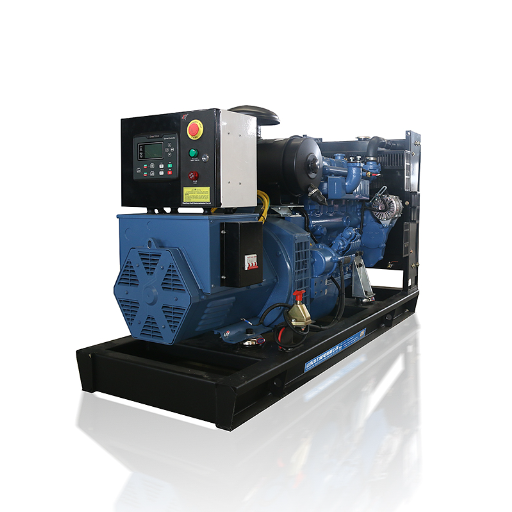
A practical menu by machine size:
- Up to about 250 kVA, standby duty: breaker with adjustable long-time, short-time, and instantaneous functions, plus a ground-fault trip.
- 250 to 1,000 kVA, prime or critical standby: add a phase-unbalance (46) function, loss-of-excitation (40), and overvoltage (59) protection.
- Above 1,000 kVA, or hospital and data-center duty: add differential (87G) and restricted earth fault (87GN) protection, and a full relay suite with fault and event logging.
Every Shandong Huali set is tested under load before delivery, and the protection functions are verified against the application during that test, not assumed from a parts list. For the sensing and control side of the machine, our generator remote monitoring and smart control panels guide shows how fault records reach you after the event.
Generator Ground Fault Protection and Grounding
Stator ground faults, insulation breakdowns from a winding to the frame, are the most common internal generator fault. They deserve a scheme of their own, and this is where grounding method and protection design must be chosen together.
Why stator ground faults are the most common internal fault
Winding insulation fails from heat, moisture, vibration, and age, and when it lets go, the phase conductor connects to the stator core. How much current flows depends entirely on the grounding of the machine’s neutral. On a solidly grounded system the ground fault current can be large and is easy to detect. On a high-resistance grounded system, the ground current is deliberately limited to a few amperes, which protects the core from iron damage but makes ordinary overcurrent relays completely blind. You can’t detect a 5 A ground fault with a relay set to trip at 800 A.
Grounding schemes and relay choices
The grounding scheme decides the relay. A high-resistance grounded generator detects the fault by the neutral voltage rise, using 59G or 64G. It gives an alarm so an operator can clear the fault without taking the set offline. A solidly grounded machine uses ground overcurrent (50G/51G) and, for larger sets, restricted earth fault protection (87GN), which compares the neutral current against the phase currents to catch internal winding faults selectively.
Because the grounding method and the protection function are inseparable, a generator protection design starts with the earthing decision. Work through the options in our generator grounding requirements guide before you finalize the relay scheme, and pair both with the generator safety tips that cover live-work and arc-flash boundaries on the same panel.
Breaker and Relay Coordination
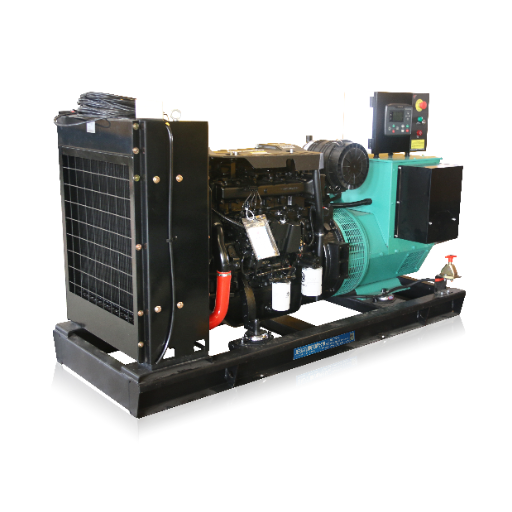
Coordination is where protection schemes live or die. A breaker that trips, but trips too late, hasn’t done its job. The setting study is what turns a box of relays into a protection scheme.
The decrement curve and the damage curve
Two curves define the problem. The alternator’s damage curve plots how much current it can carry for how long before the winding reaches its temperature limit, which is the 3 times for 10 seconds benchmark. The breaker’s trip curve plots how long it takes to clear at each current level. The trip curve has to sit below the damage curve at every point, so the breaker always clears before the machine cooks.
Settings: long-time pickup, short-time, and instantaneous
Three generator overcurrent protection settings dominate the coordination, and each has a rule of thumb:
- Long-time pickup protects against overload and must be set at no more than about 115 percent of the generator’s continuous rating for a continuous-rated machine, the limit set out in 46 CFR 111.12-11. Running a diesel genset past that rating for long periods damages the windings regardless of what tripped.
- Short-time pickup and delay handle the current between overload and full fault, typically set around 2 to 3 times rated current with a deliberate delay to ride through motor-starting inrush, per the guidance in the Schneider Electrical Installation Guide. This is where motor starting and fault protection trade against each other, and it is the reason the motor starting kVA of your largest motor must be in the coordination study.
- Instantaneous pickup is the fastest stage, and it must be set below the available fault current. A setting above what the set can actually deliver means the fast stage never operates, and the machine relies on the slow stages it may not survive.
The NHP generator protection white paper documents the classic failure: a switchboard manufacturer set a breaker’s instantaneous pickup at 12 times rated current, while the generator could only deliver about 8 times into the fault. The fast stage could never trip because the current never reached its setting, and a 20-second long-time delay let the machine cook far past its 10-second capability. The generator was destroyed, not by the fault, but by protection settings that could not act.
Parallel operation and fault-current addition
Paralleled generators add fault current, and the breaker ratings must grow with the number of sets. One set alone may be protected by a 630 A breaker with a modest interrupting rating. Parallel ten sets and the combined prospective fault current can pass 9,000 A, which forces a breaker in the 20 kA interrupting class.
Yuki, the electrical lead at a data center in Singapore, found this the expensive way. The facility had grown from two gensets to six over three years, and the feeders had been extended each time. When a contractor finally ran a fault study before an equipment refresh, the main breaker’s interrupting rating was below the prospective fault current of the paralleled group. The breaker had never operated because the group had never faulted. When it did, it could not have cleared. A breaker replacement and a revised coordination study fixed it before the fault found them.
If you run multiple sets or plan to, ask for a fault study and a coordination study as part of the supply package, not as an afterthought. Our diesel generator troubleshooting guide covers the trip side of the same system.
How to Read the Short Circuit Rating on a Datasheet
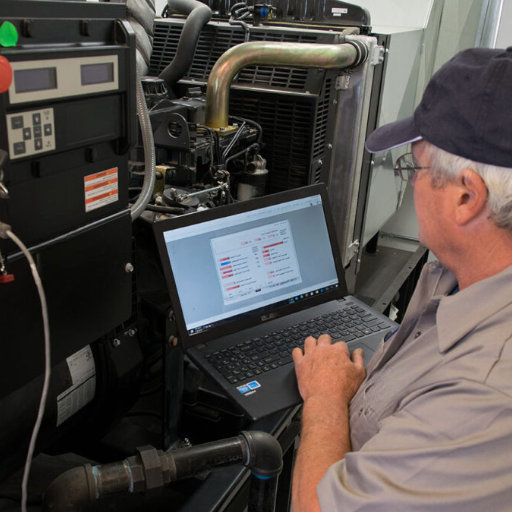
A genset datasheet hides the protection-relevant numbers in plain sight. Knowing which figures matter makes you a better specifier and a harder person for a supplier to shortchange.
Sustained current, reactances, and what to ask a supplier
Look for the sustained generator short circuit current figure, usually stated as a multiple of rated current for a number of seconds, and the reactance values Xd”, Xd’, and Xd. If the sheet omits them, ask why, because a manufacturer that doesn’t publish fault data can’t have verified the coordination.
Ask these four questions of any supplier:
- What is the sustained short circuit current, and for how many seconds?
- What are Xd, Xd’, and Xd in per unit?
- What breaking capacity does the supplied breaker carry, and against what prospective fault current?
- Is a coordination study included, or are the breaker settings left to the installer?
The habit of reading a sheet field by field is exactly what our how to read a generator specification sheet guide teaches, and the alternator figures there connect to the full generator alternator specifications deep-dive.
PMG vs self-excited sustained fault current
The excitation design decides whether the steady-state fault current holds up long enough for the breakers to clear. A permanent magnet generator (PMG) alternator feeds its excitation from a pilot generator independent of the output, so it maintains excitation and keeps delivering fault current through the full clearing sequence. A self-excited alternator without an excitation boost can see its steady-state fault current fall to about half of rated as the voltage collapses, sometimes low enough that the downstream breaker never sees a current high enough to trip it.
For applications where a delayed or low-current fault must still be cleared, data centers and hospitals chief among them, a PMG alternator is the safer choice because it guarantees the fault current the protection scheme depends on. If you are specifying a new set, confirm the excitation type against the coordination study, not just against the price list.
Frequently Asked Questions
Does the main breaker protect the alternator from a short circuit?
No. The main breaker protects the cabling between the generator and the load. The alternator feeds fault current until something interrupts it, and what protects the machine is a relay scheme coordinated below the alternator’s damage curve. That coordination is what generator short-circuit protection really is.
What is a normal generator short-circuit current?
A bolted short circuit at the terminals delivers 6 to 12 times the rated current for the first 10 to 20 milliseconds, about 1.5 to 2 times during the transient phase, and 1 to 2 times sustained, depending on excitation. On a self-excited machine without a boost, the sustained value can fall to about half of the rated.
Why does a generator trip on short circuit?
A short circuit draws current many times above the rating, so the overcurrent protection operates. If the set trips on apparent short circuits in normal service, the trip setting is too low, the coordination is wrong, or the “short circuit” is actually a motor-starting inrush that the short-time stage should have ridden through.
What protection does a diesel generator need?
A minimum scheme is a breaker with adjustable long-time, short-time, and instantaneous settings plus ground-fault protection. Larger or critical sets add phase-unbalance (46), loss-of-excitation (40), differential (87G), and restricted earth fault (87GN) protection.
How do I size a generator circuit breaker?
Size the breaker for the prospective short-circuit current at its terminals, not for the generator’s running load. The breaking capacity must exceed the maximum fault current the system can deliver, including the combined contribution of paralleled sets.
What is the difference between overload and short circuit?
An overload is a current above the rating within a working circuit, drawn by too much load, and it persists until the load is removed. A short circuit is an unintended low-impedance path that bypasses the load, and it runs at many times the rated current until a breaker interrupts it. Overload protection manages the first; fault protection manages the second.
Conclusion
Generator short-circuit protection is a system: breakers to interrupt, relays to sense, and settings coordinated below the alternator’s damage curve. The first thing to internalize is the correction, your main breaker protects the cabling, not the machine. The second is the budget, an alternator sustains about 3 times the rated current for 10 seconds, and every clearing stage must fit inside that window. The third is the settings, long-time pickup at 115 percent, short-time around 2 to 3 times, and instantaneous never above the available fault current.
Those three rules, plus a ground-fault scheme matched to your earthing method, cover the vast majority of genset installations. Paralleled sets add fault current, so breaker ratings and the coordination study must grow with every set you add.
Shandong Huali designs, builds, and load-tests diesel generator sets from 8 kVA to 4,000 kVA, and we verify breaker, relay, and protection response on the test floor before any unit ships. Talk to our engineers about your short circuit levels and protection requirements, and get a scheme that clears faults before they clear your budget.
