
A diesel generator trips when a motor starts for one of three reasons. The motor’s starting current genuinely exceeds what the set can supply, which is a real overload. A breaker or overload relay is set within the motor’s starting-current range, causing nuisance trips. Or a protection relay misreads the start as a fault.
You don’t need to guess which one you have. You need to find out which device operated, because that single clue points to the cause and the fix.
Tomás, the maintenance manager at a dairy in Querétaro, assumed the worst. Every morning at 6:00, when the 45 kW CIP pump kicked in, the plant’s 200 A main breaker popped about two seconds later. He had one foot on the phone to order a new generator before anyone measured anything.
The set wasn’t dying. It ran at full rated load for twelve hours a day without a single trip. The pump start was the only moment the system ever asked the breaker for more than a running current, and that is exactly when it opened. This guide covers how to determine which protection operated, how to distinguish among the three causes, how to measure the next start properly, and how to fix it without buying a machine you do not need.
It is one part of a motor-starting cluster. If the set stays running but the lights dim and contactors drop, that is a voltage dip, and our guide to generator voltage drop when a motor starts covers it. If you want the protection design behind breakers and relays, see generator short circuit protection. Shandong Huali Electromechanical builds diesel generator sets from 8 kVA to 4,000 kVA and load-tests every unit under stepped loads, so we see trip events like this on the test floor before they ever reach a customer’s site.
Key Takeaways
- A generator trip on motor start is one of three events: a real overload, a nuisance trip, or a protection relay that misreads the start as a fault.
- Read which device operated first. An instant main-breaker trip, a delayed overload trip, a controller fault code, and a differential trip each point to different fixes.
- A plain main circuit breaker sized to running load will trip on a motor start the alternator is built to carry. Alternators sustain roughly 3x rated current for 10 seconds.
- On the motor’s feeder, code allows raising an instantaneous breaker toward 800-1,300% of full-load current, and motor-circuit protectors toward 1,700%, so a motor can start.
- Raising a setting to coordinate a start is legitimate. Raising it to hide an overload or faulted motor is not.
First, Read Which Protection Actually Operated
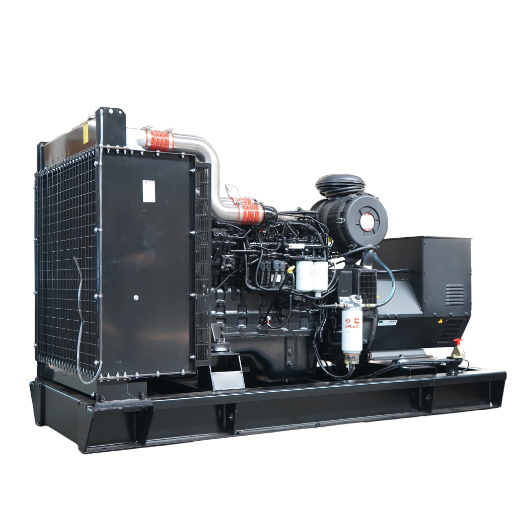
When a motor start trips something, resist the urge to guess. Walk to the panel and answer one question: Which device opened? On a generator installation, six different devices can trip during a start, and each one points to a different cause.
| Device that trips | When it operates | What it usually means |
|---|---|---|
| Main genset breaker, instant trip | Opens the moment the motor energizes | Magnetic pickup set inside the starting current, or a real short circuit |
| Main genset breaker, delayed trip | Holds 1-10 seconds, then opens | Inverse-time overload; set or breaker undersized for the start |
| Controller overload or overcurrent alarm | Set stops with a fault code | Starting demand exceeds the set’s rating, a real overload |
| Differential relay (87G) on larger sets | Trip during start, no external fault | CT mismatch reads the inrush as an internal fault |
| Undervoltage or underfrequency device | Downstream loads drop, set keeps running | The dip crossed a device setpoint, not a generator trip |
| Motor’s feeder breaker, overload, or fuses | Motor circuit opens, generator stays on | Motor protection mis-set, or a faulted motor |
Read the evidence, not just the reset button. The controller holds a fault history with the code and the timestamp. Check whether the generator itself shut down or only the breaker opened.
Note how long after the click the trip happened, because the instant and delayed point in opposite directions. That one minute of reading saves hours of swapping parts.
Why a Generator Trips When a Motor Starts: The Three Causes
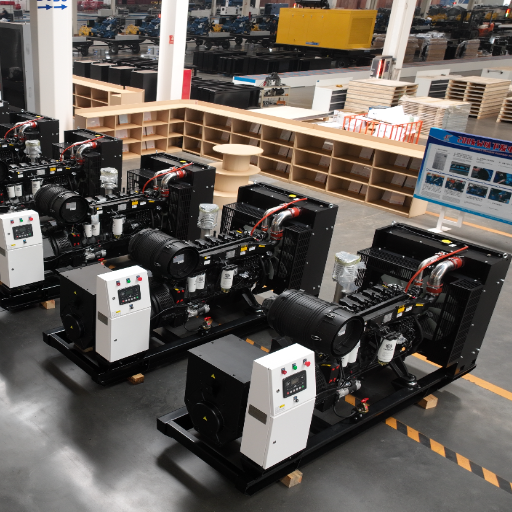
Once you know which device operated, name the class. Every motor-start trip on a generator is one of three things. They can overlap in the field, but the fix for each is different, so getting the label right matters more than anything else in this article.
Real Overload: The Set Genuinely Can’t Supply the Start
A motor pulls 5-8 times its full-load current to accelerate (see load types and starting characteristics), and it wants that as apparent power, kVA, not just real power. The generator kVA vs kW distinction is exactly why a set sized on running watts alone fails here. If the motor plus everything else on the bus exceeds what the alternator can deliver at the moment of start, voltage sags, the motor crawls instead of accelerating, and the overload protection trips after a few seconds of locked-rotor current.
The signature of a diesel generator overload trip is timing. A real overload usually trips a second or more into the start, not at the instant of energizing, and it often shows up as a controller overload or overcurrent code. The math for how much starting kVA a motor needs lives in our guide on generator motor starting kVA. As a rough benchmark, a direct-on-line start needs a set of about 2.5-3 times the motor’s kVA, while a soft-started motor needs roughly 1-1.25 times.
Nuisance Trip: Protection Set Inside the Starting Band
The motor’s locked-rotor current is legitimate and brief, not a fault. Protection devices do not know that. A main breaker sized to the running load, or a motor feeder breaker with its magnetic pickup or dial set tight, sits inside the starting-current band and opens every time the motor starts.
This is the case Tomás had. His alternator was built to sustain about 3 times the rated current for 10 seconds, which is standard alternator short-time overload capability, but a plain thermal-magnetic breaker has no way to use that headroom. The breaker was the weak link, not the set. “It was never the generator,” Tomás said once the breaker curve was coordinated.
Fixing it is a coordination job: the trip curve has to sit above the starting envelope and below the equipment’s damage curve, the same principle our protection guide explains for real faults.
Protection Misoperation: The Relay Reads a Start as a Fault
On larger sets and paralleled plants, the generator has differential protection, usually called 87G, which compares current entering the generator against current leaving it. If the two do not match, the relay trips, because an internal fault would look exactly like that. A motor start can create a false mismatch.
Current transformers saturate or drift under the surge, or the generator CTs and the bus CTs carry different ratios or burdens. In one documented case, three 16.25 MVA gas-turbine generators on an offshore platform tripped on differential whenever a newly installed 4,100 kW pump started direct-on-line, and the fault was not in the pump or the generators. As the Eng-Tips discussion of that failure records, the CTs and the relay settings were never updated for the new motor’s locked-rotor current.
This is the case where a bigger set doesn’t help and new equipment looks broken when it isn’t. The tell is that the trip happens on start, clears, and restarts fine, with no physical damage. The fix is electrical: match CT ratios and burdens, check for saturation, and update relay settings whenever a motor is added.
Measure the Next Start Instead of Guessing
Before you change anything, capture the next start. You need four numbers and one fact. This is the same protocol our engineers use when a customer sends us a trip log.
- Clamp-meter inrush on the motor feeder, compared against the nameplate locked-rotor current.
- Voltage dip at the generator terminals during the start.
- Frequency nadir: the set should not sit below about 57 Hz for long.
- Time from energizing to trip, in seconds.
- Which device operated from the first section.
Then make the call. If the measured inrush sits inside the breaker’s trip curve and the alternator still has headroom, that is a nuisance trip. If the start pulls the set to its limit and the overload code follows, that is real. If the differential trips on a healthy start, that is a misoperation.
A worked example ties it together. A 55 kW pump starts direct-on-line on a 150 kVA set. The motor nameplate says 95 A full load, so locked rotor is roughly 570 A.
The clamp meter records 430 A at energizing because the voltage sag limits the draw, and the bus dips about 18% while the pump runs up. The output MCCB, a 200 A thermal-magnetic unit sized to running load, opens after about six seconds.
The alternator is rated at 216 A and sustains 648 A for 10 seconds, so it was not overloaded. The breaker tripped inside the alternator’s capability window. That is a nuisance trip, and it is fixed with coordination or a soft starter, not a bigger set.
To run this math yourself, you’ll need X”d and the alternator’s short-time capability off the datasheet. Our guide to how to read a generator specification sheet shows where every value sits.
How to Fix a Generator That Trips When a Motor Starts
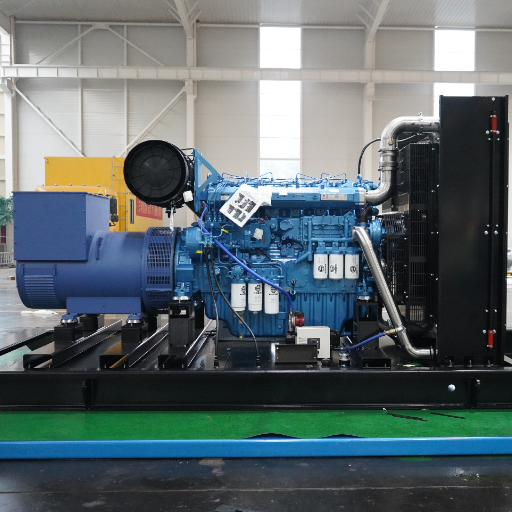
Work down this list in order. The fixes go from cheapest to most structural, and most plants stop well before the last one.
- Sequence and stagger starts. Start the largest motor first and let the set recover before the next one. A 20-second delay between starts removes combined inrush overloads in many plants.
- Cut the inrush at the motor. A soft starter or VFD drops starting current from 6-8 times full load to 2-3 times, and a VFD takes it lower still. This is usually the highest-impact fix because it treats real overloads and nuisance trips at the same time. Star-delta is the budget version and helps less with high-torque loads.
- Fix the nuisance trip inside code limits. On the motor feeder, the breaker setting may be raised so the start can ride through: NEC 430.52 (2023) allows an instantaneous-trip breaker to go to 800-1,300% of full-load current, and a motor-circuit protector to 1,700%, when starting requires it. CSA C22.1 permits 1,300% of full-load current or 2.15 times locked-rotor current. Match the overload dial to the motor’s nameplate full-load current, and pick a trip class that suits the real start time, because a Class 10 device can read a 15-second acceleration as an overload, as this MPCB nuisance-tripping guide explains.
- Coordinate the generator breaker with the alternator. The generator’s main breaker must be set against the alternator’s short-time capability, not sized tight to the running load. If it opens on a start the alternator can carry, the breaker is the problem, and it needs a trip curve coordinated per the protection guide linked at the top.
- Put the AVR in automatic mode. If the set runs with the voltage regulator in manual mode, a motor start collapses the voltage far deeper, which trips downstream devices and can stall the motor. Automatic voltage regulation is the normal duty for motor-starting loads, as this generator motor-starting and AVR guide explains.
- Right-size only when the overload is real. If the measurement shows the start genuinely exceeds the set, don’t raise settings to hide it. Fix the starting demand or size the set properly, so protection never has to work hard. Verify the real limit on a load-bank test before you buy anything bigger. Adnan ran a district cooling plant and was two signatures from ordering a 500 kVA set because a 110 kW chilled-water pump tripped the main breaker on every start. The measurement told the real story: the alternator was fine, and the breaker’s pickup sat below the pump’s locked-rotor current. “The set was healthy all along,” Adnan said. A soft starter plus a breaker coordinated with the alternator cost a fraction of the upgrade, and the pump has started cleanly ever since.
When the Trip Is at the Motor, Not the Generator
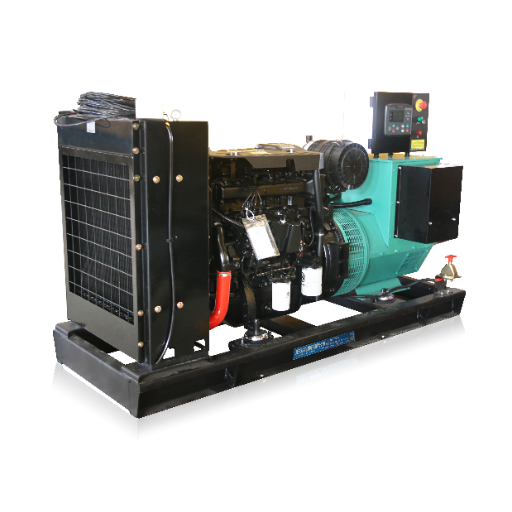
Sometimes the generator never trips at all. The motor’s own feeder breaker, overload relay, or fuses open, and because the whole system goes dark at that moment, the generator takes the blame. Rule the motor in or out before you touch the set.
- Check for a faulted motor first. Megger the winding and look for a ground fault that only shows up under starting torque.
- Make sure the feeder overload dial equals the motor’s nameplate full-load current, not a guess.
- Match the trip class to the real acceleration time. High-inertia loads need a slower class.
- Confirm the motor sees close to rated voltage, because a weak supply pushes current up and can trip a correct overload.
If the generator wasn’t the device that opened, the generator wasn’t the problem. Fix the feeder, and the next start will hold.
Frequently Asked Questions
Why does my generator trip when a motor starts?
The motor’s locked-rotor current is either bigger than the set can supply, bigger than the breaker’s trip setting, or big enough to fool a differential relay into seeing a fault. Read which device operated to pick the right one of those three.
Why does the generator trip instantly when a motor starts?
An instant trip at the click of the start means a magnetic or instantaneous element is operated, which usually means its pickup is set inside the motor’s starting-current band. Raise it within code limits, or add a soft starter so the inrush never gets that high.
Why does the generator trip a few seconds after a motor starts?
A delayed trip is an inverse-time overcurrent trip during motor starting. Either the set genuinely cannot carry the starting demand, or the device’s trip class is too fast for how long the motor takes to accelerate. Measure the start before choosing between those two.
Can I raise the breaker setting so the motor starts without tripping?
Within code limits, yes, and it is normal practice on motor feeders. An instantaneous-trip breaker may go to 800-1,300% of full-load current, and a motor-circuit protector to 1,700%, when the motor needs it. Raising a setting to hide a real overload is never the answer.
Soft starter or bigger generator for a set that trips on motor start?
Try the soft starter first. It cuts starting current from 6-8 times full load to 2-3 times, which fixes most trip causes for a fraction of the cost. Size up only when the measured start genuinely exceeds the set, not because the breaker is mis-set.
Why does a big generator trip on differential when a small motor starts?
Differential protection compares current in against current out. If the generator CTs and bus CTs have mismatched ratios or burdens, or a CT saturates during the inrush, the relay sees a false difference and trips. Check the CTs and update the relay settings for the new motor.
My motor’s breaker trips but the generator keeps running. What now?
The generator was not the problem. Look at the motor feeder: a faulted winding, an overload dial set below nameplate current, or a trip class too fast for the load. Rule out the motor with a megger test before you spend money on the set.
How big should a generator be to start a motor without tripping?
As a rough rule, IEEE 399 suggests a motor of about 10-15% of the set’s kVA for a simple islanded system, while well-configured sets with PMG excitation and fast AVR can start motors up to 30-40% of rating. The exact answer needs the motor’s starting kVA, and the full method is in our motor-starting-kVA guide.
The Bottom Line
A generator trip when a motor starts is never random, and it’s usually not the generator. Read which device operated.
Name the class: real overload, nuisance trip, or misoperation. Measure the next start. Then fix the cause.
Treat real overloads with a soft starter or a properly sized set. Fix nuisance trips with coordination within code limits. And never defeat protection to make a bad start fit. If the alternator is genuinely undersized, no setting change is safe.
At Shandong Huali Electromechanical, we build diesel generator sets from 8 kVA to 4,000 kVA and load-test every unit under stepped motor-type loads before delivery. If your set already trips when a motor starts, send our engineers the fault code and the motor nameplate. We’ll tell you which of the three causes you have and the cheapest fix before you spend money on a bigger set. Request a trip diagnosis today.
