
A generator loses roughly 1% of its output for every 100 m above 1,000 m and about 1% for every 10°C above 25°C, but that is only the engine’s half of the story. The real number comes from two curves, the engine’s and the alternator’s, and you size to whichever is worse.
Last year, a mining contractor in the Peruvian Andes read “500 kVA PRP” on a nameplate and ordered exactly that. He installed the set at 3,200 m, where the air is thin. On the first full-load day, the unit tripped on overload at 78% load. The set was never broken. It was derated, and nobody had told him the nameplate was a promise made at sea level.
You likely already understand that altitude and heat cost you power. That instinct is correct. What most guides skip is how to turn that instinct into a number and which number is the one that actually limits your set. This article gives you both, plus a worked example you can copy.
Key Takeaways
- A generator’s nameplate rating only holds at ISO 8528-1 standard conditions: 100 kPa, 25°C, and 30% relative humidity.
- The engine and the alternator derate on different curves, the engine on ~1% per 100 m above 1,000 m, the alternator on ~3% per 5°C above 40°C.
- You size to whichever component derates more, not to a simple addition of the two percentages.
- At high altitude the engine usually limits the set; at extreme heat the alternator can flip to become the limit.
- Always spec on your peak site temperature, not the 24-hour average.
What Generator Derating Actually Means
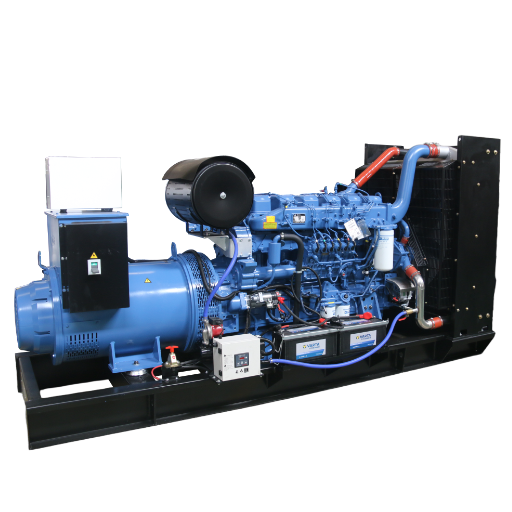
Generator derating is the reduction of a generator’s usable output below its nameplate rating, applied when site conditions, altitude, temperature, or humidity are worse than the standard conditions the nameplate assumes. A 500 kVA generator does not always deliver 500 kVA. It delivers 500 kVA only at the reference conditions printed in the small print of the datasheet.Those reference conditions are easy to miss, so if you want to know exactly where they hide, our guide on how to read a generator set specification walks through every field on the datasheet, including the ambient conditions the ratings depend on.
Every nameplate rating is a promise tied to a specific set of ambient conditions. Step outside those conditions, and the set’s real capacity shrinks. The question is never whether to derate, but how much, and which component of the set is doing the limiting.
That distinction matters because a generator set is two machines bolted together: a diesel engine (rated in kW) and an alternator (rated in kVA). Each one reacts to altitude and heat differently. If you only run the engine’s derating curve, you can still under-size the set, because the alternator has its own curve and temperature reference.
The ISO 8528 Baseline: What “No Derating” Assumes
The Three Standard Conditions
ISO 8528-1 defines the reference conditions on which every nameplate rating is based:
- Barometric pressure: 100 kPa (roughly sea level)
- Intake/ambient temperature: 25°C
- Relative humidity: 30%
Under these conditions, the air is dense enough to feed the engine’s combustion and cool the alternator, and no derating is applied. This is the baseline behind every ESP, PRP, LTP, and COP rating, a point covered in detail in our guide to ISO 8528 generator ratings.
Why Your Site Is Almost Never “Standard”
Few real sites sit at 100 kPa and 25°C. A mine at 2,500 m sees barometric pressure closer to 75 kPa. A data center in a Gulf city faces a midday ambient temperature of 47°C, not 25°C. Both conditions change the physical world the set operates in.
At altitude, the air is less dense, so each engine intake stroke pulls in fewer oxygen molecules. Less oxygen means less complete combustion and less power. At high temperatures, the same thing happens for a different reason: hot air is less dense than cold air, and the cooling system has to work against a warmer sink.
Derating Stacks on Top of the Rating Class
Here is the part most competitors never connect. The rating class (ESP, PRP, LTP, COP) tells you the duty the set can sustain. Derating tells you the capacity available at your site. The two stacks.
A 500 kVA PRP set derated 12% at altitude does not become a “500 kVA set that works a bit hard.” It becomes a ~440 kVA PRP set. If your site needs 500 kVA of prime power, the derated set is now 60 kVA short. Our ISO 8528 guide explains the rating classes; this article gives you the number to subtract.
Worked through our full rating-and-derating walk through and still unsure about your site? Send us your peak altitude and temperature and our engineers will confirm the correct set size for you.
Altitude Derating: The Engine Runs Out of Air
How Thinner Air Kills Power
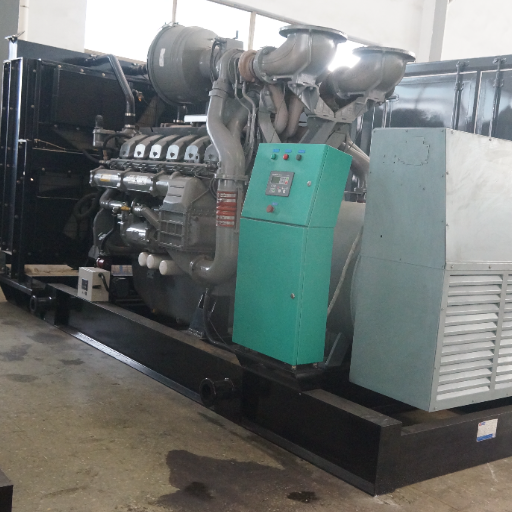
Altitude derating is fundamentally an engine problem. As elevation rises, barometric pressure falls, and each cylinder gets less oxygen per stroke. A naturally aspirated engine feels this immediately. A turbocharged engine fights back by spinning the turbo faster in thin air to maintain boost pressure, which is why turbo engines derate far less than naturally aspirated ones.
The Rule of Thumb (and the Real Table)
The widely used planning rule is ~1% derating per 100 m above 1,000 m for a turbocharged diesel, and roughly 1.5% per 100 m for a naturally aspirated engine (about 3% per 1,000 ft). Below 1,000 m, most manufacturers apply no derating at all.
| Altitude | Turbocharged (approx.) | Naturally aspirated (approx.) |
|---|---|---|
| 0 – 1,000 m | 0% | 0% |
| 1,500 m | ~5% | ~7.5% |
| 2,000 m | ~10% | ~15% |
| 2,500 m | ~12% | ~18% |
| 3,000 m | ~15% | ~22% |
These are planning figures, not gospel. Manufacturer curves vary. Cummins, for example, often starts derating above 915 m at ~3% per 300 m, while Perkins uses ~4% per 300 m above 1,000 m and Weichai roughly 1% per 100 m. Always pull the specific engine’s curve from its datasheet, our guide to reading a generator specification sheet shows exactly where that curve lives.
Turbocharged vs Naturally Aspirated Recovery
The single biggest lever on altitude derating is the engine’s aspiration. A turbocharged engine recovers a large share of the altitude loss, often cutting the naturally aspirated penalty roughly in half. A turbocharged and aftercooled (intercooled) engine performs even better because the intercooler restores air density before it reaches the cylinders.
For sites above 3,000 m, a standard turbo is usually not enough. Manufacturers specify high-altitude turbo kits, matched pistons, or dedicated high-altitude engine models. This is not a bolt-on afterthought, it is a factory configuration decision, which is why the site altitude has to be known at quote time, not discovered at commissioning.
Temperature Derating: Two Different Curves
The Engine’s Heat Curve
The engine derates on heat because hot intake air is less dense, reducing combustion efficiency. The common reference is ~1% per 10°C above 25°C, though some OEMs quote 2% per 11°C above 40°C. Either way, the engine’s heat derating is comparatively gentle.
The Alternator’s Heat Curve
The alternator derates faster and on a different reference. An alternator is rated against a 40°C cooling-air inlet temperature, not 25°C. Above 40°C, the winding insulation runs hotter, so the alternator must reduce output to keep the insulation within its temperature-rise limit. Stamford-AVK’s application guidance (AGN 012) gives roughly 3% per 5°C above 40°C:
| Cooling-air inlet | Derating factor |
|---|---|
| 40°C | 1.00 |
| 45°C | 0.97 |
| 50°C | 0.94 |
| 55°C | 0.91 |
| 60°C | 0.88 |
The alternator also derates slightly with altitude, about 0.4% per 100 m above 1,000 m, because thinner air cools the windings less effectively. Notice how much smaller this is than the engine’s altitude penalty. The alternator barely cares about altitude. The engine cares a lot.
Why the Alternator Derates Faster
The alternator’s faster heat derating comes down to insulation class and temperature rise. A Class H winding, for instance, is rated for a 125°C rise over a 40°C ambient. Push the ambient to 50°C and the total operating temperature climbs toward the insulation’s limit. Derating the kVA output reduces the winding temperature. This is the same insulation-class logic covered in our alternator specifications guide, the 40°C reference is a spec-sheet number, not an arbitrary choice.
The Worked Example: Sizing a Set for 2,500 m and 45°C
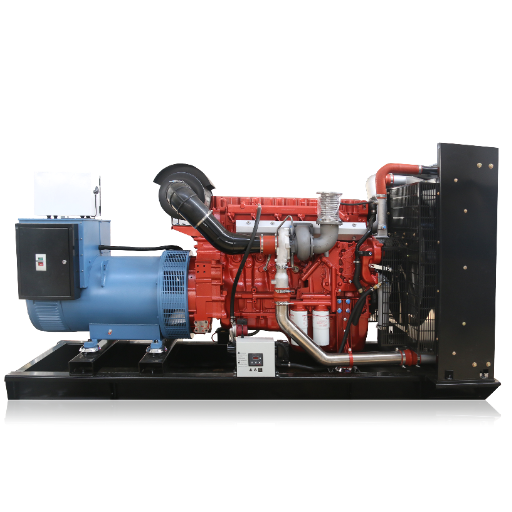
Here is the part the SERP keeps skipping. Let’s size a 500 kVA / 400 kW set for a site at 2,500 m altitude and 45°C peak ambient, running at 0.8 power factor.
Step-by-Step: Engine Curve, Alternator Curve, “More Severe Wins”
Engine (rated 400 kW):
- Altitude: 2,500 m is 1,500 m above the 1,000 m threshold. At ~1% per 100 m (turbocharged), that’s ~12% loss. 400 × 0.88 = 352 kW.
- Temperature: 45°C is 20°C above 25°C. At ~1% per 10°C, that’s ~2% more. 352 × 0.98 = ~345 kW.
- Engine available: ~345 kW.
Alternator (rated 500 kVA):
- Altitude: 0.4% per 100 m above 1,000 m = 1,500 m × 0.4% = ~6% loss. 500 × 0.94 = 470 kVA.
- Temperature: 45°C is 5°C above the 40°C reference. At ~3% per 5°C, that’s ~3% more. 470 × 0.97 = ~456 kVA.
- Alternator available: ~456 kVA.
The Full Nameplate vs the Real Available kVA
Now convert everything to a common unit. At 0.8 power factor, 345 kW of engine equals ~431 kVA. The alternator can supply 456 kVA. The engine is the limiting component, so the set behaves as a ~431 kVA set, not 500 kVA.
| Component | Parameter | Derating | Available |
|---|---|---|---|
| Engine | Altitude 2,500 m | ~12% | 400 × 0.88 = 352 kW |
| Engine | Temp 45°C | ~2% | 352 × 0.98 = ~345 kW |
| Alternator | Altitude 2,500 m | ~6% | 500 × 0.94 = 470 kVA |
| Alternator | Temp 45°C | ~3% | 470 × 0.97 = ~456 kVA |
| Set | More severe wins | Engine limits | ~431 kVA |
The buyer who ordered “500 kVA” without derating would have a set nearly 14% short on real capacity. At altitude, the engine is almost always the bottleneck because altitude hits combustion harder than it hits cooling.
When the Alternator Flips to Become the Limit
The roles reverse at extreme heat. Take the same set at sea level but at 55°C ambient. The engine loses only ~3% (30°C above 25°C), leaving ~388 kW. But the alternator, now 15°C above its 40°C reference, loses ~9%, dropping to ~455 kVA. Suddenly the alternator is the limiting component. This flip, engine at altitude, alternator in heat, is exactly why you need both curves, not just one.
What We Specify to Recover the Loss
None of this derating is inevitable. A manufacturer can recover most of it at the factory, which is why the site conditions must be known at quote time. For a high-altitude, hot site, we typically specify:
- A high-altitude turbo (and intercooler) to restore combustion air density
- An upsized radiator to handle the higher ambient sink
- A Class H alternator with margin, so the faster alternator heat derating doesn’t bind
- The correct fan and airflow configuration for thin-air cooling
The result is a set that holds its PRP rating at the actual site, instead of a nameplate number that only exists at sea level.
How to Request the Right Set
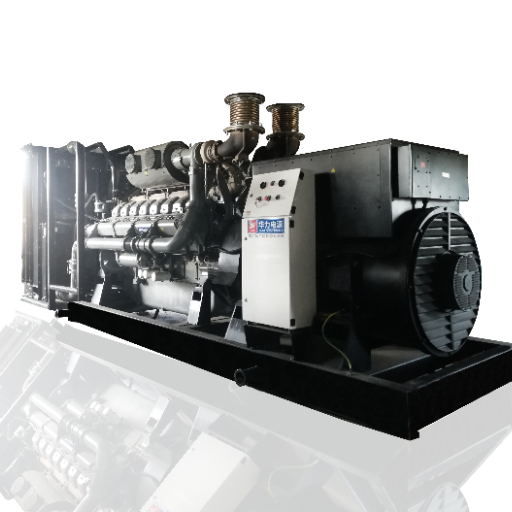
The Two Numbers You Must Send Us
Every accurate derating calculation starts with two inputs, and they are the two most often guessed wrong:
- Peak site altitude in meters, the elevation where the set actually runs, not the nearest city.
- Peak ambient temperature in °C, the hottest the site realistically reaches, not the annual average.
Send both, plus your required load in kVA and the duty (standby, prime, or continuous), and the derating becomes arithmetic instead of guesswork. If the set will sit in an enclosed room or container, also tell us the expected cooling-air inlet temperature, which runs hotter than the outdoor ambient. When you fold these site conditions into a formal procurement document, our guide to writing a generator set specification for tender shows how to state the altitude, peak temperature, and derated rating so suppliers quote against the real site, not a sea-level nameplate.
Why Peak, Not Average (the Midday Trap)
The most expensive mistake in high-temperature sizing is using the 24-hour average ambient. Consider a Gulf data center where the daily average is 32°C but the midday peak hits 47°C. Size on 32°C and the set looks fine on paper. But the afternoon is precisely when load and ambient both peak, exactly when the set is running at its lowest capacity and its highest demand.
A procurement manager in Riyadh learned this the hard way. He sized his backup set on the 32°C annual mean. Every summer afternoon, when the chiller load spiked and the roof ambient hit 47°C, the alternator’s cooling-air inlet climbed past 50°C and the set’s available kVA sagged below the data hall’s demand. The fix was a larger set and an upsized radiator, a re-quote that cost him a season of derated operation and a retrofit.
Frequently Asked Questions
What altitude does a generator need derating above?
For most diesel engines, derating begins above 1,000 m (3,280 ft). Below that, no derating is usually applied.
How much power does a generator lose at high altitude?
A turbocharged diesel typically loses ~1% per 100 m above 1,000 m; a naturally aspirated engine loses roughly 1.5% per 100 m (about 3% per 1,000 ft).
What is the standard temperature for generator rating?
The engine is rated at 25°C ambient, but the alternator is rated at a 40°C cooling-air inlet. Above these references, each component derates on its own curve.
Does the engine or the alternator derate more?
It depends on the condition. At high altitude the engine usually derates more; at extreme heat the alternator can become the limiting component because its temperature reference is higher and its derating curve steeper.
Can derating be avoided?
Partially, yes. A high-altitude turbo, intercooler, upsized radiator, and Class H alternator recover much of the loss, but they must be specified at the factory, not retrofitted.
Conclusion
Generator derating for altitude and temperature is not a single percentage. It is two independent curves, the engine’s and the alternator’s, and the set is limited by whichever component derates more. At altitude, that is usually the engine. In extreme heat, it can flip to the alternator.
The nameplate rating only holds at ISO 8528-1 standard conditions. Step outside them and you need to convert “500 kVA” into the real available number for your site. The recovery measures, high-altitude turbo, upsized radiator, and Class H alternator, are factory decisions, so the conditions must be known at quote time.
Send us your peak altitude and peak ambient temperature, plus your load and duty. Contact our engineering team and we’ll size the set correctly the first time, so the nameplate number is the number that actually shows up on your site.
