
A 2 MW generator is a 2,000 kW machine rated at 2,500 kVA, and it typically weighs between 14 and 19 tonnes dry. At that size the machine stops being something you can slide onto a plinth with a forklift. It becomes a transport job, and the transport job starts making decisions for you.
Most buyers arrive at this rating expecting a bigger version of a 500 kW set. Then the first datasheet lands and the questions change.
Can it fit through the gate? What crane do we need? Why is the freight quote larger than the machine?
This guide answers those questions with published figures rather than sales language. We build generator sets across the 8 kVA to 4,000 kVA range, and we quote megawatt-class projects case by case. If you already have a site plan, our engineers can tell you what will physically fit before you commit to a specification.
Key Takeaways
- A 2 MW set is 2,000 kW and 2,500 kVA at 0.8 power factor. Vendors on the same search page sell the same machine under all three names.
- Published dry weights for the 2,000 kW class run from 14,470 kg to 18,290 kg, and dimensions run to 6,377 mm long, 2,286 mm wide and 2,367 mm high.
- A 40-foot high-cube container is 2,352 mm wide inside. The widest 2 MW sets clear it by about 66 mm, which is why the set goes in at the factory and stays there.
- Two 2 MW sets weigh more than one container’s payload, so a two-unit plant always means two containers.
- At full load, a 2,000 kW set burns roughly 490 to 500 litres per hour on a modern engine, and more on an older platform.
What 2 MW Means on a Nameplate
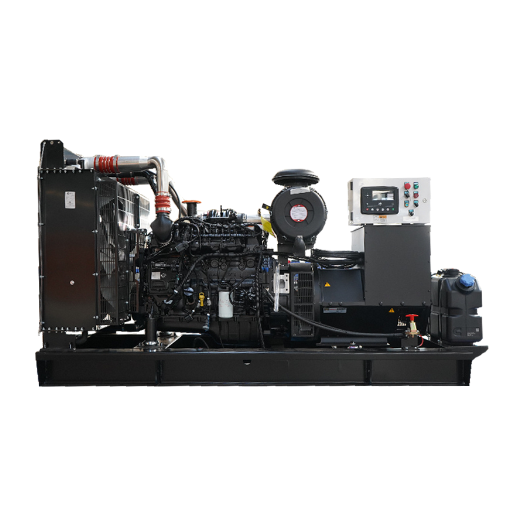
Three numbers describe the same machine, and vendors use whichever one suits the listing.
Kilowatts measure real power, the part of the output that does useful work. Kilovolt-amperes measure apparent power, which includes the magnetising current the load draws without converting it. The ratio between them is the power factor, and for generator sizing the convention is 0.8.
So a set rated 2,500 kVA at 0.8 power factor delivers 2,000 kW. A set rated 2,000 kW delivers 2,500 kVA. They are the same alternator.
Why buyers see three different names
Search for a 2 MW generator, also written 2 megawatt generator, and you will find the identical class of machine advertised as 2 MW, as 2,000 kW and as 2,500 kVA. On a single results page, listings offer “2.5 MVA diesel power generator set, 2000 kW” as though those were two products.
They are not. One name comes from the engine rating in kilowatts, one from the alternator rating in kilovolt-amperes, and one is shorthand for both. This is also why one supplier quotes a 2000 kVA generator and another quotes a 2500 kVA generator for what turns out to be the same frame. If you compare quotes by headline number alone, you will compare a 2,000 kW set against a 2,500 kW set and conclude one supplier is cheaper.
| Rating in kW | Rating in kVA at 0.8 PF | Common label |
|---|---|---|
| 1,500 | 1,875 | 1.5 MW |
| 1,600 | 2,000 | 2 MVA |
| 2,000 | 2,500 | 2 MW |
| 2,500 | 3,125 | 2.5 MW |
Convert every quote to kW before you compare it. Our guide to kVA vs kW walks through the arithmetic if you need the working.
The rating is not the capacity
A 2,000 kW figure on a datasheet is meaningless until you know which rating it refers to. ISO 8528 defines four, and the difference between them at this size is hundreds of kilowatts.
Standby allows limited hours at variable load, typically during an outage. Prime allows unlimited hours at variable load. Continuous allows unlimited hours at steady load. Data centre ratings sit close to prime with tighter conditions attached.
A set sold as 2,000 kW standby is often rated around 1,820 kW prime. Specify the wrong one and you lose roughly nine percent of capacity before the machine is even delivered. Our ISO 8528 ratings guide covers how each is defined and tested.
The Physical Envelope: What a 2 MW Generator Weighs
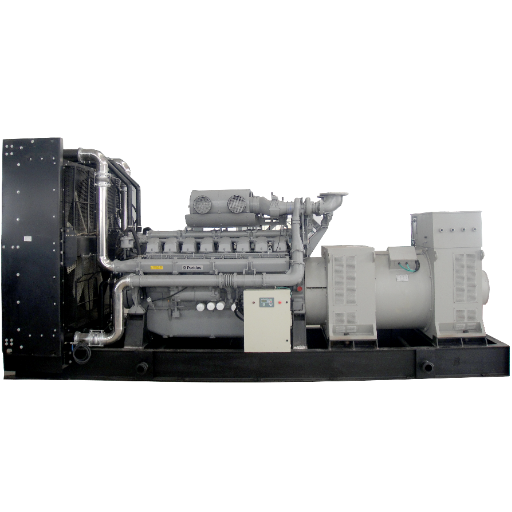
This is where a 2 MW project is won or lost, and it is the part almost nobody publishes.
Take one widely used 2 MW platform, the Caterpillar 3516B. Its published generator set dimensions run from 5,928 mm to 6,377 mm long, 2,286 mm wide and 2,367 mm high. Dry weight runs from 14,470 kg to 18,290 kg.
That spread is not sloppiness. It reflects alternator frame, radiator package, breaker and skid options. The lightest and heaviest versions of the same engine differ by nearly four tonnes.
Weight and axle load
A dry weight of 14 to 18 tonnes is before fuel, coolant, oil, exhaust silencer, switchgear and enclosure.
Add a base-frame tank for eight hours of running at full load and you add roughly 4,000 litres of diesel, which is another 3.4 tonnes. Add a canopy and you add several more. A fully packaged 2 MW unit can leave the factory above 23 tonnes.
That matters for three reasons. The truck needs the right axle configuration. The site road needs a load rating. And the crane needs a capacity that accounts for the package, not the bare set.
The 40-foot container limit
A standard 40-foot high-cube container measures 12,032 mm long, 2,352 mm wide and 2,698 mm high inside. The door opening is 2,340 mm wide and 2,585 mm high.
Now put the 3516B beside it. The set is 2,286 mm wide against a 2,352 mm internal width. That is 66 mm of total clearance, or 33 mm a side. Through the door it is tighter still, at 54 mm total.
An open 2 MW set does not slide into a shipping container. It is lowered in at the factory with the canopy off, or the container is built around it and the container becomes the enclosure.
Standard 40-foot containers also have a payload ceiling near 28,750 kg. Two minimum-weight 3516B sets weigh 28,940 kg dry, before fuel, frames or accessories. Two sets do not fit in one box on weight even if they fit on length.
Lifting, foundations and site access
A 2 MW set is lifted by its skid-mounted lift points with a spreader beam, not slung from a single hook. The crane is typically a 50 to 100 tonne mobile unit, and the lift plan usually needs the machine positioned before the enclosure walls go up.
The foundation carries the dynamic load, not just the static one. Mass, unbalanced forces and vibration isolation all go into the design, and the civil works are usually quoted separately from the set.
Access is the constraint that catches people. A 2,286 mm wide set needs a gate, a doorway and a turning radius that accommodate it. We have seen projects where the switchgear room was designed around a door the set could not pass.
Fuel Burn at 2 MW
Fuel is the largest running cost at this rating, and the arithmetic is straightforward once you have a specific fuel consumption figure.
A modern large diesel engine consumes roughly 200 to 215 grams of fuel per kilowatt-hour. Diesel density is about 0.85 kg per litre. Divide the hourly fuel mass by the density and you have litres per hour.
At 2,000 kW with a specific consumption of 210 g/kWh, that works out to about 494 litres per hour at full load.
| Load | Output (kW) | Fuel (L/h) | Fuel (L/day, 24 h) |
|---|---|---|---|
| 100% | 2,000 | ~494 | ~11,900 |
| 75% | 1,500 | ~371 | ~8,900 |
| 50% | 1,000 | ~247 | ~5,900 |
| 25% | 500 | ~124 | ~3,000 |
Two things follow from that table.
First, a 2 MW set running as a prime power source is a fuel logistics operation. At 500 litres an hour, a 20,000-litre tank buys you about 40 hours, and refuelling becomes a supply chain question rather than a maintenance task.
Second, part-load running is expensive per unit of output. At 25 percent load the set still burns 124 litres an hour to produce 500 kW, so the fuel cost per kWh roughly doubles. Prolonged light loading also causes wet stacking in diesel engines.
Confirm the specific consumption against the actual datasheet before you budget. Older Tier 2 platforms can be materially thirstier than a current engine of the same rating, and at 500 litres an hour a ten percent difference is 50 litres an hour.
One 2 MW Generator or Two 1 MW Sets
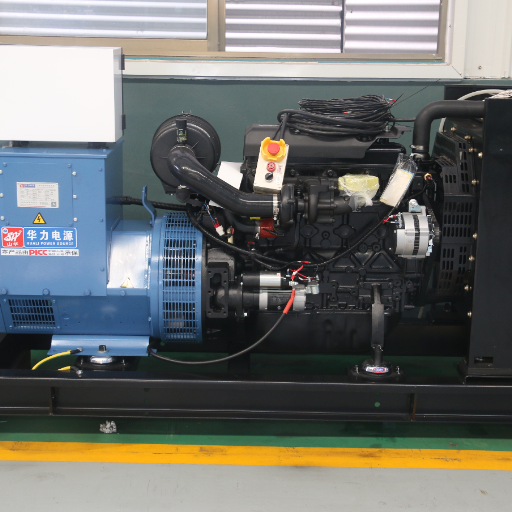
This is the decision that shapes the whole project, and it is usually framed as a reliability question. It is really a site question first.
When one large unit wins
One 2 MW set wins when the site can take it.
You need one foundation instead of two, one switchgear line-up, one fuel system, one exhaust stack and one control point. Footprint, cabling and civil works all fall. Maintenance hours are lower because there is one machine to service.
Part-load efficiency also favours the larger unit when the load is steady. A single set running at 80 percent beats two sets running at 40 percent each, on both fuel per kWh and engine health.
Parallel operation adds complexity that has to be engineered, commissioned and maintained. A single unit does not.
When two smaller units win
Two 1 MW sets win when the load profile is variable or the reliability requirement is real.
Two units give you N+1 capability: one can be serviced while the other carries the load. A single set gives you a scheduled outage instead. If the application cannot tolerate that, the architecture decision is already made.
Two smaller machines are also easier to move. A 1 MW set is roughly half the mass and fits where a 2 MW set will not. On a constrained site, in a high-rise basement or on a barge, that can decide the project on its own.
The catch is that two units need load sharing. Droop settings, communications and synchronising all have to work, and they fail in ways a single set cannot. Our comparison of one large generator versus parallel generators covers the commercial side, and the N+1 redundancy guide covers how to design the plant.
The practical rule: if a 2 MW set cannot physically reach the point of connection, choose two units and design the paralleling properly. If it can, choose one and spend the savings on the fuel tank.
What to Put on a 2 MW RFQ
Most weak 2 MW enquiries ask for “one 2 MW diesel generator” and nothing else. That request cannot be priced accurately, so every supplier prices a different machine.
Rating and site conditions
State the rating regime explicitly: standby, prime or continuous, to ISO 8528. State the expected hours per year and the average load factor. A set that runs 200 hours a year on standby is a different specification from one that runs 6,000 hours at 70 percent load.
Then state the site conditions. Altitude above 1,000 metres, ambient temperature above 40 degrees Celsius and high humidity all reduce available output, and the derating has to be applied to the nameplate rather than discovered at commissioning.
Voltage and frequency belong here too. A 3516B family set is offered from 380 V to 11,000 V, and the voltage class changes the alternator, the switchgear and the cable.
The six items buyers leave off
These are the omissions that come back as change orders:
- Enclosure type. Open set, canopy or containerised. Each changes weight, footprint and price substantially.
- Fuel tank capacity and position. Base-frame, sub-base or external, with the runtime it is meant to deliver.
- Exhaust and silencing. Noise limit at a stated distance, and whether the stack is included.
- Control system and remote monitoring. Whether it needs to talk to a building management system, and over what protocol.
- Switchgear scope. Whether the breaker, protection and synchronising panel are in or out. This is often a larger number than expected.
- Site access constraints. Gate width, turning radius, crane position and the maximum single lift. Send a site plan.
If you send the last item with the first five, the quote you get back will be close to the price you pay. Send a site plan to our engineers and we will flag the physical constraints before they become change orders.
What Drives the Price of a 2 MW Generator
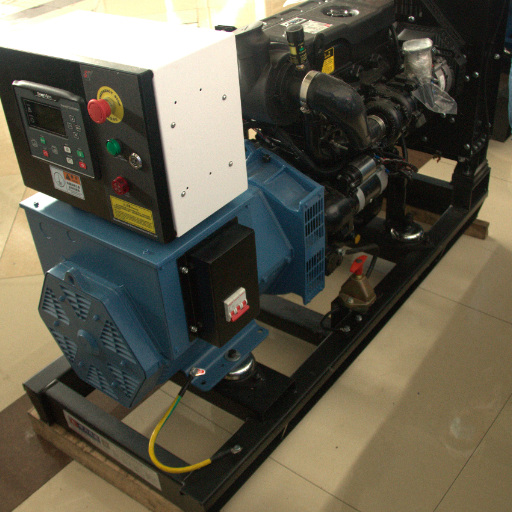
We do not publish list prices, and none of the 2 MW generator price listings you find online tell you what the project costs. What those listings show is a machine price that excludes almost everything that makes the project work.
The price of a 2 MW generator is built from five blocks.
The engine and alternator are the core, and engine brand moves the number more than any other single factor. A premium European or American platform and a Chinese platform of the same rating are not the same purchase.
The enclosure is the second largest block. Open set, canopy and containerised units differ by tonnes and by a wide margin in cost.
The electrical package covers breaker, protection, synchronising, control and cabling. On a two-unit plant this block grows sharply.
The logistics covers freight, lifting, permits and the crane. For a 15 to 18 tonne machine moving internationally, this is not a rounding error.
The site works cover foundation, fuel storage, exhaust and commissioning. These are usually quoted by others, and they are routinely left out of the comparison.
The honest way to compare two 2 MW quotes is to put both against the same scope list from the section above. A lower number almost always means a shorter list.
Choosing the Right 2 MW Configuration
Three physical questions settle most of this before commercial negotiation begins.
Can the set reach the point of connection? Measure the gate, the door and the turning circle, then compare them with a dry weight of 14,470 to 18,290 kg and a width of 2,286 mm. If the answer is no, the architecture is two units or a different building.
Can the site carry it? Foundation, floor loading, crane position and fuel storage all follow from the mass.
Can you fuel it? At roughly 494 litres an hour at full load, the tank size and the refuelling arrangement are a design input, not an afterthought.
Answer those three and the specification writes itself. Leave them to the supplier and you will get three quotes for three different machines, none of which fits your site.
Megawatt-class projects are quoted individually because the variables above change the machine. Our 1001 kW and up range covers the frames we publish full datasheets for. If you are specifying a 2 MW generator, send us the load profile and the site plan together. We will tell you what fits, what it weighs, and where the constraints are.
