
Generator surging is a repeated rise and fall in engine speed that shows up as a swinging frequency reading, a pulsing exhaust note, and lights that brighten and dim in rhythm. The cause sits in fuel delivery, air supply, the governor and its speed sensing, or the load itself.
A controller that jumps between 48.6 and 51.2 Hz on a 50 Hz set wnzsr the engine can’t hold a steady speed. The fault is almost always upstream of it.
This guide separates surging by pattern: at idle only, under load only, or at every load. We build diesel generator sets from 8 kVA to 4,000 kVA and load-test every unit before delivery, so the tests follow our commissioning sequence.
If the controller already logs Hz swings, send the trend and a photo of the fuel system to our engineers. A 30-second trend often identifies the system before anyone opens a panel.
Key Takeaways
– Generator surging is engine speed oscillation. Frequency follows speed: a four-pole set needs 1,500 rpm for 50 Hz and 1,800 rpm for 60 Hz.
– Match the pattern before replacing parts. Surging at idle only, under load only, or at all loads points to different systems.
– Cummins lists fuel supply faults first for speed surges at idle and under load: low fuel, air in the line, plugged filters, restricted flow, a weak lift pump, and injector or injection pump faults.
– ISO 8528-5 defines normal. For a G2 set, steady-state frequency must stay within ±1.5%, transient deviation on a load increase within −10%, and recovery within 5 seconds.
– Woodward’s tuning rule: raise gain until the engine hunts, reduce it to 50% of that value, and set reset to 1 divided by the oscillations per second.
What Generator Surging Looks Like
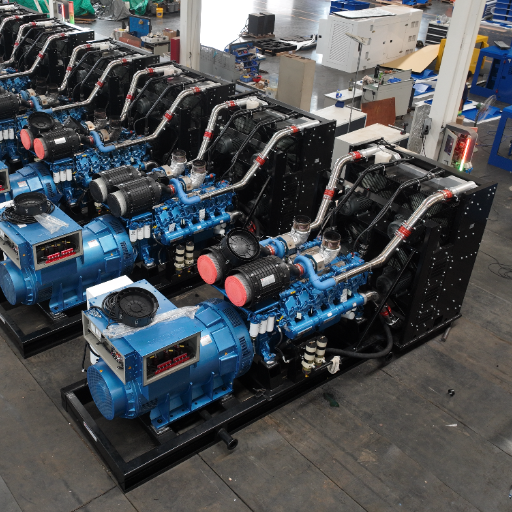
Surging is audible before it is measurable. The engine note rises and falls, the exhaust pulses, and the frequency display wanders instead of holding a digit. The swing may be tenths of a hertz or several hertz.
The frequency reading is engine speed divided by pole count. A four-pole machine runs at 1,500 rpm for 50 Hz and 1,800 rpm for 60 Hz. The formula is rpm = Hz × 120 ÷ poles.
If hertz swings, the crankshaft speeds up and slows down, so an alternator fault is unlikely to be the cause. The pattern matters more than the amplitude: a generator revs up and down under steady load only when the speed loop is oscillating.
| Pattern | What you see and hear | System to check first |
|---|---|---|
| Idle only | Engine lopes at no load, smooths as load rises | Fuel and air at low flow, idle setting, governor at low rack |
| Under load only | Steady at idle; Hz and exhaust pulse when load is applied | Fuel delivery capacity, air restriction, governor gain, block loads |
| All loads | Continuous oscillation, often with smoke or knock | Governor, actuator, speed sensor, injection pump, engine condition |
Is It Surging, Hunting, or an Electrical Power Surge?
Generator hunting is a slow, regular oscillation over several seconds. Surging describes speed instability when the amplitude is larger or the rhythm is uneven. Both come from the speed-control loop.
An electrical power surge is a millisecond voltage spike from switching, lightning, or a load dump. It doesn’t make the engine rev up and down. Lights that flicker with the engine note point to speed control, not the alternator. Flicker with a steady note points to the AVR, wiring, or load.
What Causes Generator Surging?
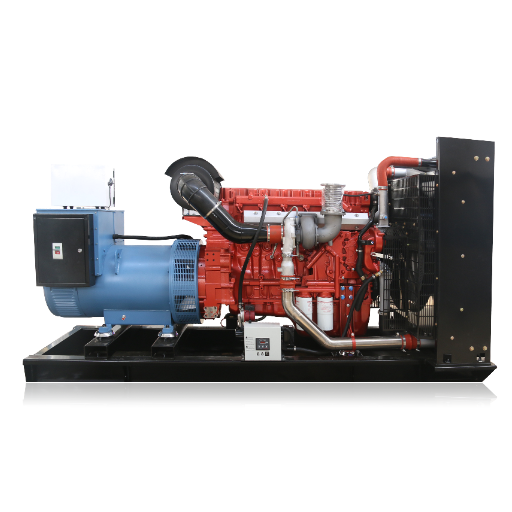
A generator set holds frequency with a closed loop: the controller compares measured speed with the setpoint, the actuator changes fuel delivery, and the speed sensor reports back.
Generator surges appear when one part of that loop is late, weak, or unstable. Uneven fuel makes the engine speed up and slow down. Too much governor gain overcorrects. A load that changes faster than the engine can pick it up produces the same swing.
| Cause family | Typical pattern | First check |
|---|---|---|
| Fuel delivery | Surge at idle or under load, worse as demand rises | Fuel level, air in line, filter restriction, lift pump pressure |
| Air supply | Rough running and low power under load | Air filter, intake leaks, turbo boost on charged engines |
| Governor and sensing | Regular oscillation at steady load, overshoot after a step | Linkage binding, actuator travel, sensor signal, gain and reset |
| Load | Swing tied to a specific motor, appliance, or phase | Load log by phase, starting method, load balance, paralleling settings |
Fuel and Air Problems
Fuel supply faults are the first cause to rule out when generator surging under load begins. They are common, cheap to check, and easy to misdiagnose as a governor fault. Cummins’ troubleshooting table for engine speed surges lists low fuel level, air in the supply, a plugged filter, inadequate flow, a faulty lift pump, the wrong fuel grade, a malfunctioning injection pump, a restriction between the pump and the injectors, a faulty injector, and moisture in the harness connectors.
Start at the tank. A low level, a blocked vent, or a standpipe that draws air can produce a surge that appears after an hour of running. Fill and bleed first.
Then check the filters and lift pump. A partly blocked filter flows enough at light load and starves the engine as load rises, which is why the surge often appears only under load. A weak lift pump produces the same signature. Measure pressure at the point the manufacturer specifies.
Air in the line is the classic post-service fault. A filter change, a line repair, or a tank run dry leaves a pocket that the engine pulls through in bursts. Bleed at the specified points and recheck. If air returns, find the leak.
Injectors and the injection pump come next. A sticking injector or a pump that delivers unevenly creates a rhythm the governor can’t smooth out. Cummins recommends calibrating or replacing the pump and replacing a faulty injector.
Air supply faults look different. A clogged filter or a leaking intake hose limits power under load, so the governor adds fuel, the engine doesn’t respond, and the loop overshoots. On a turbocharged set, a boost leak or sticking wastegate has the same effect. Check the restriction indicator before touching the governor.
Consider a cold store we’ll call Northfield. Its 400 kVA standby set began surging at idle two days after a filter change. It ran smoothly on a 300 kW load test but loped with no load.
Bleeding the secondary filter housing removed a small air pocket and the surge stopped. The filter had been installed without pre-filling. The scenario is illustrative, but the pattern is a common service callback.
Governor and Speed-Control Problems
The governor decides how much fuel the engine gets. A mechanical governor uses flyweights and springs to sense speed. An electronic governor uses a magnetic pickup or another speed sensor, a controller, and an actuator that moves the fuel rack or throttle.
Mechanical governors fail in mechanical ways. Springs weaken, flyweights wear, and linkage joints bind. A linkage that sticks for part of its travel makes the governor correct late, then overcorrect, which shows up as a slow hunt that changes with temperature. Check free travel and return spring tension before attempting any generator governor adjustment.
Electronic governors fail in electrical and tuning ways. The actuator may stick or lose calibration. The speed sensor may have the wrong gap, metal debris on its tip, or a loose connector.
The controller may hold settings that no longer match a replacement actuator. Moisture in a connector can produce an intermittent signal that looks like a governor fault.
Tuning is the third possibility, and the one most often changed without evidence. Woodward’s application note for its 700-series controls gives the standard sequence. With the engine at no load, increase gain until it begins to hunt, count the oscillations per second, then reduce gain to 50% of the value where hunting began. Set reset to 1 divided by the oscillation frequency and compensation to 25% of reset, then repeat the gain step.
Gain that is too high produces sustained oscillations; reset that is too low produces slow, low-amplitude hunting. If a slow hunt persists after gain is reduced by 50% and reset is raised by 100%, look for a sticking linkage or pressure regulator before changing the tuning again.
Under load, Woodward’s procedure calls for a 25% to 50% step load. Rapid damped oscillations after load-off call for about 25% less gain; slow damped oscillations call for more reset and a gain re-trim.
A voltage oscillation with a steady frequency is an AVR problem. If Hz holds and volts swing, test the AVR and its sensing leads. If both swing together, engine speed is moving.
At a wastewater plant we’ll call Riverton, a 1,000 kVA set was commissioned with a replacement controller. It held frequency at idle and swung about 1.5 Hz at 60% load. The linkage was free and the sensor signal was clean.
The controller had been left at default gain, which was too high for that actuator. Following the Woodward sequence brought the swing under 0.2 Hz without any parts. The scenario is illustrative, but controller swaps are a common source of new surging.
Need a second opinion on a stubborn set? Send our engineers the load log, controller photos, and fuel-system details, and we’ll tell you which system to test next.
Load-Side Causes
Not every surge starts on the generator. A load that changes faster than the engine can respond produces a visible swing even when the governor is healthy. Cummins notes that some variation with load changes is normal; excessive change may point to fuel supply or return piping rather than the control loop.
Block loads are the usual suspect. Starting a large motor, compressor, or bank of equipment in one step asks for power faster than the engine can deliver. The result is a dip and an overshoot, and on a marginal set, a sustained hunt. Staging the load, or using a soft starter or VFD, often solves a problem that looks like a governor fault.
Unbalanced single-phase load is the second cause. A three-phase set with most of its load on one phase runs unevenly and can hunt as the load shifts. Log current on all three phases at the same moment.
Light load is the third. A diesel running for long periods at a small fraction of its rating runs cold, builds carbon, and can run rough. That condition, wet stacking, is one reason standby sets are tested under load. Load bank testing proves a set can carry its rating and burns off those deposits.
Paralleling adds a fourth cause. Two sets sharing load need matching voltage, frequency, phase, and droop settings. A droop mismatch makes one set take more load, slow down, and hand it back, which appears as a slow oscillation across the plant.
ISO 8528-5:2018 sets the operating values by performance class, and Cummins reproduces the table in its transient performance paper:
| Parameter | G1 | G2 | G3 |
|---|---|---|---|
| Steady-state frequency band | ±2.5% | ±1.5% | ±0.5% |
| Transient frequency deviation on load increase | −15% | −10% | −7% |
| Frequency recovery time | 10 s | 5 s | 3 s |
| Frequency droop, droop mode | −8% | −5% | −3% |
A G2 set that dips 4% on a load step and recovers within 5 seconds is inside its class. The same set swinging outside ±1.5% at steady load is not.
How to Diagnose Generator Surging Step by Step
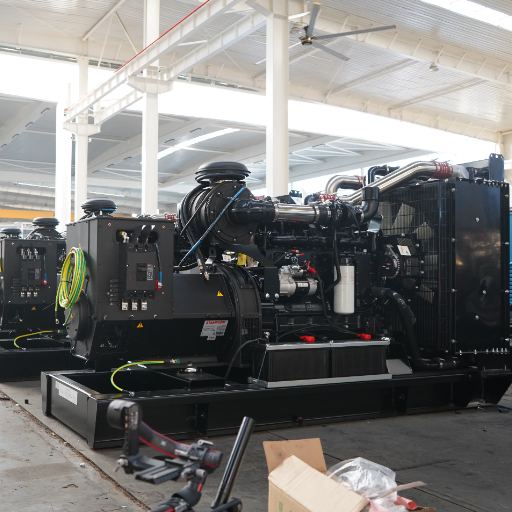
Work in this order. Each step finds the fault or rules a system out.
- Record the pattern. Note whether the surge occurs at idle, under load, or both, and measure the period and amplitude. A controller photo is enough.
- Read the controller history. Fault codes, event logs, and recent parameter changes narrow the search. A surge that began after a controller swap is a settings or connection fault until proven otherwise.
- Check fuel supply. Confirm level, vent, filter condition, and lift pump pressure, and bleed any air. This is the fastest way to rule out the most common cause.
- Check air supply. Inspect the filter indicator, intake hoses, and, on a turbocharged engine, boost pressure and wastegate operation.
- Inspect the governor linkage and actuator. With the engine stopped, move the linkage through its full travel and look for binding, lost motion, or a weak return spring.
- Check the speed sensor. Confirm the gap, mounting, and connector condition against the manufacturer’s specification, and look for metal debris on the tip.
- Step the load. Apply load in 25% increments and record Hz, volts, and kW at each step. A set that recovers cleanly at each step but hunts at one load has a load or fuel-delivery problem.
- Use a load bank if the site can’t provide a real load. A resistive load bank gives a repeatable step test and separates generator faults from site load faults. Our load bank guide covers the sequence and pass criteria.
Fix safety issues first: fuel leaks, exhaust leaks, and loose guards are not diagnostic problems.
If the readings show a slow sag rather than a swing, the fault is different. A frequency that settles low belongs in our guide to generator frequency drops under load. Black exhaust with rough running points to over-fuelling or restricted air, which our black smoke under load article covers. Fuel that looks cloudy should be tested before any tuning; our guide to diesel fuel contamination explains what to sample.
Prevention and When to Call a Technician
Most surging is preventable with scheduled maintenance. Change fuel filters on hours, not on convenience. Keep the tank above the level where the standpipe draws air.
Treat stored fuel and test it after months of idling. Exercise standby sets under load so the engine reaches temperature and the fuel system proves it can deliver.
Record a commissioning baseline at no load, 25%, 50%, 75%, and 100% load, including Hz, volts, kW, and recovery time. A year later, the baseline shows whether generator surging is new or normal.
Call a technician when the surge comes with smoke, knock, a hot exhaust, or a frequency that leaves the ISO class band and stays out. Call sooner for critical sets such as hospitals, data centers, or cold stores, where surging under load often precedes a fuel-system failure.
Shandong Huali Electromechanical builds diesel generator sets from 8 kVA to 4,000 kVA at 50 Hz and 60 Hz, with 100% pre-delivery testing in a 20 MW test center. If you are specifying a new set or replacing one that surges, our sizing guide and engineers can match the set to the load profile rather than the nameplate alone.
Frequently Asked Questions About Generator Surging
Why is my generator surging?
Generator surging means the engine is not holding a steady speed. The usual causes are air in the fuel line, a restricted filter, a weak lift pump, a governor or actuator fault, a speed sensor signal problem, or a load that changes faster than the engine can respond.
Is it normal for a generator to surge at idle?
No. A brief change in note when load changes is normal, but a steady lope at idle is not. On a diesel set, generator surging at idle usually points to fuel or air at low flow, an idle setting that is too low, or a governor that is unstable at the bottom of its range.
Why does my generator surge under load but run fine at idle?
A set that is smooth at idle and rough under load is often short of fuel or air. A partly blocked filter, weak lift pump, restricted line, or clogged air filter delivers enough at light load and not enough as demand rises. Too much gain can produce the same pattern.
Can a bad AVR cause surging?
An AVR causes voltage to swing, not engine speed. If the voltmeter moves while the Hz reading holds steady, test the AVR and its sensing circuit. If Hz and volts swing together, engine speed is changing.
How do I stop a generator from surging?
Fix the cause, not the symptom. Bleed air from the fuel system, replace restricted filters, confirm lift pump pressure, check the intake, inspect the governor linkage and speed sensor, and only then adjust gain and reset using the manufacturer’s procedure.
Conclusion
Generator surging is an engine speed problem, and the fix starts with the pattern rather than the parts catalog. Idle-only surging points to fuel and air at low flow. Load-only surging points to fuel delivery capacity, air restriction, or a load that arrives too fast. Surging at every load points to the governor, its sensor, or the engine itself.
Test in order: pattern, controller history, fuel, air, governor linkage and sensor, then a stepped load. Use ISO 8528-5 to decide whether the swing is normal for the set’s class, and use the manufacturer’s tuning procedure before changing any gain or reset value.
If you need help reading a trend, sizing a replacement, or proving a set under load, contact our engineering team with your controller data. We’ll help you separate a normal transient from a fault and choose the next test.
