
The procurement manager of a Southeast Asian data center suffered a costly lesson when he chose the lowest bid from diesel generator manufacturers. The “savings” quickly evaporated. The essential parts consisted of unbranded alternators and controllers which came from an unidentified vendor. The units broke down six months after their load tests. The delivery of replacement parts required eight weeks for their arrival. The project experienced a four-month delay in reaching its deadline.
You understand about industrial facilities which require backup and prime power because of your experience in this area. A generator requires more than basic product selection because it serves as a long-term investment decision. The generator selection process impacts business operations for a period of 15 to 20 years by determining system availability and security measures and operational expenses. The selection of diesel generator manufacturers requires more than basic price list evaluations. The evaluation process needs to include three elements which assess engineering standards and production methods and product suitability.
The guide explains all the steps which you need to follow for evaluating diesel generator manufacturing companies. The guide helps you understand the distinction between genuine OEMs and GOEMs. The guide provides you with eight essential criteria which help you identify trustworthy suppliers while avoiding dangerous partners. You will learn how to select a manufacturer who meets your particular industrial needs. The principles apply to both single standby unit purchases and multi-megawatt EPC project operations.
Want to gain a comprehensive understanding of diesel generators? (Read A Complete Guide to Diesel Generators) to delve deep into their classification, uses, and selection tips.
What Is a Diesel Generator Manufacturer?
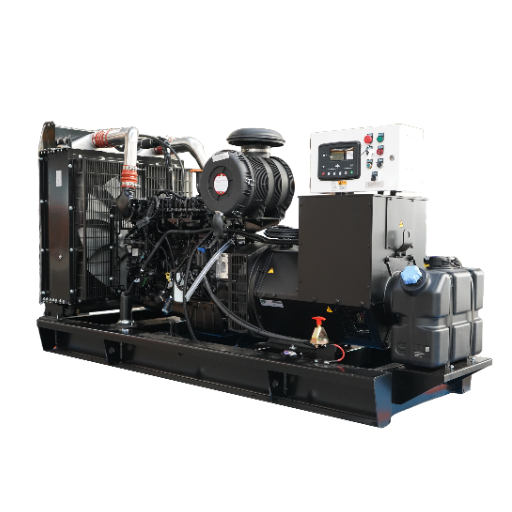
Before evaluating suppliers, you need to understand what the label “manufacturer” actually means in this industry. Not every company that assembles generator sets is a true manufacturer in the traditional sense.
True OEMs vs. GOEMs
A true original equipment manufacturer (OEM) designs and produces its own diesel engines. Companies like Caterpillar, Cummins, MTU, and Weichai fall into this category. They control the core power plant from casting to final calibration. This gives them end-to-end quality control, proprietary service networks, and consistent parts availability.
A GOEM (generator original equipment manufacturer) is a packager or assembler. GOEMs source engines, alternators, and controllers from third-party suppliers. They then integrate these components into complete generator sets. Well-known GOEMs include FG Wilson, Aksa, Pramac, and numerous certified factories in China and India.
Here is the critical point: GOEMs are not inherently inferior. Many deliver excellent value and customization flexibility. However, buyer risk increases when a supplier obscures component origins or operates without certified quality systems.
Mini-story: Maria ran facilities for a hospital group in Latin America. She needed three 500 kVA standby units. Two suppliers sent nearly identical quotes. One was a Cummins factory unit. The other was a GOEM package with a Cummins engine but an unbranded alternator and generic controller. The GOEM quote was 18% lower. Maria chose the Cummins unit. Her hospital needed a single point of accountability for warranty and service. Eighteen months later, one unit needed a controller firmware update. The factory service team fixed it in forty-eight hours. She later learned the GOEM supplier had stopped stocking parts for that controller model.
Integrated Manufacturers
Some suppliers operate as integrated manufacturers. They may not design their own engines. But they control sourcing, assembly, testing, and quality under one roof. This model blends the flexibility of a GOEM with the discipline of a larger OEM.
At Shandong Huali, for example, we source engines from trusted brands like Cummins, Perkins, Weichai, and Yuchai. We pair them with premium alternators like Stamford and Leroy-Somer. Every unit is tested 100% in our national standard testing center before delivery. This lets us tailor configurations to your project while keeping quality consistent.
The 2026 Diesel Generator Manufacturing Landscape
The global diesel generator market is worth approximately 21to21to25 billion in 2025. Analysts project it will reach 31to31to36 billion by 2030–2031. Three forces are driving this growth. Hyperscale data centers need more backup power. Grid instability is increasing in key regions. Asia-Pacific and Africa continue to industrialize rapidly.
Mordor Intelligence reports the market is growing at roughly 6.2% per year. The data center generator segment alone is worth 7.6to7.6to9.5 billion. Diesel gensets hold an 81% share of backup power installations. Interest in alternatives like hydrogen and HVO is growing. But diesel remains dominant for now.
Tier 1 Global Leaders
The top tier is moderately concentrated. Five players control about 40% of the market: Caterpillar, Cummins, Generac, Aggreko, and Rolls-Royce (MTU). They dominate critical applications. Their brand reputation, global service networks, and proven reliability command premium prices.
- Caterpillar leads in heavy mining and harsh industrial environments, commanding roughly 21% of the high-capacity segment.
- Cummins dominates data centers and healthcare with its integrated “Power of One” systems.For a detailed comparison of Cummins engine series and specifications, see our Cummins diesel generator guide.
- MTU (Rolls-Royce) is frequently called the “Ferrari of gensets” for its superior load acceptance and fuel efficiency.
- Kohler holds a strong position in commercial real estate and EMEA markets.
The Rise of Certified Tier 2 Manufacturers
While Tier 1 brands maintain their dominance, a significant shift is underway. Lead times for large industrial units from Tier 1 manufacturers now stretch to 40–100 weeks in many regions. This has created an opening for certified Tier 2 manufacturers, particularly in China, that can deliver comparable technical performance in 18–30 weeks.
The current manufacturers show improved production standards compared to their past performance as low-quality manufacturers from ten years ago. Leading Tier 2 factories now operate smart manufacturing facilities which have achieved CE and ISO certifications while serving as authorized OEM partners for Cummins and Perkins and MTU and Baudouin engine systems.
This tier is becoming more usable by procurement teams who need to meet urgent project deadlines. The essential requirement establishes certified integrated manufacturers through proper identification of their operations which distinguish them from small workshop assemblers.
How to Evaluate a Diesel Generator Manufacturer: 8 Essential Criteria
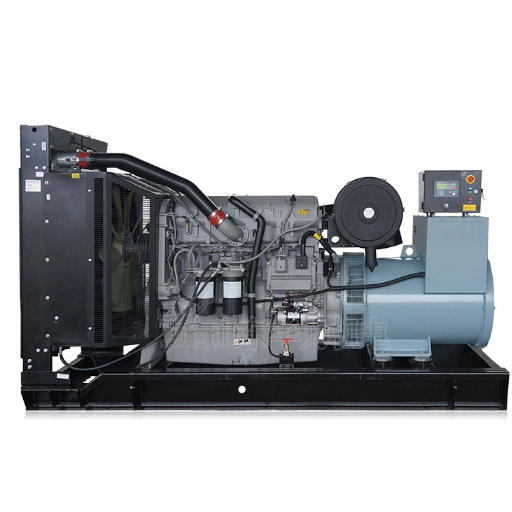
Choosing a diesel generator manufacturer should be a structured process, not a gut decision. Use these eight criteria to build a scorecard for every supplier you evaluate.
1. Demand Manufacturing Transparency
A professional supplier must clearly disclose the origin and brand of every major component. At minimum, you should receive written confirmation of:
- The diesel engine brand and model
- The alternator brand and model
- The controller brand and model
- The country of manufacture for each component
If a supplier only advertises the total kVA rating without specifying these details, treat it as a red flag. You may be buying a “white label” unit with no warranty continuity and unpredictable parts availability.
2. Verify Certifications and Quality Systems
Reliable manufacturers operate under recognized quality and environmental management systems. Look for:
- ISO 9001 (quality management)
- ISO 14001 (environmental management)
- CE certification (for EU market compliance)
- EPA Tier 4 Final or EU Stage V emissions certification (where required)
Ask for certificate copies. Reputable suppliers will provide them without hesitation.
3. Match the Application Rating
Generators are rated for different operating modes. Using the wrong rating for your application will shorten lifespan and may void the warranty.
- Standby (ESP): The system provides backup power for less than 200 hours which occurs throughout the year.
- Prime Power (PRP): The system provides power for normal use when electrical power from the grid fails to operate.
- Continuous (COP): The system delivers base-load power throughout its operational period when there is constant demand.
- Data Center Continuous (DCC): The system provides a dedicated power rating which enables mission-critical facilities to operate at full capacity.
Ensure the manufacturer can supply units rated for your specific duty cycle.
4. Evaluate Thermal Efficiency and Load Acceptance
Fuel costs are the biggest lifetime expense for a diesel generator. Even a 5–10% improvement in thermal efficiency can save tens of thousands of dollars over the unit’s life.
For data centers, load acceptance is equally important. It measures how fast a generator can take full load without voltage or frequency dips. MTU and Cummins lead here. But certified Tier 2 suppliers using the same engines can match that performance.
5. Confirm Service Network and Parts Availability
A generator without service support is a liability. Before committing to a manufacturer, map out:
- The location of authorized service centers in your region
- Average response times for emergency support
- Availability of critical spare parts (filters, injectors, belts, controllers)
- Whether the warranty covers both parts and labor
Some Tier 1 brands, particularly Caterpillar and MTU, use dealer-controlled service networks. Their parts and labor costs 20 to 40 percent more than standard market prices. The products still require testing, but they do not need to be eliminated from your options. You need to include it in your overall expenses for ownership.
6. Assess Lead Times and Supply Chain Stability
In 2025 and 2026, lead time has become a primary competitive differentiator. If your project cannot wait 12 months, a Tier 1 brand may not be the right fit. Technical excellence matters little if the unit arrives after your deadline.
Ask each supplier for a firm delivery schedule with milestones. For large EPC projects, consider penalty clauses for late delivery.
7. Calculate Total Cost of Ownership
The purchase price is only the beginning. A rigorous TCO analysis should include:
- Acquisition cost
- Freight, rigging, and installation
- Fuel system integration (tanks, lines, auto-refueling)
- Automatic transfer switch and commissioning
- Fuel consumption over the expected operating hours
- Scheduled maintenance and spare parts
- Monitoring and compliance costs
- End-of-life resale or redeployment value
Manufacturers with strong resale value, such as Caterpillar and FG Wilson, may justify a higher upfront cost for projects with shorter holding periods.
8. Inspect Factory Capability and Testing Protocols
If possible, visit the manufacturing facility or request a virtual tour. Key indicators of a capable manufacturer include:
- CNC precision machining equipment
- Dedicated engine test cells or load banks
- Climate-controlled assembly areas
- Documented pre-delivery inspection checklists
- Traceability records for each unit
Mini-story: James, an EPC contractor in East Africa, was evaluating two Chinese suppliers for a 10-unit mining project. One supplier sent glossy brochures and aggressive pricing. The other invited him to tour their factory in Shandong province. He observed CNC machining centers, a national standard testing center, and a quality control team that tested every unit for four hours before crating. The second supplier became his preferred choice. The current fleet availability rate stands at 97% after two years, during which he has made two additional orders.
Matching Manufacturers to Industrial Applications
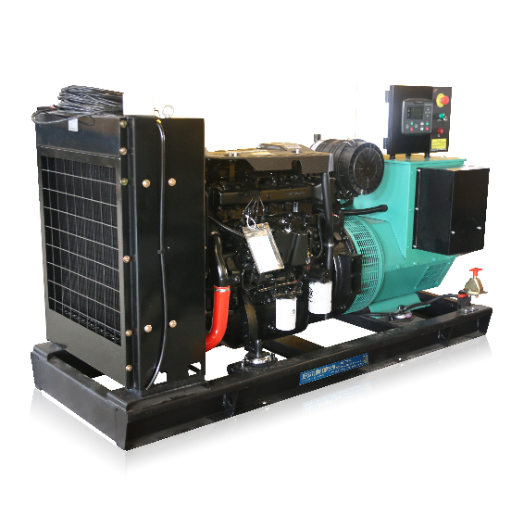
There is no single “best” diesel generator manufacturer for every situation. The optimal choice depends on your application, budget, timeline, and risk tolerance.
Data Centers and Hyperscale Facilities
Priorities: Load acceptance, redundancy, remote monitoring, emissions compliance, rapid startup.
Best fits: Cummins and MTU are the industry standards for Tier IV data centers. Cummins offers integrated “Power of One” systems with masterless load demand logic. MTU excels in DCC ratings and fuel efficiency. For projects facing tight timelines, certified Tier 2 suppliers with UL 2200 certification and equivalent engine partnerships can be viable alternatives.
Mining and Heavy Construction
Priorities: Mechanical durability, oversized cooling systems, multi-stage air filtration, global parts availability.
Best fits: Caterpillar controls this market segment through its 3500 Series engines which maintain superior resale value. Atlas Copco and Himoinsa provide durable portable solutions that work effectively for mobile and rental purposes. Continuous mining operations that require budget control can use Weichai and Yuchai certified engines which provide high thermal efficiency at reduced capital expenses.
Healthcare and Critical Infrastructure
Priorities: Uptime reliability, low noise, single-source accountability, responsive service.
Best fits: Healthcare facilities trust Cummins and Kohler because their products include silent enclosures and durable control systems and their products have widespread service coverage. Urban hospitals require silent diesel generator enclosures as mandatory equipment for their installations.
Manufacturing and Continuous Industrial Use
Priorities: Fuel efficiency, customization, stable long-term support, competitive pricing.
Best fits: The particular strength of OEM and ODM integrated manufacturing systems emerges through this location. The system enables them to create custom solutions through their ability to adjust voltage and frequency together with control systems and physical enclosures. The factory-direct pricing model eliminates all trading company markup expenses which typically exist in the industry.
For a detailed comparison of the Perkins generator set and specifications, see our Perkins generator set guide.
Red Flags: What to Avoid When Choosing a Manufacturer
Even experienced buyers can fall into common traps. Watch for these warning signs:
Unbranded or “White Label” Components
If a supplier cannot or will not name the engine, alternator, and controller brands, walk away. Unbranded alternators in particular are a common source of premature failure and poor voltage regulation.
Missing OEM Authorization Certificates
For suppliers claiming to use engines from Cummins, Perkins, Yuchai, or Weichai, ask for the official OEM authorization certificate. A sticker on the engine does not prove factory partnership.
Dealer Service Lock-In Without Disclosure
Some distributors sell GOEM units as “budget options” but later refuse to service them because they were not purchased through the official sales channel. Clarify service eligibility in writing before you sign.
Unsupported Emissions Claims
Verify that emissions certifications are genuine and applicable to your region. A unit rated for EPA Tier 2 may not be legal in a jurisdiction requiring Tier 4 Final or EU Stage V.
Suspiciously Low Pricing
If one quote is dramatically lower than comparable offers, investigate why. The savings usually come from cheaper alternators, inferior controllers, skipped testing, or thinner enclosures.
The Value of Integrated Manufacturing
Integrated manufacturing is ideal when you need customization without sacrificing quality. The manufacturer manages the full production chain under one roof. That includes engine sourcing, alternator pairing, assembly, wiring, testing, and final inspection.
This approach delivers several practical advantages:
Customization agility. Because the factory controls the full build process, it can adapt voltage ratings, control panels, enclosure dimensions, and fuel systems to match exact project specifications.
Quality consistency. Centralized production with ISO-certified processes reduces the variability that often plagues decentralized assembly operations.
Traceability. Every unit has a documented bill of materials and test record. If a component issue arises years later, the manufacturer can identify the exact part batch and recommend the correct replacement.
Cost efficiency. Factory-direct pricing eliminates middlemen markups. For large EPC projects or fleet purchases, this can translate into meaningful capital savings.
Shandong Huali operates an integrated manufacturing facility which combines world-famous engine brands with mandatory pre-delivery testing requirements. The facility enables us to create tailored generator systems which serve customers in data centers, mining operations, healthcare facilities, and manufacturing plants worldwide.
Conclusion
Choosing the right diesel generator manufacturer is one of the most important decisions in industrial power procurement. The best supplier is not always the one with the most famous logo. It is not always the cheapest either. The best supplier is the one that matches its capabilities to your application. It verifies component quality. And it backs its product with reliable support.
As you evaluate your options, keep these priorities in mind:
- Demand transparency on engine, alternator, and controller branding.
- Verify certifications and factory testing protocols.
- Match the duty cycle rating to your actual operating mode.
- Calculate total cost of ownership, not just purchase price.
- Confirm lead times and service availability in your region.
- Consider integrated manufacturers when customization and cost efficiency matter.
The diesel generator market is evolving rapidly. Tier 1 brands continue to set the standard for mission-critical applications, but certified Tier 2 and integrated manufacturers are increasingly capable of delivering equivalent technical performance with greater flexibility and shorter lead times. The key is knowing how to separate the qualified suppliers from the risky ones.
Mini-story: David worked as a project engineer to find backup power solutions for a new manufacturing facility located in Southeast Asia. He constructed a basic scorecard system to evaluate eight essential criteria. One supplier scored well on price but poorly on component transparency and service network. The second supplier obtained high scores in all evaluation categories and permitted him to visit their production facility. The project started as planned and the plant operated continuously without any unexpected shutdowns during its initial three years of operation.
For a detailed comparison of the Weichai generator and specifications, see our Weichai generator guide.
