
The best backup power solutions combine a properly sized generator or battery system, an automatic transfer switch, and enough stored energy or fuel to outlast the outage. For industrial, commercial, and data center buyers, the right choice depends on load size, runtime needs, fuel availability, and whether the goal is business continuity or life-safety compliance.
According to estimates by the U.S. Department of Energy and the industry, power outages cost U.S. businesses approximately $150 billion annually. For manufacturing plants or data centers, a mere hour of downtime can result in losses exceeding $100,000—encompassing production interruptions, product damage, and the costs associated with failing to meet service level agreements (SLAs). Yet, many buyers still treat backup power as a secondary consideration, often opting for equipment with insufficient capacity or even selecting technical solutions that are entirely unsuitable.
At Shandong Huali Electromechanical Co., Ltd., we manufacture diesel generator sets, gas generators, hybrid systems, and battery energy storage systems from 8 kVA to 4,000 kVA. We have supplied backup power solutions to clients in more than 20 countries. In this guide, we explain how to choose the right backup power system for your facility.
Key Takeaways
- Backup power solutions cover generators, UPS systems, battery storage, and hybrid configurations for business continuity.
- The right technology depends on runtime, load type, start-time tolerance, and fuel or charging infrastructure.
- Sizing starts with critical-load inventory, adds motor starting surge, applies diversity factor, and includes a 20-25% margin.
- Diesel generators remain the default for industrial backup, but hybrid generator-plus-battery systems are gaining share for peak shaving and fuel savings.
- Factory-direct procurement from a Chinese OEM can cut equipment cost by 25-40% while preserving customization and witnessed testing.
What Are Backup Power Solutions?
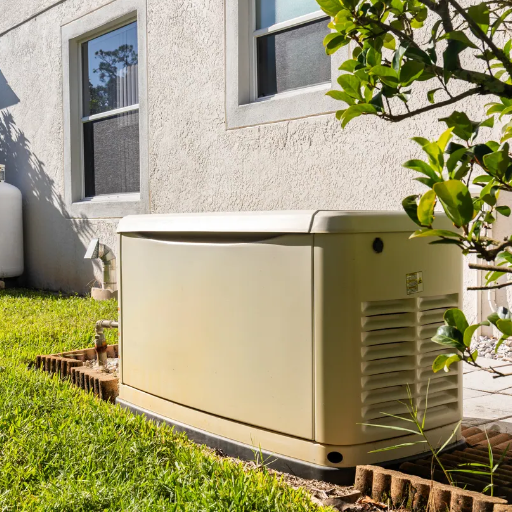
A backup power solution is any system that supplies electricity when the normal utility source fails. The term is broader than “emergency power” because backup power can serve optional, legally required, or business-critical loads, not just life-safety loads.
A complete backup power system usually includes five parts:
- Power source: diesel generator, gas generator, battery bank, or hybrid combination
- Automatic transfer switch (ATS): senses utility loss and transfers load to backup
- Distribution and protection: switchgear, circuit breakers, monitoring
- Fuel or energy storage: diesel tank, gas connection, or battery energy storage system (BESS)
- Controls: remote monitoring, auto-start, paralleling controllers
For a broader look at integrated power systems, see our complete guide to industrial power solutions.
When a regional distribution center near São Paulo lost grid power for 14 hours during a storm in 2024, its backup power generator started automatically and carried refrigeration, packing lines, and IT systems until utility power returned. The facility avoided $280,000 in spoiled inventory and missed shipments. The operations manager had sized the system for full-load runtime, not just emergency lighting. That one decision paid for the generator twice over.
Types of Backup Power Solutions and Systems
Diesel Generator Backup Power
Diesel generator sets remain the most common industrial backup power source. They start within 10 seconds, carry high motor starting surge, and store fuel on site. For a detailed buyer’s guide, see our backup power generator guide.
Best for: factories, data centers, hospitals, mining, and construction sites that need long runtime and high reliability.
Strengths:
- Fast startup and high surge capacity
- Long runtime with on-site fuel storage
- Proven technology with global parts availability
Limitations:
- Noise, emissions, and fuel maintenance
- Requires ventilation, exhaust, and fire-rated room
- Fuel must be rotated and tested
Natural Gas and Biogas Generators
Natural gas generators connect to a pipeline or compressed gas supply. Biogas generators run on landfill gas, anaerobic digester gas, or other renewable sources.
Best for: facilities with reliable gas infrastructure, clean-air requirements, or access to biogas.
Strengths:
- Cleaner emissions than diesel
- No on-site fuel storage for pipeline-connected units
- Lower maintenance and longer engine life
Limitations:
- Fuel supply can fail alongside grid during earthquakes or storms
- Lower power density than diesel
- Higher upfront cost for large units
UPS and Battery Backup Systems
An uninterruptible power supply (UPS) provides instant backup power through batteries. It bridges the gap between utility failure and generator startup.
Best for: data centers, medical imaging, telecommunications, and any load that cannot tolerate even a brief interruption.
Strengths:
- Zero transfer time
- No emissions or noise
- Compact footprint
Limitations:
- Short runtime, typically 5-30 minutes without a generator
- High capital cost per kWh
- Battery replacement every 5-10 years
Hybrid Backup Power Solutions
Hybrid backup power systems combine a diesel or gas generator with a battery energy storage system (BESS) and often solar panels. The battery handles short outages and peak loads; the generator recharges the battery during long outages.
Best for: sites with high electricity costs, demand charges, or renewable energy targets.
Strengths:
- Fuel savings through generator optimization
- Peak shaving to reduce demand charges
- Smooth integration of solar and wind
Limitations:
- Higher complexity and upfront cost
- Requires advanced controls
- Longer design and commissioning time
Portable and Mobile Backup Power
Trailer-mounted or containerized generators provide backup power solutions for construction sites, events, and disaster response. They can be relocated as needs change.
Best for: temporary facilities, remote operations, and emergency mobile power.
Backup Power Solutions by Industry
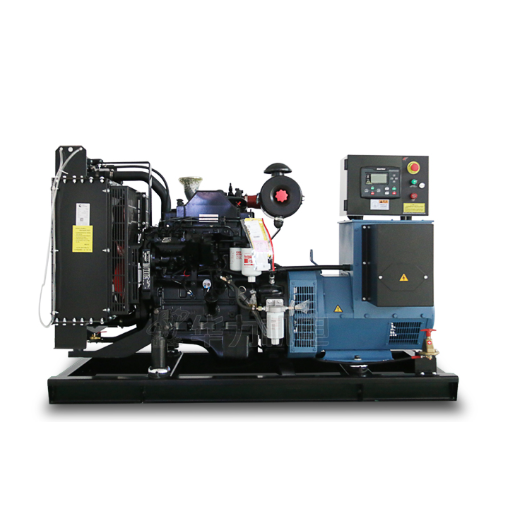
Data Center Backup Power
Data centers cannot afford downtime. A typical backup power for data center architecture uses UPS batteries to cover the first seconds, then diesel generators to carry the load for hours or days. Data centers are a leading reason the global backup power systems market is projected to grow from roughly USD 25 billion in 2024 to USD 45 billion by 2033.
Uptime Institute Tier III requires N+1 redundancy for concurrent maintainability. Tier IV requires 2N for fault tolerance. AI training campuses now exceed 1.4 GW of total power, making the backup power plant a dedicated substation.
For a deeper look at data center requirements, see our guide on industrial power solutions for data centers.
Hospital Backup Power
Hospitals need standby power solutions for life-safety, critical care, and essential mechanical systems. The essential electrical system has three branches: life safety, critical, and equipment. Many jurisdictions now require 96 hours of fuel autonomy for hospital generators, up from the traditional 24-48 hours.
Manufacturing and Factory Backup Power
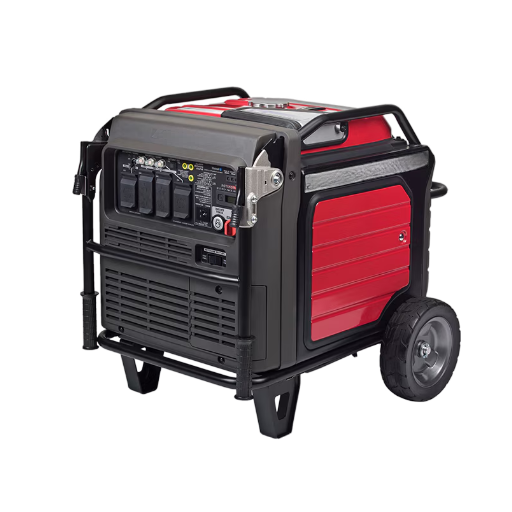
Factories use industrial backup power to protect production lines, prevent equipment damage, and maintain safety systems. Motor starting surge is often the sizing driver. A 100 kW compressor can draw 600 kVA momentarily. Undersizing leads to voltage dip and tripped drives.
Commercial buildings, warehouses, and retail centers also need commercial backup power for elevators, egress lighting, fire alarms, HVAC, and point-of-sale systems. Load diversity is usually high, so a smaller generator can serve a large building if the load analysis is done correctly.
Mining and Construction Backup Power
Mining and construction sites operate far from the grid or on weak rural feeders. Mobile and containerized backup power generator sets provide reliable power for crushing, processing, lighting, and camps.
How to Size a Backup Power System
Sizing a backup power solution follows six steps:
Step 1: Identify Critical Loads
List every load that must run during an outage. Include running kW, starting kW or kVA, power factor, and starting method.
Step 2: Apply Demand and Diversity Factors
Not every load runs simultaneously. Apply a diversity factor based on expected operation. For mixed industrial loads, this is often 0.7 to 0.85.
Step 3: Convert kW to kVA
Generators are rated in kVA. Divide running kW by the load power factor:
Generator kVA = Total running kW / Power factor
Step 4: Add Motor Starting Surge
Identify the largest motor and ensure the generator can deliver its starting kVA without excessive voltage dip. Most specifications allow 15-20% voltage dip.
Step 5: Apply Safety Margin
Add 20-25% to the calculated running kVA for future growth, harmonics, and measurement uncertainty.
Step 6: Determine Runtime and Fuel Storage
Calculate how long the system must run without refueling. Add fuel storage or battery capacity accordingly. For batteries, runtime depends on amp-hour capacity and discharge rate.
Sizing Example: Factory Critical Loads
| Load | Running kW | Starting kW |
|---|---|---|
| Production line A | 150 | 180 |
| Production line B | 120 | 150 |
| HVAC and chillers | 200 | 600 |
| Lighting and office | 50 | 50 |
| Total | 520 | 980 |
With a diversity factor of 0.8 and power factor of 0.8:
- Running kVA = 520 × 0.8 / 0.8 = 520 kVA
- With 25% margin: 650 kVA
- With motor starting surge check: select 750-800 kVA backup power generator
Backup Power vs. Emergency Power vs. Standby Power
These terms are often confused. The difference matters for code compliance and procurement.
| System Type | Loads Served | Start Time | Code Reference |
|---|---|---|---|
| Emergency power | Life-safety loads | ≤10 seconds | NEC Article 700, NFPA 110 Level 1 |
| Legally required standby | Heating, ventilation, sewage, communications | ≤60 seconds | NEC Article 701 |
| Optional standby | Production, data centers, business continuity | As designed | NEC Article 702 |
| Backup power | General term for any of the above | Varies | Common usage |
A backup power solution may include emergency, standby, and optional loads. The specification must identify which category applies so the correct equipment, installation, and testing requirements are met.
For a detailed explanation of emergency systems, see our guide on emergency power generator requirements. For legally required and optional standby loads, NEC Article 701 and Article 702 define the specific wiring, start-time, and test requirements.
Fuel Storage, Maintenance, and TCO
Fuel Comparison
| Fuel | Energy Density | Storage | Emissions | Best For |
|---|---|---|---|---|
| Diesel | High | On-site tank | Moderate | Industrial, remote, long runtime |
| Natural gas | Lower | Pipeline or CNG | Lower | Urban, clean-air sites |
| Biogas | Lower | On-site digester | Very low | Renewable energy projects |
| LPG | High | On-site tank | Moderate | Sites without diesel or gas |
Maintenance Requirements
- Diesel generators: weekly no-load run, monthly loaded test, annual full-load test, fuel polishing every 1-2 years
- Gas generators: similar schedule, plus spark plug and ignition system maintenance
- UPS/batteries: quarterly inspection, annual impedance test, battery replacement every 5-10 years
- Hybrid systems: combined generator and battery maintenance, plus control system updates
10-Year TCO Framework
| Cost Category | Diesel Generator | Gas Generator | UPS + Battery | Hybrid |
|---|---|---|---|---|
| Initial equipment | Medium | Medium-High | High | High |
| Fuel/energy | Medium | Medium-Low | Low | Low |
| Maintenance | Medium | Medium-Low | Medium | Medium-High |
| Battery replacement | N/A | N/A | 1-2 cycles | 1-2 cycles |
| Downtime risk | Low | Low | Medium | Low |
For most industrial buyers, diesel remains the lowest-risk option. Hybrid systems make sense when fuel savings, peak shaving, or renewable integration offset higher upfront cost.
Buying Backup Power Solutions from a Chinese OEM
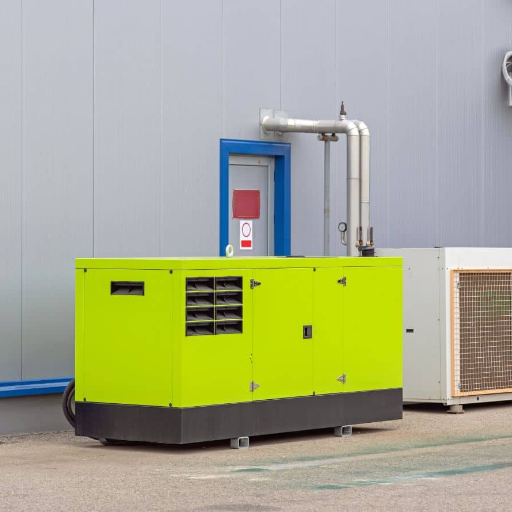
Chinese OEMs such as Shandong Huali Electromechanical Co., Ltd. offer factory-direct pricing for backup power generator sets and integrated systems without distributor markup.
What to Look For
- ISO 9001 and ISO 14001 certification
- In-house test center capable of full-load FAT
- Engine partnerships with Cummins, Perkins, Weichai, or Yuchai
- Customization track record for voltage, frequency, enclosure, ATS, and controls
- Export experience and documentation support
- Spare-parts commitment and technical support network
Typical Lead Times
- Standard backup generator sets: 4-6 weeks
- Customized systems: 8-12 weeks
- Containerized or hybrid plants: 12-16 weeks
Cost Advantage
Factory-direct procurement can cut equipment cost by 25-40% compared with a distributor or local integrator. Reinvest those savings in installation, commissioning, spare parts, and training.
When a textile manufacturer in Bangladesh needed a 1,500 kVA backup power system in 2025, it compared quotes from a regional distributor and Shandong Huali. The factory-direct option delivered a Cummins-powered generator, ATS, fuel system, and remote monitoring at 31% less cost. The system was tested, shipped, and commissioned within 10 weeks.
FAQ
What are backup power solutions?
Backup power solutions are systems that supply electricity when the normal utility source fails. They include diesel generators, gas generators, UPS systems, battery storage, and hybrid combinations.
What is the best backup power solution for a factory?
For most factories, a diesel generator set sized to carry critical loads is the best backup power solution. It offers fast startup, high surge capacity, and long runtime with on-site fuel.
How do you size a backup power generator?
Size a backup power generator by inventorying critical loads, applying demand and diversity factors, converting kW to kVA, adding the largest motor starting surge, applying a 20-25% safety margin, and derating for altitude and temperature.
What is the difference between backup power and emergency power?
Backup power is a general term for any system that supplies power during an outage. Emergency power specifically serves life-safety loads and must start within 10 seconds under NFPA 110 Level 1.
How long can a backup generator run?
A backup generator can run as long as it has fuel. Runtime depends on fuel tank size, load, and generator efficiency. Many industrial systems are designed for 24-96 hours of continuous operation.
What is a hybrid backup power system?
A hybrid backup power system combines a generator with a battery energy storage system and often solar panels. The battery handles short outages and peak loads; the generator provides long-duration backup and recharges the battery.
What is a UPS uninterruptible power supply?
A UPS is a system that provides instant backup power through batteries. It protects sensitive equipment from power interruptions, surges, and voltage fluctuations, typically bridging the gap until a generator starts.
How often should a backup generator be serviced?
A backup generator should undergo weekly inspections, monthly loaded tests, annual full-load tests, and fuel quality checks. Battery systems need quarterly inspections and periodic replacement.
What fuel is best for industrial backup power?
Diesel is usually best for industrial backup power because of its high energy density, fast startup, and on-site storage. Natural gas is a good alternative where pipelines are reliable and emissions regulations are strict.
What does turnkey backup power solution mean?
A turnkey backup power solution includes site survey, system design, equipment supply, factory acceptance testing, shipping, installation, commissioning, training, and after-sales support. If you want a turnkey solution, request a backup power assessment from our engineering team.
Conclusion
The right backup power solutions protect revenue, reputation, and safety. Start by defining what must stay on during an outage. Then match the technology to your runtime, start-time, and budget requirements. Size the system from real load data, add motor starting surge, and include a margin for growth. Finally, choose a supplier that can document performance, witness testing, and support the system globally.
At Shandong Huali Electromechanical Co., Ltd., we design and manufacture backup power solutions from 8 kVA to 4,000 kVA. We offer diesel, gas, hybrid, and BESS configurations with Cummins, Perkins, Weichai, and Yuchai engine options. We provide OEM/ODM customization, ISO-certified testing, and global delivery. If you are evaluating a new backup power system or upgrading an existing one, request a backup power assessment and our engineers will size a solution for your exact load.