
A standby power system is an automatic backup power arrangement that supplies electricity to critical loads when the normal utility source fails. It typically combines a standby generator, an automatic transfer switch (ATS), and often a UPS to bridge the seconds before the generator starts. For hospitals, data centers, factories, and commercial buildings, the right system keeps operations alive during grid outages, protects revenue, and maintains safety.
Many buyers use the terms “standby,” “emergency,” and “backup” power interchangeably. In practice, they mean different things under electrical codes, and choosing the wrong classification can create compliance problems, oversized equipment, or dangerous under-sizing. At Shandong Huali Electromechanical Co., Ltd., we manufacture diesel and gas generator sets from 8 kVA to 4,000 kVA for standby, prime, and continuous duty. In this guide, we explain how to select, size, and source a standby power system that matches your load, codes, and budget.
Key Takeaways
- A standby power system automatically supplies power to critical loads during utility failure; it is not the same as an emergency power system under NEC and NFPA 110.
- Standby generator ratings fall into three categories: standby (emergency use, ~500 hours/year), prime (unlimited runtime at 90% load), and continuous (baseload at 85% load).
- NEC Articles 700, 701, 702, and 708 define emergency, legally required standby, optional standby, and critical operations power systems.
- Sizing must include running load, motor starting kVA, voltage dip limits, diversity factor, and a 20-25% future growth margin.
- Diesel remains the most common standby fuel for reliability, but natural gas, propane, HVO, and hybrid BESS+generator systems are growing.
- Factory-direct procurement from a Chinese OEM can cut equipment cost by 25-40% while preserving customization and witnessed FAT.
What Is a Standby Power System?
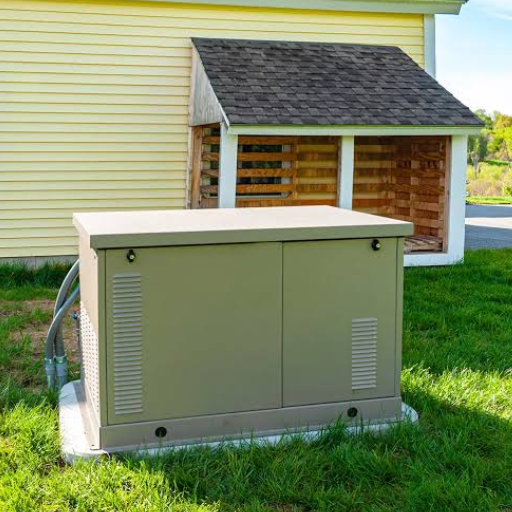
A standby power system is an electrical supply arrangement that monitors the normal utility feed and automatically transfers selected loads to an alternate power source when the grid fails. The alternate source is most often a diesel, natural gas, or propane generator set, supported by an automatic transfer switch and, for sensitive loads, a UPS.
In everyday language, people often call any backup power arrangement a “standby system.” Under the U.S. National Electrical Code (NEC), the term is more specific.
NEC Article 701 covers legally required standby systems. These must restore power within 60 seconds to loads whose failure would create hazards or hamper rescue operations. NEC Article 702 covers optional standby systems that are not legally required but protect business operations. NEC Article 700 covers emergency systems for life safety, which must restore power within 10 seconds. A fourth category, Critical Operations Power Systems under Article 708, applies to facilities vital to national security, public health, or the economy.
For a broader view of integrated power systems, see our complete guide to industrial power solutions.
When a 300-bed hospital in Southeast Asia upgraded its electrical infrastructure in 2024, the engineering team discovered that its old generator was classified as optional standby under NEC 702 but was actually carrying life-safety loads. The mismatch meant the system did not meet emergency-system transfer-time requirements. The hospital replaced it with a properly rated emergency power system plus a separate legally required standby generator, clearing the Joint Commission inspection and avoiding a six-figure fine.
Standby Power System vs. Emergency Power System vs. Backup Power System
The differences matter for code compliance, insurance, and system design.
| Term | Code Basis | Purpose | Typical Transfer Time | Example Loads |
|---|---|---|---|---|
| Emergency power system | NEC Article 700 / NFPA 110 Level 1 | Life safety | ≤ 10 seconds | Egress lighting, fire alarms, fire pumps, elevators for evacuation, life-support equipment |
| Legally required standby system | NEC Article 701 / NFPA 110 Level 2 | Code-required operations | ≤ 60 seconds | Smoke control, communications, sewage pumps, ventilation, heating |
| Optional standby system | NEC Article 702 | Business continuity/convenience | As designed | IT servers, refrigeration, office equipment, HVAC |
| Backup power system | General umbrella term | Any of the above | Varies | Any load needing power during an outage |
Backup power system is the broadest term. It includes emergency systems, standby systems, portable generators, and battery backups.
Emergency power system is the most restrictive: it protects people, not property. A standby system sits in the middle. It covers legally required and optional loads that are not life-safety critical.
NFPA 110 adds another layer. It classifies emergency power supply systems (EPSS) by Level, Type, and Class. Level 1 systems protect life safety. Level 2 systems protect less critical loads. Type defines how quickly power must be available after utility failure. Class defines how long the system must run without refueling. A common hospital designation is Type 10, Class 48: power available within 10 seconds and runtime of at least 48 hours.
Types of Standby Power Systems
Legally Required Standby Systems (NEC Article 701)
These systems supply power to loads that are not life-safety critical but are required by code or government regulation. The failure of these loads could create a hazard or interfere with firefighting or rescue. Examples include smoke removal systems, communications equipment, sewage disposal pumps, and selected industrial processes. The NEC requires automatic transfer within 60 seconds.
Optional Standby Systems (NEC Article 702)
Optional systems are installed voluntarily to protect property, data, or business continuity. They are not mandated by code. Data center IT loads, retail refrigeration, office servers, and factory production lines often fall here. Transfer time is whatever the owner specifies, although most systems still use automatic transfer.
Critical Operations Power Systems (NEC Article 708)
COPS apply to facilities designated as critical by government authorities, such as police and fire stations, emergency call centers, and certain data centers. These systems require enhanced physical security, separation from other wiring, and coordination with the authority having jurisdiction (AHJ).
Generator-Based vs. UPS-Based vs. Hybrid Systems
A generator-based system uses an engine-generator set as the alternate source. It can run for hours or days if fuel is available. A UPS-based system uses batteries or flywheels to provide instant, short-duration power. It is common for server rooms and medical imaging but cannot support long outages alone.
A hybrid system combines a UPS or BESS with a generator. The battery covers the first seconds or minutes, then the generator takes over for long-duration backup. This arrangement is increasingly popular for data centers and microgrids because it reduces generator runtime, fuel use, and emissions.
Core Components of a Standby Power System
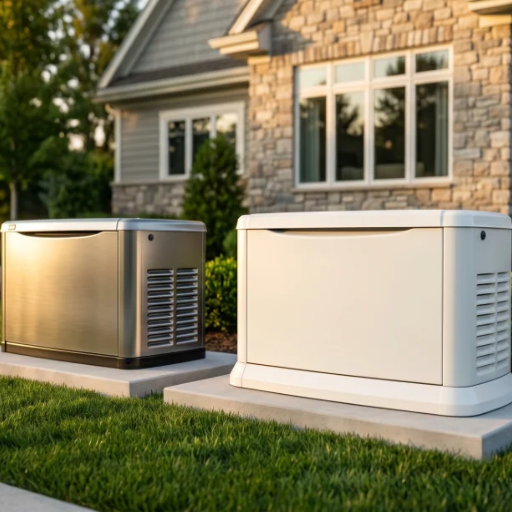
Standby Generator Set
The generator set is the heart of most standby power systems. It converts mechanical energy from an internal combustion engine into electrical energy. Engine options include diesel, natural gas, propane, and dual-fuel configurations. Alternators are typically brushless and self-excited. Control panels monitor voltage, frequency, oil pressure, coolant temperature, and operating hours.
Automatic Transfer Switch (ATS)
The ATS continuously monitors utility voltage. When it detects an outage, it signals the generator to start. It waits for stable output, then transfers the load from utility to generator.
When utility power returns and stabilizes, the ATS transfers the load back to utility. It then runs the generator through a cooling cycle before shutdown. The transfer switch also prevents dangerous backfeed into the grid.
Uninterruptible Power Supply (UPS)
A UPS provides near-instantaneous power during the gap between utility failure and generator startup. In standby generator systems, the UPS bridge is typically 10-30 seconds. Online double-conversion UPS systems work best with generators because they isolate the load from voltage and frequency transients during transfer.
Switchgear and Distribution Panels
Switchgear protects and controls the flow of power from the generator and utility to distribution panels. In large facilities, paralleling switchgear allows multiple generators to operate together. In smaller systems, a single ATS and a main distribution panel may be sufficient.
Fuel Storage and Delivery System
Diesel systems require on-site fuel tanks sized for the required runtime. Day tanks keep a small amount of fuel immediately available. Main tanks store bulk fuel.
Natural gas systems connect to a pipeline. This eliminates storage but introduces supply-chain risk during earthquakes or other disasters. Propane systems use on-site tanks and are common for smaller commercial and residential standby generators.
Monitoring, Controls, and Remote Management
Modern systems include remote monitoring through SCADA, building management systems, or cloud-based platforms. Operators receive alarms for failures to start, low fuel, battery issues, and maintenance reminders. Remote access reduces the need for on-site personnel and shortens response times.
Standby Generator Ratings: Standby vs. Prime vs. Continuous
Generator sets are rated by how long and how hard they can run. Using the wrong rating in a standby application can shorten engine life, void warranties, or cause failures during an outage.
| Rating | Load Limit | Runtime | Typical Use |
|---|---|---|---|
| Standby | 100% of rated capacity | Up to ~500 hours/year | Emergency backup during utility outages |
| Prime | 90% of rated capacity | Unlimited | Primary power where grid is unreliable or unavailable |
| Continuous | 85% of rated capacity | Unlimited | Baseload operation at constant load |
A standby-rated generator is designed for emergency use only. It can run at full nameplate capacity during an outage. It is not intended for continuous operation.
If your facility needs to run a generator for weeks or months at a time, a prime-rated or continuous-rated unit is the correct choice. Some data centers and hospitals specify prime-rated units for standby duty. The reasoning is simple: if a prolonged grid outage occurs, the generator must run continuously. A prime-rated unit running at 80% capacity has thermal and mechanical headroom that improves reliability during extended events.
How to Size a Standby Power System
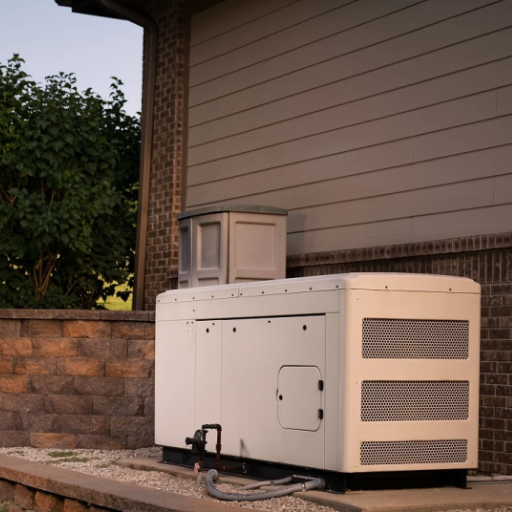
Sizing a standby power system follows a logical sequence. Skipping steps leads to under-sized generators that cannot start motors, or over-sized generators that run inefficiently and wet-stack.
Step 1: Inventory Critical Loads
List every load the generator must carry. Use nameplate data for motors, heaters, chillers, pumps, UPS systems, lighting, and IT equipment. Separate continuous loads from intermittent loads.
Step 2: Calculate Running Load
Add the running kW or kVA of all loads. Apply a diversity factor because not all loads run at full power simultaneously. Industrial facilities often use 0.7 to 0.85. Hospitals may use 0.8 to 0.9 because life-safety loads are more likely to operate together.
Step 3: Account for Motor Starting
Motors draw 5-7 times their running current during direct-on-line (DOL) starting. A 100 HP motor can require more than 500 kVA of starting capacity.
Sizing software or manufacturer curves help determine the generator kVA needed, and most standby generator sizing errors trace back to underestimating motor starting demand. The goal is to keep voltage dip within acceptable limits, typically 15-30% depending on the load.
Step 4: Add Future Growth Margin
Add 20-25% for future expansion, temperature derating, altitude derating, and load uncertainty. A generator that is exactly sized for today’s load will be too small within a few years.
Step 5: Select Standard Rating
Round up to the next standard generator rating. Manufacturers offer common sizes in 50 kVA increments at smaller ratings and 250-500 kVA increments at larger ratings.
Alternative Sizing Methods for Existing Facilities
For buildings already in operation, three field methods can validate the calculated size:
- Full load by measurement. Use a clamp-on ammeter on each leg of the electrical service during peak usage. Divide total amps by 3 for three-phase service, multiply by supply voltage, and divide by 1,000 for kW. Add emergency system loads and a 25% reserve.
- Full load by history. Review 12 months of utility bills for peak demand, then add a 25% reserve margin.
- Square footage estimate. For commercial buildings, a rough rule is 50 kW plus 5-10 watts per square foot, depending on building type. Use this only for early budgeting, never for final selection.
Medium-Voltage Considerations
For systems above roughly 400 kVA that feed loads over long distances, consider medium-voltage generation (3.3-11 kV). Medium voltage reduces cable losses and improves power quality on large campuses, but it increases switchgear cost and requires higher-skilled operating personnel. Most single-building installations below 2 MVA stay at low voltage.
Sizing Example: Industrial Manufacturing Plant
| Load Item | Running kW |
|---|---|
| Production motors (15 × 30 kW) | 450 |
| HVAC chillers (2 × 75 kW) | 150 |
| Air compressors (3 × 45 kW) | 135 |
| Lighting and receptacles | 80 |
| IT and controls | 35 |
| Total connected load | 850 |
| Diversity factor 0.75 | 638 |
| Largest motor starting kVA | +528 |
| 25% growth margin | 1,540 kVA |
| Selected generator | 1,600 kVA standby-rated |
If your project involves large motors or harmonic-rich loads, ask the generator manufacturer to review the load list. Manufacturer sizing programs account for voltage dip. They also model alternator subtransient reactance and engine governor response. These details matter in ways that manual calculations cannot capture.
Fuel Options for Standby Power Systems
Diesel
Diesel is the default fuel for industrial standby generators. It stores on site, has high energy density, and engines start quickly. A well-maintained diesel generator can reach full power in 10-15 seconds. The main drawbacks are emissions, fuel degradation over time, and the need for periodic fuel polishing and tank maintenance.
Natural Gas
Natural gas generators connect to a utility pipeline. They burn cleaner than diesel and avoid on-site fuel storage. However, pipelines can be shut off during earthquakes, hurricanes, or infrastructure failures. For this reason, many critical facilities do not rely on natural gas as the sole standby fuel.
Propane (LP)
Propane stores in pressurized tanks on site. It has indefinite shelf life and burns cleanly. Propane generators are common in residential, small commercial, and remote applications where diesel delivery is inconvenient.
HVO and Renewable Diesel
Hydrotreated vegetable oil (HVO) and renewable diesel are drop-in replacements for conventional diesel. They reduce net carbon emissions and can often be used in existing diesel engines with little or no modification. Data centers and corporations with ESG targets are increasingly specifying HVO-compatible standby generators.
Hybrid BESS + Generator Systems
A battery energy storage system (BESS) can cover short outages entirely. It also reduces generator runtime during brief events. When paired with solar, a BESS+generator arrangement forms a microgrid. This lowers fuel use and emissions while maintaining long-duration backup. It is a key option for facilities pursuing sustainability without sacrificing resilience.
Standby Power System Applications by Industry
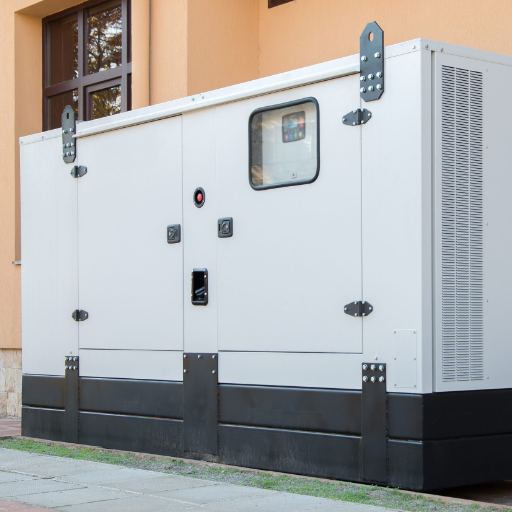
Manufacturing and Industrial Plants
Factories lose money quickly during outages. A single hour of downtime at an automotive plant can cost hundreds of thousands of dollars. Industrial systems protect production lines, robotics, process controls, safety systems, and environmental equipment. They often use three-phase diesel generators from 500 kVA to several MVA.
Hospitals and Healthcare Facilities
Hospitals require uninterrupted power for life-support equipment, operating rooms, imaging systems, and refrigeration for medicines. These facilities typically use a combination of emergency systems for life safety and legally required standby systems for critical support loads. N+1 redundancy is common, and runtime requirements often exceed 48 hours.
When Abdali Hospital in Amman expanded in recent years, it installed three Cummins C2000D5 diesel generator sets with paralleling switchgear and a master controller. The system provides standby power for the entire facility and supports N+1 redundancy for critical departments. For selection guidance, see our guide to generators for hospital applications.
Data Centers
Data centers rely on UPS systems for immediate power and generators for long-duration backup. A standby generator for data center applications must start within seconds, accept full load quickly, and run for 12-72 hours depending on the facility’s refueling contracts. Hyperscale campuses may require hundreds of megawatts of standby capacity split into redundant blocks.
Uptime Institute Tier classifications also shape generator selection. Tier I and Tier II facilities typically deploy standby-rated generators. Tier III and Tier IV facilities usually specify prime-rated units, because their designs must support concurrent maintenance and extended runtime during major grid events.
For more on data center power architecture, see our guide to power solution for data center projects.
Commercial Buildings and Telecom
Office buildings, hotels, retail centers, and telecom towers use smaller standby generators to maintain elevators, fire alarms, security systems, refrigeration, and communications. Telecom sites often use DC battery plants plus small diesel or propane generators because the loads are relatively small and continuous uptime is critical.
Codes, Standards, and Testing Requirements
NEC Articles
- Article 700: Emergency systems, life safety, ≤ 10 second transfer
- Article 701: Legally required standby systems, ≤ 60 second transfer
- Article 702: Optional standby systems, owner-specified transfer
- Article 708: Critical Operations Power Systems, enhanced requirements for critical infrastructure
NFPA 110
NFPA 110, Standard for Emergency and Standby Power Systems, governs the installation, performance, maintenance, and testing of EPSS. It classifies systems as Level 1 or Level 2 and defines Type (transfer time) and Class (runtime). Regular testing is required to verify that the system will perform during an actual outage.
UL 2200 and ISO 8528
UL 2200 covers stationary engine generator assemblies sold in North America. ISO 8528 defines international ratings and performance standards for reciprocating internal combustion engine-driven alternating current generating sets. Exporters should confirm which standards apply in the destination country.
Load Bank Testing
NFPA 110 requires periodic testing of emergency and standby power systems. Monthly exercise runs the generator under no load or light load. Annual load bank testing applies a resistive load to verify cooling, fuel delivery, and alternator performance at rated capacity. Load bank testing also helps prevent wet stacking in diesel engines.
Buying a Standby Power System from a Chinese OEM
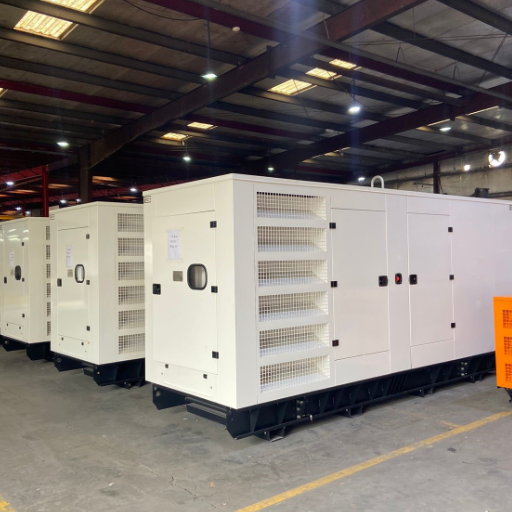
Chinese OEMs such as Shandong Huali Electromechanical Co., Ltd. offer factory-direct pricing for standby generator sets, switchgear integration, containerized power plants, and hybrid systems. There is no distributor markup.
What to Look For
- ISO 9001 and ISO 14001 certification
- In-house test center capable of full-load factory acceptance testing (FAT)
- Engine partnerships with Cummins, Perkins, Weichai, or Yuchai
- Customization track record for voltage, frequency, enclosure, ATS, and controls
- Export experience with documentation for your destination country
- Spare-parts commitment and technical support network
Typical Lead Times
- Standard standby generator sets: 4-6 weeks
- Customized systems: 8-12 weeks
- Containerized or high-voltage power plants: 12-16 weeks
Cost Advantage
Factory-direct procurement can cut equipment cost by 25-40% compared with a distributor or local integrator. Reinvest those savings in installation, commissioning, spare parts, and training.
When a textile manufacturer in Bangladesh needed 8 MW of standby power for a new dyeing facility in 2024, it compared quotes from a European distributor and Shandong Huali. The factory-direct option delivered Cummins-powered, containerized generator sets with paralleling controls and remote monitoring at 31% less cost. The units passed witnessed FAT and were commissioned within 13 weeks.
If you need help selecting the right system, request a standby power assessment and our engineers will review your load profile.
FAQ
What is a standby power system?
A standby power system automatically supplies electricity to selected loads when the normal utility source fails. It usually includes a generator, automatic transfer switch, and often a UPS for sensitive loads.
How does a standby power system differ from an emergency power system?
An emergency power system protects life safety and must restore power within 10 seconds under NEC Article 700. A standby power system covers legally required or optional loads and typically has up to 60 seconds to transfer under NEC Article 701.
What size standby generator do I need?
Size is based on total running load, motor starting requirements, voltage dip limits, diversity factor, and a 20-25% future growth margin. Industrial systems often range from 500 kVA to several MVA.
How does a standby generator start during an outage?
An automatic transfer switch detects the utility failure, signals the generator to start, waits for stable voltage and frequency, then transfers the load to generator power.
What fuel is best for a standby generator?
Diesel is most common for reliability and on-site storage. Natural gas is cleaner but depends on pipeline integrity. Propane is flexible for smaller systems. HVO and renewable diesel support sustainability targets.
How long can a standby generator run?
Runtime depends on fuel supply and rating. Diesel generators run as long as fuel is available. Standby-rated units are intended for up to ~500 hours per year, while prime-rated units can run continuously.
What maintenance does a standby power system require?
Maintenance includes regular exercise runs, oil and filter changes, battery testing, coolant checks, fuel polishing, and annual load bank testing. NFPA 110 specifies minimum testing frequencies.
What codes apply to standby power systems?
Key codes include NEC Articles 700, 701, 702, and 708, plus NFPA 110, UL 2200, and applicable local codes. International projects may require ISO 8528 or IEC standards.
Do standby generators need load bank testing?
Yes. NFPA 110 requires periodic testing, and annual load bank testing is recommended to verify performance at rated load and prevent diesel engine wet stacking.
What is the cost advantage of buying a standby generator from a Chinese OEM?
Factory-direct procurement from a Chinese OEM can reduce equipment cost by 25-40% while offering Cummins, Perkins, Weichai, or Yuchai engines, customization, FAT, and global delivery.
Conclusion
The right standby power system keeps critical operations running when the grid goes down. Start by classifying your loads under the correct NEC article, emergency, legally required standby, optional standby, or COPS. Then size the generator for running load, motor starting, diversity, and growth. Choose the right fuel and rating for your runtime and sustainability requirements. Finally, build in testing, monitoring, and maintenance from day one so the system works when it matters.
At Shandong Huali Electromechanical Co., Ltd., we design and manufacture standby, prime, and continuous generator sets from 8 kVA to 4,000 kVA. We offer diesel, gas, hybrid, and BESS configurations with Cummins, Perkins, Weichai, and Yuchai engine options. We provide OEM/ODM customization, ISO-certified testing, and global delivery. If you are planning a new standby power system or upgrading an existing one, talk to our engineering team. Our engineers will size a solution for your exact load.
