
An industrial energy solution is an integrated system that combines on-site generation, storage, energy management, and efficiency measures to cut costs, improve reliability, and lower emissions for factories. For plant managers facing volatile electricity prices and grid instability, the right mix of diesel or gas generators, combined heat and power (CHP), battery storage, and smart controls can reduce energy spending by 8–25% while keeping production lines running.
Most facilities do not need a single technology. They need a stack that works together.
In this guide, we explain how industrial energy solutions are built, why they matter now, and how to select equipment that fits your load profile. We also show how a factory-direct OEM can deliver the generators, CHP units, and hybrid controls that anchor a complete system.
For a broader view of integrated power systems, see our complete guide to industrial power solutions.
Key Takeaways
- Industrial energy solutions combine generation, storage, and management to cut costs and improve resilience.
- A well-designed industrial energy management system (IEMS) typically reduces facility energy costs by 8–25%.
- CHP/cogeneration systems reach 80–95% total efficiency by recovering waste heat for process use.
- Diesel and gas generators remain essential for backup, prime power, and grid-independent microgrids.
- Factory-direct procurement from an OEM can lower capex and speed customization for integrated energy projects.
What Is an Industrial Energy Solution?
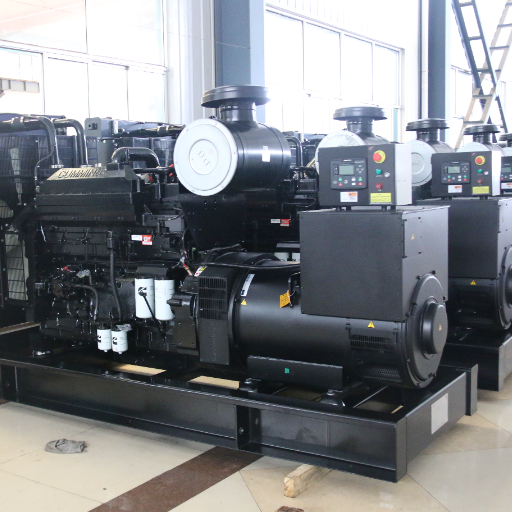
An industrial energy solution is a tailored combination of technologies and services that helps a facility produce, store, manage, and consume energy more efficiently. It goes beyond installing a generator or adding solar panels. It connects assets so they operate as one optimized system.
A typical solution may include on-site power generation, energy storage, renewable integration, energy management software, and efficiency upgrades.
The goal is not only to lower the electricity bill. It is also to reduce exposure to grid failures, manage peak demand charges, meet carbon targets, and keep production running. If protecting production against grid failure is your first concern, our guide to backup power solutions explains how automatic transfer, sizing, and fuel storage keep critical loads online.
When a textile mill in Southeast Asia combined a 1,500 kVA diesel generator with a 500 kWh battery and a cloud-based energy management platform, it reduced peak-demand penalties by 34% and rode through six utility outages in one year without stopping production.
Why Industrial Facilities Need Integrated Energy Solutions Now
Three forces are pushing manufacturers toward integrated energy strategies.
Rising Energy Costs and Demand Charges
Industrial electricity tariffs are increasing in most regions. In many markets, 30–50% of a facility’s electricity bill comes from peak demand charges, not total consumption. A solution that shaves peak load can deliver faster payback than one that only reduces kilowatt-hours.
Grid Instability and Downtime Risk
Power quality events and outages cause lost production, scrap, and restart costs. For continuous processes such as steel, cement, or chemical production, even a short interruption can cost more than a backup generator.
Decarbonization and Regulatory Pressure
Governments and customers are setting emissions targets. Industrial facilities must report energy use, reduce carbon intensity, and document progress. An integrated energy solution provides the meters, data, and controls needed for compliance.
Core Components of an Industrial Energy Solution
Industrial Energy Management System (IEMS)
An industrial energy management system is the software and hardware layer that monitors, analyzes, and controls energy flows. It collects data from meters and sensors, identifies waste, and automates responses.
Key functions include:
- Real-time monitoring of electricity, gas, steam, and water.
- Demand forecasting and peak shaving.
- Load scheduling to shift consumption to off-peak periods.
- Power quality tracking.
- Integration with building and production systems.
A properly implemented IEMS typically reduces energy costs by 8–25%, according to industry studies.
On-Site Power Generation
On-site generation turns a facility from a pure consumer into a producer. Options include:
- Diesel generator sets: Fast-start backup and prime power for remote or unstable grids.
- Natural gas generators: Lower emissions than diesel, suitable for continuous or CHP duty.
- CHP/cogeneration plants: Produce electricity and useful heat simultaneously.
- Biogas and landfill gas engines: Use waste streams as free or low-cost fuel.
Battery Energy Storage System (BESS)
Industrial BESS is one of the fastest-growing parts of the energy stack. Batteries can:
- Shift energy purchases to cheaper off-peak hours.
- Provide ride-through power during voltage sags.
- Support renewable generation by smoothing output.
- Reduce demand charges by discharging during peak periods.
Renewable Generation
Solar PV is the most common on-site renewable asset for industry. When paired with storage and a generator, it forms a hybrid microgrid that can operate with or without the utility grid.
Controls and Switchgear
Automatic transfer switches, paralleling switchgear, and microgrid controllers decide which assets run, when they run, and how they share load. Without smart controls, even the best equipment cannot deliver maximum value.
Industrial Energy Management Systems Explained
An IEMS transforms raw meter data into actionable decisions. Most platforms use a three-layer architecture.
Field Device Layer
Meters, sensors, and power analyzers measure energy flows at substations, major loads, and generation assets. They capture voltage, current, power factor, harmonics, and other parameters.
Communication Layer
Gateways collect data from field devices using protocols such as Modbus, BACnet, or IEC 61850. They buffer data locally and transmit it to the central platform.
Platform Layer
Cloud or on-premise software stores data, runs analytics, and presents dashboards. Advanced systems use machine learning to forecast loads, detect anomalies, and optimize dispatch.
A food processing plant in Eastern Europe installed sub-meters on its refrigeration compressors, mixers, and packaging lines. Within three months, the IEMS revealed that two older compressors were cycling inefficiently. Replacing them saved €47,000 per year and paid for the metering project in under 18 months.
On-Site Power Generation for Industry
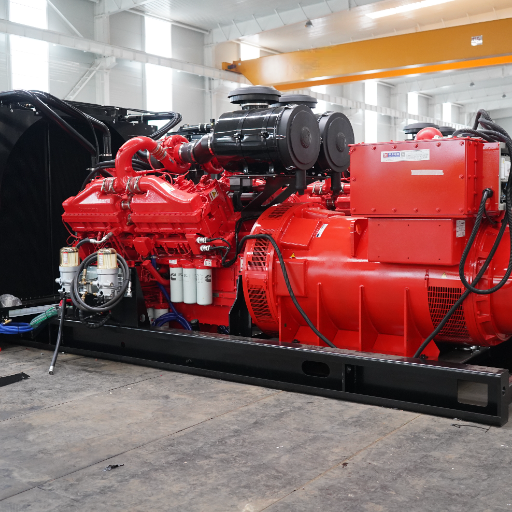
Diesel Generator Sets
Diesel generators remain the workhorse of industrial backup power. They start quickly, handle large motor loads, and can run for extended periods with adequate fuel storage.
Typical applications:
- Emergency standby for critical processes.
- Prime power for remote mines and construction sites.
- Microgrid anchor for facilities with weak grid connections.
For operations in harsh, remote terrain, our guide to the right mining power supply solution covers derating, dust protection, and mobile deployment in detail. Construction projects have their own temporary-power needs, and our guide to power supply for construction helps match equipment to each phase of a build. Because excavation and build sites shift as work progresses, many contractors rely on a trailer-mounted mobile power station that can be relocated with the operation. And where the grid is unavailable or unreliable, our guide to off-grid power solutions explains how prime, hybrid, and battery systems keep power flowing continuously.
Huali builds diesel generator sets from 8 kVA to 4,000 kVA using Cummins, Perkins, Weichai, and Yuchai engines.
Natural Gas Generators
Natural gas generators offer cleaner operation and lower fuel cost in markets with affordable gas supply. They are well suited for:
- Continuous industrial power.
- CHP systems where waste heat is recovered.
- Facilities with access to pipeline gas or compressed natural gas (CNG).
Combined Heat and Power (CHP)
CHP, also called cogeneration, produces electricity and captures heat that would otherwise be wasted. A gas engine or turbine drives a generator. Jacket water and exhaust heat are recovered for process heating, steam, or absorption cooling.
CHP systems commonly achieve 80–95% total efficiency. Separate grid power and on-site boilers reach only about 45–55%. CHP can also cut CO₂ emissions by more than one-third.
Biogas and Hydrogen-Ready Options
Facilities with organic waste streams can use biogas engines to turn a disposal problem into a fuel source. Hydrogen-ready generators are also entering the market for long-term decarbonization strategies.
Industrial Battery Energy Storage Systems
Industrial BESS is shifting from a niche technology to a standard part of the energy stack. The fastest-growing applications are:
- Peak shaving: Discharge during demand spikes to avoid high tariff bands.
- Energy arbitrage: Store cheap off-peak power and use it during expensive peak periods.
- Backup ride-through: Bridge the gap between a grid outage and generator startup.
- Renewable firming: Smooth solar and wind output to match load.
Sizing a BESS requires accurate load data. A common starting point is to size storage for the facility’s highest 15–30 minute demand peak, then model discharge duration against tariff structures.
Ready to see how on-site generation and storage can reduce your plant’s energy costs? Request an industrial energy solution assessment →
Hybrid Industrial Energy Architectures
The most resilient industrial energy solutions combine multiple assets into a coordinated microgrid.
Generator + BESS + Solar
Solar PV reduces daytime grid purchases. The BESS stores excess solar and provides peak shaving. The generator covers prolonged outages or cloudy periods. This architecture is popular for factories in regions with high solar irradiance and unreliable grids.
CHP + Thermal Storage + Absorption Cooling
In facilities with steady thermal demand, CHP provides baseload power and heat. Thermal storage captures surplus heat, and absorption chillers convert it into cooling. This turns waste heat into a valuable asset.
Grid-Connected vs. Islandable Microgrids
A grid-connected microgrid reduces energy costs while staying linked to the utility. An islandable microgrid can separate from the grid entirely and maintain critical loads during outages. The choice depends on reliability requirements and local interconnection rules.
Industrial Energy Solutions by Application
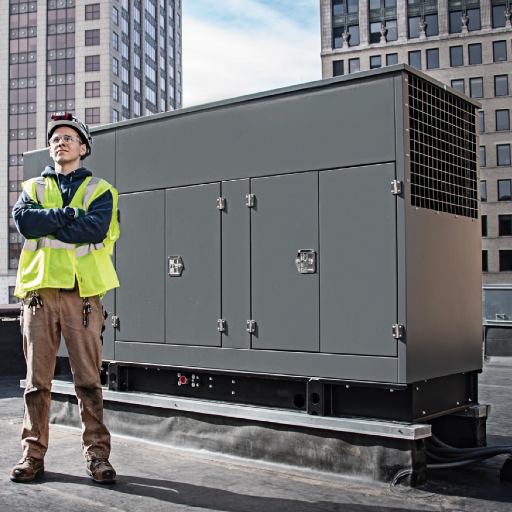
Manufacturing and Assembly Plants
Manufacturers need stable power for robotics, CNC machines, and assembly lines. Solutions often combine standby generators, power factor correction, and demand management.
Cement, Steel, and Heavy Industry
These sectors have large thermal and electrical loads. CHP, waste heat recovery, and high-efficiency motors deliver the biggest impact.
Food and Beverage Processing
Refrigeration is the dominant load. CHP with absorption cooling and solar + BESS can cut both electricity and cooling costs.
Data Centers and Critical Facilities
Data centers require N+1 redundancy and fast transfer times. Diesel generators remain the standard for backup, while BESS and solar are increasingly used for peak shaving and sustainability targets. See our detailed guide on power solution for data center.
Hospitals and Healthcare
Hospitals need compliant backup power for life safety and critical branches. A hospital energy solution must meet codes such as NFPA 99 and NFPA 110. Read more in our article on generator for hospital.
How to Size and Select an Industrial Energy Solution
A systematic approach prevents over-investment or under-performance.
Step 1: Establish the Baseline
Collect 12–24 months of utility bills and interval meter data. Identify consumption patterns, peak demand periods, and power quality issues.
Step 2: Classify Loads
Separate loads into three categories:
- Critical loads: Must stay on during outages.
- Interruptible loads: Can be shed during peak pricing or emergencies.
- Flexible loads: Can be shifted to off-peak hours.
Step 3: Size On-Site Generation
For backup duty, size generators to cover critical and life-safety loads with margin. For prime or continuous duty, size for the full operating load plus future growth.If your facility only needs power during utility outages, our guide to the standby power system explains duty limits, sizing, and typical applications. For life-safety branches that must restore power within seconds, our guide to the emergency power generator breaks down what NEC 700 and NFPA 110 demand.
Step 4: Size BESS for Peak Shaving
Model the facility’s demand profile against tariff rates. Size the battery to clip the highest peaks without excessive cycling.
Step 5: Evaluate CHP Thermal Balance
A CHP plant only makes sense if there is steady use for the recovered heat. Match electrical output to thermal demand.
Step 6: Add Growth Margin
Industrial loads typically grow 10–25% over a 10-year horizon. Size transformers, switchgear, and generation capacity to accommodate expansion.
Codes, Standards, and Compliance
Industrial energy projects must comply with electrical, environmental, and safety standards. Key references include:
- ISO 50001: Energy management systems standard.
- IEC 60204: Safety of machinery electrical equipment.
- IEEE 1547: Standard for interconnection and interoperability of distributed energy resources.
- NFPA 70 / NEC: National Electrical Code requirements.
- Local grid codes: Utility interconnection and export rules.
- Emissions regulations: Permits for generators and CHP plants.
Working with an experienced supplier simplifies compliance because the equipment arrives certified, documented, and ready for inspection.
Buying an Industrial Energy Solution from a Chinese OEM
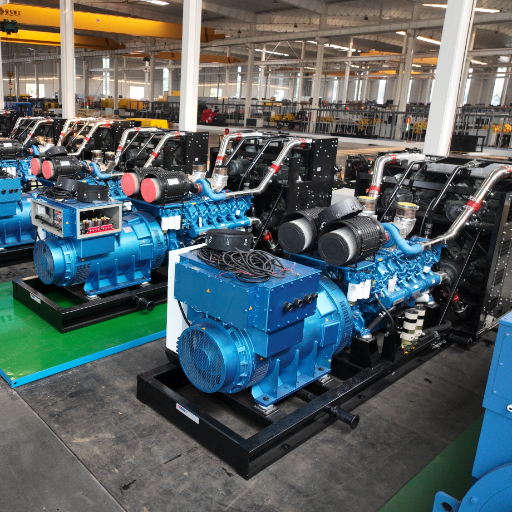
Global buyers increasingly source industrial energy equipment directly from OEMs to reduce cost and gain customization flexibility. Shandong Huali Electromechanical offers several advantages for these projects.
Factory-Direct Engineering
With 25+ years of manufacturing experience, Huali designs and builds generator sets from 8 kVA to 4,000 kVA. Every unit is tested in a national-standard facility before shipment.
Engine and Component Options
Huali integrates globally recognized engines and alternators:
- Cummins: High-performance engines for demanding duty.
- Perkins: Reliable power for continuous and standby applications.
- Weichai: Cost-effective industrial-grade solutions.
- Yuchai: Durable engines widely used in emerging markets.
- Stamford alternators: Premium electrical output quality.
Customization for Integrated Projects
Huali can customize voltage, frequency, enclosure type, fuel system, controls, ATS, and paralleling switchgear. Containerized and trailer-mounted options are available for remote or mobile deployments.
Factory Acceptance Testing and Global Delivery
Before shipment, units undergo 100% testing and documented factory acceptance testing. Huali supports clients in 20+ countries with export documentation, spare parts, and technical assistance.
Looking for a factory-direct energy partner? Contact Huali’s engineering team to discuss generators, CHP, BESS, and hybrid controls for your facility.
FAQ
What is an industrial energy solution?
An industrial energy solution is an integrated system that combines on-site generation, energy storage, energy management, and efficiency measures to reduce costs, improve reliability, and lower emissions.
What is an industrial energy management system?
An industrial energy management system (IEMS) is a platform that monitors, analyzes, and controls energy use in real time. It helps facilities identify waste, reduce peak demand, and optimize equipment operation.
How does an IEMS reduce energy costs?
An IEMS reduces costs by revealing inefficiencies, shifting flexible loads to off-peak hours, reducing peak demand charges, and automating control decisions based on real-time data.
What is CHP and why is it efficient?
Combined heat and power (CHP), or cogeneration, produces electricity and captures waste heat for useful purposes. Total efficiency can reach 80–95%, far higher than separate heat and power generation.
Can a diesel generator be part of an industrial energy solution?
Yes. Diesel generators provide fast-start backup power, prime power for remote sites, and a reliable anchor for hybrid microgrids that include solar and battery storage.
How big should an industrial BESS be?
Industrial BESS sizing depends on peak demand, tariff structure, required backup duration, and renewable generation profile. A common starting point is to size for the highest 15–30 minute peak.
What is the ROI of an industrial energy solution?
ROI depends on the technologies used. IEMS projects often pay back in 1–3 years, CHP in 3–5 years, and BESS in 3–7 years depending on electricity tariffs and incentives.
What standards apply to industrial energy management?
ISO 50001 is the leading energy management standard. Electrical interconnection follows IEEE 1547 and local grid codes, while safety follows NFPA 70 / NEC and IEC standards.
What fuels can industrial CHP systems use?
Industrial CHP systems commonly run on natural gas, biogas, landfill gas, sewage gas, and hydrogen blends. Fuel choice depends on availability, cost, and emissions targets.
What are the benefits of buying an industrial energy solution from a Chinese OEM?
Factory-direct pricing, flexible customization, direct engineering support, and documented testing. Established OEMs also provide global delivery, spare parts, and after-sales service.
Conclusion
Industrial energy solutions are no longer limited to large utilities or multinational campuses. Manufacturers of every size can combine generators, CHP, BESS, solar, and smart controls into a system that cuts costs, improves resilience, and supports sustainability goals.
The best results come from matching the technology stack to the facility’s actual load profile, then sourcing equipment from a supplier that can customize, test, and support the project globally.
At Shandong Huali Electromechanical, we supply the diesel and gas generator sets, CHP integration, and hybrid controls that anchor modern industrial energy solutions. Request an industrial energy solution assessment and our engineers will help you size and configure the right system for your plant.
