
A power supply for construction is a temporary or semi-permanent electrical system that energizes job-site trailers, tools, cranes, lighting, and safety equipment before the building’s permanent service is energized. Most contractors rely on diesel or gas generators sized for prime duty, combined with distribution panels, GFCI/RCD protection, and voltage-drop-controlled cable runs to keep the project on schedule and within code.
When a tower crane shuts down mid-lift because the generator was undersized, the delay costs more than the rental. When a concrete pour is interrupted by a tripped breaker, the slab may need rework. On construction sites, power is not a convenience.
It is the utility that runs the schedule. This guide treats site power as one of the core industrial power solutions that every contractor must get right.
In this guide, we explain how to size, install, and source a reliable power supply for construction projects of every scale. We cover load calculation, safety compliance, distribution design, mobile and hybrid options, and how to buy factory-direct equipment that fits your budget.
For a broader view of integrated power systems, see our complete guide to industrial power solutions.
Key Takeaways
- A power supply for construction must be sized for continuous load plus motor-starting surge, with a 15–25% growth margin.
- Diesel generators remain the standard, but solar-diesel-battery hybrid systems reduce fuel use and noise on urban and ESG-sensitive sites.
- NEC Article 590, OSHA, and equivalent international standards require GFCI/RCD protection, grounding, and weatherproof distribution for temporary power.
- Mobile, trailer-mounted, and containerized generator plants let contractors relocate power as the job progresses.
- Factory-direct OEM procurement can cut capital cost while delivering custom voltage, enclosure, and control configurations for global projects.
What Is a Power Supply for Construction?
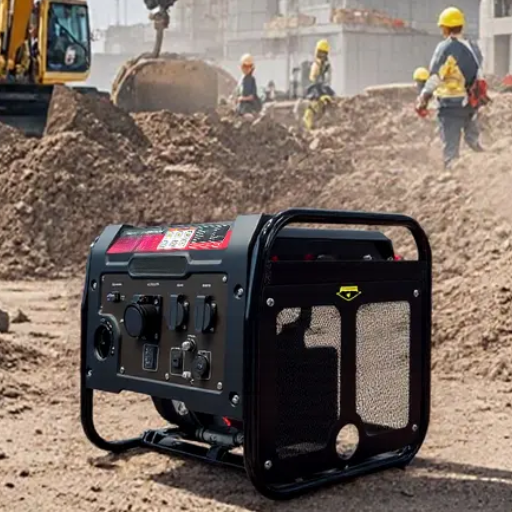
A power supply for construction is the equipment and wiring that delivers electricity to a building site before permanent utility service is available. It can come from a temporary utility connection, a generator set, or a hybrid microgrid. The system includes the power source, distribution panels, protection devices, cabling, and grounding needed to serve site loads safely.
Construction power differs from permanent building power in three important ways:
- It is temporary by design, intended to move or disconnect as phases change.
- It must survive harsh conditions such as mud, dust, vibration, and weather.
- It serves mixed loads with high starting currents, from small hand tools to large tower cranes.
A well-designed construction power system keeps crews productive, protects equipment, and satisfies inspectors from the first day of mobilization.
Why Construction Power Supply Matters More Now
Three trends are raising the stakes for site power.
Projects Are Electrifying
Battery-powered tools, electric compactors, LED lighting, and even electric excavators are appearing on more sites. These loads change the power profile. Battery chargers draw steady current for hours, while electric machines can require dedicated circuits and higher short-circuit capacity.
Schedules Are Tighter
Late power delivery can delay concrete pours, crane erection, and commissioning. Contractors increasingly bring generators to site on day one rather than wait for utility connections, which can take weeks or months.
Regulations Are Tightening
Urban projects face noise limits, emissions restrictions, and stricter electrical safety enforcement. In many cities, diesel-only generators face curfews or emissions fees. Hybrid and battery-buffered systems help contractors meet these rules without stopping work.
When a commercial contractor in Singapore replaced a 500 kVA diesel-only set with a 400 kVA diesel generator plus 200 kWh battery, noise during evening shifts dropped below 65 dB(A) at the site boundary. Fuel use fell by 28%, and the project avoided a local emissions surcharge.
Types of Power Supply for Construction Sites
Choosing the right construction site power supply starts with understanding the available sources. Each option fits different project sizes, durations, and locations.
Utility Temporary Service
The local utility can sometimes provide a temporary meter and service to the site. This is often the lowest-cost option for long-duration projects near existing infrastructure. However, it requires utility approval, lead time, and coordination with the permanent service design.
Diesel and Gas Generator Sets
A diesel generator for construction is the default choice for site power because it is portable, durable, and available in sizes from 10 kVA to 3,000 kVA. Gas generators are used where emissions rules favor cleaner fuel or where pipeline gas is available.
Mobile and Trailer-Mounted Generators
A mobile power station for construction can be towed between site phases. Trailer-mounted generators are common for roadwork, pipeline construction, and building sites where power needs shift as the structure rises.
Containerized Power Plants
For large infrastructure or remote projects, containerized generator plants house multiple generator sets, switchgear, and fuel systems in ISO containers. They arrive nearly ready to run and can be relocated by truck, rail, or ship.
Solar-Diesel-Battery Hybrid Systems
Hybrid systems combine a smaller diesel generator with solar panels and batteries. Solar and battery cover base load and quiet-hour operation, while the diesel generator handles peaks and recharges the batteries.
Battery Energy Storage Systems (BESS)
Battery systems can replace small generators for low-power sites or work alongside larger generators to reduce runtime, fuel, and noise. They are especially useful for urban night work and sites with strict emissions targets.
| Power Source | Best For | Strengths | Limitations |
|---|---|---|---|
| Utility temporary service | Long jobs near grid | Lowest fuel cost | Utility lead time, limited mobility |
| Diesel generator | Most sites | Portable, durable, high starting current | Emissions, noise, fuel logistics |
| Gas generator | Clean-air zones or pipeline access | Lower emissions | Fuel availability, lower energy density |
| Mobile/trailer generator | Shifting work fronts | Easy relocation | Smaller capacity range |
| Containerized plant | Large or remote projects | Megawatt scale, fast deploy | Higher capital cost |
| Solar-diesel-battery hybrid | Sunny, ESG-sensitive sites | Fuel savings, low noise | Higher upfront cost |
| BESS only | Small, quiet-night sites | Zero noise, zero emissions | Limited energy capacity |
Construction Site Loads and Load Profiles
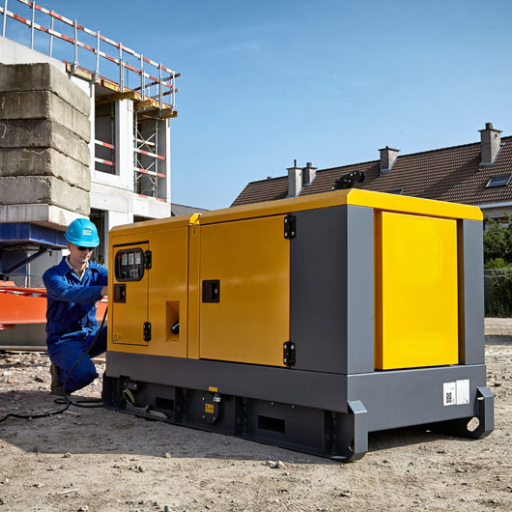
Every construction phase has a different power appetite. The power supply must be sized for the peak combination of simultaneous loads.
Site Trailers and Offices
Trailers need lighting, HVAC, computers, printers, and kitchen equipment. These loads are small but continuous. A 30–100 kVA generator often serves a cluster of site offices.
Tools and Small Equipment
Drills, saws, grinders, and compressors cycle on and off. Contractors use demand factors because not every tool runs at once. Still, the largest motor-starting surge must be accounted for.
Welders and Cutting Equipment
Welding machines draw high current with poor power factor. They can cause voltage flicker and harmonics that disturb other equipment. Proper sizing, cable sizing, and sometimes dedicated circuits are necessary.
Cranes and Heavy Lifts
Tower cranes and mobile cranes are among the largest construction loads. A single tower crane can require 200–500 kVA or more, with high starting current when hoisting. Crane power must be planned early because it affects generator size and cable routing.
Concrete Pumps and Batch Plants
Concrete pumps and batch plants need reliable three-phase power. A pump outage during a pour can waste concrete and labor. Redundant power or oversized capacity is common for critical concrete operations.
Dewatering and Pumping
Submersible pumps run for days or weeks during excavation and foundation work. They are continuous loads that must be included in the base demand calculation.
Lighting and Security
Site lighting and security systems run at night. LED floodlights reduce load compared to metal-halide lamps, but circuits must still be protected and grounded.
How to Size a Power Supply for Construction
Accurate construction generator sizing prevents both brownouts and wasted fuel. Follow these steps.
Step 1: Inventory Site Power Requirements
List every piece of equipment that may run at the same time. Record running watts, starting watts, voltage, phase, and power factor. Do not forget site trailers, chargers, and future phases.
A clear site power requirements document makes sizing faster and helps inspectors review the design.
Step 2: Record Running and Starting Power
Add the running power of all loads that operate simultaneously. Then identify the single largest motor-starting surge. This surge is added once, not for every motor.
Step 3: Apply Load Diversity and Demand Factor
Not everything runs at full load at the same time. Demand factors from NEC Article 220 or local codes can reduce the calculated load for intermittent tools. Continuous loads such as pumps, lighting, and HVAC should not be diversified.
Step 4: Convert kW to kVA Using Power Factor
Generators are rated in kVA, but motors are rated in kW. Use the formula kVA = kW / power factor. Construction loads often have power factors around 0.8.
Low power factor forces the alternator to carry more current.
Step 5: Account for Motor Starting Surge
Large motors can draw five to seven times their running current when starting. The generator must deliver this surge without excessive voltage dip. Soft starters or variable frequency drives can reduce starting current.
Step 6: Derate for Altitude, Temperature, and Fuel
Engine output drops at high altitude and high temperature. Generator manufacturers provide derating curves. Apply these to the site conditions to avoid underperformance.
Step 7: Add 15–25% Future Growth Margin
Construction loads grow as the project advances. Add a margin for new equipment, additional trailers, and unexpected additions. A 20% margin is common for mid-size projects.
A contractor in Texas sized a 300 kVA generator for a commercial site by listing all tools, cranes, and trailers, applying a 0.75 demand factor to intermittent tools, adding the tower crane starting surge, converting to kVA at 0.8 power factor, and adding 20% growth. The generator ran at 75% load during peak operations and never tripped on motor start.
Construction Power Distribution and Safety
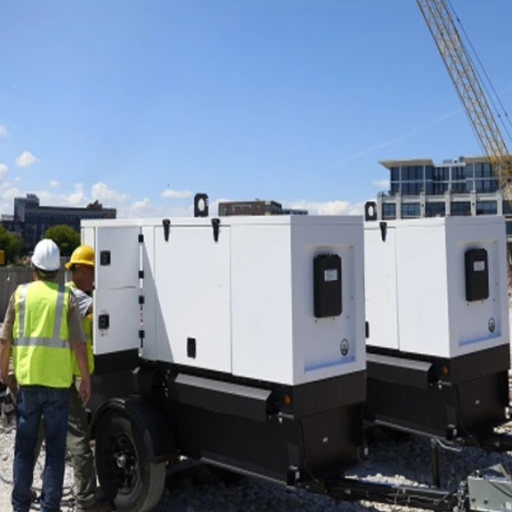
Good construction power distribution is as important as generator sizing. A properly sized generator can still fail if cables are undersized, panels are unprotected, or grounding is missing.
Distribution Panels and Temporary Switchboards
Temporary switchboards split generator output into branch circuits. They must be rated for the environment, lockable, and clearly labeled. In many countries, temporary switchboards must use Type A RCDs or equivalent that detect both AC and DC leakage.
Cable Sizing and Voltage Drop
Cables must be sized for current, distance, and voltage drop. NEC Article 445 recommends keeping generator conductor voltage drop below 3%. Long cable runs to tower cranes or remote pumps may require larger conductors or higher distribution voltage.
GFCI and RCD Protection
Ground-fault protection saves lives on wet construction sites. Construction electrical safety starts with proper GFCI or RCD protection. In the United States, OSHA and NEC require GFCI protection for 125 V, single-phase, 15 A and 20 A receptacles. Other countries require similar RCD protection with regular testing.
Grounding and Bonding
All temporary power systems must be grounded. Generator frames, distribution panels, and exposed metal parts must be bonded together. Proper grounding limits touch voltage during a fault.
Weather and Physical Protection
Cables should be routed overhead or underground where possible to avoid vehicle damage. Receptacles and panels need weatherproof enclosures. Generators should sit on level ground with adequate ventilation and spill containment.
Construction Power Standards and Compliance
NEC Article 590 (United States)
The National Electrical Code Article 590 covers temporary electrical power and lighting. It addresses wiring methods, GFCI protection, grounding, and the duration of temporary installations. Construction and demolition power can remain until the project is complete.
OSHA 29 CFR 1926 Subpart K
OSHA regulations govern electrical safety on US construction sites. Key requirements include GFCI protection or an assured equipment grounding conductor program, plus safe use of cords and equipment.
Canadian Electrical Code
Canada requires compliance with the Canadian Electrical Code and provincial occupational health and safety regulations for temporary power. Grounding, GFCI, and inspection are mandatory.
IEC and BS Standards (Europe)
European construction sites follow IEC standards and national wiring regulations. BS 7671 and related standards cover temporary supplies, RCD protection, and equipment selection.
AS/NZS 3000 and AS/NZS 3012 (Australia and New Zealand)
Australian and New Zealand construction sites must comply with AS/NZS 3000 and AS/NZS 3012. These standards specify isolation, RCD types, switchboard construction, and inspection intervals.
GB Standards (China)
Chinese construction projects follow GB standards for electrical installation, generator performance, and safety. Contractors importing equipment must ensure voltage, frequency, and certification compliance.
Mobile and Containerized Construction Power Plants
Benefits of Trailer- and Skid-Mounted Generators
Trailer-mounted generators move with the work. They reduce civil works and are ideal for road projects, pipelines, and building sites where the power point changes. Skid-mounted units are common for semi-permanent installations such as batch plants and camps.
Containerized Multi-Megawatt Plants
For airports, highways, tunnels, and remote camps, containerized power plants deliver megawatts in standard shipping containers. They include generators, fuel systems, switchgear, and controls in a weather-resistant package.
Relocation and Redeployment Value
Reusable mobile power assets protect capital investment. When one project ends, the same generator can move to the next site. This is a major advantage over fixed utility infrastructure for contractors with multiple active projects.
Hybrid and Low-Emission Construction Power
Solar-Diesel-Battery Hybrid for Urban Sites
A hybrid power system for construction reduces generator runtime by using solar during the day and batteries at night. A smaller diesel generator runs only when renewable output is insufficient. This cuts fuel deliveries, emissions, and noise.
Battery Storage for Peak Shaving and Quiet Hours
Batteries can supply short peaks without starting a larger generator. They also allow zero-noise operation during evening or weekend shifts when local noise limits are strictest.
Emissions and Noise Compliance Benefits
Cities increasingly impose low-emission zones and noise limits. Hybrid and battery-buffered systems help contractors comply while avoiding fines, curfews, and community complaints.
Rental vs. Purchase vs. Factory-Direct Procurement
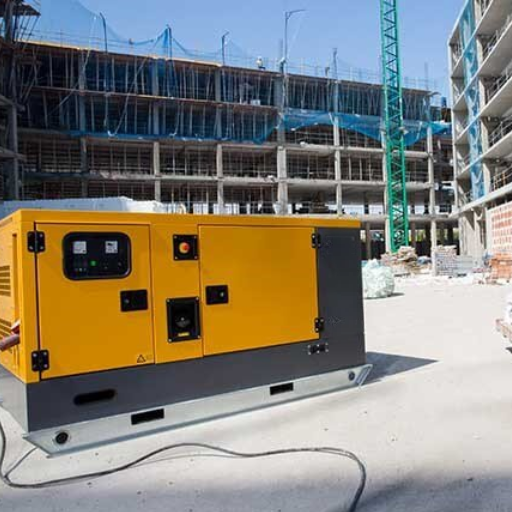
When Rental Makes Sense
Rental is best for short projects, emergency response, or when the contractor lacks maintenance capacity. Rental companies handle transport, service, and fuel logistics. The trade-off is higher cost per day over long periods.
When Purchase Pays Off
Purchase is better for contractors with steady project pipelines or long-duration jobs. Owning the asset eliminates recurring rental fees and allows customization. Depreciation and resale value also improve total cost of ownership.
Buying from a Chinese OEM
Factory-direct procurement from an established OEM offers competitive pricing, customization, and documented testing. Buyers can specify voltage, frequency, enclosure type, control system, fuel strategy, and mobile mounting.
Huali Construction Power Solutions
Shandong Huali Electromechanical has more than 25 years of manufacturing experience and supplies generator sets from 8 kVA to 4,000 kVA for construction, mining, and industrial applications.
Engine and Component Options
Huali integrates globally trusted engines and alternators:
- Cummins: high performance for demanding duty.
- Perkins: reliable continuous and standby power.
- Weichai: cost-effective industrial-grade solutions.
- Yuchai: durable engines widely used in emerging markets.
- Stamford alternators: premium output quality.
Customization for Construction Projects
Huali can customize voltage, frequency, phase, enclosure, fuel tanks, ATS, paralleling, remote monitoring, and mounting. Mobile, trailer-mounted, containerized, and silent options are available for urban and remote sites.
Our equipment also supports related critical infrastructure. Contractors working on healthcare or IT projects can pair construction power experience with our generator for hospital and power solution for data center expertise.
Factory Acceptance Testing and Global Support
Every unit undergoes 100% testing and documented factory acceptance testing before shipment. Huali supports clients in 20+ countries with export documentation, spare parts, and technical assistance.
Need a reliable power supply for your construction site? Contact Huali’s engineering team to discuss diesel, hybrid, and mobile power systems.
FAQ
How do you size temporary power for a construction site?
List all simultaneous loads, record running and starting power, apply demand factors to intermittent loads, convert kW to kVA using power factor, add the largest motor-starting surge, and include a 15–25% growth margin.
What size generator is needed for a construction site?
Small residential projects may need 7,500 W. Commercial sites typically use 25–100+ kW towable generators. Heavy industrial work with cranes can require 100+ kW or multiple synchronized units.
What is the difference between prime and standby generators for construction?
Prime-rated generators are designed for continuous operation, which is typical for construction sites without utility power. Standby generators are for emergency backup and are not rated for continuous duty. Learn more in our guide to standby power systems.
Do temporary power setups need GFCI protection?
Yes. In the United States, OSHA and NEC require GFCI protection for 125 V, single-phase, 15 A and 20 A receptacles on construction sites. Many other countries require similar RCD protection.
How long can temporary power remain on a construction site?
Under NEC Article 590, construction temporary power can remain for the duration of the project. The system must be removed or converted when permanent power is energized.
What should a temporary power plan include?
A plan should show the power source, distribution layout, panel locations, cable routes, load schedule, grounding scheme, GFCI/RCD protection, and coordination with the utility or owner.
Can solar power work on construction sites?
Yes. Solar panels can reduce daytime generator runtime, especially when paired with batteries. Hybrid systems are strongest on sites with good solar resource and strict emissions or noise limits.
What are common mistakes when sizing construction power?
Common mistakes include sizing from peak nameplate rather than continuous rating, ignoring power factor and motor starting surge, failing to plan for future phases, and overlooking voltage drop on long cable runs.
When should a contractor rent vs. buy a generator?
Rent for short-term, emergency, or maintenance-free needs. Buy when the project is long or the contractor has recurring work. Factory-direct purchase often lowers capital cost for buyers willing to manage transport and service.
What are the benefits of buying construction power equipment from a Chinese OEM?
Factory-direct pricing, flexible customization, direct engineering support, documented testing, global delivery, and spare parts availability. Established OEMs can match regional voltage, frequency, and certification requirements.
Conclusion
A reliable power supply for construction keeps schedules on track, crews safe, and inspectors satisfied. The best designs size generators for actual continuous load plus motor-starting surge, protect workers with GFCI/RCD and grounding, and choose mobile or hybrid configurations when the project demands flexibility or low emissions.
Contractors who plan power early and choose the right procurement model avoid costly delays. At Shandong Huali Electromechanical, we supply the generator sets, hybrid systems, and mobile power plants that construction teams rely on worldwide.
Request a construction power supply assessment and our engineers will help you size and configure the right system for your site.
