
Load bank testing for diesel generators is required when a standby set cannot reach 30 percent of its nameplate kW during monthly exercise, or when NFPA 110 calls for a triennial full-load test on Level 1 emergency power systems. The test applies a controlled electrical load to prove the generator can run at rated output, burn off carbon deposits, and reveal hidden faults before a real outage.
Without it, a generator that starts perfectly on a no-load weekly test can still fail when the building actually needs power. That is the gap load bank testing closes.
Hassan, the facilities manager at a 200-bed hospital in Nairobi, learned this during a scheduled grid maintenance window. His three 800 kVA standby sets had passed their monthly 15-minute no-load runs for two years. When engineers connected a load bank and stepped each set to 75 percent, one unit overheated at 50 percent and shut down. The radiator was internally scaled, and the coolant pump was worn. The fault had been invisible at no load. A corrective repair and a follow-up full-load test kept the hospital protected.
This guide gives you the exact procedure, the NFPA 110 frequency rules, the cost bands, and the parameters to watch. For the broader maintenance system behind the test, see our complete diesel generator maintenance guide. If your set is showing signs of wet stacking or light-load operation, pair this with our diesel generator troubleshooting guide and the diesel generator maintenance checklist.
Key Takeaways
- Load bank testing diesel generator sets is required when monthly exercise cannot reach 30% of nameplate kW for 30 minutes.
- NFPA 110 Level 1 emergency power systems need a full-load test every 36 months, regardless of monthly performance.
- A standard stepped test runs 25% → 50% → 75% → 100% load, with a typical total duration of 2 to 4 hours including setup and cool-down.
- Load banks are sized by kW rating, not kVA; a 500 kW generator needs at least a 500 kW load bank.
- Typical cost ranges from 1,000forsmallsets∗∗to∗∗1,000forsmallsets∗∗to∗∗4,000–$8,000+ for 1,000+ kW units.
What Is Load Bank Testing and Why Does It Matter?
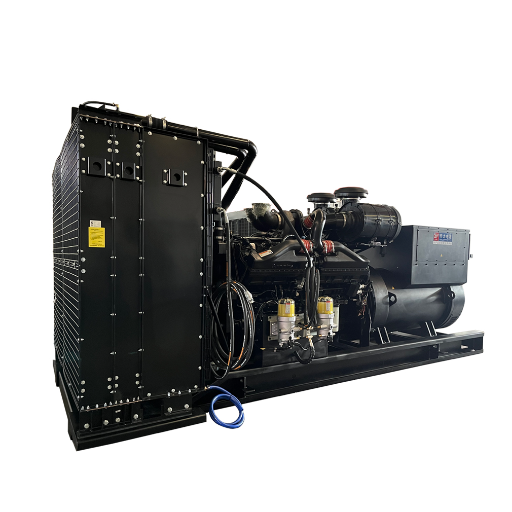
A load bank is a resistive, reactive, or combined device that simulates electrical demand. It replaces the building load so the generator runs at a known output while technicians measure performance.
The main purpose of generator load bank testing is to prove the set can carry rated load and run long enough to reach stable operating temperatures. Oil, coolant, exhaust, and combustion systems behave differently at 5 percent load than they do at 75 percent. Many faults only appear under real stress.
The second purpose is to prevent wet stacking. When a diesel runs below roughly 30 percent load for long periods, combustion temperature drops. Unburned fuel and oil then coat exhaust ports, valves, the turbocharger, and the diesel particulate filter. A load bank test burns off those deposits.
When Is Load Bank Testing Required?
NFPA 110 organizes testing into three tiers. The exact schedule depends on whether the generator hits its load target during normal monthly exercise.
| Test Type | Frequency | Load Requirement | Applies To |
|---|---|---|---|
| Monthly exercise | Monthly | ≥30% nameplate kW for 30 min, or manufacturer exhaust-temp target | All diesel EPSS |
| Annual supplemental load bank | Annually | If any monthly test fails the 30% rule; common practice is 50% for 30 min + 75% for 60 min | Sets on light-load sites |
| Triennial full-load test | Every 36 months | Full nameplate rating, often 2–4 hours | Level 1 EPSS (hospitals, life safety, critical infrastructure) |
If every monthly test reaches 30 percent or more, the annual supplemental load bank is not required. The triennial full-load test still is, for Level 1 systems. Local authorities having jurisdiction can impose stricter rules, and NFPA 99 adds extra requirements for healthcare facilities.
For a standby power system that rarely runs, monthly loaded exercise is the best way to avoid the extra annual test.
NFPA 110, NFPA 99, and Local Authority Requirements
NFPA 110 is the base standard for emergency and standby power systems. It defines the monthly exercise, the supplemental load bank, and the triennial full-load test. NFPA 99 adds healthcare-specific rules, including more frequent testing intervals and complete simulated cold starts.
However, the local authority having jurisdiction has the final word. Some jurisdictions require annual load bank testing regardless of monthly performance. Others accept documented monthly loaded runs in place of the annual test. Before you set a schedule, confirm the local interpretation.
The safest default is to test at 30 percent or more every month. That satisfies most AHJs, keeps the engine clean, and gives you a year of documented loaded runs.
For a plain-language summary of the full standard and how to keep your records audit-ready, see our guide to NFPA 110 generator maintenance.
The Step-by-Step Load Bank Test Procedure
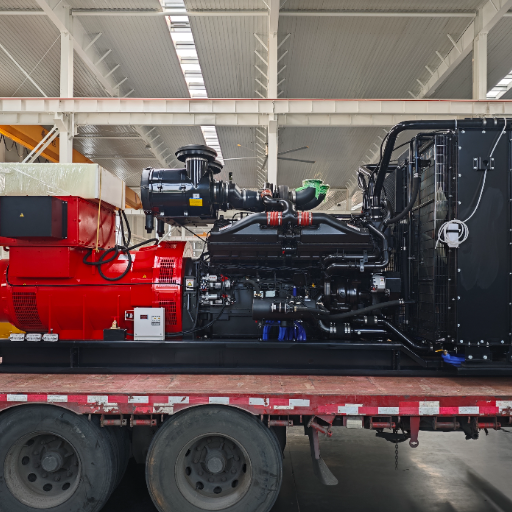
A standard stepped test applies load in stages so the engine and alternator warm up gradually. The exact timing can vary by site and manufacturer, but the structure below is widely accepted.
| Step | Load | Duration | Purpose |
|---|---|---|---|
| Warm-up / no-load | 0% | 5–10 min | Stabilize oil pressure and coolant temperature |
| Step 1 | 25% | 30 min | Initial heat soak and early fault detection |
| Step 2 | 50% | 30 min | Confirm cooling and fuel delivery |
| Step 3 | 75% | 30 min | Approach rated operating temperature |
| Step 4 | 100% | 30–60 min | Prove full-load capability |
| Cool-down | Reduced / no load | Until safe | Prevent thermal shock to turbo and exhaust |
Total time on site is usually 2 to 4 hours. A triennial or acceptance test may run 100 percent load for 2 to 4 hours. A corrective test for wet stacking may target 75 to 100 percent for 2 to 4 hours.
Load bank sizing matters. Size the load bank to the kW rating, not the kVA rating. A 500 kW / 625 kVA generator needs at least a 500 kW load bank. If the load bank is too small, you cannot reach the test load and the result is invalid.
What to Monitor During the Test
Record these parameters at each load step and at steady state:
- Voltage (line-to-line and line-to-neutral)
- Frequency / engine speed
- Current per phase and phase balance
- kW and kVAR output
- Power factor
- Oil pressure
- Coolant temperature
- Exhaust temperature, by manifold or cylinder where available
- Exhaust color and smoke
- Fuel pressure
- Vibration and noise
- Control-panel alarms and fault codes
Abnormal readings are a reason to pause or abort. Rising coolant temperature above the engine limit, dropping oil pressure, heavy black smoke, or severe vibration all signal that something is wrong. Continuing the test can turn a minor fault into major damage.
Types of Load Banks
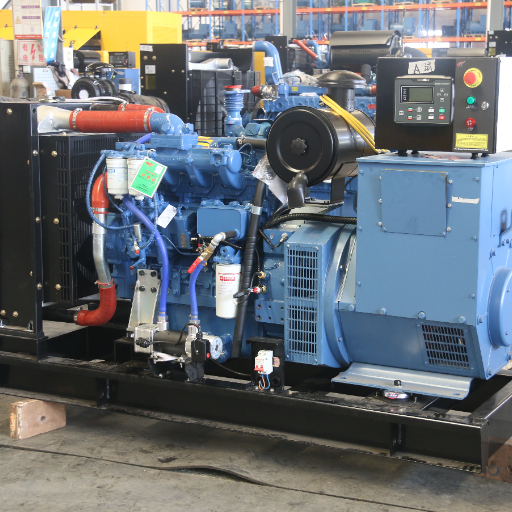
| Load Bank Type | What It Simulates | Best For |
|---|---|---|
| Resistive | Real power (kW), unity power factor | Most standby generator testing, wet stacking correction |
| Reactive | Reactive power (kVAR), inductive or capacitive load | Testing alternator capability, voltage regulation, motor-load sites |
| Combined | Both kW and kVAR | Full-site acceptance testing, data centers with mixed loads |
| Permanent / fixed | Installed on-site | Facilities that test frequently |
| Portable / trailer-mounted | Brought to site | Occasional testing, multiple generators, remote sites |
For most NFPA 110 supplemental and triennial tests on diesel standby sets, a resistive load bank is sufficient, as Duthie Power explains in their overview of load bank testing codes. Reactive or combined banks are used when the site has large motor loads or when alternator excitation performance is under scrutiny.
Load Bank Testing Cost by Generator Size
Cost depends on load bank size, test duration, technician labor, fuel, and travel. The rental is usually the largest single line item.
| Generator Size | Typical Cost per Test | Main Cost Drivers |
|---|---|---|
| 50–200 kW | ~$1,000 | Small portable load bank, 1 technician, short duration |
| 200–500 kW | 1,500–1,500–3,500 | Mid-size load bank, longer setup, more fuel |
| 500–1,000 kW | 3,000–3,000–5,000 | Larger load bank, possible transport surcharge |
| 1,000+ kW | 4,000–4,000–8,000+ | Heavy load bank logistics, multiple technicians, long full-load run |
A rough cost split is: load bank rental 40 to 50 percent, technician labor 25 to 35 percent, fuel 10 to 20 percent, and delivery/transport 5 to 15 percent. Remote sites, containerized sets, and harsh environments add travel and logistics charges.
For budgeting, see the full breakdown in generator maintenance cost per year. A 3-year NFPA test package can spread the cost and ensure the triennial test is not skipped.
Safety and Transfer-Switch Requirements
Safety is not optional. A load bank test must not leave critical loads unprotected.
- The load bank must automatically disconnect if normal power fails, so the generator transfers to the building load.
- Fire watch and adequate ventilation are required, especially during high-load runs.
- Fuel tanks must be sufficient for the full test duration plus a reserve.
- Only qualified technicians should connect, operate, and disconnect the load bank.
- Clear communication between the control room and the test team prevents accidental load drops.
For an emergency power generator, the transfer switch is part of the test. The ATS must be exercised too, not just the engine.
Common Mistakes That Waste a Load Bank Test
- Wrong load bank size. Undersizing means you cannot reach the required test load.
- Skipping cool-down. Shutting down immediately after 100 percent load can damage the turbocharger.
- No baseline data. Without previous test records, you cannot spot trends.
- Ignoring exhaust color. Black or blue smoke at load is a symptom that needs diagnosis, not just documentation.
- Testing on contaminated fuel. Dirty fuel will cause injector and filter problems during the test.
- Not testing the ATS. A generator that runs fine but cannot transfer is still a failure.
How to Schedule and Document Load Bank Tests
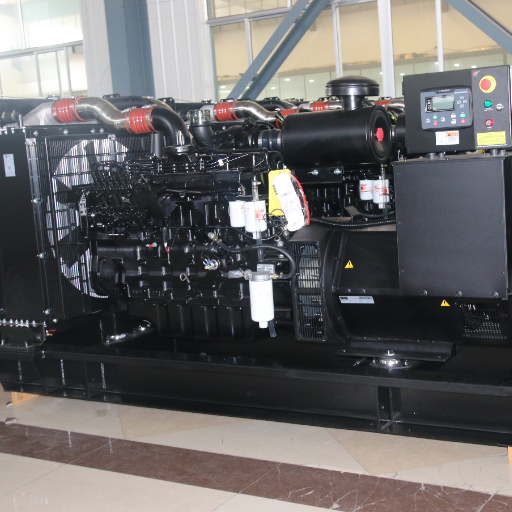
Use the diesel generator maintenance schedule to fit load bank testing into the annual calendar. Recordkeeping is part of compliance, so keep a permanent file for each test.
A good test record includes:
- Date, time, and test duration
- Generator make, model, serial number, and kW rating
- Load bank size and type
- Load steps and duration at each step
- All monitored parameters at each step
- Ambient temperature and conditions
- Technicians present
- Corrective actions taken
- Next test due date
A printable test log is a useful asset. Huali can provide a site-specific log aligned to your schedule and local AHJ requirements.
Frequently Asked Questions
How often should a diesel generator be load bank tested?
It depends on monthly performance. If monthly exercise reaches at least 30 percent of nameplate kW, the annual supplemental test may not be required. NFPA 110 Level 1 systems still need a full-load test every 36 months. Local AHJs may require more frequent testing.
Can monthly building load satisfy the 30 percent requirement?
Yes, if the actual building load during the monthly test is at least 30 percent of the generator’s nameplate kW for 30 minutes. Many standby systems do not carry enough load during tests, which is why load banks are used.
How much does load bank testing cost?
The cost for a single test of a small unit (50–200 kW) is approximately $1,000; for a medium-sized unit (200–500 kW), the cost ranges from $1,500 to $3,500; and for a large unit (over 1,000 kW), the cost may range from $4,000 to $8,000 or even higher, depending on logistics and the duration of the test.
What is the difference between resistive and reactive load banks?
Resistive load banks simulate real power at unity power factor and are used for most standby generator tests. Reactive load banks simulate inductive or capacitive loads and test the alternator’s response to kVAR demand, which matters for sites with large motors.
How long does a load bank test take?
A standard stepped test takes 2 to 4 hours including setup and cool-down. A triennial full-load test may run 2 to 4 hours at 100 percent load. A corrective wet-stacking burn-off may take 2 to 4 hours at 75 to 100 percent load.
What happens if a generator fails a load bank test?
The technician stops the test, records the failure point and symptoms, and recommends corrective action. Common causes include cooling-system faults, fuel-system restrictions, worn injectors, turbocharger issues, or alternator problems. After repair, the test is repeated to confirm the fix.
Conclusion
Load bank testing diesel generator sets is the only way to prove a standby unit can do the job it was bought for. Monthly no-load exercise checks the starter and the control panel, but it does not prove cooling, fuel delivery, alternator stability, or exhaust health under real demand.
Follow the NFPA 110 schedule, size the load bank to the kW rating, run a stepped procedure, monitor the right parameters, and keep permanent records. The cost of a test is small compared to the cost of a generator that fails when the grid drops.
Shandong Huali Electromechanical supports load bank testing for diesel generator sets from 8 kVA to 4,000 kVA, including containerized and remote-site installations. Contact our service team to schedule a test or build a 3-year NFPA 110 compliance package.
