
Generator carbon monoxide safety comes down to three rules: run the unit outdoors only, at least 20 to 25 feet from any building, with the exhaust pointing away from doors, windows, and vents. Never run a generator in a garage, basement, porch, or shed, even with the doors open.
Those rules sound simple. They are not always enough.
After Hurricane Ida, federal investigators found carbon monoxide inside 105 homes. Some of those families had followed the older advice: outside, a few feet from the wall, exhaust pointing away. In February 2026, the US Consumer Product Safety Commission responded with a report calling for tougher safety-distance rules, moving the recommendation from 20 feet to 25.
At Shandong Huali, we have manufactured diesel generator sets from 8kVA to 4000kVA for over 25 years, and CO management is part of every installation we design. This guide covers the full generator carbon monoxide safety framework: why CO kills so fast, the current placement rules and why they changed, the garage myth that refuses to die, detection technology, symptoms, and how industrial facilities handle the same hazard at scale.
Key Takeaways
- Run generators outdoors only, at least 20 feet from buildings (25 feet per the 2026 federal recommendation), exhaust pointing away from all openings.
- One portable generator produces as much carbon monoxide as hundreds of cars; lethal concentrations build in enclosed spaces within minutes.
- An open garage door is not ventilation. CO infiltrated 105 homes after Hurricane Ida, some from units placed “correctly” by older rules.
- CO-shutoff generators (ANSI/PGMA G300-2018, UL 2201) are estimated to reduce deaths by 87 to 100%.
- Headache, dizziness, and nausea during generator operation mean get to fresh air immediately, not “sleep it off.”
Why Generator Carbon Monoxide Is So Deadly
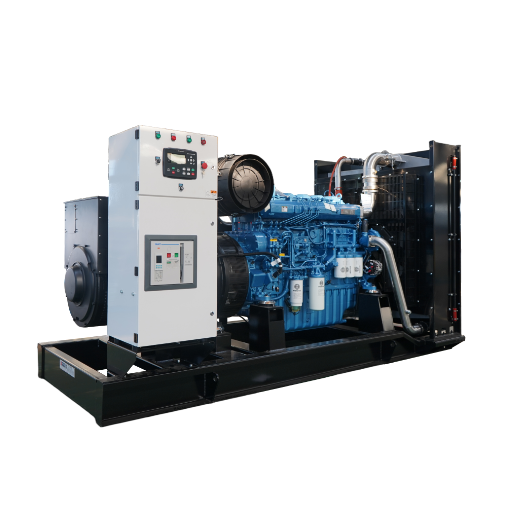
One Generator, Hundreds of Cars
A single portable generator produces as much carbon monoxide as hundreds of idling cars, according to CPSC comparisons. A typical 5kW portable unit emits CO at a rate that can push a closed two-car garage past lethal concentration in under 10 minutes.
Diesel and gasoline engines both produce CO. Diesel exhaust actually contains less CO per hour than gasoline at the same output, but “less” is meaningless at these volumes. There is no safer fuel for this hazard.
CO is colorless, odorless, and tasteless. You cannot detect it without an instrument, and by the time symptoms appear, exposure has already begun.
How Concentration Becomes Casualty
CO danger is a function of concentration times time. Public health agencies use these thresholds:
| CO Concentration | Health Effect |
|---|---|
| 50 ppm | OSHA 8-hour workplace exposure ceiling |
| 200 ppm | Headache and nausea within 2 to 3 hours |
| 400 ppm | Life-threatening after 3 hours |
| 800 ppm | Dizziness and convulsions within 45 minutes; death in 2 to 3 hours |
| 1,600 ppm | Death within 1 hour |
| 12,800 ppm | Death within 1 to 3 minutes |
A generator in an enclosed space does not creep toward these numbers. It arrives.
How CO Kills
Carbon monoxide binds to hemoglobin in your blood roughly 240 times more readily than oxygen. The result is carboxyhemoglobin: your blood keeps circulating, but it stops delivering oxygen to your brain and heart.
Symptoms track the saturation level. Mild headache and fatigue appear around 10 to 20% carboxyhemoglobin. Confusion, vomiting, and collapse follow in the 30 to 40% range. Sustained levels above 50% are frequently fatal. In an enclosed space, CO from a running generator can reach lethal concentrations within minutes, per the CDC’s carbon monoxide guidance.
There is no smell, no smoke, no warning. People who go to sleep near an infiltration path often never wake up.
The Numbers
The CPSC attributes roughly 85 deaths per year in the US to portable generator CO poisoning, and 81% of them happen in residential settings. These are not freak accidents. They follow a repeating pattern: storm, outage, generator in the wrong place, family asleep.
In June 2025, a Westlake, Louisiana couple survived exactly this scenario during hurricane season. They woke with headaches and disorientation, recognized something was wrong, and got out. They now spend their time warning neighbors. Most families in the same situation do not get the chance.
How Far Should a Generator Be From the House?
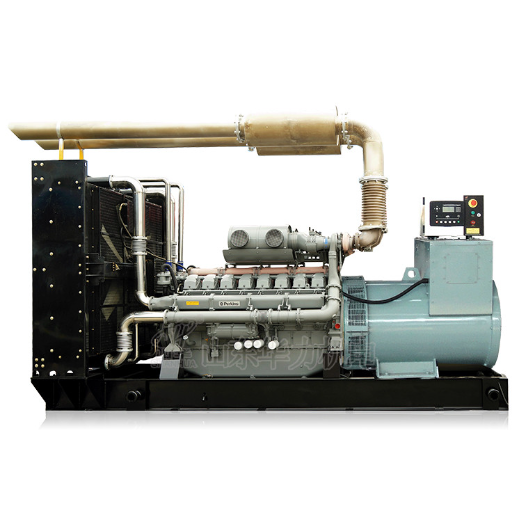
Place a portable generator at least 20 feet from your house, with the exhaust pointing away from all doors, windows, and vents. A 2026 federal report recommends 25 feet after carbon monoxide from generators infiltrated 105 homes following Hurricane Ida. Always run generators outdoors, never in a garage, even with the door open.
The 20-Foot Rule
The long-standing CDC baseline is 20 feet from any building opening. That distance came from dispersion modeling of portable units in typical residential airflow. Treat it as a floor, not a target.
The rule applies to every building, not just yours. A generator 20 feet from your house but 10 feet from your neighbor’s open window is their emergency.
The New 25-Foot Recommendation
The February 2026 CPSC report analyzed post-Ida investigations and found CO inside 105 homes, including cases where generators sat outside at distances people reasonably believed were safe. The agency’s recommendation moved to 25 feet, and NFPA’s 5-foot fire-based separation standard is now under review as a result.
If you own a home standby unit or a portable you deploy every storm season, adopt the 25-foot figure now. The extra five feet costs nothing.
Why Distance Alone Is Not Enough
Airflow defeats arithmetic. The Washington State Department of Health notes that generators should sit downwind of buildings, because wind can carry exhaust sideways and backward into openings well beyond the unit.
Check three things every time you deploy:
- Distance: 20 feet minimum, 25 preferred, from every door, window, and vent.
- Direction: exhaust outlet pointing away from the building, accounting for wind.
- Pathways: attic vents, crawl-space vents, window AC units, and soffits all draw air in.
Rain changes the picture but not the rules. If weather protection is needed, use a purpose-built generator canopy or open-sided tent designed for running units. A tarp draped over the frame traps heat and exhaust; a move into the garage trades a wet generator for a poisoned house.
This placement discipline is one section of our complete generator safety guide, which covers electrical, fuel, fire, and noise hazards as well.
The Garage Myth: Why “Door Open” Still Kills
The most dangerous half-truth in generator safety is that an open garage door makes indoor operation acceptable. It does not.
A running generator fills a garage with CO far faster than one open door can dilute it. The accumulation rate from an engine producing car-fleet-levels of CO overwhelms passive ventilation by an order of magnitude. Meanwhile, the garage shares walls, ceilings, and doorways with living space, so the CO you generate does not stay in the garage.
Fans do not fix this either. A box fan in the doorway moves air but cannot keep pace with the emission rate, and depending on wind direction it can push CO deeper into the house. The Ida investigation found this pattern repeatedly: units in garages, carports, and on covered porches, some with fans running, feeding CO into homes through shared air paths.
Treat every partially enclosed space as indoors:
- Garages, with or without the door open
- Carports and covered porches
- Basements and crawl spaces
- Sheds and equipment rooms without engineered ventilation
- Balconies adjacent to open windows
If the space has a roof and walls, the answer is no.
CO Alarms and Auto-Shutoff Technology
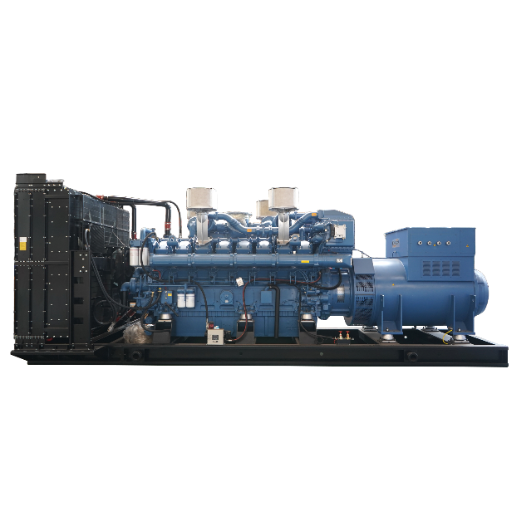
Alarm Types and Placement
Three alarm formats exist, and the right choice depends on the building:
- Battery-only alarms: simplest to deploy; mount on each level and outside sleeping areas
- Plug-in alarms with battery backup: good for hallways with outlets; the battery covers the outage, which is exactly when the generator runs
- Hardwired interconnected alarms: the standard for commercial and industrial buildings; when one trips, all of them sound
Whichever type you choose, look for a UL 2034 listing on the label. Place one alarm on every level and one outside each sleeping area. Test monthly, replace batteries annually, and replace the whole unit at its rated service life, usually 5 to 7 years. An alarm in the garage does not protect a bedroom; put the detectors where people sleep and breathe.
One limitation worth knowing: UL 2034 alarms are designed to sound before dangerous exposure accumulates in healthy adults, not to warn about low-level chronic exposure. They are an emergency device, not an air-quality meter.
CO Shutoff Generators
Modern portable generators certified to ANSI/PGMA G300-2018 or UL 2201 carry CO sensors that shut the engine down automatically when concentrations climb. The CPSC estimates these models would reduce generator CO deaths by 87 to 100%.
The two standards work differently but to the same end. PGMA G300 focuses on CO shutoff performance; UL 2201 adds a second layer by also capping the engine’s CO emission rate itself. If you are buying a portable unit in 2026, certification to either standard should be non-negotiable, and UL 2201 models are the stronger choice for users who cannot guarantee perfect placement.
For stationary diesel installations, the equivalent protection is hardwired CO detection tied into the building alarm system, which we cover below.
Limits of Technology
Shutoff sensors and alarms are backup layers, not substitutes for placement. A shutoff trips after CO accumulates. An alarm sounds after CO reaches the detector. Correct distance, direction, and outdoor-only operation keep CO from reaching people in the first place.
Carbon Monoxide Poisoning Symptoms and Emergency Response
Early CO poisoning looks like the flu, which is exactly why it kills people who decide to “sleep it off.” Watch for:
- Headache (often the first sign)
- Dizziness or lightheadedness
- Nausea or vomiting
- Weakness and fatigue
- Confusion or disorientation
- Blurred vision
- Chest pain in people with heart conditions
- Loss of consciousness
The tell is context: symptoms that appear while a generator runs and ease in fresh air are CO until proven otherwise. If multiple people or pets in the same building feel sick at once, treat it as a CO event. Pets often show symptoms first because of their smaller body mass.
If you suspect CO poisoning:
- Get everyone to fresh air immediately.
- Call emergency services from outside.
- Do not re-enter the building until responders clear it.
Do not shut the generator off first if that means spending extra seconds indoors. Get out.
At the hospital, mention the generator. CO poisoning is confirmed with a carboxyhemoglobin blood test, and treatment is high-flow oxygen, with hyperbaric oxygen for severe cases.
Victims who “feel fine” after fresh air can still carry dangerous saturation levels, and delayed neurological effects can appear days later. Every suspected exposure deserves the blood test.
Generator Carbon Monoxide Safety in Industrial and Stationary Installations
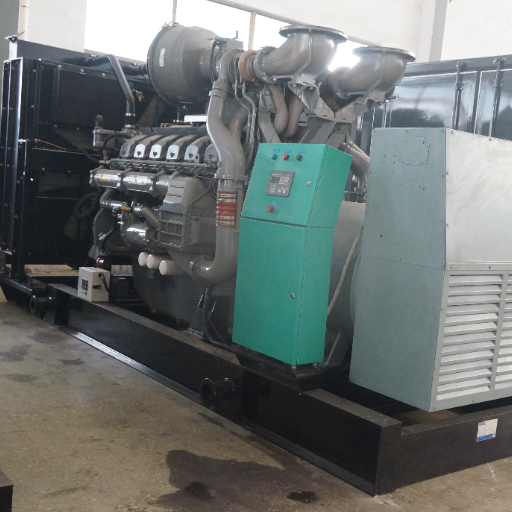
Facility managers face the same physics at larger scale, plus one hazard homeowners never see: re-entrainment.
A logistics warehouse we worked with in 2024 ran a scheduled load test on its 500kVA standby diesel unit. Midway through the test, the building alarm tripped. The CO detectors near the packing line were reading elevated levels with the generator outdoors and 40 feet away.
The cause: the exhaust stack terminated 8 feet from an HVAC fresh-air intake, and the test-day wind pushed exhaust straight into the ventilation system. The fix was a stack extension and a relocated intake damper, plus a ventilation interlock so the unit cannot run when the intake is open on that side.
Four controls prevent this failure mode in permanent installations:
- Ventilation interlocks. Generator rooms need engineered airflow per generator room ventilation requirements, and the unit should shut down automatically if combustion-air or cooling airflow fails.For the full set of code requirements that govern these spaces, see our guide to generator room fire safety requirements, which details airflow, fire ratings, and detection standards together.
- Hardwired CO detection. Fixed detectors in the generator room and adjacent occupied spaces, tied to the building alarm, not standalone battery units. Calibrate or bump-test detectors on the same schedule as the fire alarm system, typically every 6 to 12 months per manufacturer requirements.
- Exhaust placement. Stack terminations must clear HVAC intakes, operable windows, and fresh-air louvers; the ICC Building Safety Journal recommends a minimum 10-foot separation, and more where wind patterns demand it.For deeper coverage of stack routing, termination heights, and safe clearances, read our dedicated generator exhaust safety guide before finalizing any installation.
- Commissioning verification. Before handover, run the unit at full load with CO meters at the room boundary, at nearby intakes, and in adjacent occupied spaces. A one-hour commissioning CO map catches placement problems while they are still cheap to fix.
Good exhaust system design and code-compliant generator installation handle these at the design stage, which is far cheaper than retrofitting after an alarm event. Huali builds CO monitoring and ventilation interlocks into custom generator configurations on request.
Frequently Asked Questions
How far should a generator be from the house?
At least 20 feet from all doors, windows, and vents, with the exhaust pointing away. A 2026 CPSC report recommends 25 feet after CO infiltrated 105 homes following Hurricane Ida. Always operate outdoors, downwind of the building where possible, and check your neighbor’s windows too.
Can I run a generator in my garage with the door open?
No. An open garage door cannot dilute CO as fast as the engine produces it, and the gas migrates into the house through shared walls and ceilings. Fans do not change the math. Garages, carports, porches, basements, and sheds are all unsafe, open doors or not.
What are the first symptoms of carbon monoxide poisoning?
Headache, dizziness, nausea, weakness, and confusion. It mimics the flu without the fever. Symptoms that start while a generator runs and improve in fresh air indicate CO exposure. Get to fresh air and call emergency services.
Do new generators have carbon monoxide shutoffs?
Many new portable models do. Units certified to ANSI/PGMA G300-2018 or UL 2201 shut down automatically when CO levels rise, and the CPSC estimates this technology reduces deaths by 87 to 100%. UL 2201 models also cap CO emissions at the engine.
Is a diesel generator safer than gasoline for carbon monoxide?
No. Diesel engines emit somewhat less CO per hour than gasoline engines at the same output, but both produce far more than any occupied space can tolerate. Fuel type changes nothing about placement rules, detection, or the outdoor-only requirement.
Can I run a generator in the rain?
Yes, with the right protection: a purpose-built generator canopy or open-sided running tent. Never drape a tarp directly over a running unit, and never move the generator indoors or into a garage to escape the weather. Wet conditions also raise shock risk, so keep connections elevated and dry.
How long does CO take to clear from a house?
With the source off and windows open, small rooms can clear in a few hours, but do not rely on airing out. Only re-enter after emergency responders or a calibrated CO meter confirms safe levels.
How often should CO detectors be replaced?
Every 5 to 7 years for residential alarms, or per the manufacturer’s rated service life printed on the unit. Test monthly and replace batteries annually. Industrial fixed detectors need calibration or bump-testing every 6 to 12 months.
The Bottom Line
Generator carbon monoxide safety is three habits and one backup. Distance: 20 feet minimum, 25 preferred. Direction: exhaust away, downwind of the building. Detection: alarms on every level, and shutoff-certified equipment where available. The backup is knowing the symptoms well enough to act on a headache instead of sleeping through it.
The 2026 rule change exists because 105 families did almost everything right and still got CO in their homes. Take the extra five feet, point the exhaust away, and test your alarms this weekend.
For the complete picture, from backfeeding and grounding to fuel storage and lockout/tagout, read our generator safety tips guide. And if you are specifying a stationary installation, contact Huali’s engineering team for a CO-safe design with ventilation interlocks and hardwired detection built in.
