
The diesel generator requires its first service between 6 to 12 months and 250 to 500 operating hours from its start time. The standby units require their first inspection after six months and their second inspection six months later. The prime power units need their first maintenance check after 250 hours and their second check after 400 hours. You will experience generator failures which occur 60 percent of the time because you did not complete these maintenance intervals which include dead batteries, contaminated fuel, and degraded engine oil.
The obstacle exists which every facility manager understands but only a few people will take action to resolve. A standby generator that fails during an outage is worse than no generator at all. The situation creates a deceptive feeling that people should feel protected from harm. Your disaster recovery plan requires the unit to function. Your insurance requires the unit to operate. Your SLA requires the unit to provide services as promised. The majority of no-start incidents in diesel generator maintenance programs occur because personnel either postponed maintenance tasks or skipped them or did not schedule them.
This guide gives you the complete diesel generator maintenance framework used by facility engineers worldwide. The document presents maintenance schedules ranging from daily tasks to yearly activities and system-specific inspection checklists and troubleshooting methods and NFPA 110 2025 compliance standards and actual cost information based on generator capacity and necessary modifications for tropical and high-dust environments. Your maintenance program will extend generator lifespan to 20,000-30,000 hours while maximizing operational availability at the end of this process.
Key Takeaways
- Service diesel generators every 6-12 months or 250-500 hours; standby units need twice-yearly professional inspection.
- Over 60% of generator failures trace to three preventable causes: battery failure, fuel contamination, and neglected oil changes.
- NFPA 110 2025 requires monthly 30-minute runs at 30%+ load, plus annual load bank testing at 50% for 30 minutes and 75% for 60 minutes.
- Annual maintenance costs range from 200−650forresidentialunitsto200−650forresidentialunitsto5,000-15,000+ for industrial 500+ kW generators.
- Operating below 30% rated load causes wet stacking (carbon buildup), which destroys engines over time and requires load bank testing to prevent.
Diesel Generator Maintenance Schedule: How Often Should You Service Your Unit?
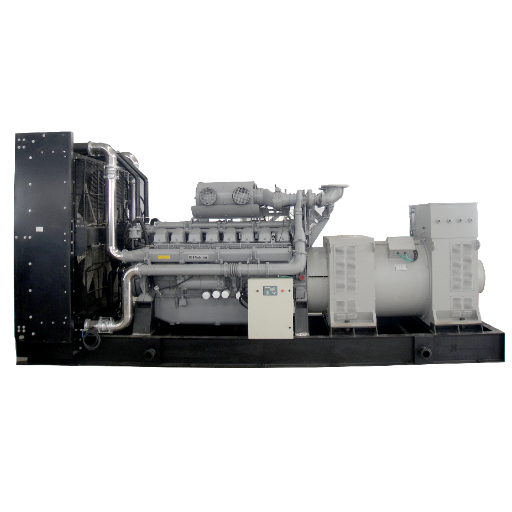
Service frequency depends on how you use the generator. A standby unit that runs 50 hours per year has different needs than a prime power unit running 4,000 hours annually.
Standby vs Prime vs Continuous Use Schedules
| Application Type | Typical Runtime | Professional Service Interval |
|---|---|---|
| Standby / Emergency | <250 hours/year | Every 6-12 months |
| Prime Power | 250-4,000 hours/year | Every 250-400 hours |
| Continuous / Heavy Use | 4,000+ hours/year | Every 200-250 hours |
Standby generators sit idle for months. Oil degrades. Batteries discharge. Fuel accumulates water from condensation. Seals dry out. Even rarely used units need routine service because time degrades components faster than runtime for standby applications.
Hour-Based vs Calendar-Based Intervals
Manufacturers specify two types of intervals. Hour-based intervals trigger service after accumulated runtime. Calendar-based intervals trigger service after elapsed time. For standby generators, the calendar interval usually arrives first. For prime power generators, the hour interval arrives first. Always follow whichever comes first.
Manufacturer-Specific Variations
Service intervals vary by engine brand. Cummins and Perkins typically recommend oil changes every 250 hours or annually. Weichai and Yuchai engines often specify 500-hour oil change intervals under normal conditions. Always consult the manufacturer’s maintenance manual for your specific model. The manual’s hour-based intervals supersede generic calendar recommendations.
When Priya Sharma, a facilities manager at a Mumbai hospital, assumed all diesel generators followed the same 500-hour oil change interval, she scheduled her 12 standby Cummins units accordingly. After 14 months, two units developed sludge buildup from degraded oil that had exceeded the 12-month calendar limit. The repair cost was 3,200.Theoilchangesheskippedwouldhavecost3,200.Theoilchangesheskippedwouldhavecost180. Calendar intervals matter as much as hour intervals.
Diesel Generator Maintenance Checklist: The Complete 7-System Framework
A thorough diesel generator maintenance checklist covers seven major systems. Use this framework for daily inspections, monthly service, and annual overhauls.
Fuel System
- Check fuel level in day tank and main storage tank
- Inspect tanks and lines for leaks, corrosion, and cracks
- Drain water separators and sediment bowls
- Test fuel quality for water content, microbial growth, and sediment
- Replace fuel filters per manufacturer schedule (typically every 500 hours)
- Verify fuel additives for long-term storage conditions
Diesel fuel degrades while sitting. Water condenses in tanks. Microbes grow at the fuel-water interface. Even in standby applications, test fuel quality annually and polish if contamination is detected.
Lubrication System
- Check engine oil level with the dipstick when the engine is cool
- Change engine oil and oil filter per schedule (250-500 hours or annually)
- Perform oil analysis to detect bearing wear, coolant intrusion, and fuel dilution
- Use manufacturer-specified oil grade and viscosity
Oil analysis is predictive. Lab testing reveals internal problems months before they cause catastrophic failure. Metal particles indicate bearing wear. Coolant in oil signals head gasket leaks. Fuel dilution points to injector problems.
Cooling System
- Verify coolant level in radiator and expansion tank (only when cool)
- Check coolant concentration with a refractometer
- Inspect hoses and belts for cracks, swelling, and improper tension
- Clean radiator fins and verify unrestricted airflow
- Monitor coolant temperature during operation
Old coolant causes radiator corrosion and reduces heat transfer efficiency. Drain and replace coolant per manufacturer recommendations, typically every 2-3 years.
Battery and Starting System
- Clean battery terminals and apply anti-corrosion treatment
- Check terminal voltage (should exceed 12.6V for 12V systems)
- Perform load testing to verify cranking capacity
- Inspect battery charger output and wiring
- Replace batteries every 30-36 months for standby applications
Battery failure is the number one cause of generator no-start events. Voltage checks alone are not enough. A battery can show acceptable voltage yet fail under cranking load. Load testing is the only reliable verification method.
Air Intake and Exhaust
- Inspect and replace air filters if clogged or restricted
- Check exhaust manifold and piping for leaks and cracks
- Monitor exhaust smoke color during operation
- Clear debris from intake and exhaust vents
In dusty environments like mining sites and construction zones, air filter replacement frequency doubles or triples. A restricted air filter reduces power output and increases exhaust temperatures.
Electrical and Control Systems
- Verify voltage regulation under load
- Test the automatic transfer switch (ATS) for clean transfer
- Inspect control panels for error codes and alarms
- Check electrical connections for corrosion or looseness
- Test safety interlocks and emergency shutdown functions
General Inspection and Safety
- Walk the unit looking for oil, coolant, or fuel leaks
- Inspect the enclosure for proper ventilation and cleanliness
- Test the emergency stop function
- Document all readings, photos, and technician signatures
For fuel system and power calculations, use our kVA to kW calculator to verify generator capacity against your load requirements.
Diesel Generator Troubleshooting: Common Problems and Quick Fixes
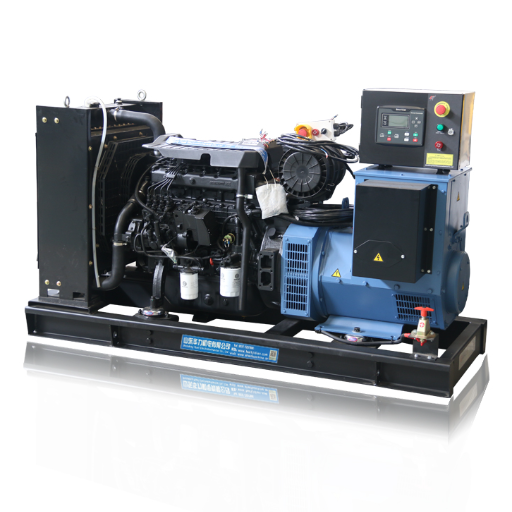
Knowing how to diagnose problems quickly prevents small issues from becoming catastrophic failures.
| Symptom | Most Likely Cause | Immediate Action |
|---|---|---|
| Fails to start | Weak battery (60%+ of cases) | Load-test battery; replace if below spec |
| Fails to start | Blocked fuel filter or air in lines | Replace filter; bleed fuel system |
| Low power output | Overloading | Reduce load to within rated capacity |
| Low power output | Faulty AVR | Test and replace automatic voltage regulator |
| Engine overheating | Low coolant level | Refill with recommended coolant; inspect for leaks |
| Engine overheating | Blocked radiator | Clean radiator fins; verify fan operation |
| Black exhaust smoke | Incomplete combustion | Clean or replace air filter; check injection timing |
| White exhaust smoke | Coolant entering combustion chamber | Inspect cylinder head gasket; test coolant system |
| Blue exhaust smoke | Oil burning (worn rings/seals) | Inspect piston rings and valve seals |
| Unstable voltage | Faulty AVR or governor issues | Adjust voltage gain or replace AVR; tune governor |
| Excessive vibration | Loose mounting bolts or worn bearings | Tighten bolts; inspect and replace bearings |
| High fuel consumption | Dirty filters or incorrect injection timing | Replace air and fuel filters; calibrate injectors |
Abnormal Exhaust Smoke Diagnostics
Exhaust smoke color reveals internal engine condition faster than any gauge.
- Black smoke means incomplete combustion. Too much fuel or too little air. Check the air filter first. It is the cheapest fix and the most common cause.
- White smoke means coolant is entering the combustion chamber or fuel quality is poor. Check the cylinder head gasket and test fuel for contamination.
- Blue smoke means engine oil is burning. Worn piston rings or valve seals are the typical culprits. This requires internal engine inspection.
When a Lagos manufacturing plant noticed black smoke from their 500 kW standby generator during monthly testing, the maintenance team assumed injector problems and scheduled a 2,800injectorservice.Ajuniortechniciancheckedtheairfilterfirst.ItwascloggedwithreddustfromtheHarmattanseason.A2,800injectorservice.Ajuniortechniciancheckedtheairfilterfirst.ItwascloggedwithreddustfromtheHarmattanseason.A45 filter replacement fixed the problem in 15 minutes. The team now inspects air filters before every test run.
Generator Wet Stacking Prevention and Load Bank Testing for Diesel Generators
Generator wet stacking prevention is one of the most overlooked aspects of diesel generator maintenance. Wet stacking is the silent killer of standby diesel generators. It occurs when engines run chronically below 30% of rated load. Exhaust temperatures stay too low to support complete combustion. The result is carbon buildup on pistons, rings, injectors, and valve seats. Fuel dilutes the engine oil. Power output drops. Eventually the engine requires a full rebuild.
What Is Wet Stacking and Why It Destroys Engines
Wet stacking builds gradually. A facility runs monthly no-load tests for 10 minutes. The engine reaches operating temperature on the gauge, but exhaust gas temperatures remain below the 800-1000°F threshold needed to burn off carbon deposits. Over two years, the exhaust system fills with unburned fuel and soot. The engine loses 20% of rated power. The operator notices only when the generator fails to carry full load during an actual outage.
NFPA 110 Monthly Testing Requirements (2025 Edition)
NFPA 110 Paragraph 8.4.2 requires diesel generators to be exercised at least once monthly for a minimum of 30 minutes. The 2025 edition specifies two acceptable methods:
- Load-based: Run at not less than 30% of the standby nameplate kW rating
- Exhaust temperature-based: Loading that maintains the minimum exhaust gas temperature recommended by the manufacturer
If your facility’s available load cannot meet either criterion, you must still exercise the unit monthly with available load and proceed to the annual supplemental load bank test.
Annual Load Bank Testing Protocol
The NFPA 110 2025 edition updated the annual protocol. The former 3-step procedure (25% for 30 min, 50% for 30 min, 75% for 60 min) was simplified to a 2-step process:
| Step | Load | Duration |
|---|---|---|
| 1 | 50% of nameplate kW | 30 continuous minutes |
| 2 | 75% of nameplate kW | 1 continuous hour |
| Total | At least 1.5 continuous hours |
If normal power fails during the load bank test, equivalent loads must be automatically replaced with essential building loads. Manual switching does not satisfy NFPA 110 requirements.
Triennial Level 1 EPSS Testing
Level 1 emergency power supply systems must be tested once every 36 months. The generator must run continuously for the duration of its assigned class. If the class exceeds 4 hours, the test may be terminated after 4 continuous hours at minimum 30% load.
For healthcare facilities, NFPA 99 imposes additional requirements beyond NFPA 110 generator maintenance standards. These include 12 tests per year at 20-40 day intervals with dynamic loads of at least 30%.
Generator Maintenance Cost Per Year: Budgeting by kW Size
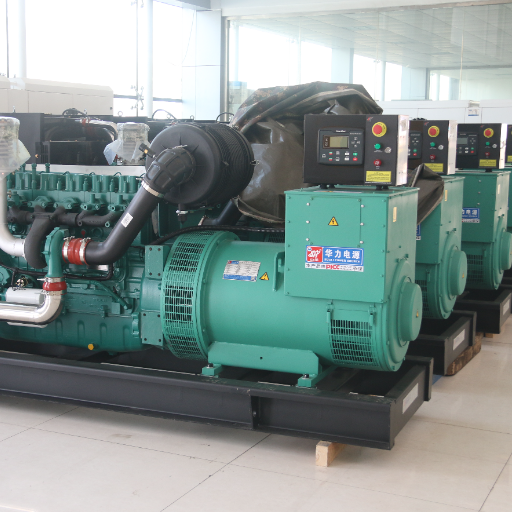
Maintenance is not a cost. It is insurance against catastrophic failure. Understanding what to budget helps procurement teams justify investment and avoid surprise expenses.
Maintenance Cost by Generator Size
| Generator Size | Application | Annual Maintenance Cost | Typical Service Contract |
|---|---|---|---|
| 10-25 kW | Residential / small commercial | $200-650 | $150-300/year |
| 25-100 kW | Commercial building | $1,000-3,000 | $800-2,000/year |
| 100-250 kW | Industrial / mid-size | $2,000-6,000 | $2,000-4,000/year |
| 250-500 kW | Large commercial | $4,000-10,000 | $4,000-7,000/year |
| 500-1,000 kW | Industrial / data center | $5,000-15,000+ | $6,000-12,000/year |
| 1,000+ kW | Heavy industrial / utility | $10,000-25,000+ | $12,000-20,000/year |
What Annual Service Contracts Include
Most comprehensive annual maintenance contracts include:
- Oil and oil filter changes
- Fuel filter and air filter replacement
- Coolant system inspection and top-off
- Battery testing and connection cleaning
- Belt, hose, and leak inspections
- Transfer switch testing
- Digital service records for compliance
Load bank testing is often billed separately at approximately 1,000fixedplus1,000fixedplus1.50 per kW. Injector cleaning and fuel polishing are also typically add-on services.
Major Overhaul Costs
Generators require major overhauls whenever their maintenance reaches its highest level of upkeep. The complete engine rebuild process requires a budget of2,000−6,000formid−sizeunitsand2,000−6,000formid−sizeunitsand10,000-30,000 for industrial engine systems which fall under large category engines. The system requires maintenance to achieve operational lifetimes between 20,000 and 30,000 hours. The system needs maintenance because it operates between 8,000 and 12,000 hours without further intervention.
At the Peruvian mining site Eduardo Reyes took control of generator repair work which included 8 diesel generators that lacked any maintenance records. The three units demonstrated such extreme wet stacking conditions that their exhaust manifolds became completely covered in dense carbon sludge. The two engines needed complete engine rebuilding which would cost $18,000 per unit. A preventive maintenance program which Eduardo created together with quarterly load bank testing implementation became his main maintenance strategy. Unplanned generator downtime decreased to 85% during three years while maintenance expenses dropped 30% after the implementation of load bank testing. The cost of prevention work always remains lower compared to repair work expenses.
Want a maintenance cost estimate for your generator fleet? Contact our service team for a customized annual maintenance contract quote based on your unit sizes and operating hours.
Special Maintenance Considerations for Harsh Environments
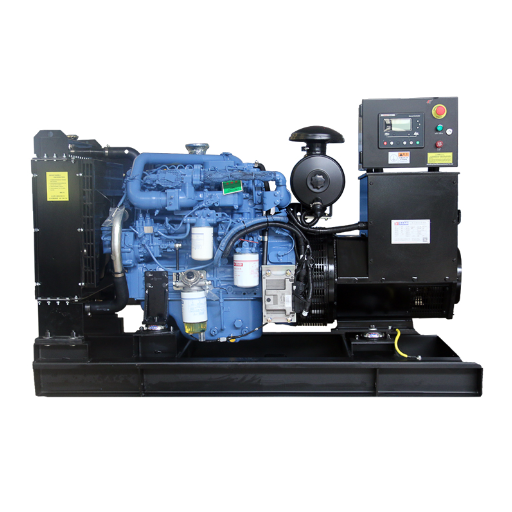
Industrial diesel generator maintenance in Dubai is not the same as in Detroit. Climate, air quality, and fuel sulfur content change what fails and when.
High-Dust Environments
Mining operations and construction sites plus desert locations expose generators to abrasive dust which blocks their air filters within days instead of months. The frequency of air filter replacements increases by two to three times. The intake vents of the enclosure require cleaning every week. The organization should consider upgrading its air filtration systems to heavy-duty models which contain pre-cleaners for extreme operating conditions.
High-Humidity Climates
Tropical coastlines accelerate electrical corrosion in control panels and terminal connections. Battery terminals experience faster corrosion. Fuel tanks accumulate water from condensation at higher rates. The inspection frequency for electrical connections needs to increase. The terminals require dielectric grease application. The installation of fuel tank water-absorption systems requires implementation.
Poor Fuel Quality Regions
Low-sulfur diesel is not available everywhere. High-sulfur fuel increases injector and pump wear. Contaminated fuel causes filter clogging and injector failure. In regions with poor fuel quality, upgrade to high-capacity fuel filtration. Install fuel polishing systems. Biocide additives should be used to stop tanks from developing microbial growth.
Extended Storage Protocols
Generators idle for 6+ months need special preservation. Run the unit monthly for 30 minutes at adequate load. If that is not possible, use fuel stabilizers, disconnect batteries with trickle chargers, and fog the engine cylinders with preservative oil. For long-term storage beyond 12 months, consult the manufacturer for preservation procedures.
For construction and mining sites, our industrial dust suppression systems reduce airborne particles that accelerate industrial diesel generator maintenance air filter requirements.
Remote Monitoring and Predictive Maintenance
Modern diesel generator maintenance goes beyond wrenches and checklists. Digital tools now predict failures before they happen.
IoT Sensors for Generator Health
Remote monitoring systems track engine temperature, oil pressure, coolant level, battery voltage, and fuel level in real time. The system sends alerts to maintenance teams when it detects that operational parameters have moved beyond their standard thresholds. The system shifts maintenance activities from scheduled times to maintenance that depends on equipment condition.
Oil Analysis as Predictive Tool
Laboratory oil analysis detects metal particles and coolant intrusion and fuel dilution and oxidation. A single oil sample can reveal bearing wear and head gasket leaks and injector problems which develop months before they become visible. For critical standby generators oil analysis conducted every 6 months detects operational problems which visual inspections cannot identify.
Digital Maintenance Platforms
Digital maintenance logs create audit-ready NFPA 110 compliance documentation. The Authority Having Jurisdiction inspections require timestamped test records together with photos and technician signatures as proof. The cloud-based platforms enable tracking of parts inventory while they schedule service appointments and produce compliance reports without human intervention.
Building Your Spare Parts Inventory
The generator that fails at 2 AM on a Sunday cannot wait for Monday morning parts delivery. Smart facilities stock critical spares on-site.
Critical Spares to Stock On-Site
- Oil filters and fuel filters (minimum 2 sets per unit)
- Air filters (4-6 per unit for dusty environments)
- V-belts and coolant hoses
- Batteries (if your unit uses standard sizes)
- AVR and control board fuses
- Injector nozzles for high-hour units
What to Order As-Needed
Major components like turbochargers, alternator rewinds, and engine blocks are too expensive to stock casually. Maintain relationships with suppliers who can deliver these within 24-48 hours. For facilities in remote locations, consider keeping one spare turbocharger on hand for critical units.
OEM vs Aftermarket Parts
OEM parts guarantee fit and warranty compliance. Aftermarket parts from reputable manufacturers like Bosch, Fleetguard, and Delphi offer cost savings of 20-40% for common consumables. For electronic components like AVRs and control modules, OEM is strongly recommended. For filters, belts, and hoses, quality aftermarket parts are acceptable if they meet manufacturer specifications.
At Shandong Huali Electromechanical, we supply diesel generator sets from 8 kVA to 4,000 kVA with full spare parts support. Our engineering team helps clients build site-specific spare parts inventories based on operating environment, runtime hours, and local parts availability. We also provide technical service manuals and maintenance schedules for all major engine brands.
Conclusion
Diesel generator maintenance costs do not function as an expense center. It serves as protection against total system breakdowns which risk contract violations and operational failures that can cause fatalities. The most successful facilities operate their maintenance activities as a fundamental process instead of treating it as an optional activity.
The requirements for our operations include scheduling, complete documentation, and testing processes that match actual system performance. The organization needs to allocate its budget for scheduled yearly maintenance instead of using funds for unexpected repair work. The spare parts inventory needs to match your specific operational conditions. A 200inspectionpreventsan200inspectionpreventsan8,000 control panel replacement. A 500loadbanktestavoidsa500loadbanktestavoidsa15,000 engine rebuild.
Diesel generator maintenance research shows operators achieve maximum value when they use traditional maintenance schedules together with contemporary predictive maintenance technologies. The combination of oil analysis, remote monitoring, and digital compliance logging enables maintenance teams to transform their work from guesswork into engineering.
Ready to optimize your generator maintenance program? Contact our engineering team for a customized maintenance assessment, spare parts inventory recommendation, and annual service contract tailored to your fleet size, operating hours, and environmental conditions.
FAQ
How often should a diesel generator be serviced?
Service a diesel generator every 6-12 months or every 250-500 operating hours, whichever comes first. Standby units need professional service twice yearly. Prime power units require service every 250-400 hours. Always follow the manufacturer’s maintenance manual for your specific engine model.
What is the most common cause of generator failure?
Battery failure is the single most common cause of generator no-start events, accounting for over 60% of starting failures. Other leading causes include contaminated fuel, clogged filters, and degraded engine oil from missed change intervals.
What is wet stacking in a diesel generator?
Wet stacking is carbon and unburned fuel buildup caused by operating a diesel engine chronically below 30% of rated load. Exhaust temperatures remain too low to burn off deposits, which accumulate on pistons, rings, injectors, and exhaust systems. Prevention requires monthly loaded runs at 30%+ capacity or annual load bank testing diesel generator systems at 50-75% rated load.
What does NFPA 110 require for generator testing?
NFPA 110 2025 requires monthly exercising for 30 minutes at 30%+ load or manufacturer minimum exhaust temperature. Annually, generators that cannot meet monthly load requirements must undergo supplemental load bank testing at 50% for 30 minutes and 75% for 60 minutes. Level 1 systems also need triennial full-duration testing every 36 months.
How much does diesel generator maintenance cost per year?
Annual maintenance costs range from 200−650forsmallresidentialunitsto200−650forsmallresidentialunitsto1,000-4,000 for commercial 100 kW generators, and $5,000-15,000+ for industrial 500+ kW units. Comprehensive service contracts typically include oil changes, filter replacements, inspections, and testing. Load bank testing and fuel polishing are usually billed separately.