
A generator room overheats for one of two reasons. Either the room can’t remove the heat the set produces, which is a ventilation problem, or the set’s own cooling system can’t reject it, which is a machine problem. Tell the two apart before you change anything, because the fix for each is completely different.
Daniel, the facilities engineer at a 300-bed hospital, learned this the hard way. Every summer the generator room crept toward 46 °C during load tests. The coolant gauge on the set sat normal, so nobody touched the machine. Instead, the control cabinet electronics baked, the starting batteries lost water, and the transfer switch threw random faults. A ten-minute louver inspection found the real culprit: the intake was half blocked with dust, and the radiator’s hot discharge was looping straight back into the room.
Generator room overheating is one of the most common field complaints our engineers hear, and it’s almost always preventable. This guide covers the temperature limits that matter, a fast way to decide whether your problem is the room or the set, the causes behind each, and fixes ordered from free to engineered.
One note on scope before we go deeper. This article is for a room that is already running hot. If you’re still designing, our generator room ventilation guide covers the full requirements, and how to calculate generator room ventilation walks through the sizing math. Machine-level diagnosis lives in our diesel generator troubleshooting guide.
Shandong Huali Electromechanical manufactures diesel generator sets from 8 kVA to 4,000 kVA and engineers room ventilation for every indoor and containerized unit we deliver. If you’re chasing a hot room right now, send us your set rating, room temperature, and any alarm code, and we’ll help you read it.
Key Takeaways
- Generator room overheating is either a room problem (heat can’t leave) or a set problem (the machine’s own cooling fails); each needs a different fix.
- Keep the room under roughly 40-45 °C with no more than a 10 °C rise over outside air, and hold the engine’s intake air at 40 °C or below.
- The top room-side cause is radiator discharge air recirculating back inside; when it does, cooling demand can effectively double.
- Normal coolant runs 82-95 °C, alarms land around 100-105 °C, and automatic shutdown happens near 110-115 °C.
- Fix a hot room in order of cost: clean and unblock first, then fix airflow paths, then engineered options like ducted radiators or remote cooling.
Generator Room Overheating: The Temperature Limits That Matter
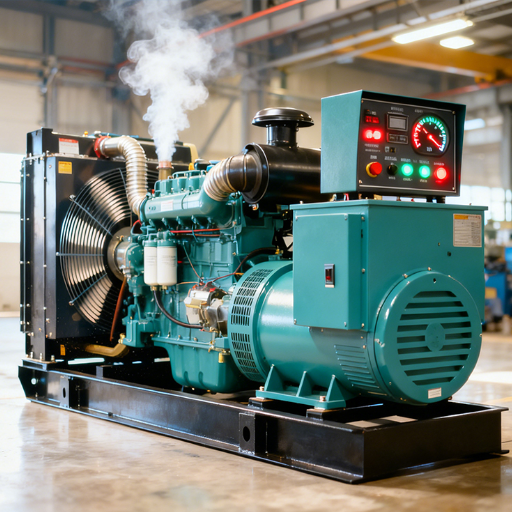
Heat tells you which system is failing if you track the right numbers. Every generator room runs three separate temperature stories at once: the room air, the engine coolant, and the alternator internals. Confusing them is how teams waste money on the wrong fix.
| Measurement | Normal | Caution | At Risk |
|---|---|---|---|
| Room temperature rises above the outside air | Up to 10 °C | 10-15 °C | Above 15 °C sustained |
| Maximum room operating temperature | 40 °C or below | 40-45 °C | Above 45 °C |
| Engine combustion / intake air | 40 °C or below | 40-50 °C | Above 50 °C (heavy derate) |
| Engine coolant | 82-95 °C | 95-100 °C | Alarm ~100-105 °C; shutdown ~110-115 °C |
| Alternator winding | Within the insulation class | Consistently near the limit | Winding hot spots, insulation aging |
The room air limit matters because the alternator pulls its cooling air from the room, not from outside. When that air runs warm, the alternator can’t shed its own heat and the winding temperature climbs even though the coolant gauge looks fine. That’s the failure mode most people miss. A hot room also quietly derates the set: warmer intake air means less oxygen per stroke and higher combustion temperature, so the engine makes less power and the exhaust runs hotter. In hot climates the output loss can reach 5-8% for every 10 °C above roughly 40 °C ambient.
The engine coolant story is separate. A diesel’s cooling system rejects a fixed amount of heat, and it does that between roughly 82 °C and 95 °C. When coolant climbs past that band, something on the machine side is wrong, and that’s where the set-side causes below come in.
First: Is It the Room or the Set?
Before you open anything, spend two minutes deciding which side is failing. This symptom map is the fastest way to sort it:
| What you observe | Most likely cause | Where to look first |
|---|---|---|
| The room is hot, but the coolant gauge sits at normal | Room-side ventilation | Louvers, airflow path, radiator discharge |
| Coolant is alarming, but the room feels fine | Set-side cooling | Coolant level, radiator, thermostat, fan belt |
| The room is hot, and the coolant is climbing | Both are usually connected | Room starving the set of cool intake air |
| Control cabinet or batteries failing in summer | The room’s ambient is too high | Room temp log, solar gain, insulation |
| High-temperature alarm only under heavy load | Set-side, load-related | Overload, fan-belt slip, coolant flow under load |
Log the room temperature and coolant temperature side by side for a week, including a loaded exercise run. Two numbers on one spreadsheet tell you more than any single measurement. If the room air is the problem, it stays hot whether the set is loaded or idling. If the set is the problem, the coolant spikes only when the engine works hard.
Daniel’s case is the classic room-side trap. The machine was fine; the room was cooking it. He added a second exhaust fan before checking the airflow path, and the room got worse because the new fan fought the first one and pulled the radiator’s hot discharge deeper inside. Rooms rarely fail from too few fans. They fail due to blocked paths and recirculated hot air.
Room-Side Causes of Generator Room Overheating
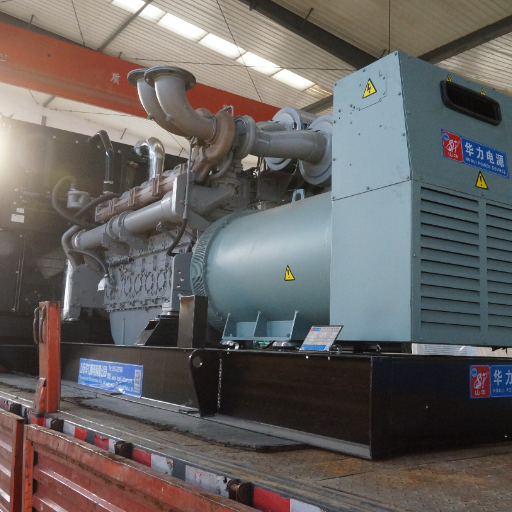
When the room itself is the problem, the causes fall into four buckets. Work through them in this order, because the cheap ones cause the most trouble.
Radiator Air Recirculating Back Into the Room
This is the number one room-side cause. An air-cooled radiator needs a clear path for its discharge air to leave the room. When that hot discharge loops back toward the intake, the cooling system inhales its own exhaust. A CFD study of an emergency diesel generator found that unsealed gaps around the heat exchanger raised the inlet air by about 5 °C and cut heat-rejection capacity by roughly 11%; sealing those gaps resolved the overheating. The blunt rule: an air-cooled radiator’s discharge must go straight outside. If it dumps into the room even partially, ventilation suddenly has to remove the radiator airflow and the room heat load, which can effectively double cooling demand.
Undersized or Dirty Louvers
Louvers are the room’s lungs, and they’re the most neglected part of an installation. A louver’s rated airflow means little once dust, insect screens, and blade angle shrink its net free area. Field checks routinely find dirty or undersized louvers delivering roughly 30% less air than the nameplate says. There’s a pressure side too. When the intake can’t supply enough air, the exhaust fans pull the room into negative pressure, and a door that’s hard to open against the suction is a strong clue. An NRC-documented emergency diesel room had exactly that problem before its ventilation was upgraded. For radiator-cooled sets, keep total static restriction across the intake and exhaust path at or below roughly 125 Pa (0.5 inches of water column), the limit NFPA 110 expects for these rooms.
Wrong Airflow Layout
Air should move through a generator room like a current: cool air enters low on one side, washes over the set, and hot air leaves high on the opposite wall. Rooms that ignore this end up with hot air pooling at the ceiling while intake and exhaust louvers sit on the same wall, letting discharge short-circuit straight across. If your intake and exhaust share a wall, that’s your prime suspect. Our generator room fire safety requirements guide covers how ventilation paths interact with fire-rated construction and fail-open dampers.
Hot Climate, Solar Heat, and Auxiliary Sources
In tropical and desert installations the baseline is already high. Rooms against sun-baked walls, uninsulated exhaust pipes radiating heat, and a hot day tank sharing the space all start several degrees hotter before the set runs. Add summer operation and marginal ventilation design tips to overheating. If you operate in this environment, plan for it rather than reacting each season.
Set-Side Causes: When the Machine Overheats in a Cool Room
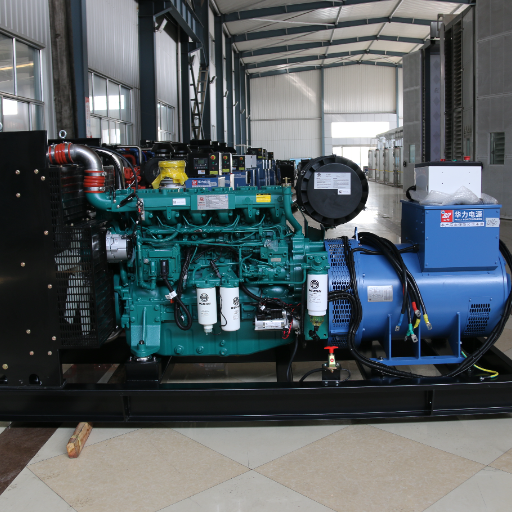
When the room is fine but the coolant alarm keeps firing, the fault is on the set. The usual suspects, in order of how often we see them:
- Low or degraded coolant. A leak, a failed cap, or plain water instead of proper coolant all cut heat transfer.
- Blocked radiator. Dust and grease across the fins act as insulation and can cut radiator airflow by 40-60%.
- Stuck-closed thermostat. Coolant never reaches the radiator, so the engine heats up fast.
- Water pump or fan-belt trouble. A slipping belt, worn impeller, or failing fan clutch starves the cooling system.
- Overload. Running past rated capacity makes more heat than the cooling system can reject.
- A false alarm. A bad sensor can fire a high-temperature alarm that isn’t real; verify with an infrared thermometer first.
Here’s a field story that shows why load matters. A telecom backup set passed its weekly no-load test for months, then shut down on high engine temperature during its first real outage under site load. The technician found the fan belt was slipping only under load, when the engine heated up and glazed the belt. A worn belt that spins freely at idle is the classic hidden cause, and it’s why no-load tests can lie to you. The full symptom-to-cause breakdown lives in our diesel generator troubleshooting guide.
How to Fix a Hot Generator Room: The Retrofit Ladder
Once you’ve confirmed the room is the problem, fix it in order of cost. Most rooms are cured at the first two rungs.
- Clean and unblock (free today). Clean the louvers and radiator fins, remove anything stored against the louvers, confirm motorized dampers are open, and restore any fans someone disconnected.
- Fix the airflow path (low cost). Seal gaps around the radiator and heat exchanger so discharge can’t recirculate. Insulate the exposed exhaust pipe. Separate the intake and discharge, and balance supply versus exhaust fans instead of letting them fight.
- Duct the radiator discharge outside (moderate cost). For an air-cooled set in a chronically hot room, this is the highest-impact retrofit available because it removes the room’s biggest heat source entirely.
- Engineered options (capital). When a room can’t physically move enough air, the durable answers are a remote radiator or a liquid-cooled system that rejects heat outside, or moving the set into a containerized unit with factory-designed ventilation.
The rung-three story is worth telling properly. A plant’s emergency diesel room ran near 50 °C every summer, and the team added fan after fan with no improvement. An audit found a fist-sized opening between the heat exchanger and its frame, big enough for hot discharge air to recirculate. Sealing that one gap dropped the heat exchanger’s inlet temperature by about 5 °C and restored roughly 11% of its heat-rejection capacity. The room cooled without a single new fan. Find the path problem before you buy equipment.
That’s exactly the conversation we have every week. Our engineers review room ventilation for indoor and containerized installations before we sign off on any set. Request a design review and send your room dimensions, set rating, and louver sizes.
Operating a Generator Room in Hot Weather
Once the room is under control, the remaining discipline is seasonal. Hot weather is when every ventilation weakness shows up:
- Clean louvers and radiator fins before the hot season, then monthly.
- Confirm coolant mix and level (never plain water) and check belt tension.
- Watch the room temperature log during loaded runs, not just at idle.
- Expect derating on days above 40 °C ambient.
- Don’t leave the set idling lightly loaded in heat; that combination builds exhaust-side problems. Our generator wet stacking prevention guide explains why.
Two points deserve emphasis. First, the control cabinet and starting batteries fail in a hot room, long before the engine does, because electronics and lead-acid batteries have tight temperature tolerances. If your room regularly passes 45 °C, those components age every cycle. Second, never defeat a high-temperature shutdown to get through a peak load. An overheating engine can warp a head, fail a gasket, or scuff a piston, and the repair dwarfs the load you were protecting. Hot exhaust and poor airflow also raise carbon monoxide and fire risk, as covered in our generator exhaust safety guide.
Frequently Asked Questions
Why does my generator room get so hot?
The room almost always fails to remove heat, creating more of it. Check for radiator discharge recirculating inside, undersized or dirty louvers, or an airflow layout that lets hot air pool instead of leave. Suspect the room before the generator.
What temperature should a generator room be kept at?
Keep the room at roughly 40-45 °C, with a rise of no more than about 10 °C above the outside air. Engine intake air should stay at 40 °C or below, because warmer intake air derates the engine and heats the exhaust.
Why is my diesel generator overheating when the room is cool?
That points to the machine’s own cooling system. Check coolant level and condition, radiator cleanliness, thermostat operation, and the fan belt under load. A set that overheats only under load often has a belt slipping as it heats, which no-load tests miss.
What does a generator high-temperature alarm mean?
The controller is telling you the coolant has passed its safe band, commonly around 100-105 °C. Don’t ignore it or defeat the shutdown. Verify the temperature with a thermometer, then trace coolant, radiator, and airflow before restarting.
Can a generator overheat from running in a hot room?
Yes. A hot room raises the temperature of the air the engine and alternator breathe, cutting heat rejection and derating output. Room heat and set heat feed each other, which is why you should measure both before deciding on a fix.
Do I have to duct the radiator discharge outside?
For an air-cooled set, yes. If the radiator’s hot discharge stays in the room, ventilation must remove that airflow on top of the room heat load, effectively doubling cooling demand. Ducting it outside is the highest-impact retrofit for a chronically hot room.
How much ventilation does a generator room need?
The accurate answer comes from a heat-balance calculation, not a guess. Total supply usually lands between 50 and 80 m³/h per kW, split between combustion, radiator cooling, and room heat removal. Our guide to calculating generator room ventilation runs the full worked example.
Conclusion
Here’s the bottom line on generator room overheating. Decide first whether the room or the set is failing, because they need opposite fixes. Keep the room under roughly 40-45 °C and intake air at 40 °C or below, and treat the 82-95 °C coolant band as the machine’s comfort zone. When the room is the problem, fix it in order of cost: clean and unblock, fix the airflow path, duct the radiator discharge outside, and only then look at engineered cooling.
The pattern is consistent across every field case we see. Rooms overheat from blocked paths and recirculated hot air, not from a shortage of fans. Find the path problem first, and you’ll usually fix the room without buying anything.
At Shandong Huali Electromechanical, we build diesel generator sets from 8 kVA to 4,000 kVA and engineer the ventilation for every indoor and containerized installation we deliver. If your generator room runs hot and you want a second set of eyes on it, send us your set rating, room temperature log, and alarm codes. Our engineers will read the numbers and tell you which fix applies. Contact our team to request a room ventilation design review.
