
Diesel generator black smoke under load means the engine is burning more fuel than the air entering it can burn cleanly. A puff that clears in a couple of seconds when a large load steps on is normal turbo lag. A plume that stays black while the load holds is a fault, and it has a readable cause.
Tomas watched a brand-new 400 kVA set pour black smoke during full-load commissioning at a food plant outside Manila. His first instinct was the injectors. It wasn’t. A plastic shipping plug was still seated in the air-inlet elbow. Remove it, and the exhaust ran clear at rated load.
When a diesel generator blows black smoke under load, most operators guess and throw parts at the set. That hides the real cause. This guide gives you the load signature and a cheapest-first test order, so you can fix the right thing once and prove it with a clean retest.
One note on scope. This article is the black-smoke deep dive. For the full color read and other fault systems, start with our diesel generator troubleshooting guide. If you saw the smoke during a failed load bank test, the generator fails load bank test article covers that signature.
Shandong Huali Electromechanical builds diesel generator sets from 8 kVA to 4,000 kVA and load-bank tests every unit before delivery. If your set is smoking, send us the rating, the kW where it smokes, and when it started. Our engineers will read the cause from those numbers.
Key Takeaways
- A brief puff when a large load steps on is normal turbo lag; a plume that persists while the load holds is a fault with a readable cause.
- A set’s rated output is the load its engine can hold while burning fuel cleanly. Above the rating, the excess fuel leaves as soot.
- Four cause families cover almost every case: load beyond rating, too little air, too much or poorly delivered fuel, and engine wear or carbon from light load.
- Fix it cheapest-first: verify the kW reading, check air-filter restriction, clear carbon with a loaded run, then test injectors, timing, and compression.
- Persistent black smoke wastes fuel, loads the engine with soot, and in an enclosed room is a carbon monoxide hazard.
Diesel Generator Black Smoke Under Load: Normal or a Fault?
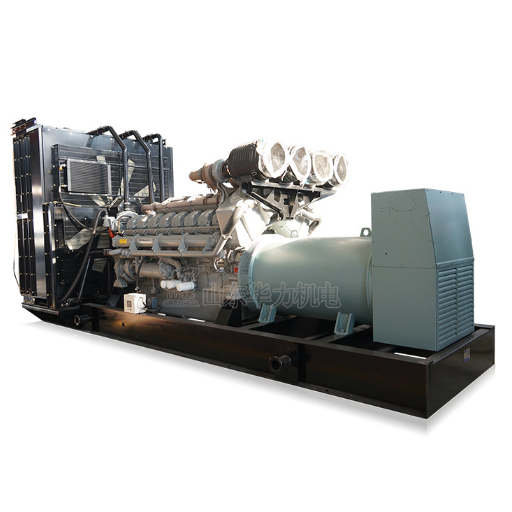
The first question is whether you are looking at a fault at all. Every turbocharged diesel throws a short puff of black smoke when a big load lands. The governor adds fuel the instant RPM dips, while the turbo needs a second or two to spin up matching air. That puff is normal.
The fault test is simple. Hold the load steady and watch the exhaust for ten seconds. If the smoke clears while load and frequency stay put, the transient was normal. If it persists or thickens, combustion is short of air or the fuel delivery is wrong.
Three numbers decide the diagnosis, so capture them when you see smoke. Read the kW on the controller against the nameplate. Read the output frequency, because an overloaded set often sags below 50 or 60 Hz while it smokes. Note the load where smoke appears, because full-load smoke points somewhere different from idle smoke.
That load level is the key: the point where diesel generator black smoke under load appears tells you which cause family to open first.
Diesel Generator Black Smoke Under Load: The Cause Families
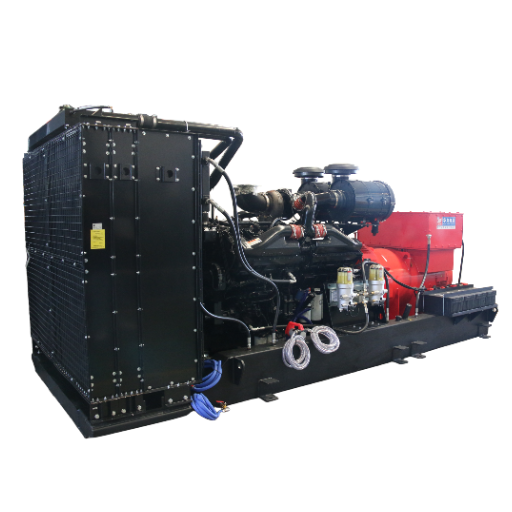
Almost every case lands in one of four families, and matching it halves the diagnostic time.
1. Load Beyond the Rating
A generator set is rated at the output its engine can hold while burning fuel cleanly. Ask for more, and the governor opens toward the fuel stop, adding fuel that the air cannot burn. The excess leaves as black soot.
That is why the kW reading is step one. A set run above its continuous rating will smoke, and the fix is load management or a bigger set, not parts. Keep the sustained draw inside the rating and leave room for motor-start surges.
2. Not Enough Air
The fastest culprit is a clogged air filter. It starves the engine of oxygen exactly when full load demands maximum airflow, so the set breathes fine at low load and chokes at high load.
Work down the air path in order. Replace the air filter when the restriction gauge reaches its mark, around 25 inches of water column on a heavy genset filter. Look for a blocked intake duct or anything left in the inlet after servicing, the plug that caught Tomas. Check the turbo and charge-air piping, because a boost leak or a worn turbo starves the engine of air at full load.
3. Too Much or Poorly Delivered Fuel
When the air path is clean and the load is honest, look at how fuel is delivered. Worn or leaking injectors are the usual suspects. A nozzle that dribbles, or sprays droplets instead of a fine mist, leaves fuel unburned, most visibly at high fuel rates. Bad injectors often show as a rough knock, uneven exhaust temperatures, or high fuel return.
Injection timing matters as much as the nozzles. Fuel injected too late burns as the piston is already moving away, turning fuel into soot. An injection pump delivering too much or unevenly across cylinders does the same. Both have a spec, and a shop with the manual and a test bench verifies them.
4. Engine Wear and Carbon From Light Load
Two mechanical states also produce black smoke under load. Worn rings, liners, or valves drop compression, so the engine cannot burn its fuel under demand. This one usually runs blue-black, with oil consumption and blow-by.
The other is carbon that was never a fault when it formed. A set that idles below about 30 percent load builds up unburned fuel and oil in the exhaust and turbo, then smokes exactly when a real load arrives. This is wet stacking, and it needs a corrective burn-off, not parts. Our generator wet stacking prevention guide explains it.
Fuel quality crosses all four families. Water, dirt, or the wrong grade makes combustion worse everywhere and can mimic an air or injector fault. Our diesel generator fuel system maintenance guide covers filters, water, and testing the fuel first.
Read the Load Signature: When the Smoke Appears
| When the black smoke appears | Most likely cause family | First checks |
|---|---|---|
| Only during a load step, clears in 2-3 seconds | Normal transient, turbo lag | None, if it clears; check governor ramp if it happens every start |
| Sustained only at high load, roughly 75-100% | Too little air, or fuel over-delivery at max fuel | kW vs. rating, air filter restriction, boost and charge-air leaks, injectors |
| From mid-load upward, worsens as load rises | Overload, or late timing and over-fueling | Controller kW reading, injection timing, pump delivery |
| At idle and no load too | Gross air restriction, or wet-stacked carbon | Air filter and intake path, then a loaded burn-off |
| Black smoke plus oil use and blow-by | Worn rings, valves, or turbo seals | Compression or leak-down test, oil consumption log |
| Black smoke on a hot day only | Hot, thin intake air | Ambient derate, room airflow, intake location |
Read the row that matches your set and open that family first. The table is a shortcut, not a verdict. Confirm the cause with a test before you order parts.
Diagnose It Cheapest-First
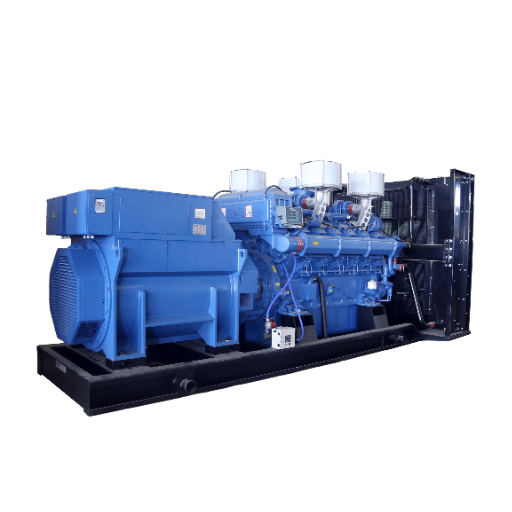
Black smoke under load is rarely a mystery once you test in order. Work this ladder from the top and stop when a step explains the smoke.
- Verify the load. Read the kW while it smokes. Above the rating for your duty, you have found the cause, so fix the loading, not the set.
- Check the air filter. Watch the restriction indicator, or run briefly without the filter in a clean room. If the smoke clears, replace the element.
- Run a loaded burn-off when there is light-load history. If the set has idled below 30 percent load for weeks, carbon is the likely culprit. Run at roughly 75 to 100 percent load for two to four hours on a load bank if you cannot draw that load in-house. Our load bank testing guide covers the procedure.
- Check fuel filters and fuel quality. Drain water from the separator, replace blocked filters, and confirm the diesel meets the engine’s grade and cetane spec.
- Test the turbo and exhaust path. Confirm boost pressure against spec, listen for charge-air leaks at the intercooler boots, and keep exhaust backpressure below the engine limit, commonly around 27 kPa on a turbocharged genset.
- Isolate the cylinder. At low load, briefly open the high-pressure fuel line at each injector one at a time. If smoke clears when you cut one cylinder, that cylinder’s injector, pump element, or compression is at fault. Comparing exhaust manifold temperatures finds it too, because a cool runner next to hot ones points to the dead cylinder.
- Escalate to a shop. A pop test checks injector opening pressure and spray pattern. A dial indicator or the ECU verifies timing. A compression test separates worn rings and valves from everything else.
Ruth, who ran maintenance for a hospital in Nairobi, followed this ladder on an 800 kVA standby set that smoked above 70 percent load. The kW was honest, the air filter fresh, and there was no light-load history. At step six she isolated cylinder four, and the manifold temperature delta agreed. A pop test found a dribbling injector. One service later, the set ran clean to rated load.
If the diagnosis stalls, or you want a second set of eyes before you spend, our engineers will read the signature from your numbers. Send the set rating, the load at which it smokes, and the fault or alarm codes, and we will tell you which step to push next.
When Black Smoke Under Load Means Stop
Black smoke under load is not just ugly. It is wasted fuel leaving as soot and a sign that the engine is outside its clean-burn envelope. Ignored, it coats the turbo and exhaust with carbon and accelerates wear.
In an enclosed room it is a safety issue, not an efficiency one. A set running under load without airflow puts out carbon monoxide alongside the soot. Never run a smoking set in an unventilated room. Room airflow problems are their own failure mode, covered in our generator room overheating article.
How much should you worry? A set that puffs on load steps and runs clear otherwise is fine. One that smokes continuously at a load within its rating needs diagnosis this week. One that smokes while frequency sags is being overloaded, and one that smokes with oil consumption is showing internal wear. None of them is improved by letting it run.
Fix It, Retest It, and Keep It From Coming Back
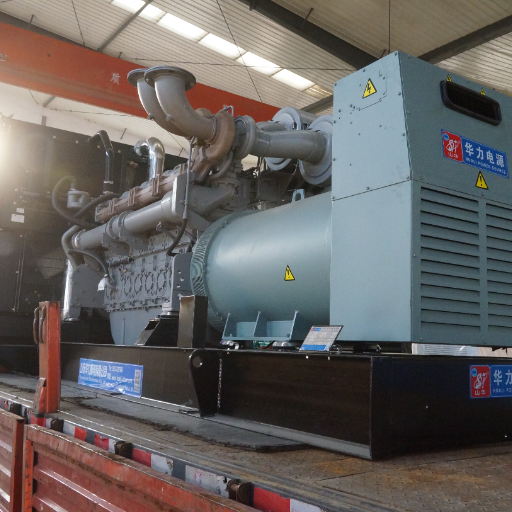
The fix is done only when the smoke clears under the load that caused it. Repair what the ladder identified, then rerun at that load and watch the exhaust for several minutes. If you fixed a real fault and not just carbon, a clean retest at rated load is your proof.
Prevention is mostly a loading habit and a schedule. Avoid sustained running below about 30 percent load. Exercise the set until it is loaded enough to keep the exhaust system hot, and put a load bank run on the calendar. The daily, weekly, and monthly tasks that stop most causes live in our diesel generator maintenance checklist.
Sometimes the smoke means the set is wrong for the job. A set that smokes because it is routinely overloaded is undersized for the real load; one that is oversized runs light, wet-stacks, and smokes when finally pushed. Parts will not fix either. Measure the load over a week and size to it with a margin for starts.
Daniel, a reliability engineer for a telecom hub, had a set that behaved all year and smoked black every annual full-load test. There was no injector fault and no air problem. Years of near-no-load runs had wet-stacked the engine, so each test burned off a season’s carbon in one smoky hour. He started exercising the set above 40 percent load, and the next annual test ran clean. The set was never broken. It was undertrained.
On a new set, black smoke under load is different. A factory-tested unit that arrived clean and smoked at commissioning almost always has an installation-side cause: a shipping plug in the air inlet, a closed intake panel, or fuel that does not meet spec. Capture the load, the fuel, and a photo of the smoke, then call the factory before you change anything.
Frequently Asked Questions
Why does my diesel generator blow black smoke under load?
Black smoke under load means the engine gets more fuel than the available air can burn, so the excess leaves as soot. Usual causes are load above rating, a clogged air filter, worn or dribbling injectors, or carbon from light-load running. Read the kW, check the air filter, and work the ladder in order.
Is some black smoke normal when a generator takes load?
A two-to-three-second puff when a large load steps on is normal. The governor adds fuel instantly while the turbo needs a moment to deliver matching air. Hold the load steady and watch. If the smoke clears while load and frequency hold, it is a normal transient. If it persists, it is a fault.
Generator black smoke only at full load: what causes that?
Smoke that appears only near full load points to something that fails at maximum airflow or maximum fuel demand. Check the load, then the air filter and turbo boost path, because a small air restriction is invisible at low load and choking at full load. Worn injectors that over-deliver at high fuel rates cause the same pattern.
Why does my generator blow black smoke on startup that clears when warm?
A cold diesel injects extra fuel to start, and until the chamber warms, some leaves unburned as smoke. Cold ambient air makes it worse. Jacket water heaters that hold the block near 100°F cut most of it, and slowing the governor’s start-up fuel ramp helps, as long as the set still meets its start time. If smoke persists once warm, diagnose a real fault.
How do I tell black, blue, and white smoke apart?
Black smoke is unburned fuel from too much fuel or too little air. Blue smoke is oil burning, from worn rings, valve guides, or turbo seals. Persistent white smoke on a warm engine is usually coolant or unburned fuel from low compression or timing, while a brief puff on a cold morning is normal condensation. The color table in our diesel generator troubleshooting guide walks through each one.
My new diesel generator smokes black under load: is it a defect?
Probably not. A factory-tested set that arrives clean and smokes at commissioning almost always has an installation-side cause, such as a shipping plug in the air inlet, a closed intake panel, or fuel that does not meet spec. Confirm the air path is open and the fuel is correct, capture the details, then contact the manufacturer before replacing parts.
Conclusion
Here is the bottom line on diesel generator black smoke under load. A brief puff on a load step is normal turbo lag; a plume that persists is a fault. Read the kW first, because a set above its rating cannot burn cleanly. Check the air filter and clear carbon with a loaded run before you suspect injectors, then move to timing, compression, and the shop. Retest under the load that caused the smoke, and exercise the set load so carbon never builds again.
The sets we see smoke for a small set of repeating reasons, and almost all are fixed once, in order, instead of with a basket of parts. A clean retest at rated load is how you prove the repair, and a loaded exercise habit is how you stop the next one.
At Shandong Huali Electromechanical, we build diesel generator sets from 8 kVA to 4,000 kVA and load-bank test every unit before delivery, so we see black-smoke signatures first in our own test cells. If your set is smoking under load, send us the set rating, the kW at which it smokes, and when the smoke started. Our engineers will tell you which step of the ladder applies and help you plan the fix. Contact our engineers to start the diagnosis.
