
A generator day tank is a small fuel tank mounted at or near the engine, refilled automatically from a larger bulk storage tank. It is sized in hours of full-load runtime, not in gallons or litres. Standby systems are typically sized for 4 hours at 100% rated load, while prime power and fire pump applications are sized for 8. Those runtime classes apply to almost every stationary generator, so the duty your set is built for decides the hours your tank must hold.
That distinction matters more than it sounds. Almost every day tank sized wrongly was sized by volume.
Ravi learned this on a manufacturing plant in 2024. His 500 kW standby generator needed a 4-hour day tank, and he specified 500 gallons because it sounded like a sensible number. His actual requirement worked out to roughly 130 gallons.
The extra 370 gallons of steel cost real money, and the fuel sitting in it would degrade long before the generator ever burned it. That money would have been better spent on the duplex transfer pump he did not buy.
This guide covers the sizing calculation, the hours each application actually requires, the level control setpoints that make automatic refill work, and the codes that limit what you can install indoors. If you already know your required hours and just want a number, our generator fuel tank sizing calculator will do the arithmetic.
Want a second opinion on your sizing before you order? Send us your load and required hours and our engineers will check the tank, pump, and controls as one system.
Key Takeaways
- A generator day tank is sized in hours of full-load runtime, not by volume. Standby is typically 4 hours at 100% rated load; prime and fire pump applications are 8.
- The sizing formula is fuel consumption rate x rated power x required hours, plus a margin for unusable volume and tank fill factor.
- NFPA 37 caps a single day tank at 660 gallons (2,500 litres). That cap is why a large machine with an 8-hour requirement cannot always be served by one tank.
- The transfer pump is the real single point of failure. Once a day tank empties, the engine trips regardless of how many generators are installed.
- Stored diesel starts forming solids within roughly six months, so an oversized day tank creates a fuel quality problem rather than a safety margin.
What Is a Generator Day Tank?
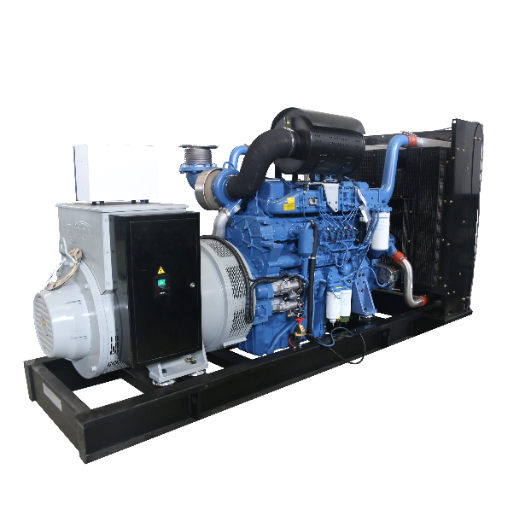
A generator day tank is a small atmospheric tank that holds enough fuel to run the engine for a defined short period and is refilled from bulk storage by a transfer pump under automatic level control. The Electrical Generating Systems Association defines it as a tank used to supply fuel to the generator set engine for 24 hours or as specified.
It is also called a daily tank, an immediate-use tank, or in German a Tagestank. The name comes from the same idea in each language: a quantity sufficient for roughly a day of consumption, replenished as it is used.
How a Day Tank Works
A float switch or level sensor monitors fuel level in the tank. When the level falls to a set point, the controller starts the transfer pump and draws fuel from the main storage tank. When the level reaches the high set point, the pump stops.
If the transfer pump works, the engine runs indefinitely. If it fails, the engine runs only until the day tank empties, then trips. That is why day tank capacity and the automatic refill set point are both specified carefully rather than left to the pump supplier.
Day Tank vs Bulk Tank vs Sub-Base Tank
These three are routinely confused, and the differences decide which one your site needs.
| Tank type | Location | Typical role |
|---|---|---|
| Day tank | At or near the engine, often indoors | Short-duration supply, refilled automatically |
| Bulk storage tank | Outside, remote from the engine | Long-duration reserve, main fuel inventory |
| Sub-base tank | Under the generator, forms its base | Combined base and fuel supply, common on smaller sets |
A sub-base tank can serve as a day tank if it is plumbed for automatic refill from bulk storage. That distinction matters, because a site with a sub-base tank already holding fuel may not need a separate day tank at all.
Do You Actually Need a Day Tank?
Most guidance assumes you do. The honest answer is that it depends on three things.
Suction distance. A fuel pump pulling from a tank 40 metres away is working against suction lift, and long suction runs on diesel are a common source of starting problems. A day tank located close to the engine removes that problem entirely.
In-building fuel limits. Fire codes restrict how much fuel may be stored inside a building. A day tank holds a small, defined quantity, which is often the only way to keep fuel near the engine legally.
Supply stability. A day tank gives the engine a steady, deaerated supply with a consistent head. On large machines with high fuel flow rates, that stability is worth having on its own.
If your generator already sits on a sub-base tank with adequate capacity and is refilled from bulk storage, a separate generator day tank may add cost and another failure point without adding capability. If your bulk tank is remote, or the engine sits inside a building, a day tank is usually the right answer.
How to Size a Generator Day Tank
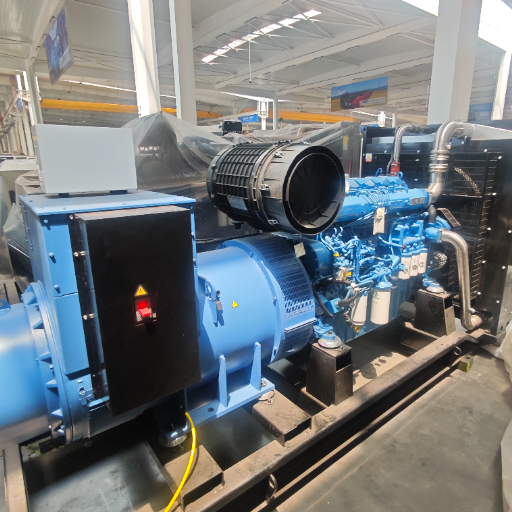
Sizing a generator day tank starts with hours, not volume. The calculation is simple once you have two inputs: the engine’s fuel consumption at full load, and the number of hours the authority having jurisdiction or your specification requires.
The Sizing Formula
Required volume = fuel consumption rate x rated power x required hours x margin
Two adjustments follow. First, add a margin for unusable volume at the bottom of the tank and the fact that a tank is filled to roughly 90% rather than to the brim. A margin of 10% is typical, though your specification may call for more. Second, account for any fuel returned to the day tank from the engine, which adds volume and heat.
You can pull the consumption rate from our diesel generator fuel consumption chart, or use the manufacturer’s data sheet for your specific engine.Day tanks are a diesel design question; if you are still choosing the fuel itself, our diesel vs natural gas generator comparison explains why a pipeline-fed gas set changes the on-site storage picture entirely.
Required Hours by Application
| Application | Minimum hours at 100% rated load |
|---|---|
| Standby power | 4 hours |
| Prime power | 8 hours |
| Fire pump standby | 8 hours |
| Integral (engine-mounted) day tanks | 1 to 8 hours |
These figures come from Unified Facilities Criteria guidance used across US federal projects, and they are a sound default elsewhere. The governing requirement is always what your specification and local authority actually state, and some applications demand more. Healthcare life-safety installations in some jurisdictions, for example, are required to hold a minimum of 48 hours.
A Worked Example
Take a 500 kW standby generator with a 4-hour requirement.
A diesel engine consumes roughly 0.2 litres per kWh at full load, so a 500 kW machine burns about 100 litres per hour. Four hours need 400 litres. Add a 10% margin and you are at 440 litres. Divide by a 90% usable fill factor and the tank needs to be about 490 litres, or roughly 130 US gallons.
That is the number to order. Note how far it sits from the 500-gallon tank Ravi specified for the same duty. The extra capacity bought him nothing but stale fuel.
Why the 660-Gallon Cap Changes the Design
NFPA 37 limits a single-day tank to 660 gallons (2,500 litres). That is not an arbitrary number. Crossing 660 gallons indoors also triggers sprinkler protection and secondary containment requirements under NFPA 30.
The practical consequence catches people out on large machines. Consider a 2,000 kW set with an 8-hour prime requirement. At 0.2 litres per kWh it burns about 400 litres per hour, so eight hours needs 3,200 litres before any margin. That exceeds the 2,500-litre cap on a single tank.
A day tank cannot legally serve that duty alone. The design has to change, either by using multiple tanks, by reducing the required day tank hours and relying on a faster refill cycle, or by moving the autonomy requirement to the bulk storage system where it belongs. Discovering this after the tank is ordered is expensive.
Refill, Pumps, and Level Controls
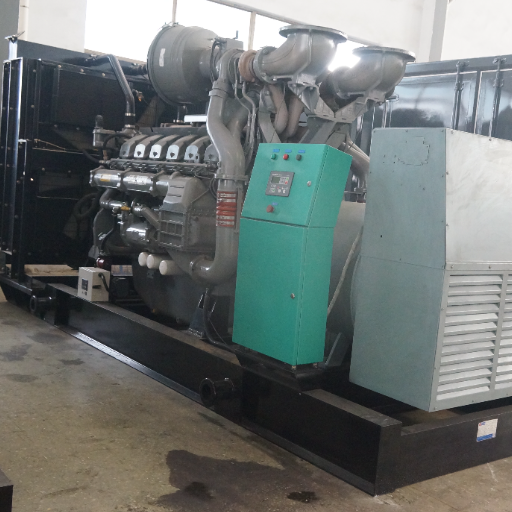
The tank is the visible part of a day tank system. The controls and pumps determine whether it works.
Transfer Pumps and Redundancy
Fuel transfer pumps are typically duplex, horizontal, positive displacement units, directly connected to the motor through a flexible coupling, with a bypass relief valve if the pump has no internal relief. Duplex means two pumps, one duty and one standby.
That redundancy is not optional on a critical site. A simplex transfer pump turns your day tank into a hard runtime limit, and it fails at exactly the moment you need the generator.
Diane found this on a regional hospital upgrade. The plant had two generators in an N+1 arrangement and a single transfer pump. During a utility outage both engines started and ran correctly, then both tripped when the day tank emptied because the pump had failed.
The redundancy in the generators was real. The redundancy in the fuel system was zero.Fuel-side resilience can also be designed into the engine, and our bi-fuel vs dual fuel generator guide explains how adding a gas supply can stretch the runtime you get from the same day tank.
Pump flow is often specified at 200% of expected fuel consumption. That sounds generous until you remember the pump must refill the tank while the engine is drawing from it, and must do so within the refill window.
Level Control Setpoints
A typical float switch assembly operates at these thresholds. Values vary by specification, but the pattern is consistent.
| Set point | Typical level | Action |
|---|---|---|
| Overfill alarm | 95% | High level alarm |
| Pump stop | 90% | Transfer pump stops |
| Pump start | 75% | Transfer pump starts, refill begins |
| Low fuel alarm | 70% | Low level alarm to controls |
| Critical low | 5% | Engine shutdown |
The gap between the 75% start and the 90% stop is the working band. It has to be wide enough that a single refill cycle is not fighting the engine’s draw, and narrow enough that the tank never runs low during normal operation.
Return Fuel and the Heat Problem
Diesel returning from the engine carries heat. If that return line goes back to the day tank and no fuel cooler is fitted, the tank may need to be larger than the consumption calculation suggests, purely to dissipate heat. Returned fuel must also stay below its flash point.
This is one of the few cases where a bigger day tank is the correct answer. It is also a detail that gets missed when sizing is treated as a pure volume exercise.
Codes and Standards That Apply
Several standards govern day tank design, and they cover different things. Confusing them is common.
- NFPA 30 covers flammable and combustible liquid storage, including containment and indoor quantity limits.
- NFPA 37 covers stationary combustion engine fuel systems, including the 660-gallon day tank cap and venting.
- NFPA 110 covers emergency power supply systems, including fuel quality testing and the runtime classes that drive your hours requirement.
- UL 142 and UL 2085 cover tank construction. UL 2085 adds concrete encasement and resistance to fire, vehicle impact, and projectiles.
Clause numbering shifts between editions, so cite the standard by name and check the edition that applies to your project.
Beyond the standards, several installation rules apply. The day tank must sit below the engine fuel return elevation. Gravity-flow arrangements, where fuel can sit above the injectors, need a valve that closes when the engine stops, and the supply line to the engine should be welded pipe.
Pump-fed tanks need an overflow line back to the source tank, a high-level alarm, and automatic high-level shutoff. Vent piping terminates outside the building, and fill and vapour connections sit at least 5 feet from building openings and lot lines.Those distances sit alongside the broader stationary generator installation requirements for clearances, ventilation, and service access around the set itself.
Your local fire marshal generally has the final say, and local amendments are common. Our diesel fuel storage regulations overview covers the regulatory side in more detail, and our NFPA 110 fuel requirements page covers the runtime classes.
Fuel Quality: The Reason Day Tanks Matter on Standby Plants
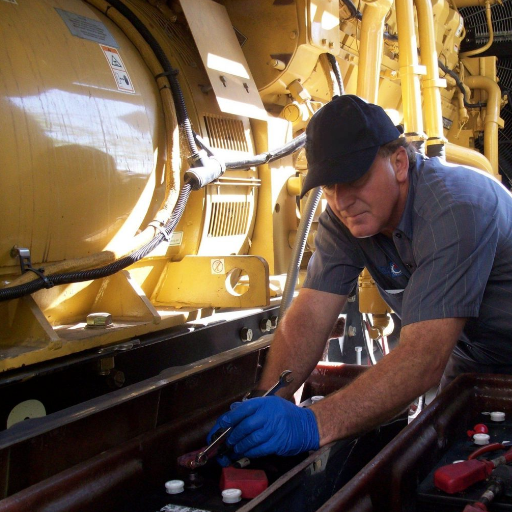
On a standby plant, the day tank holds fuel that mostly sits rather than burns. That changes the design priority.
Diesel starts to deteriorate and form solids within roughly six months. Water absorbs into the fuel, microbial growth develops at the water interface, and sediment settles to the bottom of the tank. The day tank, being the last vessel before the engine, is where those contaminants do their damage.
Karl ran facilities at a cold storage site where the generator was exercised monthly but never carried real load. After two years the unit failed to start during an outage. The day tank was full, the transfer pump worked, and the fuel looked fine in the sight glass.
Testing found microbial contamination and a layer of sediment that had been building since commissioning. The repair cost more than a decade of fuel polishing would have.
Three practices address this. Fuel polishing circulates stored diesel through filters to strip water and sediment, and is far cheaper than replacing fuel. Fuel testing checks for water, sediment, gel, and the flash and cloud points, and satisfies the annual testing requirement tied to NFPA 110. Exercising the generator under load keeps fuel moving and confirms the equipment still works.
The 20/20/20 Rule for Generators
You may see the 20/20/20 rule cited as a generator maintenance schedule. It means 20 minutes of operation at 20% load every 20 days. Some sources give the third element as every 20 running hours instead of every 20 days.
The logic is that a generator should reach operating temperature, carry enough load to burn off moisture and carbon, and do so often enough to keep the fuel and batteries healthy. Idling without load does not achieve the same thing and can cause its own problems.
Do not confuse this with a separate safety rule that also uses the number 20: operate the generator 20 feet from the building, allow 20 minutes of cooldown before refuelling, and maintain 20 inches of side clearance. That rule is about fire safety during refuelling, not about exercising. Our generator refueling safety guide covers the safety side.
The maintenance rule is a good default, not a substitute for your manufacturer’s service schedule. At 20% load a generator is well below its efficient band, so treat the 20 minutes as a warm-up and function check, not as a load test. Real load testing is covered in our guide to preventing wet stacking.
Frequently Asked Questions
How many hours of fuel does a generator day tank hold?
It depends on the application. Standby systems are typically sized for 4 hours at 100% rated load, while prime power and fire pump applications are sized for 8 hours. Integral engine-mounted day tanks commonly cover 1 to 8 hours. Your specification and local authority set the actual requirement.
What is the difference between a day tank and a belly tank?
A belly tank, or sub-base tank, is mounted under the generator and forms its base. A day tank is a separate vessel near the engine, refilled automatically from bulk storage. A sub-base tank can act as a day tank if it is plumbed for automatic refill from a main storage tank.
What is the 20/20/20 rule for generators?
It is a maintenance and exercising schedule: run the generator for 20 minutes at 20% load every 20 days. Some sources specify every 20 running hours instead. It is not the same as the refuelling safety rule of 20 feet, 20 minutes of cooldown, and 20 inches of clearance.
Does my standby generator need a day tank?
If your bulk fuel storage is remote from the engine, or the generator sits inside a building where fuel quantity is limited by fire code, a day tank is usually required. If the generator already sits on an adequately sized sub-base tank refilled from bulk storage, a separate day tank may add cost without adding capability.
How often should day tank fuel be tested?
NFPA 110 ties fuel quality testing to an annual requirement, and some specifications call for more frequent sampling. Testing checks for water, sediment, gel formation, and the fuel’s flash and cloud points. Any tank holding fuel for long periods should also be polished periodically.
If your day tank also forms part of a redundant power arrangement, our guide to N+1 generator redundancy explains how fuel autonomy limits the redundancy you actually get.
Conclusion
A generator day tank is sized in hours, not volume, and that single shift in thinking prevents most of the mistakes in this article.
Here is what to carry into your specification:
- Start with required hours. Standby is typically 4 hours at 100% rated load; prime and fire pump applications are 8. Confirm what your authority actually requires.
- Use the formula. Consumption rate x rated power x hours, plus margin for unusable volume and fill factor.
- Check the 660-gallon cap. A large machine with a long autonomy requirement may not fit in one tank, and that changes the whole layout.
- Make the transfer pump duplex. The day tank is a hard runtime limit if the pump fails, no matter how many generators you install.
- Do not oversize for comfort. Excess fuel in a day tank degrades. Size for the hours you need and put the reserve in bulk storage.
Shandong Huali Electromechanical Co., Ltd. manufactures diesel generator sets from 8 kVA to 4,000 kVA and supplies fuel systems, transfer pumps, and level controls as an integrated package, with full OEM/ODM customization.
Have our engineers size your day tank and fuel system →
Send us your load profile, required autonomy hours, and site constraints. We will size the tank, pump, and controls together, and tell you if the number you had in mind is larger than the job needs.
