
A generator thermostat is a temperature-controlled valve that holds coolant back from the radiator until the engine reaches operating temperature. It opens at a specific rated temperature, usually somewhere between 71 and 88 °C, and that rating has to match what the engine was built for. Fit the wrong one and the engine runs cold, or runs hot, or both on different days.
Here’s what most thermostat pages get wrong. They jump straight to “replace it” without telling you how to test it first. But a thermostat is one of the few generator parts you can verify on a kitchen stove in ten minutes, and doing that saves you from changing a part that was never the problem.
This page covers the part itself: what it does, why the opening number matters, how to test it, and how to replace it. It also covers the fault that gets confused with a failed thermostat more than any other. For diagnosing a temperature fault, our guide to generator overheating already walks through the symptom tree.
Key Takeaways
- A generator thermostat holds coolant back until the engine warms, then opens at its rated temperature. Most diesel gensets run in the 80–90 °C band once warm.
- Opening ratings are discrete numbers, commonly 71 °C and 79 °C. The correct one is whatever the engine manual specifies, not the closest one in stock.
- A thermostat can be bench tested in heated water with a thermometer, which beats replacing it on suspicion.
- Removing a thermostat is not a fix. It slows warm-up, degrades combustion, and at least one parts supplier states it voids the engine warranty.
- A failed water pump and a failed thermostat produce different symptoms, and confusing them is the most common diagnostic error on this circuit.
What a Generator Thermostat Does
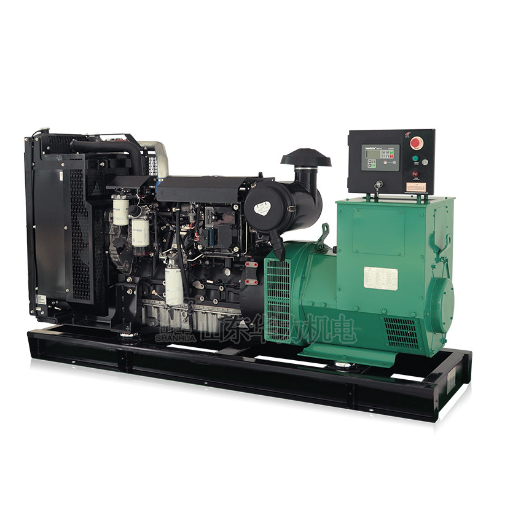
The thermostat’s job is not to cool the engine. It is to stop the cooling system cooling the engine too early.
On a cold start, coolant circulates inside the engine block and bypasses the radiator. On a large set this is the high-temperature circuit that the Kohler remote cooling paper describes, carrying jacket water and oil cooler heat. The engine warms quickly, which is what makes combustion clean and the oil thin enough to flow. Once the coolant reaches the rated temperature, the valve opens and coolant starts passing through the radiator. If it drops back below the rating, the valve closes again.
That cycle repeats continuously. The part is usually a wax pellet thermostat: a wax-filled capsule expands as it heats, pushing a piston that opens the valve. No electrics, no controller. It fails mechanically, which is why it usually fails slowly before it fails completely.
The warm-up job that gets forgotten
People think of cooling as a summer problem. In a generator, the opposite failure is just as damaging. An engine that never reaches its operating band burns fuel badly, builds carbon, and dilutes its own oil with unburned fuel.
Diesel Generator Tech, writing about Volvo gensets, puts the target at around 80 to 90 degrees and describes the thermostat’s purpose as keeping that temperature constant so the engine delivers economical power in a warm state. That band is the thing to design around, and the thermostat is what holds it. For the circuit around this valve, see our guide to the generator cooling system.
What happens when it is removed
Removing the thermostat is an old field workaround, and it’s a bad one. CNFengtop, a Perkins and Volvo parts supplier, lists four consequences, and the logic is sound:
- Warm-up takes much longer, and in cool weather at idle the engine may never reach normal temperature.
- The oil never reaches its design temperature, so fuel consumption, emissions and wear all rise.
- Cooling capacity actually falls, because not all the coolant passes through the radiator. Local boiling can occur even with a normal gauge reading.
- The warranty is affected. CNFengtop states that engines run without a thermostat are not covered by the quality warranty. Treat that as that supplier’s position, but expect most manufacturers to take a similar view.
The thermostat is a cheap part protecting an expensive engine. A generator with the thermostat removed isn’t running cooler. It’s running worse.
Dealing with a repeated temperature fault on a set you maintain? Our engineers can review the cooling circuit and the duty cycle together, which is usually where the real cause sits. Talk to our engineering team →
Opening Temperature: Why the Number Matters
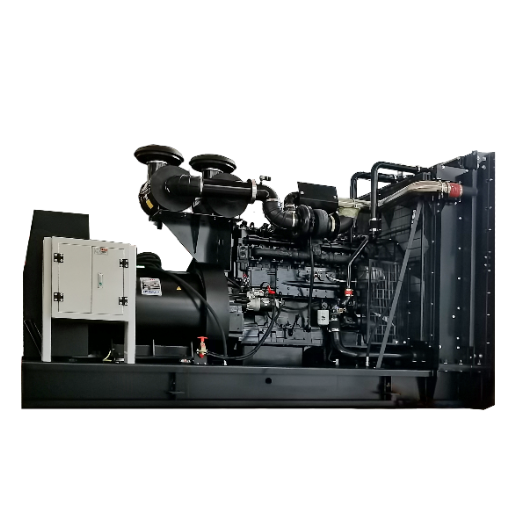
The thermostat opening temperature is stamped or printed on the part, and it is what you must match when you buy a replacement. Thermostats aren’t universal, and they aren’t interchangeable.
Product listings make this concrete. Generatormagic, a generator parts retailer holding eleven of the top results for this query, sells a “Thermostat 71°C” and a “Thermostat, 79 Deg.” as distinct items. A parts catalogue likewise lists a Perkins thermostat, a Volvo thermostat and a Cummins thermostat separately, because the rating and the housing differ.
Reading the rating on a replacement
Before ordering anything, read the rating on the part you are removing. It should match the engine manual.
Three mistakes account for most wrong-part failures. Buying the closest rating in stock is the first: a 79 °C unit is not a substitute for an 88 °C one, and the engine will run colder than designed. Trusting the catalogue over the part is the second; model years and engine variants change, and the number on the engine beats the website lookup. Fitting the wrong flange or bypass design is the third; the rating can be right and the part still wrong if the housing and bypass hole don’t match.
A thermostat rated too low opens early and keeps the engine cold. One rated too high opens late and lets it run hot. Neither is a cooling problem. Both are a specification problem.
What running cold actually costs you
An engine held below its operating band isn’t a mildly inefficient engine. It’s an engine that isn’t burning its fuel properly.
Unburned fuel passes into the exhaust and into the crankcase. In the exhaust it shows as wet stacking, the black oily residue that builds when a diesel runs cool or lightly loaded. In the crankcase it thins the oil and raises wear. Our guide to generator wet stacking prevention covers that in full. A cold engine also sits further from the assumptions behind the derating envelope, which our guide to altitude and temperature derating explains.
So the opening temperature isn’t a detail. It decides whether the engine runs in its design band or outside it.
Testing a Generator Thermostat
You can test a thermostat without draining the system, and you can test it properly on a bench. Do the first one first.
The top hose check
Start the engine cold and feel the radiator top hose. It should stay cool while the engine warms, then get hot quickly once the thermostat opens.
If the hose stays cold while the gauge climbs, coolant isn’t reaching the radiator. The thermostat isn’t opening. If the hose gets hot almost immediately, coolant is flowing from the start. The thermostat is stuck open, or there isn’t one.
This test needs no tools and catches both common failure modes. Our generator overheating guide uses the same check in its symptom tree. What it can’t tell you is whether the thermostat opens at the right temperature, only that it opens.
The bench test
The bench test answers the rating question. It needs a thermometer, a heat source and ten minutes.
- Drain and remove the thermostat, noting its orientation in the housing.
- Suspend it in a pot of water with a thermometer, not resting on the bottom.
- Heat slowly and note the temperature where the valve starts to move and where it is fully open.
- Compare both figures with the rating stamped on the part.
A thermostat that never opens has failed closed. One that is already open at room temperature has failed open. One that opens well off its rating has drifted and should be replaced. One that opens smoothly at its stated rating is fine, and the fault is elsewhere.
Use a dedicated test vessel rather than cookware you will eat from, and dispose of the coolant-contaminated water properly.
Replacing a Generator Thermostat
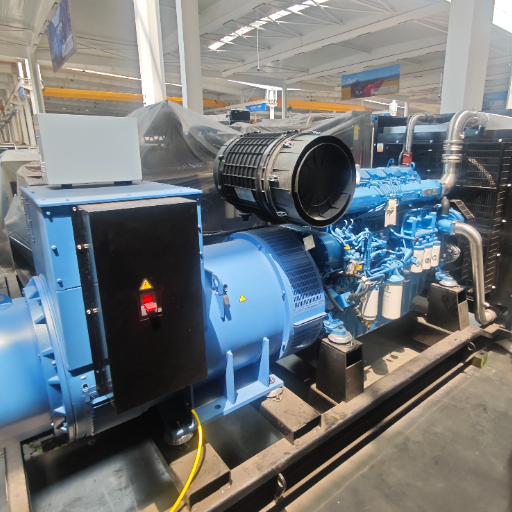
A generator thermostat replacement is straightforward on most sets. The mistakes happen at the edges.
Housing, gasket and seal
Drain the coolant to below the housing, undo the bolts evenly, and lift the housing rather than levering it. The old gasket or O-ring usually comes away with it.
Clean both mating faces properly. Old gasket material left on the face is the most common cause of a leak after a job that was otherwise correct. Check the housing for corrosion or a warped face; if the flange is pitted, a new gasket won’t seal it.
Fit the new thermostat with the air-bleed hole or jiggle valve oriented as the manual specifies. On many engines that small hole must sit at the top, because that’s how air escapes when the system is filled. Fit it upside down and the engine will airlock and overheat, and the thermostat will look like the culprit again. Torque the bolts to the specified figure, then refill slowly and bleed the system as directed.
What to inspect while it is open
The housing is one of the few places you can see inside the cooling circuit, so use the access.
Check the coolant for sludge, rust or oil contamination. Look at the inside of the housing for scale and erosion. Check the generator temperature sensor if the set has one nearby, since a failed sensor produces the same symptoms as a failed thermostat on some controllers. Our guide to generator coolant covers what the fluid should look like. If the coolant is dirty or overdue, change it now; you won’t get a cheaper opportunity.
Replacing a thermostat and unsure what else the coolant is telling you? Send us the symptoms and the set details, and our team can help you read them.
Thermostat or Water Pump?
This is the diagnostic error that costs the most money on this circuit: replacing a thermostat when the generator water pump is failing, or the reverse.
Both show up as a temperature problem. They differ in which direction the temperature goes and when it happens.
Two different faults that look alike
A failed thermostat usually produces a temperature that settles in the wrong place. Stuck closed, it overheats quickly. Stuck open, it never reaches its band. The behaviour is consistent across loads, because the valve position is fixed.
A failing water pump produces a temperature that depends on flow and load. The pump may deliver enough coolant at light load and not enough at full load, so the set runs fine at 30% and overheats at 80%. The pump is belt- or gear-driven, and both the drive and the pump fail in service. A slipping belt squeals under load. An eroded impeller is quieter: the pump turns, the belt is tight, and flow is simply too low. A failed seal shows as coolant at the weep hole.
Table 1: telling them apart
| Symptom | Thermostat | Water pump |
|---|---|---|
| Temperature sits low and never reaches band | Likely (stuck open) | Unlikely |
| Overheats quickly from cold | Likely (stuck closed) | Possible |
| Fine at light load, overheats under load | Unlikely | Likely (impeller erosion) |
| Squeal under load | No | Likely (belt) |
| Coolant at the weep hole | No | Likely (seal) |
| Temperature improves after the radiator is cleaned | No | No |
That last row is worth a separate warning. Neither a thermostat nor a pump explains a temperature that improves after the radiator is cleaned. That points at airflow, and our generator radiator guide covers it.
Conclusion
A generator thermostat is a small mechanical valve doing two jobs: getting the engine warm quickly, and holding it at its design temperature afterwards. Both matter.
- Match the opening rating to the engine manual. Ratings are discrete numbers, and the closest one in stock isn’t good enough.
- Test before replacing. The top hose check catches a stuck valve in a minute; the bench test confirms the rating in ten.
- Never remove it to “fix” overheating. It slows warm-up, degrades combustion and can void the warranty.
- Separate thermostat from water pump. One is a fixed position, the other is a flow problem that worsens with load.
- Do the replacement properly. Clean faces, correct bleed-hole orientation, correct torque, fresh coolant.
Shandong Huali has built diesel generator sets since 1999, and our engineering team specifies cooling components against the conditions each set actually sees. If you’re chasing a temperature fault, or specifying a generator thermostat replacement, send us the set details and the symptoms. Contact our engineers →
