
A perkins diesel generator is a power generation system which uses a Perkins compression-ignition engine as its main component and Stamford or Leroy-Somer or Marathon alternator and digital control systems as its secondary components. The units provide dependable electricity for standby and prime and continuous duty operations which range between 7 kVA and 2,500 kVA.
British industry has used the Perkins generator set as its primary power source since 1932. The total production of Perkins engines has exceeded 20 million units since the brand began manufacturing them. The brand dominates UK and Commonwealth markets because its customers prefer its fuel-efficient and low-noise and space-saving products which they use in telecom towers and hospitals and commercial buildings throughout the world.
The buyers discover the information now. The engine badge matters less than the complete system integration. The combination of a genuine Perkins engine with an incorrect alternator and obsolete analog controls will result in low performance. A properly specified Perkins generator set with the right alternator, digital synchronizer, and application-matched cooling system will outlast and outperform alternatives that cost 20 percent more.
This guide provides you with all the technical and commercial information needed to choose and install and run Perkins generator sets. The document contains information about all engine series which begin from the 403 model and extend to the 4016 model. The document provides real fuel consumption data and 2026 price ranges by kVA tier and methods to identify counterfeit engines and an honest assessment which compares Cummins and Weichai and MTU and which remains untested by most distributors. Your engineering team will receive a procurement specification which finance departments will approve by project completion.How to Choose a Diesel Generator Manufacturer, Please Readdiesel generator manufacturer guide
Key Takeaways
- Perkins diesel generator sets range from 7 kVA (403 engine) to 2,500+ kVA (4016 engine), with six core engine series covering every industrial application.
- Fuel consumption varies from 5 L/hr at 50% load for a 50 kVA unit to 194 L/hr at full load for a 1,000 kVA 4008 Series.
- 2026 factory pricing ranges from 5,000fora10kVA400Seriessetto5,000fora10kVA400Seriessetto200,000+ for a 2,500 kVA 4016 configuration.
- Counterfeit Perkins engines are common in emerging markets; serial number verification via the Perkins MyEngine app is essential before payment.
- Shandong Huali manufactures Perkins powered generator systems from 10 kW to 2,000 kW with 100% load testing before shipment.
What Is a Perkins Generator Set?
The Engine Behind the Name
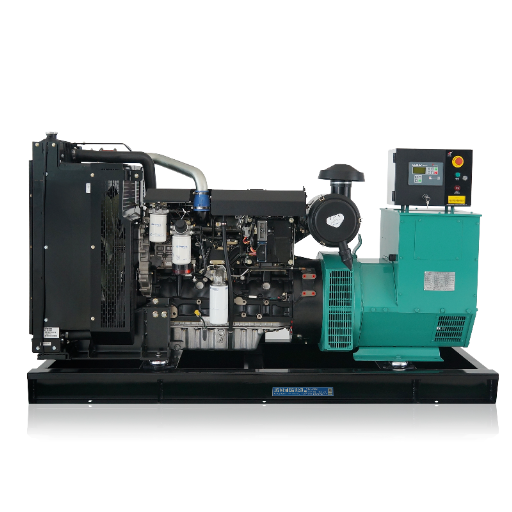
Perkins Engines Company Limited began building diesel engines in 1932 in Peterborough, England. Today, the company operates as a wholly owned subsidiary of Caterpillar Inc. Engines are manufactured in the United Kingdom, India, China, Brazil, and the United States. The power generation division produces engines specifically for generator set applications, often designated as ElectropaK units with radiators and air cleaners pre-mounted.
A Perkins generator set is not merely an engine. It is a fully integrated system. The engine provides mechanical power. The alternator converts that power into electricity.
The control system manages starting, monitoring, and protection. The cooling and exhaust systems manage heat and emissions. The base frame and fuel tank hold everything together. When specified correctly, these components work as a single machine.
When James Oduya received three quotes for a 150 kVA telecom backup generator in Nairobi, the prices varied by 35 percent. The lowest bid claimed a “Perkins-class engine.” James checked the engine serial number on the Perkins MyEngine app. The number did not exist.
He requested the factory test report and CE documentation. The supplier went silent. The middle bid used a genuine Perkins 1106A-70TAG2 with full traceability. James saved his telecom towers from a counterfeit engine that would have failed during the next grid outage and cost his company a government service contract worth $2 million annually.
OEM vs Genuine Perkins
This distinction confuses many buyers. Perkins Engines manufactures engines in the United Kingdom, India, China, Brazil, and the United States. OEM manufacturers like Shandong Huali purchase genuine Perkins engines and build complete perkins generator set configurations around them.
The engine is authentic. The alternator, control system, enclosure, and base tank are supplied by the OEM. This is standard practice across the global generator industry.
The alternative is a “Perkins-compatible” or “Perkins-class” engine. These are copies or rebuilt blocks that may look similar but lack genuine Perkins quality control, warranty support, and parts interchangeability. We cover authentication in detail later in this guide.
Want to compare power capacities before choosing an engine series? Use our kVA to kW calculator to verify your load requirements.
Perkins Engine Series for Generator Applications
Every perkins diesel generator starts with the right engine selection. Perkins organizes its generator engines into series based on displacement, cylinder count, and target power range. Understanding these series is the first step to correct specification.
400 Series: 7-50 kVA
The 400 Series includes the 403D-11G, 403A-15G, and 404D-22G engines. These compact blocks dominate the small commercial and residential standby market. The 403D-11G delivers approximately 8 kW (10 kVA) prime power. The 404D-22G extends to 36 kW (45 kVA).
400 Series engines use inline configurations with naturally aspirated or turbocharged induction. They are favored for telecom towers, small clinics, retail centers, and residential estates where space is limited and noise regulations are strict. Service intervals are typically 250 hours for oil changes.
1100 Series: 50-200 kVA
The 1100 Series is the workhorse of the mid-range market. The 1103A-33G delivers 24 kW (30 kVA). The 1104C-44TAG2 extends to 165 kW (200 kVA). The 1106A-70TAG1 covers 120-150 kW (150-188 kVA).
1100 Series engines appear in commercial buildings, small manufacturing plants, agricultural operations, and hospital backup systems. The 1104 and 1106 models are particularly popular in markets where fuel efficiency and quiet operation are priorities. Learn more about silent diesel generator enclosures and noise reduction in our dedicated guide.
1300 Series: 150-350 kVA
The 1306 Series represents Perkins’ robust mid-heavy offering. The 1306A-E87TAG4 delivers 200-280 kW (250-350 kVA) in prime power configurations. It offers a step up in durability from the 1100 Series without the cost and size of the 2200 or 4000 families.
1300 Series engines appear in commercial buildings, manufacturing facilities, and marine applications. The 1306 is particularly valued for its wet cylinder liner design, which allows in-frame overhauls without removing the engine from the generator set.
2200 Series: 350-500 kVA
The 2206 Series covers the 350-500 kVA range with exceptional power-to-weight ratio. The 2206D-E13TAG2 delivers 350-400 kW (438-500 kVA) in prime power configurations. These 6-cylinder, 13-liter engines use electronic fuel injection and meet EPA Tier 4 Final and EU Stage V emissions standards.
2200 Series engines are common in data centers, hospitals, and large commercial complexes. The compact design allows installation in spaces that would normally require a larger engine series. Service intervals extend to 500 hours for oil changes.
2500 Series: 455-687 kVA
The 2506 Series bridges the gap between the compact 2200 and the industrial 4000 families. The 2506D-E15TAG1 delivers 400-500 kW (500-625 kVA) in prime power configurations. These 6-cylinder, 15-liter engines offer high power density with on-engine aftertreatment mounting.
2500 Series engines are favored for prime power in remote locations, large manufacturing facilities, and utility backup installations where space constraints demand maximum output per square meter.
4000 Series: 750-2,500+ kVA
The 4000 Series is Perkins’ flagship industrial range. The 4006-23TAG3A covers 600-750 kW (750-940 kVA). The 4008TAG2A extends to 1,000 kW (1,250 kVA). The 4012-46TAG3A reaches 1,600 kW (2,000 kVA). The 4016-61TRG3 tops out at 2,000 kW (2,500 kVA).
These engines use 6, 8, 12, and 16-cylinder configurations with displacements from 23 to 61 liters. They are manufactured in Stafford, UK and Aurangabad, India. The 4000 Series dominates large-scale data centers, mining operations, and utility-grade installations.
| Engine Series | Displacement | Cylinders | kVA Range (Prime) | Typical Applications |
|---|---|---|---|---|
| 400 Series | 1.1-2.2 L | 3-4 | 7-50 | Telecom, residential, small commercial |
| 1100 Series | 3.3-7.0 L | 3-6 | 50-200 | Commercial, agriculture, hospitals |
| 1300 Series | 8.7 L | 6 | 150-350 | Manufacturing, marine, mid-range industrial |
| 2200 Series | 13.0 L | 6 | 350-500 | Data centers, large commercial, hospitals |
| 2500 Series | 15.0 L | 6 | 455-687 | Prime power, remote sites, utilities |
| 4000 Series | 23-61 L | 6-16 | 750-2,500+ | Data centers, mining, utility-grade |
Perkins Generator Set Specifications and Performance
Power Ratings and Duty Cycles
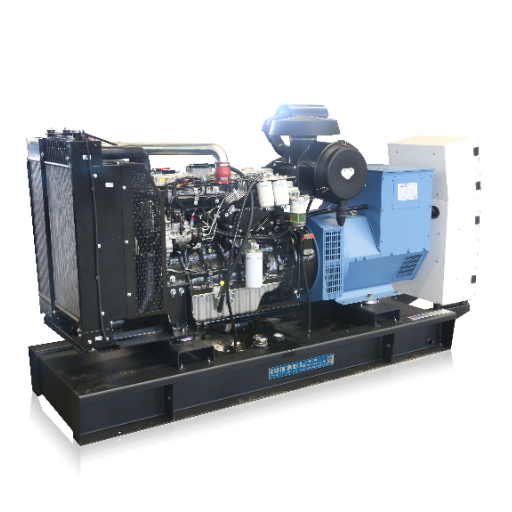
Understanding perkins generator specifications is essential before comparing quotes. The following sections detail power ratings, fuel consumption, cooling requirements, and alternator matching for every major engine series.
Perkins generator sets carry three standard ratings per ISO 8528-1. Prime Power (PRP) is for unlimited hours with variable load. A perkins standby generator carries a Standby Power (ESP) rating for emergency use only, with no overload permitted and typically limited to 200 hours annually. Continuous Power (COP) is for constant load at 100 percent output with no time limit.
Buyers must select the correct rating because a standby-rated engine operated at continuous load will experience premature wear, piston damage, and shortened overhaul intervals.
Fuel Consumption by Engine Series
Fuel consumption is typically the largest operating cost over a generator’s lifecycle. Perkins engines achieve specific fuel consumption between 201 and 252 g/kWh depending on the series. The following table shows approximate fuel consumption at common load percentages.
| kVA Rating | Engine Model | 50% Load | 75% Load | 100% Load (Prime) |
|---|---|---|---|---|
| 30 kVA | 1103A-33G | 3.5 L/hr | 5.2 L/hr | 7.0 L/hr |
| 50 kVA | 1104D-44TG1 | 5.0 L/hr | 7.5 L/hr | 10.0 L/hr |
| 100 kVA | 1104C-44TAG2 | 10.0 L/hr | 15.0 L/hr | 20.0 L/hr |
| 150 kVA | 1106A-70TAG1 | 15.0 L/hr | 22.5 L/hr | 30.0 L/hr |
| 250 kVA | 1306A-E87TAG4 | 28.0 L/hr | 42.0 L/hr | 56.0 L/hr |
| 500 kVA | 2206D-E13TAG2 | 55.0 L/hr | 82.0 L/hr | 110.0 L/hr |
| 1,000 kVA | 4008TAG2A | 97.0 L/hr | 142.0 L/hr | 194.0 L/hr |
| 2,000 kVA | 4012-46TAG3A | 180.0 L/hr | 265.0 L/hr | 360.0 L/hr |
Perkins engines are generally 5-10 percent more fuel-efficient than comparable Cummins models under standard load conditions. At 2,000 operating hours annually, this advantage translates to thousands of dollars in fuel savings.
Control System Pairings
Perkins generator sets integrate with modern digital control systems. ComAp InteliGen controllers manage auto-start, remote monitoring, and paralleling. Deep Sea DSE7310 and DSE8610 controllers offer comprehensive protection and synchronization. Woodward EasyGen systems provide advanced load sharing and grid connection management.
The control system selection depends on application complexity. A simple standby generator for a small building needs auto-start and basic alarms. A data center installation requires paralleling, load sharing, and remote monitoring across multiple units.
Alternator Matching
Stamford alternators are the most common pairing with Perkins engines in generator sets. Leroy-Somer and Marathon alternatives are also widely used. The alternator must match the engine’s power curve, voltage regulation requirements, and transient response needs.
A 150 kVA Perkins 1106A-70TAG1 paired with a Stamford UCI274C alternator achieves voltage regulation within plus or minus 1 percent. This precision protects sensitive electronic equipment in hospitals and data centers.
Perkins Generator Set Price Guide by kVA (2026)
Most distributors avoid publishing perkins generator price data because engine brand, alternator specification, and enclosure type create wide variation. But procurement teams need budgetary numbers for capital planning. Here is what factory-direct OEM pricing looks like in 2026.
Price Ranges by Engine Series
| kVA Range | Engine Series | 2026 Price Range (USD) | Notes |
|---|---|---|---|
| 7-15 kVA | 400 Series | 5,000−5,000−10,000 | Open type, basic controller |
| 20-50 kVA | 400 / 1100 Series | 10,000−10,000−18,000 | Silent canopy adds 20-30% |
| 60-100 kVA | 1100 Series | 17,000−17,000−25,000 | Deep Sea DSE6120 standard |
| 125-175 kVA | 1100 / 1300 Series | 25,000−25,000−35,000 | 2-year warranty typical |
| 200-350 kVA | 1300 / 2200 Series | 35,000−35,000−55,000 | Tropical radiators for hot climates |
| 400-500 kVA | 2200 / 2500 Series | 55,000−55,000−85,000 | Tier 4 Final available |
| 600-1,000 kVA | 4000 Series | 90,000−90,000−180,000 | Synchronization panels extra |
| 1,250-2,500 kVA | 4000 Series | 150,000−150,000−250,000+ | Containerized configurations |
What Drives Cost
Four factors determine the final price of a perkins generator set. First, the engine tier. A Tier 4 Final emissions-compliant engine costs 30-50 percent more than a Tier 2 equivalent. Second, the alternator brand. Stamford alternators command a premium over lesser-known brands.
Third, the enclosure type. An open generator on a base frame costs the least. A weatherproof silent canopy adds 20-35 percent. A containerized enclosure for high-power units adds 40-60 percent.
Fourth, the control system. Basic auto-start controllers cost under 500.Advancedparallelingcontrollerswithremotemonitoringexceed500.Advancedparallelingcontrollerswithremotemonitoringexceed5,000.
Total Cost of Ownership
Purchase price is only the beginning. Over a 10-year lifecycle, fuel typically accounts for 60-70 percent of total cost. Maintenance accounts for 15-20 percent. Parts and labor account for the remainder.
A 250 kVA Perkins generator set running 2,000 hours annually at 75 percent load consumes approximately 42 L/hr of diesel. At 1.20perliter,annualfuelcostis1.20perliter,annualfuelcostis100,800. Over 10 years, fuel alone costs 1,008,000.A5percentfuelefficiencyadvantageoveracompetingbrandsaves1,008,000.A5percentfuelefficiencyadvantageoveracompetingbrandsaves50,400 over that period. That is why perkins generator set buyers should evaluate total cost of ownership, not just purchase price.
Perkins vs Cummins vs Weichai vs MTU: Engine Comparison
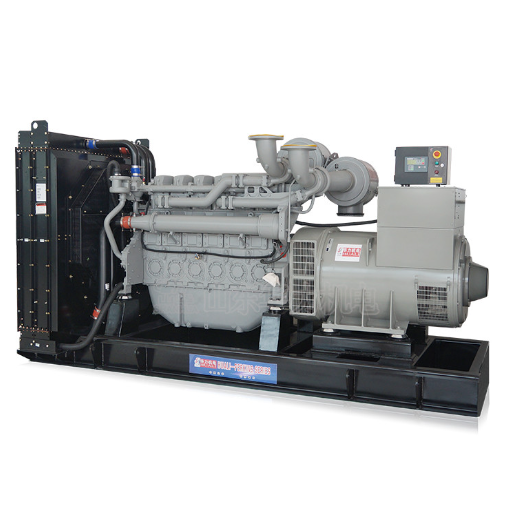
Industrial buyers rarely choose engines in a vacuum. The perkins vs cummins generator debate is the most common comparison we see, followed by evaluations of Weichai and MTU alternatives. Here is an honest assessment of how Perkins stacks against its most common competitors.
| Factor | Perkins | Cummins | Weichai | MTU |
|---|---|---|---|---|
| Power Range | 7-2,500+ kVA | 20-3,000+ kVA | 20-1,000 kVA | 200-3,500+ kVA |
| Fuel Efficiency | Excellent (5-10% edge) | Good | Moderate | Excellent |
| Noise Level | Lower (65-72 dB) | Moderate (70-78 dB) | Moderate | Low |
| Service Network | Strong in UK/Commonwealth | Largest global (50,000+) | Strong in China | Premium European |
| Parts Cost | Moderate | Higher | Lowest | Highest |
| Initial Price | Moderate | Moderate | Lowest | Highest (+40-60%) |
| Best For | Standby, commercial, telecom | Prime power, heavy industrial | Cost-sensitive projects | Premium continuous duty |
When to Choose Perkins
The best choice for Perkins generator sets occurs when fuel efficiency and silent performance and small footprint are essential requirements. Perkins engines provide excellent performance in standby and prime power applications that operate below 1,000 kVA capacity. The service network of the UK and Commonwealth territories provides unmatched support throughout those regions.
The 5-10 percent fuel efficiency advantage over Cummins provides significant benefits for applications that require frequent operation. Perkins provides perfect performance for hospitals and residential areas and urban installations because of their ability to operate at low noise levels which meet strict noise regulations.
When Cummins Is the Better Choice
Cummins provides better worldwide parts distribution through its network of more than 50000 service centers. For projects located in distant areas or in nations with limited Perkins distribution, Cummins provides the better option. Cummins controls the ultra-high-power market which exceeds 2000 kVA because the QSK60 engine has no Perkins counterpart.
For a detailed comparison of Cummins engine series and specifications, see our Cummins diesel generator guide.
When Weichai or Yuchai Make Sense
Chinese engine brands Weichai and Yuchai offer genuine value in cost-sensitive applications where the generator runs fewer than 2,000 hours annually and parts can be sourced locally. These engines typically cost 30-40 percent less than Perkins equivalents. For standby duty in controlled environments, they are a rational choice. For prime power in harsh conditions, the longer service life and global support of Perkins justify the premium.
When MTU Is Worth the Premium
MTU (a Rolls-Royce Power Systems company) dominates the premium segment above 1,000 kVA where fuel efficiency and overhaul intervals matter most. An MTU 4000 series engine achieves 500-1,000 hour service intervals and 30,000+ hour overhaul life. The purchase price is 40-60 percent higher than Perkins. For applications running 8,000+ hours annually, MTU often delivers lower total cost of ownership despite the higher upfront investment.
For a deeper comparison of generator enclosure types and configurations, see our complete containerized generator guide. It covers how Perkins 4000 Series engines integrate into modular power plants exceeding 10 MW.
Perkins Generator Set Applications by Industry
Every perkins industrial generator application demands a different engine series, duty rating, and enclosure configuration. Below are the most common sector requirements.
Data Centers and Critical Infrastructure
Data centers specify Perkins diesel generators for standby power because the engines start reliably, accept load within 10 seconds, and synchronize with UPS systems through modern digital controllers. The 2200 and 4000 Series are most common in this sector due to compact footprints and electronic diagnostic capability.
Bridgegate Data Centers in London expanded their power capacity from 2 MW to 6 MW during 2025. The facilities director selected four Perkins 4012-46TAG3A generators in N+1 configuration for her design. The facility operates each 2,000 kVA unit at 80 percent capacity throughout its regular operating schedule.
The three functioning generators take on full operational power when one generator experiences a failure. Chen’s team performs maintenance on one unit each Thursday during times of low demand. The data center has achieved 99.999 percent operational uptime for 16 consecutive months.
For data center-specific design requirements, see our generator for data center guide.
Healthcare and Hospitals
A perkins standby generator for hospital backup typically uses 1100 or 2200 Series engines in the 100 kVA to 500 kVA range. The engines must start automatically within 10 seconds of grid failure and accept full rated load within 20 seconds. NFPA 110 Level 1 compliance is standard for hospital emergency power.
Perkins engines are particularly valued in hospital applications because of their quiet operation. A 150 kVA Perkins 1106 in a silent canopy produces approximately 68 dB at 7 meters. A comparable Cummins unit produces 74 dB. In residential-adjacent facilities, that 6 dB difference determines whether the generator meets local noise ordinances.
For a complete overview of standby system design, see our guide to industrial backup power generator requirements.
Mining and Construction
Mining operations specify a perkins industrial generator from the 2200, 2500, or 4000 Series for prime power in remote locations. The heavy-duty blocks tolerate dust, altitude, and temperature extremes. The 500-hour service intervals on 2200 and 2500 Series engines reduce downtime in locations where technicians visit monthly rather than weekly.
For a broader look at heavy-duty power solutions, explore our industrial diesel generator applications and specifications.
Telecom and Remote Sites
Telecom towers need autonomous standby power with minimal site visits. Perkins 403 and 1104 engines in silent canopy enclosures are the industry standard for cell tower backup. The compact footprint fits within tower compound boundaries. The 72-hour base fuel tanks provide coverage during extended grid outages.
The fuel efficiency advantage is decisive in telecom applications. A 50 kVA Perkins 1104 consumes 10 L/hr at full load. A comparable unit from a Chinese brand consumes 12-13 L/hr.
Over 10 years at 500 hours annual runtime, the Perkins engine saves 10,000-15,000 liters of diesel. At 1.20perliter,thatis1.20perliter,thatis12,000-$18,000 in fuel savings per tower.
How to Verify a Genuine Perkins Engine
Counterfeit and rebuilt Perkins engines are a significant problem in emerging markets. A rebuilt engine with a counterfeit data plate may look identical to a genuine new engine. Here is how buyers protect themselves.
Engine Serial Number Verification
Every genuine Perkins engine has a unique serial number stamped on the engine block and recorded on the data plate. The serial number can be verified through the Perkins MyEngine app or Perkins engine registry. Enter the number, and the system displays the engine model, build date, original specifications, and factory configuration.
If the serial number does not exist in the registry, the engine is not genuine. If the specifications returned do not match the engine in front of you, the data plate has been swapped or counterfeited.
Documentation Requirements
A genuine Perkins engine sold through authorized channels includes a factory test report, a certificate of origin, a warranty registration card, and compliance documentation (CE, EPA, or ISO depending on the destination market). Request these documents before payment. Verify that the serial number on the documents matches the engine.
Physical Inspection Points
The evidence of counterfeit engines becomes visible through detailed examination. The block and heads require assessment of their casting quality. The authentic Perkins castings display smooth surfaces together with uniform parting lines.
The fuel injection pump requires inspection. The genuine Perkins engines operate with fuel systems from Bosch Delphi or Perkins which display manufacturer identification. The turbocharger requires inspection. The authentic Holset and Garrett turbos display both their serial numbers and manufacturer logos.
Warranty Validation
Perkins provides its standard industrial engine warranty for 12 months or 1000 operating hours which customers can extend to 24 months through authorized dealers. A supplier who cannot provide a valid Perkins warranty certificate is not selling a genuine new engine. Rebuilt engines may have third-party warranties but they do not include Perkins factory warranties.
Perkins Generator Set Maintenance and Service Considerations
Recommended Service Intervals
| Service Item | 400/1100 Series | 1300 Series | 2200/2500 Series | 4000 Series |
|---|---|---|---|---|
| Engine oil change | 250 hrs | 250 hrs | 500 hrs | 500 hrs |
| Oil filter change | 250 hrs | 250 hrs | 500 hrs | 500 hrs |
| Fuel filter change | 500 hrs | 500 hrs | 500 hrs | 1,000 hrs |
| Air filter replacement | 1,000 hrs | 1,000 hrs | 1,500 hrs | 2,000 hrs |
| Coolant change | 2,000 hrs | 2,000 hrs | 4,000 hrs | 6,000 hrs |
| Valve adjustment | 2,000 hrs | 2,000 hrs | 4,000 hrs | 6,000 hrs |
| Major overhaul | 12,000 hrs | 15,000 hrs | 20,000 hrs | 25,000 hrs |
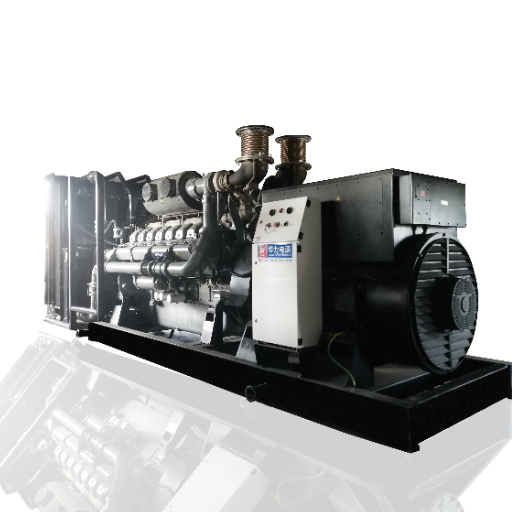
These intervals assume operation with approved fluids and filters in clean environments. Dusty or high-temperature conditions require more frequent service.
Parts Availability and Global Distribution
Perkins operates 4,000+ distributor locations across 180 countries. The global parts distribution network ships critical components within 24-48 hours to major markets. For remote locations, buyers should specify a spare parts package at purchase, including oil filters, fuel filters, air filters, belts, and critical gaskets.
Common Issues and Troubleshooting
The most common Perkins generator issues are fuel-related. Water contamination in diesel fuel destroys injection pumps. Algae growth in tropical climates clogs fuel filters. These issues are preventable with proper fuel storage, water separators, and biocide treatment.
Cooling system problems rank second. Scale buildup in radiators reduces heat rejection. Thermostat failures cause overheating or overcooling. Regular coolant testing and radiator cleaning prevent these failures.
Load Bank Testing
Perkins generator sets in standby service must be load bank tested quarterly to prevent wet stacking. Wet stacking occurs when an engine runs at light load for extended periods, causing unburned fuel to accumulate in the exhaust system. A load bank applies artificial resistive load, allowing the engine to reach full operating temperature and clear carbon deposits.
For detailed maintenance protocols in harsh environments, refer to our diesel generator maintenance guide.
How to Choose the Right Perkins Generator Set
Step 1: Calculate Your Power Requirement
Start with your total simultaneous load in kW or kVA. Add the highest motor starting current in your system. Apply a 1.25 safety factor for future expansion. The result is your minimum generator capacity.
For example, a manufacturing plant with 300 kW of running load and a 100 kW motor starting surge needs a generator rated for (300 + 100) x 1.25 = 500 kW minimum. A 500 kW (625 kVA) Perkins 2206D-E13TAG2 would be appropriate. For a step-by-step method that works for any application, read our guide on how to calculate generator size for your facility.
Step 2: Select the Duty Cycle
Standby generators run only during outages. Prime generators run continuously. Continuous generators run at fixed load indefinitely.
The duty cycle determines engine specifications, cooling capacity, and warranty terms. Never use a standby-rated engine for prime power.
Step 3: Match Engine Series to Application
Use the engine series table from earlier in this guide. 400 and 1100 Series for small commercial. 1300 and 2200 for mid-range industrial. 2500 and 4000 for heavy prime power and mission-critical applications.
Step 4: Specify the Complete System
The engine is only one component. Specify the alternator brand, excitation type, voltage, and frequency. Specify the control system with required features (auto-start, remote monitoring, paralleling).
Specify cooling for the ambient temperature at your site. Specify the enclosure type (open, canopy, containerized) based on environment and noise regulations.
Step 5: Evaluate the Supplier
- Does the supplier hold ISO 9001 certification?
- Can the supplier provide Factory Acceptance Testing documentation?
- Is the Perkins engine serial number verifiable on MyEngine?
- Does the supplier offer installation supervision and commissioning?
- What is the warranty period and local service coverage?
At Shandong Huali Electromechanical, we manufacture Perkins-powered diesel generator sets from 10 kW to 2,000 kW. Every unit pairs a genuine Perkins engine with a Stamford alternator and ComAp or Deep Sea controls.
Every unit undergoes 100% load testing in our national standard testing center before shipment. Our engineering team supports customization for tropical, arctic, high-dust, and marine environments.
Conclusion
The perkins diesel generator remains the default choice for industrial buyers who value fuel efficiency, quiet operation, and a predictable total cost of ownership. The Perkins engine range provides complete power solutions for every application from the 403D-11G telecom tower engine to the 4016-61TRG3 10 MW data center engine.
The procurement decision is not simply about choosing Perkins over Cummins or MTU. It is about specifying the complete system correctly.
You need to select the proper alternator You need to select the proper control system You need to select the proper cooling system and enclosure solution for your specific operational requirements You need to select the proper duty rating that matches your specific operational needs And above all verification that the engine which you possess is authentic needs to be done
Counterfeit engines destroy budgets and endanger operations. The genuine Perkins engines which industrial buyers need for their operations deliver reliability when included in complete Perkins generator sets that qualified OEM manufacturers have built.
Follow the framework in this guide. Calculate your load correctly. Select the right engine series. Specify the complete system. Verify authenticity before payment. And remember that the lowest bid often conceals the highest long-term cost. For a broader procurement framework that applies to any engine brand, see our complete diesel generator set buyer’s guide.
Perkins Generator Set FAQ
What is a perkins generator set?
A Perkins generator set operates as a power generation system which uses a real Perkins compression-ignition engine as its main engine to generate electricity through an alternator and digital control system. These generator sets provide power output capacities which range from 7 kVA to more than 2500 kVA for standby and prime and continuous duty applications.
How much does a perkins generator set cost?
Perkins generator set price ranges in 2026 start at 5,000 for a 10kVA 400Series unit and extend to 200,000 for a 2,500 kVA 4016 configuration. Mid-range units like the 150 kVA 1106 Series cost $25,000-35,000. The base prices increase by 15-50% when customers choose enclosure options or alternator upgrades or control system features.
How long does a Perkins generator last?
The Perkins 400 and 1100 Series engines reach their maximum operational lifespan of 12000 to 15000 hours. The 2200 and 2500 Series engines reach their operational limit after 20000 hours. The 4000 Series engines achieve an operational lifespan that extends beyond 25000 hours. A 2200 Series engine operates for 10 to 12 years before it needs an overhaul when it runs 2000 hours each year.
What is the difference between Perkins and Cummins generators?
Perkins and Cummins are comparable in performance and price in the 50-500 kVA range. Perkins offers superior fuel efficiency and quieter operation. Cummins offers a larger global service network (50,000+ locations vs 4,000+ for Perkins).
For UK and Commonwealth markets, Perkins parts availability is the decisive factor. For most international projects, the choice depends on local service network density.
How do I verify a genuine Perkins engine?
Check the engine serial number on the Perkins MyEngine app or engine registry. Request the factory test report, certificate of origin, and warranty card. Inspect casting quality, fuel injection pump markings, and turbocharger branding. If the supplier cannot provide verifiable documentation, the engine is not genuine.
What maintenance does a Perkins generator need?
Standard maintenance requires oil and filter changes to be performed after every 250-500 operating hours. Fuel filters need replacement after 500-1,000 operating hours. Air filters need replacement after 1,000-2,000 operating hours. The series determines coolant changes which occur between 2,000 and 6,000 operating hours. Standby units need to undergo load bank testing four times a year to avoid wet stacking problems.
Where can I find official perkins generator specifications?
The official Perkins generator specifications can be accessed through the Perkins MyEngine app or Perkins Technical Library by entering the engine serial number. The specification sheet provides information about rated power, fuel consumption curves, emissions certification, dimensional drawings, and alternator compatibility data. Shandong Huali also provides project-specific specification packages which contain installation drawings and single-line diagrams.
In a perkins vs cummins generator comparison, which is better?
The perkins vs cummins generator choice depends on your location and application. Perkins offers superior fuel efficiency and quieter operation, particularly in the 50-500 kVA range. Cummins excels in global parts availability with 50,000+ service locations.
For UK and Commonwealth markets, Perkins wins on service network density and parts commonality. For remote international projects, Cummins may offer better support coverage.