
kW (kilowatts) measures the real power a generator can actually deliver to your equipment, while kVA (kilovolt-amperes) measures the total apparent power its alternator can carry. The two are linked by power factor: kW = kVA x power factor, and most diesel generators are rated at 0.8, so a 100 kVA generator delivers 80 kW of usable power.
That one distinction costs buyers real money. Last year, a project manager named Daniel was procuring backup power for a construction site outside Lagos. His load calculation came to 150 kW, so he requested quotes for a “150 kVA generator” and picked the cheapest one. The unit that arrived could only deliver 120 kW of real power. On the first afternoon, the site crusher started up, the voltage sagged, and the generator tripped offline. The replacement unit, the freight, and three days of downtime cost him more than buying the right generator in the first place.
If you have ever compared generator quotes and wondered why suppliers keep quoting two different numbers, you are not alone. Once you understand the difference between kVA and kW, every quote becomes easier to compare. This guide explains exactly what kVA and kW mean, how to convert between them, and how to correctly size a generator the first time. The engineering team writes it at Shandong Huali Electromechanical, a manufacturer that has built diesel generator sets from 8 kVA to 4000 kVA for over 25 years.
Key Takeaways
- kW is real, usable power. kVA is apparent power. They are connected by power factor: kW = kVA x PF.
- Most diesel generators are rated at 0.8 power factor, so a 100 kVA unit delivers 80 kW of real power.
- Always size your generator by your load in kW, then convert to kVA. Never shop by the kVA number alone.
- Motor starting current (up to 6-7x running current) and altitude or temperature derating can force you to size up well beyond the simple formula.
- Alternators are rated in kVA and engines in kW, which is why a serious datasheet shows both.
What Is the Difference Between kVA and kW?
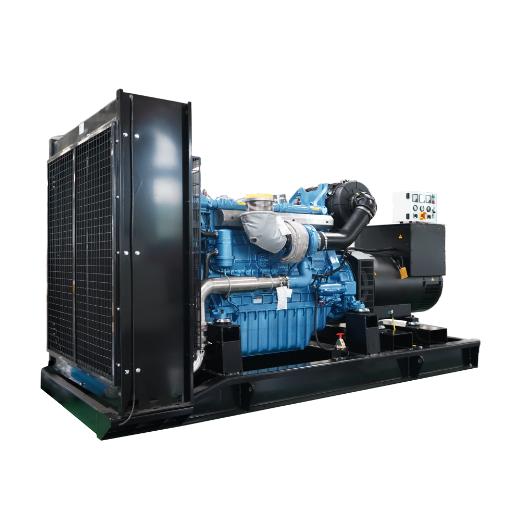
kW (kilowatts) is real power: the electricity that actually does work, turning motors, heating elements, and powering servers. kVA (kilovolt-amperes) is apparent power: the total power the alternator must produce, including reactive power that circulates through inductive loads like motors without doing useful work. The difference between them is the power factor.
kW: Real Power That Does the Work
Real power is what your equipment consumes and what your electricity meter bills. When a factory draws 200 kW, that is the power being converted into motion, heat, light, and computation. It is also what the diesel engine must produce at the crankshaft, which is why engine output is specified in kW.
kVA: Apparent Power the Alternator Must Carry
Apparent power is the total load on the alternator’s windings. Inductive equipment such as motors, compressors, and transformers draws current that is out of phase with voltage. This reactive current does no useful work, but it still flows through the cables and windings, generating heat. The alternator, cabling, and breakers must be sized for the full kVA, not just the kW.
The Power Triangle Explained
Picture a right triangle. The horizontal side is kW (real power), the vertical side is kVAr (reactive power), and the hypotenuse is kVA (apparent power). The angle between kW and kVA is set by your load’s power factor. A power factor of 1.0 means kW and kVA are equal, which happens only with purely resistive loads. Real industrial sites with motors typically sit between 0.8 and 0.95.
Why 0.8 Is the Standard Power Factor
The 0.8 figure is not arbitrary. Induction motors, which dominate most industrial loads, naturally run at a power factor of 0.8 to 0.85. The industry settled on 0.8 as a conservative, realistic midpoint, so that engines and alternators could be paired consistently across manufacturers. A generator rated at 0.8 PF needs a physically larger alternator than one rated at 1.0 PF for the same kW output, because it must carry the extra reactive current. When you see two generators with the same kW but different power factor ratings, the lower-PF unit is the more robustly built of the two.
How to Convert kVA to kW (Formula + Chart)
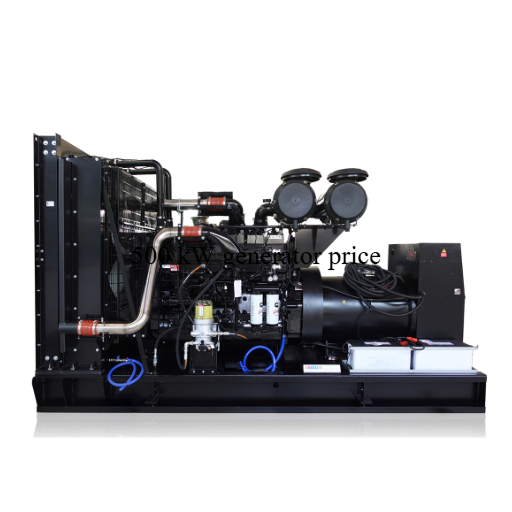
Converting between kVA and kW takes three steps:
- Find the power factor. Use your site’s measured PF, or the generator’s rated 0.8 if unknown.
- Apply the formula: kW = kVA x PF, or in reverse, kVA = kW / PF.
- Add sizing headroom of 20-25% for motor starting, load growth, and site conditions.
kVA to kW Conversion Table (0.8 Power Factor)
| Generator Rating (kVA) | Real Power Output (kW) |
|---|---|
| 10 kVA | 8 kW |
| 50 kVA | 40 kW |
| 100 kVA | 80 kW |
| 250 kVA | 200 kW |
| 500 kVA | 400 kW |
| 1,000 kVA | 800 kW |
| 2,000 kVA | 1,600 kW |
The same kVA rating delivers different kW depending on the power factor. Here is a 100 kVA generator at four common values:
| Power Factor | kW Output from 100 kVA |
|---|---|
| 0.7 | 70 kW |
| 0.8 | 80 kW |
| 0.9 | 90 kW |
| 1.0 | 100 kW |
This is why a measured power factor is worth having. A site that runs at 0.9 PF gets 12.5% more usable power from the same 100 kVA machine than a site running at 0.8.
Worked Example: Sizing for a 160 kW Factory Load
A small manufacturing plant calculates a running load of 160 kW at a measured power factor of 0.85. The required apparent power is 160 / 0.85 = 188 kVA. Adding 25% headroom for motor starting and future expansion brings the requirement to 235 kVA, so the buyer should consider a 250 kVA generator set. Notice the trap: had they ordered a “160 kVA generator,” it would have delivered only 128 kW at 0.8 PF, and the plant would have been underpowered from day one.
Single-Phase vs Three-Phase: Where the Formula Changes
The formulas above assume three-phase power, which is what industrial generators deliver. Single-phase is different, and it matters for smaller units. For single-phase, real power is simply voltage times current times power factor, divided by 1,000: kW = V x A x PF / 1000. For three-phase, you multiply by the square root of 3 (1.732) instead, because power flows through three conductors. That 1.732 is why a three-phase generator delivers about 73% more power than a single-phase unit drawing the same current. Most sites over roughly 20 kW use three-phase, while homes, small offices, and light commercial loads run single-phase.
Why Are Generators Rated in kVA Instead of kW?
Generators are rated in kVA because the manufacturer cannot know the power factor of your load in advance. The alternator’s windings must carry the total current regardless of how much of it does useful work, so the alternator is rated in kVA. The engine, which produces mechanical power, is rated in kW. A properly specified generator set shows both numbers on the nameplate.
This is also why some suppliers lead with the kVA figure in their marketing: it is the bigger number. A “500 kVA generator” sounds more impressive than a “400 kW generator,” even though they are the same machine. When you compare quotes from different suppliers, always convert everything to kW at the same power factor before comparing prices.
What Your Load Type Does to Usable Power
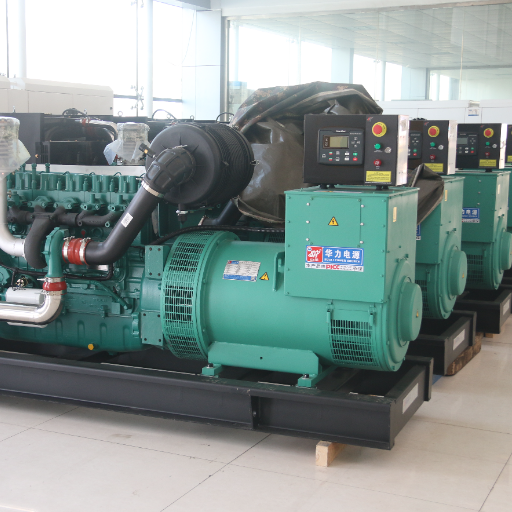
Two sites with the same kW load can need very different generators, because load type drives the power factor and the starting behavior.
| Load Type | Typical Power Factor | Usable kW from a 125 kVA Generator |
|---|---|---|
| Resistive heating, incandescent lighting | 0.95 – 1.0 | 95 – 100 kW |
| Induction motors (pumps, fans, crushers) | 0.8 – 0.85 | 80 – 85 kW |
| Welders, older fluorescent lighting | 0.7 – 0.8 | 70 – 80 kW |
| VFD-driven motors, UPS systems | 0.9 – 0.95 (with harmonics) | 90 – 95 kW |
Motor Starting and Inrush Current
Electric motors draw 6 to 7 times their rated current for a few seconds when started direct-on-line. Consider a mining site in Zambia that runs a 55 kW crusher motor. Its running demand is about 69 kVA at 0.8 PF, but a direct-on-line start pulls roughly 415 kVA of apparent power momentarily. The generator does not need to supply all of that continuously, but it must absorb the surge without the voltage dipping more than about 15-20%, or contactors drop out and equipment resets.
In practice, a motor started direct-on-line often needs a generator rated at 2.5 to 3 times the motor’s kVA. Soft starters and variable frequency drives cut the inrush to 2-3 times running current, which can allow a meaningfully smaller generator. This is the calculation most online guides mention but never actually perform, and it is the single most common reason undersized generators end up on motor-heavy sites.If your site is motor-heavy, it is worth running the numbers properly, and our guide to generator motor starting kva walks through the two ways to calculate starting kVA and check the voltage dip before you commit to a rating.
VFDs, UPS Systems and Harmonics
Non-linear loads such as variable frequency drives and uninterruptible power supplies show a good power factor on paper but distort the current waveform. The harmonics they generate create extra heating in the alternator. As a rule of thumb, when non-linear loads exceed roughly 30-40% of the total load, discuss alternator oversizing or harmonic filtering with your supplier.
Power Factor Correction: What to Do About a Low PF
If your site measures below 0.8, you are paying for apparent power you cannot use. Power factor correction raises the figure toward 1.0, usually with capacitor banks or active correction equipment. The payoff is real: correcting a 0.7 PF load to 0.95 can cut your kVA demand by over a quarter, letting a smaller generator serve the same kW load, or freeing capacity on an existing one. The trade-off is that correction adds cost, and capacitors can interact badly with variable frequency drives if not selected carefully. For motor-heavy sites, discuss correction with your supplier before sizing the generator around it.
Reading a Generator Nameplate: kW, kVA, and Power Ratings
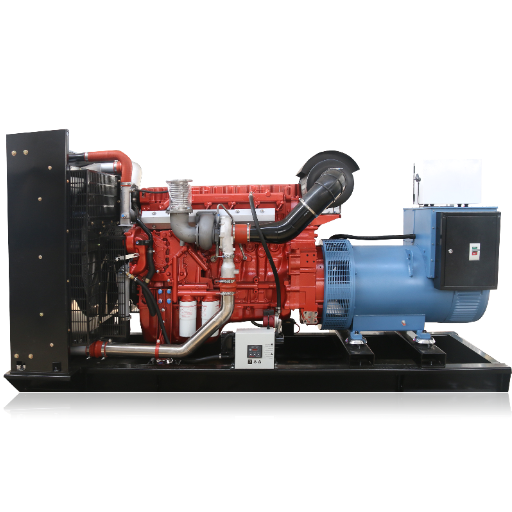
A generator nameplate tells you far more than one capacity figure. Knowing how to read it protects you from the marketing games described above.
Standby vs Prime vs Continuous Power
The same generator set carries three different ratings:
- Standby (ESP): maximum output for emergency use during grid outages, typically limited to around 200-500 hours per year with variable load.
- Prime (PRP): unlimited hours at variable load, with a 10% overload allowance for one hour in twelve.
- Continuous (COP): unlimited hours at a constant, steady load.
A unit sold as “500 kVA standby” might only be rated around 455 kVA prime. If your site runs off-grid for 12 hours a day, you need the prime rating, and buying on the standby number will void warranties and shorten engine life.These three ratings are defined by an international standard, and our guide to the ISO 8528 generator rating explains the run-time, load, and overload limits behind ESP, PRP, and COP so you can size on the right one.
Altitude and Temperature Derating
Nameplate ratings assume standard conditions, usually 25-40 degrees C at sea level to 1,000 m. Above that, engines lose power. Typical derating is roughly 3-4% for every 300 m above 1,000 m of altitude, and around 2% for every 5-10 degrees C above the rated temperature. A 500 kVA set installed at a mine 2,500 m up in the Andes may effectively behave like a 425 kVA unit. Always confirm the exact derating curves on the engine manufacturer’s datasheet, because the figures vary between Cummins, Perkins, Weichai, and other engines.
A Walkthrough of a Real Nameplate
On a Huali 500 kVA diesel generator set, the nameplate shows: 500 kVA / 400 kW at 0.8 PF, 400 V three-phase at 50 Hz, and a rated current of 722 A. That current figure comes from the three-phase formula: I = kVA x 1000 / (1.732 x V), so 500,000 / (1.732 x 400) = 721 A. Your cables and breaker must be sized for those 722 amps, which is the kVA side of the story made physical.If any of those fields still look unfamiliar, our field-by-field guide on how to read generator specification sheet decodes every line so you can check a datasheet with confidence.
For a complete breakdown of what each field on the datasheet means, from ratings and power factor to voltage, frequency, and current, see our generator set specification guide.
kVA vs kW: Common Buying Mistakes to Avoid
- Sizing by kVA instead of kW. Convert your load to kVA with your real power factor, then add headroom. This was Daniel’s mistake in Lagos, and it remains the most expensive one on this list.
- Ignoring starting surge. A generator that runs your load comfortably can still fail to start it. Map your largest motor and its starting method before choosing a rating.
- Forgetting site derating. Altitude, heat, and humidity all reduce output. A unit that looks right on paper in a showroom may be 15% short at your site.
- Comparing quotes on kVA alone. One supplier’s “500 kVA standby” can be another’s “450 kVA prime.” Normalize every quote to kW at the same rating basis before comparing prices.If you are preparing a procurement document, our generator set specification for tender template gives you a ready-made framework that locks every bidder to the same rating basis, so you compare like for like from the start.
- Assuming higher kVA means a better generator. An oversized unit running at 20% load suffers wet stacking, poor fuel economy, and carbon buildup. Right-sizing beats oversizing.
Ready to size it right the first time? Our engineering team reviews your load list, starting currents, and site conditions, then recommends the exact rating.
Frequently Asked Questions
How many kW is a 100 kVA generator?
At the standard 0.8 power factor, a 100 kVA generator delivers 80 kW of real, usable power (100 x 0.8 = 80). If your loads have a better power factor, such as 0.9, the same machine could supply up to 90 kW, but you should size on the rated 0.8 figure.
Is kVA the same as kW?
No. kVA is apparent power (the total the alternator carries) and kW is real power (what does useful work). They are only equal when the power factor is 1.0, which is rare outside purely resistive loads like heaters.
kVA vs kW vs kWh: What’s the Difference?
kVA and kW both measure power at a moment in time: apparent power and real power respectively. kWh (kilowatt-hours) measures energy, meaning power consumed over time. Running a 100 kW load for 3 hours consumes 300 kWh of energy, which is what determines your fuel consumption.
What power factor should I use if I don’t know mine?
Use 0.8, the standard rating for diesel generators. It is a conservative default for mixed industrial loads. For an existing facility, you can measure your actual power factor with a power quality analyzer or read it from your utility bill, and a measured figure always beats an assumption.
Why does my generator trip when a large motor starts?
The motor’s starting current, often 6-7 times its running current, causes a momentary voltage dip. If the dip is deep enough, protective devices trip. The fix is a larger generator, a soft starter or VFD on the motor, or staggering motor starts so two large motors never start simultaneously.
Conclusion: Size by kW, Buy by kVA, Verify Both
The generator kVA vs kW question comes down to one formula and a handful of disciplines. kW is the real power your equipment consumes, kVA is the total apparent power the alternator carries, and power factor (usually 0.8) connects them. Size your load in kW, convert to kVA with your real power factor, add 20-25% headroom, then check the three things the simple formula misses: motor starting surge, standby versus prime ratings, and altitude or temperature derating.
Do that, and you will never be the buyer who discovers on commissioning day that a “150 kVA generator” only delivers 120 kW. If you would rather have an engineer check the math, that is what we do every day. Shandong Huali builds diesel generator sets from 8 kVA to 4000 kVA, with Cummins, Perkins, Weichai, and Yuchai engine options, every unit fully tested before delivery.
