
A generator specification sheet is three documents in one: a nameplate, an engine data tag, and an alternator data tag, each carrying the electrical, mechanical, and protection ratings that decide whether the unit fits your site. Read the kW for real power, kVA for apparent power, the power factor (usually 0.8) that links them, and the prime rating for real running capacity. The nameplate overrides every sales sheet and verbal claim.
That last point is where buyers get hurt. A procurement engineer named Amina was comparing two quotes for a factory in Karachi, both listed as “500 kVA.” Quote A showed a Stamford alternator and a prime rating of 455 kVA. Quote B showed an unbranded alternator and no prime figure at all, only a standby number of 500 kVA. On paper the two looked identical. In service, Quote B could only run 360 kW continuously, about 40 kW short of what the plant’s motors drew during the day shift. Amina could not see that from the marketing line, but she would have seen it in three minutes on the spec sheet.
If you have ever stared at a datasheet and wondered which numbers actually matter, this guide is for you. It explains how to read a generator specification sheet field by field, written by the engineering team at Shandong Huali Electromechanical, a manufacturer that has built diesel generator sets from 8 kVA to 4000 kVA for more than 25 years.
Key Takeaways
- A spec sheet is three tags: the genset nameplate, the engine tag, and the alternator tag. All three matter, and the nameplate is the single source of truth.
- kW is real power, kVA is apparent power, and at the standard 0.8 power factor a “500 kVA” generator delivers 400 kW.
- “500 kVA” can mean three different things: standby, prime, or continuous. Size your purchase on the prime rating, never the standby number.
- Protection specs (insulation class, IP rating) decide whether the unit survives your site’s heat, dust, and altitude, not just its load.
- Derating is real: a generator can lose 3-4% output per 300 m of altitude and more with temperature, so a nameplate rating is only valid at its stated conditions.
What Is a Generator Specification Sheet (and Where to Find It)?
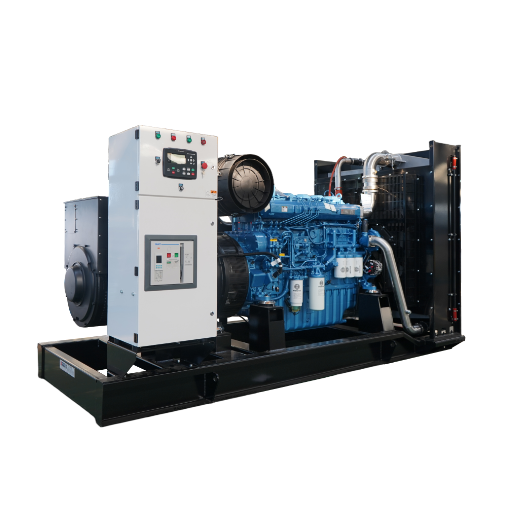
A generator specification sheet, often called a datasheet, is the manufacturer’s official record of a unit’s capabilities and operating limits. It is usually provided as a one- or two-page document at quotation stage, and a condensed version is riveted or laminated to the machine itself as the nameplate.If you want a full field-by-field reference you can keep beside your quotes, our complete generator set specification guide breaks down every line item in one place.
The Nameplate Is the Single Source of Truth
The nameplate carries the model number, serial number, electrical ratings, and certification marks. It is the authoritative reference. If a sales brochure lists one rating and the nameplate lists another, the nameplate wins. That rule protects you in procurement and in any warranty dispute later.The nameplate only carries full weight when it matches what the supplier committed to on paper, so cross-check every figure against the guaranteed technical particulars generator schedule, the contractual record that turns a marketing claim into an obligation a bidder cannot walk back.
You will find the nameplate near the control panel or within sight of the inspection window on enclosed units. Older machines use riveted metal plates; newer ones use durable laminated decals. The operator’s manual always states the exact location.
Genset, Engine, and Alternator: The Three Data Tags
A complete specification sheet is really three tags combined:
- Genset data tag – model, serial number, overall kW and kVA rating, voltage, phase, frequency, and power factor.
- Engine data tag – engine model and serial, horsepower or kW output, RPM, fuel type, and emissions tier.
- Alternator data tag – alternator model and serial, kVA rating, voltage range, and lead configuration.
A missing alternator tag is a red flag. It is the clearest tell between a properly specified generator and a cheap unit assembled with an unbranded alternator.To know what a genuine alternator tag should tell you line by line, our guide to the alternator specification for generator walks through the kVA rating, insulation class, IP rating, and excitation system so you can spot what a missing tag is hiding.
How to Read the Electrical Ratings (kW, kVA, and Power Factor)
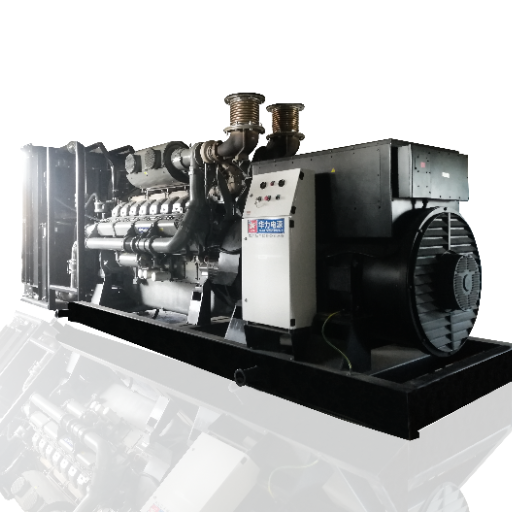
The electrical section is where most of the money in a buying decision lives, so read it first.
kW, kVA, and the 0.8 Power Factor
kW is real power, the electricity that actually runs your motors and lights. kVA is apparent power, the total the alternator’s windings must carry. Power factor links themthat : kW equals kVA times power factor. Most industrial diesel generators are rated at 0.8, so a 500 kVA generator delivers 400 kW of real power.
If you want the full worked explanation of the power triangle and the conversion math, read our dedicated guide on generator kVA vs kW, which goes deeper than we will here.
Voltage, Phase, and Connection Type
The voltage line tells you the output configuration. Common three-phase voltages are 380 V, 400 V, 440 V, and 480 V, often listed with a slash for the line-to-neutral figure, such as 400/230 V. Check that this matches your equipment’s rated voltage and your region’s grid standard.
The phase line reads single-phase or three-phase. Large industrial loads are almost always three-phase. The connection type, star (wye) or delta, matters if you ever reconfigure the unit.
The Three-Phase Formula
You can sanity-check any spec sheet with one formula: for three-phase power, kVA equals the square root of 3 times voltage times current, divided by 1,000. A 500 kVA generator running at 400 V should show a rated current of about 722 A, because 500,000 divided by (1.732 times 400) is 722. If the current on the sheet does not match the kVA and voltage, ask why.
Standby vs Prime vs Continuous Power Ratings
This is the section most buyers skim and most suppliers hope they will. The same generator carries three different ratings, and “500 kVA” can mean any of them.
| Rating | Run Time | Load | Best For |
|---|---|---|---|
| Standby | ~200-500 hours/year | Variable, no overload | Emergency backup during rare grid outages |
| Prime | Unlimited hours | Variable, ~70% average, 10% overload 1h/12h | Daily power where the grid is unreliable |
| Continuous | Unlimited hours | Constant, steady 100% load | Off-grid and remote sites |
Why “500 kVA” Means Three Different Things
A unit sold as 500 kVA standby might only be rated 455 kVA prime, or 450 kVA continuous. If your site runs off-grid for 12 hours a day, you need the prime figure, and buying on the standby number will overload the engine, shorten its life, and void the warranty. Always normalize every quote to the same rating basis before comparing prices.When you are running a formal procurement, our generator set specification for tender template locks every bidder to the same rating basis, so a standby figure can never be dressed up to look like a prime one.
That is exactly the trap in Amina’s story above. Two “500 kVA” quotes, but only one disclosed its prime rating. The other was a standby number dressed up to look equivalent.
The Mechanical Specs That Decide Lifespan
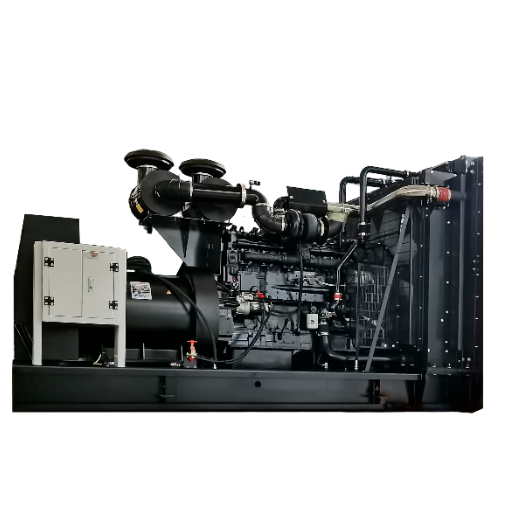
Electrical ratings tell you what the generator can do. The mechanical specs tell you whether it will keep doing it for 20 years.
Frequency and RPM: 50 Hz vs 60 Hz
Frequency is tied directly to engine speed. A four-pole machine runs at 1500 RPM to produce 50 Hz, and 1800 RPM to produce 60 Hz. Which one you need depends on your region.
| Frequency | Engine Speed | Typical Regions |
|---|---|---|
| 50 Hz | 1500 RPM | Europe, China, most of Asia, Africa, Middle East, Australia |
| 60 Hz | 1800 RPM | North America, parts of South America, Japan, South Korea, Philippines |
Ordering the wrong frequency means your equipment runs hot or fails outright. This line on the spec sheet is non-negotiable and must match your grid.
Engine Data: Displacement, Fuel Consumption, and Runtime
The engine tag lists displacement in litres, which is a rough proxy for durability. A larger engine loafing at partial load generally outlasts a smaller one working hard. More useful is the fuel consumption figure, usually given in litres per hour (L/h) at 50%, 75%, and 100% load, or in grams per kilowatt-hour (g/kWh).
Combine that with the tank capacity and you get runtime. A unit that burns 80 L/h at full load with a 1,000 L tank runs for about 12.5 hours on a fill. For a site that needs 24-hour off-grid power, that tank is too small, and the spec sheet should have told you so before you bought it.
Cooling System and Starting Method
The cooling line reads air-cooled or water-cooled. Air-cooled suits small portable units. Water-cooled is standard for industrial sets because it handles sustained load. The starting method, usually a 12 V or 24 V electric starter, matters for cold climates where battery performance drops.
The Protection Specs: Insulation Class and IP Rating
These two lines decide whether the generator survives your environment, and they are almost always ignored on competitor explainers.
Insulation Class H (and What 180 °C Means)
Insulation class describes how much heat the alternator windings can tolerate before the insulation degrades. Class F is rated to 155 °C, and Class H to 180 °C. In a hot engine room or a sealed container, the extra 25 °C of headroom in a Class H alternator can mean the difference between a 15-year machine and one that fails early. Look for Class H on industrial sets.
IP Ratings and Enclosure Types for Outdoor Sites
The IP, or ingress protection, rating has two digits. The first covers solids, the second liquids. IP23 is typical for an open alternator indoors. A weatherproof enclosure for a coastal or mining site should be IP54 or higher, where the 5 blocks most dust and the 4 blocks splashing water. Match the enclosure to the site, not to the cheapest option on the quote.
The Advanced Specs Serious Buyers Check
Once you have covered the basics, three advanced lines separate a careful buyer from a lucky one.
Voltage Regulation and Transient Response
Voltage regulation, often given as a percentage such as plus or minus 1%, tells you how tightly the generator holds voltage from no load to full load. Transient response describes how it recovers when a big load steps on, like a crusher motor starting. A tight regulator and fast recovery protect sensitive electronics like VFDs and server racks from voltage sags.
Altitude and Temperature Derating
Nameplate ratings assume standard conditions, typically sea level to 1,000 m and 25 to 40 degrees C. Above that, the engine loses power because the air is thinner and hotter. Expect roughly 3-4% less output for every 300 m of altitude above 1,000 m, and around 2% for every 5-10 degrees C above rated temperature.These losses compound faster than most buyers expect, so before you size a unit for a hot or high-elevation site, work through the full curves in our guide to generator derating altitude temperature.
Consider a site in the Andes at 2,500 m. A 500 kVA set derated by about 18% effectively behaves like a 410 kVA unit. The fine print of the spec sheet says this; the marketing line does not. Always confirm the exact derating curves on the engine manufacturer’s datasheet, because they vary between Cummins, Perkins, Weichai, and other engines.
Emissions Tier (EPA / Stage V / China IV)
Emissions regulations are tightening worldwide. Depending on your market, the generator may need to meet EPA Tier 4, EU Stage V, or China IV standards. The engine tag lists the tier. If your site, your client, or your country requires a specific tier, missing this line can delay a whole project at the import stage.
How to Read a Real Nameplate: A Field-by-Field Walkthrough
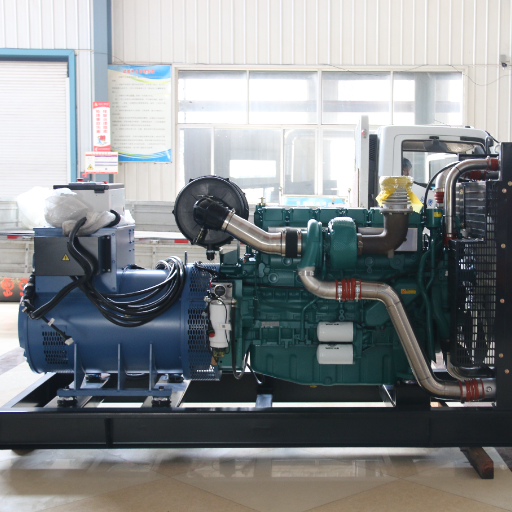
Let us walk through an actual Huali 500 kVA diesel generator set nameplate, line by line. Every industrial nameplate follows roughly this layout, so this exercise carries over to any brand.
On the nameplate you will see: 500 kVA / 400 kW at 0.8 power factor, 400 V three-phase at 50 Hz, rated current 722 A. Here is what each line means in plain terms.
The 500 kVA is apparent power, the total the alternator carries. The 400 kW is real power, what the engine can actually deliver to your equipment. The 0.8 power factor is the ratio between them. The 400 V and three-phase tell you the output configuration and its line voltage. The 50 Hz tells you the frequency, which means the engine runs at 1500 RPM. And the 722 A is the current your cables and breaker must be sized to carry.
Now cross-check it against the three-phase formula: 1.732 times 400 times 722 divided by 1,000 equals 500. The numbers agree, which is exactly what you want to see on a well-specified unit. If the current, voltage, and kVA did not line up, treat that spec sheet with suspicion.
Frequently Asked Questions
What do the numbers on a generator mean?
The kW is real usable power, the kVA is apparent power, and the power factor (usually 0.8) links them. The voltage, phase, and frequency describe the output configuration and regional standard, and the current tells you the cable and breaker sizing.
Is a higher kVA always better?
No. An oversized generator running at 20% load suffers wet stacking, poor fuel economy, and carbon buildup, and it costs more up front. Right-sizing beats oversizing. Match the rating to your actual load plus sensible headroom.
What is the difference between 50 Hz and 60 Hz?
It is a regional grid standard. 50 Hz machines run at 1500 RPM and serve Europe, China, and most of Asia and Africa. 60 Hz machines run at 1800 RPM and serve North America and parts of Asia. The frequency on the spec sheet must match your grid or your equipment fails.
How do I know if a generator is single-phase or three-phase?
Read the phase line on the nameplate. Three-phase units list a line voltage such as 380 V, 400 V, or 480 V and are standard for industrial loads. Single-phase units serve light residential or small commercial loads at 220-240 V.
Why does my generator deliver less power than its nameplate says?
Nameplate ratings assume standard altitude and temperature. At high altitude or extreme heat, the engine derates and produces less power. The standby rating is also higher than the prime rating, so a unit run continuously on its standby figure will appear to underperform.
Conclusion: Read the Nameplate, Not the Headline
Learning how to read a generator specification sheet comes down to a handful of checks. Read the kW for real power and the kVA for apparent power, and confirm the 0.8 power factor. Size on the prime rating, never the standby number. Check the mechanical and protection specs, the insulation class, the IP rating, and the derating limits for your altitude and temperature. And always trust the nameplate over the sales sheet.
Do those checks, and you will never buy a “500 kVA” generator that quietly turns out to be a 360 kW machine. If you would rather have an engineer read the datasheet with you, that is exactly what we do. Shandong Huali builds diesel generator sets from 8 kVA to 4000 kVA with Cummins, Perkins, Weichai, and Yuchai engines, every unit tested before delivery.
Send us the spec sheet you are evaluating and our engineers will decode it against your load and site conditions at no cost.
For deeper reading, see our guide on generator kVA vs kW, how to choose a diesel generator for industrial applications, and our diesel generator maintenance checklist. For an independent explanation of the electrical ratings, Generator Source’s specifications guide is a useful reference, and the prime, standby, and continuous rating definitions come from the ISO 8528 standard.
