
ISO 8528 is the international standard that defines how a generating set is rated, and it specifies four power ratings: ESP (Emergency Standby Power), PRP (Prime Rated Power), LTP (Limited-Time Running Power), and COP (Continuous Operating Power). Each differs in how many hours a year you may run it, how the load may vary, and the average load you may apply.
Here is why that matters in money. A procurement officer named Priya was sourcing power for a remote clinic in Rajasthan that runs off-grid 10 hours a day. Two suppliers quoted her a “500 kVA generator” at nearly the same price, so she picked the faster delivery. The unit that arrived was a standby machine rated for emergency outages only, at most a few hundred hours a year. Within six months of daily running, the engine began wet stacking, the warranty was void, and the set needed a rebuild. The other quote had been a 455 kVA prime-rated machine, the correct choice, and it would still be running today.
If you have ever compared generator datasheets and found yourself unsure what “standby,” “prime,” and “continuous” actually commit a supplier to, this guide is for you. You will learn the four ISO 8528 ratings, the 70% load factor rule that catches most buyers out, and how to verify that a rating is genuinely ISO 8528 rather than a marketing label. It is written by the engineering team at Shandong Huali Electromechanical, a manufacturer that prints these ratings on real nameplates every day.
Key Takeaways
- ISO 8528-1 defines four ratings: ESP (standby), PRP (prime), LTP (limited-time), and COP (continuous), each with its own run-time, load, and overload limits.
- ESP is capped at around 200 hours a year and LTP at 500 hours; PRP and COP are unlimited but differ in load variability and average load.
- The 70% average load factor rule means a “500 kVA prime” set is really sized for about 350 kVA over a 24-hour cycle, not 500 kVA sustained.
- A single machine carries several ratings: a set marked “500 kVA ESP” is typically about 455 kVA PRP and 450 kVA COP at 0.8 power factor.
- The trap to avoid is a supplier quoting a loose “standby/prime” label that is not ISO 8528-compliant; always ask for the rating class and the standard it follows.
What Is ISO 8528 (and Why It Matters)?
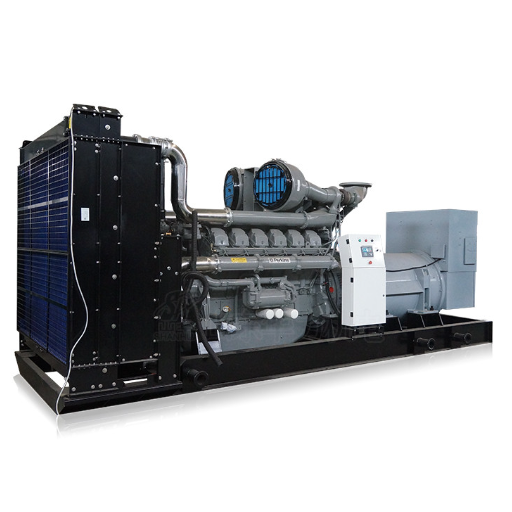
ISO 8528 is a family of standards published by the International Organization for Standardization. Its full title is “Reciprocating internal combustion engine-driven alternating current generating sets.” Part 1, ISO 8528-1, is the section that defines how a generating set’s power output is rated, including the classification terms ESP, PRP, LTP, and COP. In short, an ISO 8528 generator rating tells you the conditions under which the machine is guaranteed to deliver its stated power.
Without a shared standard, two manufacturers could label the same physical machine “100 kW” and mean very different things. One might rate it for continuous 24/7 duty, the other for a few hours of emergency backup a year. ISO 8528 removes that ambiguity by forcing every rating to state three things.
The Three Criteria: Run-Time, Load Variability, Load Factor
Every ISO 8528 rating is defined by three criteria, and you need all three to understand what a number means:
- Annual run-time. How many hours per year is the set expected to operate. This is the difference between a standby set that idles in reserve and a prime set that works daily.
- Load variability. Whether the applied load is variable (changing throughout the day, as in a factory or site) or constant (a steady, predictable draw, as in a base-load plant).
- Average load factor. The average power drawn over a 24-hour period, expressed as a percentage of the rating. This is the criterion most buyers have never heard of, and it changes the math more than they expect.
Get these three clear and you can read any generator datasheet like an engineer. Miss one, and you are comparing quotes on a false basis.
The Four ISO 8528-1 Power Ratings
The standard defines four ratings. Here they are side by side, then each in turn.
| Rating | Meaning | Annual Run-Time | Load Type | Average Load | Overload |
|---|---|---|---|---|---|
| ESP | Emergency Standby Power | up to 200 hours | variable | up to 70% | none |
| PRP | Prime Rated Power | unlimited | variable | up to 70% | 10% for 1 h in 12 |
| LTP | Limited-Time Running Power | up to 500 hours | undefined | up to 100% | none |
| COP | Continuous Operating Power | unlimited | constant | up to 100% | none |
ESP: Emergency Standby Power
Emergency Standby Power (ESP) is the maximum power a set can deliver during a grid outage. It is limited to roughly 200 hours per year at variable load, with no overload allowed. The key word is “emergency”: an ESP machine is built to sit idle, start fast, and carry the load for the duration of an outage, then return to standby. It is the right choice for hospitals, data centers, and facilities that run on mains power and only need backup when the grid fails.
PRP: Prime Rated Power
Prime Rated Power (PRP) is the workhorse rating: unlimited hours at variable load, with a 10% overload allowance for one hour in every twelve. A prime set is what you buy when the generator is a primary source of power, not a backup. Mining sites, off-grid construction camps, and rural facilities that run on the set every day all need a PRP rating.
LTP: Limited-Time Running Power
Limited-Time Running Power (LTP) sits between the two. It allows up to 500 hours per year at up to 100% of the rating, with variable load and no overload. LTP is used where a set runs at full load for limited periods, for example seasonal agricultural processing or peak-shaving during known high-demand windows.
COP: Continuous Operating Power
Continuous Operating Power (COP) is the rating for a constant, non-varying load with unlimited hours. Because the load never fluctuates, the engine is not stressed by sudden changes, so it can be rated at up to 100% load continuously. COP is the spec for base-load generation, remote communities, and other applications where the draw is steady around the clock.
The 70% Load Factor Rule (and Why It Catches Buyers Out)
Of the three criteria, the average load factor causes the most expensive mistakes. ISO 8528-1 defines the average load factor for PRP as the average power drawn over a 24-hour period, and it must not exceed 70% of the rating. In plain terms: a prime-rated set is sized for about 70% of its nameplate figure over a normal day.
This is not a defect or a trick. Engines run most efficiently and last longest at a moderate load. A prime set that averages 70% with occasional peaks is a well-used, healthy machine. A buyer who expects 100% all day is asking the engine to run flat-out constantly, which shortens its life and voids the rating.
A Worked Example: 500 kVA Prime at 70% Average Load
Take a set rated 500 kVA PRP. The 70% rule means your average load over 24 hours should be around 350 kVA, with room for short peaks above that. If your site genuinely needs 480 kVA around the clock, a 500 kVA prime set is undersized for that duty, and you should be looking at a larger machine or a continuous-rated unit.
The arithmetic is simple, and putting it in text here fixes the one gap every competitor leaves in an image: average load = 500 kVA x 0.70 = 350 kVA. A set that averages above 350 kVA over a full day is being run beyond its prime rating, no matter what the nameplate headline says.
What Happens When You Run a Standby Unit Continuously
Run an ESP machine as if it were a prime set and the engine tells you quickly. At low or inconsistent loads, diesel engines suffer wet stacking, where unburned fuel and soot condense in the exhaust and cylinders. Carbon builds up, efficiency drops, and eventually the engine needs a major overhaul. Beyond the mechanical wear, running a standby set beyond its rating voids the manufacturer’s warranty, because you are operating it outside the conditions it was sold for.
Priya’s clinic is the textbook case: a standby set run daily, wet stacking inside six months, and a warranty that no longer applied. The repair cost more than the price difference between the two quotes.
How Ratings Map to kVA, kW and Power Factor
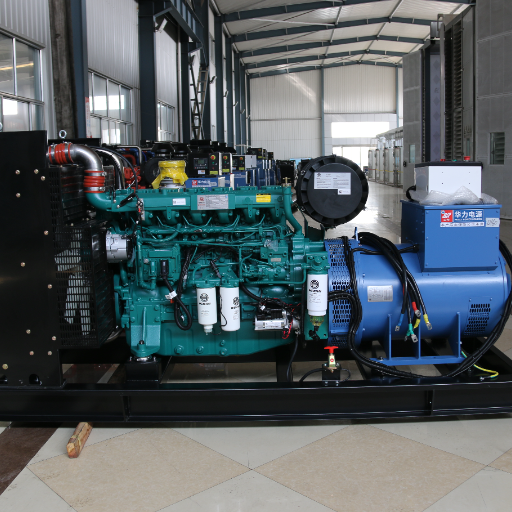
An ISO 8528 rating is always tied to kVA and a power factor, usually 0.8. This is where the rating classes and the kVA-versus-kW question meet, and it is worth one careful read. If you are not clear on the difference between kVA (apparent power) and kW (real power), start with our guide to generator kVA vs kW, which covers the power factor formula in full.
Why does a Nameplate Show “500 kVA ESP / 455 kVA PRP”
Because the ratings describe different duties, the same physical machine carries several of them. A Huali set might read “500 kVA ESP / 455 kVA PRP / 450 kVA COP at 0.8 PF.” In real power at 0.8 power factor, that is 400 kW standby, 364 kW prime, and 360 kW continuous. The standby figure is highest because the set may only need to hold that load briefly during an outage. The prime and continuous figures are lower because they must be sustainable for unlimited hours.
This is why two “500 kVA” quotes can be different machines. One supplier is quoting the standby number, the other the prime number. Always confirm which rating class the headline figure belongs to, or you will compare a standby peak against a prime continuous output as if they were equal.
How the Ratings Relate to Each Other
The four ratings are not independent numbers; they sit on a predictable scale for the same machine. A set’s emergency standby rating is the highest, typically 10-15% above its prime rating, because the engine only has to hold that load briefly during an outage. Its continuous rating is the lowest, typically 10-15% below prime, because a constant load leaves no room to recover between peaks.
That is why the Huali set reads 500 kVA ESP, 455 kVA PRP, and 450 kVA COP. The differences look small, but they describe different duties. The 500 kVA figure exists only for short outages; the 455 kVA figure is what the machine can actually sustain day after day. When a supplier quotes a single “500 kVA,” ask which of these three it is.
Which Rating Do You Need? A Duty-Cycle Decision Guide
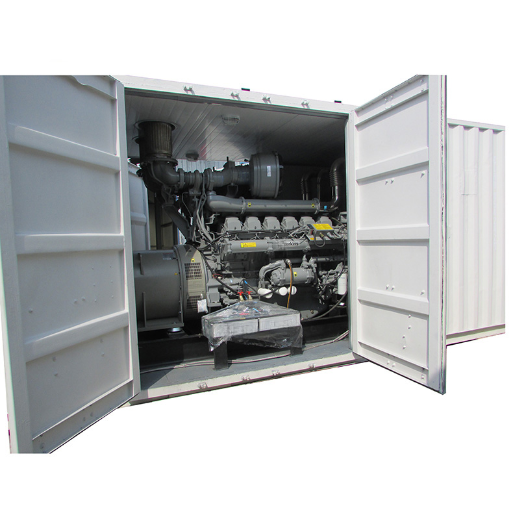
The quickest way to pick a rating is to match your site to its duty cycle. Ask two questions: how many hours a year will the set run, and does the load vary?
| Your Situation | Hours / Year | Load Type | Rating |
|---|---|---|---|
| Backup for a grid-connected building | up to 200 | variable | ESP (standby) |
| Primary power, off-grid or daily use | unlimited | variable | PRP (prime) |
| Seasonal or peak-period use at full load | up to 500 | variable | LTP (limited-time) |
| Constant base load, 24/7 | unlimited | constant | COP (continuous) |
The pattern to remember: a set that waits for an outage is ESP. A set that is your main source with a changing load is PRP. A set that runs flat-out for a defined season is LTP. A set that carries a steady load without end is COP.
A hospital that runs on mains power and only needs the set during grid failures needs ESP. A mining camp living off-grid that runs the set 20 hours a day needs PRP. A grain-processing operation running flat-out for six weeks of harvest needs LTP. A remote village drawing a constant base load needs COP. The same kVA number in those four cases means four very different machines.
Derating Stacks on Top of the Rating Class
The rating class is one constraint; the site is another. A nameplate rating assumes standard conditions, usually sea level to 1,000 m altitude at 25-40 degrees C. Above that, the engine loses power, and that derating applies on top of whichever rating class you chose.
A 500 kVA set installed at a mine 2,500 m up behaves like roughly a 425 kVA machine, at about 3-4% loss per 300 m above 1,000 m. The standby and prime figures both shift down together. So choose the rating class for your duty cycle first, then apply the site derating, or you will undersize twice. The exact curves vary by engine brand, so confirm them on the datasheet, as covered in how to read a generator specification sheet.
The Non-ISO Rating Trap (and How to Avoid It)
ISO 8528 is a voluntary standard, and not every supplier follows it. Some use their own loose “standby,” “prime,” and “continuous” labels without stating the run-time, load, or overload limits the standard requires. A “prime” rating from a non-compliant supplier might not carry the 70% average load factor discipline, which means the machine is being sold on a number it cannot sustain.
How to Verify a Rating Is Genuinely ISO 8528
Three checks separate a real ISO 8528 rating from a marketing label:
- Ask for the rating class letter code. If the datasheet says ESP, PRP, LTP, or COP, that is the standard’s own vocabulary. If it only says “standby” or “prime” in prose, ask which ISO 8528 class it corresponds to.
- Confirm the stated limits. A genuine PRP rating states the average load factor (70%), the overload allowance (10% for 1 h in 12), and the conditions. If those numbers are absent, the rating is incomplete.
- Check the derating curves. Every real datasheet includes altitude and temperature derating. If none is provided, you are buying a number with no stated conditions, which is not a specification at all. See how to read a generator specification sheet for a field-by-field walkthrough of where these live.
How to Specify Correctly in a Tender
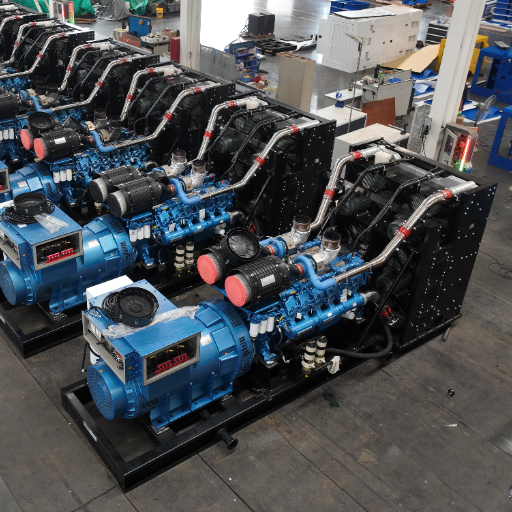
The cleanest way to protect yourself is to write the requirement into the procurement document. Specify the rating class explicitly, like this:
“The generating set shall be rated in accordance with ISO 8528-1 as Prime Rated Power (PRP), with a 10% overload allowance for one hour in every twelve, a maximum average load factor of 70% over 24 hours, at 0.8 power factor, at the stated site altitude and temperature.”
That single sentence forces every supplier to quote on the same basis, and it quietly filters out the non-compliant ones. A serious manufacturer can answer it in a sentence; a supplier selling a loose label has to dodge it.For a complete template you can adapt, see our guide to writing a generator set specification for tender, which lays out every clause a compliant document should contain.
A procurement team in Nairobi saw the difference in one week. They asked three suppliers for a “500 kVA standby generator” and received prices spanning 18%, each built on a different assumption of what standby meant. When they re-issued the tender with the clause above, the same three suppliers quoted within 3% of each other, and one admitted it could not meet the stated PRP conditions at all. The clause did not change the machines; it changed what suppliers were allowed to assume.
Frequently Asked Questions
What is the difference between prime and standby power?
Standby (ESP) power is for emergency use during grid outages and is capped at around 200 hours per year. Prime (PRP) power is for a set that acts as a primary source, with unlimited hours at variable load. A standby set run daily will fail early; a prime set is built for exactly that duty.
How many hours can a standby generator run per year?
Under ISO 8528-1, a standby (ESP) generator is limited to roughly 200 hours per year at variable load. Beyond that, you are running it outside its rating, which voids the warranty and accelerates engine wear.
Can I use a standby generator as prime power?
Not without consequences. A standby set run as a prime source will suffer wet stacking, carbon buildup, and premature failure, and the warranty will not cover it. If the set is a primary power source, buy a prime (PRP) rating.
What does the 70% load factor mean?
It means the average load over a 24-hour period must not exceed 70% of the rating for a prime (PRP) set. A 500 kVA prime machine should average around 350 kVA, with short peaks above that, not a sustained 500 kVA.
What is ISO 8528-1?
ISO 8528-1 is the part of the ISO 8528 standard that defines how reciprocating-engine generating sets are rated, including the ESP, PRP, LTP, and COP classifications and the criteria of run-time, load variability, and load factor.
Conclusion: Read the Rating, Not Just the Number
An ISO 8528 generator rating is the difference between a number on a brochure and a guarantee you can hold a supplier to. The four classes, ESP, PRP, LTP, and COP, tell you the run-time, load variability, average load, and overload allowance. The 70% load factor rule reframes what a “500 kVA prime” set really means. And the non-ISO trap reminds you to verify the standard rather than trust the label.
Read the rating class first, confirm the 70% rule and the overload allowance, check the derating curves, and specify the standard in your tender. Do that, and you will never be the buyer who discovers, six months in, that their “500 kVA” generator was a standby machine all along.
That is the work our engineering team does every day. Shandong Huali Electromechanical builds diesel generator sets from 8 kVA to 4000 kVA, with ESP, PRP, and COP ratings printed on the nameplate and Cummins, Perkins, Weichai, and Yuchai engine options across the range.
